
News
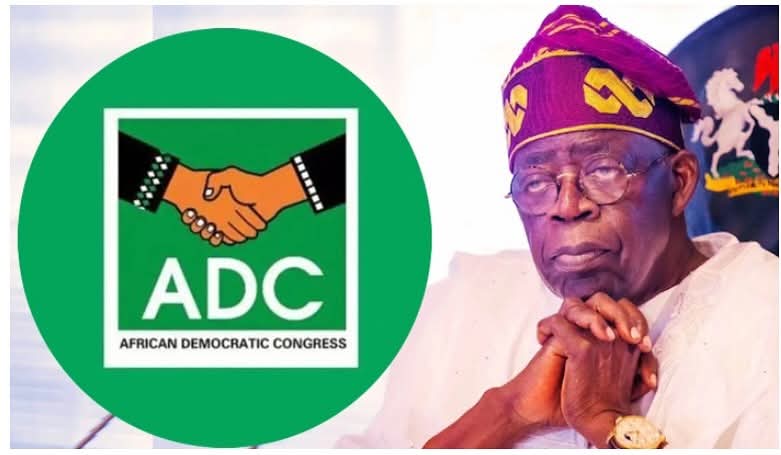
Nigeria’s 4th Place In Global Terror Ranking Confirms Tinubu Failure Says ADC

Nigeria’s 4th Place In Global Terror Ranking Confirms Tinubu Failure Says ADC
Nigeria’s 4th place in global terror ranking confirms Tinubu failure, says ADC – Party Proposes National Intelligence Coordination to Fix Failing Security System.
The African Democratic Congress (ADC) has responded to the latest Global Terrorism Index (GTI) 2026 report, stating that Nigeria’s ranking as the 4th most terrorism-affected country in the world is clear evidence of the failure of the Bola Tinubu-led government to secure the nation.
In a statement signed by its National Publicity Secretary, Mallam Bolaji Abdullahi, the party cited data from the report, including a 43 percent rise in attacks and increasing civilian deaths, and said the findings point to a breakdown in governance, not just a security lapse.
To address the crisis, the ADC outlined a three-part strategy focused on improving intelligence coordination, decentralizing policing to bring security closer to communities, and shifting from reactive responses to preventive, intelligence-led security operations.
The full statement read:
Against the deeply troubling backdrop of yet another deadly terrorist attack in Borno State, where dozens of Nigerians have been killed and many more injured, the African Democratic Congress (ADC) has reviewed the newly released Global Terrorism Index (GTI) 2026, which delivers a clear and troubling verdict on the state of insecurity in Nigeria today.
Nigeria is now ranked the 4th most terrorism-affected country in the world. That is not an abstract statistic. It is a direct reflection of the failure of the Bola Tinubu-led APC government to secure the country.
At a moment when Nigerians are grieving and communities across the country are living under constant threat, Tinubu, his National Security Adviser, and the Minister of Defence are abroad. The contrast is clear: a country in crisis, and a leadership that is absent.
Nigerians should take note of this moment. It raises a fundamental question about Tinubu and the APC’s priorities. At a time that demands focus, discipline, and urgency, the Tinubu government appears more concerned with pageantry, paparazzi, and propaganda — rather than real performance .
The Global Terrorism Index confirms what Nigerians already know from lived experience. Terror attacks have surged by 43 percent, rising from 120 incidents in 2024 to 171 in 2025. Violence is increasingly concentrated in Borno State, which now accounts for 67 percent of attacks and 72 percent of deaths. Most concerning, civilians now make up 67 percent of those killed. That is a measure of how exposed ordinary Nigerians have become.
The threat to Nigerian families is also evolving. ISWAP is responsible for over half of all attacks and deaths across the country. Boko Haram remains active and deadly. New groups like Lakurawa are emerging, showing that Tinubu’s national security strategy is not containing the insecurity problem but expanding it.
These outcomes point to something deeper than isolated security lapses. They reflect a breakdown in governance. The GTI identifies weak governance, internal instability, and economic hardship as key drivers of terrorism. That is not a political talking point. It is the assessment of an independent international body.
A government that is truly focused on protecting its people would demonstrate coordinated and visible leadership during crises strengthen local security architecture and address the economic and social conditions that fuel recruitment into extremist groups. Instead what Nigerians see is a leadership class that is more preoccupied with political positioning than with the urgent business of governance.
This is why the ADC will take three decisive steps to fix Nigeria’s broken security system and restore safety across the country.
First, we will fix coordination. Nigeria does not lack intelligence, it lacks coordination. Today, agencies operate in silos, warnings are missed, and response is delayed. The ADC will establish a legally mandated national intelligence coordination system, led by a Coordinator of National Intelligence, and a unified Joint Terrorism Task Force. The goal is simple: no more missed signals, no more confusion, no more excuses.
Second, we will bring security closer to the people. Nigeria cannot be policed effectively from Abuja alone. The ADC will implement a decentralized policing system with federal, state, and community layers, each with clear roles and national standards. This will ensure faster response, clearer accountability, and security that reflects the local realities of the 774 local government areas.

ADC, Tinubu
Third, we will shift from reaction to prevention. Today, Nigeria reacts to attacks after lives are lost. The ADC will build an intelligence-driven, preventive security system that is powered by data, early warning systems, and rapid response units in every state.
Our focus will be to stop attacks before they happen, not merely respond after tragedy strikes.
Signed:
Mallam Bolaji Abdullahi National Publicity Secretary African Democratic Congress (ADC)








News
Religious Leaders, Other Stakeholders Convene International Security Conference as Tinubu Calls for Peaceful Coexistence and National Unity
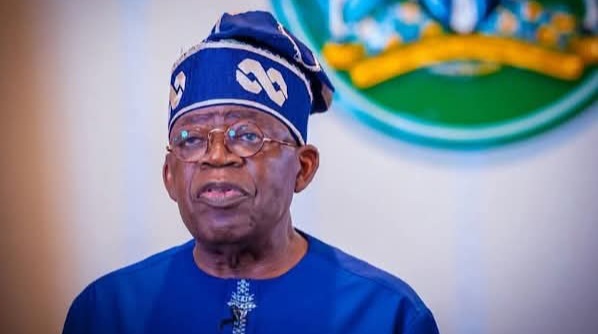
Religious Leaders, Other Stakeholders Convene International Security Conference as Tinubu Calls for Peaceful Coexistence and National Unity
Tinubu calls for peaceful coexistence and national unity. Nigeria and the Muslim World League will on Tuesday, 11 August 2026, convene an international security conference in Abuja, bringing together religious leaders and other stakeholders to advance peaceful coexistence, national unity and security.
The conference, holding at the Bola Ahmed Tinubu International Conference Centre, Abuja, is expected to explore the relationship between peace, security and socio-economic development, while strengthening dialogue and mutual understanding among Muslims, Christians and people of other faiths.
The Honourable Minister of Information and National Orientation, Mohammed Idris, disclosed this on Monday at the inauguration of the Muslim World League Mosque in Abuja by the Secretary General of the Muslim World League and Chairman of the Organization of Islamic Scholars, Sheikh Mohammed Bin Abdulkarim Al-Issa.
Idris, who had earlier received Sheikh Al-Issa at the Presidential Wing of the Nnamdi Azikiwe International Airport and accompanied him to the mosque inauguration, described the visit as a demonstration of the strong relationship between Nigeria, the Kingdom of Saudi Arabia and the international community.
He said the conference comes at an important time for Nigeria, as the country continues to strengthen its national security architecture while pursuing reforms and investments aimed at accelerating socio-economic development.
The Minister reaffirmed President Bola Ahmed Tinubu’s commitment to peaceful coexistence, religious harmony and national unity, stressing that peace and security are fundamental to Nigeria’s prosperity and stability across Africa.
“The President is determined to ensure peace and tranquillity not just in Nigeria, but around the world. This is a clear demonstration of the path that President Bola Ahmed Tinubu is taking,” Idris said.
He noted that Nigeria, as Africa’s most populous country, has a major responsibility to promote peace and stability across the continent, adding that a peaceful and secure Nigeria would positively influence West Africa and Africa as a whole.
Idris said the international conference would provide an important platform for religious leaders and other stakeholders to exchange ideas and develop practical approaches to strengthening peaceful coexistence, security and mutual understanding.
He commended the Muslim World League, Jama’atu Izalatil Bid’ah Wa Iqamatus Sunnah (JIBWIS), the Saudi Arabian Government and other stakeholders for facilitating Sheikh Al-Issa’s visit and the establishment of the mosque.
The Minister also expressed appreciation to Sheikh Al-Issa for his sustained commitment to peace, dialogue and understanding among faith communities.
Earlier, Sheikh Al-Issa commended President Tinubu’s efforts to foster peaceful coexistence between Muslims and non-Muslims, stressing that peace and harmony in Nigeria would contribute significantly to stability across West Africa and the wider world.
The Secretary General said his visit was centred on peace and peaceful coexistence and expressed confidence that the conference would provide an important platform for advancing dialogue and harmony in Nigeria and globally.
He also inaugurated a newly constructed Mosque in Gauda, Abuja and expressed appreciation to all those who contributed to its establishment.
The International Security Conference brings together religious leaders, policymakers and other stakeholders.
President Tinubu
Attendance at the event included the Executive Governor of Sokoto State, Ahmad Aliyu Sokoto; Honourable Minister of Health and Social Welfare, Prof. Muhammad Ali Pate; Honourable Minister of Labour and Employment, Muhammad Maigari Dingyadi; Senator Aliyu Magatakarda Wamakko, representing Sokoto North Senatorial District; Senator Mohammed Danjuma Goje, representing Gombe Central Senatorial District; and Senator Ahmed Sani Yerima, among other dignitaries.
Rabiu Ibrahim, MNIPR
Special Assistant (Media) to the Honourable Minister of Information and National Orientation
Monday, 10 August 2026
News
ICPC Hosts Indonesian Diplomatic Dialogue, Seeks Stronger Global Cooperation, Knowledge-Sharing Against Corruption

ICPC Hosts Indonesian Diplomatic Dialogue, Seeks Stronger Global Cooperation, Knowledge-Sharing Against Corruption
The Independent Corrupt Practices and Other Related Offences Commission (ICPC) has called for stronger international collaboration and knowledge-sharing in the fight against corruption, as it hosted the second edition of its International Diplomatic Dialogue in Abuja on Monday.
Eereporter.com
The dialogue, organised by the Anti-Corruption Academy of Nigeria (ACAN), the research and training arm of the ICPC, was themed “Experience Sharing in Anti-Corruption Strategy: The Indonesian Perspective.”
The Indonesian Ambassador to Nigeria was represented at the event by Mrs. Tuty Dityawanty, Minister Counsellor for Political Affairs.
In his address, the ICPC Chairman, Dr. Musa Adamu Aliyu, SAN, said the dialogue was designed to provide an opportunity for Nigeria to learn from Indonesia’s experience, policies and strategies in combating corruption.
Aliyu recalled that the Commission had earlier hosted the Kenyan High Commissioner to Nigeria, Ambassador Isaac Keen Parashina, MBS, during which both sides exchanged knowledge on approaches to tackling corruption in Kenya.
According to him, Indonesia’s experience is particularly relevant given the efforts of the country’s anti-corruption agency, the Komisi Pemberantasan Korupsi (KPK), also known as the Corruption Eradication Commission.
He said Nigeria could benefit from Indonesia’s experiences in areas including institutional reforms, legal reforms, enforcement and other strategies deployed to prevent and combat corruption.
The ICPC Chairman described corruption as a global phenomenon and a major impediment to sustainable development, economic growth, social justice and public trust in institutions.
He stressed that corruption has devastating consequences for the political, socio-economic and developmental progress of nations and organisations where it is allowed to thrive unchecked.
“As Nigeria continues to deepen its anti-corruption efforts, there is much value in learning from comparative experiences, understanding best practices, and identifying innovative approaches that can be adapted to our local realities,” Aliyu said.
He noted that the diplomatic dialogue reflects the commitment of the ICPC and ACAN to promoting international cooperation and evidence-based approaches to corruption prevention.
Aliyu further said the initiative aligns with the Commission’s broader objective of building a culture of integrity, transparency and accountability in both the public and private sectors.
He expressed appreciation to the Indonesian Ambassador for accepting the invitation and sharing the country’s experiences and insights with Nigerian stakeholders.
According to him, the engagement further strengthens the cordial relations between Nigeria and Indonesia while demonstrating the two countries’ shared commitment to good governance and ethical leadership.
The ICPC Chairman also commended the Provost of ACAN, Professor Sheriff Ghali Ibrahim, and his team for conceptualising and organising the initiative, describing the Academy as playing an important role in research, training, advocacy and capacity development in support of Nigeria’s anti-corruption agenda.
He urged participants at the dialogue to actively engage in discussions, ask critical questions, share perspectives and explore opportunities for future collaboration.
Aliyu stressed that the knowledge exchanged at the event should translate into practical actions capable of strengthening institutions, improving public trust and contributing to national and continental development.
“Corruption remains one of the greatest threats to development, but together, through collective action, collaboration, and unwavering commitment, we can build institutions and societies where transparency and accountability thrive,” he said.
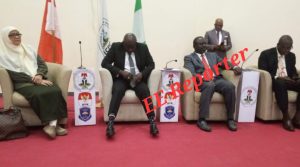
Indonesian, ICPC
He disclosed that the ICPC would, in the coming months, host other heads of diplomatic missions to share their respective experiences and strategies in the fight against corruption.
The ICPC Chairman formally welcomed participants to the second edition of the International Diplomatic Dialogue and expressed hope that the deliberations would serve as a catalyst for stronger partnerships and innovative solutions in combating corruption.
Eereporter.com
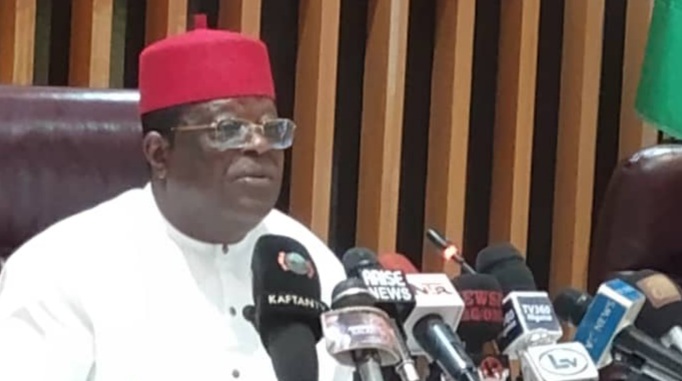
Umahi: “N752bn Abuja-Kano Highway to be Completed by November”
The Federal Government has said the remaining sections of the Abuja-Kaduna-Zaria-Kano highway will be completed by November, with the ongoing works on the strategic road now estimated to cost N752bn.
Eereporter.com
The Minister of Works, David Umahi, disclosed this in Abuja on Monday, saying more than 80 per cent of the cost of the two major sections being handled by the present administration had already been paid.
Umahi said the government was also installing solar-powered streetlights along the highway and would deploy what he described as “superhighway guards” to protect the road from vandalism after observing attempts by some people to remove sections of the concrete pavement.
The minister spoke when he was decorated as the Patron of the National Association of Nigerian Students by the leadership of the union at the Ministry of Works headquarters in Abuja.
According to him, the Abuja-Kaduna-Zaria-Kano route covers 375 kilometres in one direction, translating to 750 kilometres when both carriageways are considered.
He explained that the Federal Government had previously spent more than N200bn on the portion of the road handled by Julius Berger, with the contractor completing 240 kilometres on each carriageway, amounting to 480 kilometres. He said another 140 kilometres, representing 280 kilometres when both carriageways are considered, remained to be completed.
Umahi said the current administration had recorded an unprecedented feat by completing 118 kilometres of the road with concrete pavement within 30 months, while work was continuing on the remaining 164 kilometres, or 82 kilometres on each carriageway. He said the two sections currently being executed by the government were valued at N752bn.
“For the first time, we are able to complete 118 kilometres of Route 118 on concrete pavement within 30 months. Never happened. Never happened. And today we are battling with the remaining 164 kilometres. That’s 82 kilometres by two. Both of these projects are costing us 752 billion under the President.
“Over 80 per cent has been paid. We are believing that by November the entire stretch would have been completed. We are putting solar lights. Every 30 meters, you have four poles. All true. I just came back from Lagos where we inaugurated the coastal guards. We are also going to inaugurate on this Abuja, Kaduna, Zaria, Kano. Superhighway guards. Because I saw people digging the concrete to remove roads,” he said.
The minister said the Federal Government was determined to ensure that the huge investment in the highway was protected from vandalism and other acts capable of undermining the road after completion.
He said the proposed guards would complement the government’s infrastructure protection efforts, particularly as the road would serve as a major transport corridor linking the Federal Capital Territory with Kaduna, Zaria and Kano.
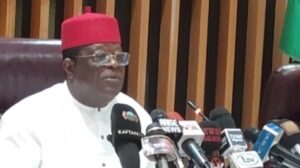
Umahi
Umahi also used the occasion to defend the administration’s spending on infrastructure, arguing that the projects were creating jobs and opening economic opportunities across the country.
He said every major construction site had generated direct and indirect employment, stressing that the infrastructure investments should not be viewed merely as government expenditure.
Eereporter.com
-
 Crime1 year ago
Kogi Assembly Considers Law To Regulate Rent, Establish Control Board: Tenancy Law
-

 News1 year ago
Atiku Reveals Why He Failed To Pick Wike As Running Mate In 2023
-
 Akwa Ibom2 years ago
The Apostolic Church Gets New Territorial Chairman, Exco
-

 Crime1 year ago
Federal High Court Jails 2 For Vandalizing Transformer, Telecom Mast In Kogi
-
 News2 years ago
The Apostolic Church Gets New National President, Executive
-
 Akwa Ibom2 years ago
Umo Eno Commences Payment Of 80,000 Naira Minimum Wage With Arrears
-

 News1 year ago
Senator Natasha Returns To Senate With Husband Amid Seat Dispute
-

 Economy1 year ago
Kiyosaki: Is Tinubu’s Government Afraid Of Ibrahim Traore?