
Economy
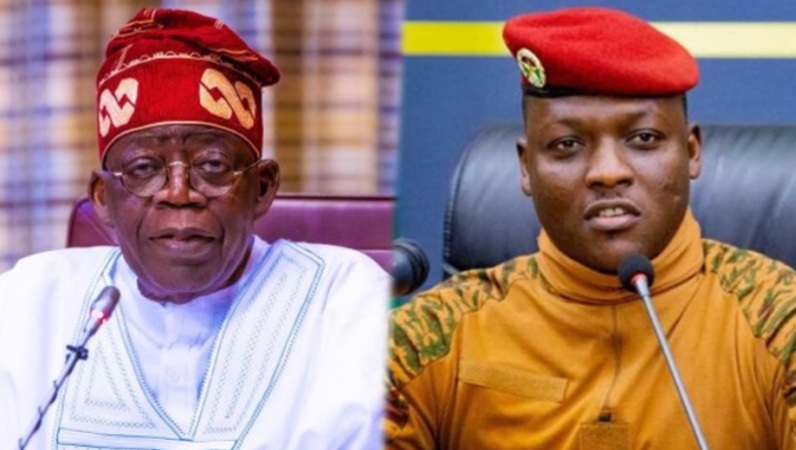
Kiyosaki: Is Tinubu’s Government Afraid Of Ibrahim Traore?

Kiyosaki: Is Tinubu’s Government Afraid Of Ibrahim Traore?
Kiyosaki: Is Tinubu’s government afraid of Ibrahim Traore?. When the government loses the people’s trust, even a banner becomes a battlefield.
“History reminds us that dictators and despots arise during times of severe economic crisis.”
-Robert Kiyosaki
As a preface to this week’s piece, permit me two brief confessions on military intervention in the governance of a nation-state. Firstly, I am not seduced by the glamour of military adventurism.
I hold no affection for putschists who trample constitutions under the jackboots of rifles and enthrone regimes alien to democratic imagination. Secondly, the crises of democracy are not resolved by rupturing democracy.
They are cured within democracy. The Constitution is both ailment and remedy. What wounds it cannot heal, nothing outside it can. Military coups wear the mask of order, but they carry the heart of chaos. They do not reset the nation. They rupture it. In my view, democracy, fragile and flawed as it is, remains the only legitimate instrument for renewal.
Given the foregoing, it is only appropriate to situate the current economic crisis our country faces within the framework that speaks directly to the widening conditions that allow the type of politics that strengthens the arms of strong men intent on harming liberties.
When despair deepens and institutions grow brittle, the soil only becomes fertile for authoritarian seeds. It is in this perilous moment that citizens must insist on democratic remedies, however imperfect, over the seductions of unconstitutional force. Our country is in the middle of a severe economic meltdown. Food inflation has crossed 40 per cent. Fuel prices are unbearable. The naira continues to fall.
There is growing unemployment, deepening poverty, and widespread despair. Amid this national hardship, the Tinubu administration has chosen not to address the crisis while deploying state apparatuses of power to repress dissent and silence critical voices.
The recent arrest and detention of social activist, Martins Otse, popularly known as Very Dark Man, is emblematic of this trend.
According to the Economic and Financial Crimes Commission (EFCC), his arrest is based on “petitions bordering on sundry issues of alleged financial crimes.” The EFCC, however, has not offered specifics. No formal charges have been made public. No transparency. Just silence, and continued incarceration.
This has become the familiar script: faceless petitions, vague allegations, and indefinite detention. This is not the pursuit of justice. It is a campaign of fear. The target is not corruption, but criticism.
In a related development in Benin City, human rights activists, Marxist Edokpayi Kola and Orako Hanson, were arrested and charged with inciting an “unlawful procession.” Their offence? Displaying a banner expressing solidarity with Ibrahim Traore, the transitional president of Burkina Faso and a symbol of anti-imperialist defiance in West Africa. Edokpayi and Hanson were released a few days ago, in circumstances which depicted the SSS as having had a bite of the humble pie.
What, one might ask, links these two seemingly disparate cases? Why does Tinubu’s government suddenly find itself imperiled on one hand by a lone activist who has assumed the burden of shielding the public from the encroachments of a totalising state and its exalted agents of power and the self-styled custodians of what the French once called la mission civilisatrice, the civilising mission; and on the other hand by the image and symbolism of a Burkinabé soldier-president?
Why does the mention of Ibrahim Traore inspire such a crackdown? It is a paradox as old as power itself: those who claim to rescue the people from darkness often become the architects of a deeper twilight. The activist stands alone, armed with nothing but the moral clarity of conscience and the weight of public disaffection.
At the same time, the state, draped in the regalia of modern governance, deploys the familiar instruments of coercion and apparatuses of violence to the theatre of the absurd. What threatens the government is not merely dissent, but the piercing mirror held up to its contradictions: a government that invokes civilisation yet enacts repression; that touts reforms yet recoils from scrutiny; that invests in renewed hope, yet secures hopelessness as profit. In that reflection, its legitimacy begins to unravel.
But the answer also lies in what Traore represents. At just 36, he is a youthful Pan-African voice who openly challenges French neocolonialism and champions economic and political independence. In a continent dominated by ageing elites, Traore is an anomaly. And anomalies make the system nervous.
Traore came to power through a military coup that ousted the French-aligned elite in Ouagadougou. Since then, he has nationalised assets, cut ties with foreign military bases, and restored dignity to many of his people. He speaks the language of self-determination and accountability, which resonate deeply with young Africans who feel betrayed by their leaders.
And that is precisely why Tinubu’s government is unsettled. This is not because Traore poses any military threat to Nigeria but because his power of example has become politically contagious.
Today, in our country, the youth are restless. They are tired of the recycled leadership of men who have been in power since the 1970s. They are looking for inspiration from elsewhere, from someone who dares to challenge the global order, who talks about local control of resources, and who puts citizens’ interests first. Ibrahim Traore, like Thomas Sankara before him, embodies that hope. And in our country, hope is dangerous.
Rather than address the rising cost of living, unemployment, and insecurity, Tinubu is more focused on suppressing civic expression. It has turned the EFCC, the State Security Service (SSS), and the police into tools of censorship and intimidation. From journalists to influencers, activists to union leaders, anyone who questions the system is met with arrest or threats.
This is the context in which many citizens view the crackdown on Very Dark Man, Edokpayi, and Hanson. They are not being punished for crimes. They are being punished for dissent. For daring to speak truth to power and taking sides with the poor of our country. For choosing solidarity with a foreign leader who stands for everything our government seems to oppose.
Now, a few questions and answers. Why is Tinubu’s government afraid? It is afraid that citizens will ask: why not us? Why does a banner in Benin City pose such an existential threat? The answer is simple.
When leadership is illegitimate, every truth sounds like rebellion. When power is rooted in elite deals and electoral manipulation, every protest feels like a referendum. When the government loses the people’s trust, even a banner becomes a battlefield. So, repression becomes the weapon of choice.
Ibrahim Traore
Repression is not just political, it is ideological. It is a short-term strategy. It is aimed at extinguishing the idea that another country is possible. A country that is not bound to the IMF’s economic prescriptions. A country that is not permanently beholden to France, the United States, the United Kingdom, or any foreign power. A country where leadership listens, responds, and acts with courage.
Traore’s example makes these questions urgent. His youthfulness exposes the generational gap in our country’s leadership. His rhetoric contrasts sharply with Tinubu’s incoherent governance. His posture of defiance makes our government’s subservience appear even more hollow. African leaders have long feared examples that challenge their status quo.
From the overthrow of Kwame Nkrumah, the death of Samora Machel, to the assassinations of Patrice Lumumba and Thomas Sankara, the continent’s post-independence history is littered with the destruction of bold voices. But even in death, these voices endure. And now, in the age of social media, they travel faster, resonate deeper, and inspire more.
History teaches us that dictators, no matter how powerful, always fall. The people may be silenced for a while, but silence never lasts forever. Economic crisis breeds resistance. And the more the government doubles on fear, the more inevitable resistance becomes.
By arresting citizens for celebrating Traore, Tinubu’s government is only fuelling the fire. It is drawing more attention to Traore. It proves that he is not just a leader but also the symbol of youth, resistance, and the new reawakening. Tinubu is exposing our country, once the continent’s hope, both as a tragedy and a cautionary tale.
A country with brilliant minds, abundant resources, and a rich history of activism has been reduced to a state of managed decline. And yet, rather than course-correct, he prefers to clamp down on free speech and intimidate critics.
But, our citizens are not damfools. They are watching. They are listening. They are reading about Ibrahim Traore. They are taking notes. They are drawing comparisons. And one day, they will act. No arrests will be made when they do, and the deployment of secret police will be enough to hold them back.
The warning of the acclaimed author of Rich Dad Poor Dad, Robert Kiyosaki, should be heeded: it is in times of economic crisis that despots emerge. But it is also in those times that citizens rediscover their power.
History is watching with “Koboko on the rafters”, as my friend, the late Professor Pius Adesanmi, once described it with flourish. Abdul Mahmud is a human rights attorney in Abuja.







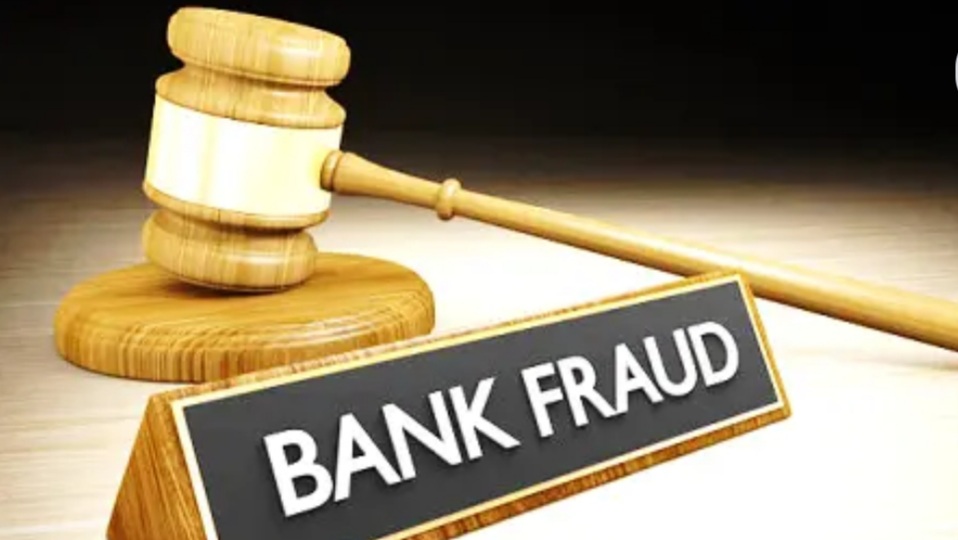
EFCC Arraigns Former SKye Bank Chairman, Tunde Ayeni For N15.6b Fraud
The Economic and Financial Crimes Commission, EFCC, on Monday, May 4, 2026, arraigned a former Chairman, Board of Directors of the defunct Skye Bank Plc, Tunde Ayeni before Justice Jude Onwuzuruike of the Federal Capital Territory, FCT, High Court, Apo, Abuja.
Ayeni was arraigned on a 17-count charge bordering on criminal breach of trust, misappropriation and conversion of investors’ funds to the tune N15,665,085,429 (Fifteen Billion, Six hundred and Sixty five Million, Eighty five thousand, Four Hundred and Twenty-nine Naira (N15,665,085,429).
Prosecution counsel E.E. Iheanacho, SAN, informed the court that the matter was slated for arraignment and prosecution ready for trial.
“We have before the court 17-count charge dated April 28, 2026, we humbly apply that the charge be read to the defendant”, he said.
Eereporter.com
Count three of the charge reads: “That you, Tunde Ayeni, whilst being the Chairman, Board of Directors of the defunct Skye Bank Plc between 21st of October, 2014 and 19th November, 2014 at Abuja within the jurisdiction of this Honourable Court and having dominion over depositors funds domiciled in the defunct Skye bank Plc’s Suspense Account, committed criminal breach of trust when you dishonestly misappropriated the aggregate sum of Three billion, Two hundred and One million, Five Hundred and Thirty Five Thousand, Four Hundred and Twenty Nine Naira, Forty two kobo(N3,201,535,429.42) by transferring same to Misa Limited’s account No: 1011295717 and 1011295718 domiciled with Zenith Bank in Violation of the Prudential Guidelines and other regulations and thereby committed an offence contrary to Section 311 of the Penal Code and punishable under Section 312 of the same Act.
Count five of the charge reads: “That you Tunde Ayeni, whilst being the Chairman, Board of Directors of the Defunct Skye Bank Plc on or about 27th November, 2014, at Abuja within the Jurisdiction of this Honourable Court and having dominion over depositors’ funds domiciled in the defunct Skye bank Plc’s Suspense Account, committed criminal breach of trust when you dishonestly misappropriated the sum of Five Billion, Seventy Eight million, Five hundred and Fifty thousand Naira(N5, 078,550,000) by transferring same to Union Registrar Limited’s Account No: 0003490559 domiciled with Union Bank in violation of the Prudential Guidelines and other Regulations and thereby Committed an offence contrary to Section 311 of the Penal Code and Punishable under Section 312 of same Act.”
Fraud
Ayeni pleaded “not guilty” to the charges when they were read to him.
In view of his “not guilty” plea, Iheanacho prayed the court for a trial date and urged the court to remand the defendant in a Correctional Centre.
Defence counsel, Ahmed Raji Bashir, SAN, informed the court that the charge was given to the defendant on a public holiday adding that he considered it imperative to inform the court. He also prayed the court to release the defendant to him or return him to the custody of the EFCC.
Justice Onwuzuruike adjourned the matter to May 13, 2026, for hearing of the bail application, while the defendant was remanded at the Kuje Correctional Centre pending determination of bail application.
Economy
World Press Freedom Day: FG Calls For Collaboration To Address Disinformation, Misinformation
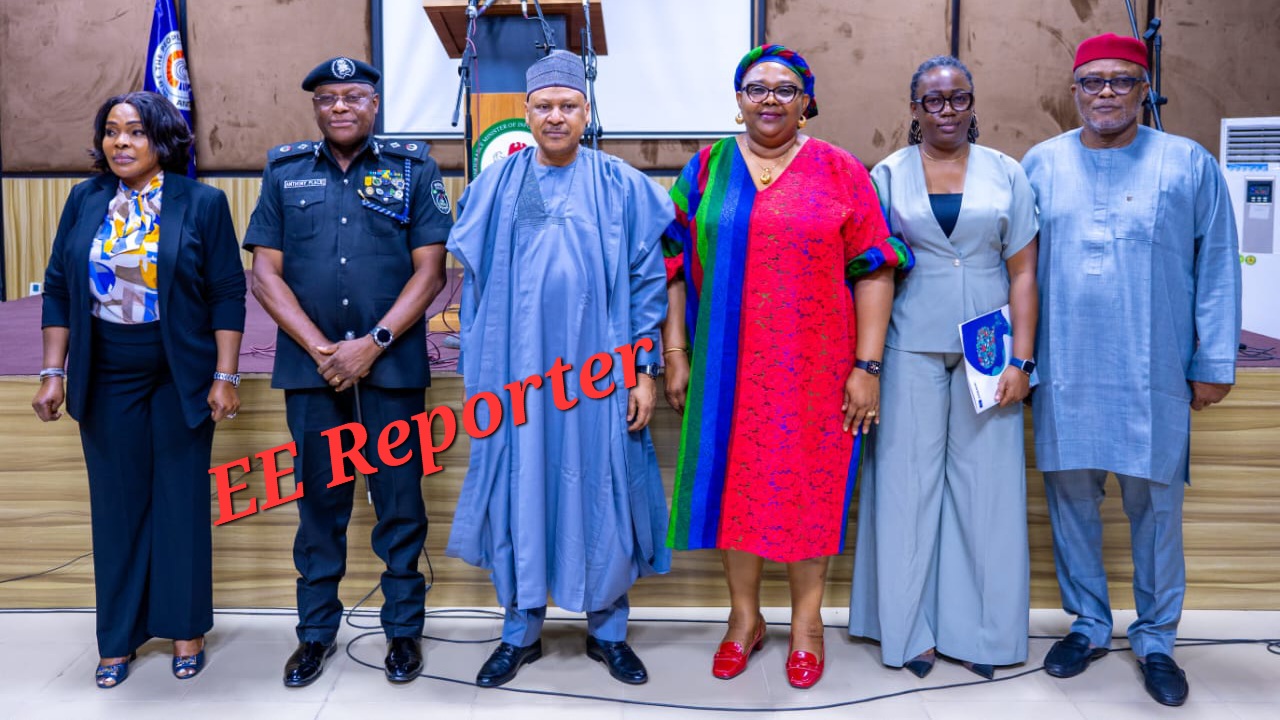
World Press Freedom Day: FG Calls For Collaboration To Address Disinformation, Misinformation
The Federal Government has called for stronger collaboration among the media, government institutions, and other stakeholders to address the growing threat of disinformation and misinformation, stressing that collective action is essential to protect public trust and national stability. The Honourable Minister of Information and National Orientation, Mohammed Idris, made this known on Monday in Abuja at the 2026 World Press Freedom Day commemoration held at Radio House.
“This administration has prioritised collaboration with media stakeholders and international partners to promote responsible journalism, counter disinformation and misinformation,” said the Minister.
He described press freedom as a fundamental right guaranteed under the Constitution, noting that the Federal Government remains fully committed to its protection. “The Federal Government fully recognises press freedom as a fundamental right and remains committed to fostering an environment where the media can operate freely, safely, and responsibly, in accordance with democratic principles and the rule of law,” he stated.
Idris noted that the Federal Government, under the leadership of President Bola Ahmed Tinubu, has taken deliberate steps to strengthen transparency and access to information through sustained media engagement, implementation of the Freedom of Information Act, and investment in public communication platforms.
Eereporter.com
He further pointed to Nigeria’s partnership with UNESCO in establishing the International Media and Information Literacy Institute (IMILI) in Abuja as a key step towards building a more informed and discerning public. “This pioneering initiative reflects our commitment to strengthening media and information literacy, empowering citizens to engage with information critically, and promoting responsible communication in the digital age.”
The Minister urged journalists to uphold professionalism, fairness, and ethical standards in their work, stressing that press freedom must go hand in hand with responsibility. “The true test of press freedom lies not in our declarations, but in our actions, how safely journalists can do their work, how truthfully information is shared, and how responsibly it is consumed,” he said.
Earlier in her welcome address, the Permanent Secretary of the Federal Ministry of Information and National Orientation, Dr. Binyerem Ukaire, described the event as a critical platform for strengthening collaboration across institutions.
“This gathering reflects our shared commitment to strengthening press freedom and fostering a more informed and inclusive society. It provides an opportunity for constructive engagement on how best to advance a media environment that is both free and responsible,” she said.
World Press Freedom Day
Ukaire emphasised the need for coordinated responses to the challenges posed by the evolving information ecosystem, particularly the spread of misinformation. “The expansion of digital platforms has introduced new complexities that require coordinated institutional responses, especially in addressing misinformation and strengthening public trust,” she noted.
She added that the Ministry remains committed to facilitating dialogue, strengthening partnerships, and promoting professionalism within the media space.
The Federal Government reiterated its commitment to working with the media, civil society, and international partners to build a resilient information system that supports democratic governance, national unity, and sustainable development.
The event was attended by the Inspector General of Police, represented by FPRO, DCP Anthony Okon Placid, mni, mnipr; the Director-General of the Department of State Services, represented by Director of Protocol M. O. Chukwuka, fsi; Executive Secretary, Nigerian Press Council, Dr Dilli Ezughah; Head of UNESCO Abuja Office, represented by the Head of Communication and Information Sector, Ms Yachat Nuhu.
Rabiu Ibrahim
Special Assistant (Media) to the Honourable Minister of Information and National Orientation
Monday, May 4, 2026
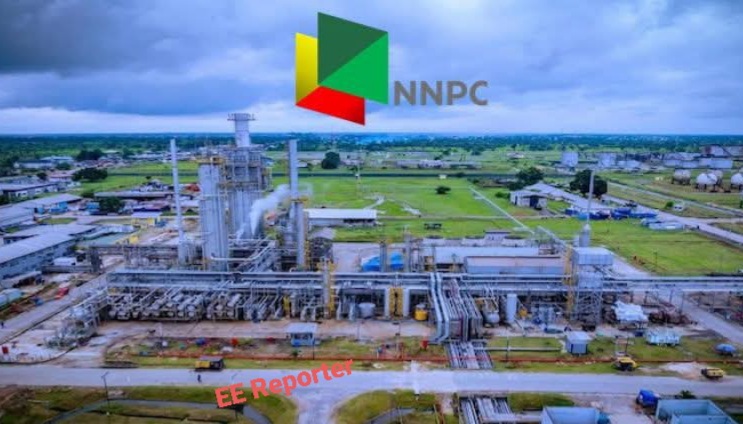
NNPC, Chinese Firms Sign MoU Towards Restart, Expansion Of Warri, Port Harcourt Refineries
The NNPC Ltd has signed a Memorandum of Understanding (MoU) with two Chinese companies, Sanjiang Chemical Company Limited and Xinganchen (Fuzhou) Industrial Park Operation and Management Co. Ltd, for collaboration through a potential Technical Equity Partnership in support of the completion and operation of the Port Harcourt and Warri Refineries.
The MoU was signed by the Group CEO, NNPC Ltd, Engr. Bashir Bayo Ojulari; Chairman, Sanjiang Chemical Company, Guan Jianzhong and Chairman of Xinganchen (Fuzhou) Industrial Park Operation and Management Co. Ltd, Bill Bi, in Jiaxing City, China, on Thursday, April 30, 2026.
Eereporter.com
The potential framework would cover completion of outstanding work at the two refineries, together with operating and maintaining both facilities to achieve best-in-class, sustainable performance. Planned expansion and upgrades would elevate both facilities to cleaner, more profitable product standards.
The potential collaboration also contemplates expanding the refineries’ petrochemical capacities and harnessing gas and downstream opportunities through the development of co-located, gas-based industrial hubs.
Speaking shortly after signing the dotted lines, the GCEO NNPC Ltd, Engr. Bashir Bayo Ojulari, described the MoU execution as a significant milestone, following more than six months of concerted engagement between the technical and management teams of NNPC and the two Chinese partners.
“All parties recognise mutually beneficial opportunities for the development and long-term sustainable profitability of NNPC’s refining assets in Nigeria, and the collective weight required for success,” Ojulari noted.

NNPC
The GCEO further stated that the MoU is a significant step on the journey towards identifying potential technical equity partner(s) to restart and expand NNPC’s refineries, and to explore opportunities in co-located petrochemicals and gas-based industries.
The MoU reflects the parties’ shared intent to progress discussions in good faith, with any definitive arrangements to follow in due course and subject to customary approvals.
-
 Crime1 year ago
Kogi Assembly Considers Law To Regulate Rent, Establish Control Board: Tenancy Law
-

 News1 year ago
Atiku Reveals Why He Failed To Pick Wike As Running Mate In 2023
-
 Akwa Ibom2 years ago
The Apostolic Church Gets New Territorial Chairman, Exco
-

 Crime1 year ago
Federal High Court Jails 2 For Vandalizing Transformer, Telecom Mast In Kogi
-
 News2 years ago
The Apostolic Church Gets New National President, Executive
-
 Akwa Ibom2 years ago
Umo Eno Commences Payment Of 80,000 Naira Minimum Wage With Arrears
-

 News1 year ago
Senator Natasha Returns To Senate With Husband Amid Seat Dispute
-
 Politics2 years ago
President Trump Changes Divorce Law, No 50% Property Shares