
Akwa Ibom
Nigerian Navy Rescues 22 Sea Rubbery Victims, Recovers Hijacked Passengers Boat in Akwa Ibom

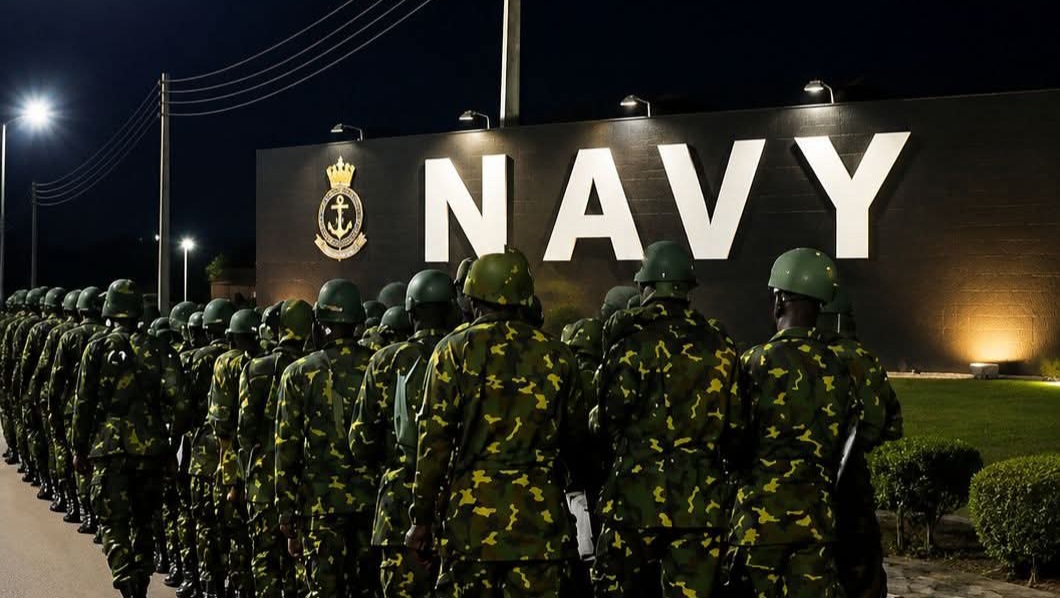
Nigerian Navy Rescues 22 Sea Rubbery Victims, Recovers Hijacked Passengers Boat in Akwa Ibom
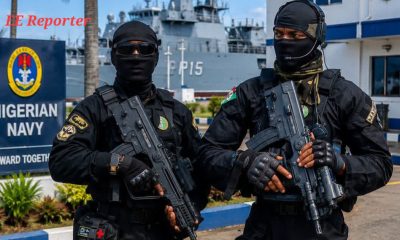
The Nigerian Navy has recorded a significant operational success against
maritime criminality with the rescue of 22 passengers following the
hijacking of a wooden passenger boat along the Calabar–Oron–Ibaka
waterway and the recovery of the hijacked vessel.
Eereporter.com
The successful operation was conducted by personnel of Forward
Operating Base (FOB) Ibaka) in collaboration with Operation Delta Safe
(OPDS) Sector 4 and the Marine Police, following the attack on a passenger
boat travelling from Henshaw Town Beach in Calabar to Utan Uyata,
Ibaka, on 11 August 2026.
The boat was reportedly intercepted by armed sea robbers shortly after
passing Enwang Community, resulting in the hijacking of the vessel and
the abduction of its passengers. Upon receipt of information on the
incident, personnel of FOB Ibaka, in coordination with the collaborating
security agencies, commenced coordinated efforts to locate the victims
and recover the hijacked boat.
The sustained response resulted in the recovery of the hijacked passenger
boat and the rescue of 11 victims who had been abandoned by the
suspected criminals at Asak-Ikang Creek. A further 11 passengers who
had earlier escaped during the attack were subsequently located and
accounted for at the OPDS Sector 4 command post, bringing the total
number of rescued and accounted-for victims to 22.
All the rescued passengers were subsequently taken to the FOB Ibaka
Sickbay for medical assessment and first aid before arrangements were
made for their safe return to Calabar alongside the recovered passenger
boat. No ransom was paid for the release of the victims.
The Flag Officer Commanding, Eastern Naval Command, Rear Admiral
Chidozie Okehie, reaffirmed the Nigerian Navy’s commitment to
sustaining robust maritime security operations, strengthening inter-
agency collaboration and leveraging timely intelligence to deny criminal
elements freedom of action along the nation’s waterways.
Nigerian Navy
The successful rescue further demonstrates the Nigerian Navy’s
determination to protect lives, safeguard legitimate maritime activities and
maintain a secure maritime environment. The Service will continue to
sustain operations in collaboration with sister security agencies and other
stakeholders to counter sea robbery, kidnapping and other forms of
maritime criminality.
Signed
Abiodun Folorunsho
Navy Captain
Director of Naval Information
Eereporter.com








Governor Eno Inspect Ibom Air’s third Airbus Aircraft in Canada
The Akwa Ibom State Governor, Umo Eno, has led a delegation comprising some state executives and members of the airline’s management team to a pre-delivery inspection at the Airbus production facility in Mirabel, Canada ahead of the formal delivery of Ibom Air’s third Airbus A220-300 aircraft,.
Eereporter.com
A statement issued by the Group Manager, Marketing and Communication of Ibom Airlines Limited, Aniekan Essienette, in Uyo on Saturday, said the inspection marked another significant milestone in the company’s fleet modernisation and growth strategy.
According to the statement, the pre-delivery inspection is part of the acceptance process before the aircraft enters commercial service. It also marks a further step in Ibom Air’s commitment to expanding capacity, strengthening connectivity and operating one of Africa’s most modern fleets.
The delegation was received by Guillaume Chevasson, Head of the A220 Programme and Chief Executive Officer of Airbus Canada.
Speaking on the significance of the event, the Chief Executive Officer of Ibom Air, Mr George Uriesi, described the inspection as a significant milestone in Ibom Air’s fleet expansion and modernisation.
He said the company remained focused on investing in modern aircraft that deliver superior operational efficiency, reliability, safety and passenger comfort as demand for air travel continues to grow.
“This pre-delivery inspection represents an important milestone in our fleet expansion programme and brings us one step closer to welcoming this aircraft to Nigeria. As demand for air travel continues to grow across our markets, we remain focused on investing in modern aircraft that deliver superior operational efficiency, reliability, safety, and passenger comfort.
“The Airbus A220 continues to be the ideal aircraft for our network strategy, and we look forward to deploying this latest addition into our network in furtherance of our growth objectives,” Uriesi said.
“This investment aligns with the ARISE Agenda and our vision of establishing Akwa Ibom as a leading aviation hub, supported by world-class infrastructure and a modern airline.
“We look forward to formally receiving this aircraft in Akwa Ibom State and to the economic opportunities that enhanced connectivity will create for trade, tourism, investment, and regional development,” Eno said.
Speaking on the partnership with Ibom Air, Guillaume Chevasson, Head of the A220 Programme and Chief Executive Officer of Airbus Canada, noted:
“We are honoured by Ibom Air’s trust in Airbus and the A220 Family. The A220 is the ideal aircraft for the airline’s fleet modernisation, thanks to its exceptional operational flexibility, fuel efficiency, passenger comfort, and performance across domestic and regional networks, and we look forward to supporting Ibom Air’s continued growth for many years to come.”
The aircraft, according to the statement, incorporates features that further support the airline’s commitment to continuous improvement in operational capability, efficiency and customer experience.
Upon completion of the delivery processes, the aircraft will be ferried to Nigeria, where it will be officially received into the Ibom Air fleet in Akwa Ibom State before commencing commercial operations.

Canada
The Airbus A220-300 is globally recognised for its advanced technology, fuel efficiency, spacious cabin design and exceptional passenger comfort. Its addition further strengthens Ibom Air’s position as one of Africa’s fastest-growing and most innovative airlines, while supporting the carrier’s long-term vision for sustainable growth and service excellence.
Eereporter.com
Akwa Ibom
Ibom Air Fleet Expansion: Gov Eno Meets SAMCO, Airbus Groups in Montreal, Engages on MRO Operations
Ibom Air Fleet Expansion: Gov Eno Meets SAMCO, Airbus Groups in Montreal, Engages on MRO Operations
Akwa Ibom State Governor, Pastor Umo Eno, has reaffirmed the State Government’s determination to ensure the full operation of the Aircraft Maintenance, Repair and Overhaul (MRO) facility at Victor Attah International Airport, Uyo, as well as its continued support for the ongoing Ibom Air fleet expansion programme.
Eereporter.com
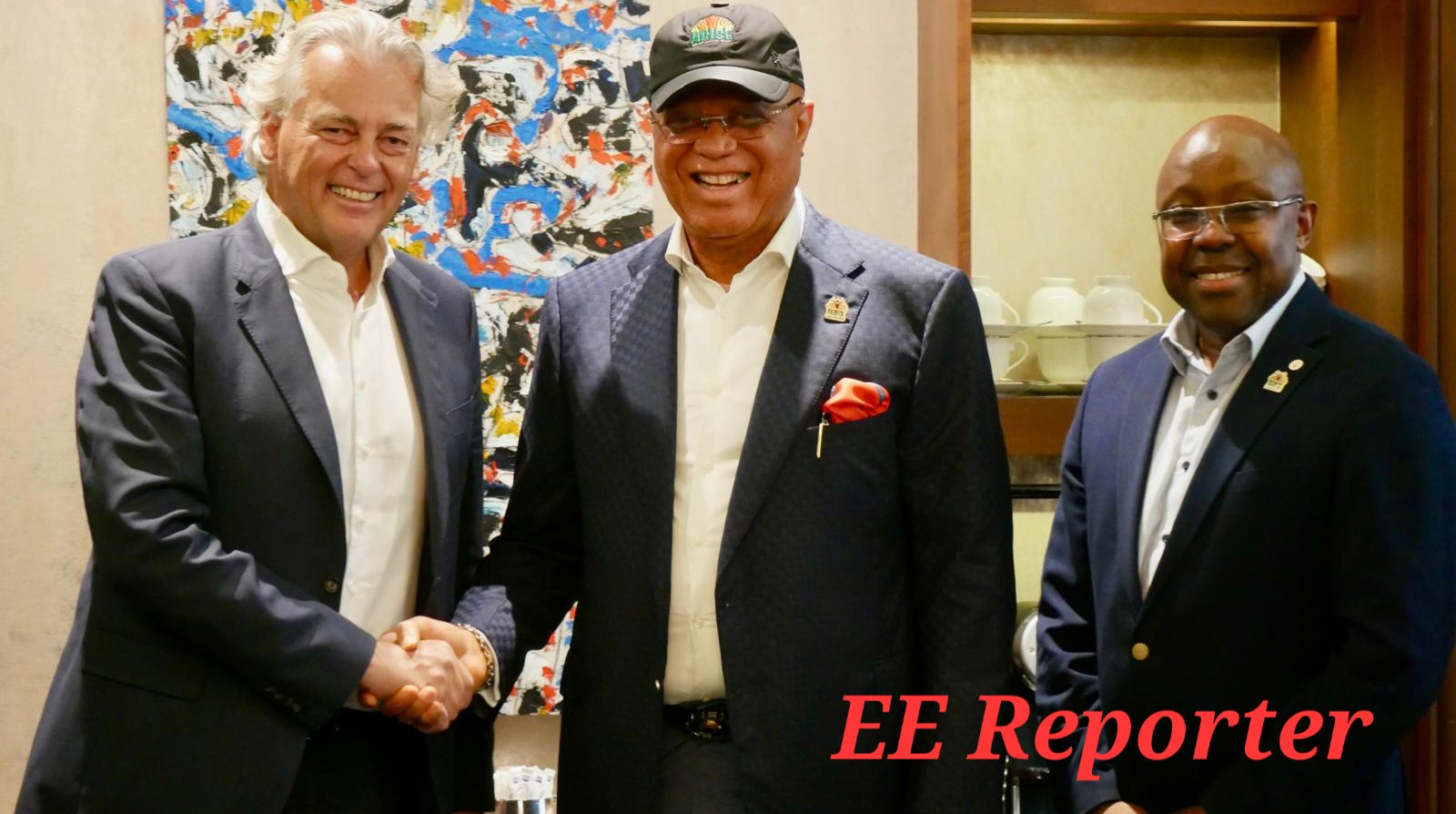
The Governor made the commitment during high-level meetings with SAMCO Group Europe and Airbus in Montreal, Canada, ahead of the Pre-Delivery Inspection (PDI) of Ibom Air’s latest brand-new Airbus A220-300 aircraft. The engagements focused on developing the technical and maintenance capabilities required to support Ibom Air’s expanding fleet and strengthen Akwa Ibom’s position in the aviation industry.
Governor Eno first met with Constant Van Shani, Chief Executive Officer of SAMCO Group Europe, to explore a strategic partnership for the management and operation of the MRO facility. He said the administration was seeking a practical partnership that would strengthen the State’s aviation infrastructure, enhance technical capabilities, create skilled employment and develop a sustainable local aviation workforce.
The Governor, who noted that his administration had made substantial financial investments in completing the MRO facility, recalled his team’s visit to SAMCO’s facility, where he said he was impressed by the company’s technical capabilities and operational standards. He stressed that the proposed relationship should go beyond conventional consultancy, with discussions covering maintenance and technical support for aircraft, particularly those in the Ibom Air fleet, as well as technical training, technology transfer and capacity building.
SAMCO Aviation Services B.V. is a Netherlands-based aviation maintenance company headquartered at Maastricht-Aachen Airport, specialising in the repair and maintenance of civil aircraft and aerospace equipment. The company operates from its facility at Horsterweg 19 in Maastricht and is part of the wider SAMCO aviation maintenance operation, which has provided aircraft maintenance services for operators in Africa. SAMCO’s Maastricht facility has also been used for the maintenance and inspection of Ibom Air aircraft, including its Airbus A220-300 fleet, underscoring its role in supporting the airline’s fleet development and technical operations in Europe and Africa.
SAMCO also presented its experience working with African airlines and highlighted the importance of developing strong local technical capabilities. Governor Eno said building indigenous aviation expertise would reduce dependence on overseas maintenance facilities, strengthen the MRO at Victor Attah International Airport and create opportunities for highly skilled aviation professionals in Akwa Ibom. Responding, SAMCO CEO, Constant Van Shani, welcomed the Governor’s commitment to the proposed partnership, saying: “Governor, we are glad to know that you are willing to work with us. We are here to get it done beyond consulting.”
In a related development, Governor Eno met with Hadi Akoum, Vice President of Sales, Africa, Airbus, and expressed appreciation to the aircraft manufacturer for its partnership with Ibom Air and its efforts to facilitate the delivery of the new aircraft. The Governor assured Airbus that the State Government remained fully committed to Ibom Air, describing the airline as a strategic economic asset to Akwa Ibom.
Governor Eno said Ibom Air was central to the administration’s plans to expand tourism, connectivity, trade and investment, stressing that “it is a forex-denominated business, and airlines must be made to function.” He said the State would continue to make the necessary strategic investments to ensure the airline remains commercially viable, operationally strong and capable of supporting the State’s wider economic ambitions.
Akoum described Ibom Air as a major Airbus customer in Africa and disclosed that Airbus currently produces about 14 aircraft monthly, with a production backlog of approximately 9,000 aircraft. He also highlighted the capabilities of the A220-300, noting its passenger capacity of about 120 and its cargo capability. The discussions further reinforced the importance of continued collaboration between Airbus, Ibom Air and the Akwa Ibom State Government as the airline expands its fleet and network.
SAMCO
Governor Eno said the engagements with SAMCO and Airbus formed part of a coordinated strategy to align Ibom Air’s fleet expansion with the development of the MRO facility, maintenance capacity, technical training and technology transfer. He said the new A220-300 would further strengthen the airline’s operations and expansion while supporting Akwa Ibom’s tourism, connectivity and broader economic development objectives.
Present at the meetings were the Ibom Air Managing Director/Chief Executive Officer, George Uriesi; members of the Akwa Ibom State Executive Council; and relevant officials of the airline.
Eereporter.com
Akwa Ibom
Governor Eno calls for democracy that Delivers institutions, opportunity and Dignity for all
Governor Eno calls for democracy that Delivers institutions, opportunity and Dignity for all
At the Yoruba Tennis Club centenary Lecture on August 6, 2026, Akwa Ibom Governor Pastor Umo Eno calls for democracy that delivers institutions, opportunity and dignity for all.
Eereporter.com
Thursday, August 6, began with a rainy morning in Lagos, South-West Nigeria. But at Onikan, within the historic precincts of the Yoruba Tennis Club, the weather was quickly overshadowed by an occasion of national significance. It was the day Akwa Ibom State Governor, Pastor Umo Eno, delivered the centenary lecture of an institution that has witnessed, and in many ways mirrored, the evolution of Nigeria’s social and political life. His subject was compelling: “Democracy and Good Governance: Renewing Hope in Challenging Times.”
This year, the Yoruba Tennis Club marks 100 years since its establishment in 1926. From an original membership of about 25, it has grown into a prestigious institution with more than 2,000 members. President Bola Ahmed Tinubu is the Patron of the Club, while Lagos State Governor Babajide Sanwo-Olu serves as Vice Patron. The membership reads almost like a roll call of the Yoruba political, professional, business and intellectual establishment, making the club one of the country’s influential civic meeting points. The club also has its own distinctive character and tradition of salutation: members greet one another with the familiar “GREETINGS,” a simple expression that reflects the camaraderie and identity of the institution.
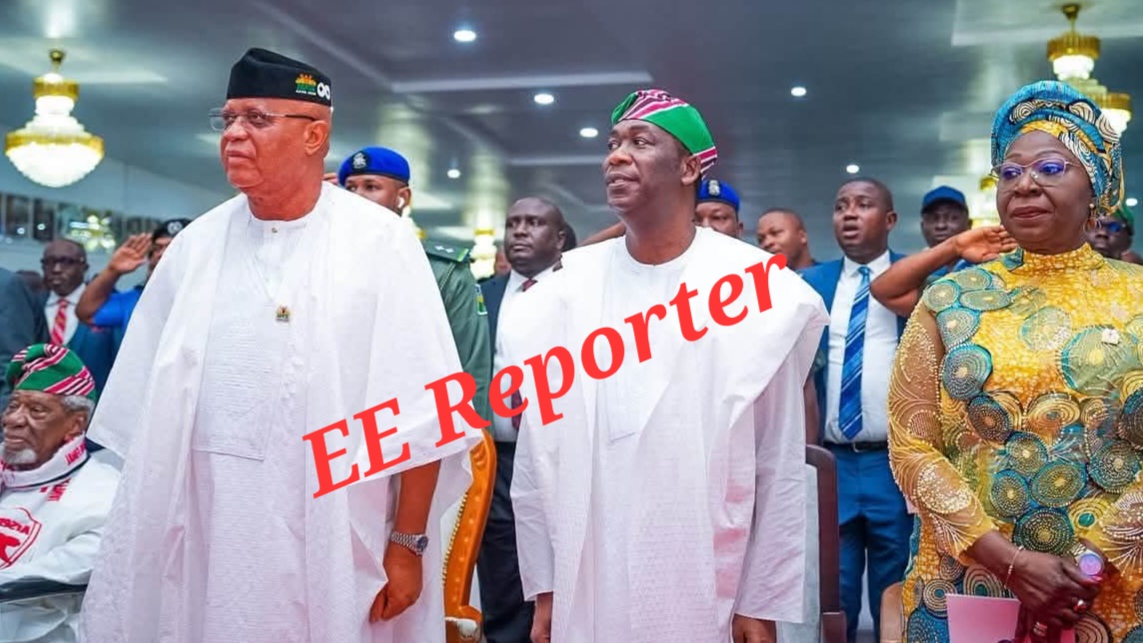
There was also something distinctive about the occasion beyond the speeches and formalities: the club’s unmistakable sartorial identity. Members appeared resplendent in white Agbada, complemented by Aso-Oke caps featuring the club’s characteristic green and red stripes. The sea of white gave the centenary gathering a striking visual identity and spoke to the club’s enduring sense of tradition, pride and belonging.
The Governor himself appeared to have read the mood and symbolism of the occasion. He arrived in a white stone-lace Agbada, complemented by his characteristic Awo-like headgear, prominently inscribed with the “ARISE” and “Renewed Hope” insignias. He arrived in the official Lexus LX 570 staff car, adding his distinctive touch to an occasion that brought together tradition, public service and contemporary politics.
The centenary has been marked by a year-long programme of activities, including a series of lectures by distinguished Nigerians. Nobel Laureate Professor Wole Soyinka delivered the first, and Governor Umo Eno followed with his August address. It was therefore more than a ceremonial lecture. It was an opportunity to place the question of democratic governance before an audience deeply familiar with Nigeria’s political, economic and institutional challenges.
The Chairman of the Yoruba Tennis Club, Bro. Chief Olawumi Gasper, Mni, said Governor Eno was chosen as keynote speaker because of his sterling performance in office, his compassionate leadership and appreciation of values associated with integrity, openness, responsibility and good character. The packed hall reflected the importance attached to the occasion. Former Akwa Ibom Governor Udom Emmanuel, Governor Sanwo-Olu, senior business figures, politicians, professionals and leaders of the club were present. Akwa Ibom also arrived in strength. The Deputy Governor of Akwa Ibom State, Senator Akon Eyakenyi; Speaker of the State House of Assembly, Hon. Udeme Otong; Senators Effiong Bob, Aloysius Etok and Ekong Sampson; Paul Usoro, SAN, and Emmanuel Enoidem, SAN; Secretary to the State Government, Prince Enobong Uwah; some members of the State House of Assembly; members of the State Executive Council; and Local Government Chairmen were among those who came out in support of the Governor. Other Akwa Ibom leaders and elders present included Atuekong Don Etiebet. The Akwa Ibom Community in Lagos also came out in large numbers to identify with and support the Governor.
Eno did not begin by recounting the achievements of his administration. Instead, he began with the story of the club itself. In 1926, African Lagosians faced exclusion from the European clubs of colonial Lagos. Rather than remain at the gate demanding admission, the founders of what became the Yoruba Tennis Club organized themselves, raised their own resources, secured land and established an institution of their own. They created rules and values that have carried the club across a century.
For Eno, that history contained a profound lesson in citizenship. The founders encountered a problem, organized around a solution, committed their own resources and built an institution designed to survive them. The fact that the club deliberately welcomed Nigerians from different backgrounds who subscribed to its values made the story even more compelling. Eno’s tribute to the founders was memorable: “Vision is common. Vision that outlives the visionary is rare.”
That became the philosophical foundation of his lecture. Nigeria, he argued, must move beyond the idea that democracy is sufficiently defined by elections. Elections are essential because they confer legitimacy, but the real test begins after the ballot boxes are closed. What does government do with the mandate it receives? How does that mandate translate into roads, schools, hospitals, jobs, security and dignity?
For the ordinary Nigerian, democracy is not experienced only at a polling station. It is experienced at the hospital, in the classroom, on the road to the farm, in the market and in the cost of feeding a family. If democratic government cannot reach those places, public confidence inevitably begins to weaken. This was perhaps the most powerful proposition in the Governor’s presentation: democracy has to be felt in the daily life of the citizen before it can be fully trusted.
From there, Gov. Eno identified five practical pillars of good governance: accountability, transparency, participation, the rule of law and equity. These are familiar terms in governance literature, but he sought to give them practical meaning through examples from Akwa Ibom. His argument was that democratic values must move from constitutional language into administrative habits.
On accountability, he cited the state’s monthly Delivery Review Sessions, where projects are examined in terms of cost, timelines and implementation. Stakeholders, journalists, civil society organizations and members of the public are invited to question officials. The importance of such a process lies not only in identifying delays or shortcomings, but in creating a culture in which public office is understood as a responsibility requiring continuous explanation.
Transparency, in turn, makes accountability possible. Citizens cannot question what they cannot see. Eno’s point was that public expenditure, procurement and government decisions must be sufficiently open to allow citizens to understand how their resources are being deployed. Without transparency, distrust grows in the spaces where information is absent.
Participation was the third element. Through town hall meetings, the Governor said, communities are given opportunities to identify their own priorities. A community may value a particular road, health centre, classroom or water project more urgently than an official in Uyo might realize. Bringing citizens into the planning process therefore improves not only democratic participation but the quality of development itself.
The principle of equity completed his argument. Government must serve the whole population, including those who did not vote for the administration in power. Development cannot become a reward for political loyalty. Once elected, a government assumes responsibility for everyone. That is one of the fundamental distinctions between campaigning for power and governing a society.
Pastor Eno then widened the lens to Nigeria’s national circumstances. He acknowledged the pressures confronting the country — economic hardship, insecurity, unemployment, infrastructure deficits and the erosion of public confidence. Yet he argued that periods of difficulty can also become moments when nations make difficult choices capable of producing long-term renewal. His assessment of President Tinubu’s economic reforms was supportive, particularly the efforts to create greater fiscal room for governments and restructure the national economy.
The Governor’s argument, however, was that macroeconomic reform only becomes meaningful when its consequences are visible on the ground. He used the transformation of a 70-hectare erosion-ravaged site in Akwa Ibom into the ARISE Palm Resort as an example. A piece of land that had represented environmental and economic liability is being converted into a major tourism asset. The lesson, he suggested, is that economic space created at the national level can become infrastructure and opportunity at the state level.
This connection between national policy and state-level delivery formed an important part of his presentation. The Governor cited Akwa Ibom’s programmes in infrastructure, social protection, agriculture, healthcare, aviation, tourism and human capital as examples of what can happen when government combines fiscal responsibility with a clear development agenda.
He spoke of the payment of more than ₦88 billion from an inherited gratuity obligation of ₦111 billion, the construction of more than 461 Compassionate Homes for vulnerable families, business grants and support for farmers and entrepreneurs. He also highlighted skills acquisition programmes and youth initiatives, arguing that economic development cannot be separated from the welfare of citizens who are most vulnerable.
His comments on young people carried a particular national resonance. Nigeria cannot continue to describe its youth as merely “leaders of tomorrow,” he argued. They are already a central part of the country’s population and economy. Their education, technical skills, digital capacity, entrepreneurial ability and access to capital must therefore be treated as immediate national priorities.
That philosophy is reflected in Akwa Ibom’s plans for Youth Development Centres across its 31 local government areas, with facilities intended to support ICT, vocational training, creativity and entrepreneurship. The real measure of those centres, however, will not be the buildings but the livelihoods and businesses they help create. Human capital becomes meaningful when training leads to productive economic participation.
Agriculture also featured in Eno’s wider development vision. His administration’s support for farmers, the Ibom Model Farms and the Tree Crop Revolution represents an effort to reconnect agriculture with commercial production and value chains. The objective is not simply to grow food but to create an agricultural economy capable of generating surpluses, processing opportunities, exports and jobs.
Perhaps the most important part of Eno’s national argument was his emphasis on continuity. Nigeria has repeatedly lost valuable time and resources when successive administrations abandon projects initiated by their predecessors. Eno’s declaration that his administration would complete inherited projects, regardless of which government began them, offers a different philosophy. His description of it as the “Finisher’s Anointing” may be colourful, but the principle behind it is serious: public projects belong to the people, not to the political personalities who initiate them.
This is where the centenary story of the Yoruba Tennis Club comes full circle. The founders did not build merely for their immediate generation. They created an institution that would outlive them. Nigeria’s leaders face the same responsibility. Roads, hospitals, schools, policies and institutions should be conceived with the next generation in mind, not merely the next election.
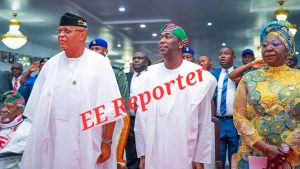
Governor Eno
Gov. Eno therefore left the audience with a message that was simultaneously political, civic and institutional. Government must be accountable, but citizens must also accept their responsibilities. Nigerians must vote peacefully, respect the rule of law, reject corruption in their daily dealings, pay taxes and insist on institutions that are stronger than the individuals temporarily occupying them. Democracy cannot be sustained by government alone.
The significance of the Yoruba Tennis Club setting was therefore impossible to miss. For a hundred years, the club has survived changes in politics, society and generations because its founders created rules and values bigger than themselves. It has become a meeting place for a substantial part of the Yoruba political-intelligentsia, business community and professional elite, while retaining a wider Nigerian identity. Its centenary provided Eno with a fitting metaphor for the task confronting Nigeria.
As he rounded off, the Governor returned to hope. But it was not the easy optimism of political speeches. His was a more demanding definition of hope: hope must have evidence behind it. It is renewed when a road is completed, a classroom functions, a doctor is available at a hospital, a young person finds meaningful work, a farmer receives support and a small business survives. In that sense, good governance is not an abstract political theory. It is the daily accumulation of small proofs that government can work.
The rain that greeted Lagos that Thursday morning had long ceased by the time the lecture ended, but the larger question Eno placed before the audience remained. Nigeria has held elections for decades. The next chapter must be about building institutions capable of delivering on the promise those elections represent. The founders of the Yoruba Tennis Club built for a century they may never see. Nigeria’s present generation must build with the same courage, not simply for the next election, but for the next generation.
Eereporter.com
-
 Crime1 year ago
Kogi Assembly Considers Law To Regulate Rent, Establish Control Board: Tenancy Law
-

 News1 year ago
Atiku Reveals Why He Failed To Pick Wike As Running Mate In 2023
-
 Akwa Ibom2 years ago
The Apostolic Church Gets New Territorial Chairman, Exco
-

 Crime2 years ago
Federal High Court Jails 2 For Vandalizing Transformer, Telecom Mast In Kogi
-
 News2 years ago
The Apostolic Church Gets New National President, Executive
-
 Akwa Ibom2 years ago
Umo Eno Commences Payment Of 80,000 Naira Minimum Wage With Arrears
-

 News1 year ago
Senator Natasha Returns To Senate With Husband Amid Seat Dispute
-

 Economy1 year ago
Kiyosaki: Is Tinubu’s Government Afraid Of Ibrahim Traore?