
News
IGP Disu Pledges Direct Advocacy For Retirees: Vows To Facilitate Pension Reform, Support For Officers’ Families

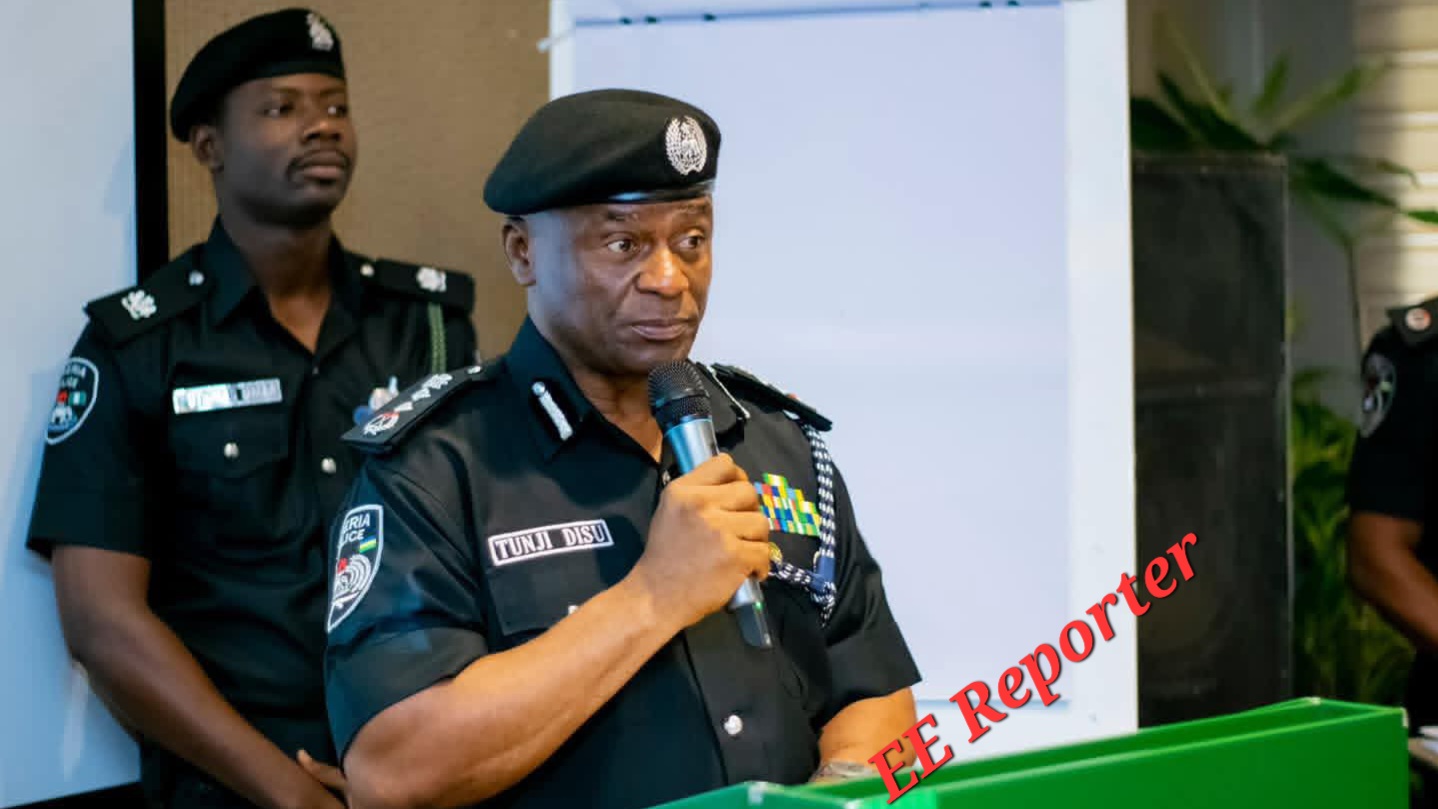
IGP Disu Pledges Direct Advocacy For Retirees: Vows To Facilitate Pension Reform, Support For Officers’ Families
The Inspector General of Police, IGP Olatunji Rilwan Disu, psc (+), NPM, met yesterday with a delegation of retired police officers to address critical welfare concerns, placing the resolution of pension and gratuity issues at the forefront of the Force’s current agenda.
During the meeting, the IGP Disu highlighted the persistent challenges surrounding pensions and salaries, identifying them as pressing matters that demand immediate attention. He underscored his administration’s determination to pursue lasting solutions and encouraged retirees to maintain a balanced perspective while the leadership navigates the necessary administrative processes.
In a landmark commitment to the welfare of the Force’s veterans, the Inspector General of Police outlined two distinct avenues to ensure retirees’ grievances reach the highest levels of government: first, through an executive liaison mechanism, retirees are encouraged to submit petitions directly to the IGP, who pledged to personally present these documents to the President in advocacy for the signing of the pension bill; second, by guaranteeing security for civic expression, the IGP assured that retirees’ rights will be respected and that full protection will be provided should they choose to embark on peaceful demonstrations to press their demands.
IGP Disu
As a gesture of appreciation for their years of dedicated service, IGP Disu also announced plans to collaborate with relevant officers to improve employment opportunities for the children of retired officers during future recruitment exercises.
Concluding the meeting, IGP Disu emphasized that the dignity and financial security of retired officers are non-negotiable. IGP Disu also emphasized that the Force continues to care for its members, even after they retire from service.
DCP ANTHONY OKON PLACID psc (+), mni
Force Public Relations Officer
Force Headquarters, Abuja
14th April 2026







News
John Momoh Calls For Stronger Diaspora Partnerships To Drive Nigeria’s Healthcare Transformation

John Momoh Calls For Stronger Diaspora Partnerships To Drive Nigeria’s Healthcare Transformation
The Chairman and Chief Executive Officer of Channels Television, Mr. John Momoh, has called for stronger collaboration between Nigeria and its diaspora to harness global expertise for national development, particularly in transforming the country’s healthcare system.
Eereporter.com
Delivering the keynote address at the 2026 National Diaspora Day Celebration and National Diaspora Merit Awards, Momoh described the event as a celebration of excellence, patriotism, and the enduring bond between Nigeria and its citizens across the world.
Said he: “No matter how far a river flows, it never forgets its source,” hence the saying aptly captures the Nigerian diaspora, whose remarkable achievements across the globe continue to reflect an unwavering connection to their homeland.
He observed that Nigerians are making extraordinary contributions to healthcare and other critical sectors around the world, demonstrating that the country is not short of talent but must create the right opportunities for that talent to contribute meaningfully to national development.
Commending the Nigerians in Diaspora Commission (NiDCOM) for providing a platform that connects Nigerians abroad with development initiatives at home, Mr. Momoh noted that “when knowledge travels back home, everyone wins.”
He emphasised that healthcare should no longer be viewed merely as a social service but as critical national infrastructure, stressing that building an effective healthcare system requires sustained collaboration among government, the private sector, healthcare professionals, and the diaspora.
According to him, Nigeria must move beyond celebrating the achievements of its healthcare professionals abroad to forging practical partnerships that promote knowledge exchange, skills transfer, research collaboration, and improved healthcare delivery.
He urged stakeholders to harness the multiplier effect of diaspora engagement, noting that this is how nations grow and achieve sustainable development.
Describing human capital as the nation’s greatest asset, Momoh remarked that “every nation’s greatest resource is not what lies beneath the ground, but what lives in its people.”
He added that his optimism about Nigeria remains unshaken, not because the country is without challenges, but because of the resilience, innovation, and determination of its people.
Addressing Nigerians in the diaspora, he thanked them for representing the country with distinction and for flying the Nigerian flag through excellence in their various professions.
He reminded them that success comes with responsibility and that patriotism is measured not only by words but by meaningful contributions to national development.
The veteran Broadcaster also encouraged young Nigerians to seize the opportunities available to them, stressing that true success is measured not only by personal achievements but by the opportunities created for others.
He congratulated recipients of the National Diaspora Merit Awards, describing the honour as recognition of excellence, sacrifice, and outstanding service to the nation.
He urged the awardees to continue opening doors for others while serving as worthy ambassadors of Nigeria’s values and aspirations.

Just In
He concluded by calling on all stakeholders to build trust, strengthen partnerships, and translate the expertise of Nigerians in the diaspora into practical solutions that will build a resilient healthcare system, improve the lives of citizens, and accelerate national development.
E-Signed
Abdur-Rahman Balogun
Head, Media, Public Relations and Protocols Unit,
(NiDCOM).
Eereporter.com

Olukoyede Assures Staff Of Enhanced Welfare And Career Progression In Their 20th Anniversary
The Executive Chairman of the Economic and Financial Crimes Commission, EFCC, Mr. Ola Olukoyede has expressed the resolve of his administration to continuously enhance welfare of staff and create room for career progression within the Commission.
Eereporter.com
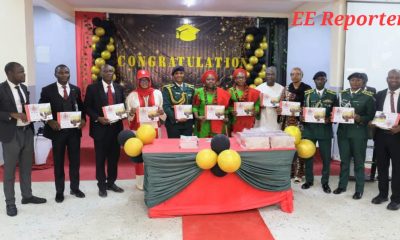
He gave this assurance at the 20th Anniversary Ceremony of the EFCC Detective Inspector Course One which took place at the Commission`s Academy in Karu, Abuja.
Olukoyede who spoke through his Chief of Staff, Commander of EFCC, CE Micheal Nzekwe stated that the Executive Chairman was always thinking of various ways to better the lives of his staff.
“The Executive Chairman is very interested in staff welfare. He is always thinking of what is next for staff, he is always talking about how the lives of staff are better in terms of welfare so that they are not distracted. In every system, career progression is something that is very important and I am glad many of you have improved yourself. As for the conversion thing that the Executive Chairman promised, it is as good as a done deal. Try as much as you can to be diligent and committed. Do not be an enemy to yourself because I see many of you becoming Chairman and Director. Take your hands away from anything that will discredit you, especially corruption”, he said.
The Director of Administration and Human Resources, Commander of EFCC, CE Femi Gbarufu recalled how the journey of the celebrants started 20 years ago.
He added that attaining 20years of service out of 35years was very commendable and further urged them to be good ambassadors of EFCC as many of them are already taking up leadership positions already.
In his goodwill message, the Director of Investigation, Commander of EFCC, CE Abdulkarim Chukkol reminded the celebrants that becoming the first set of the EFCC Inspectorate Cadre means that they are pace- setters for all sets that are coming behind, encouraging them to be of good character and role models.
“When they say course one, it means number one, so you have set the pace for others coming behind. 20 years is actually a lot, any action you take in the course of your work, think of your family and loved ones. Anyone here can be a Chairman, I wish you God`s guidance and congratulations once again” he said.
The Acting Commandant of the EFCC Academy, Assistant Commander of EFCC, ACE,1 Joseph Ogwiji while addressing the celebrants stated that he was part of their training exercise which makes him familiar with their growth and progress. He encouraged them to keep upholding the tenets of integrity by abiding by their oath of service “because when an oath is broken it fights against you and when you abide by it, it works for you.
Also delivering his goodwill message, the Head, Media and Media and Publicity and Spokesperson of the EFCC, Deputy Commander of the EFCC, DCE Dele Oyewale told the celebrants that “in the journey of life, there is a position that is better than number one and the position is that of an overtaker, he urged them to continually equip themselves with excellence and integrity so that they are not overtaken.
Oyewale added that excellence should be guided jealously, encouraging officers to continually challenge themselves by letting the only competition be with themselves “as the nation is waiting for you to do well”.
In a welcome address, the Course Governor, Bala Mohammed appreciated the “EFCC for shaping, testing, challenging, refining and providing the opportunities to serve the nation through the Commission as we have evolved from young recruits into mature, responsible and respected officers.
He expressed sincere appreciation to the Executive Chairman for the recent housing initiative that enabled qualified staff to acquire homes through a transparent and rigorous ballot process, an initiative that transformed the lifelong dreams of many officers into reality.

Students
“We also thank the Chairman for the recent conversion exercise, which if followed through, many deserving officers, including members of this course, will be given opportunities for career progression. These commendable initiatives reflect a leadership approach that recognizes values, nurtures and invests in the growth and development of its personnel” he said.
The Anniversary provided opportunities for all the course members to come together, share experiences and forge a stronger union. Awards were given to the Executive Chairman, Chief of Staff to the Executive Chairman, Director of Administration and Human Resources, Director of Investigation, Spokesperson of the Commission and Commandant of the EFCC Academy.
Eereporter.com
News
National Diaspora Day: Experts Advocate Mentorship, AI Skills, Healthy Living To Empower Nigeria

National Diaspora Day: Experts Advocate Mentorship, AI Skills, Healthy Living To Empower Nigeria
Experts from the fields of healthcare, education, technology, media, philanthropy, sports and the Nigerian diaspora have called for increased mentorship, investment in young people, the responsible use of artificial intelligence (AI), and healthy living as critical pillars for empowering Nigerian youth and accelerating national development.
Eereporter.com
The call was made during a panel discussion at the 2026 National Diaspora Day Youth Empowerment Summit, organised by the Nigerians in Diaspora Commission (NiDCOM) with the theme, “Harnessing Global Diaspora Medical Expertise to Strengthen Local Health Systems for National Development.”
Moderated by Hon. Bobby-Diggi Olisa, Youth Development Expert, Canvas Institute, New York, USA, the session brought together accomplished professionals from Nigeria and the diaspora to discuss mentorship, health advocacy, innovation, leadership and youth empowerment.
The panelists included Prof. Bisi Ademuyiwa, Breast Medical Oncologist at Washington University School of Medicine in St. Louis and Founder of Rooted in Naija; Nnoruka Kenechi, Esq., Assistant Commander General of Narcotics, National Drug Law Enforcement Agency (NDLEA); Ms. Morenike Eniola Olasebikan, Clinical Pharmacist and Founder of Ribbon Rouge Foundation, Lagos; Ejimofor Anosike, Nigerian-American basketball star and founder of the Carriage Foundation; Dr. Faith Adole, Founder and Chief Executive Officer of U-VOL Foundation; Mr. Kierian Umeayo, Veteran Broadcaster; Christopher Okoigun, Group Head, Branding and Communications, ARCO Group; and Dr. Emiri Odogwu, Chief Executive Officer of Cecy Intelligence.
The discussion focused on mentorship, leadership, health advocacy, innovation, artificial intelligence and youth development.
Speaking on mentorship, the panelists stressed that Nigerians in the diaspora have a vital role to play in supporting young people through mentorship, sponsorship and professional networking. They encouraged participants to seek mentors, remain teachable, and use social media responsibly to build meaningful careers and become responsible leaders.
The panel also highlighted the importance of physical and mental well-being, urging young Nigerians to prioritise balanced nutrition, regular exercise, adequate sleep and mental health support as essential foundations for personal and professional success.
Speaking on the future of work, Dr. Faith Adole emphasised that artificial intelligence should be embraced as a tool to enhance productivity rather than replace human talent.
She urged young Nigerians to acquire AI skills and leverage the technology to strengthen their existing competencies and remain competitive in the rapidly evolving global economy.
Other panelists encouraged participants to discover their unique strengths, become solution providers, and continuously develop future-ready skills that will position them for success.
The experts further underscored that investing in people remains the most sustainable path to national development, calling for greater support for education, volunteerism, skills acquisition, and inclusive opportunities for young Nigerians.
Participants were reminded that lasting national transformation begins with empowering young people through knowledge, mentorship, innovation, and stronger collaboration between Nigeria and its diaspora.

NiDCOM
The interactive session concluded with a renewed commitment by the panelists to continue supporting initiatives that equip Nigerian youth with the skills, networks, and confidence required to excel globally while contributing meaningfully to Nigeria’s development.
E-signed
Abdur-Rahman Balogun, (mnipr)
Director, Media, Public Relations and Protocols, NiDCOM, Abuja.
-
 Crime1 year ago
Kogi Assembly Considers Law To Regulate Rent, Establish Control Board: Tenancy Law
-

 News1 year ago
Atiku Reveals Why He Failed To Pick Wike As Running Mate In 2023
-
 Akwa Ibom2 years ago
The Apostolic Church Gets New Territorial Chairman, Exco
-

 Crime1 year ago
Federal High Court Jails 2 For Vandalizing Transformer, Telecom Mast In Kogi
-
 News1 year ago
The Apostolic Church Gets New National President, Executive
-
 Akwa Ibom2 years ago
Umo Eno Commences Payment Of 80,000 Naira Minimum Wage With Arrears
-

 News1 year ago
Senator Natasha Returns To Senate With Husband Amid Seat Dispute
-
 Economy1 year ago
Kiyosaki: Is Tinubu’s Government Afraid Of Ibrahim Traore?