
Akwa Ibom
How Governor Umo Eno Creating Cities Out Of A City

How Governor Umo Eno Creating Cities Out Of A City
How Governor Umo Eno creating cities out of a city. On Dominic Utuk Avenue in Uyo, the Akwa Ibom State capital, where a menacing erosion gully once swallowed land, livelihoods and hope, a new geography has emerged.
It is not merely a construction project; it is an audacious reimagining of space and the recreation of the biblical “City Made of Gold”. The ARISE Palm Resort standing on the space today is a proof that vision, when matched with execution, can convert ecological scars into economic signatures.
Before bulldozers progressively arrived the site, the 70–71 hectares were a troubled landscape—deep ravines, criminal hideouts, and advancing erosion threatening nearby public and private infrastructure. What could have remained an environmental liability has instead become an engineered ecosystem, courtesy of the visionary leadership of the Akwa Ibom State Governor, Pastor Umo Eno.
At the construction site of the “City” which unarguably is the first of its kind in Nigeria, ten to twelve metres of unstable earth have been excavated and replaced. A massive drainage control tunnel—about 3.5 metres high and 6 metres wide—now channels water responsibly. This is not beautification; it is environmental surgery, and the narrative shift from danger zone to economic citadel sends a powerful development message: decay is not destiny.
At the center of the resort is a cynosure of a Palm tree, which is both symbolic and instructive. This, perhaps, explains why Palm forms part of the name. In local culture, the palm tree represents resourcefulness—every part productive, every yield valuable. In similar fashion, the resort has been structured so that each facility—sports, hospitality, retail, conferencing, entertainment—becomes a revenue stream.
The foregoing implies that the ARISE Palm Resort is not an isolated beautification effort. It is a coordinated strategy aligning erosion control, tourism development, employment generation, renewable energy adoption and revenue expansion within a single framework. Few public projects attempt such multi-layered integration.
To understand the scale, one must see the resort not as a leisure park but as a multi-sector economic city. At its heart lies a nine-hole golf course built across hills, slopes and a bridge that spans a water channel—challenging terrain that meets international sporting standards.
Around it radiate villas, apartments, banquet halls, exhibition galleries, sports complexes, retail spaces and waterfront attractions. This is urban planning within a single perimeter.
Additionally, the economic projections are striking. When fully operational, the resort is expected to generate between ₦22 and ₦27 billion annually in internally generated revenue. In an era where subnational governments struggle with fiscal sustainability, this single development could significantly strengthen the state’s revenue base and foreign exchange inflows through tourism and events.
But macroeconomics often hides the human pulse. During construction alone, about 2,000 direct jobs were created, with an estimated 10,000 indirect engagements across supply chains. If each worker supports an average family of four, the livelihood impact extends to tens of thousands. Bricklayers, welders, ICT experts, gardeners, food vendors, POS operators—an entire micro-economy found oxygen.
Expressing her excitement about the all-in-one project, Grace Etim, a food vendor at the site confided thus: “I used to worry about feeding my children,” . “Now, lunch hour feels like harvest time.” Another artisan admitted candidly that steady site work kept many young men away from destructive paths. Development, in this sense, became a social stabiliser.
Significantly, the execution leaned heavily on local content. No expatriates dominated the workforce. Nigerian professionals—about 75 percent from Akwa Ibom—interpreted, developed and delivered the governor’s vision. It is infrastructure built by indigenous competence, reinforcing confidence in local capacity.
At the resort, power is not an issue as energy sustainability forms another pillar that makes the center unique and distinctively different. A 1.5-megawatt solar farm powers the complex, complemented by a dedicated public electricity line and standby generators. This layered power architecture reduces vulnerability and aligns with global hospitality standards where uninterrupted service is non-negotiable.
Again, security and institutional presence further reinforce investor confidence. With a police post, fire service station, clinic, pharmacy, bank, and 24/7 CCTV control room, the resort functions like a self-contained municipality. It is leisure fused with governance infrastructure—order embedded within recreation.
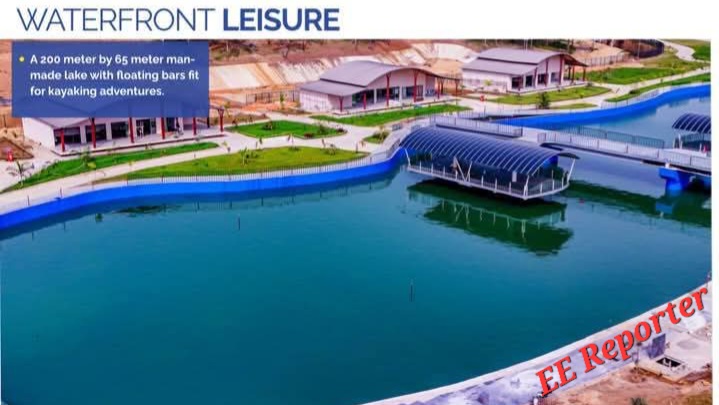
The artificial lake, stretching about 2.6 kilometres in its expanded design, introduces aquatic tourism—floating bars, canoe rides and planned electric boats. Waterfront dining and landscaped walkways extend over 1.5 kilometres, encouraging family recreation and wellness culture. It is environment curated as experience.
Sports tourism is another strategic layer. Beyond golf, other sporting activities that will take place at the resort include football, tennis, basketball, volleyball, badminton, squash, bowling, gymnastics and yoga. With a 1,500-capacity banquet hall expandable toward 2,000 seats and six breakout rooms, the resort positions Uyo as a conference and events destination capable of hosting national and international gatherings.
Quite commendable is the proximity of the resort to the Victor Attah International Airport. Delegates can land and arrive at a world-class leisure and conference environment within minutes. In tourism economics, accessibility determines viability. Here, geography cooperates with vision.
The residential component—20 luxury apartments (15 two-bedroom and five three-bedroom units) with smart-room features and curated services—signals long-stay hospitality potential. The Phase Two’s additional villas further amplify revenue streams and property value appreciation within the axis.
Critics may call it ambitious. Supporters may call it transformative. But its structural logic is undeniable: creating an attraction that multiplies value across sectors—agriculture (through food supply), transport, retail, entertainment, real estate and professional services. The multiplier effect is already visible in surrounding communities.
Importantly, the resort rebrands Uyo psychologically. Cities grow not only by population but by perception. A destination city attracts conferences, destination weddings, sporting tournaments and cultural festivals. Each event translates into hotel bookings, restaurant bills and transport fares.

How Governor Umo Eno Creating Cities Out Of A City
For Governor Umo Eno, this is more than bricks and landscaping. It is governance as place-making. By reclaiming a threatened terrain and converting it into a revenue-yielding asset, he demonstrates how leadership can create cities within cities—self-sustaining enclaves that relieve pressure on government finances while uplifting citizens.
Ultimately, the ARISE Palm Resort is a statement that development need not be incremental; it can be catalytic. From ravine to revenue hub, from erosion site to economic citadel, the transformation challenges conventional limits of subnational ambition.
In the final analysis, the ARISE Palm Resort is less about luxury and more about leverage. It leverages reclaimed land into revenue, recreation into employment, and vision into measurable economic value.
In doing so, it offers a template for how bold subnational leadership can indeed create cities out of a city—transforming geography into growth and aspiration into architecture. This is what the Arise Agenda of Governor Umo Eno represents- leadership with a human face.
Venerable Richard Peters is a Public Relations manager and writes from Uyo.








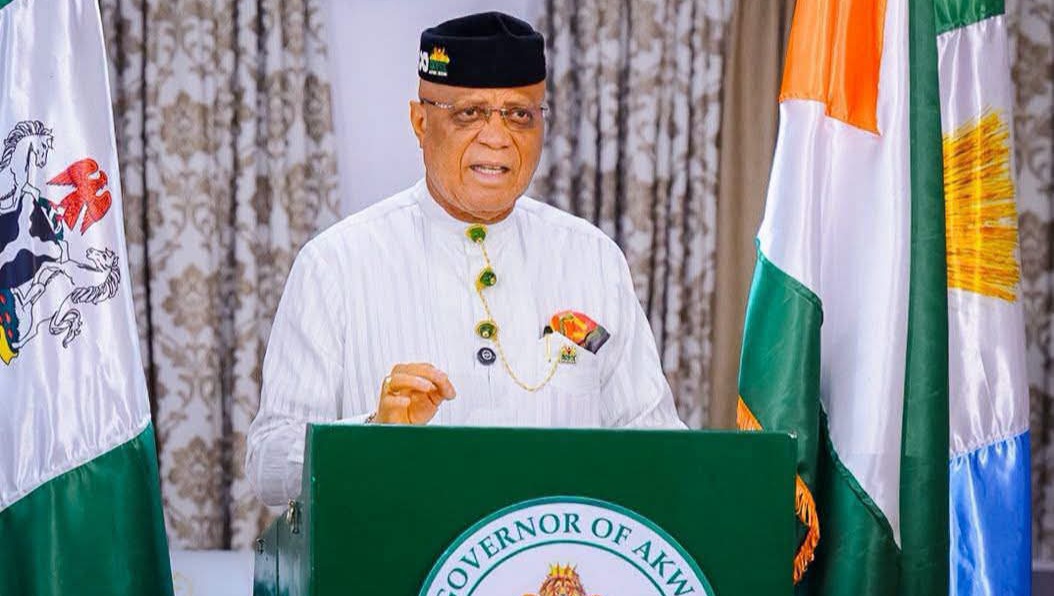
World Teachers’ Day: Governor Umo Eno Declares October 5 Teaching-Free Day in Akwa Ibom
The Akwa Ibom State Government, in collaboration with the Nigerian Union of Teachers (NUT), Akwa Ibom State Wing, has declared Monday, October 5, 2026, a teaching-free day across the state to enable teachers to participate fully in the 2026 World Teachers’ Day celebration.
Eereporter.com
The special celebration will take place at the Uyo Township Stadium by 11:00 a.m., with the Executive Governor of Akwa Ibom State, Pastor Umo Eno, Ph.D., as the Special Guest of Honour.
The event will be held under the theme: “Standing with Teachers: 60 Years of Protecting the Profession, Advancing its Status and Shaping our Futures.”
According to the state government, all public primary and secondary schools across Akwa Ibom will be closed on Monday to allow teachers from the 31 Local Government Areas to attend the celebration.
The government said the occasion would provide an opportunity to honour and appreciate teachers for their contributions to education, human capital development and the overall progress of the state.
It also reaffirmed the commitment of the Umo Eno-led administration to improving teachers’ welfare, professional development, dignity and working conditions.
The government highlighted its interventions in school infrastructure, teacher recruitment and development, human capital development, teachers’ welfare and the provision of conducive learning environments.

Umo Eno
It described education as a major pillar of the ARISE Agenda, stressing that teachers remain central to the success of the education system and the development of the next generation.
The state government also commended the Nigerian Union of Teachers for its partnership in promoting industrial harmony, professional excellence and the dignity of the teaching profession in Akwa Ibom.
The government called on teachers, education stakeholders, parents, students and members of the public to join in celebrating teachers and recognising their contributions to the development of Akwa Ibom State and Nigeria.
Eereporter.com

Gov Eno Flags Off Ikot Ekpene International Market, Targets Trade, Jobs, Economic Growth
Akwa Ibom State Governor, Pastor Umo Eno, has officially unveiled the design and performed the groundbreaking ceremony for the construction of the Ikot Ekpene International Market, describing the project as a strategic investment in trade, employment and economic development.
Eereporter.com
The ceremony, held on Wednesday, September 30, as part of activities marking the 39th anniversary of Akwa Ibom State, took place in Ikot Ekpene Local Government Area.
Speaking at the event, Governor Eno said the project demonstrated his administration’s commitment to delivering tangible infrastructure across the state.
He recalled earlier questions from the opposition regarding the number and location of the 39 projects promised as part of the anniversary activities.
“When we first started, the opposition asked, ‘Where are the 39 projects?’
“Today, we can gladly tell them to come and see,” the Governor said.
Governor Eno explained that the project was not merely about constructing a market but about investing in the economic future of Akwa Ibom State.
“Today, we are not just laying a foundation or turning the sod for this market; we are laying a foundation for prosperity, building infrastructure for opportunities, and creating a platform upon which our traders, entrepreneurs, artisans, manufacturers, and young people can build their dreams,” he said.
Also speaking, the Commissioner for Trade and Investment, Captain Iniobong Ekong (Rtd.), said the project reflected the administration’s efforts to position Akwa Ibom as a hub for trade, tourism and industrialisation.
According to him, the first phase of the market comprises 30 blocks of double-deck structures containing 108 shops, alongside two warehouses, restaurants, cold rooms, a police station, asphalt and concrete roads.
Ekong said the strategic location of the market would attract traders and customers from neighbouring states and beyond, particularly Cross River, Abia and Rivers states, as well as Cameroon.
“Upon completion, this market is going to generate income and revenue, create employment, and connect us with the trade hubs of the Gulf of Guinea,” he said.
The Director-General of Campaigns, Ambassador Chief Assam Assam (SAN), commended Governor Eno for initiating the project, noting that its strategic location would make it accessible to communities across the state.
He recalled the Governor’s earlier promise to establish an international market in Ikot Ekpene, describing the project as the fulfilment of that commitment.
“I remember that the Governor was in Ikot Ekpene Stadium when he said he was going to build an international market in Ikot Ekpene. This market is this Governor’s dream child,” Assam said.
Speaking on behalf of stakeholders in the area, Senator Emmanuel Ibokessien said the project was conceived by the people of Ikot Ekpene in 2010 but remained unrealised through successive administrations.
He commended Governor Eno for actualising the project.
“This project started in 2010 when it was conceived by the people of Ikot Ekpene. And through three administrations, this project did not see the light of day, but when you came with the finisher’s anointing, this project is now actualised,” he said.
Earlier, the Chairman of Ikot Ekpene Local Government Area, Hon. Elder Aniefiok Nkom, expressed appreciation to Governor Eno for commencing the long-awaited project.
Nkom recalled previous discussions on the economic importance of the market, noting that its location was expected to redirect commercial traffic and attract traders who ordinarily travel to other commercial centres.
He described the Governor as “a man of his word,” saying the people of Ikot Ekpene were excited by the commencement of the project.
Ikot Ekpene International Market
The Paramount Ruler of Ikot Ekpene Local Government Area, His Royal Majesty, Okuku Okon Udo Ukut, also expressed gratitude to the Governor, describing the project as a significant development for the area.
Upon completion, the Ikot Ekpene International Market is expected to strengthen commercial activities, create employment opportunities and expand Akwa Ibom State’s trade links with neighbouring states and the wider Gulf of Guinea region.
Eereporter.com
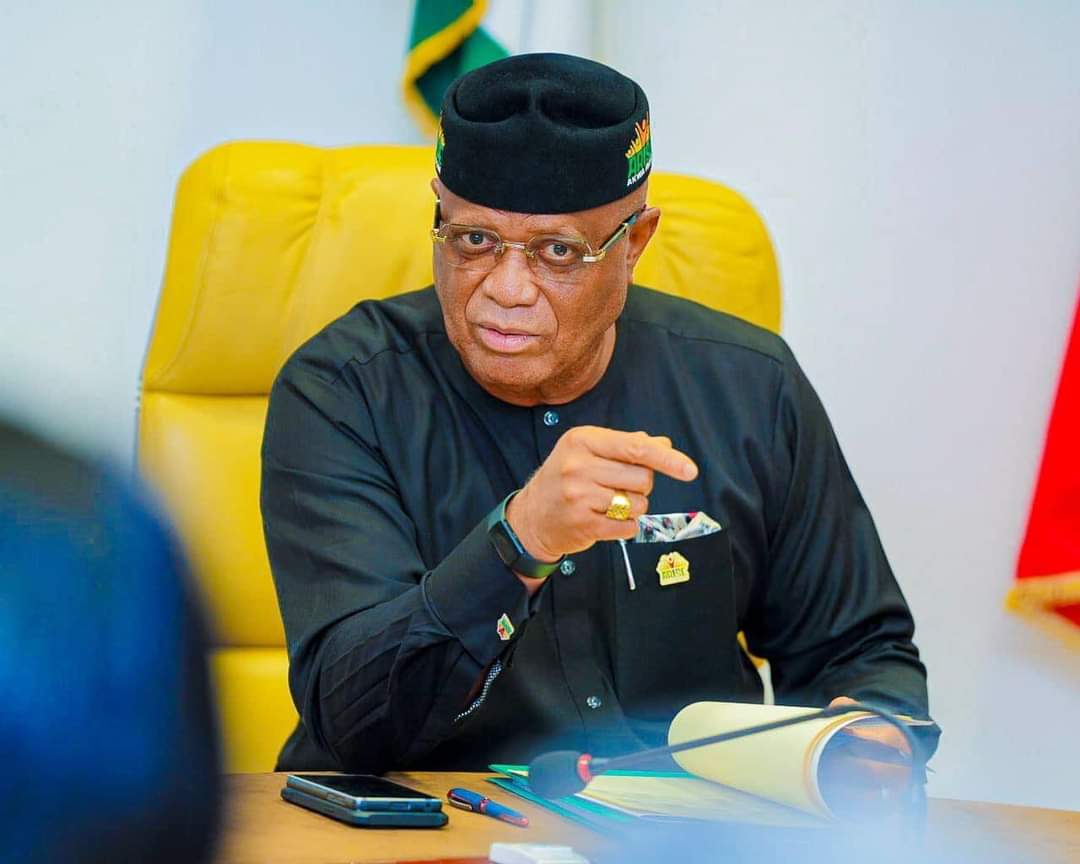
2026 NECO: Akwa Ibom Government Rejects ‘False’ Ranking, Says 83 Centres’ Results Pending
The Akwa Ibom State Government has dismissed as false and misleading a report circulating on social media which purportedly ranked the state among the lowest-performing states in the 2026 National Examinations Council (NECO) results.
Eereporter.com
The State Commissioner for Information, Rt. Hon. Aniekan Umanah, said the report was based on a performance chart that did not represent the official data released by NECO.
Umanah explained that although NECO released the 2026 examination results on September 24, 2026, the performance chart published by Premium Times was not an official NECO document, contrary to the impression created by the publication.
According to the Commissioner, while the published chart placed Abia, Ebonyi and Ekiti States first, second and third respectively, the official NECO data identifies Kano, Lagos and Oyo States as the first, second and third-ranked states.
He further disclosed that NECO was yet to release the results of 83 out of the 214 examination centres operated by public schools in Akwa Ibom State.
He said the examination body was still completing the sorting and verification of the statutory accreditation status of the affected centres.
Umanah therefore described any attempt to rank or assess the overall performance of Akwa Ibom at this stage as premature, noting that the outstanding results could affect the state’s final performance assessment.
The Commissioner urged media organisations to exercise greater diligence when reporting examination statistics, particularly where official results are still being processed.
He reaffirmed the commitment of the administration of Governor Umo Eno to the development of education, noting that the sector remains a major priority under the ARISE Agenda.
Umanah said the 2026 Approved Budget provides more than ₦35 billion for education, while ₦5.9 billion has been released to the State Universal Basic Education Board (SUBEB) for basic education intervention projects for 2025 and 2026.
He added that the state government had continued to construct model primary schools across the state to provide pupils with conducive learning environments.
According to him, the government has also paid bursaries to students and covered examination fees for candidates sitting for Placement Examinations, the Basic Education Certificate Examination (BECE), National Business and Technical Examinations Board (NABTEB) examinations and the West African Senior School Certificate Examination (WASSCE).
Beyond infrastructure and institutional support, Umanah said Governor Umo Eno had continued to provide direct assistance to young people pursuing higher education.
He cited the Governor’s recent approval of full overseas tuition support for a young graduate to pursue a master’s degree abroad, as well as an earlier scholarship awarded to a young law graduate from the Government Children’s Home to enable her pursue a master’s degree overseas.
The Commissioner said the interventions demonstrated the administration’s commitment to expanding access to quality education and creating opportunities for young Akwa Ibom people to pursue their academic and professional aspirations.
Umo Eno
Umanah consequently urged members of the public to disregard the Premium Times publication and similar claims based on the purported performance chart, stressing that they do not reflect the official NECO data currently available.
He advised the public to rely on verified and authoritative sources, particularly information released by NECO, for accurate updates on the 2026 examination results.
Eereporter.com
-
 Crime1 year ago
Kogi Assembly Considers Law To Regulate Rent, Establish Control Board: Tenancy Law
-

 News2 years ago
Atiku Reveals Why He Failed To Pick Wike As Running Mate In 2023
-

 Akwa Ibom2 years ago
The Apostolic Church Gets New Territorial Chairman, Exco
-

 Crime2 years ago
Federal High Court Jails 2 For Vandalizing Transformer, Telecom Mast In Kogi
-
 News2 years ago
The Apostolic Church Gets New National President, Executive
-
 Akwa Ibom2 years ago
Umo Eno Commences Payment Of 80,000 Naira Minimum Wage With Arrears
-

 News2 years ago
Senator Natasha Returns To Senate With Husband Amid Seat Dispute
-

 Economy1 year ago
Kiyosaki: Is Tinubu’s Government Afraid Of Ibrahim Traore?