
News
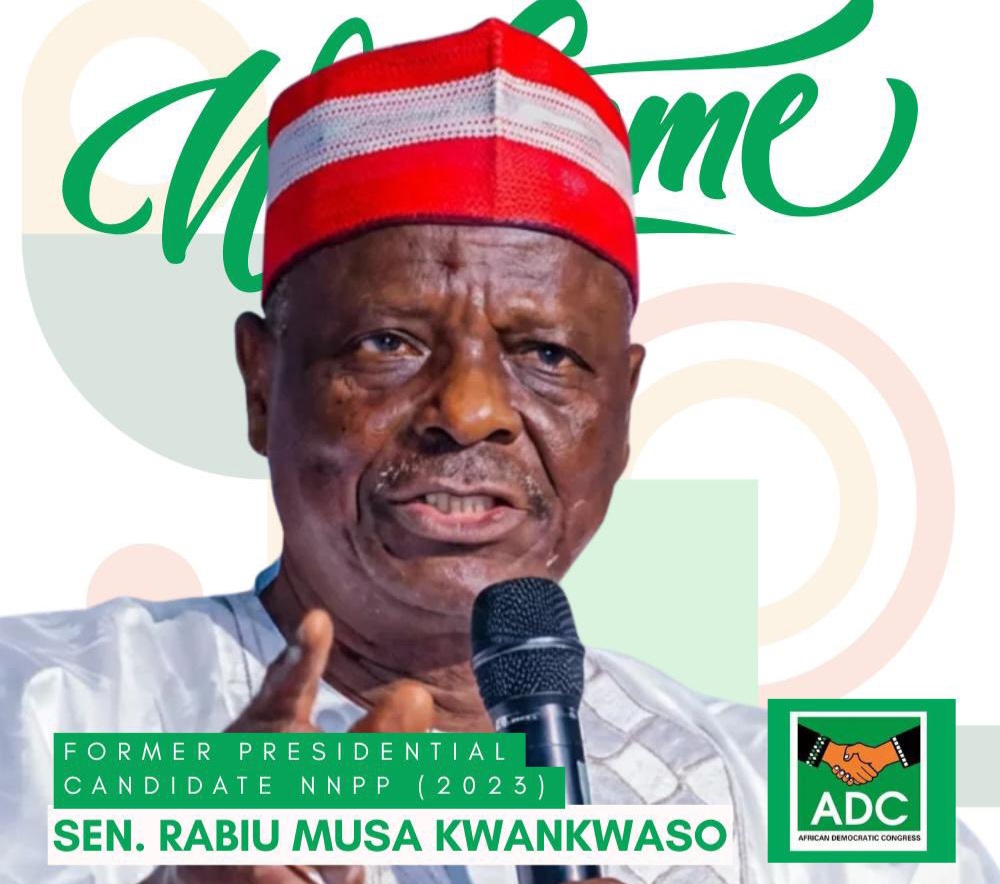
ADC Receives Kwankwaso “The Game Changer” To The Party

ADC Receives Kwankwaso “The Game Changer” To The Party
Kwankwaso the Former Kano Governor Urges all followers to join party. Party online database experiences surge in last 24 hours.
The African Democratic Congress (ADC) has welcomed the defection of former Kano State Governor and NNPP’s 2023 presidential candidate, Senator Rabiu Musa Kwankwaso, describing him as a “game-changer” whose move signals a growing coalition for change ahead of future elections. In a statement by its National Publicity Secretary, Mallam Bolaji Abdullahi, the party said Kwankwaso has directed his supporters nationwide to join the ADC, a development already reflected in a surge of registrations on the party’s online platform within 24 hours.
The full statement read:
The African Democratic Congress (ADC) warmly welcomes the decision of former Governor of Kano State and Presidential Candidate of the NNPP in the 2023 General Election, Senator Rabiu Musa Kwankwaso, to join our party at this important moment in our country’s journey.
This is reflects a growing recognition that Nigeria needs a new direction, and that the time has come for leaders and citizens alike to come together around a credible alternative that puts people first.
Senator Kwankwaso’s decision speaks to what many Nigerians already feel, that the country needs leadership that understands the challenges people face every day and is ready to take responsibility for fixing them. His experience in governance, his strong grassroots connection, and his ability to bring people together make him a valuable part of this collective effort to rebuild Nigeria. As part of this move, he has also encouraged members of his political movement and supporters across the country to join the ADC, adding strength to this growing coalition for change.
His defection was witnessed by key leaders of the party, including the National Chairman, Senator David Mark, the National Secretary, Ogbeni Rauf Aregbesola, members of the National Working Committee, and leading presidential aspirants such as Mr. Peter Obi and Rt. Hon. Rotimi Amaechi. Also present were respected party leaders including Senator Liyel Imoke, Rt. Hon. Emeka Ihedioha, and former Speaker of the House of Representatives, Senator Aminu Waziri Tambuwal. Their presence reflects a party that is united, focused, and steadily building momentum.
ADC Receives Kwankwaso
In the last 24 hours alone, the ADC’s online registration platform has seen a significant surge in new members. This is a clear sign that more Nigerians are beginning to align with a different path forward.
To Senator Kwankwaso’s supporters, and to Nigerians who believe this country can work better, this is your moment. The ADC is not just a political party. It is a shared commitment to building a country where people can live with dignity, find opportunity, and trust that the system will work for them. Change does not happen by chance. It happens when people come together with purpose.
Signed:
Mallam Bolaji Abdullahi
National Publicity Secretary
African Democratic Congress (ADC)








News
Obi Accuses Tinubu Government Of Harassment, Demands Immediate Release Of Supporter Rilwan Olawale
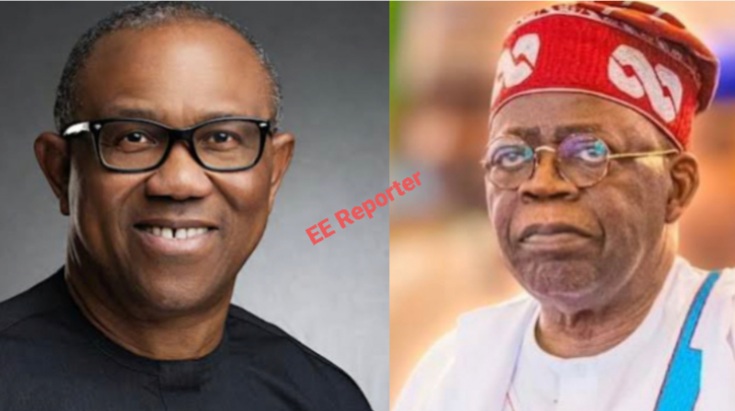
Obi Accuses Tinubu Government Of Harassment, Demands Immediate Release Of Supporter Rilwan Olawale
The presidential candidate of the Nigeria Democratic Congress (NDC) for the 2027 general elections, Peter Obi, has warned the President Bola Tinubu government against what he described as the continued harassment and intimidation of his supporters across Nigeria, demanding the immediate release of his supporter, Rilwan Olawale.Nigerian news subscription.
Eereporter.com
Obi issued the warning in a statement released on Monday, titled, “Civility Is Not Weakness. Enough Of The Harassment Of My Supporters. Release Rilwan Olawale Now.”
The former Anambra State governor described the alleged treatment of his supporters as “disturbing and unacceptable,” citing the arrest of Olawale as the latest case.
“The continued intimidation and harassment of my supporters across the country, the latest being the case of Rilwan Olawale, is disturbing and unacceptable,” Obi said.
Olawale, an NDC supporter and political mobiliser associated with the Obidient movement, was reportedly taken from his Lagos residence in the early hours of Sunday, October 25, 2026, by armed men who identified themselves as operatives of the Department of State Services (DSS).
According to reports, the men allegedly arrived at his residence at about 1 am and took him away, sparking concern among his supporters over his whereabouts.
The circumstances surrounding the incident, however, remain unclear, with no public confirmation from the DSS or police establishing that Olawale is in their custody.
Funso Doherty, the NDC governorship candidate in Lagos State, had also raised the alarm over the reported arrest, saying efforts were being made to establish the facts and gain access to Olawale through his family and legal counsel.
Doherty urged the public to remain calm while the circumstances were being clarified.
Olawale’s reported detention has triggered calls from supporters for information about his whereabouts and his immediate release, with the hashtag #FreeRilwanNow gaining traction online.
Supporters have alleged that his political activities may have been connected to the incident, although there has been no official confirmation establishing the motive for his reported detention.
Obi, in his statement, also accused President Tinubu of undermining democratic values despite being a major beneficiary of Nigeria’s democratic system.
“President Bola Tinubu has remained a huge beneficiary of our democracy and should not brazenly be destroying it by encouraging and facilitating violence,” Obi said.
Obi maintained that his campaign ahead of the 2027 elections would remain peaceful and focused on issues, saying the NDC was seeking to offer Nigerians a credible alternative founded on competence, accountability, justice and compassion.
“Our campaign is peaceful and issue-driven, focused on offering Nigerians a credible alternative built on competence, accountability, justice, and compassion,” he said.
According to him, his supporters have deliberately chosen peaceful political engagement and persuasion rather than violence and intimidation.
“However, nobody should mistake our civility for weakness, our restraint for fear, or our commitment to peace for an absence of resolve,” he said.
Obi vowed that he would not be intimidated into silence or abandon Nigerians who believe in his political vision.
“We will not be intimidated into silence, nor will we abandon Nigerians who believe in a New Nigeria that is possible and will be OK,” he added.
Obi specifically demanded “transparency regarding Rilwan Olawale’s arrest, his release, respect for his rights, and an end to politically motivated harassment.”

Tinubu, Peter Obi
He further argued that Nigerians should be free to support candidates of their choice without fear of intimidation or harassment.
“No government or political party has the right to deny Nigerians the freedom to support a candidate of their choice,” he said.
“We will remain peaceful but resolute. We will not resort to violence, but we will stand firmly and lawfully against every attempt to undermine our democratic rights.”
Eereporter.com
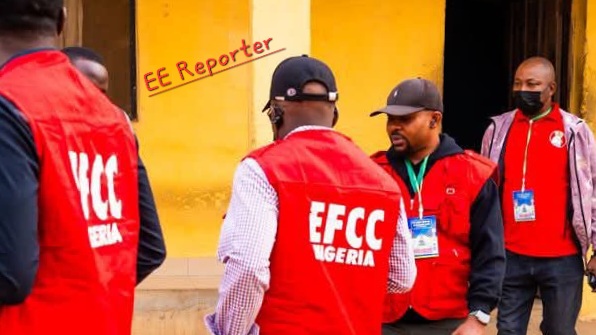
EFCC Bursts Four Illegal Lithium Processing Plants, Arrests 14 Suspects in Ogun
Operatives of the Lagos Zonal Directorate 2 of the Economic and Financial Crimes Commission, EFCC, have arrested 14 Chinese and one Nigerian at four illegal lithium processing plants in the Ogere area of Ogun State.
Eereporter.com
The suspects were arrested on Friday, October 23, 2026, following credible intelligence and surveillance.
EFCC
Upon their arrest, bags of lithium rocks, 18 mobile devices, four computer laptops, two decoders, a television remote control, and a trailer truck were recovered from the suspects.
The suspects will be charged to court upon conclusion of investigations.
Eereporter.com
News
Atiku Faults Tinubu Government Over Luxury SUV Gifts to APC Youth Leaders as Youths Battle Hunger
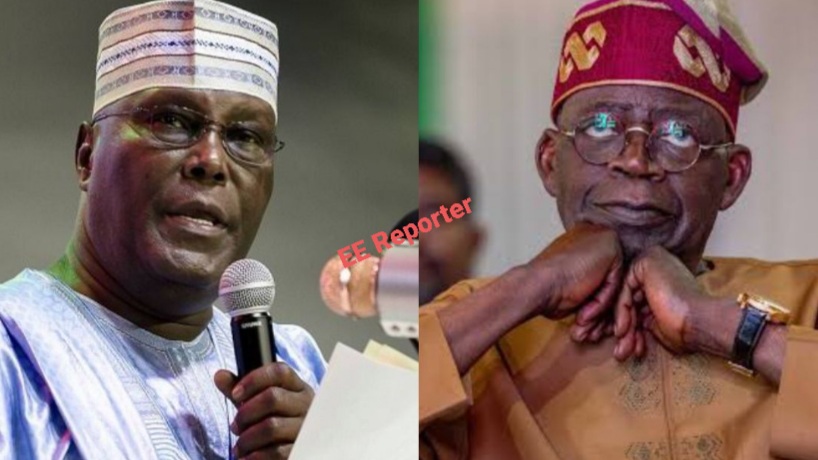
Atiku Faults Tinubu Government Over Luxury SUV Gifts to APC Youth Leaders as Youths Battle Hunger
Former Vice President and African Democratic Congress presidential candidate in the 2027 election, Atiku Abubakar, has demanded an immediate explanation from President Bola Tinubu over the reported distribution of 2026 model luxury Sport Utility Vehicles, each reportedly worth about N150 million, to APC youth leaders amid worsening hunger and cost-of-living crisis.
Atiku, in a statement issued by the Director of Strategic Communication of the ADC Presidential Campaign Council, Phrank Shaibu, described the reported gifts as a “grotesque spectacle of executive excess” and a “brazen insult” to Nigerians struggling to afford food and transport.Nigerian news subscription
He said the Presidency must disclose who paid for the vehicles and why such lavish political spending was taking place while ordinary families faced hardship.
The statement quoted Atiku as saying, “The APC National Youth Leader says these vehicles were donated by First Lady Oluremi Tinubu. Nigerians deserve to know where the money came from to buy and distribute so many 2026 model SUVs, each worth more than N150 million, for political mobilisation.
ATIKU
“The First Lady holds no elected or executive office. She is only a domestic appendage of the office of President. Were these vehicles bought with her personal funds, donations or public resources? Who paid for them? What was the total cost? The Presidency must provide a clear account. Nigerians cannot be expected to accept a fleet of extraordinarily expensive vehicles for party loyalists without knowing who financed them.”
Atiku said the timing of the gifts worsened the plight of Nigerians, adding that the government provided luxury SUVs for party loyalists while millions waited for relief from the cost-of-living crisis.
He said, “At a time families cannot afford food, transport and other basic necessities, these gifts are a brazen insult to the people. The government has found a way to provide luxury SUVs for APC youth leaders, yet millions of Nigerians are still waiting for meaningful relief from the cost-of-living crisis. This is not merely a question of misplaced priorities. It is one of the most outlandish displays of executive recklessness in our history.”
The former Vice President recalled that APC women leaders reportedly received luxury vehicles earlier, coming on the eve of the abduction of schoolchildren in Oyo State.
He said, “Now another lavish round of political giving is taking place while Nigerians face hunger, insecurity and hardship.”
Atiku demanded that the Presidency explain how the gifts were funded, saying, “While Nigerians continue to ask where the savings from subsidy removal have gone, the Presidency must explain how such costly gifts are being funded. If the vehicles were paid for privately, the source of the funds should be disclosed. If public resources were used, the government must identify who authorised the spending and under what legal authority.”
He warned that the scale of the gifts raised “grave questions about whether our collective patrimony is being diverted to buy political loyalty. Nigeria cannot be run as a captured state, where wealth and influence serve the powerful while ordinary citizens are left to struggle.”
Atiku also criticised the APC National Youth Leader, who he said was reportedly travelling by private jet.
He said, “That image of extraordinary privilege stands in jarring contrast to the hardship facing ordinary Nigerians. The Presidency must stop treating questions about wealth and spending as an inconvenience. Nigerians have a right to ask where the money came from.”
He further took a swipe at the President’s household, saying, “Nor is this culture of privilege confined to party officials; it reaches the very household of the President. His own son, Mr Seyi Tinubu, has been pictured, in widely circulated images, wearing a Richard Mille RM 67-02 Sébastien Ogier, a timepiece that sells for close to half a million dollars ($500k), while the same government asks ordinary Nigerians to endure hardship, tighten their belts and wait patiently for relief that never seems to arrive.”
Atiku said, “A worker on the national minimum wage would need several lifetimes to earn what the President’s son wears on one wrist. When the household of the President and the youth leader of his party flaunt such wealth in a season of hunger, insecurity and joblessness, they are not merely displaying poor taste; they are telling Nigerians, in the plainest possible terms, how little their suffering registers in the corridors of power.
Atiku, Tinubu
“Why is Bola inflicting such pain on Nigerians while those closest to his government enjoy such lavish privilege? Nigerians need answers, not another display of wealth for political mobilisation.”
He vowed to investigate illegal spending if elected President.
“When I am sworn in as President, every naira found to have been spent illegally will be thoroughly investigated, and everyone found culpable will be brought to justice. Tinubu made life difficult. I will make life affordable again,” Atiku said.
Eereporter.com
-
 Crime1 year ago
Kogi Assembly Considers Law To Regulate Rent, Establish Control Board: Tenancy Law
-
 News2 years ago
Atiku Reveals Why He Failed To Pick Wike As Running Mate In 2023
-
 Akwa Ibom2 years ago
The Apostolic Church Gets New Territorial Chairman, Exco
-

 Crime2 years ago
Federal High Court Jails 2 For Vandalizing Transformer, Telecom Mast In Kogi
-
 News2 years ago
The Apostolic Church Gets New National President, Executive
-
 Akwa Ibom2 years ago
Umo Eno Commences Payment Of 80,000 Naira Minimum Wage With Arrears
-
 News2 years ago
Senator Natasha Returns To Senate With Husband Amid Seat Dispute
-
 Economy1 year ago
Kiyosaki: Is Tinubu’s Government Afraid Of Ibrahim Traore?