
News
2026 OTC Opened On 4th May, At NRG Park In Houston, Texas


2026 OTC Opened On 4th May, At NRG Park In Houston, Texas
The 2026 Offshore Technology Conference (OTC) opened on Monday, 4 May, at NRG Park in Houston, Texas, bringing together energy professionals and policymakers from over 100 countries for one of the world’s foremost offshore energy events.
NNPC Limited’s Chief Financial Officer, Dapo Segun, and Executive Vice President, Upstream, Udy Ntia, joined the Commission Chief Executive, Nigerian Upstream Petroleum Regulatory Commission, Oritsemeyiwa Eyesan, to formally open the Nigerian Pavilion at the Conference.
Eereporter.com
At the General Session, President of the Co-operative Republic of Guyana, Dr. Mohamed Irfaan Ali, delivered the opening address, calling on global energy leaders to shift the industry’s central debate from energy transition to energy balance.

NNPC, Texas
NNPC Limited’s participation at OTC 2026 reinforces its position as Africa’s leading national oil company and underscores its continued engagement with the global energy community at the highest strategic and industry levels.





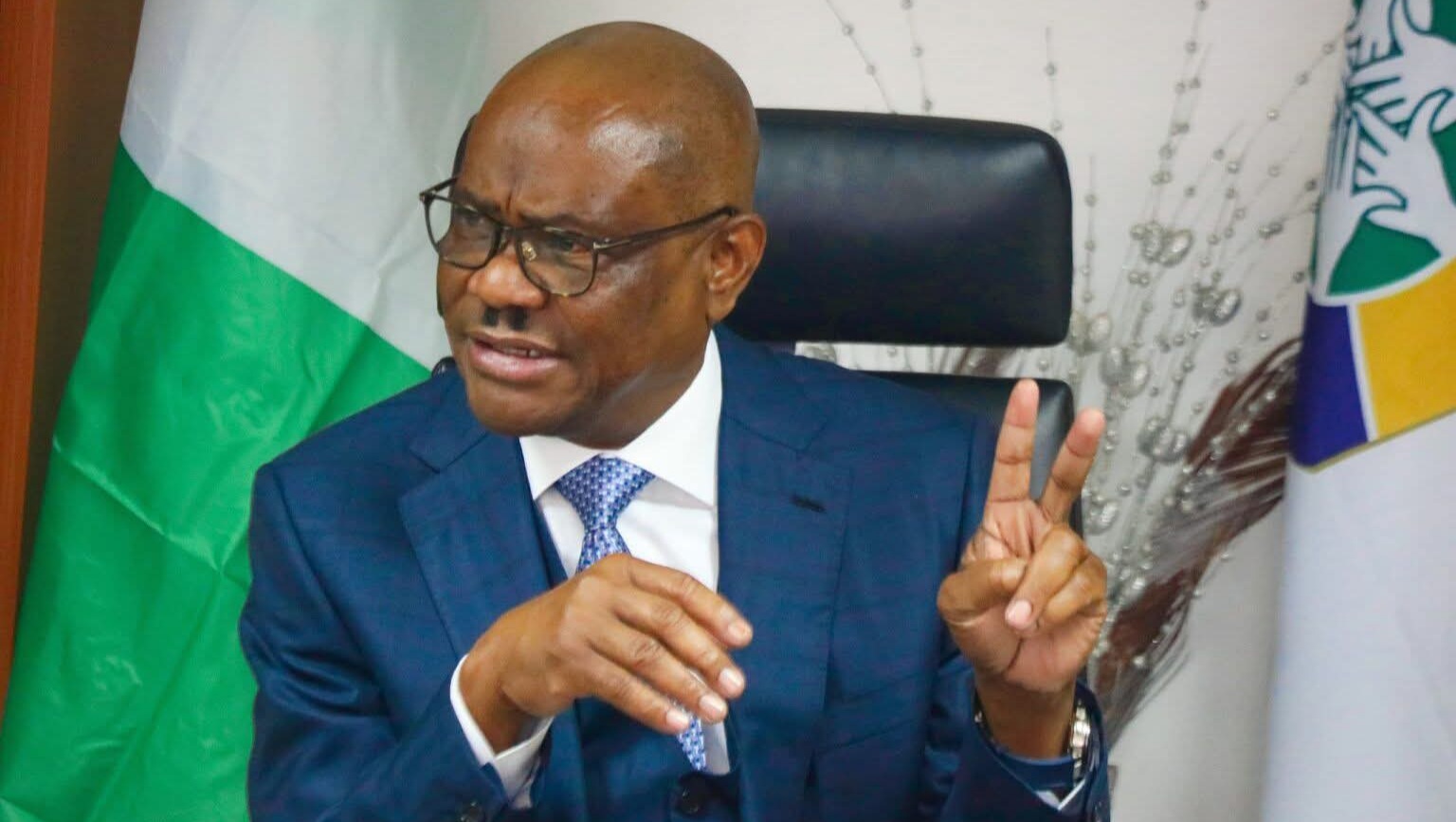
FCT Minister Wike Slams David Mark’s Infrastructure Record, Defends Tinubu’s Achievements
The Minister of the Federal Capital Territory, Nyesom Wike, on Thursday criticised former Senate President David Mark over his record on infrastructure development.
Eereporter.com
Wike argued that the administration of President Bola Tinubu has delivered more road projects within three years than were achieved during Mark’s years in national leadership.
He made the remarks at the commissioning of the Interchange at the Arterial Road N16–Ring Road II Junction linking the Jahi and Gwarimpa districts of Abuja.
Tinubu was represented at the event by Senate President Godswill Akpabio.
The minister’s comments followed recent criticisms of the Federal Government by the African Democratic Congress, which he noted had nevertheless acknowledged the administration’s achievements in road infrastructure.
“African Democratic Congress has conceded that in terms of road infrastructure, Mr President has done very, very well. Without roads, you cannot go to hospital, you cannot go to school, and you cannot go to farm. Roads are the bedrock of development in any society,” Wike said.
Turning to Mark, whom he identified as chairman of a faction of the ADC, Wike questioned the former Senate President’s contribution to infrastructure development, particularly during his eight-year tenure in office.
He cited the Akwanga-Makurdi road project, which he said remained in poor condition despite being awarded during Mark’s time in leadership.
“The poor people could not afford to travel to Makurdi because there was no road. But David Mark, as Senate President then, was flying helicopters.
“Today, because of the intervention of this administration, people can drive freely to Makurdi and Otukpo. The same David Mark, who once relied on helicopters, can now travel by road too,” Wike said.
According to him, the Jahi-Gwarimpa interchange project was awarded before the current administration assumed office but had received neither mobilisation nor significant progress until the present government intervened.
“One of the problems of development in Nigeria is that new administrations often abandon projects initiated by their predecessors. But President Tinubu has shown that the government is a continuum. What matters is completing projects for the benefit of the people, regardless of who awarded them,” he said.
Wike noted that many residents of the area had doubted the project would ever be completed, describing its delivery as another milestone in the ongoing transformation of the Federal Capital Territory.
He also dismissed claims that the administration’s development agenda was focused solely on roads, highlighting ongoing investments in water infrastructure across satellite towns in the FCT.
The minister recalled the recent commissioning of a water supply project in Karu and announced that another major water infrastructure project in Bwari would be inaugurated on July 14.

Wike
“It is not correct to say we are only doing roads. In Karu, we commissioned water supply infrastructure, and by July 14 we will commission another major water project in Bwari. These are projects designed to improve the lives of ordinary people,” he said.
Wike challenged critics to identify similar investments in satellite communities under previous administrations, insisting that the Renewed Hope Agenda was delivering tangible benefits to residents across the territory.
The Federal Capital Territory Administration under Wike has embarked on an aggressive infrastructure drive since the minister assumed office in August 2023.
Eereporter.com

Former Senator Seeks Legislative Oversight In Appointment Of State Police Commissioners
Ayodele Arise, a former senator who represented Ekiti north, has called for legislative oversight in the appointment and removal of state police commissioners as Nigeria moves closer to establishing state police.
Eereporter.com
Arise spoke while reacting to the passage of the Constitution of the Federal Republic of Nigeria (Alteration) (State Police) Bill, 2026, by the national assembly.
The former lawmaker commended President Bola Tinubu for supporting the state police initiative and praised both chambers of the national assembly for passing the legislation, which seeks to create a dual policing structure comprising federal and state police services.
He described the proposed state police system as a critical step towards addressing insecurity, arguing that locally recruited officers would be better positioned to understand and respond to security threats within their communities.
“Having state police is a much-needed solution to reduce the security threat that we are facing in the country,” Arise said.
“There is no way security challenges will be eliminated completely but kudos to Mr. President that he has been very proactive on this subject as we continue to face the challenges of insecurity in the country.
“The president has been in the forefront of ensuring that solutions are provided to meet these challenges and almost completely eliminate existence of these bad elements in the country as it comes to kidnapping that has been going on in communities and the ability of the federal police to respond very quickly and then moving from one location to the other that they aren’t particularly familiar with the terrain.”
He said community-based policing would significantly improve intelligence gathering and response efforts because local officers are familiar with the terrain and residents.
While acknowledging concerns that governors could misuse state police for political purposes, Arise said such fears could be addressed through constitutional safeguards and institutional checks.
“Yes, many of the objections are legitimate concerns, but most of the federal states that we know around the world, the successful ones like the United States and Canada, they have this multi-layered policing system that has worked for them over the years,” he said.
“So, it is our responsibility to ensure that we put few checks and balances here and there that will curtail the excessiveness of any leader or governor of a state to use the Police against the people of the state.”
To prevent abuse, Arise proposed a process that would require legislative involvement in the appointment of state police commissioners.

State Police
“We can have a state police commission that recommends two or three names to the Governor and the governor selects his option and that option is then passed to the state legislature to ratify,” he said.
“Beyond that, there must be a way to ensure that to remove a State Commissioner of Police, he must go back to the state assembly and cite breaches by the Commissioner of Police.”
The former senator expressed confidence that stronger democratic institutions, public vigilance and constitutional safeguards would ensure state police serve their intended purpose of improving security rather than becoming tools for political intimidation.
Eereporter.com
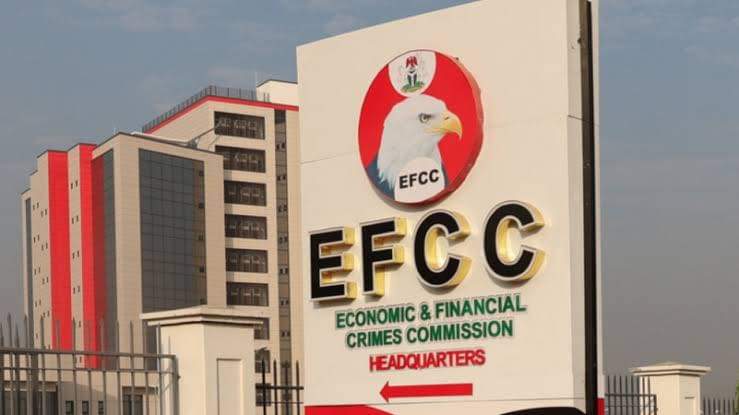
EFCC, CAC Join Forces Against Unregistered POS Operators
The Economic and Financial Crimes Commission, EFCC and the Corporate Affairs Commission, CAC, have expressed concerns over risks being posed to businesses and national security by the activities of unregistered Point of Sale. POS, operators.
The concerns were expressed in Abuja on Thursday, June 25, 2026 when the Board Chairman, CAC, Senator Ibrahim Adah paid a courtesy visit to the Executive Chairman of the EFCC, Mr, Ola Olukoyede at the corporate headquarters of the Commission.
Idah, who came with some management staff of the CAC, sought EFCC’s support in enforcing compliance among POS operators nationwide, disclosing that, “presently, only about 20% of POS operators are registered with CAC, a situation inconsistent with the Companies and Allied Matters Act, CAMA 2020, and the Central Bank Nigeria Agent Banking Regulations 2026, which require all businesses operating under a business name to be duly registered.
“Furthermore, Mr. Chairman, we seek closer cooperation in developing a reliable database of POS operators for use by the EFCC and other law enforcement agencies.”
He warned that evidence increasingly suggests that criminal proceeds, including ransom payments linked to kidnapping cases, are sometimes routed through POS terminals.
Idah also said that his visit was aimed at engaging public institutions that maintain close working relationships with his Commission and applauded the EFCC for its role in the fight against economic and financial crimes.
He stressed that both institutions have interconnected mandates, explaining that while CAC registers and regulates companies in Nigeria, EFCC investigate and prosecute financial crimes.
Decrying the misuse of some corporate entities for fraudulent activities, he stressed that, “When companies are misused for fraud or money laundering, the mandates of both institutions are directly affected. Neither of the two agencies can therefore fight and win the war against economic and financial offences, especially those perpetrated through corporate entities, if we work alone.
Collaboration is required in that regard. A strong CAC registry makes the work of EFCC easier. Just as strong EFCC enforcement protects the integrity of the CAC corporate registry.”
According to him, stronger synergy between the two agencies requires focus on data and intelligence sharing on fraudulent companies, sensitisation of the public on financial risks and capacity building for staff. He, therefore, expressed the CAC’s commitment to partner with the EFCC to deepen corporate compliance and protect the financial system.
“The CAC Board is fully committed to this partnership. We see the EFCC as a serious and strategic partner in this drive to deepen corporate compliance, promote transparency, and safeguard the integrity of Nigeria’s financial system,” he said.
In response, Olukoyede also expressed concerns about POS operators, describing their activities as a major challenge to the nation’s financial system, adding that, “if you do not regulate the activities of such key players, you will be having major problems and challenges within your financial ecosystem.” He reaffirmed the Commission’s commitment to working closely with the CAC in combating economic crimes and promoting regulatory compliance.
The EFCC’s boss described the CAC as the “gateway to economic growth in Nigeria because the first contact of foreign investors in Nigeria is the Corporate Affairs Commission.” He disclosed that the EFCC had established a dedicated desk to handle matters involving the CAC while revealing that ongoing investigations involving about 200 companies had yielded considerable results.

EFCC
“As a matter of fact, I think we have about 200 companies that you forwarded the list to us that we are currently investigating and we have made reasonable progress in that investigation.
We have made very interesting discoveries, which will help you by the time you lay your hands on the report. We will continue to work together to ensure regulatory compliance in part of those companies that you are regulating.”
He noted that most public corruption cases investigated by EFCC involve procurement and contract fraud carried out through companies regulated by CAC.
He also stressed the need for both agencies to tackle insider deficits and strengthen internal accountability.
On data sharing and intelligence exchange, Olukoyede directed officials of both agencies to review and update an existing Memorandum of Understanding to reflect current realities, especially in the area of beneficial ownership information and data protection.
Eereporter.com
-

 Crime1 year ago
Kogi Assembly Considers Law To Regulate Rent, Establish Control Board: Tenancy Law
-

 News1 year ago
Atiku Reveals Why He Failed To Pick Wike As Running Mate In 2023
-
 Akwa Ibom1 year ago
The Apostolic Church Gets New Territorial Chairman, Exco
-

 Crime1 year ago
Federal High Court Jails 2 For Vandalizing Transformer, Telecom Mast In Kogi
-
 News1 year ago
The Apostolic Church Gets New National President, Executive
-

 Akwa Ibom1 year ago
Umo Eno Commences Payment Of 80,000 Naira Minimum Wage With Arrears
-

 News1 year ago
Senator Natasha Returns To Senate With Husband Amid Seat Dispute
-

 Economy1 year ago
Kiyosaki: Is Tinubu’s Government Afraid Of Ibrahim Traore?