
News
EFCC, CAC Join Forces Against Unregistered POS Operators


EFCC, CAC Join Forces Against Unregistered POS Operators
The Economic and Financial Crimes Commission, EFCC and the Corporate Affairs Commission, CAC, have expressed concerns over risks being posed to businesses and national security by the activities of unregistered Point of Sale. POS, operators.
The concerns were expressed in Abuja on Thursday, June 25, 2026 when the Board Chairman, CAC, Senator Ibrahim Adah paid a courtesy visit to the Executive Chairman of the EFCC, Mr, Ola Olukoyede at the corporate headquarters of the Commission.
Idah, who came with some management staff of the CAC, sought EFCC’s support in enforcing compliance among POS operators nationwide, disclosing that, “presently, only about 20% of POS operators are registered with CAC, a situation inconsistent with the Companies and Allied Matters Act, CAMA 2020, and the Central Bank Nigeria Agent Banking Regulations 2026, which require all businesses operating under a business name to be duly registered.
“Furthermore, Mr. Chairman, we seek closer cooperation in developing a reliable database of POS operators for use by the EFCC and other law enforcement agencies.”
He warned that evidence increasingly suggests that criminal proceeds, including ransom payments linked to kidnapping cases, are sometimes routed through POS terminals.
Idah also said that his visit was aimed at engaging public institutions that maintain close working relationships with his Commission and applauded the EFCC for its role in the fight against economic and financial crimes.
He stressed that both institutions have interconnected mandates, explaining that while CAC registers and regulates companies in Nigeria, EFCC investigate and prosecute financial crimes.
Decrying the misuse of some corporate entities for fraudulent activities, he stressed that, “When companies are misused for fraud or money laundering, the mandates of both institutions are directly affected. Neither of the two agencies can therefore fight and win the war against economic and financial offences, especially those perpetrated through corporate entities, if we work alone.
Collaboration is required in that regard. A strong CAC registry makes the work of EFCC easier. Just as strong EFCC enforcement protects the integrity of the CAC corporate registry.”
According to him, stronger synergy between the two agencies requires focus on data and intelligence sharing on fraudulent companies, sensitisation of the public on financial risks and capacity building for staff. He, therefore, expressed the CAC’s commitment to partner with the EFCC to deepen corporate compliance and protect the financial system.
“The CAC Board is fully committed to this partnership. We see the EFCC as a serious and strategic partner in this drive to deepen corporate compliance, promote transparency, and safeguard the integrity of Nigeria’s financial system,” he said.
In response, Olukoyede also expressed concerns about POS operators, describing their activities as a major challenge to the nation’s financial system, adding that, “if you do not regulate the activities of such key players, you will be having major problems and challenges within your financial ecosystem.” He reaffirmed the Commission’s commitment to working closely with the CAC in combating economic crimes and promoting regulatory compliance.
The EFCC’s boss described the CAC as the “gateway to economic growth in Nigeria because the first contact of foreign investors in Nigeria is the Corporate Affairs Commission.” He disclosed that the EFCC had established a dedicated desk to handle matters involving the CAC while revealing that ongoing investigations involving about 200 companies had yielded considerable results.

EFCC
“As a matter of fact, I think we have about 200 companies that you forwarded the list to us that we are currently investigating and we have made reasonable progress in that investigation.
We have made very interesting discoveries, which will help you by the time you lay your hands on the report. We will continue to work together to ensure regulatory compliance in part of those companies that you are regulating.”
He noted that most public corruption cases investigated by EFCC involve procurement and contract fraud carried out through companies regulated by CAC.
He also stressed the need for both agencies to tackle insider deficits and strengthen internal accountability.
On data sharing and intelligence exchange, Olukoyede directed officials of both agencies to review and update an existing Memorandum of Understanding to reflect current realities, especially in the area of beneficial ownership information and data protection.
Eereporter.com









Obi: Government Doing Everything To Ensure I Do Not Contest In 2027
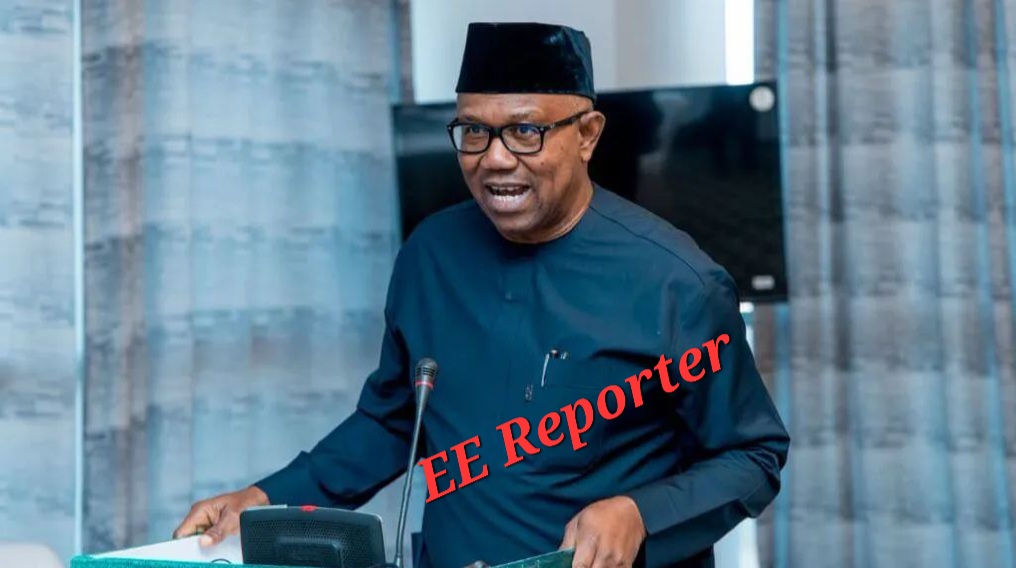
Presidential candidate of the Nigeria Democratic Congress, Peter Obi, has alleged that forces within the Federal Government are working to prevent him from appearing on the ballot for the 2027 presidential election.
Eereporter.com
Speaking on Friday as a guest speaker at a leadership programme organised by NextGen Mentorship and Leadership Initiative at Madonna University, Okija, Obi claimed efforts were underway to stop his participation in the next election, Daily Post reports.
“If you know what they are doing to ensure that I’m not on the ballot in 2027, you will be surprised. Nigerian government is doing everything to ensure that I do not contest in this election, but I’m not looking at the obstacles but at the destination.
“I’m rather focussed at the fruitfulness of the destination and that is what keeps me going,” he said.
Obi also challenged all prospective presidential contenders, including President Bola Tinubu, to a public debate on their plans for the country.
“I challenge any of those contesting to a debate to say what they want to do for this country, including President Bola Tinubu. I’m not saying it to make you happy but to change Nigeria and make it work,” he said.
The former Anambra State governor told the students that he was not driven by personal ambition but by a desire to see the country improve.
Get your PVC
“I’m not desperate to be Nigerian President but desperate to see Nigeria work. Go and obtain your PVC. If you don’t vote, you are hurting your future. When you have your PVC, do not vote for me because I’m an Igbo man. I’m not contesting election because I’m an igbo man, but vote for me because I’m the most qualified.”
Obi also spoke about insecurity across the country, saying: “I will fight to make Nigeria better and end the criminality in Nigeria. There is insecurity in the entire country and everyone is involved, so I want to build a country that works.”
The NDC figure further argued that Nigeria’s challenges stem from a lack of commitment among leaders and what he described as reactionary forces determined to hinder progress.
Reacting to a Federal High Court judgment in Lokoja, Kogi State, which set aside an earlier ruling directing the Independent National Electoral Commission (INEC) to register the NDC as a political party, Obi said the setback would not deter him.
“They can not stop me. They will fail. Let me assure you it is not the end of the road. We are committed to this democracy and those who want to kill this democracy are trying to hurt the society.
Peter Obi
“The reactionary elements in Nigeria, those who are bent on holding Nigeria down do not want it to work but I can assure you it would work. I have confidence that I will pull through because the will of the people must prevail,” he declared.
He added: “No where is safe in Nigeria today, yet the people who should help salvage the country are bent on hurting our democracy. My message to all those who mean well for Nigeria and not just my supporters is for us to remain peaceful and continue to resist this tragedy being imposed on Nigeria.”
Eereporter.com

NAF Boost Maintenance Efficiency And Workplace Safety Through Specialised NDT And HSE Training
The Nigerian Air Force (NAF) has continued to strengthen its technical capacity and operational readiness through targeted human capital development, with personnel of NAF Base, Port Harcourt, successfully completing specialised training in Non-Destructive Testing (NDT) Level 1 and Health, Safety and Environment (HSE) Levels 1–3. Facilitated by Bevelog Nigeria Limited under its annual Free Skills Development Initiative (FSDI), the training equipped participants with industry-relevant technical and safety competencies to enhance maintenance efficiency and strengthen workplace safety culture.
Eereporter.com
The specialised programme reinforces the Nigerian Air Force’s commitment to sustaining a highly skilled and mission-ready workforce by enhancing personnel competence in preventive maintenance, technical inspection and workplace safety.
The Non-Destructive Testing (NDT) training equips personnel with practical skills to support preventive maintenance and improve aircraft serviceability, while the Health, Safety and Environment (HSE) component strengthens workplace safety, risk management and accident prevention across the Service.
Together, these competencies enhance operational efficiency and reinforce the Nigerian Air Force’s commitment to maintaining the highest standards of professionalism and safety.
The Chief of the Air Staff, Air Marshal Sunday Kelvin Aneke, appreciates the invaluable contributions of corporate organisations such as Bevelog Nigeria Limited in advancing capacity development through meaningful civil-military partnerships.

NAF
According to him, “such collaborations complement the Service’s efforts to build a highly skilled and mission-ready workforce while contributing to enhanced national security and sustainable national development”.
The NAF remains committed to fostering strategic partnerships that promote innovation, professional excellence and institutional capacity in support of its constitutional mandate to defend Nigeria and its people.
Eereporter.com
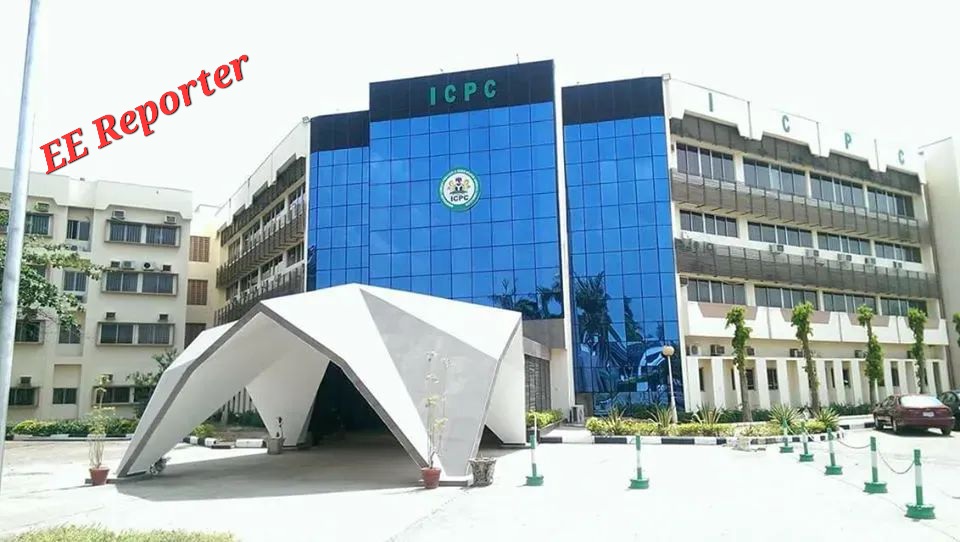
ICPC Boss: Corruption Must Be Prevented Through Education, Not Prosecution Alone
The Independent Corrupt Practices and Other Related Offences Commission has said corruption can be more effectively tackled through preventive education rather than relying solely on prosecution after offences have been committed.
Eereporter.com
The ICPC Chairman, Dr Musa Adamu-Aliyu (SAN), stated this at the closing of a two-day workshop on integrating the teaching of anti-corruption into Nigerian universities and the Nigerian Law School on Friday in Kano.
The workshop, themed “Institutionalizing Anti-Corruption in Nigerian Legal Training,” was organised by the ICPC in collaboration with the Nigerian Law School.
Adamu-Aliyu said corruption is often addressed after the damage has already been done, stressing that the fight against the menace should begin with the formation of character and ethical values among future legal practitioners.
“Corruption is rarely defeated in the courtroom after the damage has been done. It is prevented much earlier through the formation of character and values in young professionals,” he said.
According to him, many individuals prosecuted for corruption are educated professionals, making it imperative to strengthen integrity and ethical consciousness among law students before they enter legal practice.
He said the legal profession has a critical role to play in restoring public confidence in the justice system by producing lawyers who are competent, ethical, and committed to justice.
Adamu-Aliyu noted that legal education curricula should produce graduates with both intellectual capacity and moral conscience, urging lecturers to reflect anti-corruption values in both teaching and institutional practices.
The ICPC chairman pledged the commission’s continued support for the initiative, expressing optimism that the proposed framework would produce a new generation of lawyers committed to integrity, accountability, and the rule of law.
Earlier, Prof. Garba Sa’ad of Bayero University, Kano, presented a paper titled “Curriculum Development and Review: Emerging Challenges and the Way Forward.”
He described curriculum development as a continuous process that must respond to changing societal realities, recommending that anti-corruption education be introduced either as a standalone course or integrated into existing law courses such as Criminal Law and the Law of Evidence.
ICPC
Also, Dr Nte Bisong, Deputy Director and Head of the Open and Distance Learning Division of the National Universities Commission, presented a paper titled “The Core Curriculum and Minimum Academic Standards (CCMAS).”
Bisong said incorporating anti-corruption content into the CCMAS for law programmes would produce lawyers who are intellectually proficient, ethically grounded, and committed to the anti-corruption crusade.
NAN reports that the workshop brought together legal educators, curriculum experts, and institutional stakeholders to advance the landmark initiative aimed at embedding anti-corruption values into Nigeria’s legal education framework.
Eereporter.com
-

 Crime1 year ago
Kogi Assembly Considers Law To Regulate Rent, Establish Control Board: Tenancy Law
-

 News1 year ago
Atiku Reveals Why He Failed To Pick Wike As Running Mate In 2023
-

 Akwa Ibom1 year ago
The Apostolic Church Gets New Territorial Chairman, Exco
-

 Crime1 year ago
Federal High Court Jails 2 For Vandalizing Transformer, Telecom Mast In Kogi
-

 News1 year ago
The Apostolic Church Gets New National President, Executive
-
 Akwa Ibom1 year ago
Umo Eno Commences Payment Of 80,000 Naira Minimum Wage With Arrears
-

 News1 year ago
Senator Natasha Returns To Senate With Husband Amid Seat Dispute
-

 Economy1 year ago
Kiyosaki: Is Tinubu’s Government Afraid Of Ibrahim Traore?