
News
We Cannot Fight 21st Century Corruption With 20th Century Tools – ICPC Chairman

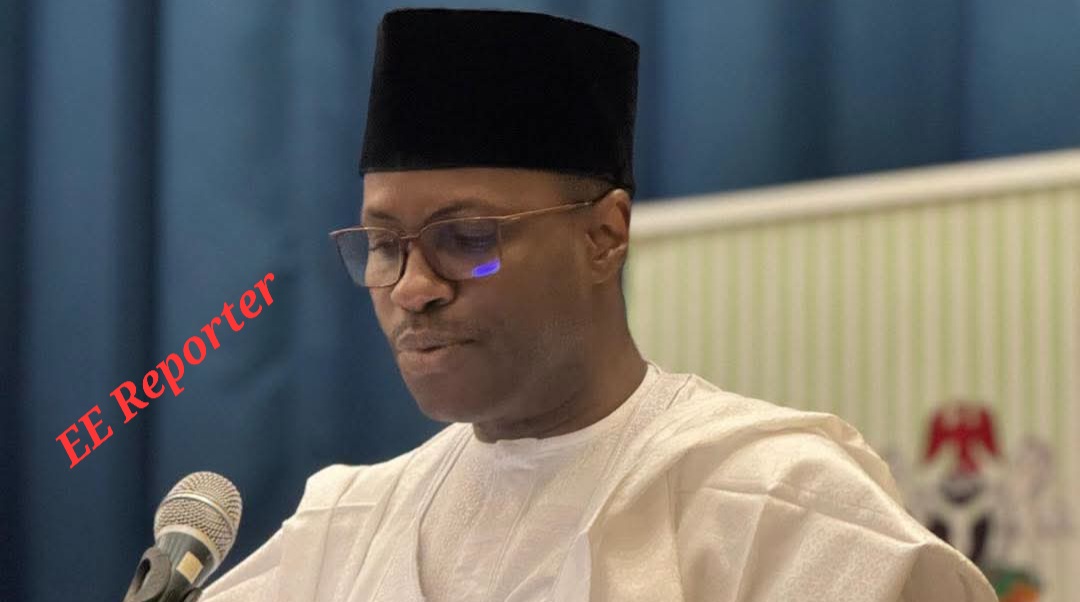
We Cannot Fight 21st Century Corruption With 20th Century Tools – ICPC Chairman
The Chairman of the Independent Corrupt Practices and Other Related Offences Commission (ICPC), Dr. Musa Adamu Aliyu, SAN, has called for innovative and technology-driven approaches to tackling corruption, stressing that “we cannot fight 21st century corruption with 20th century tools.” He made the statement at the IFEPS/ICPC Stakeholders Conference held at the Commission’s Headquarters in Abuja.
Eereporter.com
The conference, themed “Securing Tomorrow: Ethics at the Frontier of Innovation,” brought together leaders, policymakers, educators, civil society organisations and private sector stakeholders to advance ethics, transparency and accountability as essential pillars for Nigeria’s development.
Declaring the conference open through the Secretary to the Commission, Mr. Clifford Okwudili Oparaodu, DSSRS, the ICPC Chairman said corruption has become increasingly digital, faster and more sophisticated, making it imperative for anti-corruption strategies and ethical standards to evolve accordingly. “Our theme, Securing Tomorrow: Ethics at the Frontier of Innovation, speaks directly to the challenge before us. Corruption is evolving. It is now digital, faster and more sophisticated. If our ethics do not evolve with it, we will be left behind. That is why this conference is critical.
We cannot fight 21st century corruption with 20th century tools,” he stated.
Dr. Aliyu outlined three key priorities for strengthening integrity in Nigeria. The first is Prevention through Values through the C-H-I-L-D-R-E-N Values Initiative, aimed at instilling honesty, discipline and respect in children from an early age.
The second is Responsibility in the Digital Space through the Citizens Digital Responsibility Initiative (CDRI), which promotes ethical online behaviour and combats cybercrime, misinformation and digital fraud.
The third is Sustainability through Funding through the newly launched Ethics Endowment Fund (EEF), designed to provide sustainable resources for ethics education, public sensitization and the institutionalisation of integrity nationwide.
Reaffirming the Commission’s commitment to combating corruption, Dr. Aliyu stated that while enforcement remains a core mandate of the ICPC, prosecution alone cannot eradicate corruption.
He stressed the need to build a national culture where integrity becomes the accepted standard of behaviour, adding that the Commission has already laid important foundations through initiatives such as the National Values Curriculum (NVC), the National Ethics and Integrity Policy (NEIP), and the Sexual Harassment Policy.
Earlier, in her welcome address, the Executive Director of the Institute for Ethics and Professional Studies (IFEPS), Dr. (Mrs.) Uyim Akpabio, said the conference was convened at a time when technology is advancing faster than regulations, making it imperative to embed ethics into innovation.
She observed that while artificial intelligence, data and digital platforms are reshaping governance and society, integrity must remain the guiding principle. She commended the ICPC for facilitating the National Values Curriculum (NVC) and the National Ethics and Integrity Policy (NEIP), describing them as complementary frameworks for nurturing ethical values in young people and promoting integrity in public and private institutions.
Dr. Akpabio explained that the conference was built around three key objectives—Alignment, Action and Activation.
According to her, the initiative seeks to unite government, academia, the private sector, civil society, faith-based organisations, the media and families in promoting ethics as a shared national responsibility.
She urged participants, particularly children and youths, to become champions of the C-H-I-L-D-R-E-N Values Initiative, the Citizens Digital Responsibility Initiative (CDRI), the National Values Curriculum and the National Ethics and Integrity Policy in their schools, workplaces and communities, while commending the ICPC for its unwavering leadership in institutionalising ethics in governance.
In her opening remarks, the Chairperson of the Board of the Institute for Ethics and Professional Studies (IFEPS), Prof. Ekanem Braide, represented by Amb. (Mrs.) Anthonia Ekpa, said the Institute, in collaboration with the ICPC, streamlined the originally planned two-day stakeholders’ conference into a one-day event to ensure greater participation, focus and impact while maintaining the quality of engagement and expected outcomes.
She noted that the conference theme underscores the urgent need to align rapid technological advancement with ethical values, warning that innovation without integrity could fuel inequality, misinformation and the erosion of public trust.
She added that the conference would also witness the joint launch of three flagship initiatives by IFEPS and ICPC aimed at institutionalising ethics, integrity and responsible digital citizenship, stressing that securing the ethical values of young people is fundamental to securing Nigeria’s future.
Delivering the goodwill message on behalf of the Corps Marshal of the Federal Road Safety Corps (FRSC), Shehu Mohammed, mni, Assistant Corps Commander Agboola Olundegun commended the organisers for choosing a theme that reflects the realities of an era in which technology is rapidly transforming governance and public service delivery.
He emphasized that innovation must be guided by integrity, transparency, accountability and professionalism if it is to strengthen governance and earn public trust.
He noted that the FRSC has continued to leverage technology through digital driver’s licence and number plate administration, electronic traffic enforcement, real-time patrol monitoring and crash data management systems to improve service delivery. He, however, maintained that technology alone cannot eliminate corruption or guarantee excellence, stressing that ethical values remain indispensable to sustainable national development.

ICPC Chairman
Also delivering a goodwill message on behalf of the Director-General of the Bureau of Public Procurement (BPP), Dr. Adebowale Adedokun, the Director of the Civil Infrastructure Department, Mr. Nasir M. Bello, described the conference as timely, noting that ethics, transparency and accountability must underpin innovation and digital transformation in public service.
He said collaboration among government institutions, the private sector and civil society is critical to entrenching integrity in governance.
Mr. Bello reaffirmed the Bureau’s commitment to promoting due process, transparency and accountability in public procurement, expressing confidence that the conference would foster stronger partnerships and practical strategies for advancing ethical leadership and strengthening Nigeria’s anti-corruption efforts.
Eereporter.com











News
Umo Eno Reaffirms Commitment to Youth Employment, Says Ibom International Hotel Will Create More Jobs

Umo Eno Reaffirms Commitment to Youth Employment, Says Ibom International Hotel Will Create More Jobs
Akwa Ibom State Governor, Pastor Umo Eno, has reaffirmed his administration’s commitment to creating more employment opportunities for youths and other residents of the state, describing job creation as a deliberate process that requires strategic planning and investments.
Eereporter.com
The Governor stated this on Tuesday, November 3, 2026, while responding to questions from Government House Correspondents shortly after inspecting the ongoing Ibom International Hotel project in Uyo.
He explained that the hotel project, alongside other developments within the Tropicana area, had already provided direct and indirect employment for several Akwa Ibom indigenes, noting that more opportunities would emerge upon its completion.
Eno described the project as part of his administration’s commitment to fulfilling its promises to the people and laying a solid foundation for sustainable employment generation.
“What we promised Akwa Ibom people, we are delivering. You can imagine for yourself how many people this project is employing now and what it will employ when it is finished,” he said.
The Governor stressed that employment opportunities do not emerge without deliberate efforts, explaining that his administration was making strategic investments and establishing the necessary structures to create sustainable jobs.
“If you don’t create a foundation, you can’t build on it. You don’t create employment in the air. You deliberately and intentionally prepare, put something on the ground and then employ people to work,” he stated.
He further cited the recent recruitment of 4,000 civil servants, who had just undergone an orientation exercise, as evidence of his administration’s commitment to expanding employment opportunities.
According to him, the recruitment process was carefully planned, with the government taking deliberate steps to determine the number of personnel required.

Ibom International Hotel
“We have just done orientation for 4,000 newly employed civil servants. We didn’t create it in the air. I took time to explain how we arrived at the number. So these things are precept upon precept,” he explained.
The Governor noted that the inspection formed part of his routine visits to ongoing project sites, particularly those within areas receiving attention from his administration.
Eno undertook the inspection shortly after addressing the 4,000 newly recruited public servants at their orientation exercise held at the Ibom Tropicana Event Centre, Uyo.
He was accompanied by the Chief of Staff, Mr Aniefiok Johnson, members of the State Executive Council and other government officials.

Nigeria Police Vows to Arrest and Prosecutes Anyone Destroying Campaign Posters and Billboards
The Nigeria Police Force has observed with serious concern the growing incidents of deliberate tearing, defacement and destruction of political campaign posters, banners and billboards belonging to candidates and political parties across the country ahead of the 2027 General Elections.
Eereporter.com
The Force strongly condemns this act of political intolerance and warns political thugs, hoodlums and other mischief-makers involved to desist immediately.
For the avoidance of doubt, destroying, defacing or unlawfully removing another candidate’s campaign posters and billboards may constitute malicious damage, which is a criminal offence under applicable criminal laws (Section 451 of the Criminal Code Act and Sections 326 of the Penal Code Law, which defines the offence of mischief). Political differences or loyalty to a particular party do not give anyone the right to destroy another candidate’s property or infringe on their right to campaign freely.
The Force reiterates that all political parties and candidates, irrespective of their affiliation or status, are entitled to equal protection under the law. No individual or group has the right to determine whose campaign materials should be displayed or destroyed.
The Inspector-General of Police, IGP Olatunji Rilwan Disu, psc(+), NPM, has directed Commissioners of Police across the 36 States of the Federation and the Federal Capital Territory to take proactive measures to prevent such acts, investigate reported incidents and ensure that persons found culpable are arrested and prosecuted in accordance with the law. Political sponsors and individuals who recruit, encourage or facilitate these criminal acts will equally be held accountable where evidence establishes their involvement.
The Force calls on political parties, candidates and their supporters to conduct their campaigns peacefully and respect the rights of others. Nigeria’s democratic process must not be undermined by political intolerance, intimidation or criminal conduct.

Police
The Nigeria Police Force will not allow political thugs and troublemakers to turn the nation’s political environment into a theatre of lawlessness. Those who choose to break the law will face the full consequences of their actions.
BE WARNED. RESPECT THE LAW. LET DEMOCRACY THRIVE.
CSP Ani Iniedu anipr
Force Public Relations Officer
Nigeria Police Force
Force Headquarters, Abuja.
Eereporter.com
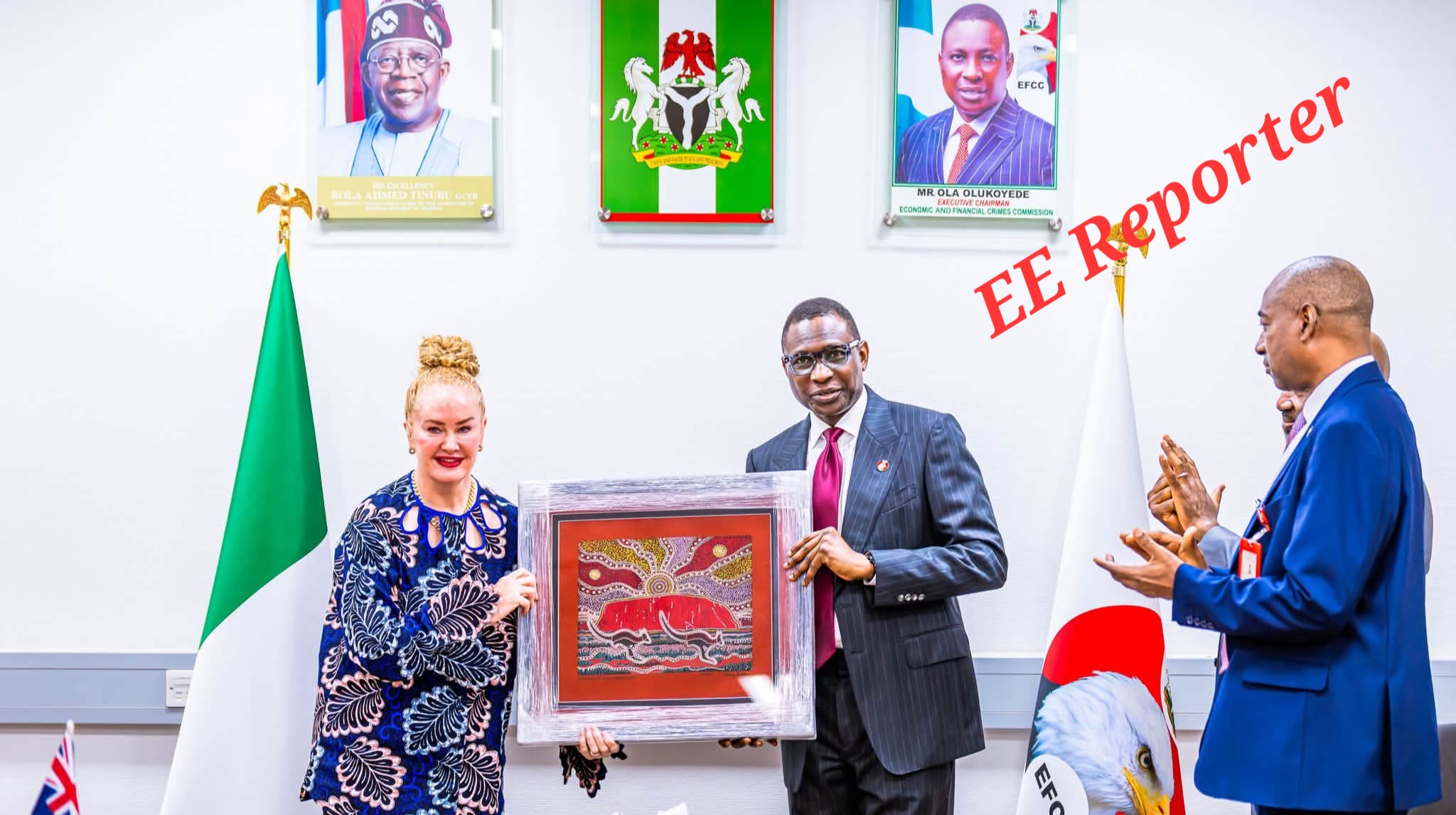
EFCC, Australian Federal Police Sign MoU to Strengthen Fight Against Cybercrime
The Economic and Financial Crimes Commission, EFCC, and the Australian Federal Police, AFP, have signed a Memorandum of Understanding, MoU, to strengthen collaboration in tackling cybercrime and other transnational financial crimes.
Eereporter.com
The agreement was signed on Wednesday, November 4, 2026, at the EFCC Headquarters, Jabi, Abuja.
Speaking at the ceremony, the Australian High Commissioner to Nigeria, Leilani Bin-Juda, commended the EFCC Chairman, Ola Olukoyede, and officers of the Commission for the cordial relationship and cooperation with the Australian Federal Police over the years.
“Chairman, I want to say a big thank you to you, your leadership, your agency and your amazing officers who have worked closely with the Australian Federal Police,” she said.
She noted that Nigeria and Australia have sustained cooperation on several issues, through exchange of technology, intelligence and professional advice, adding that the partnership had contributed positively to the bilateral relationship between both countries.
According to her, cybercrime remains a global concern requiring concerted efforts, noting that Nigeria plays a significant leadership role in the region.
“This is an area of interest and importance, not only to Australia and Nigeria but also globally. Cyber matters are affecting many countries, and Nigeria is one of those leading countries in the region. Other African countries look to Nigeria for leadership in this aspect. I commend you for your efforts,” she said.
Also speaking, the Assistant Commissioner of the Australian Federal Police, Sandra Booth, described the MoU as an important step towards deepening the existing relationship between both institutions.
She disclosed that the partnership between the EFCC and AFP dated back to 2004 and had produced significant results in several areas, including sensitive investigations, cyber-enabled crimes, business email compromise investigations, financial investigations and scams.
“We are very grateful for this relationship that we have with you. I look forward to the new MoU providing new opportunities for us to work together, open new horizons, strengthen our relationship and promote professional development between our organisations,” she said.
Booth expressed confidence that the agreement would provide a clearer framework for sustained cooperation, mutual support and the continued exchange of expertise between the two agencies.
“We are very excited about today. It takes us to what we believe is the next step in our relationship. Relationships go through evolution, and I am very proud to be able to sign this document with you, Chairman, which articulates what the future looks like,” she said.
In his remarks, EFCC Chairman, Ola Olukoyede, thanked the Australian Government and the Australian Federal Police for finding Nigeria and the Commission worthy of the partnership.
He said the Commission had always remained open to international collaboration, particularly in the investigation and prosecution of financial crimes, given the increasingly transnational nature of economic and financial crimes.
“We have discovered that financial crimes take a transnational dimension. What affects Nigeria inevitably affects Australia. That is why countries have to come together because criminals always work together,” he said.
Olukoyede stressed that the interconnected nature of criminal networks made cooperation among law enforcement agencies across jurisdictions imperative.
“There is a network of criminals, and for us to fight this network, we must also network as countries that are serious about the fight against such crimes. That is why we are always open to this kind of collaboration,” he said.
He explained that the MoU was intended to formalise the longstanding relationship between the two agencies and establish a framework for more structured cooperation.
According to him, the framework would cover training and manpower development, mutual support, as well as the exchange of information and intelligence, subject to the domestic laws of both countries.

Australian Federal Police
“We are always willing to do that. It is a bilateral relationship that benefits both countries, irrespective of where the perpetrators are,” he said.
The ceremony also featured the presentation of awards by the Australian Federal Police to four outstanding officers of the Commission in recognition of their exceptional investigative skills, professionalism and dedication demonstrated during a complex and lengthy investigation.
The award recipients were Assistant Commander of the EFCC II, Abba Sambo Usman; Assistant Commander of the EFCC II, Olufemi Olukinni; Assistant Commander of the EFCC II, Omewa Pius Nnaemeka; and Inspector of the EFCC I, Owolabi Jude Oyarekhua.
Eereporter.com
-

 Crime1 year ago
Kogi Assembly Considers Law To Regulate Rent, Establish Control Board: Tenancy Law
-

 News2 years ago
Atiku Reveals Why He Failed To Pick Wike As Running Mate In 2023
-

 Akwa Ibom2 years ago
The Apostolic Church Gets New Territorial Chairman, Exco
-

 Crime2 years ago
Federal High Court Jails 2 For Vandalizing Transformer, Telecom Mast In Kogi
-

 News2 years ago
The Apostolic Church Gets New National President, Executive
-

 Akwa Ibom2 years ago
Umo Eno Commences Payment Of 80,000 Naira Minimum Wage With Arrears
-

 News2 years ago
Senator Natasha Returns To Senate With Husband Amid Seat Dispute
-

 Economy1 year ago
Kiyosaki: Is Tinubu’s Government Afraid Of Ibrahim Traore?