
International
U.S. Delta Plane Crashes In Canada, Carrying 80 People


U.S. Delta Plane Crashes In Canada, Carrying 80 People
U.S. Delta plane crashes in Canada, carrying 80 people. At least 18 passengers were injured after an aircraft belonging to Delta Air Lines, which was on a trip from Minneapolis in the U.S., crashed and overturned while landing at the Toronto Pearson Airport in Canada on Monday evening.
The flight was carrying 80 people – 76 passengers and four crew when it crashed.
Initial reports indicate there are no fatalities, and 18 passengers with injuries have been transported to hospitals, according to a statement by the airline.
“Our primary focus is taking care of those impacted,” it stated.
In an update at 10:33 p.m. (ET), the airline said its incident response team were deployed to Toronto Pearson International Airport (YYZ) to support efforts surrounding Delta Connection flight 4819, operated by Endeavor Air, which was involved in a single-aircraft accident at YYZ around 2:15 p.m. ET.”
No fatalities have been reported, and some passengers initially taken to hospitals “have been released,” said the airline.

Delta Plane
“The hearts of the entire global Delta family are with those affected by today’s incident at Toronto-Pearson International Airport,” said Delta CEO Ed Bastian. “I want to express my thanks to the many Delta and Endeavor team members and the first responders on site.”
Mr Bastian added, “We are working to confirm the details and will share the most current information on news.delta.com as soon as it becomes available. In the meantime, please take care and stay safe.”



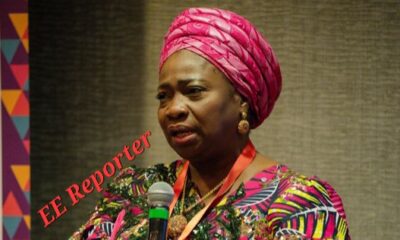




AKISAN 2026: The Homecoming begins, as the new Akwa Ibom Awaits the Diaspora
Truly, a new Akwa Ibom under Governor Umo Eno awaits the Diaspora in 2027; from audacious tourism destinations and modern infrastructure to better healthcare and education, peaceful and united people, opportunities to invest, reconnect and come home.
There are conventions that end with applause, handshakes and photographs, and there are conventions that leave behind decisions capable of changing an organization’s direction. The 39th National Convention of the Akwa Ibom State Association of Nigeria, USA Inc. (AKISAN) belongs to the latter. For four days, Dallas became a temporary capital of the Akwa Ibom Diaspora, bringing together professionals, community leaders, traditional rulers, entrepreneurs, families and guests. Yet, beyond the speeches, cultural celebrations, Business Summit, fundraising activities and the election of Mr. and Miss Akwa Ibom 2026/27, one decision towered above the rest: Uyo, 2027.
The AKISAN Convention, the organization’s highest governing body, voted to hold its 40th National Convention in Uyo, Akwa Ibom State, Nigeria, as part of the celebration of four decades of the organization’s existence. It was more than a choice of venue; it was a declaration: AKISAN is coming home. And when the Diaspora returns, it will encounter a state that has continued to evolve under Governor Pastor Umo Eno, PhD, with a strong emphasis on infrastructure, tourism, healthcare, education, social development and investment.
The question, therefore, is: What will Akwa Ibom sons and daughters in the Diaspora come home to see?
At the convention proper, the Governor was represented by Mrs. Helen Eno Obareki, Coordinator of the Office of the First Lady, who delivered his message to the gathering. The message was clear: Akwa Ibom people in the Diaspora should bring home their expertise, professional skills, international exposure, networks and investments. They are invited to come home not merely to visit, but to participate. We are all partners in the Greater Akwa Ibom Project.
At the Town Hall, yours truly had earlier taken the Diaspora through the achievements of the Governor, providing a broad picture of the transformation taking place across the state. The presentation offered a glimpse of the journey so far and, perhaps more importantly, the road ahead.
The diaspora will see a state where tourism is increasingly treated as an economic engine. One major attraction will be the audacious ARISE Palm Resort, a landmark development on approximately 73 hectares of reclaimed and remediated land. Designed for leisure, business, recreation and family entertainment, the resort is expected to offer golf, swimming pools, floating bars, restaurants, sports facilities, a children’s playground and extensive convention infrastructure. It could become a fitting centrepiece of the 40th anniversary experience, a place where business meets leisure and memory meets celebration.
They will also encounter the rehabilitated Ibom Hotel and Golf Resort, the reconstructed Ibom Hotels at the City Convention Arena, perhaps the 5,000-capacity International Convention Centre at the Arena and the 2,000-capacity convention hall at the resort. Nearby, the ARISE Shopping City will be warming up for shopping and social activities. For Diaspora visitors accustomed to the facilities of major American cities, these developments will provide tangible evidence of a state determined to compete for attention on a broader global stage.
Their arrival will begin at the newly completed terminal of Victor Attah International Airport. More than an arrival point, the modern terminal represents the first impression Akwa Ibom intends to make on visitors. With the possibility of expanded regional and international connectivity, the airport is positioned to become an even more important gateway between the state, Nigeria and the wider world.
From the airport, the journey home will continue along a road network of more than 1,300 kilometres and across 41 bridges connecting Uyo with communities throughout the state. Some delegates will return to ancestral homes, schools, churches and neighbourhoods they have not seen in years. Beyond the concrete and asphalt, however, they will encounter something more important: people and communities experiencing the effects of development.
They will also have the opportunity to ride in the state’s CNG-powered buses, experiencing a modern, cleaner and more affordable dimension of public transportation as they move around the state. And as they travel, they will savour something perhaps even more precious than new infrastructure , the peaceful ambience of their homeland. In the gentle rhythm of the journey, beneath the familiar green landscape and through communities alive with activity, they may rediscover the quiet beauty of a state that feels like home.
Among the most heartwarming encounters will be with their retired relatives, many of whom will welcome them home with renewed joy and dignity as beneficiaries of gratuities owed to them for years. Governor Umo Eno inherited a gratuity burden of about ₦111 billion and, according to the state’s account, has so far paid ₦88.6 billion, substantially reducing the backlog. His administration has also committed to clearing the outstanding obligations by the end of his first term. For many families, these payments are more than figures on a balance sheet; they represent years of waiting finally giving way to relief, dignity and renewed hope.
They will meet elderly parents and retirees who are happier and more secure, as well as vulnerable citizens benefiting from social intervention programmes. At the ARISE Senior Citizens Centre, they will see the state’s effort to provide dignity and care for older people, including the professional contribution of Diaspora-connected experts to its development. Such encounters will remind returning citizens that development is measured not only in roads and buildings, but also in the dignity restored to ordinary people.
The Diaspora will also see a healthcare system being expanded to reach more citizens. Nearly 230,000 people are enrolled in the state’s health insurance programme, while the 350-bed Ibom International Hospital provides specialist services. For doctors, nurses, pharmacists and other healthcare professionals returning from abroad, these facilities may inspire a different question: How can I bring my expertise home?
Education and primary healthcare will also feature prominently. The state’s 31 model primary healthcare centres and 31 model primary schools represent interventions spread across the local government areas. Alongside these are efforts in agriculture, human capital development, security, social investment and public service. The broader picture is one of development being pursued not only through flagship projects, but through interventions intended to reach communities and households.
Perhaps among the most touching examples are the 461 Compassionate Homes , furnished two-bedroom houses built for vulnerable residents. Behind the number are families with secure roofs, children with better environments in which to grow and citizens whose dignity has been restored. For returning Diaspora visitors, such stories may prove more memorable than statistics because they reveal the human face of government.
Akwa Ibom is also seeking to strengthen its economic future beyond government spending. Agriculture, the blue economy, tourism, power, housing, transportation and investment are being positioned for growth. The establishment of the Akwa Ibom State Electricity Regulatory Commission reflects the changing energy landscape, while the Ibom Deep Seaport remains part of the state’s larger economic vision. The invitation to the Diaspora is therefore not simply to bring money, but ideas, technology, networks and global experience.
This is where the Business Summit at the Dallas convention becomes especially significant. AKISAN’s Diaspora is a reservoir of expertise , doctors, engineers, lawyers, accountants, academics, technology professionals, entrepreneurs, investors and creatives. Uyo 2027 can become the platform where those capabilities meet opportunities at home, producing partnerships, professional exchanges, investment commitments, mentorships and enduring development initiatives.
The youth dimension will be equally important. At the convention’s fundraising launch, Chairman of the occasion, Obong Dr. Itata Itata, Esq., urged AKISAN members to stop treating young people merely as “leaders of tomorrow” and instead give them meaningful opportunities to lead today. The young people returning with their parents to Uyo are themselves part of AKISAN’s future. For them, homecoming can transform Akwa Ibom from an inherited family story into a lived experience.
They will hear the language, taste the food, see the landscape and meet their people. They may discover that their heritage is not merely a photograph on a family wall, but a living culture with a future. That discovery could be among the most enduring legacies of the 40th anniversary convention.
For Engr. Dr. Mbong Ekiko, whose second consecutive two-year term as National President begins unopposed, the timing is significant. His administration has secured the historic decision to return to Uyo, but the harder assignment now begins. AKISAN must prepare an anniversary worthy of 40 years while strengthening its institutions, engaging younger members and creating sustainable pathways for Diaspora participation in Akwa Ibom’s development.

AKISAN 2026
Forty years also demand reflection. Who were the pioneers? What sacrifices did they make? How did a community of Akwa Ibom people abroad transform an idea into an organization with chapters, leadership structures and a national identity? Uyo 2027 should honour those pioneers while examining what remains unfinished. Remembrance must lead to renewal, because the best tribute to AKISAN’s founders will be an organization strong enough to serve another generation.
There is poetry in the journey home. The traveller who returns after many years may find changed roads, new buildings and altered skylines, but certain things remain: a family name, a village, childhood memories, familiar landscapes and the sound of home. Those who left carried memories and built lives across the ocean; now they can return carrying something even more valuable , the knowledge, networks and experience they have gathered around the world.
The road from Dallas to Uyo will require careful planning. AKISAN leadership, its chapters, the Akwa Ibom State Government, traditional institutions, businesses, community leaders and other stakeholders must work together to deliver a memorable 40th convention. Imagine delegates arriving through a modern airport terminal, travelling on improved roads and CNG buses, staying in renewed hospitality facilities, touring tourism assets, visiting their communities, engaging government and business leaders and gathering to celebrate four decades of shared identity. That is more than a convention; it is a reunion of a people with their homeland.
When delegates gathered in Dallas, they could have elected their officers, celebrated their culture, raised funds and returned home. Instead, they made a bigger choice. They chose Uyo. Dallas gave the organization the vote; Uyo will give it the homecoming. The Diaspora will see a state striving to be peaceful, joyful, welcoming and ambitious , a state where roads connect communities, hospitals are expanding, vulnerable families are receiving homes, elders are being cared for and major tourism assets are rising.
They will see a state still becoming, still building, still dreaming. They will see the model health centres and schools, the airport terminal, roads and bridges, hospital, resorts, shopping and convention facilities, social programmes and communities touched by development. They may pause and say, “To God be the glory.” Not because everything is finished, but because the direction of the journey is visible.
Most importantly, they will see a state that has continued to nurture the dream of peace and unity. That is the spirit of the new Akwa Ibom , Akwa Ibom United. A people united cannot be defeated.
The 39th convention has ended, but its most important chapter is still ahead. In 2027, AKISAN will return to Uyo carrying four decades of history and a world of experience. It will honour its pioneers, celebrate its present, engage its homeland and imagine its future. And the welcome will come not only from government officials and convention organisers, but from the roads, the airport, the resorts, the schools, the hospitals, the families, the elders, the children and the communities waiting for their own to come home.
Perhaps, when the first aircraft touches down in Uyo and the familiar air of home meets those who have travelled across the ocean, there will be a moment when memory and reality embrace. The roads will lead them onward; the landscape will tell its story; the CNG buses will carry them through peaceful streets; and the people will complete the welcome. What they once left behind will not be exactly what they find. Home, too, has been travelling , growing, changing and preparing for their return.
Dallas gave AKISAN the vote. Uyo will give it the homecoming. There could not have been a better way to celebrate Akwa Ibom at 40. The 40th AKISAN convention has, in a sense, already begun. Welcome home, worthy ambassadors of a blessed State. The Governor with a Midas touch looks forward to seeing you all!
Eereporter.com
International
IGP Disu Highlights NPF’s Efforts on Community Protection and Professional policing in US-Nigeria CPC Meeting
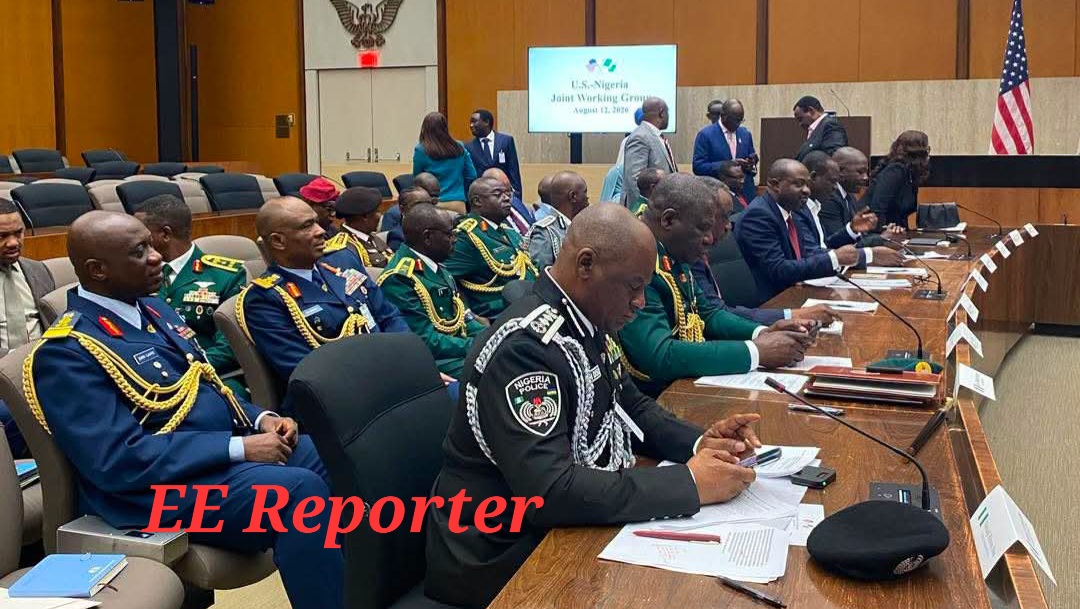
IGP Disu Highlights NPF’s Efforts on Community Protection and Professional policing in US-Nigeria CPC Meeting
The Inspector-General of Police, IGP Olatunji Rilwan Disu, psc(+), NPM, represented the Nigeria Police Force at the second United States-Nigeria Country of Particular Concern (CPC) Joint Working Group meeting held on 12th August, 2026, in Washington, D.C., where he highlighted the Force’s contributions to the implementation of the Joint Working Group Roadmap.
Eereporter.com
The IGP was part of the Nigerian delegation comprising the National Security Adviser, the Honourable Ministers of Foreign Affairs, Interior and Defence, Service Chiefs and Heads of other security and law enforcement agencies. The meeting reviewed progress on the Roadmap for the April to June 2026 reporting period and explored areas for strengthened cooperation.
Presenting the NPF’s contributions, the IGP highlighted sustained counter-kidnapping and anti-banditry operations, strengthened Police presence in vulnerable communities, early-warning mechanisms and measures supporting the protection and safe return of Internally Displaced Persons.
He disclosed that personnel from specialised Police formations were deployed across vulnerable Local Government Areas during the reporting period to reinforce public safety and deter violent extremist and criminal groups. He also noted that the recruitment of 50,000 Police Constables is advancing towards the final pre-training stage, with preparations underway for comprehensive training based on an improved curriculum and international best practices.
The IGP further highlighted strengthened community engagement with traditional rulers, religious leaders and other stakeholders, stressing the importance of public trust, religious tolerance and peaceful coexistence in achieving sustainable security.
He reaffirmed the NPF’s commitment to lawful and professional investigations, civilian protection, human rights and due process, noting the Force’s continued contribution to Nigeria’s broader counterterrorism and criminal justice framework.
US-Nigeria meeting
The IGP reaffirmed the NPF’s commitment to sustaining its contribution to the Joint Working Group Roadmap through professional policing, community protection, strengthened investigative capacity and support for Nigeria’s broader security and rule-of-law objectives.
CSP Ani Iniedu, anipr
Force Public Relations Officer
Force Headquarters, Abuja
13th August , 2026
Eereporter.com

Ronaldo Comforts Messi to Stay Strong Following Father’s Death
Cristiano Ronaldo the Portugal forward has sent a heartfelt message of support to Lionel Messi, offering words of encouragement to his longtime football rival during a difficult moment as the Argentine mourns his dad.
Eereporter.com
The Portuguese superstar reached out to Messi with a message focused on strength and solidarity, extending his support to the Argentine forward and his loved ones.
As reported by Fabrizio Romano on X on Wednesday, Ronaldo was quoted as saying, “Huge hug to you and your loved ones in this difficult moment, Leo. Stay strong.’

Ronaldo Comforts Messi
Despite their legendary rivalry on the pitch, the pair have repeatedly shown admiration for each other away from the game.
Online media had reported that the Argentina football icon had bid farewell on Sunday to his father, the global star’s emotional anchor and agent since childhood who passed away following a battle with cancer aged 68.
Eereporter.com
-
 Crime1 year ago
Kogi Assembly Considers Law To Regulate Rent, Establish Control Board: Tenancy Law
-

 News1 year ago
Atiku Reveals Why He Failed To Pick Wike As Running Mate In 2023
-
 Akwa Ibom2 years ago
The Apostolic Church Gets New Territorial Chairman, Exco
-

 Crime2 years ago
Federal High Court Jails 2 For Vandalizing Transformer, Telecom Mast In Kogi
-
 News2 years ago
The Apostolic Church Gets New National President, Executive
-
 Akwa Ibom2 years ago
Umo Eno Commences Payment Of 80,000 Naira Minimum Wage With Arrears
-

 News1 year ago
Senator Natasha Returns To Senate With Husband Amid Seat Dispute
-

 Economy1 year ago
Kiyosaki: Is Tinubu’s Government Afraid Of Ibrahim Traore?