
International
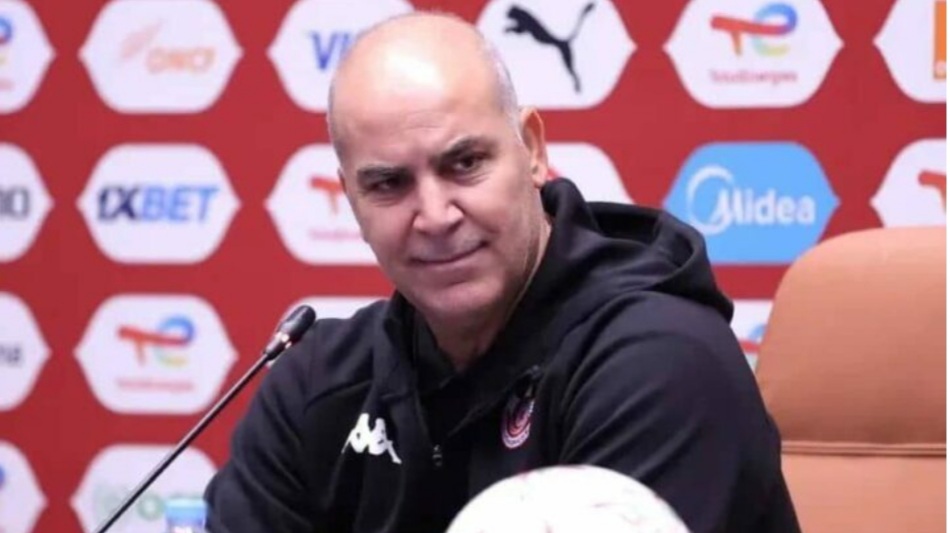
Tunisia Sack Head Coach After AFCON 2025 Exit

Tunisia Sack Head Coach After AFCON 2025 Exit
Tunisia sack head coach after AFCON 2025 exit. Tunisia have parted ways with its national senior soccer team head coach Sami Trabelsi after the Carthage Eagles’ early exit from the ongoing 2025 TotalEnergies CAF Africa Cup of Nations (AFCON), ending a turbulent campaign that drew widespread criticism.
The Tunisian Football Federation confirmed the development on Sunday, less than a day after Tunisia were knocked out by Mali in the Round of 16.
The fiercely contested clash finished 1–1 after extra time, before Mali prevailed in a tense penalty shootout to send the North Africans out of the continental competition.
In a brief statement, the federation disclosed that the decision was reached by mutual consent with Trabelsi and his technical crew, pointing to the team’s inability to advance beyond the last 16 stage of the tournament.
“The Executive Committee has decided to terminate the contractual relationship by mutual consent with the entire technical staff of the national team,” the CAF website quoted FTF as saying.
The dismissal followed mounting frustration among supporters and football analysts, many of whom had tipped Tunisia as strong contenders at the tournament hosted in Morocco.
Tunisia’s campaign began on a positive note, as the Carthage Eagles secured a convincing 3–1 victory over Uganda, briefly fuelling optimism about a possible deep run.
However, defensive shortcomings were laid bare in a 3–2 loss to Nigeria, while a scrappy 1–1 draw with Tanzania in their final group fixture further highlighted concerns over the team’s cohesion and mental strength.
Those weaknesses, according to the release, became even more apparent during the knockout stage.
Against Mali, Tunisia struck first and looked set to dictate proceedings, particularly after their opponents were reduced to ten men early on.

Tunisia Sack Head Coach After AFCON 2025 Exit
Despite holding a numerical advantage, the Carthage Eagles were unable to press home their dominance, allowing Mali to recover, push the game into extra time and eventually secure victory on penalties.
The early exit proved costly for Trabelsi, whose side struggled to impose themselves consistently throughout the tournament.
Tunisia’s Round of 16 elimination represented another disappointing chapter for a country that once ruled African football after lifting the AFCON title on home soil in 2004.








International
ICPC Hosts Russia at 4th Diplomatic Dialogue, Advocates for More Preventive Strategies Against Corruption
ICPC Hosts Russia at 4th Diplomatic Dialogue, Advocates for More Preventive Strategies Against Corruption
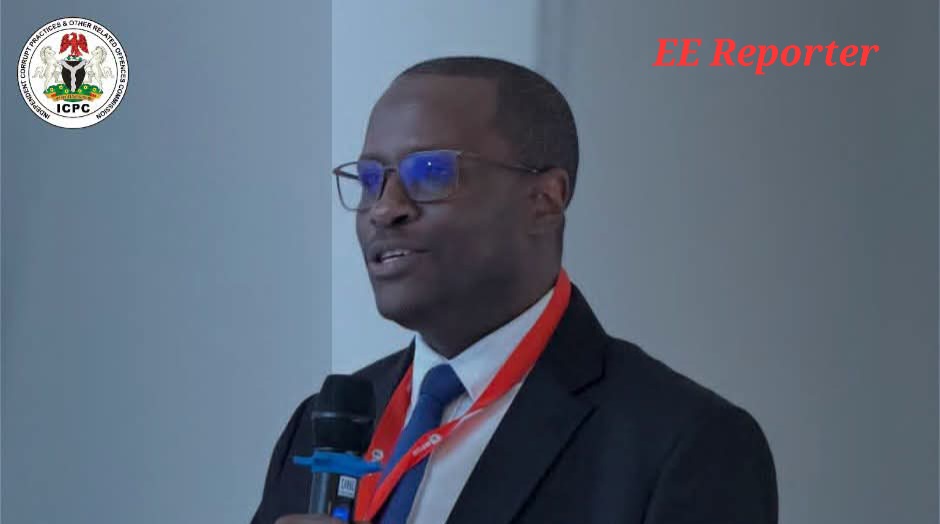
The Independent Corrupt Practices and Other Related Offences Commission (ICPC) has advocated for greater emphasis on preventive strategies, institutional safeguards and innovative approaches capable of addressing corruption risks before they translate into corrupt practices.
Eereporter.com
Chairman of the Commission, Dr. Musa Adamu Aliyu, SAN, made the call on Tuesday at the Fourth International Diplomatic Dialogue organised by the Anti-Corruption Academy of Nigeria (ACAN), the research and training arm of ICPC, at the Commission’s Headquarters in Abuja.
The Dialogue, themed “Development of Anti-Corruption Strategies and Policies: The Russian National Experience,” featured the Minister Counsellor/Charge d’ Affairs of the Embassy of the Russian Federation in Nigeria, His Excellency, Mr. Igor Ivannikov, who shared Russia’s experience in developing and implementing preventive, legal and enforcement measures against corruption.
Dr. Aliyu noted that corruption continued to pose a major threat to development, making it imperative for anti-corruption institutions to continually explore practical approaches that strengthen institutions, promote transparency and accountability, and enhance public trust.
“As Nigeria continues to deepen its anti-corruption efforts, there is much value in learning from comparative experiences, understanding best practices, and identifying innovative approaches that can be adapted to our local realities,” he said.
The ICPC Chairman further charged participants to translate lessons from the Dialogue into practical actions, stressing that knowledge acquired from the engagement should contribute to stronger institutions and improved anti-corruption outcomes.
“The knowledge and experience shared today should not end within the walls of this auditorium. Rather, they should inspire practical actions that strengthen our institutions, enhance public trust, and contribute to national and continental development,” Dr. Aliyu stated.
Presenting the Russian experience, Mr. Ivannikov said an effective anti-corruption system must combine the suppression of offences already committed with measures that address their underlying causes, noting that criminal punishment alone does not eliminate the conditions that enable corruption.
He identified declaration of income and assets by designated categories of public officials, expenditure monitoring and prevention of conflicts of interest as some of the preventive instruments deployed under the Russian system. According to him, financial declarations enable authorities to compare the legitimate income of public officials with their actual financial and property holdings.
Mr. Ivannikov also highlighted anti-corruption review of legislation as another preventive mechanism, explaining that the process seeks to identify provisions capable of creating corruption risks, including excessively broad official powers, unjustified discretion and unclear administrative procedures.
On public procurement, the Minister Counsellor/Charge d’ Affairs, said Russia had increasingly deployed digital platforms and risk-based monitoring to enhance transparency in procurement and contract administration. He, however, stressed that digitalisation could not, on its own, eliminate corruption without effective oversight, access to information and accountability for violations.
He further identified internal institutional measures such as codes of ethics, conflict-of-interest procedures, designation of officers responsible for anti-corruption compliance and regular assessment of corruption risks as important components of a preventive anti-corruption framework.
The Russian diplomat also outlined the enforcement component of his country’s anti-corruption system, including investigation of corruption-related crimes, tracing and freezing of illicit assets, prosecution and eventual determination of cases by the courts.
Earlier, the Provost of ACAN, Professor Sheriff Ghali Ibrahim, provided the background to the Dialogue, highlighting the evolution of Russia’s anti-corruption legal and institutional framework and the structures established to prevent, detect and address corrupt practices.
Professor Ibrahim identified some of Russia’s major contemporary anti-corruption legislation to include the Criminal Code of the Russian Federation, the Code of Administrative Offences, the Federal Law on Civil Service and the Federal Law on Combating Corruption. He noted that these laws provide part of the legal architecture within which the country’s anti-corruption institutions operate.
The Provost also highlighted the network of institutions involved in Russia’s anti-corruption system, including the Presidential Council for Countering Corruption, the Presidential Civil Service, Personnel and Anti-Corruption Directorate, the Prosecutor General’s Office, Investigative Committee, Ministry of Justice, Federal Security Service, Ministry of Internal Affairs and Accounts Chamber, among others.

ICPC Tasks South-South Development Commission
He particularly drew attention to the role of the Prosecutor General’s Office in Russia’s anti-corruption architecture, explaining that specialised units for supervision over the implementation of anti-corruption legislation were established within the Office and prosecutors’ offices at constituent-entity level in 2007, in line with Article 36 of the United Nations Convention against Corruption.
Professor Ibrahim further noted Russia’s contribution to the establishment and continued support of the International Anti-Corruption Academy, underscoring the place of specialised training and institutional capacity development in sustaining anti-corruption efforts.
J. Okor Odey
Head, Media and Public Communications, ICPC
Eereporter.com
NiDCOM’s Response in Auditor-General’s Observations on a Purported “Nido Worldwide”
We acknowledge receipt of your letter and the accompanying statement concerning the Auditor-General’s observations relating to the Nigerians in Diaspora Commission (NIDCOM).
Eereporter.com
For the avoidance of doubt, a query is meant to be responded to, and NiDCOM is doing exactly that.
It is appropriate to allow the established process to take its course and await NiDCOM’s response to the query before making public pronouncements on matters that are still being addressed through due process.
An audit observation is not, in itself, a final finding of wrongdoing. It is therefore premature and inappropriate for any organisation to prejudge the Commission’s response or draw conclusions before the relevant facts, records and explanations have been fully considered.
For the record, we wish to state that the reference to the event mentioned in the audit observations, was the Global Alliance Diaspora Symposium, organised in partnership with the Organisation of African, Caribbean and Pacific States (OACPS), an organisation comprising 74 member states.
This was a global event with support from the Ministry of National Planning for which NiDCOM collaborated with officials of the Ministry as well as the Ministry of Foreign Affairs. The 2023 event in question was not the regular NiDCOM events and the NIDO Europe Chairman at that time was one of those sponsored to attend.
We must also reiterate an important point concerning representation. NIDO is one organisation within the Nigerian diaspora community. It cannot present itself as representing the collective views of all Nigerians living abroad. A
Perhaps this is also an opportunity for you to reflect on and address some of NIDOs longstanding internal challenges, which have unfortunately affected its cohesion and broader representation.
Given the varying claims and perspectives within the organisation, it may be prudent to avoid giving the impression that its current leadership speaks for the entire Nigerian diaspora.
The signatories to the letter are, of course, entitled to express their views, but those views should perhaps be understood within the context of the wider and very diverse
Nigerian diaspora, rather than as representing Nigerians abroad as a whole.
NiDCOM
NiDCOM remains committed to transparency, accountability and due process. We are responding to the query issued to the Commission through the appropriate institutional channels and will allow the competent authorities to consider the facts and documentation in accordance with their mandate.
Eereporter.com
We trust that the matter will be allowed to follow due process and that, when the process is concluded, the outcome will be treated with the same level of seriousness and public attention with which the matter was initially raised.
Signed
Management

Clarification on the Legitimate Leadership of NIDO Europe
This notice is issued to inform the general public, members of the Nigerian community in Europe, and relevant stakeholders regarding the legitimate leadership of the Nigerians in Diaspora Organisation Europe (NIDOE).
Eereporter.com
1. LEGITIMATE LEADERSHIP OF NIDOE
In accordance with the history, constitutional provisions, and established leadership succession of NIDO Europe, Hon. Cllr. Harold Ogunfemi is the duly elected Chairman of NIDO Europe. He was elected in November 2024 in Athens, Greece, in accordance with the organisation’s constitution and formally received the mantle of leadership from his predecessor, Dr. Bashir Obasekola, on 9th November 2024.
2. JUDICIAL AFFIRMATION OF LEADERSHIP
The legitimacy of Hon. Cllr. Harold Ogunfemi’s leadership has been affirmed by the County Court at Central London (Claim No. L03CL967). In a judgment dated 28 May 2025 and sealed on 14 June 2025, Deputy District Judge Chakravarty dismissed the claim brought by NIDO UK South against NIDO Europe. As the election of Cllr. Harold Ogunfemi in 2024 was not challenged successfully in court or set aside, he remains the authentic leader of NIDO Europe. We expected that Barr. Chibuzor, being a lawyer, an officer of the court will respect without any hesitation the decision of the court but No, he is desperate to be chairman to achieve a selfish effect.
3. CLARIFICATION ON CLAIMS TO THE CHAIRMANSHIP
We wish to clarify that the claims to the chairmanship of NIDO Europe by Barr. Chibuzor Ubochi do not represent the leadership recognised by our organisation. The leadership dispute and subsequent division within the organisation have generated considerable concern among members and stakeholders. We maintain that the leadership under Hon. Cllr. Harold Ogunfemi derives its legitimacy from the constitutional electoral process and the established succession of leadership within NIDOE, spanning over two decades. What is the historical geneology of Barr.Chibuzor’s leadership. Whom did he take over from or does it mean he created a new NIDO Europe?
4. CONCERNS OVER THE PURPORTED “NIDO WORLDWIDE” CHAIRMANSHIP
We are equally concerned about the continued use of the title of “Coordinating Chairman of NIDO Worldwide” by Barr. Chibuzor Ubochi and others. The Act establishing the Nigerians in Diaspora Commission (NIDCOM) does not recognise any entity called “NIDO Worldwide.” What the Act recognises are Continental leadership structures, each independent and not under any coordinating leadership in the guise of “NIDO Worldwide.” We therefore question the basis for the continued use of this title and urge all stakeholders to beware.
5. APPEAL TO THE GENERAL PUBLIC AND STAKEHOLDERS
We hereby dissociate ourselves from any group or
activities purporting to represent NIDO Europe under a leadership that is not recognised by our organisation. We urge members of the public, government institutions, corporate bodies, and other stakeholders to exercise due diligence and verify the legitimacy of any individual or group claiming to represent NIDO Europe before engaging with them.
NIDO Europe
With regards to the auditor generals querry to NIDCOM, there are already enough institutions, agencies and apparatus of government to investigate and determine the authenticity or otherwise of the claims. Let those institutions therefore carry out their duties.
6. OUR COMMITMENT TO CONSTITUTIONALISM AND UNITY
NIDO Europe remains a law-abiding organisation committed to constitutional governance, transparency, unity, and the advancement of Nigerians in the diaspora.
We shall not allow personal ambitions, leadership
disputes, or competing claims to undermine the
organisation’s history, integrity, and collective purpose.
We therefore call on all members and stakeholders to uphold the constitution, respect legitimate leadership, and work towards peace, unity, and the continued progress of NIDOE.
SIGNED:
Cllr. Harold Ogunfemi
Chairman
Hon. Otogo Μ.Α.
General Secretary
Nigerians in Diaspora Organisation Europe (NIDOE)
Eereporter.com
-

 Crime1 year ago
Kogi Assembly Considers Law To Regulate Rent, Establish Control Board: Tenancy Law
-

 News1 year ago
Atiku Reveals Why He Failed To Pick Wike As Running Mate In 2023
-
 Akwa Ibom2 years ago
The Apostolic Church Gets New Territorial Chairman, Exco
-

 Crime2 years ago
Federal High Court Jails 2 For Vandalizing Transformer, Telecom Mast In Kogi
-
 News2 years ago
The Apostolic Church Gets New National President, Executive
-
 Akwa Ibom2 years ago
Umo Eno Commences Payment Of 80,000 Naira Minimum Wage With Arrears
-

 News2 years ago
Senator Natasha Returns To Senate With Husband Amid Seat Dispute
-

 Economy1 year ago
Kiyosaki: Is Tinubu’s Government Afraid Of Ibrahim Traore?