
Security
Stephen Oronsaye Report: Fake Agencies and Ghost Workers Saga

Stephen Oronsaye Report: Fake Agencies and Ghost Workers Saga
The latest scandal involving fake government agencies and ghost workers should not be dismissed as another corruption story in Nigeria’s seemingly endless catalogue of public-sector abuses. It is better to treat it as a critical inquiry into the quality of governance.
Eereporter.com
President Bola Ahmed Tinubu’s decision to order a comprehensive forensic audit of the Integrated Personnel and Payroll Information System, federal agencies and related government systems is therefore timely.
The audit, to be coordinated by Finance Minister and Coordinating Minister of the Economy, Taiwo Oyedele, is expected to examine payroll records, personnel and pension systems, bank accounts, government agencies and the connections between IPPIS, GIFMIS (Government Integrated Financial and Management Information System), Remita and the Treasury Single Account.
But an uncomfortable question must be asked: why did government need another scandal before it looked seriously at the architecture of government? That is the bigger issue.
The discovery of the fictitious Presidential Foreign Intervention Promotion Council and other allegedly fake agencies is astonishing. More disturbing is that PFIPC, one of the phantom entities, reportedly secured a N1.3bn allocation in the 2026 federal budget. The scandal raises a fundamental question: if an agency that does not legally exist can find its way into the budget, what else is hiding in the system?
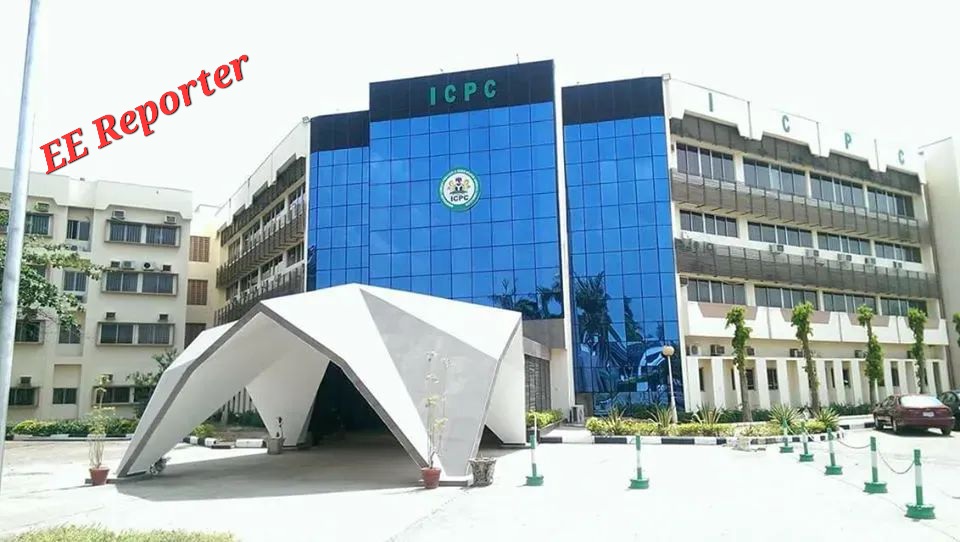
The Independent Corrupt Practices and Other Related Offences Commission subsequently uncovered another alleged fake agency. They reported that the promoter created additional fictitious entities, complete with forged legislative documents and bank accounts. This is no longer simply about one clever fraudster; it is about a broken system that apparently had enough gaps for the fraud to flourish.
That brings us to the Stephen Oronsaye Report – a low-hanging fruit – which has been gathering dust since the report was submitted in 2012 after a presidential committee chaired by former Head of the Civil Service, Stephen Oronsaye, examined the structure of federal government agencies and the cost of governance.
The report identified duplication, overlapping mandates and unnecessary agencies. Among its major recommendations was reducing 263 statutory agencies to 161, abolishing 38 agencies, merging 52 and reverting 14 to departments within ministries.
In February 2024, President Tinubu’s Federal Executive Council approved the implementation of the report, with agencies to be scrapped, merged, subsumed or relocated. An implementation committee was subsequently inaugurated with a 12-week deadline.
So, what happened?
That is precisely the question Nigerians should be asking. More than two years after the presidential approval, the evidence suggests that implementation has been selective and incomplete. In fact, the government has continued to create or entertain proposals for new agencies whose mandates overlap with existing institutions.
The International Centre for Investigative Reporting recently documented this contradiction, noting that the executive and legislative pipelines continue to produce new agencies despite the stated commitment to rationalisation. This is where the government’s credibility is tested, as it cannot approbate and reprobate at the same time. If the cost of governance is too high, then why are we creating more ministries, departments, agencies and boards?
Instead of delivering a leaner government, the political system continues to treat the creation of agencies as a convenient way to reward interests, create positions, and distribute patronage. I have a strong feeling that President Tinubu is now ready to step on toes and wield the big stick because of the embarrassing ICPC revelations.
But why is the Oronsaye so difficult to implement?
The uncomfortable answer is that reform threatens vested interests. Every agency has a director-general, chairman, board members, directors, special assistants, administrative structures, procurement opportunities, contracts and budgetary allocations. Merging two agencies may make economic sense to the taxpayer, but it also means that somebody’s office disappears.
On the other hand, scrapping an agency means eliminating positions and reducing political appointments. Politicians and civil servants know that rationalising government has political consequences. That is why the Oronsaye Report has survived three administrations. Jonathan did not fully implement it. Buhari ignored it. Tinubu announced implementation in 2024, but the process remains far from complete.
The ICIR’s recent assessment is particularly revealing: despite the 2024 approval, implementation has been selective, while new establishment bills continue to emerge. But another problem remains: legislation.
Some agencies cannot simply disappear because the National Assembly created them through Acts. Some mergers, therefore, require legislative amendments. For example, the proposed subsuming of the National Salaries, Incomes and Wages Commission into the Revenue Mobilisation Allocation and Fiscal Commission requires constitutional amendment because the latter is constitutionally established.
But that cannot become an excuse for doing nothing. The federal government knows which agencies require legislation and those that can be administratively merged. What of redundant agencies and those that can be returned to ministries? We should not pretend that government does not know them. In fact, the reform could have been done in phases with specific deliverables.
If fictitious names, ineligible personnel or fraudulent bank accounts can still penetrate the payroll system, then the issue is no longer simply whether IPPIS exists; it is whether the controls around IPPIS work. And if the allegation that some workers who live and work abroad are drawing salaries from the civil service is true, then the allegation, in my view, would be a much bigger scandal.
The ICPC has reported recovering more than N24bn linked to ghost workers’ pensions and obtaining forfeiture orders involving more than 900 suspected ghost workers. That is a staggering indictment of institutional controls.
ICPC
The President’s forensic audit is therefore welcome, but it must not become another committee exercise that produces a report which eventually gathers dust. What we are suffering from is poor implementation of rules and regulations; enforcement of existing laws and ignoring committee recommendations, not a shortage of reports.
Whatever happened to previous white papers and audit reports? We have reform programmes and anti-corruption agencies, but we often lack the political will to follow recommendations to their logical conclusion. That is a governance failure spanning several seasons since 1999.
The most important lesson from the fake-agency scandal is that corruption does not always require sophisticated technology; sometimes, it only requires institutional negligence. How could an agency without a proper legal foundation obtain recognition, open accounts, have access to government offices, and be accommodated within the national budget? That is a huge scandal arising from poor stewardship.
How could several layers of bureaucracy fail to ask the most basic question: where is the enabling law? These questions should form part of the forensic investigation by Tunde Oyedele and his committee. The President’s directive appropriately says the audit should go beyond individual cases and examine the architecture of government. That is exactly what is required, but the architecture must lead to restructuring for far-reaching decisions.
If the forensic audit, for example, discovers 50 weaknesses and government merely fixes the individual cases, we will be back here again. The objective should be to create a government where it is structurally difficult – not merely illegal – for a fake agency or ghost worker to enter the system. The Oronsaye Report should be the starting point to clean up an opaque system. The government should resist the temptation to establish yet another committee to review the report.
The report is old, which means some recommendations may require updating because Nigeria’s institutional landscape has changed. Still, the central diagnosis remains relevant: too many institutions have overlapping responsibilities at too great a cost.
Indeed, a recent analysis cited concerns that Nigeria now has more than 900 MDAs (and counting), with estimates of significant annual losses associated with the proliferation of agencies.
The answer is not another report. While the Tunde Oyedele Committee is diligently carrying out President Tinubu’s directive, the government should publish the Oronsaye Implementation Matrix showing which agencies have been scrapped, merged, subsumed, or require legislation. If implementation was stalled at some point, who is now responsible for completing each action? There should also be a deadline for feedback.
And, importantly, no new federal agency should be created without demonstrating that an existing institution cannot perform its functions. That should become a rule of governance. President Tinubu deserves credit for ordering the forensic audit. Still, Nigerians should not judge the exercise by the number of ghost workers discovered or fake agencies exposed – they should judge it by what happens after the discovery.
Will the government recover the money, and will those responsible face prosecution? Those who failed in their supervisory responsibilities should be held accountable. We also want to know whether duplicated agencies were actually merged and if redundant agencies were made to disappear like the morning dew.
Without prejudice to Tunde Oyedele’s Committee Report, the number of government entities must be reduced, and payroll verification should become continuous rather than episodic. Government should also stop creating the institutional conditions that make these scandals possible.
Meanwhile, how many weaknesses in government remain undiscovered because nobody is looking? Who promotes fake agencies and ghost workers? If they truly exist, why can’t we find them? That is why this scandal should not be treated merely as another anti-corruption event, but a governance story.
The Oronsaye Report provides a tested framework for rationalising government, eliminating duplication and reducing the cost of governance. The Tinubu administration should pick it. If government is serious about fighting ghost workers and fake agencies, it must do more than clean up the symptoms; it must redesign the system that produced them.
Nigerians are entitled to ask: if the government approved the Oronsaye reforms in 2024, why are we still debating the same problem in 2026?
Eereporter.com






Olukoyede Urges Youths to Build their Future by Embracing Integrity
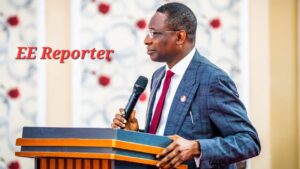
The Executive Chairman of the Economic and Financial Crimes Commission, EFCC, Mr. Ola Olukoyede has called on students and youths across the country to be the builders of their own future by embracing integrity and accountable conduct.
Eereporter.com
He gave the charge in Abuja on Wednesday, September 2, 2026 when students of Wisdom Academy came on a study tour of the EFCC’s headquarters.
The Chairman, who spoke through the Head, Media & Publicity and Spokesperson of the Commission, Deputy Commander of the EFCC, DCE Dele Oyewale, stated the future of youths will be determined by what they build themselves through hard work, integrity and avoidance of criminal tendencies
“As a Commission, we are telling you that there is a future ahead but that future is to be built by you; you have to make a choice on the future that you want to build for yourself. Many young people today are taking short cuts, the short cuts of criminality, internet fraud, all manner of compromises, financial infraction and thinking that is the way to go. That is not the way to go. If you take short cuts, you are likely to be cut short. So, as young people that are interested in a future that is going to be profitable for the entire country, embrace values that are sustainable, profitable, time-tested values that you can leverage on, so that tomorrow you can be so sure that what you have built today can be able to sustain you tomorrow,” he said.
“The name of your Academy, Wisdom Academy, is very instructive. Wisdom is the ability to see a problem before it becomes an emergency. And when you look at Nigeria today, for our youths and for those that are a bit advanced in age, you will see that corruption is a problem and it takes wisdom for us to be able to navigate, pattern our lives overcome this challenge,” he said.
Olukoyede noted that many Nigerians have found themselves between either accepting to be part of the problem of corruption facing Nigeria or joining in the efforts to combat it for the benefit of all.
“We have found ourselves at a juncture in our country to either decide to be part of the problem or be the solution. As young people, your future is not a ready-made structure. Your future is a building that must be built. Your future is not a tower that is waiting for you to just go into, it is a super structure that you need to build yourself.”
The EFCC Chairman warned them against compromising the values and ethics that have the potential to help them achieve life goals, adding that “Nigeria is not going to build your future for you. The EFCC is not going to build your future for you. You are going to build your future by yourself, by your industry, resourcefulness, vision and commitment to profitable values.”
“That is why as a young fellow, you have to stand up and say, I am going to do something differently. The only firm place that you can stand to make you rule the world is the firm place of integrity, uprightness and personal commitment to say that I am not going to be part of the crowd, I am going to separate myself to be able to move my generation forward,” he added.
“At the EFCC, we are doing a lot of work, we fight all manner of economic and financial crimes; contract fraud, procurement fraud, money laundering, illicit flow of funds, banking fraud, anything that is a compromise of established extant rules and regulations concerning finances and the economy, we fight them. But we cannot fight these alone if you and I do not resolve to be part of the solution rather than part of the problem,” he said.
Speaking on the need for young Nigerians to have good role models, Head, Enlightenment and Reorientation, Assistant Commander of the EFCC, ACE II Aisha Muhammed stated that the EFCC is concerned with young Nigerians having role models that can shape their perception for a better future.
“It is very important and it is something we try to talk to the younger ones because if there is anything we realized that is affecting the young generation is lack of role models, they don’t have mentors. The EFCC is always ready to have the younger ones, you are our topmost stakeholders, because we are catching them young to build up a better generation and a better Nigeria,” she said.
Muhammed told the visitors that the EFCC does not only prosecute economic and financial crimes but also prevent and investigate financial offences. “Before EFCC arrests anyone, the EFCC tries to talk to people, we go to schools, we have Integrity Clubs in Primary and Secondary schools, we have Zero Tolerance clubs in tertiary institutions and then we have the EFCC-NYSC CDS group. We do sensitization, we have Radio and TV programmes,” she further said.
She called on the students to live a life of integrity and avoid get-rich-quick syndrome and peer pressure. “We try to explain to the people that there is no comparison, our fingers are not equal. “Say not to peer pressure, don’t allow anybody to pressure you, you are unique, beautiful and you are the most important person even if you are sitting with a billionaire,” she added.
Olukoyede
Representative of Wisdom Academy, Dr. Wycleff Dah appreciated the EFCC, stating that the first objective of Wisdom Academy is to develop good citizenship in Nigeria.
“The very first objective is to develop youths that are patriotic, civil, bold, wise and clever in terms of their schooling, careers, money, relationship with others. And I think you have helped in no small way to move that objective to a great point,” she said.
Eereporter.com
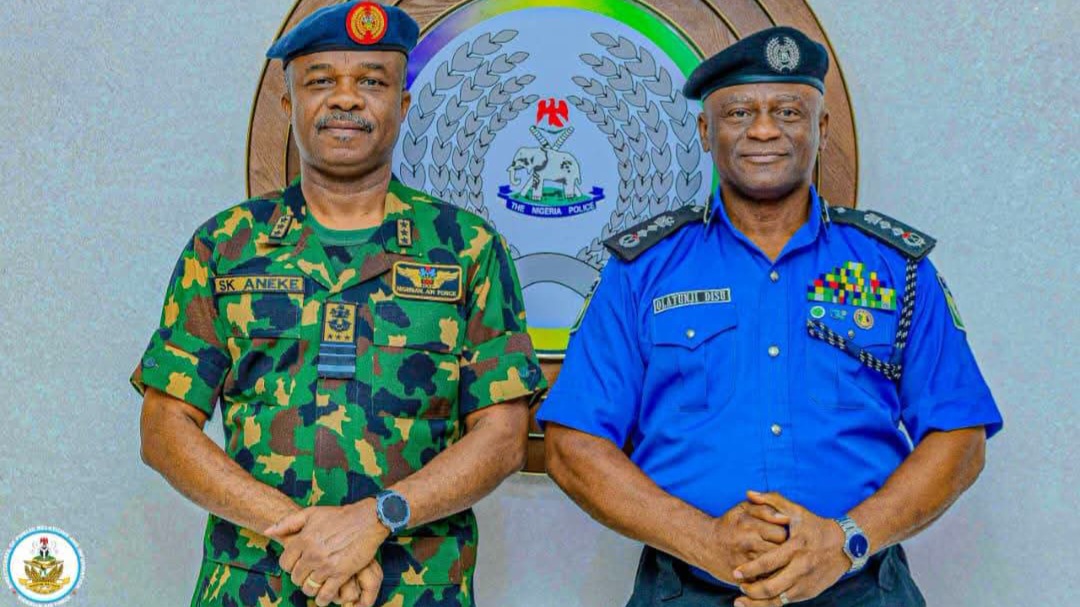
NAF, NPF Deepen Strategic Partnership Ahead of 2027 General Elections
The Chief of the Air Staff (CAS), Air Marshal Sunday Kelvin Aneke, on 2 September 2026 paid a courtesy visit to the Inspector-General of Police (IGP), Mr Olatunji Rilwan Disu NPM, at the Force Headquarters, Abuja, reaffirming the longstanding partnership between the Nigerian Air Force (NAF) and the Nigeria Police Force (NPF) in advancing national security.
Eereporter.com
The engagement highlighted the importance of sustained inter-agency cooperation, building on the strong collaboration between both Services in addressing security challenges across the country.
Ahead of the 2027 General Elections, the CAS emphasised the need for closer coordination, timely information sharing and strengthened institutional cooperation to support a secure and peaceful electoral environment. He also identified opportunities to further enhance collaboration through the effective utilisation of existing capabilities and expertise, while exploring areas where NAF Intelligence, Surveillance and Reconnaissance (ISR) assets could support Police operations.
In response, the IGP welcomed the engagement and reaffirmed the Nigeria Police Force’s commitment to continued partnership with the NAF and other security agencies in support of national security and peaceful elections.
The meeting further explored opportunities for joint capacity development, including knowledge exchange in intelligence, forensics, crime scene management and criminal investigations. The CAS noted that stronger cooperation in training and professional development would enhance the capabilities of personnel across both Services and further consolidate their institutional partnership.
NPF, NAF
The engagement underscores the shared commitment of the NAF and NPF to working in synergy, strengthening professional capacity and contributing to a safer and more secure Nigeria.
Eereporter.com
EFCC Arraigns Mahmud A. Abubakar for Alleged N1.09b Fraud in Abuja
The Economic and Financial Crimes Commission, EFCC, on Wednesday, September 2, 2026, arraigned one Mahmud A. Abubakar before Justice N.C. Nwabulu of the Federal Capital Territory High Court, Maitama, Abuja.
Eereporter.com
Abubakar was arraigned on a two-count charge bordering on retention of proceeds of a criminal activity to the tune of N1,098,976,008 (One Billion, Ninety-Eight Million, Nine Hundred and Seventy-six Thousand and Eight Naira).
Count one reads: “That you Mahmud A. Abubakar, between January 2024 and December 2024, within the jurisdiction of this Honourable Court did retain control of the proceeds of a criminal conduct totalling N795,360,000 (Seven Hundred and Ninety-five million, Three hundred and Sixty Thousand Naira) in your Access Bank with name Mahmud A. Abubakar and number 0057310017, which sum you knew that the same was derived from criminal conduct and thereby committed an offence contrary to Section 17(a) of the Economic and Financial Crimes Commission (Establishment) Act 2004 and punishable under Section 17(b) of the same Act.”
Count two reads: “That you Mahmud A. Abubakar, between January 2024 and December 2024, within the jurisdiction of this Honourable Court did transfer proceeds of a criminal conduct totalling N303,616,008 (Three Hundred and Three Million, Six Hundred and Sixteen Thousand Eight Naira) from your Access Bank with name Mahmud A. Abubakar and number 0057310017, to one Suleiman Umar which sum you knew that the same was derived from criminal conduct and thereby committed an offence contrary to Section 17(a) of the Economic and Financial Crimes Commission (Establishment) Act 2004 and punishable under Section 17(b) of the same Act.”
He pleaded “not guilty,” to the charges, prompting the prosecution counsel, Y.Y. Tarfa, to request a trial date and for the defendant to be remanded in a Correctional Centre, while the defence counsel, A. M. Aliyu, filed a bail application, which was not opposed by the prosecution counsel.
Justice Nwabulu granted the defendant bail with two sureties, both of whom must be Level 15 civil servants, with one required to be a landed property owner in the Federal Capital Territory, FCT.

EFCC
The judge further ordered that the defendant be remanded in Kuje Correctional Centre, Abuja, pending the fulfilment of the bail conditions and adjourned the matter till September 30, 2026, for commencement of trial.
Eereporter.com
-
 Crime1 year ago
Kogi Assembly Considers Law To Regulate Rent, Establish Control Board: Tenancy Law
-

 News1 year ago
Atiku Reveals Why He Failed To Pick Wike As Running Mate In 2023
-
 Akwa Ibom2 years ago
The Apostolic Church Gets New Territorial Chairman, Exco
-

 Crime2 years ago
Federal High Court Jails 2 For Vandalizing Transformer, Telecom Mast In Kogi
-
 News2 years ago
The Apostolic Church Gets New National President, Executive
-
 Akwa Ibom2 years ago
Umo Eno Commences Payment Of 80,000 Naira Minimum Wage With Arrears
-

 News1 year ago
Senator Natasha Returns To Senate With Husband Amid Seat Dispute
-
 Economy1 year ago
Kiyosaki: Is Tinubu’s Government Afraid Of Ibrahim Traore?