
News
Shared Learning, Evidence-Based Strategies Only Remedy To Africa’s Corruption Scourge: ICPC Nigeria, EACC Kenya


Shared Learning, Evidence-Based Strategies Only Remedy To Africa’s Corruption Scourge: ICPC Nigeria, EACC Kenya
Shared learning and evidence-based strategies only remedy to Africa’s corruption scourge, says ICPC Nigeria and EACC Kenya.
In a rare unison of African anti-corruption voices, the Chairman of Nigeria’s Independent Corrupt Practices and Other Related Offences Commission (ICPC), Dr. Musa Adamu Aliyu, SAN, and Kenya’s Ethics and Anti-Corruption Commission (EACC), through its High Commissioner, have declared that no single nation can win the war on graft in isolation. Addressing a groundbreaking diplomatic dialogue in Abuja, they jointly called for a continent-wide shift towards shared learning, data-driven strategies, and cross-border institutional collaboration, warning that without evidence-based prevention, sustainable development remains a mirage.
Chairman of the Independent Corrupt Practices and Other Related Offences Commission (ICPC), Dr. Musa Adamu Aliyu, SAN, has issued a rallying call for African nations to abandon siloed approaches to fighting corruption, urging instead the adoption of shared learning and evidence-based strategies across the continent.
Dr Aliyu made the remarks on Tuesday during the maiden edition of the International Diplomatic Dialogue, hosted at the ICPC headquarters in Abuja. He described the forum as a unique platform for international engagement, knowledge exchange, and collaborative learning, one designed to sharpen anti-corruption frameworks throughout Africa.
Highlighting the persistent threat that corruption poses to sustainable development, economic growth, social justice, and public trust, the ICPC Chairman stressed that only evidence-based prevention methods could yield lasting results. In a nod to the Kenyan experience, he commended the EACC’s initiatives, noting that lessons from their journey could serve as a catalyst for transformative action in other African countries.
“Continuous engagement and learning from successful international models will be crucial in shaping robust anti-corruption frameworks,” Dr. Aliyu said. He thanked the Anti-Corruption Academy of Nigeria (ACAN), led by Professor Sheriff Ghali Ibrahim, for organising the event and urged participants to ask critical questions and share perspectives freely. He concluded by expressing hope that similar dialogues would be held with other nations, thereby strengthening a global network of integrity-driven institutions.
In his welcome address, the Provost of ACAN, Professor Sheriff Ghali Ibrahim, underscored the importance of mutual learning and international cooperation in institutional development. He explained that Kenya was selected for the maiden dialogue because of its resilient anti-corruption history and notable achievements, including significant asset recoveries and the successful deployment of digital governance platforms that have drastically reduced bribery opportunities.
Presenting the keynote address, the Kenyan High Commissioner to Nigeria, Ambassador Isaac Keen Parashina, traced the evolution of Kenya’s anti-corruption framework. He identified the country’s 2010 Constitution as a landmark reform that entrenched integrity, transparency, and accountability as national values. He further highlighted the establishment of key institutions—namely the Ethics and Anti-Corruption Commission (EACC), the Office of the Director of Public Prosecutions (ODPP), and the Asset Recovery Agency (ARA).
Ambassador Parashina also outlined Kenya’s legislative and institutional reforms, including the Anti-Corruption and Economic Crimes Act and the Bribery Act, which have strengthened accountability in both public and private sectors. He noted that specialised anti-corruption courts and a coordinated multi-agency approach had enhanced Kenya’s capacity to investigate, prosecute, and recover the proceeds of corruption.
Crucially, the High Commissioner spotlighted technology as an enabler of transparency, citing platforms such as the e-Citizen Portal, the Integrated Financial Management Information System (IFMIS), and electronic government procurement systems.
According to him, these innovations have significantly reduced opportunities for corruption by minimising human interaction in public service delivery and tightening oversight of government expenditure.
While acknowledging persistent challenges—including cyber-enabled corruption and judicial delays—Ambassador Parashina stressed that sustained progress demands continuous adaptation, stronger institutions, and enhanced international collaboration.
He called for deeper cooperation between Kenya and Nigeria in asset recovery, financial intelligence, and capacity building to promote good governance and sustainable development across Africa.

EACC Kenya, ICPC
Delivering a goodwill message, the Deputy High Commissioner of Sierra Leone to Nigeria, Major General Dauda Alfa, described corruption as a major driver of insecurity and a prime cause of deprivation in essential public services.
He highlighted asset declaration as a key anti-corruption measure adopted by the Government of Sierra Leone and expressed confidence that the dialogue would yield practical, evidence-based solutions to address the menace.
J. Okor Odey anipr.
Head, Media & Public Communications, ICPC.
Eereporter.com
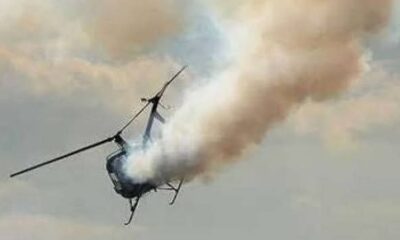










NAF Activates Immediate Search and Rescue Following Aircraft Accident in Ondo Community
The Nigerian Air Force (NAF) has activated an immediate Search and Rescue operation following an ATR-42 aircraft accident in the Igbokoda area of Ondo State on 5 October 2026.
Eereporter.com
The aircraft was on a routine mission from Benin to Lagos when the accident occurred. Search and Rescue operations, in coordination with relevant authorities and emergency response agencies, are currently ongoing.
The NAF is committed to ensuring the success of the ongoing Search and Rescue efforts. Further details will be communicated in due course.
Helicopters crash
Ehimen Ejodame
Air Commodore
Director of Public Relations and Information
Headquarters, Nigerian Air Force
5 October 2026
Eereporter.com
News
Suspected Terrorists Kills Bus Driver, Abduct 18 Sokoto Health College Students Travelling to Oyo
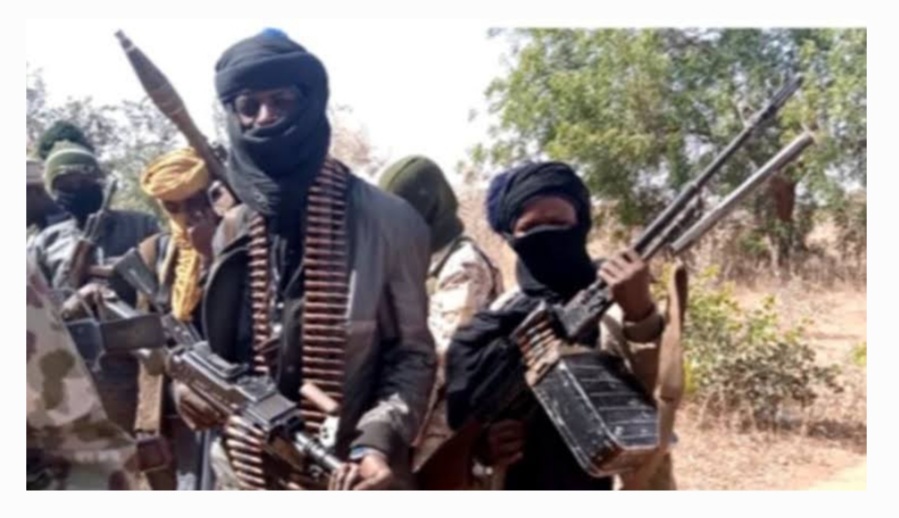
Suspected Terrorists Kills Bus Driver, Abduct 18 Sokoto Health College Students Travelling to Oyo
Suspected terrorists have abducted about 18 students of Gamji College of Health Technology, Sokoto State, who were travelling to their home towns in Oyo State, SaharaReporters has learnt. The incident reportedly occurred within the past 48 hours along the route to Oyo State, with the driver of the bus allegedly killed at the scene.
Eereporter.com
A youth leader from Oke-Ogun, who confirmed the incident to SaharaReporters during an exclusive interview, said the victims were not students of Usmanu Danfodiyo University (UDUS), as earlier reported.
According to him, the students were travelling in a chartered bus from Gamji College of Health Technology in Sokoto to Oke-Ogun, particularly Igboho in Oyo State.
“Sadly, the unfortunate incident is being confirmed by me because I’m from Oke-Ogun too, and our people have confirmed that it truly happened in the past 48 hours.
“But it wasn’t a bus conveying UDUS students. It was a bus taking students from Gamji College of Health Technology, Sokoto, to Oke-Ogun, Igboho to be precise.
“The driver was killed and all the students were kidnapped. They have reached the Mokwa side,” the youth leader said. Other sources familiar with the incident told SaharaReporters that the number of abducted students could be as many as 18.
The sources said the students were travelling in a chartered bus arranged by their school to convey them to their respective home towns in Oyo State. They were reportedly all taken away by the assailants after the driver was killed.
The reported movement of the abducted students towards the Mokwa axis has raised concerns among residents and relatives of the victims, as the area has previously witnessed attacks and abductions along major roads.
The victims were travelling from Ibadan, Oyo State, to orientation camps in Abia and Akwa Ibom when gunmen reportedly attacked their two buses along the Owerri-Onitsha Road in Umunoha, Imo State, on Thursday.
Isiah Akpan, the Managing Director of Uko Akwa Ibom Motors Nigeria Limited, said the abductors had demanded N50 million for each victim, putting the total ransom at N950 million.
Reacting in a post on X, human rights activist and African Action Congress (AAC) presidential candidate, Omoyele Sowore, said the incident reinforced his longstanding position that the NYSC had “outlived its usefulness in its present form.”

Terrorists Attack
“You cannot force young Nigerians to ‘serve their fatherland’ when the same country cannot guarantee their safety while they travel to their places of service,” he wrote.
Sowore called for the immediate suspension of the scheme and its eventual abolition, proposing that corps members should, in the interim, be allowed to serve within their states of origin.
Eereporter.com
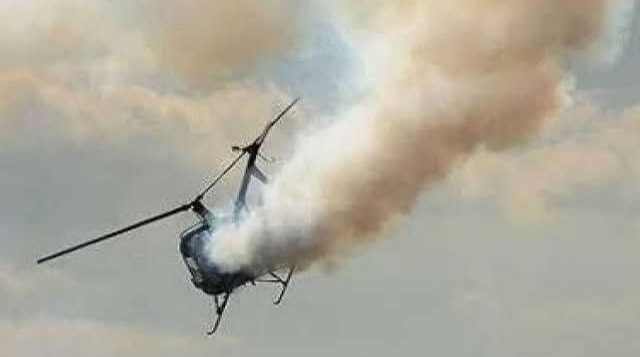
Many Feared Dead as Helicopter Crashes in Ondo Community
Many persons are feared dead after a helicopter crashed in Igbokoda, headquarters of Ilaje Local Government Area of Ondo State.
Eereporter.com
The incident, which occurred on Monday, October 5, 2026, threw the coastal community into panic, with residents scampering for safety.
Details surrounding the crash remained sketchy as of the time of filing this report.
It was yet unclear how many persons were aboard the helicopter, while the condition of possible survivors could not be immediately ascertained.
Sources in the community told SaharaReporters that efforts were underway to access the crash site and determine the extent of casualties and circumstances that led to the crash.
“Yes, it’s true. A helicopter just crashed now at Igbokoda, Ondo state,” a resident told SaharaReporters.
Ondo State Police Command spokesperson Abayomi Jimoh told SaharaReporters he was unaware of the incident but would make inquiries.
Helicopters crash
Igbokoda is a riverine community and commercial hub of Ilaje, one of the oil-rich areas of Ondo State, where helicopters are frequently used for oil and gas logistics operations.
Nigeria has recorded a series of helicopter crashes in recent years, many involving oil workers and military aircraft, raising fresh concerns over aviation safety and regulatory compliance.
Eereporter.com
-
 Crime1 year ago
Kogi Assembly Considers Law To Regulate Rent, Establish Control Board: Tenancy Law
-

 News2 years ago
Atiku Reveals Why He Failed To Pick Wike As Running Mate In 2023
-

 Akwa Ibom2 years ago
The Apostolic Church Gets New Territorial Chairman, Exco
-

 Crime2 years ago
Federal High Court Jails 2 For Vandalizing Transformer, Telecom Mast In Kogi
-
 News2 years ago
The Apostolic Church Gets New National President, Executive
-

 Akwa Ibom2 years ago
Umo Eno Commences Payment Of 80,000 Naira Minimum Wage With Arrears
-

 News2 years ago
Senator Natasha Returns To Senate With Husband Amid Seat Dispute
-

 Economy1 year ago
Kiyosaki: Is Tinubu’s Government Afraid Of Ibrahim Traore?