
News
Rivers Proxy Battle Between Nyesom Wike, Simi Fubara Before Supreme Court: Chidi Odinkalu

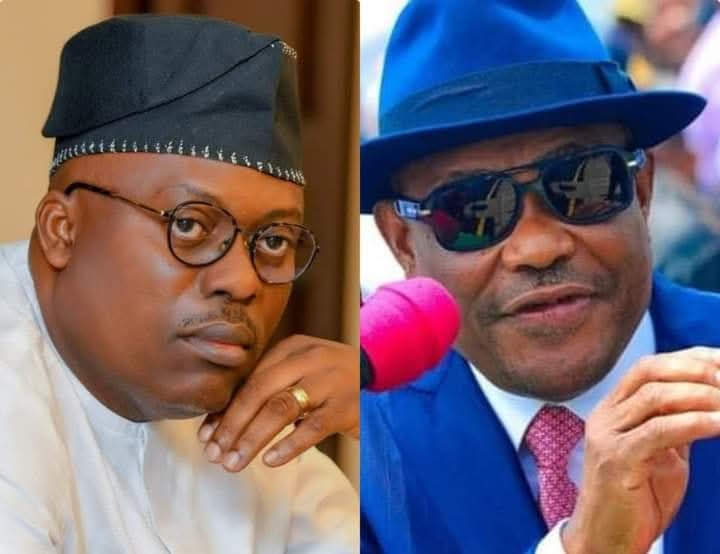
Rivers Proxy Battle Between Nyesom Wike, Simi Fubara Before Supreme Court: Chidi Odinkalu
Rivers proxy battle between Nyesom Wike and Simi Fubara before dupreme court. One important difference, though, is that the issues in Rivers State today hardly involve principle or the public interest.
Depending on one’s perspective, February 10, 2025, promises to be Proxy Wars Day at the Supreme Court of Nigeria in Abuja.
On that day, a panel of five Justices will hear arguments on seven appeals connected with the synthetic political crisis in Rivers State.
The issues that the court will be asked to decide include the validity of last October’s local government elections in the state, the fate of the faction in the Rivers State House of Assembly that claims to have switched affiliations from the Peoples’ Democratic Party (after being elected on the platform) to the ruling All Progressives Congress (APC), the legality of the state’s 2025 budget passed by the rump of the state House of Assembly, and the effort to importune judges into denying Rivers State access to its share of the federation account.
The effort to frame these as legal issues is transparently valiant.
Despite the shameful conversion of judges into politicians in the Rivers State crisis—or indeed because of precisely that fact—the imminence of Rivers State Proxy Wars Day at the Supreme Court is evidence of what has gone wrong with Nigeria’s judicial system and why fixing it is essential for the health of Nigeria’s attempt at government with electoral legitimacy.
This is not the first time that legal disputes about power and how to share the spoils from it have ended up at the highest court in the land.
That tendency in Nigeria is over a century old. It arguably goes back to the 1921 judgment of the Judicial Committee of the Privy Council in the case of Amodu Tijani over the effort by the colonial authorities to split Herbert Heelas Macaulay from his support for Eshugbayi Eleko, the Oba of Lagos.
To hear those cases before the Judicial Committee of the Privy Council in 1920, Herbert Macaulay travelled to London with the Oba’s Staff of Office in support of Amodu Tijani and the Idejo Chiefs of Lagos.
From London, he issued a statement claiming that the Eleko was the King of over 17 million Nigerians and in possession of territory more than three times that of Great Britain.
Despite a healthy revenue of over £4 million, he claimed, the British had reneged on a treaty commitment to compensate the Eleko.
Embarrassed at being publicly called duplicitous in this way, the British required the Eleko to disown Herbert Macaulay.
He issued a public statement clarifying his position on Herbert Macaulay’s statement but declined to disown him through the Oba’s Bell Ringers, as the Brits required.
Unable to secure the popular Eleko’s support, the colonists decided to head off rising tension by deposing him.
On 6 August 1925, they issued an ordinance de-stooling him, and two days later, on 8 August, they arrested and removed Eleko for internal banishment in Oyo. In his place, they installed Oba Ibikunle Akitoye.
Oba Akitoye’s rule lasted an uncomfortably brief three years, largely because he lacked the support of the people of Lagos. Indeed, in 1926, he suffered a physical assault by his people.
Supported by the elite and people of Lagos, the deposed Eleko took his case to the courts, fighting again to the Privy Council, which decided on 19 June 1928 in favour of his claim for leave for a writ of habeas corpus. This sealed the fate of Oba Akitoye, suspected to have facilitated his earthly demise shortly thereafter.
The crisis in Rivers State shares some unsettling similarities with the events in Lagos nearly one century ago.
In Rivers today, as in Lagos then, a powerful man – in this case, the current Minister of the Federal Capital Territory and immediate past governor of Rivers State, Nyesom Wike – seeks to banish the current governor of Rivers State, Siminalayi Fubara, from office using surrogates beholden to him in the state House of Assembly.
One important difference, though, is that the issues in Rivers State today hardly involve principle or the public interest. Framed though they are in legalese, these cases from Rivers State are about power and money grab.
This is not a first. It is the standard procedure of the current FCT Minister to seek to inveigle judges into acting as his political surrogates under a ruse of law.
In instigating this crisis, Mr Wike suffered a characteristic failure of his frontal lobe. He forgot his public vow to “give himself that respect” and not interfere in the affairs of the state after his exit from the office in May 2023. Rather, since leaving office as the state governor, Mr Wike has sought to install himself as the minister in Abuja and sole administrator in Port Harcourt.
He makes no effort to conceal that much of what passes as his political dare-devilry appears to be accomplished under the influence of sufficiently gluttonous amounts of dangerous beverage to entitle him to access to a defence of automatism in criminal law.
In October 2024, he told Seun Okinbaloye on Channels Television with undisguised hubris that the only solution to the crisis in Rivers State was for the incumbent governor to “obey court judgment.”
This was no advocate for the rule of law, however. Instead, Mr. Wike projected an air of political impregnability purchased with a currency bearing a distinct whiff of procured judicial cookery.
This is not entirely unexpected of an ambitious Nigerian politician without an alternative address (apologies to Deji Adeyanju). What is more difficult to overlook is the high judicial tolerance for the undisguised political importuning of judges.
Nigeria’s judicial system has been overtaken by a category known as “political cases.” In November 2023, former Chief Justice of Nigeria, Olukayode Ariwoola, reported that his Supreme Court registered 1,271 motions and appeals from September 12, 2022, to July 11, 2023. The court “heard 388 political appeals, 215 criminal appeals and 464 civil appeals.”
Two years earlier, in 2021, Ariwoola’s predecessor, Tanko Muhammad, reported that the court’s portfolio of 269 appeals disposed of included 139 civil appeals, 102 criminal appeals, and 28 “political cases”.
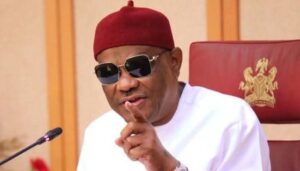
Nyesom Wike
According to CJN Ariwoola’s report, the court “delivered a total number of 251 judgments, of which 125 were political appeals, 81 were civil appeals, and 45 were criminal appeals.” The court’s output fell by 6.69% in just two years, but “political cases” rose from 10.67% to 49.8%. Even allowing for the fact that 2023 was an election year, this is a system collapse.
Nigeria’s judges appear to have decided that politicians are the only people entitled to exit from the courts. In turn, the politicians are happy to enjoy this exclusivity and to overwhelm the courts to the point that even judges now complain. They hire the priciest lawyers to frame undisguised power and money grabs as questions of law.
The Supreme Court can end this, but it is reluctant. Instead, the court affords powerful politicians the tolerance they are unwilling to extend to lesser mortals, preferring to enable this joint enterprise of senior lawyers and politicians. At the same time, it fetters its capacity to determine what should be a question of law deserving of its rarefied attention.
This sucks for many reasons. It prostitutes the bench, casualizes the constitutional guarantee of fair trial “within a reasonable time,” and portrays the judiciary as captured.
To describe this as Supreme pusillanimity is to be generous. It is a form of judicial lasciviousness syndrome, promenading judicial wares before political gawkers in a peonage system where the only effective currency is high political patronage.
The Supreme Court can make a bold statement in these Rivers State cases. It should be ready for many more proxy war days if it doesn’t.







Economy
NAF, Innoson Vehicle Manufacturing (IVM) Sets for Partnership to Advance Indigenous Defence Capacity
NAF, Innoson Vehicle Manufacturing (IVM) Sets for Partnership to Advance Indigenous Defence Capacity
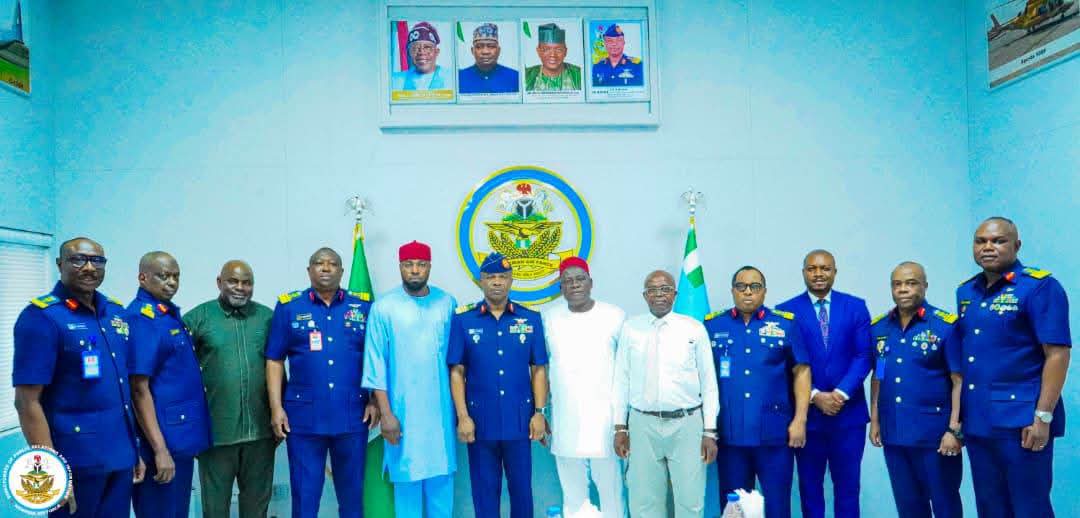
The Chief of the Air Staff (CAS), Air Marshal Sunday Kelvin Aneke, has expressed the readiness of the Nigerian Air Force (NAF) to explore a strategic partnership with Innoson Vehicle Manufacturing (IVM) to strengthen indigenous capacity in aircraft spares production, technology transfer and specialised technical training.
Eereporter.com
The CAS stated this on 29 September 2026 when the Chairman of IVM, Chief Dr Innocent Ifediaso Chukwuma, CON, paid a courtesy visit to him at Headquarters NAF, Abuja.
Discussions focused on leveraging IVM’s indigenous manufacturing capabilities to support NAF operational requirements and advance local content in the defence sector. Chief Chukwuma highlighted IVM’s interest and capability in the production of selected aircraft parts and spares, while also showcasing its CNG and electric vehicle manufacturing capabilities.
The CAS welcomed the initiative and reaffirmed NAF’s commitment to partnerships that promote local production, technology transfer and human-capacity development. He also expressed interest in exploring affordable vehicle acquisition options for NAF personnel through convenient payment arrangements, subject to further engagement and applicable procedures.

Innoson Vehicle Manufacturing (IVM)
The engagement underscores the CAS’s drive to harness indigenous innovation and local expertise to strengthen NAF capability and personnel welfare, while supporting Nigeria’s broader pursuit of technological self-reliance and industrial development.
Eereporter.com
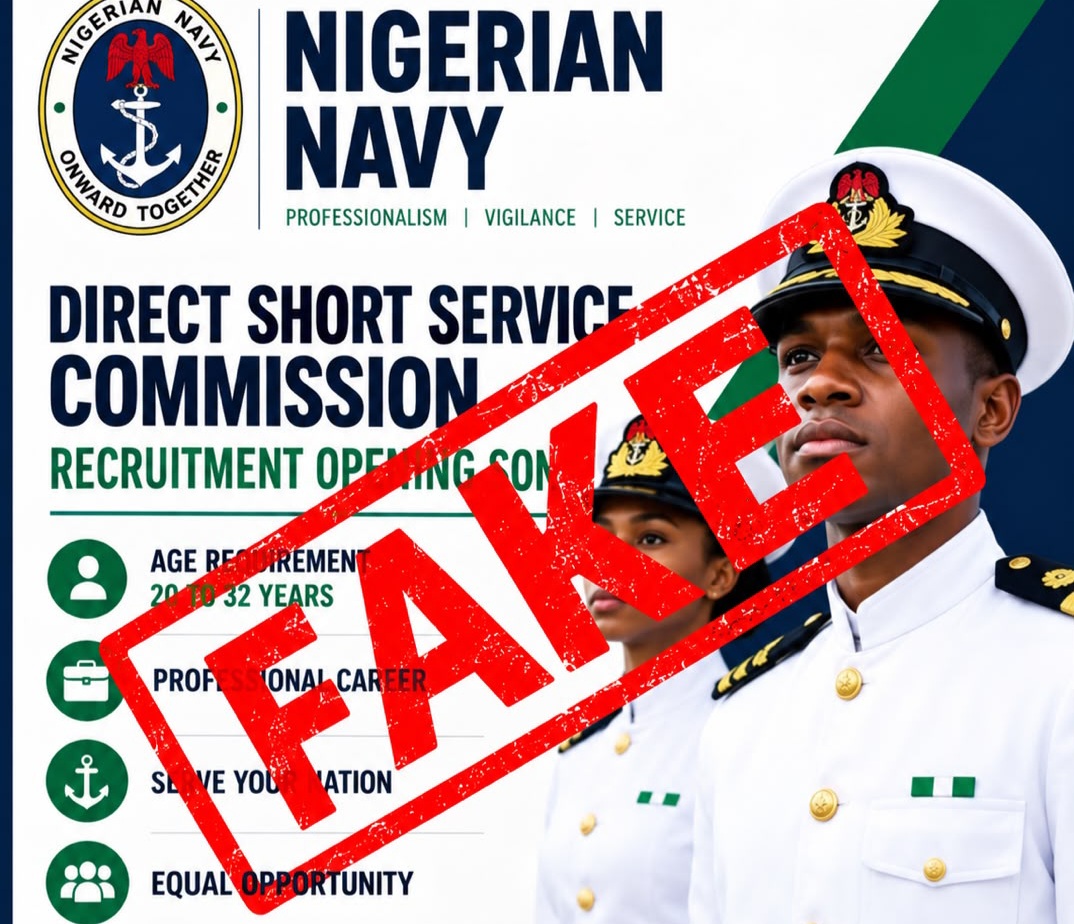
Nigerian Navy Disclaims Recurrent Fake Recruitment on Social Media
The Nigerian Navy has observed the recurrent circulation of fake recruitment notices on social media platforms and other unofficial channels, purportedly announcing Nigerian Navy recruitment exercises. The Nigerian Navy wishes to state categorically that such notices are not authorised and should not be regarded as official recruitment announcements.
Eereporter.com
The Nigerian Navy therefore advises prospective applicants and members of the public to exercise caution and disregard recruitment information obtained from unofficial social media accounts, websites or other unauthorised sources. All official information concerning Nigerian Navy recruitment, including eligibility requirements, application procedures, timelines and categories, will be communicated exclusively through authorised Nigerian Navy channels. The official recruitment website is http://www.joinnigeriannavy.navy.mil.ng, while the Nigerian Navy’s official website is https://navy.mil.ng.
Members of the public are particularly warned against making payments to individuals, agents or unauthorised platforms in connection with Nigerian Navy recruitment. Recruitment into the Nigerian Navy is free of charge, and the Service does not authorise third parties to recruit applicants or collect recruitment fees on its behalf.

Nigerian Navy
The Nigerian Navy will continue to monitor and address the circulation of fraudulent recruitment information and urges the public to rely solely on its official communication channels for accurate and verified information on recruitment exercises.
Signed
AA FOLORUNSHO Director Naval Information
Captain (Nigerian Navy)
Eereporter.com
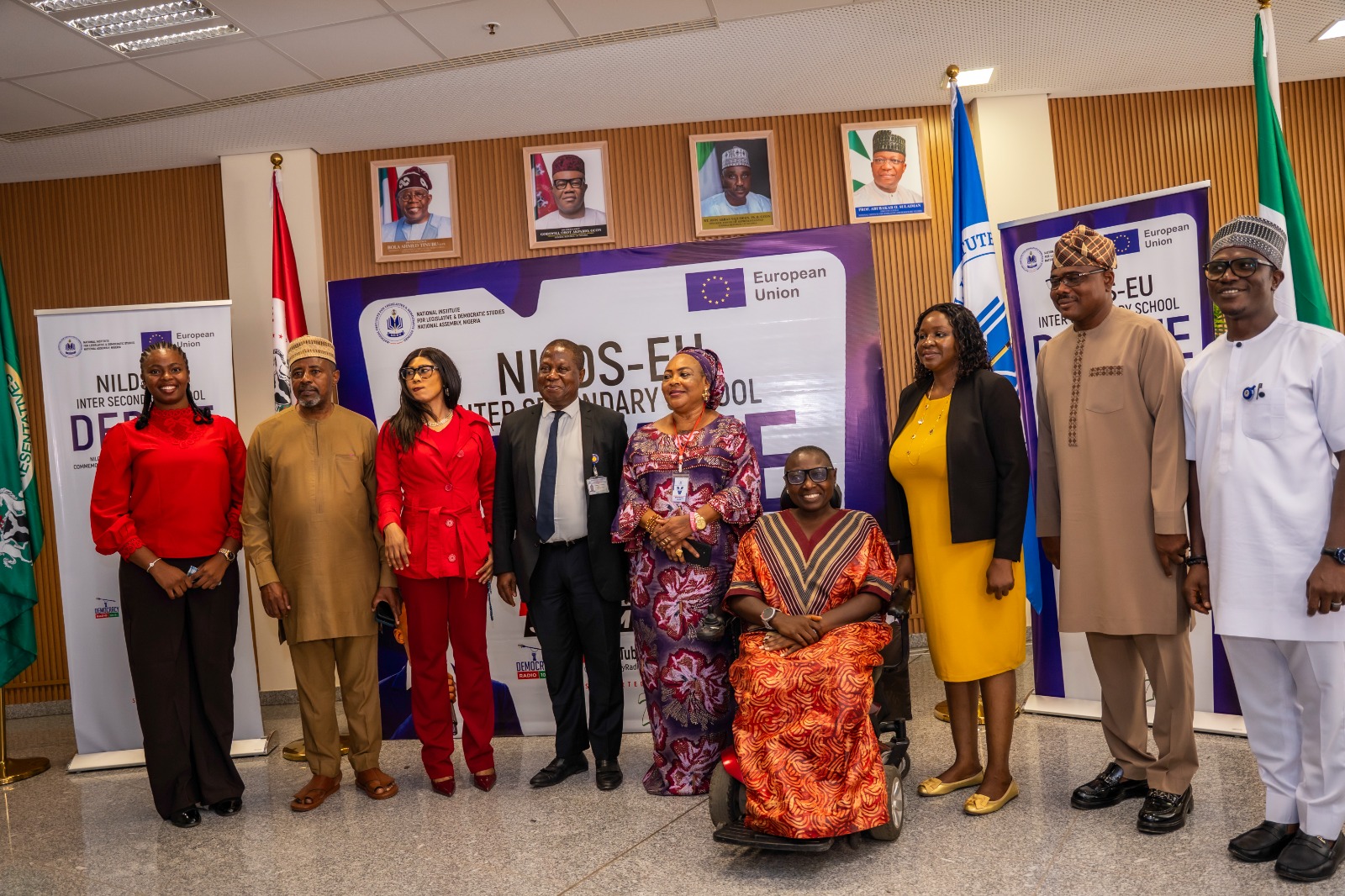
Girl-Child Rights: Six FCT Schools Advance to NILDS-EU Debate Semi-Finals
The National Institute for Legislative and Democratic Studies (NILDS), in collaboration with the European Union (EU), has commenced an inter-secondary school debate aimed at promoting the education, protection, equal opportunities and meaningful participation of the girl child in public affairs.
The initiative, organised as part of activities marking the International Day of the Girl Child, involves 12 secondary schools drawn from the six Area Councils of the Federal Capital Territory (FCT).
The programme is being implemented under the European Union Support for Democratic Governance in Nigeria (EU-SDGN).
Speaking at the opening of the debate in Abuja, the Director-General of NILDS, Professor Abubakar Sulaiman, said increased investment in the education and empowerment of girls, coupled with equal opportunities and greater participation in public affairs, would contribute to Nigeria’s democratic development.
Sulaiman, who was represented by the Acting Director, Department of Legislative Support Services, Professor Amuda Kannike, SAN, said women bring valuable perspectives to governance and should be given greater opportunities to participate in decisions affecting society.
He also called for stronger legislation to protect and advance the rights of women and girls, stressing that progress in the area should not depend solely on individual discretion.
The NILDS Director-General disclosed that recommendations and insights generated from the debate would be forwarded to relevant committees of the Senate and House of Representatives to support legislative discussions on issues affecting the girl child.
Also speaking, European Union Policy Officer, Amira Haid, said the partnership with NILDS demonstrates the EU’s commitment to empowering girls and addressing gender inequalities in Nigeria.
Haid noted that while progress had been made in girls’ education, significant challenges remained, particularly in healthcare and gender equality.
A Senior Research Fellow at NILDS, Dr Doris Heron, commended the participating students for demonstrating a strong understanding of issues affecting the girl child.
She said their contributions showed their ability to engage with complex social and legal issues, including through references to constitutional provisions, international treaties and other relevant legal instruments.
The first stage of the competition featured 12 secondary schools representing the six Area Councils of the FCT.
Following the opening round, six schools were eliminated, while six others progressed to the semi-final stage.
The successful schools are scheduled to compete in the semi-finals on October 5, 2026, while the Grand Finale will hold on October 12, 2026.
The students have debated issues including girl-child empowerment, child marriage, female circumcision and gender stereotypes, providing them with opportunities to research, develop arguments and engage one another on questions of rights, education, equality and development.
The competition is being broadcast on Democracy Radio 104.9 FM, Abuja, with the debates also available on digital platforms to extend the discussions beyond the participating schools.
According to NILDS, the initiative is designed not only as a competition but also as a platform for developing informed, confident and civically engaged young people while drawing greater public attention to the rights and aspirations of the girl child.
The programme will culminate in the Grand Finale on October 12, when the remaining schools will compete for the overall honours.
-
 Crime1 year ago
Kogi Assembly Considers Law To Regulate Rent, Establish Control Board: Tenancy Law
-

 News2 years ago
Atiku Reveals Why He Failed To Pick Wike As Running Mate In 2023
-
 Akwa Ibom2 years ago
The Apostolic Church Gets New Territorial Chairman, Exco
-

 Crime2 years ago
Federal High Court Jails 2 For Vandalizing Transformer, Telecom Mast In Kogi
-
 News2 years ago
The Apostolic Church Gets New National President, Executive
-
 Akwa Ibom2 years ago
Umo Eno Commences Payment Of 80,000 Naira Minimum Wage With Arrears
-

 News2 years ago
Senator Natasha Returns To Senate With Husband Amid Seat Dispute
-
 Economy1 year ago
Kiyosaki: Is Tinubu’s Government Afraid Of Ibrahim Traore?