
News
Rivers Proxy Battle Between Nyesom Wike, Simi Fubara Before Supreme Court: Chidi Odinkalu

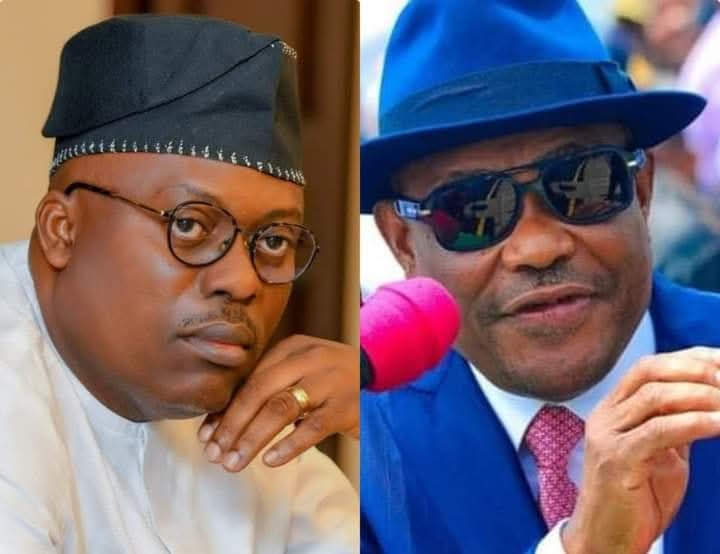
Rivers Proxy Battle Between Nyesom Wike, Simi Fubara Before Supreme Court: Chidi Odinkalu
Rivers proxy battle between Nyesom Wike and Simi Fubara before dupreme court. One important difference, though, is that the issues in Rivers State today hardly involve principle or the public interest.
Depending on one’s perspective, February 10, 2025, promises to be Proxy Wars Day at the Supreme Court of Nigeria in Abuja.
On that day, a panel of five Justices will hear arguments on seven appeals connected with the synthetic political crisis in Rivers State.
The issues that the court will be asked to decide include the validity of last October’s local government elections in the state, the fate of the faction in the Rivers State House of Assembly that claims to have switched affiliations from the Peoples’ Democratic Party (after being elected on the platform) to the ruling All Progressives Congress (APC), the legality of the state’s 2025 budget passed by the rump of the state House of Assembly, and the effort to importune judges into denying Rivers State access to its share of the federation account.
The effort to frame these as legal issues is transparently valiant.
Despite the shameful conversion of judges into politicians in the Rivers State crisis—or indeed because of precisely that fact—the imminence of Rivers State Proxy Wars Day at the Supreme Court is evidence of what has gone wrong with Nigeria’s judicial system and why fixing it is essential for the health of Nigeria’s attempt at government with electoral legitimacy.
This is not the first time that legal disputes about power and how to share the spoils from it have ended up at the highest court in the land.
That tendency in Nigeria is over a century old. It arguably goes back to the 1921 judgment of the Judicial Committee of the Privy Council in the case of Amodu Tijani over the effort by the colonial authorities to split Herbert Heelas Macaulay from his support for Eshugbayi Eleko, the Oba of Lagos.
To hear those cases before the Judicial Committee of the Privy Council in 1920, Herbert Macaulay travelled to London with the Oba’s Staff of Office in support of Amodu Tijani and the Idejo Chiefs of Lagos.
From London, he issued a statement claiming that the Eleko was the King of over 17 million Nigerians and in possession of territory more than three times that of Great Britain.
Despite a healthy revenue of over £4 million, he claimed, the British had reneged on a treaty commitment to compensate the Eleko.
Embarrassed at being publicly called duplicitous in this way, the British required the Eleko to disown Herbert Macaulay.
He issued a public statement clarifying his position on Herbert Macaulay’s statement but declined to disown him through the Oba’s Bell Ringers, as the Brits required.
Unable to secure the popular Eleko’s support, the colonists decided to head off rising tension by deposing him.
On 6 August 1925, they issued an ordinance de-stooling him, and two days later, on 8 August, they arrested and removed Eleko for internal banishment in Oyo. In his place, they installed Oba Ibikunle Akitoye.
Oba Akitoye’s rule lasted an uncomfortably brief three years, largely because he lacked the support of the people of Lagos. Indeed, in 1926, he suffered a physical assault by his people.
Supported by the elite and people of Lagos, the deposed Eleko took his case to the courts, fighting again to the Privy Council, which decided on 19 June 1928 in favour of his claim for leave for a writ of habeas corpus. This sealed the fate of Oba Akitoye, suspected to have facilitated his earthly demise shortly thereafter.
The crisis in Rivers State shares some unsettling similarities with the events in Lagos nearly one century ago.
In Rivers today, as in Lagos then, a powerful man – in this case, the current Minister of the Federal Capital Territory and immediate past governor of Rivers State, Nyesom Wike – seeks to banish the current governor of Rivers State, Siminalayi Fubara, from office using surrogates beholden to him in the state House of Assembly.
One important difference, though, is that the issues in Rivers State today hardly involve principle or the public interest. Framed though they are in legalese, these cases from Rivers State are about power and money grab.
This is not a first. It is the standard procedure of the current FCT Minister to seek to inveigle judges into acting as his political surrogates under a ruse of law.
In instigating this crisis, Mr Wike suffered a characteristic failure of his frontal lobe. He forgot his public vow to “give himself that respect” and not interfere in the affairs of the state after his exit from the office in May 2023. Rather, since leaving office as the state governor, Mr Wike has sought to install himself as the minister in Abuja and sole administrator in Port Harcourt.
He makes no effort to conceal that much of what passes as his political dare-devilry appears to be accomplished under the influence of sufficiently gluttonous amounts of dangerous beverage to entitle him to access to a defence of automatism in criminal law.
In October 2024, he told Seun Okinbaloye on Channels Television with undisguised hubris that the only solution to the crisis in Rivers State was for the incumbent governor to “obey court judgment.”
This was no advocate for the rule of law, however. Instead, Mr. Wike projected an air of political impregnability purchased with a currency bearing a distinct whiff of procured judicial cookery.
This is not entirely unexpected of an ambitious Nigerian politician without an alternative address (apologies to Deji Adeyanju). What is more difficult to overlook is the high judicial tolerance for the undisguised political importuning of judges.
Nigeria’s judicial system has been overtaken by a category known as “political cases.” In November 2023, former Chief Justice of Nigeria, Olukayode Ariwoola, reported that his Supreme Court registered 1,271 motions and appeals from September 12, 2022, to July 11, 2023. The court “heard 388 political appeals, 215 criminal appeals and 464 civil appeals.”
Two years earlier, in 2021, Ariwoola’s predecessor, Tanko Muhammad, reported that the court’s portfolio of 269 appeals disposed of included 139 civil appeals, 102 criminal appeals, and 28 “political cases”.
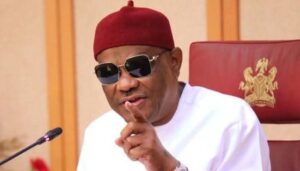
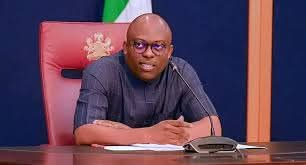
Nyesom Wike
According to CJN Ariwoola’s report, the court “delivered a total number of 251 judgments, of which 125 were political appeals, 81 were civil appeals, and 45 were criminal appeals.” The court’s output fell by 6.69% in just two years, but “political cases” rose from 10.67% to 49.8%. Even allowing for the fact that 2023 was an election year, this is a system collapse.
Nigeria’s judges appear to have decided that politicians are the only people entitled to exit from the courts. In turn, the politicians are happy to enjoy this exclusivity and to overwhelm the courts to the point that even judges now complain. They hire the priciest lawyers to frame undisguised power and money grabs as questions of law.
The Supreme Court can end this, but it is reluctant. Instead, the court affords powerful politicians the tolerance they are unwilling to extend to lesser mortals, preferring to enable this joint enterprise of senior lawyers and politicians. At the same time, it fetters its capacity to determine what should be a question of law deserving of its rarefied attention.
This sucks for many reasons. It prostitutes the bench, casualizes the constitutional guarantee of fair trial “within a reasonable time,” and portrays the judiciary as captured.
To describe this as Supreme pusillanimity is to be generous. It is a form of judicial lasciviousness syndrome, promenading judicial wares before political gawkers in a peonage system where the only effective currency is high political patronage.
The Supreme Court can make a bold statement in these Rivers State cases. It should be ready for many more proxy war days if it doesn’t.








Eld-el-fitr Luncheon: CAS Reaffirms NAF’s Unwavering Resolve Against Terrorism
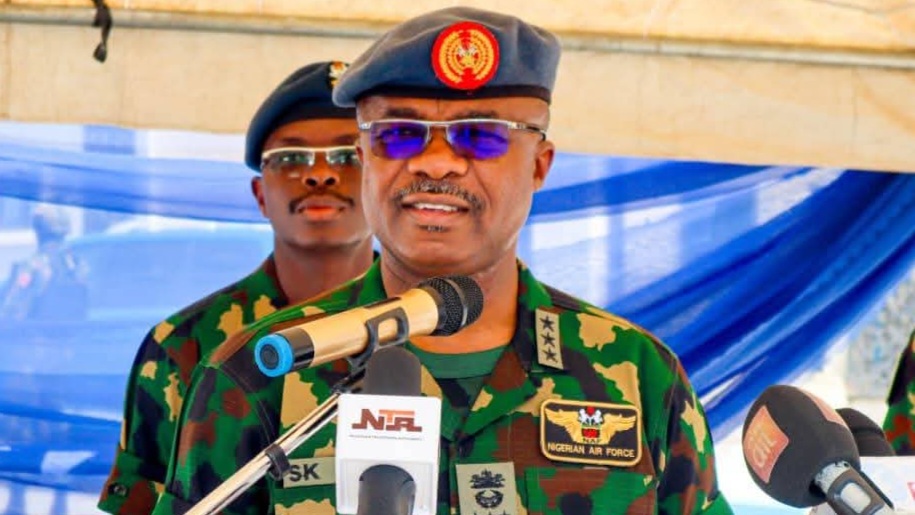
The Chief of the Air Staff (CAS), Air Marshal Sunday Kelvin Aneke, on Saturday, 21 March 2026, hosted Nigerian Air Force (NAF) personnel at an Eid-el-Fitr Luncheon at NAF Base Maiduguri, marking the successful completion of the holy month of Ramadan while honouring the sacrifices of frontline troops engaged in ongoing counter-terrorism operations.
Represented by the Chief of Policy and Plans, Air Vice Marshal AY Abdullahi, the CAS conveyed his goodwill and profound appreciation to personnel for their professionalism, resilience and unwavering dedication in a challenging and evolving operational environment. The Executive Governor of Borno State, Professor Babagana Umara Zulum, was represented at the event by the Honourable Commissioner for Information and Internal Security, Professor Usman Tar.
In his address, the CAS underscored the evolving and adaptive nature of contemporary security threats, noting that adversaries continue to employ desperate tactics in their attempts to undermine stability in the region.
He reassured personnel of the Service’s sustained resolve, highlighting intensified intelligence-driven air operations, including precision strikes, close air support, armed reconnaissance and interdiction missions, which have continued to significantly degrade terrorist capabilities, disrupt their logistics networks and restrict their operational freedom across the theatre.
Air Marshal Aneke further reaffirmed the NAF’s commitment to maintaining relentless operational pressure through enhanced inter-service synergy, the acquisition of advanced platforms and precision-guided capabilities, and sustained investment in personnel welfare and capacity development.
CAS Air Marshal Aneke
He paid tribute to fallen heroes and expressed appreciation to the President and Commander-in-Chief, the Honourable Ministers of Defence, the Chief of Defence Staff, and the Government and people of Borno State for their steadfast support.
The luncheon, attended by senior military leaders, government officials and distinguished guests, reinforced the NAF’s enduring dedication to restoring lasting peace, stability and hope across the North-East.
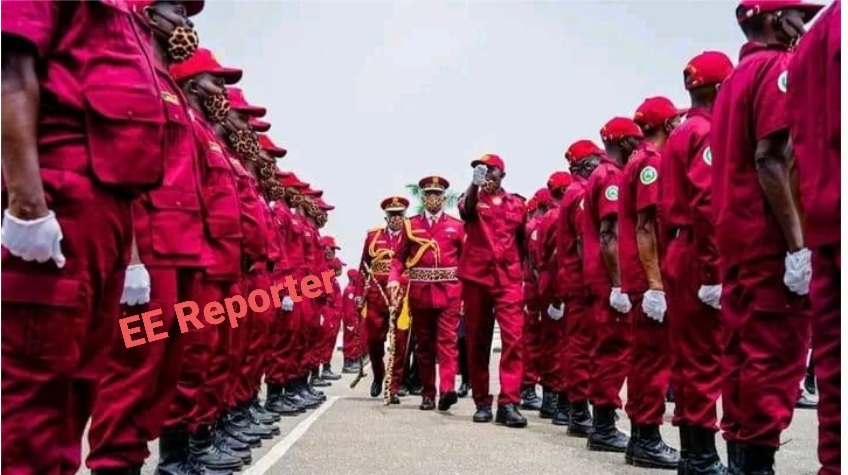
Amotekun Recruitment Has Become Highly Politicised, Says Gani Adams
Amotekun Recruitment has become highly politicised, says Gani Adams. In January 2020, south-west governors launched the Western Nigeria Security Network, codenamed Amotekun, in response to escalating insecurity and persistent protests over alleged incursions by suspected bandits in parts of the region.
The formation of Amotekun came barely six months after Funke Olakunrin, daughter of Reuben Fasoranti, leader of the Afenifere, was shot dead in Ore, Ondo state — an incident that sparked nationwide outrage.
Speaking in an interview with Vanguard, Adams said that over six years after its establishment, heavy politicisation has hindered Amotekun from achieving its founding mandates.
“The recruitment into Amotekun that we agitated for has been highly politicised. It was only the first recruitment that was made, especially in Oyo state, that was less politicised, but others have been highly politicised,” he said.
“I am becoming more disappointed in the way Amotekun is being run now. It is not like the way we thought it would be. Some state actors have seen it as a place to give employment to their political followers.
“The issue of security must not be like that. If you want to achieve any goal from security, you have to look at the background of the people you recruit to that security outfit because it is a case of life and death.
Advertisement
“There is native intelligence that must be brought into it, which is very important. Amotekun could have achieved more than what they are achieving now.”
‘I AM HIGHLY WORRIED’
Adams decried the rising wave of insecurity in the south-west, adding that about seven Yoruba monarchs have been killed by terrorists in recent months.
He said the security situation in the south-west is worsening, partly due to the lack of an effective government response.
“I am highly worried, I won’t deceive you. The terrorists have so far killed about seven monarchs in the south-west and some Yoruba-speaking areas in Kwara state,” he said.
“We are not even talking about the ‘baales’, the community heads in Yorubaland. In November last year, I raised an alarm, yet no governor called me to ask what we could do about it. No governor, no security agency, or security officer called me.”
Adams added that the wave of attacks has spread across key areas, including Ibadan, which is very close to Lagos, as well as other parts of Oyo and Ogun states.
“In Lagos state, we know that they have infiltrated seriously. Some kidnappings have been happening in the riverine areas of Epe and Ibeju Lekki, but it is not only northerners who are involved. Some people from the south-east and even some Yoruba are conniving with them. It is an agenda. Some things that happen in Lagos are like a business,” he said.

Amotekun
He advised that the recruitment and management of Amotekun should be depoliticised and strengthened with intelligence-led operations to effectively protect communities.
“As one of the stakeholders, I have written to the south-west governors for collaboration, called the attention of the media in various fora, and even held a press conference to emphasise that all hands must be on deck,” he said.
“Security is not the duty of the government alone; it requires collective action so that the south-west, and Nigeria in general, will be secure.”
Adams also welcomed President Bola Tinubu’s recent statement that the issue of state police would be prioritised.
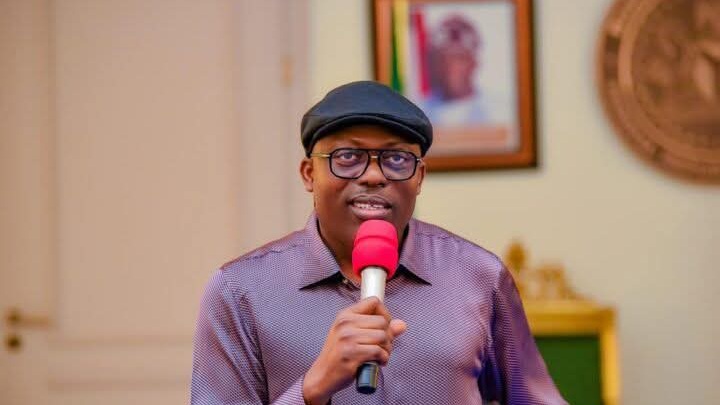
Eid Meeting: Governor Fubara Assures Protection For Rivers’ Residents
Eid Meeting: Governor Fubara assures protection for Rivers’ residents. Mr Uhor thanked the governor for his inclusiveness and for granting the delegation audience.
Rivers State Governor, Siminalayi Fubara, has reaffirmed his administration’s commitment to safeguarding lives and property of all residents, including the Muslim community in the state.
Mr Fubara made the pledge on Friday in Port Harcourt while receiving a delegation of the Muslim ummah, led by Nasir Uhor.
The delegation, including Islamic clerics and Arewa community leaders, visited the governor as part of eid-el-fitr celebrations.
Mr Fubara said every resident, regardless of origin or religion, was regarded as an indigene of Rivers State.
He said, “This is because they live, conduct business and contribute to the socio-economic development of Rivers State. In essence, you are Rivers indigenes, even if not by birth.
“Because you live here, have your homes and children here, government will protect your lives and property. We will do our best to make Rivers State safe for everyone living and doing business here.”
Mr Fubara commended the Muslim community’s dedication and steadfastness during the Ramadan fast.
On farmer-herder tensions, he noted that Rivers State remained peaceful through strategic engagement and coordination with security agencies.
He urged Islamic leaders to strengthen internal communication to sustain peace among their members.
“It is important leaders engage their people to conduct themselves properly in their communities. You are their leaders, so guide them, so we all work together for the state’s peace,” he said.
Mr Fubara assured the delegation that their requests were under review and would be addressed in line with available resources.
Rivers Governor Fubara
Mr Uhor thanked the governor for his inclusiveness and for granting the delegation audience.
He urged the government to build a central mosque in Port Harcourt and return the Muslim cemetery section to the council.
He stated, “We also appeal for land allocation for a mosque at Rivers State University.
-
 Crime11 months ago
Kogi Assembly Considers Law To Regulate Rent, Establish Control Board: Tenancy Law
-

 News12 months ago
Atiku Reveals Why He Failed To Pick Wike As Running Mate In 2023
-
 Akwa Ibom1 year ago
The Apostolic Church Gets New Territorial Chairman, Exco
-

 Crime1 year ago
Federal High Court Jails 2 For Vandalizing Transformer, Telecom Mast In Kogi
-
 News1 year ago
The Apostolic Church Gets New National President, Executive
-
 Akwa Ibom1 year ago
Umo Eno Commences Payment Of 80,000 Naira Minimum Wage With Arrears
-

 News1 year ago
Senator Natasha Returns To Senate With Husband Amid Seat Dispute
-
 Economy10 months ago
Kiyosaki: Is Tinubu’s Government Afraid Of Ibrahim Traore?