
News
Public Interest Must Prevail Over Personal Agendas, ICPC Chief Warns New Permanent Secretaries

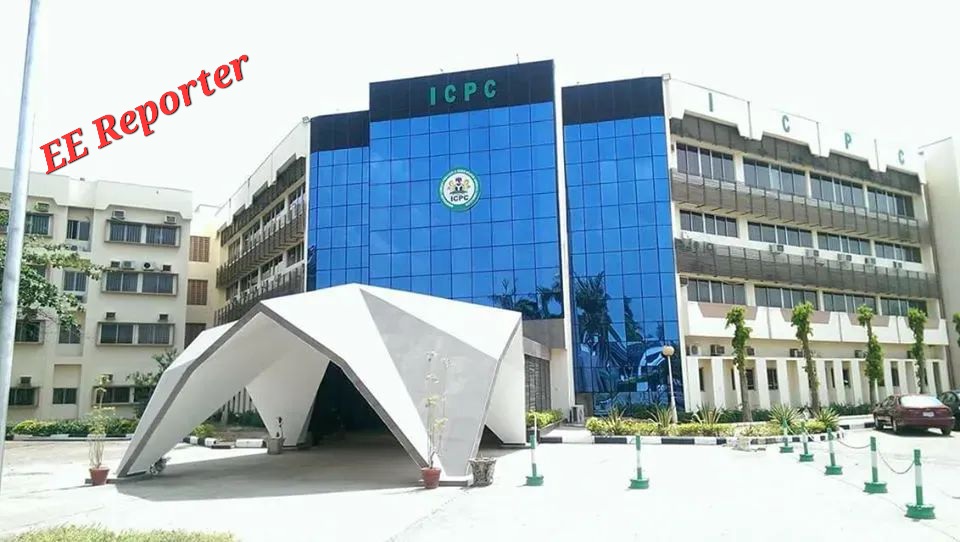
Public Interest Must Prevail Over Personal Agendas, ICPC Chief Warns New Permanent Secretaries
In a firm admonition to the Federal Civil Service’s newest accounting officers, Chairman of the Independent Corrupt Practices and Other Related Offences Commission (ICPC), Dr. Musa Adamu Aliyu, SAN, has charged newly appointed Permanent Secretaries to steadfastly subordinate personal and sectional interests to the greater public good in the execution of their official responsibilities.
Eereporter.com
Dr. Aliyu delivered this clarion call during an induction training programme for the four newest Permanent Secretaries, held recently at the Chief Olusegun Obasanjo Conference Hall within the Office of the Head of the Civil Service of the Federation in Abuja. He underscored that such unwavering commitment is indispensable for fostering transparency, accountability, and robust good governance across the public service landscape.
Presenting a paper entitled “Avoiding Corruption Pitfalls: Adherence to Anti-Corruption Principles,” the ICPC Chairman characterised corruption as a pervasive global malaise by no means confined to Nigeria. He identified greed, eroded integrity, feeble accountability frameworks, and ineffectual institutional oversight as the principal drivers of corrupt practices worldwide.
Dr. Aliyu proceeded to delineate the mandates of Nigeria’s three frontline anti-corruption agencies, providing clarity on their distinct yet complementary roles. He explained that the Code of Conduct Bureau is statutorily responsible for promoting public morality and enforcing asset declaration compliance among public officers.
The ICPC, he noted, is vested with the mandate to prevent, investigate, and prosecute systemic corruption within the public sector, alongside its educational function. Meanwhile, the Economic and Financial Crimes Commission (EFCC) focuses on investigating and prosecuting economic and financial crimes traversing all sectors of the national economy.
Drawing upon the United Nations Convention Against Corruption (UNCAC), Dr. Aliyu highlighted that Section 15(5) stipulates unequivocally that States shall abolish all corrupt practices and abuse of power. He emphasised that the mandatory language of “shall” imposes a binding obligation rather than a discretionary option, thereby underscoring the gravity of the international anti-corruption architecture.
He further observed that the ICPC Act of 2000 stands out for its meticulous, section-by-section articulation of provisions, furnishing a comprehensive legal framework for Nigeria’s anti-corruption crusade.
Turning his attention to the strategic fulcrum occupied by Permanent Secretaries, Dr. Aliyu characterised the Federal Civil Service as the veritable engine room of government. He elucidated that whilst ministers craft policies and set strategic priorities, it falls to Permanent Secretaries to translate these visions into measurable, tangible outcomes for the citizenry.
The Hon Chairman reminded the participants that, as accounting officers, financial controllers, and trustees of their respective ministries, they are duty-bound to exercise the most exacting standards of diligence, probity, and integrity in managing public resources. Corruption, he stressed, extends far beyond the narrow confines of bribery; it encompasses abuse of office, conflicts of interest, contract inflation, ghost worker schemes, nepotism, and other unethical practices that erode public trust.
Dr. Aliyu urged the newly appointed Permanent Secretaries to assert firm control over their ministries by bolstering internal control mechanisms, safeguarding whistleblowers from reprisal, and ensuring rigorous compliance with due process at every turn. “Always place the public interest above personal or sectional interest,” he counselled, in a refrain that resonated throughout the hall.
In her remarks, the Head of the Civil Service of the Federation, Mrs. Didi Esther Walson-Jack, represented by the Permanent Secretary of the Common Services Office, Dr. Danjuma Usman Kalba, commended the ICPC Chairman for his unwavering dedication to the anti-corruption crusade. Dr. Kalba also lauded the Commission’s proactive measures designed to ensure that Ministries, Departments and Agencies (MDAs) adhere rigorously to due process in discharging government responsibilities. Such initiatives, he affirmed, are critical to reinforcing accountability and bolstering public confidence in governance institutions.
The induction programme featured four newly appointed Permanent Secretaries who participated in the intensive training session. They are:
1. Mrs. Bekearedo Augustina Waren – Permanent Secretary, Political and Economic Affairs Office, Office of the Secretary to the Government of the Federation (OSGF);
ICPC
2. Dr. Kamil Ayinde Shoretire – Permanent Secretary, Federal Ministry of Labour and Employment;
3. Mrs. Nkiruka Bella Jones-Nebo – Permanent Secretary, Career Management Office, Office of the Head of the Civil Service of the Federation (OHCSF); and
4. Mr. Sani Yargaya Aminu – Permanent Secretary, Special Services Office, Office of the Secretary to the Government of the Federation (SSO-OSGF).
The induction programme forms an integral component of the Office of the Head of the Civil Service of the Federation’s ongoing efforts to equip newly appointed Permanent Secretaries with the requisite knowledge, ethical grounding, and leadership acumen necessary for effective stewardship of public institutions.
Ultimately, the initiative seeks to deepen the culture of transparency, accountability, and exemplary service delivery across the entire Federal Civil Service, in service to the Nigerian people.
J. Okor Odey anipr.
Head, Media & Public Communications, ICPC.
Eereporter.com








Tinubu Government Disburses ₦38.93bn to Tertiary Institutions
The Federal Government has disbursed ₦38.93 billion to 166 public tertiary institutions nationwide under the Needs Assessment Revitalisation Fund.
Eereporter.com
The disbursement covers 79 universities, 46 polytechnics and 41 colleges of education to support approved projects aimed at addressing infrastructure gaps and improving teaching and learning facilities across the institutions.
The university component accounts for ₦28.5 billion for 79 institutions, while 46 polytechnics have allocations totalling ₦5.8 billion. The 41 colleges of education are allocated ₦4.7 billion.
The intervention forms part of the Federal Government’s efforts to address the needs of public universities and support the implementation of agreed measures under the Memorandum of Understanding between the Federal Government and the Academic Staff Union of Universities (ASUU).
The funds are expected to enable beneficiary institutions to commence or advance approved projects addressing critical infrastructure and other identified institutional needs, with the overall objective of strengthening the quality of tertiary education in Nigeria.
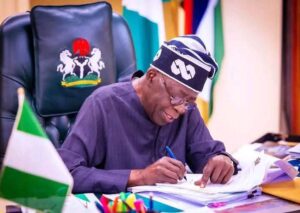
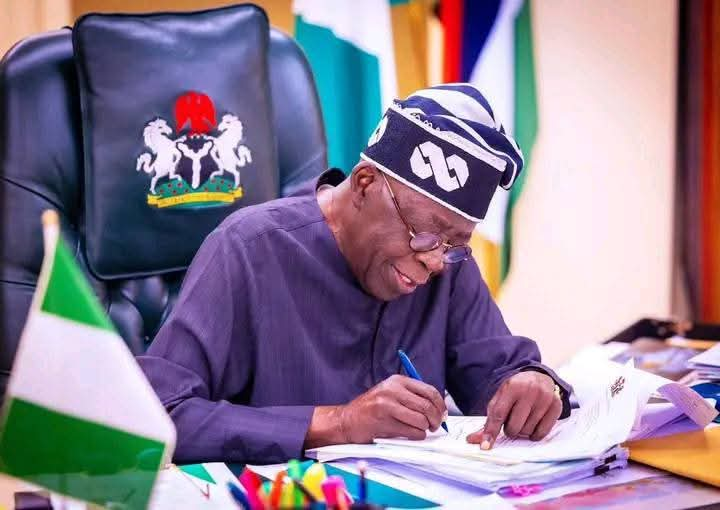
President Tinubu
The disbursement underscores the importance of effective coordination between the Federal Ministry of Finance, the Federal Ministry of Education and beneficiary institutions in ensuring that approved public funding translates into tangible improvements in educational infrastructure and institutional capacity.
For further information on the beneficiary institutions and their respective allocations, members of the public are advised to visit the official website of the Federal Ministry of Finance at https://www.finance.gov.ng/.
Efe Ovuakporie
Head of Media
Federal Ministry of Finance
25th October, 2026
Eereporter.com
News
Infrastructure Development: Some Nigerians Need Eyeglasses to See My Husband’s Achievements, Says Remi Tinubu
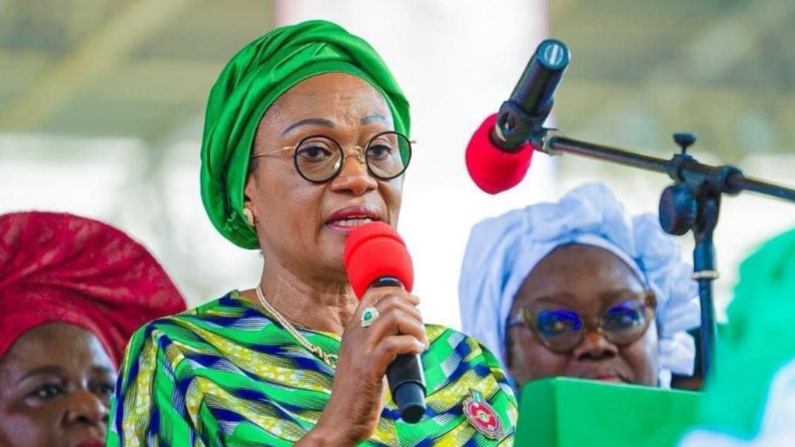
Infrastructure Development: Some Nigerians Need Eyeglasses to See My Husband’s Achievements, Says Remi Tinubu
According to Oluremi, the country is making progress, but some Nigerians have apparently failed to notice the developments.
Eereporter.com
Senator Oluremi, President Bola Tinubu’s wife, has said Nigerians who fail to recognise the achievements of the current administration may need “eyeglasses” to see the changes taking place in the country.
Mrs Tinubu made the remark while inaugurating the Abuja headquarters of the PBAT Door-to-Door Movement, a grassroots mobilisation group campaigning for the President’s re-election in 2027.
According to Oluremi, the country is making progress, but some Nigerians have apparently failed to notice the developments.
“So things are happening in Nigeria, except, you know, those who don’t see; maybe we’ll give them some, you know, Bola Tinubu eyeglasses. We are doing that, JigiBola,” she said.
Mrs Tinubu referred to the Jigi-Bola eye-care initiative, introduced by her husband during his tenure as governor of Lagos State in 2001.
The programme provided eye screenings, eyeglasses and surgery, and was relaunched by the Lagos State Government in 2021.
She cited developments at Nigerian airports as evidence of progress under the current administration.
“I want to get to the airport. I want to travel, you know, so quickly. And you can see our airports too are changing,” she said.
She also expressed the hope that Nigeria would become a country she could enjoy after leaving the Presidential Villa in 2031.
“I want to leave Aso Rock, in 2031, by the grace of God, and enter a Nigeria that me as a 70-something-year-old woman will enjoy,” she said.
Her remarks came amid preparations for the 2027 general elections, with the PBAT Door-to-Door Movement mobilising support for President Tinubu’s anticipated re-election bid.
Mrs Tinubu subsequently commissioned the group’s Abuja headquarters and expressed confidence in her husband’s electoral prospects.

Remi Tinubu
Oluremi’s comments come as the administration continues to face public debate over its economic reforms, the cost of living and the extent to which Nigerians are experiencing improvements in their daily lives.
While the government has pointed to infrastructure projects and economic policy changes as signs of progress, many Nigerians continue to express concerns about household expenses and living conditions.
Eereporter.com
News
Nigeria Customs Sets to Host CGC’S Conference, C-PACT 2026 to Advance Border Security, African Trade Integration

Nigeria Customs Sets to Host CGC’S Conference, C-PACT 2026 to Advance Border Security, African Trade Integration
The Nigeria Customs Service (NCS) is set to host the Comptroller-General of Customs (CGC) Conference from 7 to 8 December 2026 and the Customs Partnership for African Cooperation in Trade (C-PACT) 2026 Conference from 9 to 11 December 2026 in Abuja, as part of its commitment to strengthening border security, facilitating legitimate trade and advancing regional economic integration.
Eereporter.com
The CGC’s Conference, themed “Securing Borders, Enabling Trade: A Customs Commitment to Safer Communities,” will provide a platform to review the Service’s modernisation efforts, assess progress against previous commitments, and reinforce the relationship between effective Customs administration, national security, and trade facilitation. C-PACT 2026, themed “One Border, Interconnected Systems: Advancing Customs Cooperation through One-Stop Border Posts,” will extend these discussions to the continental level, focusing on practical approaches to coordinated border management and digital connectivity across Africa.
The CGC’s Conference will bring together relevant government officials, Customs leadership, trade stakeholders and institutional partners to examine the Service’s progress in implementing modernisation and trade facilitation reforms. Under the sub-themes: “Enabling African Trade: Digital Customs, Trusted Corridors and Seamless Payments” and “Secure Borders, Safer Communities: Intelligence, Partnership and Trust at the Frontline,” the programme will also review commitments made in 2025 and results achieved in 2026, as well as feature presentations on Customs modernisation, Authorised Economic Operator (AEO) certificate presentation, and discussions on measuring the impact of reforms on trade and revenue. The conference will examine intelligence-led enforcement, emerging border threats, inter-agency collaboration, and officers’ professional responsibilities in protecting communities and maintaining public trust.
Furthermore, a major component of the CGC Conference will be the examination of how digital transformation and stakeholder partnerships are improving Customs operations.
Discussions will give stakeholders, including AEO beneficiaries, the National Single Window Secretariat, the Presidential Enabling Business Environment Council (PEBEC), excise-sector representatives, and other relevant institutions, an opportunity to assess reform outcomes and identify areas for further improvement. The second day of the conference will focus on coordinated responses to converging border threats, bringing together relevant security and enforcement institutions, including the Office of the National Security Adviser (ONSA), the NCS, the National Drug Law Enforcement Agency (NDLEA) and the Nigerian Financial Intelligence Unit (NFIU).
Building on the national conference, C-PACT 2026 will provide a continental platform for Customs administrations, policymakers, the African Continental Free Trade Area (AfCFTA) Secretariat, Regional Economic Communities, border management agencies, development partners, technology providers and private-sector stakeholders to advance cooperation in African trade.
The conference will address persistent challenges affecting cross-border trade, including fragmented procedures, duplicated controls, limited information exchange, incompatible digital systems, and insufficient coordination among border agencies. It will explore how One-Stop Border Posts (OSBPs), supported by interconnected Customs platforms, coordinated risk management, harmonised procedures and secure information exchange, can reduce delays, lower trade costs, and improve the predictability of goods movement across African trade corridors.
The C-PACT 2026 programme will feature high-level policy dialogue, strategic discussions among Customs administrations, technical sessions on connected borders, presentations of operational experiences from existing and emerging OSBPs, technology demonstrations and discussions on public-private partnerships for financing and delivering modern border infrastructure. The conference will focus on implementing relevant AfCFTA initiatives, including the AfCFTA Integrated Transit System, the Single Bond Guarantee Scheme, and the Electronic Certificate of Origin system.
The conference is expected to generate practical recommendations, identify priority technology and investment opportunities, strengthen institutional partnerships, and develop an implementation-oriented roadmap to advance interconnected, digitally enabled border systems across the continent.

Customs
The NCS, under the leadership of CGC Bashir Adewale Adeniyi MFR and its management members, reiterates its commitment to strengthening collaboration with national institutions, regional partners and international stakeholders to secure borders, facilitate legitimate trade and support Africa’s economic integration agenda. Through the CGC Conference and C-PACT 2026, the Service seeks to reinforce accountability for ongoing reforms while advancing practical solutions that connect border security with trade facilitation, technological innovation and safer communities.
The outcomes of both conferences are expected to improve Customs operations, strengthen regional cooperation, and advance the AfCFTA’s objectives of building a more integrated, competitive, and prosperous African market.
ABDULLAHI MAIWADA, PhD, mnipr, mniia
Deputy Comptroller of Customs
National Public Relations Officer
for Comptroller-General of Customs
25 October 2026
Eereporter.com
-
 Crime1 year ago
Kogi Assembly Considers Law To Regulate Rent, Establish Control Board: Tenancy Law
-

 News2 years ago
Atiku Reveals Why He Failed To Pick Wike As Running Mate In 2023
-
 Akwa Ibom2 years ago
The Apostolic Church Gets New Territorial Chairman, Exco
-

 Crime2 years ago
Federal High Court Jails 2 For Vandalizing Transformer, Telecom Mast In Kogi
-

 News2 years ago
The Apostolic Church Gets New National President, Executive
-
 Akwa Ibom2 years ago
Umo Eno Commences Payment Of 80,000 Naira Minimum Wage With Arrears
-

 News2 years ago
Senator Natasha Returns To Senate With Husband Amid Seat Dispute
-

 Economy1 year ago
Kiyosaki: Is Tinubu’s Government Afraid Of Ibrahim Traore?