
Security
Olukoyede to Local Government Chairmen: Accountability Must Reach Grassroots

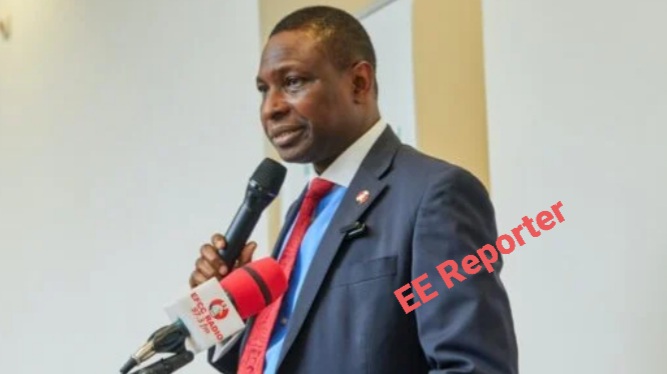
Olukoyede to Local Government Chairmen: Accountability Must Reach Grassroots
The Executive Chairman of the Economic and Financial Crimes Commission, EFCC, Mr. Ola Olukoyede, has assured local government council chairmen and chairmen of traditional rulers’ councils across the country that anti-corruption enforcement would penetrate the grassroots in order to make development closer to the people.
Eereporter.com
He stated this in Abuja on Tuesday, September 22, 2026 at the maiden Annual National Conference of Local Government Council Chairmen and Traditional Rulers Councils.
According to him, the Commission’s commitment to accountability does not stop at the federal level, pledging closer attention to transparency at the sub-national tier as well. He noted that as more resources flow to local governments, the real measure of success will be whether that funding translates into tangible improvements in the everyday lives of grassroots communities. He pointed out that the EFCC’s work supports every pillar of President Bola Ahmed Tinubu’s Renewed Hope Agenda, and pledged that accountability efforts would extend to the sub-national level.
“The EFCC is equally committed to transparency and accountability at the sub-national level and would want to see the improved resources flow to the third tier of government translate into improvement in the quality of lives of the grassroots population,” he said.
Represented by the Director, Public Affairs Department, Commander of the EFCC, CE Wilson Uwujaren, the EFCC Chairman highlighted the conversion of recovered proceeds of crime into public investment, noting that the Federal Government had directed ₦50 billion each from recovered funds to the Nigerian Education Loan Fund (NELFUND) and the Nigerian Consumer Credit Corporation (CREDICORP), with further funding since approved. He also cited the transformation of the forfeited former NOK University in Kaduna State into the Federal University of Applied Sciences, Kachia, which he said had enrolled 1,909 students by December 2025.
On national security, Olukoyede said economic crime and security threats could no longer be treated as separate concerns, pointing to the financing of terrorist organisations, illegal mining, cross-border cybercrime and money laundering as serious security issues. He disclosed that the Commission’s specialised enforcement portfolio had recorded 920 cases and 212 convictions, with further investigations and prosecutions ongoing across money laundering, terrorist financing, illegal mining and virtual-assets fraud.
He added that almost 60 per cent of the Commission’s processes and operations had been digitalised, alongside continued investment in the Cybercrime Rapid Response Centre and investigative technology, to protect Nigeria’s fast-growing digital economy from fraud and abuse.
“We will investigate professionally, prosecute on the strength of evidence and respect the constitutional role of the courts in determining guilt or innocence. No title should place anyone outside the reach of the law, but neither should the fight against corruption be separated from due process.”
Olukoyede recalled that between October 2023 and the period covered by the Commission’s recent stewardship account, the EFCC recorded recoveries exceeding ₦1.233 trillion, alongside about $684.48 million, £373,905.78 and €9.34 million in other currencies. He said roughly two-thirds of the naira recovered was returned to ministries, departments and agencies, state revenue services, companies and individuals, with federal and state tax recoveries alone totalling about ₦288.1 billion.
He stressed that recovery should not end with seizure, noting that approximately ₦661.32 billion and $492.37 million had been released to beneficiaries during the period under review, including individuals, companies, government institutions and revenue authorities. “Recovery reaches its highest value when recovered assets are returned to citizens or converted into productive national use,” he said.
Turning to the council chairmen, Olukoyede said the Commission was strengthening its own internal standards, including new arrest and bail guidelines and conflict-of-interest safeguards, so that an institution demanding accountability from others also holds itself to the same standard. He urged that accountability “become a living principle rather than a slogan” across all tiers of government, particularly as more resources flow to local councils.
Olukoyede linked Nigeria’s exit from the Financial Action Task Force grey list in October 2025 to sustained inter-agency reforms in which the EFCC played a central role, describing the anti-corruption fight as an instrument for economic growth, national reputation and investor confidence. He said the delisting mattered because international investors weigh not only the size of an economy but the strength of its institutions and the integrity of its financial system.
This was as President Bola Ahmed Tinubu said the vision and focus of his administration was about shortening the distance between government and the governed, widening access to services and creating more centres of local development.
Ola Olukoyede
Building on that experience, President Tinubu who was represented by Secretary to the Government of the Federation, George Akume said his administration, “since 2023, has pursued national development with a strengthened belief that Nigeria cannot develop from the centre alone. Development must take root from the bottom up.”
The President also told the LGA Chairmen that “Nigerians in all parts of the country must witness and experience better primary healthcare, basic education, rural roads, safe water, stronger food systems, support for small businesses and opportunities for women and young people.”
Eereporter.com









NADF Sets to Boost Agricultural Funding with Non-interest Finance
The National Agricultural Development Fund has commenced the validation of its proposed Non-Interest Finance Framework and Guidelines to widen access to agricultural financing and support the Federal Government’s food security objectives.
Eereporter.com
This was contained in a statement issued by NADF on Tuesday following a Strategic Roundtable and Validation Session on the proposed framework and guidelines.
According to the statement, the initiative is aimed at ensuring that farmers, agribusinesses and other players across the agricultural value chain have access to diverse and innovative financing options.
The Executive Secretary/Chief Executive Officer of NADF, Mohammed Ibrahim, said non-interest finance had become an important component of Nigeria’s financial system, providing ethical, asset-backed and risk-sharing financing models that complemented conventional finance.
“Our objective is not simply to introduce another financing framework. It is to broaden the financing ecosystem for agriculture by ensuring that every credible financing option is available to Nigerian farmers, agribusinesses, and other value chain actors,” Ibrahim said.
According to the statement, the proposed framework would provide a structured and transparent basis for delivering agricultural interventions through licensed non-interest financial institutions while institutionalising governance, operational and Shari’ah compliance standards.
Ibrahim said the documents were deliberately presented as drafts to allow stakeholders to scrutinise them and contribute their expertise before finalisation.
“Today’s gathering marks an important milestone in that journey,” he said, urging participants to examine the draft documents critically, challenge assumptions where necessary and share practical experiences.
The statement quoted the Director of the Development Finance Advisory Department of the Central Bank of Nigeria, Dr Paul Oluikpe, as saying that significant work remained to be done to improve access to agricultural finance in Nigeria.
Oluikpe welcomed the proposed non-interest finance framework, describing it as an opportunity to bring an often-overlooked dimension of agricultural financing into the mainstream.
Also speaking, the Deputy Chairman of the CBN’s Financial Regulation Advisory Council of Experts, Professor Bashir Aliyu Umar, said the proposed framework was consistent with efforts to promote financial inclusion and expand access to finance.
“What we are witnessing today is also following this trajectory of financial inclusion and easing access to finance and having a level playing field and even developmental perspective for the whole country whereby no segment of society is left out,” he said.
NADF
Providing an overview of the initiative, NADF’s Head of Investment, Olalekan Alabi, said the framework and guidelines were designed to establish a structured mechanism for deploying non-interest financing to eligible agricultural activities and value-chain interventions.
“Together, the Framework and Guidelines are expected to provide clarity on how NADF’s non-interest financing interventions will be structured, assessed, approved, implemented, monitored and reported,” Alabi said.
He added, “We are not here simply to confirm that the documents have been prepared. We are here to test their technical robustness and practical applicability.”
Alabi said stakeholders were expected to identify gaps, inconsistencies, overlaps and provisions requiring further clarification before the documents were finalised.
“Our objective is to have a set of Framework and Guidelines that are clear, technically sound, operationally practical, appropriately governed and capable of supporting NADF’s non-interest agricultural financing interventions,” he said.
The statement said the validation session brought together representatives of government institutions and regulatory agencies, development partners, non-interest finance experts, financial institutions and other stakeholders in the agricultural and financial sectors.
Eereporter.com

Nigeria Customs Concludes 2025 Recruitment Exercise, Almost 3,000 Candidates screened
The Nigeria Customs Service (NCS) has concluded the final phase of its 2025 recruitment exercise, with shortlisted candidates completing documentation, physical fitness assessments, and medical screenings at the Training and Doctrine Command (TRADOC), Gwagwalada, Abuja.
Eereporter.com
The two-week exercise, which commenced on Monday, 7 September 2026, ended on Saturday, 19 September 2026, covering candidates across the Assistant Superintendent of Customs II (ASCII), Inspectorate, and Customs Assistant cadres. The screening was conducted in batches to ensure an orderly process and reduce congestion at the centre.
Speaking on the outcome of the exercise, the Assistant Comptroller-General of Customs in charge of Human Resource Development, Frank Onyeka, said measures had been implemented to address gaps identified during the earlier phase, improve the screening process, and ensure greater efficiency.
“We have put measures in place to reduce congestion and ensure a smoother process this week. The gaps identified last week have been addressed, and we do not expect them to recur this week,” Onyeka stated, while emphasising the importance of discipline and responsibility among candidates.
Also speaking, Deputy Comptroller of Customs and member of the coordinating team, Adamu Musa, stated that the exercise had recorded significant improvements, with close to 3,000 candidates screened so far without any casualty. He attributed the progress to the introduction of personalised screening forms containing candidates’ records across the various assessment stages.
“Any candidate that has been shortlisted has a form designed especially for him, unlike in the past where you come, they issue you a form, and then some people along the way go and even change some of the records. These forms come with the candidates’ records, including their names and details for sports, medical, documentation, and the checklist of required items. So, once the candidate comes, you just verify what you already have from the system,” Musa explained.
Musa stressed the importance of continuous manpower development to strengthen the Service’s capacity to meet its evolving responsibilities in national security, border protection, and other services to the nation. He said the growing demands on Customs underscore the need to continually improve its workforce.

Customs
He further disclosed that candidates would be evaluated based on criteria set by the Service, including age, physical fitness, and drug screening. He explained that candidates who test positive for hard drugs, exceed the stipulated age limit, or have physical conditions that may affect their duties could be disqualified, subject to management’s final decision.
Musa also advised candidates and members of the public to verify recruitment information through the Service’s official website and verified social media platforms to avoid fraudulent messages.
Eereporter.com

Navy Uncovers 182,000 Litres of Suspected Stolen Crude Oil in Rivers Community
The Nigerian Navy has uncovered approximately 182,000 litres of substance suspected to be stolen crude oil in Bethel Creeks, Rivers State, in another major disruption of illicit crude oil storage and transfer activities within the area.
Eereporter.com
The discovery was made by FOB BONNY on 22 September 2026 during a follow-up operation based on actionable information concerning suspicious activities around the creeks. The operation uncovered 8 dugout pits, 5 of which contained the suspected stolen crude oil, while 3 were empty. Hoses associated with the movement of crude oil were also discovered and subsequently handled in accordance with established procedures.
The latest discovery comes barely two weeks after FOB BONNY uncovered approximately 87,000 litres of suspected stolen crude oil at 4 newly activated illegal refining sites around Aworkiri on 8 September 2026. The earlier operation also exposed 19 dugout pits and associated infrastructure, indicating attempts to establish facilities for the storage and handling of stolen crude oil.
The successive discoveries highlight the Nigerian Navy’s expanding focus on denying criminal operators the storage and transfer infrastructure required to sustain crude oil theft, rather than allowing illicit activities to become re-established after previous disruptions.

Navy
The latest operation further constrains the availability of crude oil and supporting infrastructure for illegal exploitation within the area.
ABIODUN FOLORUNSHO
Navy Captain Director Naval Information Nigerian Navy
Eereporter.com
-
 Crime1 year ago
Kogi Assembly Considers Law To Regulate Rent, Establish Control Board: Tenancy Law
-

 News1 year ago
Atiku Reveals Why He Failed To Pick Wike As Running Mate In 2023
-
 Akwa Ibom2 years ago
The Apostolic Church Gets New Territorial Chairman, Exco
-

 Crime2 years ago
Federal High Court Jails 2 For Vandalizing Transformer, Telecom Mast In Kogi
-
 News2 years ago
The Apostolic Church Gets New National President, Executive
-
 Akwa Ibom2 years ago
Umo Eno Commences Payment Of 80,000 Naira Minimum Wage With Arrears
-

 News2 years ago
Senator Natasha Returns To Senate With Husband Amid Seat Dispute
-

 Economy1 year ago
Kiyosaki: Is Tinubu’s Government Afraid Of Ibrahim Traore?