
Crime
Olukoyede Charges Businesses, Professionals in Southwest on Money Laundering

Olukoyede Charges Businesses, Professionals in Southwest on Money Laundering
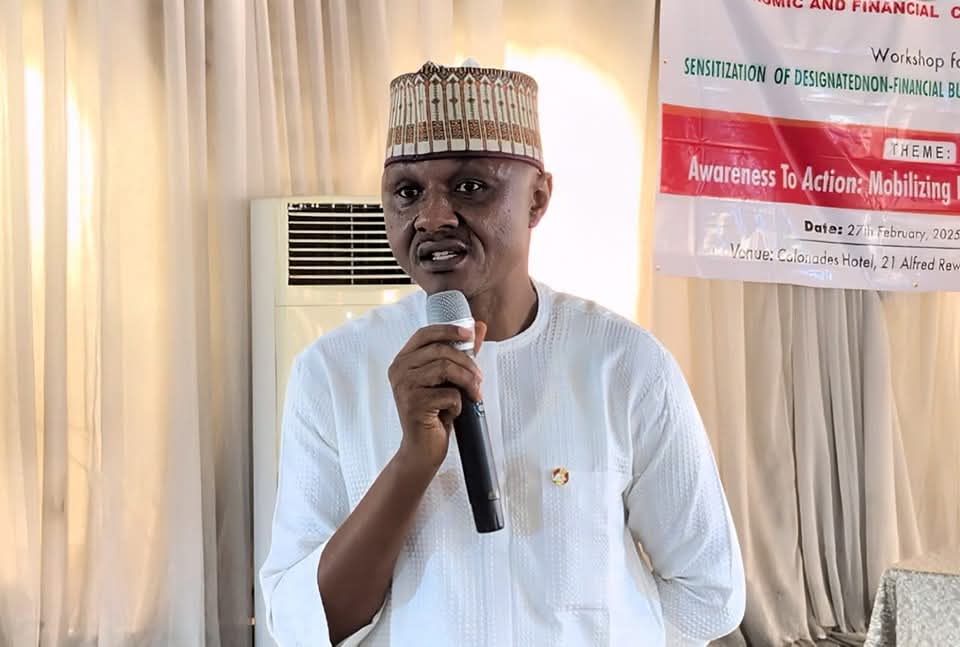
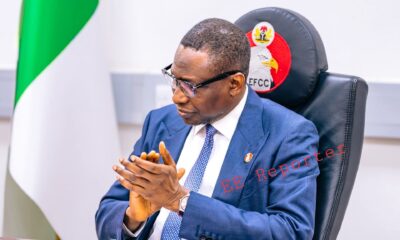
The Executive Chairman of the Economic and Financial Crimes Commission, EFCC, Mr. Ola Olukoyede has charged Designated Non-Financial Businesses and Professionals, DNFBPs to strictly comply with the provisions of the Money Laundering (Prevention and Prohibition) Act, 2022, do due diligence on their customers and ensure that they report suspicious transactions, especially of Politically Exposed Persons, PEPs to the Commission.
He gave the charge at a one-day workshop for sensitization of DNFBPs, with the theme: “Awareness to Action: Mobilizing DNFBPs for Compliance”, which was held in Lagos, on Thursday, February 27, 2025.
The workshop, which was organized by the South-West region of the Special Control Unit against Money Laundering, SCUML, which is the Anti-Money Laundering Department of the EFCC, had in attendance professionals from various DNFBPs across the region.
Declaring the workshop open, the acting Zonal Director, Lagos Zonal Directorate, ACE I Michael Wetkas, stressed the need for the DNFBPs to strictly comply with the stipulated rules guiding their operations, as a way of contributing their quota to the fight against money laundering, and engendering economic growth and development.
“As professionals in the DNFBP sector of the economy, you are critical stakeholders in the fight against economic and financial crimes. Nigeria belongs to all of us, so you need to play your role diligently without fear or favour, because what you do in your own corner will have a multiplier impact on the country,” he said.
Also speaking, Director of SCMUL, Commander of EFCC, CE Daniel Isei, noted that the awareness campaign was part of the concerted efforts of the Commission to get Nigeria off the Financial Action Task Force, FATF’s Grey List.
“As you may be aware, Nigeria was added to the FATF Grey list in February 2023 after a 2021 Mutual Evaluation Report identified critical gaps in our financial crime prevention measures,” he said.
The grey list, he explained, included jurisdictions under increased monitoring due to deficiencies in their AML/CFT regimes. According to him, while substantial strides have been made under an action plan, jointly developed with FATF’s International Cooperation Review Group, ICRG, there was still more work to be done, particularly as it relates to the DNFBPs.
He said: “Nigeria needs to come out of the Grey List and one of the deficiencies found is that compliance is very low. In order to exit the Grey List by May 2025, some outstanding actions need to be addressed urgently to demonstrate our effectiveness, such as applying effective,
proportionate and dissuasive sanctions for breaches of AML/CFT requirements and following up to ensure remedial actions are taken by sanctioned entities. Enhance preventive measures through inspections, outreach and provision of guidance for higher-risk sectors.”
He urged participants to ensure that they complied with their obligations under the Nigerian AML/CFT regime.
In a paper titled, “Application of KYC/CDD measures (PEP Reporting) to prevent ML/TF risk for DNFBP”, the Head, SCUML, Lagos, ACEI Ibinabo Amachree, stressed the importance of the Know Your Customer, KYC obligation of DNFBPs.
“You must ensure that you carry out due diligence in knowing your customer, and ensuring proper documentation to ascertain relevant information from your prospective customers before doing business with them, and this is a continuous activity,” she said, stressing that failure to do so will mean running afoul of the law, and ignorance was not a defence in law,”
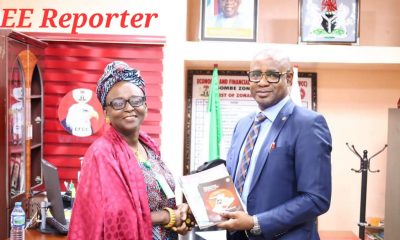
Head, SCUML, Ibadan, ACE I Toyin Ehindero, noted that the South-West region was seen as a critical stakeholder in achieving the goals of the Commission.
Olukoyede
Further highlights on targeted financial sanctions were provided by ACE II Folashade Oluwasanya, a resource person from SCUML, who emphasized the roles of the DNFBPs in combating money laundering and terrorist financing.
“The importance of vigilance in identifying suspicious activities and legal obligations of DNFBPs in reporting such transactions to relevant authorities cannot be overemphasized,” she said.
On his part, ACE II Bassey Okon, gave a detailed analysis on the administrative sanctions that can be imposed on DNFBPs for non-compliance with regulatory requirements.
He further underscored the potential repercussions of failing to adhere to financial regulations, and the importance of maintaining robust compliance frameworks.
The workshop was in furtherance of the goal of the Commission to ensure the removal of Nigeria from the FATF Grey List and ensuring compliance with extant laws by DNFBPs, particularly in the South-West region.







Brazil Fines TikTok $30m Over Failure to Implement Child Safety
Brazil’s data protection agency on Tuesday fined TikTok nearly $30 million for failing to implement child safety measures in what it said was a “powerful signal” to social media companies.
Eereporter.com
Brazil has taken a tough stance on the regulation of social media platforms, cracking down on disinformation and requiring users under 16 years to have their accounts linked to those of their parents.
An enforcement director with the ANPD data protection agency, Fabricio Lopes, told a press conference that TikTok “was not taking the necessary measures to prevent adolescents from accessing the platform and from having the data of these children and adolescents processed.”
This data was “being used to offer advertising to adolescents.”
He said the fine of 153.7m reais ($29.9 million) was a “powerful signal to other platforms regarding how seriously the ANPD takes this work” and that the agency hoped they “get the message.”
TikTok agreed last week to pay $400m to settle a lawsuit with the US Department of Justice over claims that the video-sharing platform collected children’s personal data without parental permission.
– Tougher enforcement –
This month, the ANPD also ordered popular streaming platform Discord to suspend livestreams and video calls after a teenage girl was allegedly encouraged to take her own life during a broadcast.
The agency told AFP that an appeal filed by Discord on Monday against the suspension is under review.
ANPD director Lorena Coutinho said the agency had, last week, initiated proceedings to verify the compliance of 22 social media networks and platforms with a law passed this year to protect children and teens online.
In addition to the fine, the ANPD ordered TikTok parent company ByteDance to delete data collected in violation of regulations.
Coutinho said TikTok had committed to suspend all adverts for users who are not logged in.
TikTok has committed to “implementing a compliance plan to improve the protection of children and adolescents,” the ANPD said.

Brazil Fines TikTok
The platform will be required to automatically apply stricter privacy settings to accounts belonging to children under the age of 16, strengthen parental supervision systems, and implement stricter content filters.
TikTok did not immediately respond to requests for comment from AFP.
In 2024, the platform X was blocked for 40 days in Brazil, until the social media network owned by the world’s richest person, Elon Musk, complied with the Supreme Court’s orders to remove accounts spreading disinformation.
Eereporter.com
EFCC Grills Raheem Abiodun Wasiu for Alleged $12,000 Fraud in Enugu
Operatives of the Enugu Zonal Directorate of the Economic and Financial Crimes Commission, EFCC have commenced investigations into the activities of one Raheem Abiodun Wasiu, an alleged serial fraudster, for an alleged case of fraud to the tune of $12,000 (Twelve Thousand United States Dollars).
Eereporter.com
Wasiu, 38, was arrested by operatives of the Nigeria Security and Civil Defence Corps, NSCDC, following a complaint by one Ezekulie Stanley Chukwuamuanya, a Bureau De Change operator who claimed that he was defrauded the sum of $5000 (Five Thousand United States Dollars) by the suspect.
In the course of investigation by operatives of the EFCC, it was discovered that the suspect rents different Toyota Hilux trucks, disguises as a wealthy contractor, moves with escorts and meets BDC operators in the south-east and allegedly tricks them into parting with their had earned money, by presenting fake alerts in Naira to them, after collecting their money.
According to Chukwumuanya, “I gave him the dollar and he counted it by himself. After confirmation, he then asked for my bank details. After giving him my account number, he mentioned my name that popped up on his bank application, I confirmed it. The next thing he told me was that it had gone through, which I waited for the alert to come, to no avail. Because of time, he asked me to go and that I will get it, that it could be network issues and I left because of his personality”. He alleged that soon after that, the suspect became incommunicado.
Another petitioner, based in Owerri, Imo State, one Chief Nwaoha Ubaferem equally alleged that Wasiu defrauded him of the sum of $7,000. He said, “the dollar on me was $2,600, then I called my office to bring additional $4,400 to me to complete it as he requested for $7,000. As we were waiting, he complained that he was running late and we decided to move to Royce Road from Port Harcourt Road where he finally collected the money from me, resumed transfer, called my name and informed me that the transfer had gone which I believed but continued to expect alert from him”.
EFCC
Further investigations revealed that the suspect has toured the South-east, and Akwa Ibom State, using the same pattern to allegedly defraud BDC operators.
Items recovered from the suspect include: A Hilux truck (Akwa Ibom KTR 379 AA), various bank ATM cards, different bank transfer tokens, digital National Identification Number slip with the name Sunday Abiodun, two complimentary cards with the name Engineer Abiodun, a designer bag (Emporio Amani), One iPhone 17 Promax, One Samsung phone, 4G internet pocket WIFI, One Patek Philip wrist watch, vehicle particulars, One gold bangle and a pair of shoes (Alexandra MC Queen).
The suspect will be charged to court as soon as investigations are concluded.
Eereporter.com
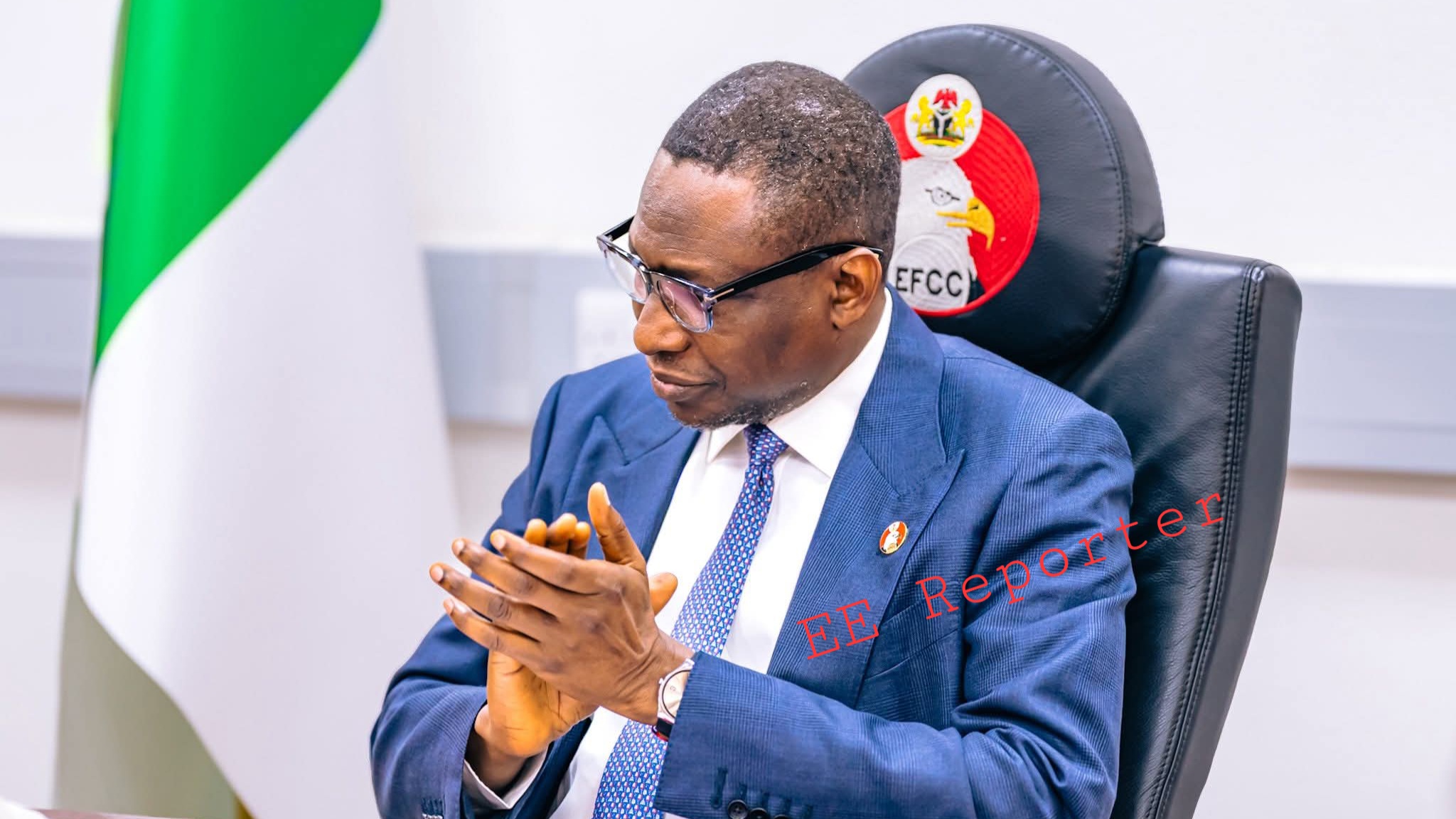
EFCC Boss Orders Withdrawal of Charges Against Maryam Shehu, Abubakar Shuraim Abdulhamad
The Executive Chairman of the Economic and Financial Crimes Commission, EFCC, Mr. Ola Olukoyede has compassionately ordered the withdrawal of charges preferred against Maryam Isah Shehu and Abubakar Shuraim Abdulhamad, who were, on Thursday August 20, 2026 arraigned before Justice Joyce Abdulmalik of the Federal High Court, Abuja, for alleged cybercrime and peddling malicious information against the Commission.
Eereporter.com
While the Commission considered the arraignment of the two defendants for cyber stalking to be contrary to Section 24(2) (c) of the Cybercrimes (Prohibition, Prevention, Etc) Act, 2015 (As Amended) 2024 and punishable under Section 24 (2) (c) (ii) of the same Act, the Executive Chairman, nonetheless, considered the passionate pleas and apologies of Shehu’s father and appeals of well-meaning Nigerians for leniency.
To this end, he has directed that charges filed against the two young Nigerians be dropped and warned that the EFCC would no longer tolerate any wilful attack on its image in any form, medium or platform.
Ola Olukoyede
The EFCC’s boss assured Nigerians that the Commission would continue to function in line with its assigned mandate and in the best interests of the nation.
Eereporter.com
-
 Crime1 year ago
Kogi Assembly Considers Law To Regulate Rent, Establish Control Board: Tenancy Law
-

 News1 year ago
Atiku Reveals Why He Failed To Pick Wike As Running Mate In 2023
-
 Akwa Ibom2 years ago
The Apostolic Church Gets New Territorial Chairman, Exco
-

 Crime2 years ago
Federal High Court Jails 2 For Vandalizing Transformer, Telecom Mast In Kogi
-
 News2 years ago
The Apostolic Church Gets New National President, Executive
-
 Akwa Ibom2 years ago
Umo Eno Commences Payment Of 80,000 Naira Minimum Wage With Arrears
-

 News1 year ago
Senator Natasha Returns To Senate With Husband Amid Seat Dispute
-
 Economy1 year ago
Kiyosaki: Is Tinubu’s Government Afraid Of Ibrahim Traore?