
News
Obi Means Well, I Will Give Him That Much. Can Nigeria Be Fixed In Four Years

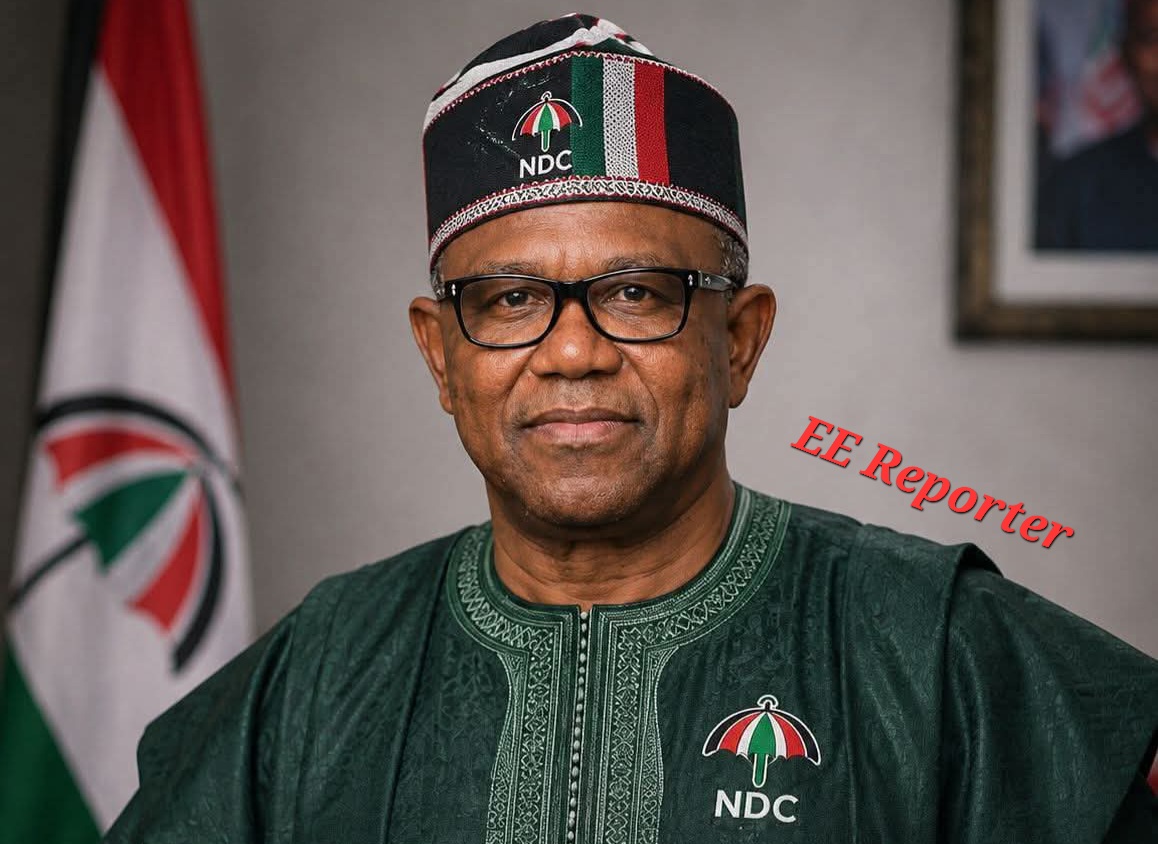
Obi Means Well, I Will Give Him That Much. Can Nigeria Be Fixed In Four Years
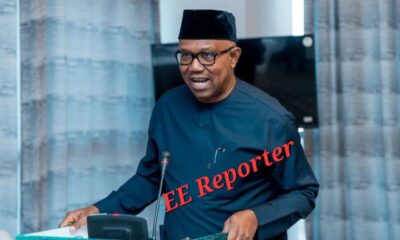
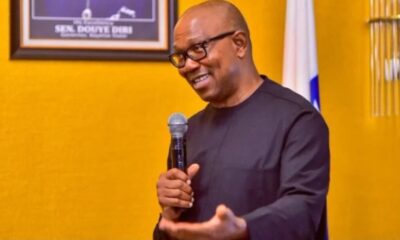
Peter Obi means well. I will give him that much. The former Labour Party presidential candidate and Nigerian Democratic Congress ( NDC) likely flagbearer has been consistent on at least one thing since he entered the 2027 race: he wants to be a one-term president. “I would not stay a day longer than four years, even with a gun to my head,” he told News Central TV.
Those are strong words. The kind of conviction you rarely hear from politicians in this country, where staying in power is treated like a hereditary right and term limits are just suggestions for other people. But here is my problem. And it is a serious one.
Eereporter.com
As I have said on this page before, Nigeria cannot be fixed in four years. Not even close. The country has been damaged so thoroughly, from the power sector to education, from healthcare to security, that it would take at least two full terms of focused, disciplined governance to begin to see meaningful structural change.
You need eight years to plant a tree and watch it take root. Four years? You will barely have finished identifying the problem, let alone solving it.
Think about it. Our power crisis has been with us since before many of our young voters were born. NEPA became PHCN, PHCN became the successor DisCos, and Nigerians are still buying diesel at N1,500 per litre to run generators at home and at work. Our healthcare system has become a travel agency; every president, every governor, every senator boards a flight to London or India at the first sign of a headache, while the hospitals they are supposed to fix remain glorified consulting rooms without drugs or equipment.
Our security situation in the North East, the North West and the Middle Belt is not a four-year problem. It is a generational wound with roots going back decades. And education? Nigeria has more than 20 million out-of-school children, according to UNICEF. You don’t fix that in 48 months.
So when Obi says one term is enough to make a mark, I want to believe him. But wanting to believe someone and actually believing them are two very different things.
Now, to be fair to Obi, he has grounded his one-term pledge in something that at least sounds principled, the zoning arrangement. His argument is that if a southerner wins in 2027, that president must be ready to step down in 2031 to keep the unwritten power-rotation compact alive.
On paper, that is statesmanlike. In practice, it is a political landmine he is walking toward with his eyes wide open. Here is why. The south-east has never produced a civilian president in the history of this republic. Not once. From 1999 till today, we have had Olusegun Obasanjo from the south-west, Umaru Yar’Adua and Muhammadu Buhari from the north-west, Goodluck Jonathan from the south-south.
The south-east has been the one region sitting outside the door, knocking, watching, waiting. So if Peter Obi becomes the first Igbo civilian president in Nigeria’s post-military democratic history, the question nobody in his camp wants to answer is this: Why should the south-east settle for just four years?
The constitution gives any president the right to run for two terms of four years each. Eight years. Every other region that has held the presidency has used that full constitutional window. Obasanjo served eight years. Buhari served for eight years. Even Jonathan, who completed Yar’Adua’s term and then won his own election, was on course for a combined stretch that no South East candidate has ever come close to. So what Obi is essentially proposing is that the first Igbo civilian president should agree, before he even wins, to half of what every other region enjoyed.
That is not just zoning. That is something else entirely, and the South East deserves a more honest conversation about what it means. There is a clear difference between respecting democratic norms and pre-emptively surrendering your constitutional rights before you have won a single vote.
And this is where the pledge, however well-intentioned, begins to unravel. Because it is not just about Peter Obi the individual. The moment he wins, the south-east as a region enters Aso Rock for the first time in civilian democratic history. From that day, you are not managing one man’s ambition. You are managing the collective expectation of an entire region that has waited since 1999. Those are two fundamentally different political problems, and conflating them is naive.
Two years into his tenure, mark my words, the groups will come. Youth associations, Ohanaeze factions, town union federations, political entrepreneurs in agbada, all of them printing T-shirts and issuing press releases with one message: the south-east must complete its eight years.
That is not speculation. That is how Nigerian politics has always worked. The hangers-on arrive without invitation. They wrap regional sentiment around the presidency so tightly that a principled one-term pledge starts to look, from the inside, like a betrayal of an entire people.
Obi cannot control that narrative from the State House. No president has ever managed to. Obasanjo, in 2006, swore the third-term agenda was not his idea. Whether you believe him or not is beside the point. The pressure around a presidency has its own gravitational pull. It warps everything around it, including the best intentions.
History has also not been kind to pre-election one-term pledges. Goodluck Jonathan once positioned himself as a reluctant president who would govern briefly and go home quietly. His supporters had other plans entirely. The pledge is always sincere at the microphone.
It is the office that changes the mathematics. The combination of power, party pressure, regional expectation and the sheer institutional weight of the presidency has a way of making a man reconsider positions he held with total certainty before he sat in the chair.
Now, many people have genuine respect for what Peter Obi represents in our political conversation. According to his supporters, he has brought fiscal discipline, attention to numbers and a genuine questioning of the waste that has defined our governance for decades.
After years of politicians who could not differentiate between a national budget and a personal shopping list, that matters. But sincerity and strategic thinking are not the same commodity, and you cannot run a country on sincerity alone.
Obi Means Well
What Obi should be telling Nigerians right now is not how long he plans to stay. What we need to hear is what exactly he will do with the time. What is his specific plan for electricity? What is his blueprint for the 20 million out-of-school children? What is his counter-insurgency strategy for Borno, Zamfara and Plateau? What will he do about an economy where more than 133 million Nigerians live in multidimensional poverty, according to the National Bureau of Statistics? These are the questions that matter. Not dramatic declarations about guns to heads.
Because here is the hard truth: no one in our political space wants to say plainly that a bad president for four years can inflict more lasting damage than a decent president serving eight. We do not need shorter tenures. We need better leaders with the right competence, the right team and the institutional will to govern without stealing.
The one-term pledge is a campaign device, not a governance strategy. And Nigerian voters deserve better than campaign devices dressed up as constitutional philosophy.
So can Nigeria be fixed in four years? No. Not by Obi, not by any political Houdini that this system eventually produces. The problems are too structural, too layered, too generational. What four years of the right leadership can do is begin to change direction, not arrive at the destination.
Let us demand direction. Let us demand competence. Let us demand a plan. These are the issues.






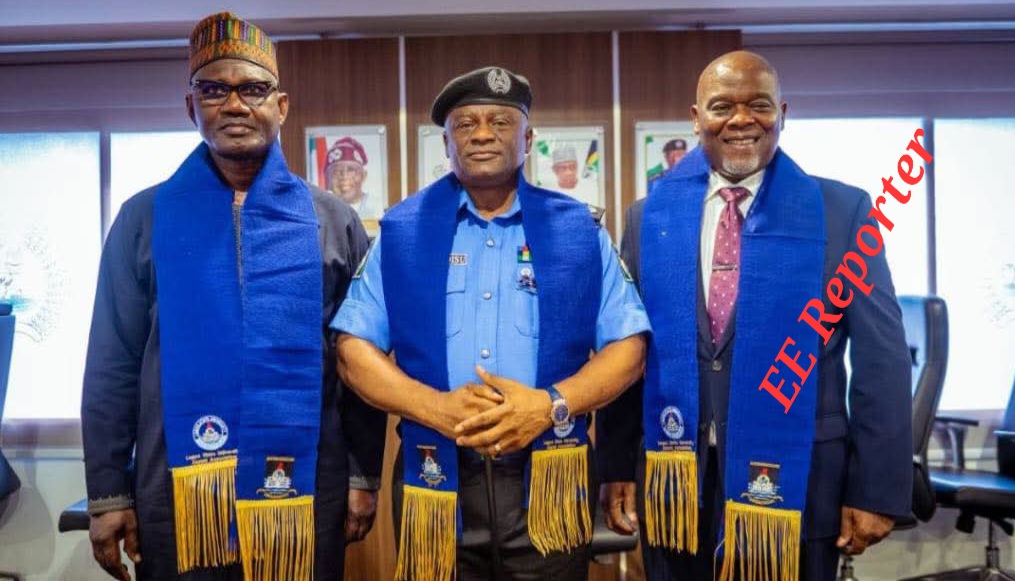
IGP Disu Receives (LASU) Alumni Association Delegation, Conferred With Emeritus Membership
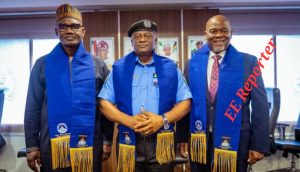
The Inspector-General of Police, IGP Olatunji Rilwan Disu, psc(+), NPM, today, Thursday, 22nd October 2026, received a delegation of the Lagos State University (LASU) Alumni Association led by its President, Mr Morisson Quakers, SAN, at the Force Headquarters, Abuja. During the visit, the Association conferred emeritus membership on the IGP in recognition of his achievements and contributions to public service.
Eereporter.com
Speaking on behalf of the delegation, the Association’s President commended the IGP’s leadership and commitment to people-centred policing, personnel welfare and inter-agency collaboration. He noted that the policy direction and priorities of his administration would shape the legacy of his tenure and assured him of the Association’s continued support.
The Chairman of the Association’s Board of Trustees, Mr Lekan Ogunbanwo, described the IGP as a worthy representative of the University and commended his accessibility and dedication to service.
In his remarks, the IGP expressed appreciation for the honour bestowed on him by the alumni and acknowledged the University’s contribution to his personal and professional development and the encouragement he had received from fellow alumni throughout his career.
Police
The IGP also highlighted ongoing efforts to strengthen professionalism and improve personnel welfare through institutional initiatives and partnerships. He called for greater public understanding and cooperation with police officers in the discharge of their duties, acknowledging the demands and sacrifices associated with policing.
The Inspector-General of Police thanked the Association for its goodwill and reaffirmed his commitment to sustaining ties with his alma mater while advancing the Force’s mandate to protect lives and property and serve the public.
CSP ANI INIEDU, anipr
Force Public Relations Officer
Force Headquarters, Abuja
22nd October, 2026
Eereporter.com
Nigerian Navy, NDLEA Recover Drugs in Joint Operations, Arrest 10 Suspects in Warri
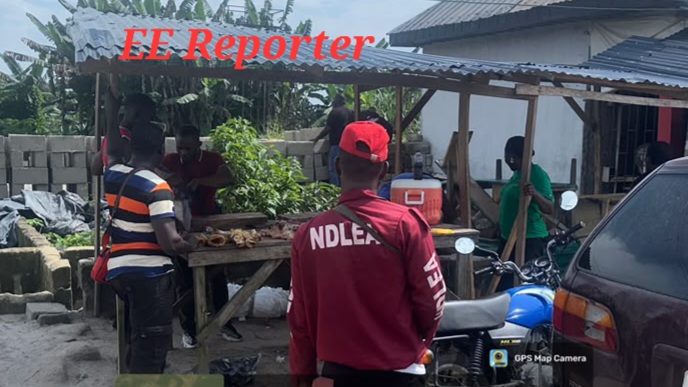
The Nigerian Navy, in collaboration with the National Drug Law Enforcement Agency (NDLEA), has arrested 10 suspects and recovered assorted substances suspected to be illicit drugs during a joint operation in the Warri general area of Delta State.
Eereporter.com
The operation, conducted by Nigerian Navy Ship (NNS) DELTA and NDLEA from 19 to 20 October 2026, targeted locations suspected of being used for the storage, sale and distribution of illicit drugs. Items recovered included five cards of tramadol, 20 litres of Monkey Tail, 20 kilogrammes of cannabis, 10 kilogrammes of Colorado and other related exhibits.
The suspects and recovered exhibits were handed over to the NDLEA Warri Area Command for further investigation and necessary legal action.
NDLEA
The operation reflects the Nigerian Navy’s contribution to tackling drug-related criminality through intelligence-led collaboration with relevant law enforcement agencies. The Navy will continue to support coordinated efforts to disrupt illicit drug distribution networks and strengthen security within its area of responsibility.
Signed AA FOLORUNSHO
Navy Captain
Director Naval Information.
Eereporter.com
Nigeria Customs, TMPL Test Cutting-Edge Cargo Scanners in China Ahead of Deployment
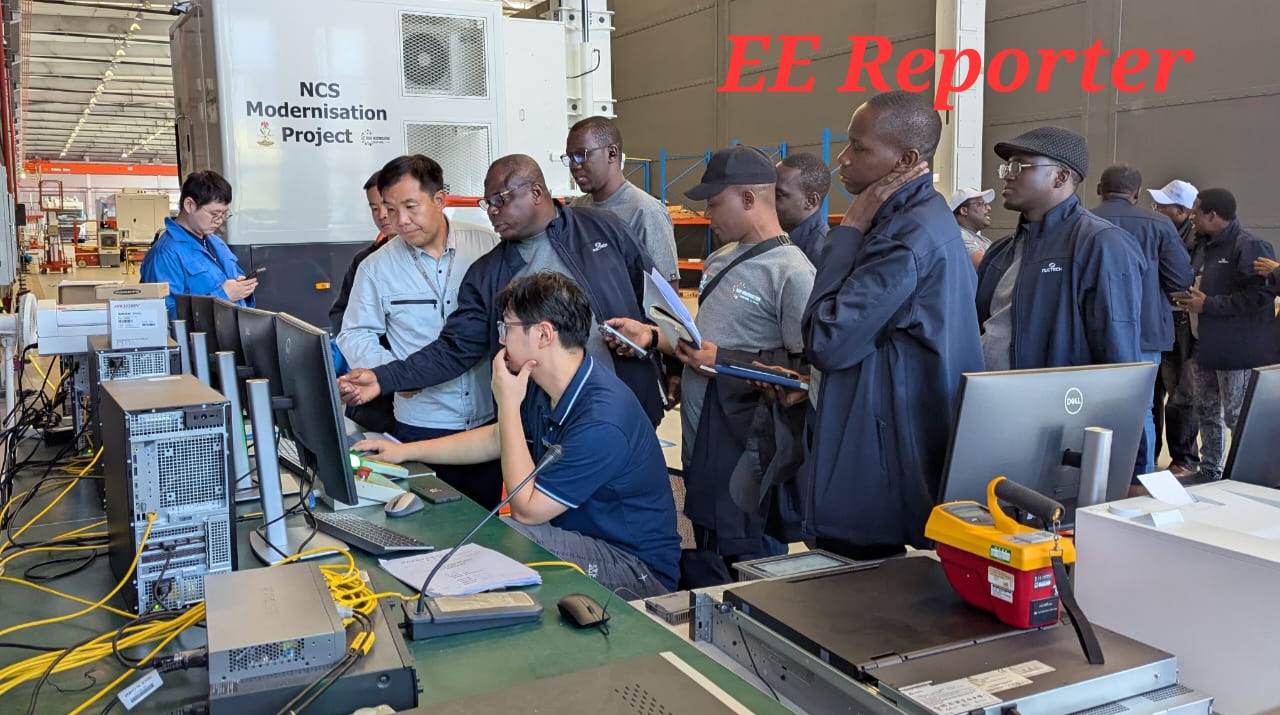
A high-powered delegation of experts from the Nigeria Customs Service (NCS) and Trade Modernisation Project Limited (TMPL) recently completed a Factory Acceptance Test (FAT) for the newly acquired Non-Intrusive Inspection (NII) equipment and Electronic Cargo Tracking System (ECTS) in China.
Eereporter.com
The two-week exercise, led by the Deputy Comptroller-General of Customs (DCG) in charge of the Information Communication and Technology/Modernisation Department, Oluyomi Adebakin, took place from 9 to 20 October 2026 at Nuctech Company Limited’s facility in China, the manufacturer of the advanced systems. The delegation conducted comprehensive technical verification of the high-tech scanners and the Electronic Cargo Tracking System, designed to work in synergy to enhance cargo examination and real-time monitoring from port to destination.
During the test, DCG Adebakin reaffirmed Comptroller-General of Customs Adewale Adeniyi’s commitment to using technology as a catalyst for trade facilitation, revenue optimisation, and national security. She said the FAT is a crucial quality-assurance process to ensure the scanners and tracking system meet contractual specifications and global operational standards before shipment to Nigeria.
“The Nigeria Customs Service, under the leadership of CGC Adeniyi, is committed to ensuring that we deploy only cutting-edge, fit-for-purpose technology that will fast-track cargo examination, reduce dwell time, and enhance our ability to detect concealments and prohibited items, improve revenue generation, as well as facilitate legitimate trade”, CG Adebakin said.
For his part, the Acting Comptroller, Non-Intrusive Inspection (NII), Deputy Comptroller of Customs Umar Madugu, noted that deploying the new scanners and ECTS will significantly reduce the need for 100% physical examination, minimise human contact, curb cargo diversion, and improve efficiency across Customs formations.
Speaking on behalf of Trade Modernisation Project Limited, the company’s General Manager, Bamidele Chinedu, described the FAT as a milestone in implementing the TMP, stressing that integrating NII scanners and the Electronic Cargo Tracking System is central to achieving a transparent, technology-driven Customs system.
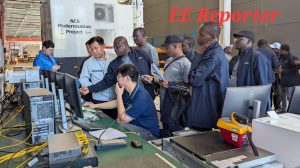
TMPL
Also speaking, Niu Chao, Project Manager, Nuctech Company Limited, China, expressed the company’s commitment to delivering world-class equipment, technical support, capacity building, and after-sales services.
During the exercise, technical experts from both NCS and TMPL were also trained to handle, operate, and maintain the scanners and the ECTS to ensure seamless deployment and sustainability in Nigeria.
Eereporter.com
-
 Crime1 year ago
Kogi Assembly Considers Law To Regulate Rent, Establish Control Board: Tenancy Law
-
 News2 years ago
Atiku Reveals Why He Failed To Pick Wike As Running Mate In 2023
-
 Akwa Ibom2 years ago
The Apostolic Church Gets New Territorial Chairman, Exco
-

 Crime2 years ago
Federal High Court Jails 2 For Vandalizing Transformer, Telecom Mast In Kogi
-
 News2 years ago
The Apostolic Church Gets New National President, Executive
-
 Akwa Ibom2 years ago
Umo Eno Commences Payment Of 80,000 Naira Minimum Wage With Arrears
-
 News2 years ago
Senator Natasha Returns To Senate With Husband Amid Seat Dispute
-
 Economy1 year ago
Kiyosaki: Is Tinubu’s Government Afraid Of Ibrahim Traore?