
Politics
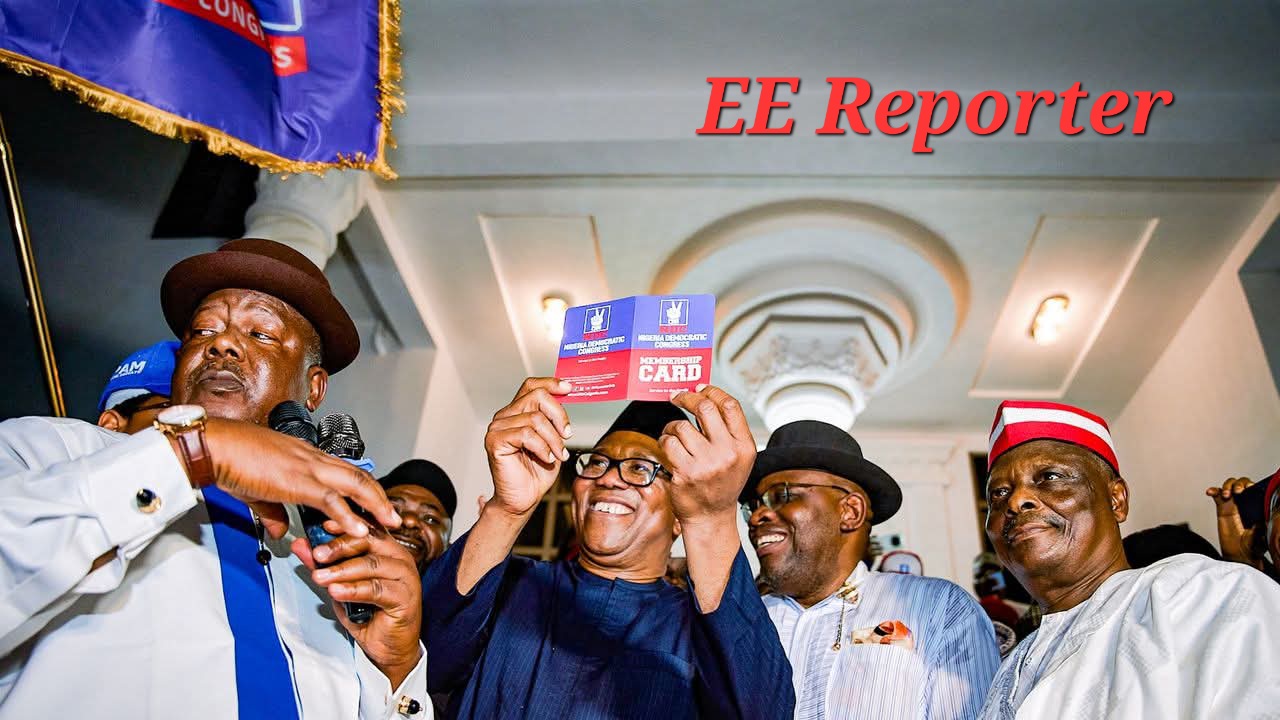
Obi-Kwankwaso Defection: Recalibration That Could Redefine The Country’s Power Structure

Obi-Kwankwaso Defection: Recalibration That Could Redefine The Country’s Power Structure
Obi-Kwankwaso surge; the defection storm that could upend Nigeria’s political system.
Politics does not whisper at defining moments; it roars, demanding bold choices and decisive turns. Today, the evolving journeys of Mr. Peter Obi, presidential candidate of the Labour Party in the 2023 elections, and Senator Rabiu Musa Kwankwaso, flagbearer of the New Nigeria Peoples Party in that same contest, capture the urgency of this moment.
This is not a quest for mere relevance or routine recalibration; it is a high-stakes pivot and a deliberate search for a credible platform capable of bearing the weight of a serious national challenge and reshaping the country’s political destiny.
What many once dismissed as improbable is now gaining the texture of inevitability: a broad, reform-minded alliance anchored on the convergence of supporters of Obi and Kwankwaso, now christened the OK Movement. This is no ordinary political maneuver; it is a recalibration that could redefine the country’s power structure while opening a path toward a more inclusive and stable democratic order.
Eereporter.com
Both figures have, in recent cycles, moved away from their former party homes, briefly converging within the African Democratic Congress (ADC) and now gravitating toward the National Democratic Congress (NDC). Kwankwaso’s migration from the NNPP to the ADC was not merely symbolic; it signaled that the old political camps were no longer fit for purpose. As he put it, “We left the NNPP because of externally influenced legal challenges that made our stay perilous.”
Obi’s departure from the Labour Party to the ADC further consolidated what many hoped would become a formidable coalition. However, the ADC, rather than emerging as a stable opposition platform, became entangled in internal disputes, legal battles, and structural inconsistencies that many insiders now describe as unreliable. Explaining his exit, Obi noted: “My decision to depart from the ADC was not due to personal issues with the party leadership… but was driven by unresolved political conflicts and recurring legal and internal disputes that distracted the party from national issues.”
What we are witnessing is not indecision; it is strategic migration, a revolt against weak platforms and a determined search for a viable electoral vehicle. The ADC phase offered proof of concept, an early coalition impulse, but also exposed the limitations of platforms lacking internal cohesion. By contrast, the emerging NDC option presents itself as a more structured vehicle and one that promises clarity of leadership, a predictable primary process, and an institutional spine capable of sustaining a national campaign.
With this shift, a potential exodus of key members from the ADC appears imminent, further weakening a party already burdened by litigation over its leadership. Yet, the true engine of this moment is not party labels rather it is people. The fusion of the Kwankwasiyya Movement and the Obidient Movement represents one of the most compelling political alignments in contemporary Nigeria.
Kwankwasiyya brings disciplined grassroots organization, particularly across northern constituencies, with a proven record of loyal and enduring mobilization. The Obidient Movement, by contrast, is youthful, decentralized, digitally savvy, and driven by a reformist ethos that prioritizes transparency, competence, and accountability.
Together, they offer a rare synthesis: structure meets spontaneity; regional strength meets national reach; experience meets aspiration. In electoral terms, this alignment has the potential to consolidate a broad alliance cutting across geography, class, and generation. In governance terms, it could nurture a culture that blends technocratic discipline with active citizen engagement. This is precisely the mix many analysts argue Nigeria needs to move from cyclical contestation to sustained development.
This is where the NDC’s proposition becomes pivotal. Beyond serving as a landing ground, the party is positioning itself as an enabling architecture. Its most significant offering to an Obi–Kwankwaso ticket is not merely access, but assurance: a transparent pathway to nomination, a commitment to internal democracy, and a platform anchored on policy coherence rather than factional bargaining.
In a political environment often defined by contentious primaries and legal disputes, such guarantees can be decisive. They reduce uncertainty, attract broader coalitions, and allow candidates to focus on articulating a national agenda rather than navigating intra-party conflict.
The potential implications for electoral success are considerable. A unified ticket anchored on these two leaders could redraw Nigeria’s political map by aligning northern organizational strength with southern reformist momentum. It could also recalibrate voter psychology, shifting the narrative from fragmented opposition to a credible alternative. In many democracies, it is this moment of perceived viability that transforms enthusiasm into votes.
Obi-Kwankwaso
More importantly, the NDC offers narrative clarity. In modern politics, perception is shaped not only by what a movement stands for, but by how clearly and consistently it communicates its purpose. By providing a structured environment, the party enables the OK Movement to maintain message discipline while articulating a vision centered on economic reform, governance efficiency, and national unity. This clarity could convert widespread goodwill into measurable electoral support.
Analytically, the implications of this convergence are significant. Nigerian elections are often decided at the intersection of structure and sentiment. The Obidient Movement brings the sentiment, an energized, emotionally invested base seeking change.
Kwankwasiyya contributes the structure, a disciplined network capable of translating enthusiasm into votes. Their alignment, under a stable platform, creates a political equation that could fundamentally alter electoral dynamics.
Globally, such alignments have often catalyzed both electoral success and political stability. In diverse democracies, coalitions that bridge ideological, regional, or generational divides have demonstrated an ability not only to win power but to govern with a broader mandate. Their strength lies in inclusivity: carrying multiple constituencies along, reducing post-election tensions, and fostering shared ownership of governance.
In Kenya, intense political rivalry gave way to alliance arrangements that restored stability, most notably the 2008 power-sharing framework between Mwai Kibaki and Raila Odinga. In South Africa, the Government of National Unity in the 1990s brought former adversaries together, stabilizing a fragile transition and laying the foundation for enduring democratic institutions.
The lesson is clear: alliances are not easy, but when thoughtfully constructed, they can transform fragmentation into functionality. They convert competition into shared responsibility and create the conditions for stability.
For Nigeria, the Obi–Kwankwaso surge represents a similar possibility. It offers an opportunity to move from fragmented contestation to coordinated engagement, from narrow political calculations to a broader national vision, one grounded in competitive credibility rather than entrenched dominance.
No movement is without challenges. Alliance management demands discipline, compromise, and clear decision-making frameworks. Messaging must remain consistent, expectations must be managed, and internal cohesion must be actively maintained. Yet, these are the natural tests of any serious political enterprise.
What matters is the direction of travel and here, it is unmistakable: toward consolidation, credibility, and a reimagined political center.
The defection storm, therefore, should not be seen merely as instability. It is a manifestation of political evolution and a sign that actors are responding to the demands of a changing electorate. It reflects a growing insistence on platforms that can deliver not just participation, but performance.
In the final analysis, the Obi–Kwankwaso surge is more than a moment; it is a message. A message that Nigeria’s political space remains open to reinvention and that that alliances can be rebuilt, narratives reshaped, and power redefined.
As the storm gathers strength, one truth stands out: this is not simply about upending an existing order. It is about constructing a new one: more inclusive, more responsive, and more aligned with the aspirations of the Nigerian people.
And as the OK Movement weighs its next steps, the path forward becomes clearer. The future of Nigeria’s political contest will not be decided by rhetoric alone, but by the ability to align vision with structure, energy with organization, and aspiration with execution.
In that sense, the journey from the ADC to the NDC is not merely a change of address. it is a statement of intent: an intent to move from possibility to preparedness, from momentum to machinery and from movement to mandate.







Politics
ADC Challenges Governor Zulum Over Fresh ‘Tinubu Must Go’ Arrest Threat, Says ‘Borno is not A Detention Centre
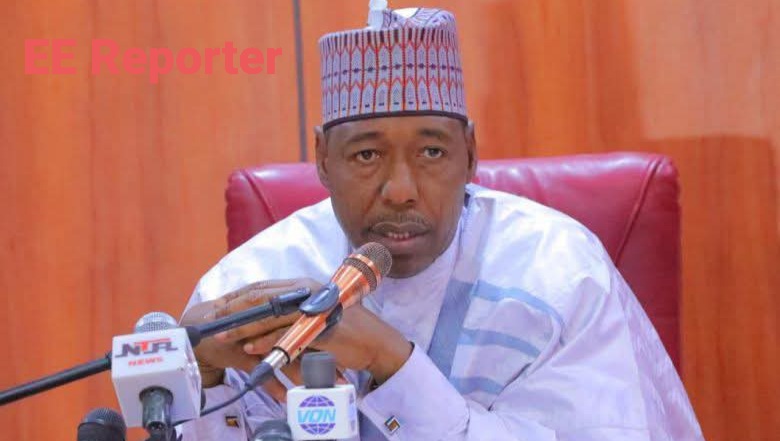
ADC Challenges Governor Zulum Over Fresh ‘Tinubu Must Go’ Arrest Threat, Says ‘Borno is not A Detention Centre’
The Presidential Campaign Council of the African Democratic Congress (ADC) has accused Borno State Governor Babagana Zulum of threatening to arrest and detain residents who express opposition to President Bola Tinubu.
Eereporter.com
The ADC PCC made the allegation in a statement signed by its Director of Strategic Communications, Phrank Shaibu, following the circulation of a viral video in which Zulum allegedly spoke in Hausa and said that anyone caught expressing slogans such as “Tinubu Must Go” would be arrested and detained.
The group described the alleged directive as an “assault on democracy” and questioned the governor’s commitment to citizens’ constitutional rights to freedom of expression and peaceful political participation.
According to Shaibu, the development is particularly concerning because Zulum had recently denied ordering the arrest of individuals wearing “Tinubu Must Go” T-shirts.
“Governor Zulum recently denied ordering the arrest of people wearing ‘Tinubu Must Go’ T-shirts. He must explain the fresh video and reconcile its contents with that denial,” the statement said.
The ADC PCC said Nigerians deserved clarity rather than “contradictory messages” over whether citizens expressing opposition to the President would be arrested.
“No governor has the authority to criminalise peaceful political opinion. A slogan, a T-shirt or a call for a president to leave office is not, by itself, a crime,” the statement added.
The opposition group warned that Borno State must not become a place where citizens are intimidated into silence for criticising the Federal Government.
“Borno State is not a political detention centre, and its citizens must not be threatened into silence for opposing President Tinubu,” it said.
The ADC PCC further urged the authorities to prosecute anyone suspected of committing a separate criminal offence through due process, rather than using other allegations as a pretext to suppress political expression.
“If the authorities have credible evidence of a separate offence, they should present it in court and allow due process to take its course. They must not use other allegations as a cover to punish citizens for their political views,” Shaibu said.
The group called on Zulum to withdraw any directive allegedly targeting peaceful protesters and guarantee that no citizen would be arrested solely for expressing opposition to Tinubu.
“A government confident in its record answers criticism with evidence and performance—not threats of arrest and detention,” the statement said.
Governor Zulum had warned that his administration would not tolerate actions capable of undermining peace and security in the state, amid renewed demonstrations by youths wearing T-shirts bearing the inscription “Tinubu Must Go.”
Zulum said there would be consequences for people who, according to him, were using group identities, weapons and political activities to create unrest in Maiduguri. The governor spoke in an interview in which he warned that authorities would take action against people he said were responsible for recent disturbances in the state.
“But you put it in writing on the singlet. You wear a T-shirt showing a sign of arms and knives. You wear the singlet and move around claiming to belong to a particular group,” Zulum said. He warned that continued inaction could make the state capital uninhabitable.
“I swear, if we stand by and watch these things happen without taking actions. I swear, this town will not remain habitable if this continues. I am telling you,” he said. Zulum said some areas of the city had become difficult to access at night because of activities by groups he described as problematic.
“You cannot enter some area around 11 o’clock. Those people, we will deal with all of them within ten minutes. But because there is no unity and cooperation…” he said. He also expressed concern over the impact of violence on residents, including women.
“We will see what happens in this town. We have seen people being destroyed, and we are witnessing these things, including women being affected, right before our eyes,” the governor said.
The governor’s comments came days after five men were arrested and arraigned in Maiduguri over T-shirts bearing the inscription “Tinubu Must Go.”
The five men, identified as Baba Aji Gremami, Mustapha Abba Yemen, Abacha Mohammed Ali, Adam Umar Gubio and Abdulhamid Mohammed, were charged with criminal conspiracy, inciting disturbance, disturbance of public peace and thuggery under Sections 60, 78, 79 and 392 of the Borno State Penal Code.
They pleaded not guilty, while their bail application is expected to be ruled on October 6. The substantive case has been fixed for October 26.
The arrests have generated controversy, with opposition groups and rights activists questioning whether the men were being prosecuted over the political message on their clothing.
The Borno State Police Command, however, has denied arresting the men simply because they wore anti-Tinubu shirts.
The police said they were apprehended during a routine patrol around West End Roundabout in Maiduguri and that officers allegedly recovered 15 wraps of dried leaves suspected to be Indian hemp, 100 tablets suspected to be D5, a shisha pot, scissors and two T-shirts bearing the “Tinubu Must Go” inscription.
The police said the suspects were arrested over allegations of inciting disturbance, breach of public peace, thuggery and possession of suspected illicit drugs.
The ADC, however, rejected the police account, alleging that the youths had obtained clearance from the police and the Department of State Services to hold a peaceful gathering at its secretariat around West End Roundabout.
Zulum had previously denied ordering the arrest of the five men or any opposition politicians, saying he was not aware of the arrests and that his focus remained on rebuilding Borno after years of Boko Haram insurgency.
Governor Zulum
The latest comments, however, come as dozens of youths again appeared in Maiduguri wearing white T-shirts with the “Tinubu Must Go” inscription. SaharaReporters reported that the youths were seen marching together in a video circulating on X, days after the five men were arrested.
The fresh demonstration was seen as a show of solidarity with those arrested and a renewed expression of opposition to President Bola Ahmed Tinubu ahead of the 2027 general elections.
The circumstances surrounding the gathering, including whether it had obtained formal approval from security agencies, could not immediately be independently established.
The controversy over the arrests has continued to attract criticism, with Amnesty International and other political figures questioning the prosecution of the men.
The case has also prompted a petition by lawyer and rights activist Hamza N. Dantani to the Inspector-General of Police, Olatunji Disu, calling for a review of the arrests and prosecution and alleging possible selective enforcement of the law by the Borno Police Command.
Eereporter.com
Politics
APC Mocks Amaechi Over Claim He Couldn’t Afford Mother’s Medication, Describes Him ‘Loafer’ Outside Public Office
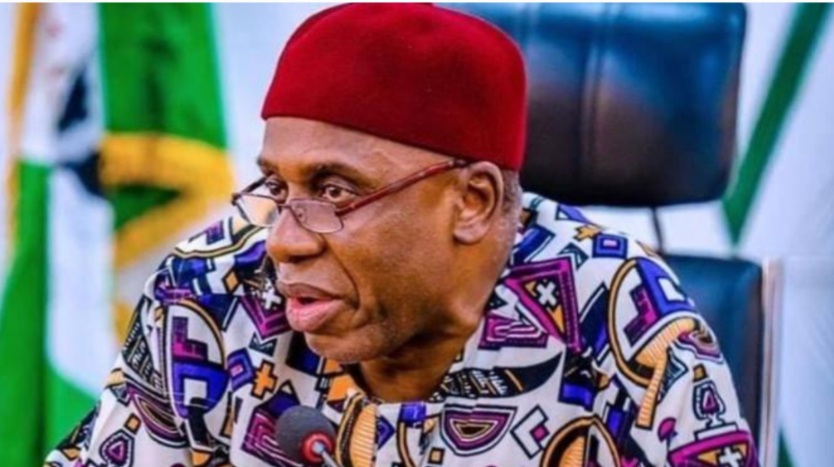
APC Mocks Amaechi Over Claim He Couldn’t Afford Mother’s Medication, Describes Him ‘Loafer’ Outside Public Office
The All Progressives Congress (APC) has mocked former Rivers State Governor and African Democratic Congress (ADC) vice-presidential candidate Rotimi Amaechi over his reported inability to afford medication for his late mother, describing him as a “loafer” outside public office.
Eereporter.com
The APC, in a statement signed by its National Publicity Secretary, Felix Morka, on Sunday, also questioned Amaechi’s suitability for the vice-presidential position ahead of the 2027 general elections.
The party began by praying for the repose of the soul of Amaechi’s mother, Dame Ezinne Mary Oduah Amaechi, and wishing the former governor “excellent health of mind and body.”
However, it quickly turned its attention to Amaechi’s reported financial difficulties, saying he had been unable to afford medication for his mother’s treatment.
The APC sarcastically prayed that employers in Amaechi’s hometown of Ubima in Ikwerre Local Government Area of Rivers State would find him suitable for a job that could provide enough income for him to feed himself and his family and afford medications.
“We also pray for excellent health of mind and body for her son, Rotimi Chibuike Amaechi, a former two-term Speaker of the Rivers State House of Assembly, two-term Governor, two-term Minister of Transportation, former presidential aspirant, and currently the vice-presidential candidate of the African Democratic Congress (ADC), who could not afford medications for his mother’s treatment,” the statement said.
“It is our sincere wish that employers of labour in his hometown of Ubima in Ikwerre Local Government Area of Rivers State may find him suitable for a job that pays wages sufficient for him to feed and buy medications for himself and his beloved family for the rest of his retirement. Amen.”
The ruling party also referenced previous comments attributed to Amaechi about his financial situation, saying the former governor had previously complained that he had become broke and hungry to the extent that his wife was feeding him.
The APC said Amaechi had now reportedly linked his mother’s death at the age of 89 to his inability to afford her medications.
“Rotimi Amaechi’s uncanny confessions must not be missed. First, he howled that he had become so broke and hungry that his wife was now feeding him. Now, he has stated that his inability to afford medications killed his mother at 89,” the party said.
The APC then attacked Amaechi’s record in public office, arguing that he had spent about four decades benefiting from government positions and should have developed means of earning a living outside political office.
“For four decades, Rotimi Amaechi freeloaded at the highest levels of public office. He was never hungry and could afford medications for himself and his family,” the party said.
“Just three years out of office, he has become destitute, unable to fend for himself and his loved ones.”
The APC further described Amaechi as a “loafer, aimless and irresponsible” if his inability to earn a living outside public office was not due to what it called “some kind of Peter Pan syndrome.”
It also accused him of seeking the ADC vice-presidential ticket in order to return to government patronage.
“The same Rotimi Amaechi now asks Nigerians to make him vice president come 2027 so he can continue leeching on the public treasury and keep the predatory lifestyle he has grown accustomed to,” the party said.
Amaechi
The APC concluded by declaring that the presidency should not be used as a means of providing for individuals, saying: “The presidency is not a soup kitchen and will not be a soup kitchen for Rotimi Amaechi.”
It added: “No one can speak more to Rotimi Amaechi’s unfitness for the office of Vice President than Rotimi Amaechi himself.”
Amaechi stated during a recent interview on Channels Television’s Politics Today that the economic policies of President Bola Tinubu’s administration contributed to the death of his mother by making her medication difficult to afford.
The former Rivers State governor asserted that “Tinubu’s policies killed my mother”. He claimed his mother was healthy before 2023, but after the administration took office, rising costs made it hard to buy her drugs.
He argued that general inflation and economic pressures under the current administration are harming ordinary citizens and affecting healthcare access.
Eereporter.com
Politics
Government Ban ‘Tinubu Must Go Movement’ in Borno, Says Any Protesters Caught Will Be Arrested, Detained
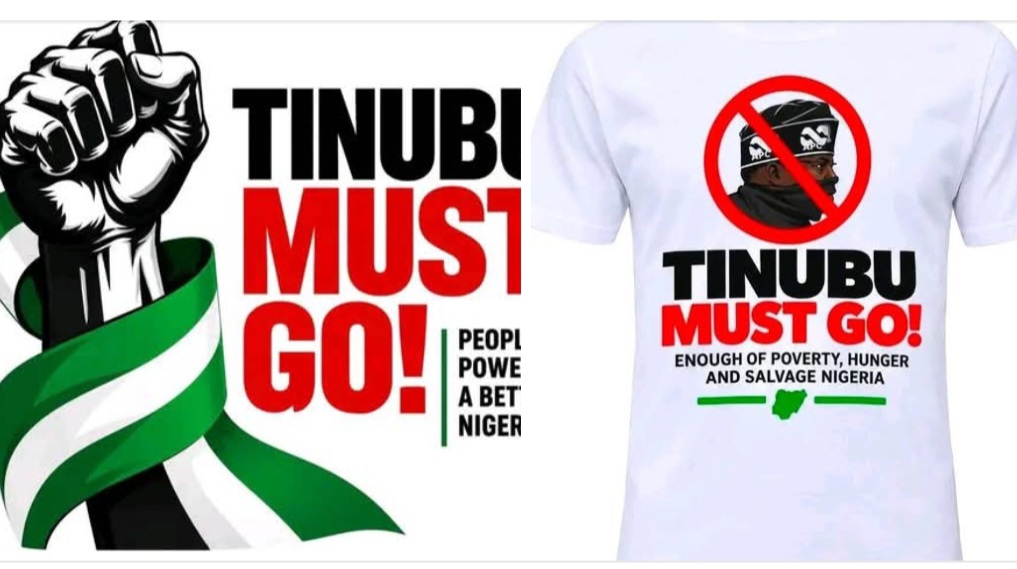
Government Ban ‘Tinubu Must Go Movement’ in Borno, Says Any Protesters Caught Will Be Arrested, Detained
Borno State Governor, Babagana Umara Zulum, has warned that his administration will not tolerate actions capable of undermining peace and security in the state, amid renewed demonstrations by youths wearing T-shirts bearing the inscription “Tinubu Must Go.”
Eereporter.com
Zulum said there would be consequences for people who, according to him, were using group identities, weapons and political activities to create unrest in Maiduguri.
The governor spoke in an interview in which he warned that authorities would take action against people he said were responsible for recent disturbances in the state.
“But you put it in writing on the singlet. You wear a T-shirt showing a sign of arms and knives. You wear the singlet and move around claiming to belong to a particular group,” Zulum said.
He warned that continued inaction could make the state capital uninhabitable.
“I swear, if we stand by and watch these things happen without taking actions. I swear, this town will not remain habitable if this continues. I am telling you,” he said.
Zulum said some areas of the city had become difficult to access at night because of activities by groups he described as problematic.
“You cannot enter some area around 11 o’clock. Those people, we will deal with all of them within ten minutes. But because there is no unity and cooperation…” he said.
He also expressed concern over the impact of violence on residents, including women.
“We will see what happens in this town. We have seen people being destroyed, and we are witnessing these things, including women being affected, right before our eyes,” the governor said.
Zulum said political considerations should not prevent authorities from taking action against people responsible for violence or unrest.
“People will be killed. But today, because of politics, someone will say, ‘Leave our boys alone,’ even when our own people are responsible for what is happening,” he said.
The governor added that his administration would take action against those responsible for recent incidents.
“We will deal with those responsible for what has been happening here over the past five days,” he said. He further warned that some measures would be taken without prior public announcement.
“That is why we will rise up and take action. There are measures we will take without necessarily announcing them to anyone. Anyone we catch will be arrested and detained,” Zulum said. He stressed that his administration would not allow anyone to destabilise the state.
“We will not tolerate anyone who wants to undermine peace in Borno. This is not about me personally. We will not allow anyone to instigate another conflict, attack others, or cause unrest,” he said.
Zulum also questioned the effectiveness of past protests and urged those interested in politics to pursue their ambitions through democratic means. “What was achieved through all these acts of protest that were done years ago?” he asked.
“What has violence achieved? If you want to contest an election, go ahead. If you want to engage in politics, do politics, but…”
The governor’s comments come days after five men were arrested and arraigned in Maiduguri over T-shirts bearing the inscription “Tinubu Must Go.”
The five men, identified as Baba Aji Gremami, Mustapha Abba Yemen, Abacha Mohammed Ali, Adam Umar Gubio and Abdulhamid Mohammed, were charged with criminal conspiracy, inciting disturbance, disturbance of public peace and thuggery under Sections 60, 78, 79 and 392 of the Borno State Penal Code.
They pleaded not guilty, while their bail application is expected to be ruled on October 6. The substantive case has been fixed for October 26.
The arrests have generated controversy, with opposition groups and rights activists questioning whether the men were being prosecuted over the political message on their clothing.
The Borno State Police Command, however, has denied arresting the men simply because they wore anti-Tinubu shirts.
The police said they were apprehended during a routine patrol around West End Roundabout in Maiduguri and that officers allegedly recovered 15 wraps of dried leaves suspected to be Indian hemp, 100 tablets suspected to be D5, a shisha pot, scissors and two T-shirts bearing the “Tinubu Must Go” inscription.
The police said the suspects were arrested over allegations of inciting disturbance, breach of public peace, thuggery and possession of suspected illicit drugs.
The ADC, however, rejected the police account, alleging that the youths had obtained clearance from the police and the Department of State Services to hold a peaceful gathering at its secretariat around West End Roundabout.
Zulum had previously denied ordering the arrest of the five men or any opposition politicians, saying he was not aware of the arrests and that his focus remained on rebuilding Borno after years of Boko Haram insurgency.
Tinubu Must Go
The latest comments, however, come as dozens of youths have again appeared in Maiduguri wearing white T-shirts with the “Tinubu Must Go” inscription. SaharaReporters reported that the youths were seen marching together in a video circulating on X, days after the five men were arrested.
The fresh demonstration was seen as a show of solidarity with those arrested and a renewed expression of opposition to President Bola Ahmed Tinubu ahead of the 2027 general elections. The circumstances surrounding the gathering, including whether it had obtained formal approval from security agencies, could not immediately be independently established.
The controversy over the arrests has continued to attract criticism, with Amnesty International and other political figures questioning the prosecution of the men.
The case has also prompted a petition by lawyer and rights activist Hamza N. Dantani to the Inspector-General of Police, Olatunji Disu, calling for a review of the arrests and prosecution and alleging possible selective enforcement of the law by the Borno Police Command.
Eereporter.com
-

 Crime1 year ago
Kogi Assembly Considers Law To Regulate Rent, Establish Control Board: Tenancy Law
-

 News2 years ago
Atiku Reveals Why He Failed To Pick Wike As Running Mate In 2023
-

 Akwa Ibom2 years ago
The Apostolic Church Gets New Territorial Chairman, Exco
-

 Crime2 years ago
Federal High Court Jails 2 For Vandalizing Transformer, Telecom Mast In Kogi
-
 News2 years ago
The Apostolic Church Gets New National President, Executive
-
 Akwa Ibom2 years ago
Umo Eno Commences Payment Of 80,000 Naira Minimum Wage With Arrears
-

 News2 years ago
Senator Natasha Returns To Senate With Husband Amid Seat Dispute
-

 Economy1 year ago
Kiyosaki: Is Tinubu’s Government Afraid Of Ibrahim Traore?