
History
Ndigbo Applauds IBB’s Revelation On 1966 Coup, Demands Apology From FG

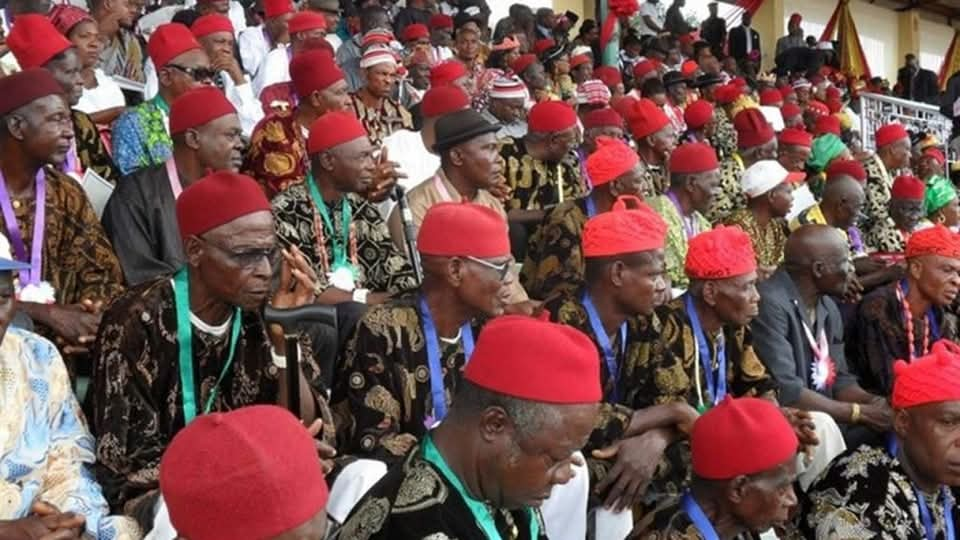
Ndigbo Applauds IBB’s Revelation On 1966 Coup, Demands Apology From FG
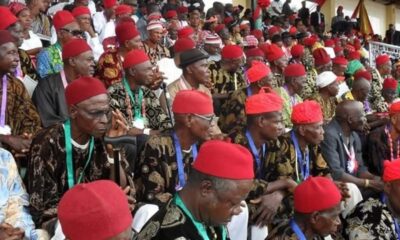
Ndigbo applauds IBB’s revelation on 1966 coup, demands apology from FG. Apex Igbo socio-cultural group, Ohanaeze Ndigbo, has commended former Military President, General Ibrahim Badamasi Babangida (IBB), for clarifying that the January 1966 Coup was not an Igbo-led uprising.
The organization described this revelation as a significant step toward correcting historical misrepresentations that have long fueled animosity toward the Igbo people in Nigeria’s political landscape.
Ohanaeze emphasized that Babangida’s assertion challenges the deep-seated notion that Igbos were solely responsible for the coup, a narrative that has led to decades of discrimination, hostility, and marginalization.
The former military leader made this statement during the launch of his book, A Journey in Service, where he explicitly stated that the Igbo community should not be blamed for the 1966 coup or labeled as adversaries of the North.
In a statement released on Sunday by Ohanaeze’s factional Deputy President-General, Okechukwu Isiguzoro, the group highlighted the long-term consequences of the erroneous labeling of the 1966 coup.
It noted that this mischaracterization contributed to the July 1966 Counter-Coup, the tragic Nigeria-Biafra War, and the continued systemic injustices against the Igbo people, including political exclusion and economic marginalization.
The statement pointed out several grievances, including the persistent underrepresentation of Igbos in Nigeria’s political structure, the neglect of critical infrastructure in the Southeast, and discriminatory policies such as the quota system that disadvantages Igbo citizens.
Additionally, the permanent closure of the Calabar seaport and the lack of functional international airports in the region were cited as evidence of the federal government’s neglect.
Ohanaeze reiterated its long-standing demands, first articulated during the 1999 Justice Oputa-led Human Rights Violation Commission.
The group is calling on President Bola Ahmed Tinubu to acknowledge historical injustices by issuing a public apology on behalf of past military regimes, particularly that of General Yakubu Gowon, whose administration oversaw the devastating Nigeria-Biafra War.
They also demand reparations of 10 trillion naira to compensate for the massive human and infrastructural losses suffered by the Igbo people.
Ndigbo
Despite the historical grievances, Ohanaeze emphasized the Igbo spirit of forgiveness, stating that they have extended their pardon to General Babangida and other actors involved in past injustices.
However, they urged President Tinubu to seize this moment to foster genuine reconciliation and unity by addressing the lingering wounds of the past.
According to Ohanaeze, true national healing can only occur when historical injustices are acknowledged, and steps are taken to ensure equity for all ethnic groups in Nigeria.
The group remains hopeful that Babangida’s revelation will pave the way for long-overdue restorative justice and national cohesion.









Nigeria Popular Pastor Reveals Why Christians Go To Church With Offerings
Nigeria popular pastor reveals why Christians go to Church with offerings. You don’t go to church with an offering to bribe God. You don’t give so that God will bless you. That mentality is transactional, and it is not the gospel. God is not a merchant, and church is not a marketplace.
In Christ, you are already blessed. “Blessed be the God and Father of our Lord Jesus Christ, who has blessed us with all spiritual blessings in heavenly places in Christ.” (Ephesians 1:3). If God has already blessed you with all blessings, what exactly are you trying to buy with money?
Offering is not a tool for manipulation. It is not a seed to twist God’s hand. It is a response to understanding. When light comes, giving follows. You don’t give to get; you give because you have received.
You go to church with an offering because ministry requires resources. The gospel must be preached, and preaching the gospel to reach a greater audience costs money. church facilities, media equipment, missions, outreaches, welfare, administration, all these require finances.
The work of the ministry does not run on wishes; it runs on resources.
Jesus had a treasury (John 12:6). Paul collected offerings to support ministry work and missions
(1 Corinthians 16:1–2, Philippians 4:15–18).
The early church gave to sustain the spread of the gospel (Acts 4:34–35). Giving has always been about supporting the work, not paying God, or bribing God to respond to your case.
When you give, you are partnering with the gospel. You are saying, “I believe in this message, and I want it to go far.” You are investing in lives, in souls, in eternity. That is why Paul said their giving was “fruit that abounds to your account,” not because God needed their money, but because the gospel was advancing through it.
“THIS IS WHY YOU GO
TO CHURCH WITH AN OFFERING”

Why Christians Go To Church With Offerings
Offering is stewardship, You are managing resources God already put in your hands. You are not losing, You are not buying blessings; you are financing the message that blesses lives.
So, you don’t give to be blessed. You give because you are blessed. You don’t give out of fear. You give out of understanding. You don’t give under pressure. You give in partnership.
What To Know About Air Chief Marshal Alex Sabundu Badeh
What to know about Air Chief Marshal Alex Sabundu Badeh. Air Chief Marshal Alex Sabundu Badeh was born on November 7, 1957, in Vimtim, a small town in Mubi Local Government Area of Adamawa State.
His military career began when he was admitted into the Nigerian Defence Academy as part of the 21st Regular Course on January 3, 1977. He was commissioned as a Pilot Officer on July 3, 1979.
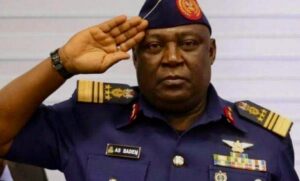
Air Chief Marshal Alex Sabundu Badeh
General Badeh’s remarkable rise to prominence saw him appointed as the 18th Chief of Air Staff, and later, he rose to the pinnacle of military leadership as the 15th Chief of Defence Staff – a testament to his exceptional leadership and expertise, with the rare distinction of holding TWO of the most powerful positions in the Nigerian Military.
Unfortunately, Air Chief Marshal AS Badeh died after gunmen attacked him on his way to his farm along Abuja-keffi road, on December 2018. May his gallant soul continue to rest in peace.
NNPC Post Record 5.76trn Naira Profit In 2025
Key Highlights:
NNPC post record 5.76trn naira profit in 2025– _”The company recorded a profit after tax of N5.76 trillion for the year and remitted N14.706 trillion to statutory government agencies.”
NNPC Monthly Report Summary
Revenue Breakdown: Total revenue for 2025 was N60.51 trillion, with statutory payments to government agencies and partners amounting to N14.7 trillion.

NNPC
”Crude oil and condensate production averaged 1.54 million barrels per day in December 2025, down by 3.75 percent from 1.6 million bpd in November 2025.” NNPC
Gas Production : Natural gas output stood at 6.914 billion standard cubic feet per day in December 2025.
Infrastructure Progress : Ajaokuta-Kaduna-Kano (AKK) gas pipeline reached 91% completion, while Obiafu-Obrikom-Oben (OB3) pipeline project is on track
-
 Crime1 year ago
Kogi Assembly Considers Law To Regulate Rent, Establish Control Board: Tenancy Law
-

 News2 years ago
Atiku Reveals Why He Failed To Pick Wike As Running Mate In 2023
-
 Akwa Ibom2 years ago
The Apostolic Church Gets New Territorial Chairman, Exco
-

 Crime2 years ago
Federal High Court Jails 2 For Vandalizing Transformer, Telecom Mast In Kogi
-
 News2 years ago
The Apostolic Church Gets New National President, Executive
-
 Akwa Ibom2 years ago
Umo Eno Commences Payment Of 80,000 Naira Minimum Wage With Arrears
-

 News2 years ago
Senator Natasha Returns To Senate With Husband Amid Seat Dispute
-
 Economy1 year ago
Kiyosaki: Is Tinubu’s Government Afraid Of Ibrahim Traore?