
Politics
Nasarawa State House Of Assembly Speaker Tasks Traditional Rulers On Unity, Peace


Nasarawa State House Of Assembly Speaker Tasks Traditional Rulers On Unity, Peace
Nasarawa State House of Assembly speaker tasks traditional rulers on unity, peace. The speaker also urged the people to continue to pray and support Gov. Abdullahi Sule and other leaders to succeed.
The Speaker, Nasarawa State House of Assembly, Danladi Jatau, has urged traditional rulers to continue to promote unity and peace in their domains for development to thrive.
Mr Jatau made the call on Sunday in Akwanga during a thanksgiving service to mark the 5th year of installation/50th birthday of the traditional ruler of Chim Nku, Habila Aboki.
The speaker, who underscored the importance of unity and peace to human and societal development, called on traditional rulers to continue to reconcile their people for peace to reign.
He congratulated the second-class traditional ruler on his double celebrations and wished him sound health, protection, and more wisdom in the years ahead.
“Today is a great day in the history of your life.
“I am happy to be here to celebrate with you. On behalf of the Nasarawa State House of Assembly, I congratulate you, and I wish you more prosperous years.
“I want to use this opportunity to appeal to you as a custodian of people, campaign for peace in your domain, and God will use you to reconcile not only your people but other ethnic groups,” he said.
The speaker also urged the people to continue to pray and support Gov. Abdullahi Sule and other leaders to succeed.
“Prayer is key, and when you depend on God, He will not fail you.
“We pray for God’s protection, guidance, and blessing, as well as sound and good health for you,” he added.
Former deputy governor, Nasarawa state, James Angbazo, and Kwanta Yakubu, immediate past commissioner for environment, all congratulated Chim Nku on his successful celebration.
They also prayed God to continue to give him more wisdom and good health.
Mr Aboki, in his remarks, said that he decided to organise the event in order to appreciate God over his life and the lives of his family members.
The traditional ruler appreciated Mr Sule, traditional rulers, stakeholders, and other people for their support for him to succeed.

Nasarawa
He assured the people of his commitment to promote unity and peace among his subjects and other people.
In his sermon, the ERCC general secretary, Rev. Gagara Mallunche, called on Christians to be grateful to God at all times.
Mr Mallunche, who took his reading from Psalms 50:14-16, urged Christians to imbibe the spirit of thanksgiving to attract more blessings from God.
The cleric also prayed for the unity, peace, progress, and development of the state and the country at large.








Politics
ADC Challenges Governor Zulum Over Fresh ‘Tinubu Must Go’ Arrest Threat, Says ‘Borno is not A Detention Centre
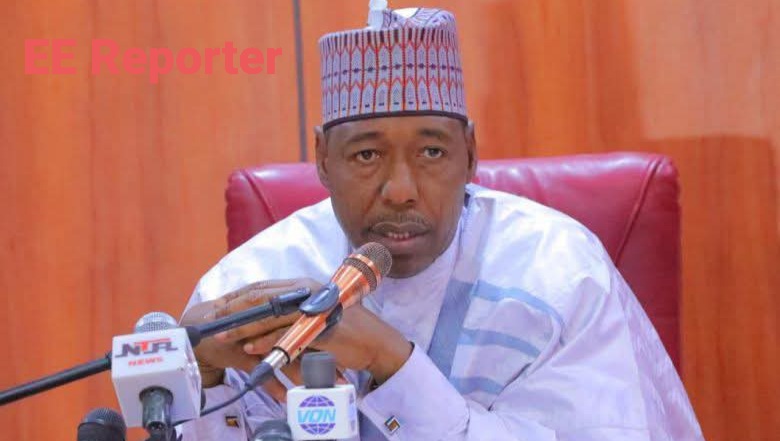
ADC Challenges Governor Zulum Over Fresh ‘Tinubu Must Go’ Arrest Threat, Says ‘Borno is not A Detention Centre’
The Presidential Campaign Council of the African Democratic Congress (ADC) has accused Borno State Governor Babagana Zulum of threatening to arrest and detain residents who express opposition to President Bola Tinubu.
Eereporter.com
The ADC PCC made the allegation in a statement signed by its Director of Strategic Communications, Phrank Shaibu, following the circulation of a viral video in which Zulum allegedly spoke in Hausa and said that anyone caught expressing slogans such as “Tinubu Must Go” would be arrested and detained.
The group described the alleged directive as an “assault on democracy” and questioned the governor’s commitment to citizens’ constitutional rights to freedom of expression and peaceful political participation.
According to Shaibu, the development is particularly concerning because Zulum had recently denied ordering the arrest of individuals wearing “Tinubu Must Go” T-shirts.
“Governor Zulum recently denied ordering the arrest of people wearing ‘Tinubu Must Go’ T-shirts. He must explain the fresh video and reconcile its contents with that denial,” the statement said.
The ADC PCC said Nigerians deserved clarity rather than “contradictory messages” over whether citizens expressing opposition to the President would be arrested.
“No governor has the authority to criminalise peaceful political opinion. A slogan, a T-shirt or a call for a president to leave office is not, by itself, a crime,” the statement added.
The opposition group warned that Borno State must not become a place where citizens are intimidated into silence for criticising the Federal Government.
“Borno State is not a political detention centre, and its citizens must not be threatened into silence for opposing President Tinubu,” it said.
The ADC PCC further urged the authorities to prosecute anyone suspected of committing a separate criminal offence through due process, rather than using other allegations as a pretext to suppress political expression.
“If the authorities have credible evidence of a separate offence, they should present it in court and allow due process to take its course. They must not use other allegations as a cover to punish citizens for their political views,” Shaibu said.
The group called on Zulum to withdraw any directive allegedly targeting peaceful protesters and guarantee that no citizen would be arrested solely for expressing opposition to Tinubu.
“A government confident in its record answers criticism with evidence and performance—not threats of arrest and detention,” the statement said.
Governor Zulum had warned that his administration would not tolerate actions capable of undermining peace and security in the state, amid renewed demonstrations by youths wearing T-shirts bearing the inscription “Tinubu Must Go.”
Zulum said there would be consequences for people who, according to him, were using group identities, weapons and political activities to create unrest in Maiduguri. The governor spoke in an interview in which he warned that authorities would take action against people he said were responsible for recent disturbances in the state.
“But you put it in writing on the singlet. You wear a T-shirt showing a sign of arms and knives. You wear the singlet and move around claiming to belong to a particular group,” Zulum said. He warned that continued inaction could make the state capital uninhabitable.
“I swear, if we stand by and watch these things happen without taking actions. I swear, this town will not remain habitable if this continues. I am telling you,” he said. Zulum said some areas of the city had become difficult to access at night because of activities by groups he described as problematic.
“You cannot enter some area around 11 o’clock. Those people, we will deal with all of them within ten minutes. But because there is no unity and cooperation…” he said. He also expressed concern over the impact of violence on residents, including women.
“We will see what happens in this town. We have seen people being destroyed, and we are witnessing these things, including women being affected, right before our eyes,” the governor said.
The governor’s comments came days after five men were arrested and arraigned in Maiduguri over T-shirts bearing the inscription “Tinubu Must Go.”
The five men, identified as Baba Aji Gremami, Mustapha Abba Yemen, Abacha Mohammed Ali, Adam Umar Gubio and Abdulhamid Mohammed, were charged with criminal conspiracy, inciting disturbance, disturbance of public peace and thuggery under Sections 60, 78, 79 and 392 of the Borno State Penal Code.
They pleaded not guilty, while their bail application is expected to be ruled on October 6. The substantive case has been fixed for October 26.
The arrests have generated controversy, with opposition groups and rights activists questioning whether the men were being prosecuted over the political message on their clothing.
The Borno State Police Command, however, has denied arresting the men simply because they wore anti-Tinubu shirts.
The police said they were apprehended during a routine patrol around West End Roundabout in Maiduguri and that officers allegedly recovered 15 wraps of dried leaves suspected to be Indian hemp, 100 tablets suspected to be D5, a shisha pot, scissors and two T-shirts bearing the “Tinubu Must Go” inscription.
The police said the suspects were arrested over allegations of inciting disturbance, breach of public peace, thuggery and possession of suspected illicit drugs.
The ADC, however, rejected the police account, alleging that the youths had obtained clearance from the police and the Department of State Services to hold a peaceful gathering at its secretariat around West End Roundabout.
Zulum had previously denied ordering the arrest of the five men or any opposition politicians, saying he was not aware of the arrests and that his focus remained on rebuilding Borno after years of Boko Haram insurgency.

Governor Zulum
The latest comments, however, come as dozens of youths again appeared in Maiduguri wearing white T-shirts with the “Tinubu Must Go” inscription. SaharaReporters reported that the youths were seen marching together in a video circulating on X, days after the five men were arrested.
The fresh demonstration was seen as a show of solidarity with those arrested and a renewed expression of opposition to President Bola Ahmed Tinubu ahead of the 2027 general elections.
The circumstances surrounding the gathering, including whether it had obtained formal approval from security agencies, could not immediately be independently established.
The controversy over the arrests has continued to attract criticism, with Amnesty International and other political figures questioning the prosecution of the men.
The case has also prompted a petition by lawyer and rights activist Hamza N. Dantani to the Inspector-General of Police, Olatunji Disu, calling for a review of the arrests and prosecution and alleging possible selective enforcement of the law by the Borno Police Command.
Eereporter.com
Politics
APC Mocks Amaechi Over Claim He Couldn’t Afford Mother’s Medication, Describes Him ‘Loafer’ Outside Public Office
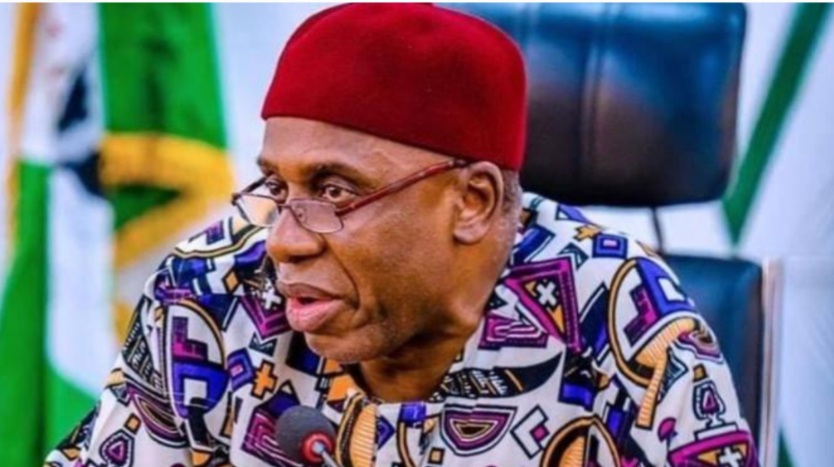
APC Mocks Amaechi Over Claim He Couldn’t Afford Mother’s Medication, Describes Him ‘Loafer’ Outside Public Office
The All Progressives Congress (APC) has mocked former Rivers State Governor and African Democratic Congress (ADC) vice-presidential candidate Rotimi Amaechi over his reported inability to afford medication for his late mother, describing him as a “loafer” outside public office.
Eereporter.com
The APC, in a statement signed by its National Publicity Secretary, Felix Morka, on Sunday, also questioned Amaechi’s suitability for the vice-presidential position ahead of the 2027 general elections.
The party began by praying for the repose of the soul of Amaechi’s mother, Dame Ezinne Mary Oduah Amaechi, and wishing the former governor “excellent health of mind and body.”
However, it quickly turned its attention to Amaechi’s reported financial difficulties, saying he had been unable to afford medication for his mother’s treatment.
The APC sarcastically prayed that employers in Amaechi’s hometown of Ubima in Ikwerre Local Government Area of Rivers State would find him suitable for a job that could provide enough income for him to feed himself and his family and afford medications.
“We also pray for excellent health of mind and body for her son, Rotimi Chibuike Amaechi, a former two-term Speaker of the Rivers State House of Assembly, two-term Governor, two-term Minister of Transportation, former presidential aspirant, and currently the vice-presidential candidate of the African Democratic Congress (ADC), who could not afford medications for his mother’s treatment,” the statement said.
“It is our sincere wish that employers of labour in his hometown of Ubima in Ikwerre Local Government Area of Rivers State may find him suitable for a job that pays wages sufficient for him to feed and buy medications for himself and his beloved family for the rest of his retirement. Amen.”
The ruling party also referenced previous comments attributed to Amaechi about his financial situation, saying the former governor had previously complained that he had become broke and hungry to the extent that his wife was feeding him.
The APC said Amaechi had now reportedly linked his mother’s death at the age of 89 to his inability to afford her medications.
“Rotimi Amaechi’s uncanny confessions must not be missed. First, he howled that he had become so broke and hungry that his wife was now feeding him. Now, he has stated that his inability to afford medications killed his mother at 89,” the party said.
The APC then attacked Amaechi’s record in public office, arguing that he had spent about four decades benefiting from government positions and should have developed means of earning a living outside political office.
“For four decades, Rotimi Amaechi freeloaded at the highest levels of public office. He was never hungry and could afford medications for himself and his family,” the party said.
“Just three years out of office, he has become destitute, unable to fend for himself and his loved ones.”
The APC further described Amaechi as a “loafer, aimless and irresponsible” if his inability to earn a living outside public office was not due to what it called “some kind of Peter Pan syndrome.”
It also accused him of seeking the ADC vice-presidential ticket in order to return to government patronage.
“The same Rotimi Amaechi now asks Nigerians to make him vice president come 2027 so he can continue leeching on the public treasury and keep the predatory lifestyle he has grown accustomed to,” the party said.

Amaechi
The APC concluded by declaring that the presidency should not be used as a means of providing for individuals, saying: “The presidency is not a soup kitchen and will not be a soup kitchen for Rotimi Amaechi.”
It added: “No one can speak more to Rotimi Amaechi’s unfitness for the office of Vice President than Rotimi Amaechi himself.”
Amaechi stated during a recent interview on Channels Television’s Politics Today that the economic policies of President Bola Tinubu’s administration contributed to the death of his mother by making her medication difficult to afford.
The former Rivers State governor asserted that “Tinubu’s policies killed my mother”. He claimed his mother was healthy before 2023, but after the administration took office, rising costs made it hard to buy her drugs.
He argued that general inflation and economic pressures under the current administration are harming ordinary citizens and affecting healthcare access.
Eereporter.com
Politics
Government Ban ‘Tinubu Must Go Movement’ in Borno, Says Any Protesters Caught Will Be Arrested, Detained

Government Ban ‘Tinubu Must Go Movement’ in Borno, Says Any Protesters Caught Will Be Arrested, Detained
Borno State Governor, Babagana Umara Zulum, has warned that his administration will not tolerate actions capable of undermining peace and security in the state, amid renewed demonstrations by youths wearing T-shirts bearing the inscription “Tinubu Must Go.”
Eereporter.com
Zulum said there would be consequences for people who, according to him, were using group identities, weapons and political activities to create unrest in Maiduguri.
The governor spoke in an interview in which he warned that authorities would take action against people he said were responsible for recent disturbances in the state.
“But you put it in writing on the singlet. You wear a T-shirt showing a sign of arms and knives. You wear the singlet and move around claiming to belong to a particular group,” Zulum said.
He warned that continued inaction could make the state capital uninhabitable.
“I swear, if we stand by and watch these things happen without taking actions. I swear, this town will not remain habitable if this continues. I am telling you,” he said.
Zulum said some areas of the city had become difficult to access at night because of activities by groups he described as problematic.
“You cannot enter some area around 11 o’clock. Those people, we will deal with all of them within ten minutes. But because there is no unity and cooperation…” he said.
He also expressed concern over the impact of violence on residents, including women.
“We will see what happens in this town. We have seen people being destroyed, and we are witnessing these things, including women being affected, right before our eyes,” the governor said.
Zulum said political considerations should not prevent authorities from taking action against people responsible for violence or unrest.
“People will be killed. But today, because of politics, someone will say, ‘Leave our boys alone,’ even when our own people are responsible for what is happening,” he said.
The governor added that his administration would take action against those responsible for recent incidents.
“We will deal with those responsible for what has been happening here over the past five days,” he said. He further warned that some measures would be taken without prior public announcement.
“That is why we will rise up and take action. There are measures we will take without necessarily announcing them to anyone. Anyone we catch will be arrested and detained,” Zulum said. He stressed that his administration would not allow anyone to destabilise the state.
“We will not tolerate anyone who wants to undermine peace in Borno. This is not about me personally. We will not allow anyone to instigate another conflict, attack others, or cause unrest,” he said.
Zulum also questioned the effectiveness of past protests and urged those interested in politics to pursue their ambitions through democratic means. “What was achieved through all these acts of protest that were done years ago?” he asked.
“What has violence achieved? If you want to contest an election, go ahead. If you want to engage in politics, do politics, but…”
The governor’s comments come days after five men were arrested and arraigned in Maiduguri over T-shirts bearing the inscription “Tinubu Must Go.”
The five men, identified as Baba Aji Gremami, Mustapha Abba Yemen, Abacha Mohammed Ali, Adam Umar Gubio and Abdulhamid Mohammed, were charged with criminal conspiracy, inciting disturbance, disturbance of public peace and thuggery under Sections 60, 78, 79 and 392 of the Borno State Penal Code.
They pleaded not guilty, while their bail application is expected to be ruled on October 6. The substantive case has been fixed for October 26.
The arrests have generated controversy, with opposition groups and rights activists questioning whether the men were being prosecuted over the political message on their clothing.
The Borno State Police Command, however, has denied arresting the men simply because they wore anti-Tinubu shirts.
The police said they were apprehended during a routine patrol around West End Roundabout in Maiduguri and that officers allegedly recovered 15 wraps of dried leaves suspected to be Indian hemp, 100 tablets suspected to be D5, a shisha pot, scissors and two T-shirts bearing the “Tinubu Must Go” inscription.
The police said the suspects were arrested over allegations of inciting disturbance, breach of public peace, thuggery and possession of suspected illicit drugs.
The ADC, however, rejected the police account, alleging that the youths had obtained clearance from the police and the Department of State Services to hold a peaceful gathering at its secretariat around West End Roundabout.
Zulum had previously denied ordering the arrest of the five men or any opposition politicians, saying he was not aware of the arrests and that his focus remained on rebuilding Borno after years of Boko Haram insurgency.

Tinubu Must Go
The latest comments, however, come as dozens of youths have again appeared in Maiduguri wearing white T-shirts with the “Tinubu Must Go” inscription. SaharaReporters reported that the youths were seen marching together in a video circulating on X, days after the five men were arrested.
The fresh demonstration was seen as a show of solidarity with those arrested and a renewed expression of opposition to President Bola Ahmed Tinubu ahead of the 2027 general elections. The circumstances surrounding the gathering, including whether it had obtained formal approval from security agencies, could not immediately be independently established.
The controversy over the arrests has continued to attract criticism, with Amnesty International and other political figures questioning the prosecution of the men.
The case has also prompted a petition by lawyer and rights activist Hamza N. Dantani to the Inspector-General of Police, Olatunji Disu, calling for a review of the arrests and prosecution and alleging possible selective enforcement of the law by the Borno Police Command.
Eereporter.com
-

 Crime1 year ago
Kogi Assembly Considers Law To Regulate Rent, Establish Control Board: Tenancy Law
-

 News2 years ago
Atiku Reveals Why He Failed To Pick Wike As Running Mate In 2023
-

 Akwa Ibom2 years ago
The Apostolic Church Gets New Territorial Chairman, Exco
-

 Crime2 years ago
Federal High Court Jails 2 For Vandalizing Transformer, Telecom Mast In Kogi
-

 News2 years ago
The Apostolic Church Gets New National President, Executive
-

 Akwa Ibom2 years ago
Umo Eno Commences Payment Of 80,000 Naira Minimum Wage With Arrears
-

 News2 years ago
Senator Natasha Returns To Senate With Husband Amid Seat Dispute
-

 Economy1 year ago
Kiyosaki: Is Tinubu’s Government Afraid Of Ibrahim Traore?