
International
NAF Deepens Munitions Safety Capacity In Turkiye Through Strategic Global Training Engagement

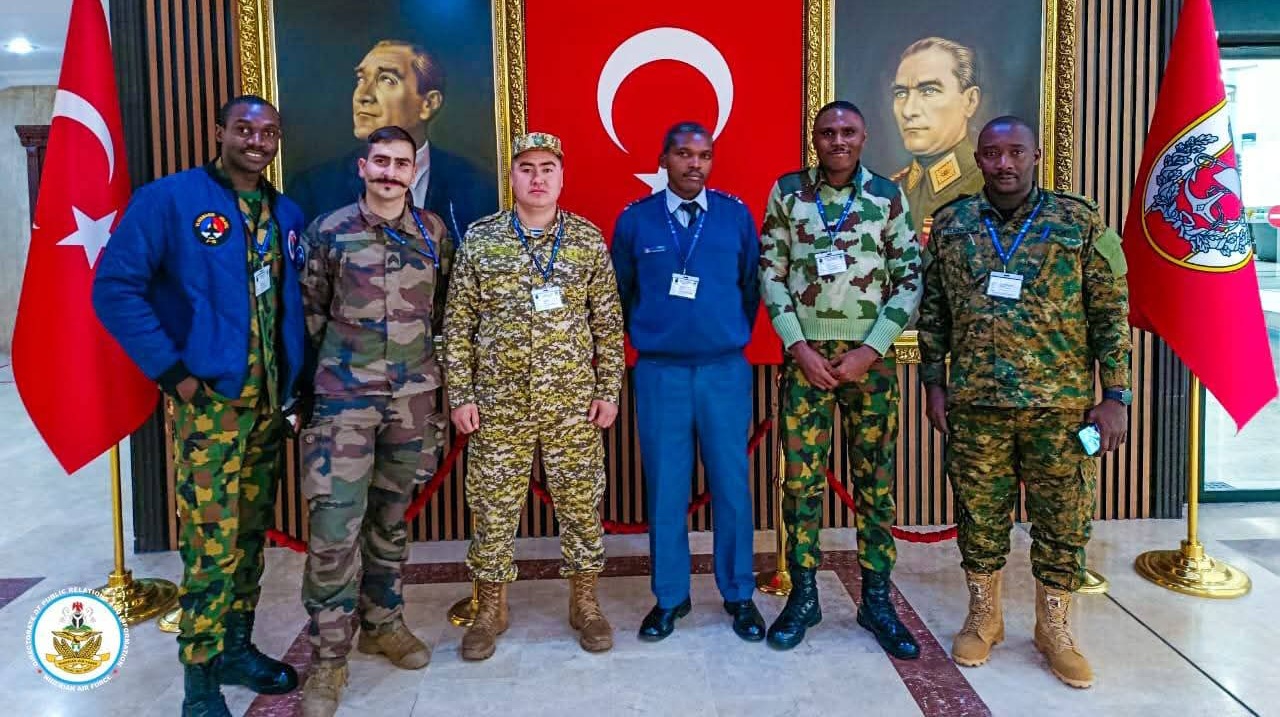
NAF Deepens Munitions Safety Capacity In Turkiye Through Strategic Global Training Engagement
NAF deepens munitions safety capacity in Turkiye through strategic global training engagement. In line with its sustained commitment to capacity development and operational excellence, the Nigerian Air Force (NAF) has strengthened its technical and safety competencies through active participation in the Munitions Management and Safety Course held from 23–27 February 2026 at the Turkish Partnership for Peace Training Centre in Ankara, Türkiye.
Three NAF officers were among 25 participants drawn from 14 countries, reflecting the Service’s deliberate investment in international professional military education and exposure to global best practices. The course provided a robust platform for cross-national collaboration and knowledge exchange in contemporary munitions management standards.
Participants received intensive training on United Nations and NATO doctrines, terminologies, and guidelines governing munitions management and safety. Through structured syndicate work and group discussions, officers exchanged insights on national procedures and safety frameworks, fostering interoperability awareness and enhancing professional competence.
The course also introduced emerging trends and technologies shaping modern munitions safety architecture, broadening participants’ technical perspectives in line with evolving global standards.

NAF Deepens Munitions Safety Capacity In Turkiye
This strategic engagement aligns with the Command Philosophy of the Chief of the Air Staff (CAS), Air Marshal Sunday Kelvin Aneke, which prioritizes deliberate training, international collaboration, and continuous professional development as pillars of operational effectiveness.
By equipping its officers with globally benchmarked knowledge and fostering enduring partnerships, the NAF continues to reinforce its commitment to safety, professionalism, and mission readiness.










Iran-US Conflict May Raise Nigeria’s Fuel Prices: Minister Heineken Lokpobiri
Iran-US conflict may raise Nigeria’s fuel prices: Minister Heineken Lokpobiri. Energy experts and downstream operators have warned that Nigeria may witness a fresh increase in petrol and diesel prices if global crude oil prices surge above $90 per barrel amid escalating tensions between the United States and Iran.
The warning comes as hostilities in the Middle East triggered fresh volatility in the global oil market, raising concerns over the vulnerability of Nigeria’s domestic fuel pricing structure despite the country’s push for local refining.
Recent checks across major cities indicate that petrol currently sells between N824 and N880 per litre, depending on location, logistics costs, and the marketer involved, following the latest price adjustment by the Dangote Petroleum Refinery. The development comes after the refinery reduced its Premium Motor Spirit (petrol) gantry price by N25 per litre, lowering the ex-depot rate from N799 to N774 per litre in February 2026.
Five energy experts, in separate interviews with our correspondent on Sunday, said the recent US–Iran conflict could have far-reaching effects on global crude oil prices, warning that any sustained escalation of hostilities, particularly around the strategic Strait of Hormuz, is already feeding risk premiums into the market.
They all agreed that the development could translate into higher fuel costs for consumers if the crisis deepens. Already, global crude oil prices rose by about 10 per cent over the weekend after several oil majors reportedly halted tanker movements near the Strait of Hormuz, one of the world’s most critical energy transit routes, amid escalating hostilities in the Middle East.
The waterway links the Persian Gulf to the Indian Ocean and handles a significant portion of global oil shipments. Any disruption to the route is widely seen as capable of triggering supply shocks and price spikes.
As of 10 pm Sunday, Brent crude traded at $72.87 per barrel, while West Texas Intermediate stood at $67.02. Nigeria’s Bonny Light crude was priced at $78.62 per barrel. Analysts warned the situation could deteriorate if the crisis escalates, pushing prices closer to the $90 benchmark.
Chief Executive Officer of Dairy Hills, Kelvin Emmanuel, said Nigeria’s exposure to global crude pricing remains high because the Dangote Refinery still imports a significant portion of its feedstock.
He stated, “Dangote currently processes an average of 18 million barrels of crude oil monthly. Out of this, about 12 million barrels are imported, while he gets about 5.7 million barrels, which is the equivalent of six cargoes, from the Nigerian National Petroleum Company Limited.
“The commercial operators are not keen on supplying him feedstock because they hide under the guise of willing buyer, willing seller to inflate third-party commissions to the domestic refiner, in contravention of Section 109 of the Petroleum Industry Act.
“Any sharp increase in crude oil prices from this escalation will lead to a revision in the cracking margin spread of the refiner and, consequently, the price of refined products. The fact that protection and indemnity clubs are raising war risk insurance premiums on tanker vessels will also make it more expensive to land feedstock in Nigeria. If crude prices rise above $90 per barrel, the refiner will have to revise the price of PMS and diesel in Nigeria.”
He also questioned the transparency of the government’s naira-for-crude arrangement, saying, “The government claims that it supplies him nearly 190,000 barrels under the naira-based crude swap but is unable to account for the volume of cargoes given under said arrangement, or specify the equivalent petrol and diesel output.”
Similarly, the Chief Executive Officer of Petroleumprice.ng, Olatide Jeremiah, said Nigeria’s continued reliance on imported crude and refined products leaves the country vulnerable to international market shocks.
He said, “Nigeria is the largest crude oil producer in Africa and at the same time hosts the biggest refinery on the continent and the seventh largest globally. Ideally, a hike in global crude prices should not have a direct impact on local fuel prices.
“The Petroleum Industry Act clearly prioritises domestic refineries in crude allocation. If Dangote sourced 100 per cent of its crude locally, global price volatility would have little or no impact on domestic fuel prices because transactions would be naira-denominated.
“However, more than 60 per cent of Dangote refinery’s crude feedstock is being sourced abroad, and 40 per cent of refined products being consumed are imported.
Fuel prices will be at the mercy of oil prices. Petroleum traders in Nigeria have been tracking events between Iran and the US, and a surge in oil prices is expected. For Nigeria, revenue will increase, but Nigerians should brace for higher fuel prices on Monday, no doubt.”
Jeremiah added that the geopolitical tension should serve as a wake-up call for authorities to boost crude production and address oil theft and under-supply to domestic refineries.
“Also, the crises affecting the strategic Strait of Hormuz, through which tankers pass to Africa, won’t directly affect the supply of crude to Nigeria, depending on the markets we serve, like North America, Asia, and Europe.
“This is a wake-up call to the federal government that Nigeria’s growing and functional refineries cannot continue to rely on foreign crude. With current production at 1.5 million barrels per day, just 50 per cent of our potential, Nigeria should produce at least 2.5 million barrels per day if not for theft, corruption, and sabotage.
An energy law expert at the University of Lagos, Dayo Ayoade, said the global oil market operates on a demand-supply model, and Nigeria can no longer shield consumers from international price volatility following the removal of fuel subsidies.
He said, “The instability in the Middle East and any threat to the Strait of Hormuz will drive oil prices higher based on both perception and real supply concerns.
“Now the local fuel market has transitioned to a more commercial model, which is affected by international developments. Without subsidies, any crude price increase will directly impact fuel prices at the pump. More revenue may come in, but we must remain cautious.”
Professor Emeritus Wumi Iledare, a petroleum economist, cautioned against panic, noting that the global oil market is more diversified and responsive than during past geopolitical crises.
He said, “We must resist the temptation to interpret the US–Iran strike as the beginning of another historic oil shock. This is not the 1973 oil embargo, nor the Iran–Iraq war, nor the Gulf War era. The global oil market today is structurally more diversified, transparent, and responsive. Prices reacted sharply in the past because supply options were limited and information was slower.”
Iledare added that oil prices are determined by global market forces rather than by OPEC alone, noting that geopolitical tensions may introduce only a temporary risk premium that fades when fundamentals remain stable.

Petrol
National Publicity Secretary of the Independent Petroleum Marketers Association of Nigeria, Chinedu Ukadike, said marketers were monitoring the situation and would respond based on market developments.
He said, “Anything that affects the international oil market will affect local supply and prices. We are watching the trend and the reactions of the refinery and the government. We assure Nigerians that marketers will continue to ensure a steady supply once products are available.”
The PUNCH reports that the crisis escalated after coordinated military strikes on Iran by the United States and Israel, prompting retaliatory attacks across the region and raising fears of a wider conflict. Saudi Arabia has vowed to respond to any aggression, further heightening tensions.
President Donald Trump announced on Truth Social that Iran’s supreme leader, Ayatollah Ali Khamenei, was killed Saturday after US and Israeli predawn assaults. Iranian state media later confirmed his death.
The situation highlights Nigeria’s continued exposure to global oil shocks despite ongoing reforms and investments in local refining. Experts stressed that improving crude production, curbing theft, and ensuring adequate domestic supply to refineries remain critical to achieving energy security and insulating the economy from future price volatility.
Brent crude jumped 10 per cent to about $80 per barrel over the counter on Sunday, while analysts predicted that prices could climb as high as $100 after US and Israeli strikes on Iran.
The Strait of Hormuz, a narrow but strategic corridor linking the Persian Gulf to the Indian Ocean, handles a significant portion of global oil shipments. More than 20 per cent of global oil is moved through the Strait. Any threat to the route typically pushes oil prices higher due to supply risks and rising shipping costs.
The suspension of cargo movements followed heightened military activity in the region, including missile exchanges and naval alerts, which raised fears among shipowners and insurers. War risk premiums on vessels operating in the region were also increased, making crude transportation more expensive.
Meanwhile, key members of the OPEC+ oil cartel announced a greater-than-expected increase to production quotas on Sunday following US and Israeli strikes on Iran. The eight-member V8 group, including Saudi Arabia, Russia, Kuwait, Oman, Iraq, and the UAE, agreed to a “production adjustment” of 206,000 barrels per day (bpd), effective in April.
Analysts, however, warned that the increase may be insufficient to prevent a spike in oil prices if tensions persist. Jorge Leon, an analyst at Rystad Energy, noted that Iran could target the Strait of Hormuz, which carries nearly a quarter of the world’s seaborne oil supplies.
Leon said, “If oil cannot move through Hormuz, an extra 206,000 barrels per day does very little to ease the market. Prices will respond to Gulf developments and shipping flows, not a relatively small increase in output.” Algeria and Kazakhstan are also part of the V8 group.
International
Ibadan Airport To Begin Direct International Flights By End Of The Year 2026: Official
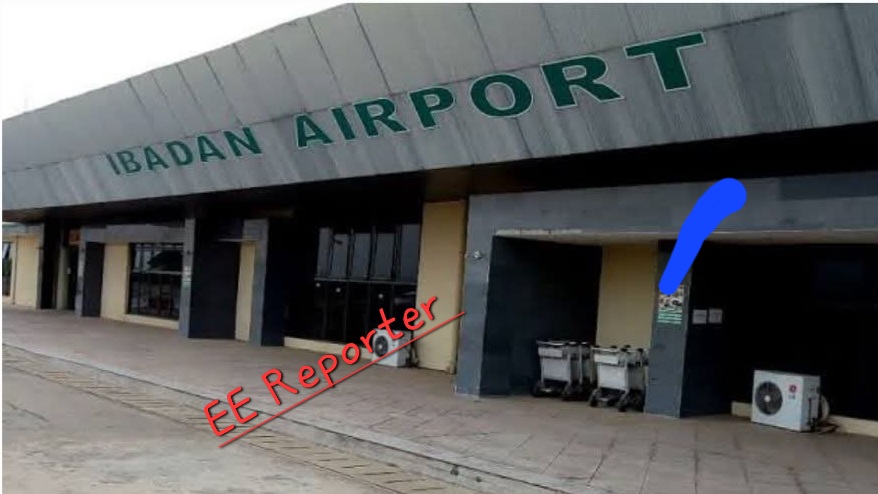
Ibadan Airport To Begin Direct International Flights By End Of The Year 2026: Official
Ibadan airport to begin direct international flights by end of the year 2026: Official. He said that the airport had undergone major upgrades.
Bimbo Adekanmbi, the chairman of the 11-man committee on the upgrade of the Ibadan airport, has said that direct international flights would commence before the end of 2026.
Ms Adekanmbi told journalists in Ibadan on Saturday that although some airlines had begun offering Ibadan–London flight options, such services were not direct international operations from the airport.
According to him, the current arrangements involve stopovers in Abuja before proceeding to the United Kingdom.
“Those are not the direct flights we promised. They take off from Ibadan, transit through Abuja and then continue to the UK.
“It is a good start, but our plan is to have direct international flights once the new terminal is completed,” he said.
Ms Adekanmbi disclosed that the international terminal to handle direct overseas flights was just between 40 per cent and 50 per cent completion.
The project chairman added that construction work was still ongoing on the terminal, but expressed optimism that the it would be ready for operation before the end of the year.
He said that the airport had undergone major upgrades, including expansion and extension of the runway.
“We have lengthened the runway from 2,400 metres to 3,000 metres and expanded it from 45 metres to 60 metres.
“The runway is now ready to receive big, wide-bodied aircraft.
“We have also restored the runway lights, which means aircraft can land at night. In addition, the Instrument Landing System (ILS) has been installed to enable aircraft land safely even in poor weather conditions,” he said.
Ms Adekanmbi said local flight operations had fully resumed, with aircraft flying daily to Abuja and other parts of the country.
According to him, the apron has also been expanded to accommodate larger aircraft and improve turnaround time.
“Also, new operational vehicles have been provided for aviation agencies, including the Nigerian Civil Aviation Authority (NCAA), the Nigerian Airspace Management Agency (NAMA), the airport fire service and the airport police command,” he said.
On the 2026 Hajj operations, he said the state would be among the first to airlift pilgrims, with flights scheduled to depart from Ibadan in May.
Ms Adekanmbi explained that pilgrims would be processed at the existing Hajj Camp in Olodo before being transported to the airport for departure.
Speaking on the economic impact of the upgraded airport, the project chairman said the facility would boost trade, investment and job creation in Oyo State.
He said that plans were underway to develop a cargo terminal and bonded warehouses to support agricultural exports and imports.
“With a cargo terminal, farmers and manufacturers can export their goods directly. Importers can also use bonded terminals to bring in equipment and other products.
Ibadan Airport
“This will generate revenue, create jobs and stimulate economic activities along the airport corridor and adjoining roads,” he said.
Mr Adekanmbi added that improved connectivity through the airport and ongoing road projects by the administration of Governor Seyi Makinde would transform the state from a largely consumer-driven economy to a production-oriented one.
On sustainability, he said the project was backed by an outline business case to ensure long-term viability.
According to him, measures such as improved turnaround time for aircraft, expanded apron space and enhanced passenger processing systems are being introduced to make the airport attractive to airlines and travellers.
He expressed confidence that once fully operational, the upgraded airport would position Ibadan as a major aviation hub and further stimulate economic growth in the state.
NSC Partners NiDCOM To Strengthen Diaspora Engagements
NSC partners NiDCOM to strengthen diaspora engagements. NCS granted over N60 billion customs duty concessions in 2025 to attract diaspora investment as it forges strategic alliance with NIDCOM.
The Nigeria Customs Service (NCS), has expressed readiness to partner with Nigerians in Diaspora Commission (NiDCOM), to deepen diaspora engagements, facilitate humanitarian interventions, and support strategic investments by Nigerians abroad.
This commitment was made during a courtesy visit by Hon. Abike Dabiri-Erewa, Chairman/CEO, NiDCOM to the Service Headquarters in Abuja, where both agencies reaffirmed the importance of structured collaboration in advancing national development.
Speaking during the visit, Dabiri-Erewa informed the Comptroller General on the preparations for this year’s Nigeria Diaspora Day, whose focus is on Diaspora Health Impact Initiative 2026 (DHII 2026) scheduled for July 20-23, 2026, across multiple states in Nigeria as part of the National Diaspora Day celebrations on July 25 and 26 in Abuja.
Dabiri-Erewa highlighted challenges faced by diaspora Nigerians who import medical equipment and relief materials for genuine humanitarian purposes in the country.
She called for the establishment of a structured framework to support legitimate diaspora interventions, including waivers for medical and educational equipment.
Under the initiative, seven major diaspora medical associations will be deployed to designated regions across the country to conduct medical outreaches and specialised training.
The associations will cover various spheres of medicine across Nigeria’s six geopolitical zones before rounding off in Abuja for National Diaspora Day 2026.
Dabiri-Erewa appealed to the Service for seamless collaboration in participating at the 2026 Diaspora Day, clearing medical equipment and supplies to be brought in for the outreach, while also seeking moral, financial, and institutional support for the event.
She used the opportunity to invite the Comptroller General to participate in the Diaspora Quarterly Lecture Series, which attracts thousands of participants and to be physically present at the Global Diaspora Summit scheduled to hold in Canada on August 12, 2026.
She also proposed joint training initiatives, including sensitisation programs for Customs officers on the diaspora phenomenon and capacity-building support for NiDCOM staff.
In his response, the Comptroller-General of Customs, Bashir Adewale Adeniyi commended NiDCOM for its impactful work over the past six years in projecting a positive image of Nigerians globally and strengthening ties between the diaspora and the Nigerian government.
He explained that while revenue generation remains a core mandate of the Service, the NCS has become increasingly deliberate about trade facilitation to improve turnaround time, reduce the cost of doing business, and ultimately enhance revenue performance.
He said in the last three years, the Service under his command has developed guidelines to create dedicated corridors for perishable and life-saving goods at ports and airports.
“We will be willing to do anything for them that will enhance development back home and our reputation abroad as enablers and NOT Impediments to their progress”, he assured.
He affirmed that similar considerations would apply to genuine humanitarian and medical outreach materials, subject to due process and proper documentation, including Import Duty Exemption Certificates (IDEC) from the Ministry of Finance.
The CG further referenced healthcare sector concessions introduced under President Bola Ahmed Tinubu’s administration in 2025 to reduce medical costs, discourage medical tourism, and attract diaspora investment.
He disclosed that in 2025 alone, over ₦60 billion in Customs duty concessions were granted to entities involved in manufacturing or importing healthcare delivery systems.

NiDCOM
“This is an area we would like Nigerians in the diaspora to key into. Government is deliberately giving up revenue to encourage investment in healthcare. We can have discussions with those interested,” he stated.
While cautioning against abuse of humanitarian channels, the CG assured that the Service would continue discussions with NiDCOM to establish clear processes that distinguish genuine interventions from misuse.
He welcomed NiDCOM’s proposal for joint training and announced that the Service already operates a help desk, which can also serve as a focal point within the Service to specifically handle diaspora-related matters.
Also in attendance were top senior officers of the Nigeria Customs Service and management team from NiDCOM.
The meeting marks a significant step toward institutionalizing structured engagement between Customs and Nigeria’s diaspora community, reinforcing the Federal Government’s commitment to harnessing diaspora contributions for national growth and development.
E-signed
Abdur-Rahman Balogun (mnipr)
Director, Media, Public Relations and Protocols
NiDCOM, Abuja.
-
 Crime10 months ago
Kogi Assembly Considers Law To Regulate Rent, Establish Control Board: Tenancy Law
-

 News11 months ago
Atiku Reveals Why He Failed To Pick Wike As Running Mate In 2023
-

 Akwa Ibom1 year ago
The Apostolic Church Gets New Territorial Chairman, Exco
-

 Crime1 year ago
Federal High Court Jails 2 For Vandalizing Transformer, Telecom Mast In Kogi
-

 News1 year ago
The Apostolic Church Gets New National President, Executive
-

 Akwa Ibom1 year ago
Umo Eno Commences Payment Of 80,000 Naira Minimum Wage With Arrears
-

 News12 months ago
Senator Natasha Returns To Senate With Husband Amid Seat Dispute
-

 Economy10 months ago
Kiyosaki: Is Tinubu’s Government Afraid Of Ibrahim Traore?