
Economy
Iran-US Conflict May Raise Nigeria’s Fuel Prices: Minister Heineken Lokpobiri

Iran-US Conflict May Raise Nigeria’s Fuel Prices: Minister Heineken Lokpobiri
Iran-US conflict may raise Nigeria’s fuel prices: Minister Heineken Lokpobiri. Energy experts and downstream operators have warned that Nigeria may witness a fresh increase in petrol and diesel prices if global crude oil prices surge above $90 per barrel amid escalating tensions between the United States and Iran.
The warning comes as hostilities in the Middle East triggered fresh volatility in the global oil market, raising concerns over the vulnerability of Nigeria’s domestic fuel pricing structure despite the country’s push for local refining.
Recent checks across major cities indicate that petrol currently sells between N824 and N880 per litre, depending on location, logistics costs, and the marketer involved, following the latest price adjustment by the Dangote Petroleum Refinery. The development comes after the refinery reduced its Premium Motor Spirit (petrol) gantry price by N25 per litre, lowering the ex-depot rate from N799 to N774 per litre in February 2026.
Five energy experts, in separate interviews with our correspondent on Sunday, said the recent US–Iran conflict could have far-reaching effects on global crude oil prices, warning that any sustained escalation of hostilities, particularly around the strategic Strait of Hormuz, is already feeding risk premiums into the market.
They all agreed that the development could translate into higher fuel costs for consumers if the crisis deepens. Already, global crude oil prices rose by about 10 per cent over the weekend after several oil majors reportedly halted tanker movements near the Strait of Hormuz, one of the world’s most critical energy transit routes, amid escalating hostilities in the Middle East.
The waterway links the Persian Gulf to the Indian Ocean and handles a significant portion of global oil shipments. Any disruption to the route is widely seen as capable of triggering supply shocks and price spikes.
As of 10 pm Sunday, Brent crude traded at $72.87 per barrel, while West Texas Intermediate stood at $67.02. Nigeria’s Bonny Light crude was priced at $78.62 per barrel. Analysts warned the situation could deteriorate if the crisis escalates, pushing prices closer to the $90 benchmark.
Chief Executive Officer of Dairy Hills, Kelvin Emmanuel, said Nigeria’s exposure to global crude pricing remains high because the Dangote Refinery still imports a significant portion of its feedstock.
He stated, “Dangote currently processes an average of 18 million barrels of crude oil monthly. Out of this, about 12 million barrels are imported, while he gets about 5.7 million barrels, which is the equivalent of six cargoes, from the Nigerian National Petroleum Company Limited.
“The commercial operators are not keen on supplying him feedstock because they hide under the guise of willing buyer, willing seller to inflate third-party commissions to the domestic refiner, in contravention of Section 109 of the Petroleum Industry Act.
“Any sharp increase in crude oil prices from this escalation will lead to a revision in the cracking margin spread of the refiner and, consequently, the price of refined products. The fact that protection and indemnity clubs are raising war risk insurance premiums on tanker vessels will also make it more expensive to land feedstock in Nigeria. If crude prices rise above $90 per barrel, the refiner will have to revise the price of PMS and diesel in Nigeria.”
He also questioned the transparency of the government’s naira-for-crude arrangement, saying, “The government claims that it supplies him nearly 190,000 barrels under the naira-based crude swap but is unable to account for the volume of cargoes given under said arrangement, or specify the equivalent petrol and diesel output.”
Similarly, the Chief Executive Officer of Petroleumprice.ng, Olatide Jeremiah, said Nigeria’s continued reliance on imported crude and refined products leaves the country vulnerable to international market shocks.
He said, “Nigeria is the largest crude oil producer in Africa and at the same time hosts the biggest refinery on the continent and the seventh largest globally. Ideally, a hike in global crude prices should not have a direct impact on local fuel prices.
“The Petroleum Industry Act clearly prioritises domestic refineries in crude allocation. If Dangote sourced 100 per cent of its crude locally, global price volatility would have little or no impact on domestic fuel prices because transactions would be naira-denominated.
“However, more than 60 per cent of Dangote refinery’s crude feedstock is being sourced abroad, and 40 per cent of refined products being consumed are imported.
Fuel prices will be at the mercy of oil prices. Petroleum traders in Nigeria have been tracking events between Iran and the US, and a surge in oil prices is expected. For Nigeria, revenue will increase, but Nigerians should brace for higher fuel prices on Monday, no doubt.”
Jeremiah added that the geopolitical tension should serve as a wake-up call for authorities to boost crude production and address oil theft and under-supply to domestic refineries.
“Also, the crises affecting the strategic Strait of Hormuz, through which tankers pass to Africa, won’t directly affect the supply of crude to Nigeria, depending on the markets we serve, like North America, Asia, and Europe.
“This is a wake-up call to the federal government that Nigeria’s growing and functional refineries cannot continue to rely on foreign crude. With current production at 1.5 million barrels per day, just 50 per cent of our potential, Nigeria should produce at least 2.5 million barrels per day if not for theft, corruption, and sabotage.
An energy law expert at the University of Lagos, Dayo Ayoade, said the global oil market operates on a demand-supply model, and Nigeria can no longer shield consumers from international price volatility following the removal of fuel subsidies.
He said, “The instability in the Middle East and any threat to the Strait of Hormuz will drive oil prices higher based on both perception and real supply concerns.
“Now the local fuel market has transitioned to a more commercial model, which is affected by international developments. Without subsidies, any crude price increase will directly impact fuel prices at the pump. More revenue may come in, but we must remain cautious.”
Professor Emeritus Wumi Iledare, a petroleum economist, cautioned against panic, noting that the global oil market is more diversified and responsive than during past geopolitical crises.
He said, “We must resist the temptation to interpret the US–Iran strike as the beginning of another historic oil shock. This is not the 1973 oil embargo, nor the Iran–Iraq war, nor the Gulf War era. The global oil market today is structurally more diversified, transparent, and responsive. Prices reacted sharply in the past because supply options were limited and information was slower.”
Iledare added that oil prices are determined by global market forces rather than by OPEC alone, noting that geopolitical tensions may introduce only a temporary risk premium that fades when fundamentals remain stable.
Petrol
National Publicity Secretary of the Independent Petroleum Marketers Association of Nigeria, Chinedu Ukadike, said marketers were monitoring the situation and would respond based on market developments.
He said, “Anything that affects the international oil market will affect local supply and prices. We are watching the trend and the reactions of the refinery and the government. We assure Nigerians that marketers will continue to ensure a steady supply once products are available.”
The PUNCH reports that the crisis escalated after coordinated military strikes on Iran by the United States and Israel, prompting retaliatory attacks across the region and raising fears of a wider conflict. Saudi Arabia has vowed to respond to any aggression, further heightening tensions.
President Donald Trump announced on Truth Social that Iran’s supreme leader, Ayatollah Ali Khamenei, was killed Saturday after US and Israeli predawn assaults. Iranian state media later confirmed his death.
The situation highlights Nigeria’s continued exposure to global oil shocks despite ongoing reforms and investments in local refining. Experts stressed that improving crude production, curbing theft, and ensuring adequate domestic supply to refineries remain critical to achieving energy security and insulating the economy from future price volatility.
Brent crude jumped 10 per cent to about $80 per barrel over the counter on Sunday, while analysts predicted that prices could climb as high as $100 after US and Israeli strikes on Iran.
The Strait of Hormuz, a narrow but strategic corridor linking the Persian Gulf to the Indian Ocean, handles a significant portion of global oil shipments. More than 20 per cent of global oil is moved through the Strait. Any threat to the route typically pushes oil prices higher due to supply risks and rising shipping costs.
The suspension of cargo movements followed heightened military activity in the region, including missile exchanges and naval alerts, which raised fears among shipowners and insurers. War risk premiums on vessels operating in the region were also increased, making crude transportation more expensive.
Meanwhile, key members of the OPEC+ oil cartel announced a greater-than-expected increase to production quotas on Sunday following US and Israeli strikes on Iran. The eight-member V8 group, including Saudi Arabia, Russia, Kuwait, Oman, Iraq, and the UAE, agreed to a “production adjustment” of 206,000 barrels per day (bpd), effective in April.
Analysts, however, warned that the increase may be insufficient to prevent a spike in oil prices if tensions persist. Jorge Leon, an analyst at Rystad Energy, noted that Iran could target the Strait of Hormuz, which carries nearly a quarter of the world’s seaborne oil supplies.
Leon said, “If oil cannot move through Hormuz, an extra 206,000 barrels per day does very little to ease the market. Prices will respond to Gulf developments and shipping flows, not a relatively small increase in output.” Algeria and Kazakhstan are also part of the V8 group.








EFCC Arraigns Former SKye Bank Chairman, Tunde Ayeni For N15.6b Fraud
The Economic and Financial Crimes Commission, EFCC, on Monday, May 4, 2026, arraigned a former Chairman, Board of Directors of the defunct Skye Bank Plc, Tunde Ayeni before Justice Jude Onwuzuruike of the Federal Capital Territory, FCT, High Court, Apo, Abuja.
Ayeni was arraigned on a 17-count charge bordering on criminal breach of trust, misappropriation and conversion of investors’ funds to the tune N15,665,085,429 (Fifteen Billion, Six hundred and Sixty five Million, Eighty five thousand, Four Hundred and Twenty-nine Naira (N15,665,085,429).
Prosecution counsel E.E. Iheanacho, SAN, informed the court that the matter was slated for arraignment and prosecution ready for trial.
“We have before the court 17-count charge dated April 28, 2026, we humbly apply that the charge be read to the defendant”, he said.
Eereporter.com
Count three of the charge reads: “That you, Tunde Ayeni, whilst being the Chairman, Board of Directors of the defunct Skye Bank Plc between 21st of October, 2014 and 19th November, 2014 at Abuja within the jurisdiction of this Honourable Court and having dominion over depositors funds domiciled in the defunct Skye bank Plc’s Suspense Account, committed criminal breach of trust when you dishonestly misappropriated the aggregate sum of Three billion, Two hundred and One million, Five Hundred and Thirty Five Thousand, Four Hundred and Twenty Nine Naira, Forty two kobo(N3,201,535,429.42) by transferring same to Misa Limited’s account No: 1011295717 and 1011295718 domiciled with Zenith Bank in Violation of the Prudential Guidelines and other regulations and thereby committed an offence contrary to Section 311 of the Penal Code and punishable under Section 312 of the same Act.
Count five of the charge reads: “That you Tunde Ayeni, whilst being the Chairman, Board of Directors of the Defunct Skye Bank Plc on or about 27th November, 2014, at Abuja within the Jurisdiction of this Honourable Court and having dominion over depositors’ funds domiciled in the defunct Skye bank Plc’s Suspense Account, committed criminal breach of trust when you dishonestly misappropriated the sum of Five Billion, Seventy Eight million, Five hundred and Fifty thousand Naira(N5, 078,550,000) by transferring same to Union Registrar Limited’s Account No: 0003490559 domiciled with Union Bank in violation of the Prudential Guidelines and other Regulations and thereby Committed an offence contrary to Section 311 of the Penal Code and Punishable under Section 312 of same Act.”
Fraud
Ayeni pleaded “not guilty” to the charges when they were read to him.
In view of his “not guilty” plea, Iheanacho prayed the court for a trial date and urged the court to remand the defendant in a Correctional Centre.
Defence counsel, Ahmed Raji Bashir, SAN, informed the court that the charge was given to the defendant on a public holiday adding that he considered it imperative to inform the court. He also prayed the court to release the defendant to him or return him to the custody of the EFCC.
Justice Onwuzuruike adjourned the matter to May 13, 2026, for hearing of the bail application, while the defendant was remanded at the Kuje Correctional Centre pending determination of bail application.
Economy
World Press Freedom Day: FG Calls For Collaboration To Address Disinformation, Misinformation
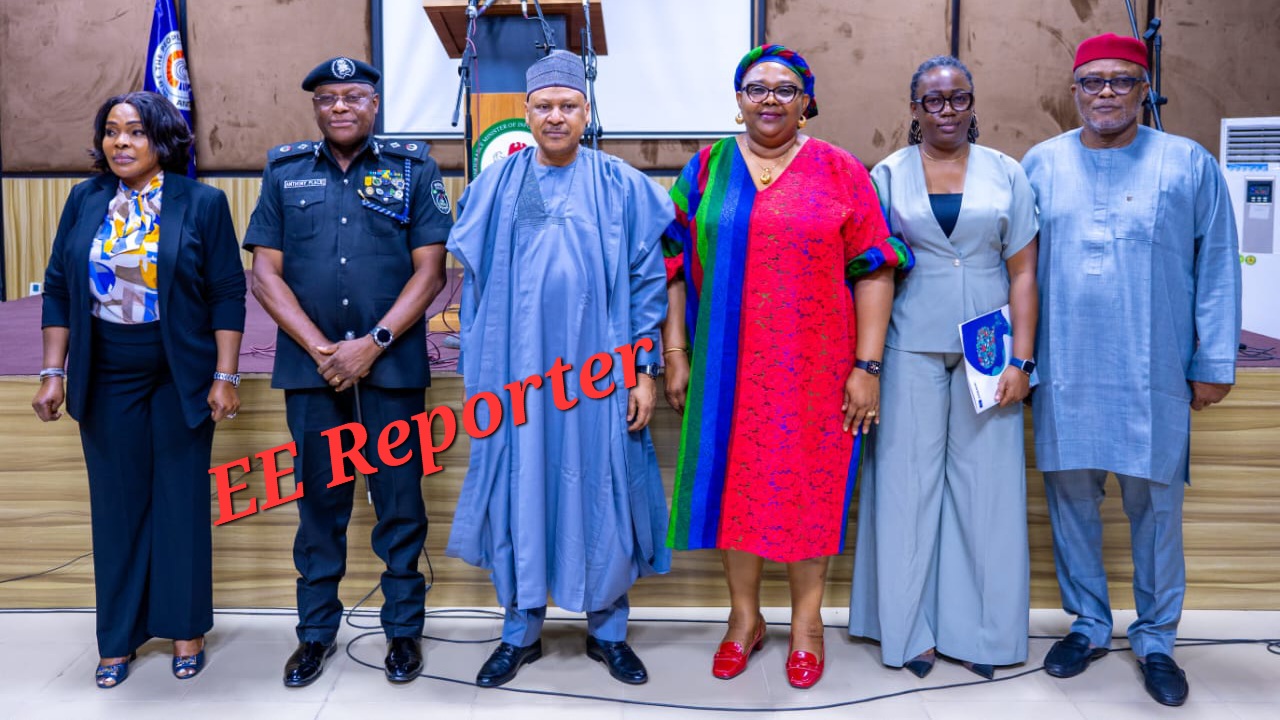
World Press Freedom Day: FG Calls For Collaboration To Address Disinformation, Misinformation
The Federal Government has called for stronger collaboration among the media, government institutions, and other stakeholders to address the growing threat of disinformation and misinformation, stressing that collective action is essential to protect public trust and national stability. The Honourable Minister of Information and National Orientation, Mohammed Idris, made this known on Monday in Abuja at the 2026 World Press Freedom Day commemoration held at Radio House.
“This administration has prioritised collaboration with media stakeholders and international partners to promote responsible journalism, counter disinformation and misinformation,” said the Minister.
He described press freedom as a fundamental right guaranteed under the Constitution, noting that the Federal Government remains fully committed to its protection. “The Federal Government fully recognises press freedom as a fundamental right and remains committed to fostering an environment where the media can operate freely, safely, and responsibly, in accordance with democratic principles and the rule of law,” he stated.
Idris noted that the Federal Government, under the leadership of President Bola Ahmed Tinubu, has taken deliberate steps to strengthen transparency and access to information through sustained media engagement, implementation of the Freedom of Information Act, and investment in public communication platforms.
Eereporter.com
He further pointed to Nigeria’s partnership with UNESCO in establishing the International Media and Information Literacy Institute (IMILI) in Abuja as a key step towards building a more informed and discerning public. “This pioneering initiative reflects our commitment to strengthening media and information literacy, empowering citizens to engage with information critically, and promoting responsible communication in the digital age.”
The Minister urged journalists to uphold professionalism, fairness, and ethical standards in their work, stressing that press freedom must go hand in hand with responsibility. “The true test of press freedom lies not in our declarations, but in our actions, how safely journalists can do their work, how truthfully information is shared, and how responsibly it is consumed,” he said.
Earlier in her welcome address, the Permanent Secretary of the Federal Ministry of Information and National Orientation, Dr. Binyerem Ukaire, described the event as a critical platform for strengthening collaboration across institutions.
“This gathering reflects our shared commitment to strengthening press freedom and fostering a more informed and inclusive society. It provides an opportunity for constructive engagement on how best to advance a media environment that is both free and responsible,” she said.

World Press Freedom Day
Ukaire emphasised the need for coordinated responses to the challenges posed by the evolving information ecosystem, particularly the spread of misinformation. “The expansion of digital platforms has introduced new complexities that require coordinated institutional responses, especially in addressing misinformation and strengthening public trust,” she noted.
She added that the Ministry remains committed to facilitating dialogue, strengthening partnerships, and promoting professionalism within the media space.
The Federal Government reiterated its commitment to working with the media, civil society, and international partners to build a resilient information system that supports democratic governance, national unity, and sustainable development.
The event was attended by the Inspector General of Police, represented by FPRO, DCP Anthony Okon Placid, mni, mnipr; the Director-General of the Department of State Services, represented by Director of Protocol M. O. Chukwuka, fsi; Executive Secretary, Nigerian Press Council, Dr Dilli Ezughah; Head of UNESCO Abuja Office, represented by the Head of Communication and Information Sector, Ms Yachat Nuhu.
Rabiu Ibrahim
Special Assistant (Media) to the Honourable Minister of Information and National Orientation
Monday, May 4, 2026
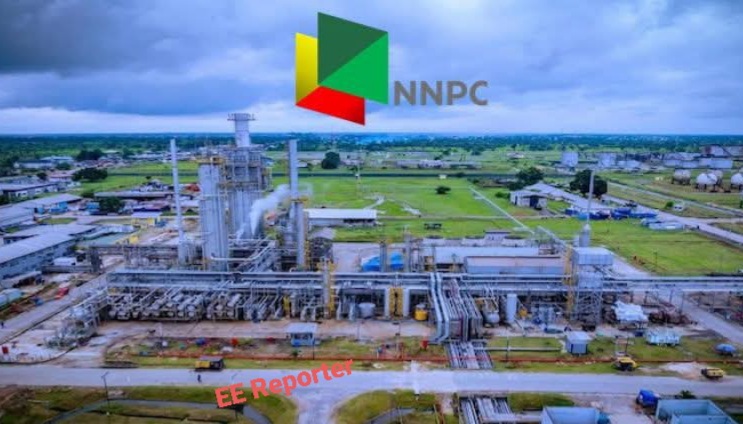
NNPC, Chinese Firms Sign MoU Towards Restart, Expansion Of Warri, Port Harcourt Refineries
The NNPC Ltd has signed a Memorandum of Understanding (MoU) with two Chinese companies, Sanjiang Chemical Company Limited and Xinganchen (Fuzhou) Industrial Park Operation and Management Co. Ltd, for collaboration through a potential Technical Equity Partnership in support of the completion and operation of the Port Harcourt and Warri Refineries.
The MoU was signed by the Group CEO, NNPC Ltd, Engr. Bashir Bayo Ojulari; Chairman, Sanjiang Chemical Company, Guan Jianzhong and Chairman of Xinganchen (Fuzhou) Industrial Park Operation and Management Co. Ltd, Bill Bi, in Jiaxing City, China, on Thursday, April 30, 2026.
Eereporter.com
The potential framework would cover completion of outstanding work at the two refineries, together with operating and maintaining both facilities to achieve best-in-class, sustainable performance. Planned expansion and upgrades would elevate both facilities to cleaner, more profitable product standards.
The potential collaboration also contemplates expanding the refineries’ petrochemical capacities and harnessing gas and downstream opportunities through the development of co-located, gas-based industrial hubs.
Speaking shortly after signing the dotted lines, the GCEO NNPC Ltd, Engr. Bashir Bayo Ojulari, described the MoU execution as a significant milestone, following more than six months of concerted engagement between the technical and management teams of NNPC and the two Chinese partners.
“All parties recognise mutually beneficial opportunities for the development and long-term sustainable profitability of NNPC’s refining assets in Nigeria, and the collective weight required for success,” Ojulari noted.
NNPC
The GCEO further stated that the MoU is a significant step on the journey towards identifying potential technical equity partner(s) to restart and expand NNPC’s refineries, and to explore opportunities in co-located petrochemicals and gas-based industries.
The MoU reflects the parties’ shared intent to progress discussions in good faith, with any definitive arrangements to follow in due course and subject to customary approvals.
-
 Crime1 year ago
Kogi Assembly Considers Law To Regulate Rent, Establish Control Board: Tenancy Law
-

 News1 year ago
Atiku Reveals Why He Failed To Pick Wike As Running Mate In 2023
-

 Akwa Ibom2 years ago
The Apostolic Church Gets New Territorial Chairman, Exco
-

 Crime1 year ago
Federal High Court Jails 2 For Vandalizing Transformer, Telecom Mast In Kogi
-
 News2 years ago
The Apostolic Church Gets New National President, Executive
-
 Akwa Ibom2 years ago
Umo Eno Commences Payment Of 80,000 Naira Minimum Wage With Arrears
-

 News1 year ago
Senator Natasha Returns To Senate With Husband Amid Seat Dispute
-
 Economy1 year ago
Kiyosaki: Is Tinubu’s Government Afraid Of Ibrahim Traore?