
News
Just In: Kwara Assembly Approves State Police Bill


Just In: Kwara Assembly Approves State Police Bill
The Kwara State House of Assembly has approved a proposed amendment to the 1999 Constitution to provide a legal framework for establishing the state police.
Eereporter.com
The assembly approved the amendment during Tuesday’s plenary after the speaker, Yakubu Danladi-Salihu, read a letter from the clerk of the National Assembly on the proposed constitutional amendment.
“The Kwara State House of Assembly has approved the proposed amendment to the 1999 Constitution to provide a legal framework for the establishment of state police,” a statement issued by Abdulkadir Yusuf, the chief press secretary to Mr Danladi, read.
According to the statement, the approval came after House Leader Mogaji Oba Abdulkadri enumerated the various merits of the proposed amendment to the country’s policing system.
“Other lawmakers who spoke on the constitution amendment opined that the alteration will bring police closer to the people, thereby improving the security of life and property of people across the country,” it added.
The statement noted that Mr Danladi directed the clerk of the House, Ahmed Olayiwola, to communicate the assembly’s decision to the National Assembly for further action.
The approval came amid ongoing efforts to amend the 1999 Constitution to allow states to establish their own police services to strengthen security across the country.
The National Assembly had forwarded the proposed constitutional amendment to state legislatures for consideration, as 25 out of the 36 state Houses of Assembly must approve a constitutional alteration before it can proceed to the next stage.
While state policing has been considered necessary to decentralise policing, improve intelligence gathering and enable faster responses to local security threats, including kidnapping, banditry and other violent crimes, the proposal has faced criticism over possible abuse by state governors.
The approval by the Kwara assembly marks a significant step in the state government’s efforts to address killings, kidnappings and other violent crimes in the state.

State Police
Meanwhile, Femi Gbajabiamila, Chief of Staff to President Bola Tinubu, said last Thursday that the presidency will transmit the National Policing Bill to the National Assembly within two weeks.
“The National Policing Bill is more or less ready for transmission to the National Assembly. We will probably have one more meeting after this to cross the t’s and dot the i’s and make sure every area is covered. So, we are 90% ready. The governors have one or two observations, and we should be ready in about a week or so,” Mr Gbajabiamila said.
Eereporter.com








EFCC Boss Olukoyede Charges Students to Use Internet Responsibly, Shun Crimes
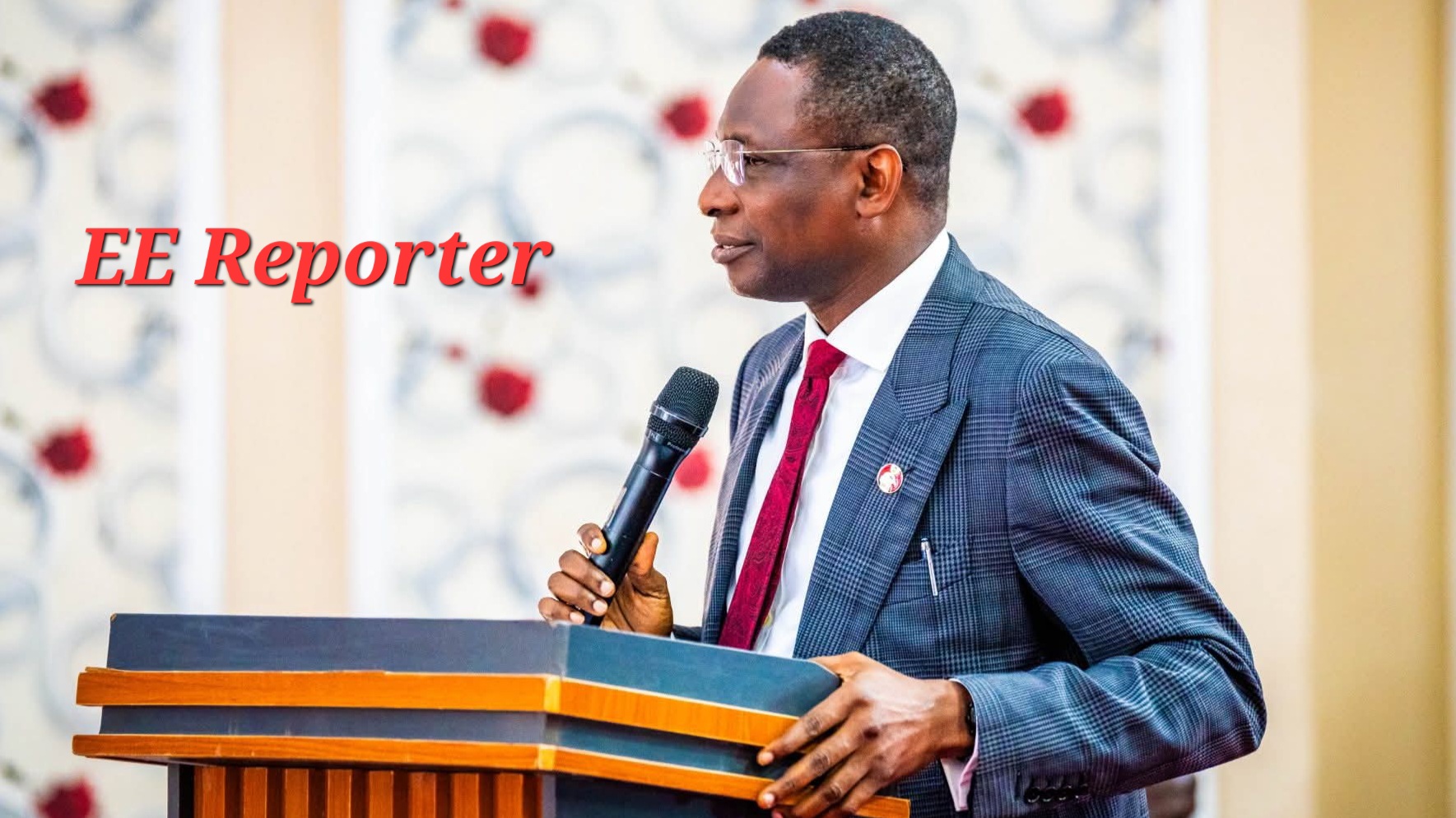
The Executive Chairman of the Economic and Financial Crimes Commission (EFCC), Mr. Ola Olukoyede, has urged students across the country to shun all forms of financial crimes and learn to use the internet responsibly.
Eereporter.com
He made the call in Lagos recently at a sensitisation programme organised by Peace College, Iju-Ishaga, with the theme, “Financial Crimes Associated with Students and Youths: Consequences and the Path to Responsible Citizenship.”
Speaking through Chief Superintendent of the EFCC, CSE Lovina Emole of the Public Affairs Department, Lagos Zonal Directorate 1, Olukoyede emphasized that the internet should be used as a tool for learning, creativity, business, and positive social engagements rather than for committing financial crimes.
“As students and young people, you must learn to use technology responsibly. Protect your personal information, respect the privacy of others, verify online opportunities before engaging with them, and avoid activities that could expose you or others to financial harm,” he said.
The EFCC Chairman noted that young people could acquire various digital skills to earn legitimate income, including digital marketing, software development, graphic design, and data analysis.
“Instead of seeking quick and dishonest ways to make money, invest your time and energy in developing skills that can provide sustainable income and open doors to legitimate opportunities,” he said.
Emphasising the importance of honesty among students, Olukoyede urged them to embrace integrity as a core personal value. According to him, personal integrity would discourage them from stealing, deceiving others, impersonating people, manipulating financial transactions, or exploiting the trust of others for personal gain.
Olukoyede also highlighted the important role schools can play in curbing financial crimes. He stressed the need for educational institutions to incorporate financial literacy, digital citizenship, ethics, and anti-fraud education into their student development programmes.
In his remarks, the Proprietor of the College, Mr. Temitayo Oyekunle, thanked the EFCC for honouring the school’s invitation to sensitise students on the dangers and consequences of involvement in financial crimes.

Olukoyede
He expressed hope that the sensitisation programme has succeeded in equipping the students with the knowledge and awareness needed to shun financial crimes, particularly cybercrime.
“The institution would continue to organise programmes aimed at discouraging financial crimes and promoting responsible conduct among students”, he said.
Eereporter.com
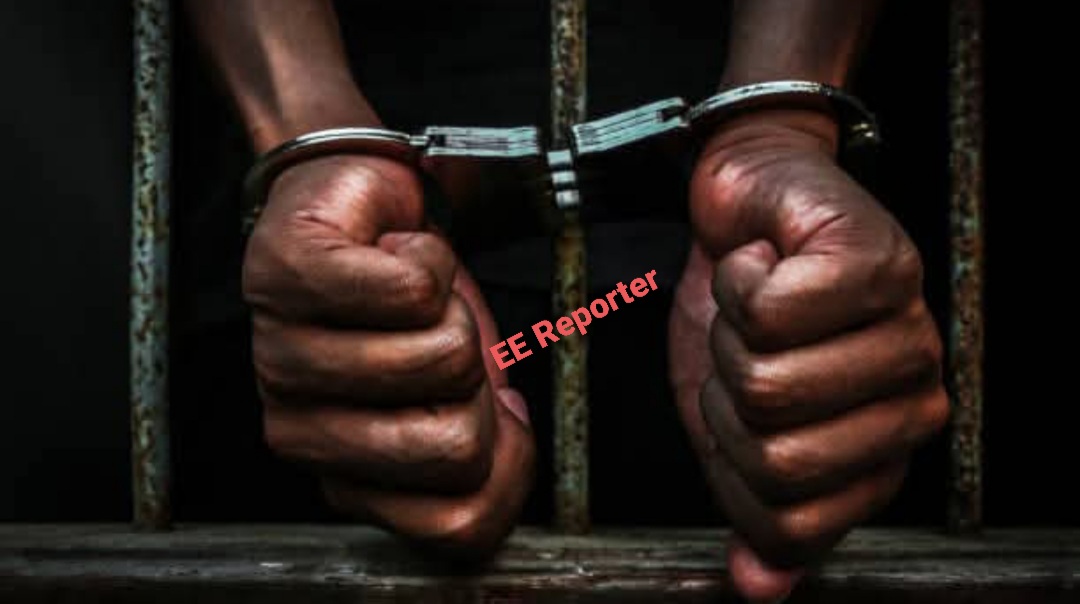
Court Jails Former Banker for Fraud in Lagos
The Economic and Financial Crimes Commission, EFCC, on Monday, October 19, 2026, secured the conviction of Chukwuebuka Nweke, a former banker for bank fraud before Justice Ismail Ijelu of the Lagos State High Court sitting in Ikeja.
Eereporter.com
Investigation revealed that Nweke, on June 21, 2025, in Lagos, accessed a desktop computer assigned to one Emmanuella Anyanwu without lawful authority, thereby facilitating the unauthorised withdrawal of ₦1 million from an account belonging to Leelee Dumbari and domiciled with one of the new generation banks.
The offence is contrary to Section 386(1) of the Criminal Law of Lagos State, 2011.
Upon the conclusion of investigations, Nweke was arraigned by the Lagos Zonal Directorate 1 of the EFCC on a one-count charge bordering on the unlawful withdrawal of ₦1 million from Leelee Dumbari’s account with the bank.
He pleaded “not guilty” to the charge, prompting a full trial.
During the trial, the prosecution counsel, M.K. Bashir called five witnesses to establish the case against the defendant.
Jail
The defence, however, called one witness.
Delivering judgment, Justice Ijelu found Nweke guilty as charged and sentenced him to pay a fine of ₦1 million within 30 days, failing which he would be remanded in a Correctional Centre for six months.
Eereporter.com

Customs Records Major Operational Success Under WCO-Jica Joint Border Security Project
In furtherance of its commitment to strengthening border security, combating smuggling and advancing intelligence-led enforcement, the Nigeria Customs Service (NCS) has recorded significant operational outcomes through its participation in Operation GEOCONTROL, conducted under the World Customs Organisation (WCO)–Japan International Cooperation Agency (JICA) Joint Project.
Eereporter.com
The operation, implemented from 29 June to 8 July 2026 along the Benin–Nigeria border corridor, brought together the Service and the Benin Directorate General of Customs under WCO coordination, with JICA support.
The operation marked the first operational deployment of Geospatial Intelligence (GEOINT) capabilities developed through the GEOINT Master Trainer Programme for West Africa, completed in February 2026. It was designed to demonstrate the practical application of geospatial intelligence in identifying smuggling hotspots, mapping high-risk routes, improving intelligence sharing and supporting coordinated Customs enforcement. The operation combined geospatial analysis, hotspot mapping, aerial surveillance, intelligence exchange and coordinated field deployment to strengthen operational decision-making along the border corridor.
The consolidated results of Operation GEOCONTROL over time have covered 10 targeted areas, with the Benin Customs Administration reporting 31 seizures, while the Nigeria Customs Service recorded six significant seizure cases involving narcotics, pharmaceuticals, rice, petroleum products and used clothing. Four suspects were also detained during the operation. These outcomes underscored the importance of cross-border cooperation and intelligence-led enforcement in addressing illicit trade and other activities that undermine national security, lawful commerce and government revenue.
Beyond the seizures recorded, the operation demonstrated the practical value of GEOINT as a Customs enforcement capability, particularly in the identification of vulnerable border locations, analysis of high-risk movement patterns and deployment of operational resources to priority areas.
The use of multiple risk maps and hotspot analyses supported intelligence-driven field activities, while the exchange of operational information enhanced coordination between the two Customs administrations. The initiative also provided an opportunity to apply skills developed through the GEOINT Master Trainer Programme to real-world enforcement challenges.
The successful implementation of Operation GEOCONTROL highlights the importance of sustained international cooperation, capacity development and technology-driven border management in addressing transnational smuggling. The collaboration between the WCO, JICA, the NCS and the Benin Customs Administration demonstrates how shared intelligence, geospatial tools and coordinated operational planning can strengthen enforcement outcomes across common borders. The post-operation report, dated 2 August 2026, further documented the results achieved and the operational lessons arising from the joint deployment.

Nigerian Customs
The NCS reiterates its commitment to deepening cooperation with international partners and neighbouring Customs administrations to strengthen border security, improve intelligence sharing and promote legitimate trade. The Service will continue to leverage relevant technological capabilities, professional expertise and collaborative enforcement frameworks to combat smuggling, protect national interests and contribute to a safer and more efficient trading environment.
ABDULLAHI MAIWADA, PhD, mnipr, mniia
Deputy Comptroller of Customs
National Public Relations Officer
for Comptroller-General of Customs
20 October 2026
Eereporter.com
-
 Crime1 year ago
Kogi Assembly Considers Law To Regulate Rent, Establish Control Board: Tenancy Law
-

 News2 years ago
Atiku Reveals Why He Failed To Pick Wike As Running Mate In 2023
-
 Akwa Ibom2 years ago
The Apostolic Church Gets New Territorial Chairman, Exco
-

 Crime2 years ago
Federal High Court Jails 2 For Vandalizing Transformer, Telecom Mast In Kogi
-
 News2 years ago
The Apostolic Church Gets New National President, Executive
-
 Akwa Ibom2 years ago
Umo Eno Commences Payment Of 80,000 Naira Minimum Wage With Arrears
-

 News2 years ago
Senator Natasha Returns To Senate With Husband Amid Seat Dispute
-

 Economy1 year ago
Kiyosaki: Is Tinubu’s Government Afraid Of Ibrahim Traore?