
News
Integrity Key To Sustainable Development, Says Olukoyede At NACIWA Leadership Conference

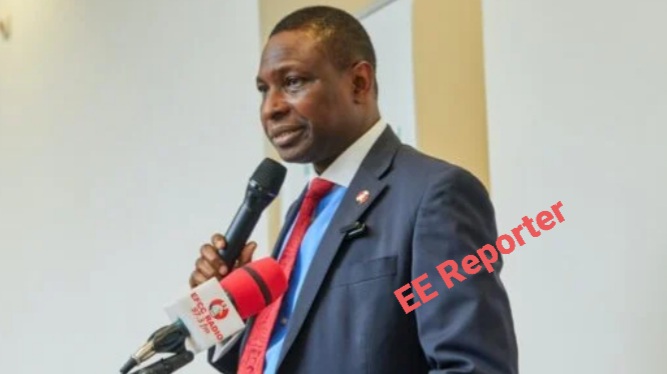
Integrity Key To Sustainable Development, Says Olukoyede At NACIWA Leadership Conference
The Executive Chairman of the Economic and Financial Crimes Commission, EFCC, and President, Network of Anti-Corruption Institutions in West Africa, NACIWA, Mr. Ola Olukoyede has identified integrity as a critical and compelling need for sustainable development of nations and institutions in the West-African sub-region.
Eereporter.com
He stated this in Abuja on Tuesday, July 21, 2026 at the opening ceremony of a two-day Leadership Conference for Heads of National Anti-Corruption Institutions in West Africa at the New ECOWAS Secretariat.
Olukoyede pointed out that without integrity in public institutions, the promises of economic integration, democratic governance, peace and sustainable development cannot be realised.
Corruption, he said, “weakens public confidence, diverts resources from essential services, distorts markets, undermines security and threatens the legitimacy of the state.”
He disclosed that the corruption environment has changed significantly, with criminal networks increasingly operating across borders. Illicit financial flows, he said, move through multiple jurisdictions within seconds, digital platforms and emerging technologies creating new opportunities for development, and also producing new forms of fraud, concealment, manipulation and financial crimes.
While noting that Artificial Intelligence has transformed the way information is generated, analysed and deployed, through enormous potential for detection, intelligence development, risk assessment and institutional efficiency, he stressed that it also raises questions of governance, ethics, accountability, data integrity and organisational readiness.
Explaining the rationale for the Conference, Olukoyede stated that it was designed as a leadership development programme and a statement of institutional intent. “We are signaling that leadership development, institutional capacity, peer learning and implementation must become permanent features of the Network’s programming. We are signaling that West African anti-corruption institutions are prepared to take collective responsibility for strengthening the regional integrity architecture,” he said.
The Conference, attended by heads of anti-graft agencies and institutions in West Africa, including Chairman, Code of Conduct Bureau, Dr. Abdulahi Bello, representatives of Independent Corrupt Practices and Other Related Offences Commission, ICPC, is devoting ample time to discussions on artificial intelligence in transformational leadership; institutional independence, integrity and accountability; institutional reform and high performance; digital transformation and intelligence-led enforcement; judicial partnership; transnational corruption; cross-border cooperation; asset recovery leadership; and effective board and executive governance.
Explaining what successful anti-corruption fight entails, the EFCC’s boss stated that anti-corruption agencies are required to pursue difficult cases, confront powerful interests, protect the integrity of sensitive investigations, respond to rapidly evolving financial crimes, manage public expectations and maintain confidence in their work.
In so doing, he noted that the agencies, at the same time, must ensure due process, institutional accountability, professionalism, fairness and respect for the rule of law. These challenges he noted “requires more than technical competence. They require strategic leadership.”
“Our institutions must be built to outlive us. They must have clear systems, credible governance arrangements, professional personnel, reliable technology, institutional memory and cultures that preserve integrity across successive leadership transitions”, he said, adding that “We must build anti-corruption institutions that are strong because their systems are strong; trusted because their processes are credible; and sustainable because their capabilities are deliberately developed and continuously renewed.”
In a lecture tagged: NACIWA Distinguished Leadership Lecture, Attorney General of the Federation and Minister of Justice, Prince Lateef Fagbemi, SAN, stated West African states are facing defining moments, when leadership is measured not by the eloquence of its pronouncements, but by the strength, credibility and integrity of institutions built and sustained. “West Africa stands at such a moment. Across our region, citizens are demanding governments that are accountable, economies that are transparent, and public institutions worthy of their confidence,” he said.
According to him, protecting public trust and ensuring that those entrusted with public resources remain accountable requires more than robust legal frameworks or institutional mandates, but demands courageous, visionary and transformational leadership. “Leadership that is prepared to uphold the rule of law without fear of failure, strengthen institutional independence, inspire public confidence, and leave behind institutions that are stronger than individuals,” adding that the difference between an institution that merely occupies space and one that changes the trajectory of a nation is almost always leadership.
He warned that public office is not a license for self-enrichment and that those entrusted with public resources must always be prepared to account for how those resources are managed. Nigeria, he said, remains unwavering in its commitment to combating corruption through strong institutions and faithful application of laws.
Ola Olukoyede
Other speakers at the Conference are, Dr. Olubunmi Ajayi, former Chairman, Independent Corrupt Practices and Other Related Offences Commission, ICPC, Professor Bolaji Owasanoye, former chairman of Independent Corrupt Practices and Other Related Offences Commission, ICPC, Mr. Dein Whyte, Dr, Arabi D.I., among others
The leadership Conference is the maiden edition put together by the Executive Committee of NACIWA. The well-attended Conference features delegates from Ghana, Sierra Leone, Cape Verde, Togo, Gambia, Senegal and other West African countries. The Conference is expected to come out with the Abuja Leadership Declaration, which would capture NACIWA’s shared understanding of the leadership standards, institutional priorities and cooperative actions required to strengthen anti-corruption effectiveness across West Africa.
Eereporter.com




Nigeria Customs Celebrates Two ACGs After Meritorious Years of Service
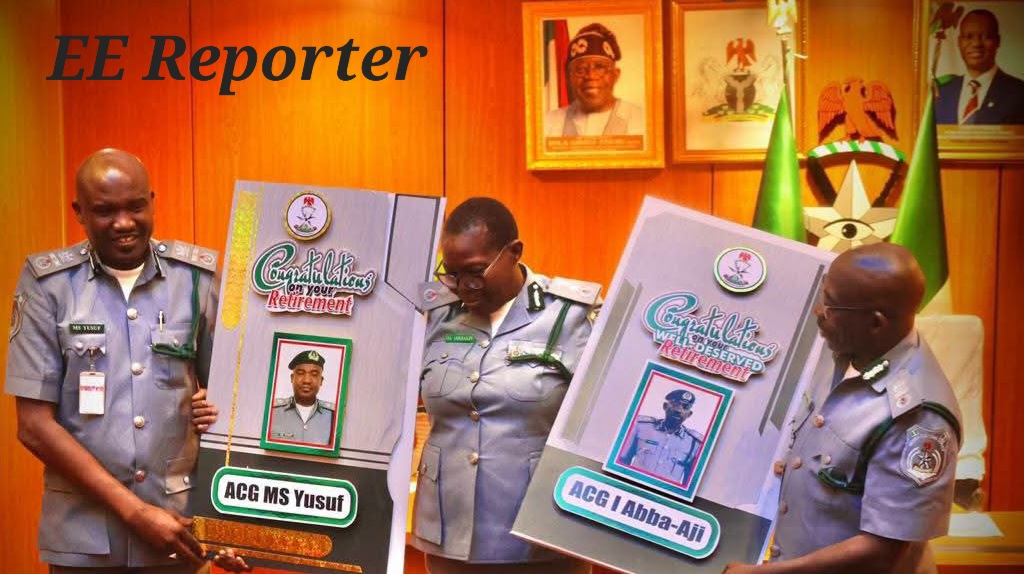
The Nigeria Customs Service (NCS) has bid farewell to Assistant Comptrollers-General Mohammed Yusuf and Ibrahim Abba-Aji after meritorious years of dedicated service to the Service and the nation.
Eereporter.com
The two senior officers were honoured at a retirement ceremony attended by colleagues and friends, who celebrated their contributions, sacrifices and progression through the ranks during their careers in the NCS.
Deputy Comptroller-General, Finance, Administration, Technical and Support, Kikelomo Adeola, led the tributes, commending the retiring officers for their dedication and commitment. She described retirement as a transition “from pressure to pleasure” and wished them good health and fulfilment in the next phase of their lives.
DCG Trade and Tariff, Caroline Niagwan, also paid tribute to the officers, drawing on her long association with them to appreciate their contributions to the Service. She prayed that their tomorrow would be better than their today and that retirement would bring renewed purpose and satisfaction.
As part of the ceremony, DCG Timi Bomodi presented gifts to the retiring ACGs, while commemorative cards were also presented to the celebrants by colleagues, families and friends.
Speaking at the ceremony, ACG Mohammed Yusuf thanked God and the NCS management for the opportunity to serve. Reflecting on his career, he said, “Life is transient. We never thought we’d leave one day. The good you do stays after you leave; try and discharge your jobs well,” while appreciating the management for improvements in officers’ welfare.
ACG Ibrahim Abba-Aji also expressed appreciation to the Service and the Comptroller-General Adewale Adeniyi for the opportunity to serve at the highest levels of the institution. He described retirement as a milestone to be embraced, saying, “Retirement isn’t a bad thing. Congratulations to all of us for coming this far. Long live the Nigeria Customs Service.”

Nigeria Customs
The ceremony marked the close of active careers spanning 35 years for ACGs Mohammed Yusuf and Ibrahim Abba-Aji, as colleagues celebrated their service and wished them fulfilment in their retirement and the years ahead.
The event ended with a cake-cutting session to mark the completion of their 35 years of service.
Eereporter.com

39th Anniversary: Akwa Ibom Journalists Forum Congratulates Governor Eno, Citizens
The Akwa Ibom Journalists Forum, Abuja, has congratulated Akwa Ibom State Governor, Pastor Umo Eno, and the people of the state on the 39th anniversary of the creation of Akwa Ibom State.
Eereporter.com
In a congratulatory message dated September 23, 2026, and signed by the Chairman of the Forum, Dominic Edem, and Secretary, Nathan Williams, the journalists commended the Eno administration for its development initiatives under the ARISE Agenda.
The Forum specifically highlighted the administration’s efforts in road infrastructure, healthcare, agriculture, education and economic empowerment, describing them as areas with direct impact on the people of the state.
The journalists also acknowledged the government’s efforts towards the payment of retirees’ gratuities, the development of Ibom Air and the sustenance of peace and security across Akwa Ibom.
The Forum further congratulated Governor Eno on the commissioning of 39 projects across the state as part of activities marking the 39th anniversary.
It also commended the addition of a new Airbus A220-300 aircraft to the Ibom Air fleet, describing the development as another milestone in the state’s aviation sector.
The Akwa Ibom Journalists Forum, Abuja, reaffirmed its commitment to responsible journalism and constructive engagement in promoting the image, development and interests of Akwa Ibom State.

Akwa Ibom Journalists
The Forum said it would continue to play its role as journalists and stakeholders in the Akwa Ibom project by providing responsible coverage of developments in the state.
The journalists prayed for continued wisdom, strength and divine guidance for Governor Eno as he leads the state, while wishing Akwa Ibom continued prosperity, peace, unity and development.
The statement concluded with prayers for the progress of Akwa Ibom State and the Federal Republic of Nigeria.
Eereporter.com
NADF Sets to Boost Agricultural Funding with Non-interest Finance
The National Agricultural Development Fund has commenced the validation of its proposed Non-Interest Finance Framework and Guidelines to widen access to agricultural financing and support the Federal Government’s food security objectives.
Eereporter.com
This was contained in a statement issued by NADF on Tuesday following a Strategic Roundtable and Validation Session on the proposed framework and guidelines.
According to the statement, the initiative is aimed at ensuring that farmers, agribusinesses and other players across the agricultural value chain have access to diverse and innovative financing options.
The Executive Secretary/Chief Executive Officer of NADF, Mohammed Ibrahim, said non-interest finance had become an important component of Nigeria’s financial system, providing ethical, asset-backed and risk-sharing financing models that complemented conventional finance.
“Our objective is not simply to introduce another financing framework. It is to broaden the financing ecosystem for agriculture by ensuring that every credible financing option is available to Nigerian farmers, agribusinesses, and other value chain actors,” Ibrahim said.
According to the statement, the proposed framework would provide a structured and transparent basis for delivering agricultural interventions through licensed non-interest financial institutions while institutionalising governance, operational and Shari’ah compliance standards.
Ibrahim said the documents were deliberately presented as drafts to allow stakeholders to scrutinise them and contribute their expertise before finalisation.
“Today’s gathering marks an important milestone in that journey,” he said, urging participants to examine the draft documents critically, challenge assumptions where necessary and share practical experiences.
The statement quoted the Director of the Development Finance Advisory Department of the Central Bank of Nigeria, Dr Paul Oluikpe, as saying that significant work remained to be done to improve access to agricultural finance in Nigeria.
Oluikpe welcomed the proposed non-interest finance framework, describing it as an opportunity to bring an often-overlooked dimension of agricultural financing into the mainstream.
Also speaking, the Deputy Chairman of the CBN’s Financial Regulation Advisory Council of Experts, Professor Bashir Aliyu Umar, said the proposed framework was consistent with efforts to promote financial inclusion and expand access to finance.
“What we are witnessing today is also following this trajectory of financial inclusion and easing access to finance and having a level playing field and even developmental perspective for the whole country whereby no segment of society is left out,” he said.
NADF
Providing an overview of the initiative, NADF’s Head of Investment, Olalekan Alabi, said the framework and guidelines were designed to establish a structured mechanism for deploying non-interest financing to eligible agricultural activities and value-chain interventions.
“Together, the Framework and Guidelines are expected to provide clarity on how NADF’s non-interest financing interventions will be structured, assessed, approved, implemented, monitored and reported,” Alabi said.
He added, “We are not here simply to confirm that the documents have been prepared. We are here to test their technical robustness and practical applicability.”
Alabi said stakeholders were expected to identify gaps, inconsistencies, overlaps and provisions requiring further clarification before the documents were finalised.
“Our objective is to have a set of Framework and Guidelines that are clear, technically sound, operationally practical, appropriately governed and capable of supporting NADF’s non-interest agricultural financing interventions,” he said.
The statement said the validation session brought together representatives of government institutions and regulatory agencies, development partners, non-interest finance experts, financial institutions and other stakeholders in the agricultural and financial sectors.
Eereporter.com
-

 Crime1 year ago
Kogi Assembly Considers Law To Regulate Rent, Establish Control Board: Tenancy Law
-

 News1 year ago
Atiku Reveals Why He Failed To Pick Wike As Running Mate In 2023
-

 Akwa Ibom2 years ago
The Apostolic Church Gets New Territorial Chairman, Exco
-

 Crime2 years ago
Federal High Court Jails 2 For Vandalizing Transformer, Telecom Mast In Kogi
-

 News2 years ago
The Apostolic Church Gets New National President, Executive
-
 Akwa Ibom2 years ago
Umo Eno Commences Payment Of 80,000 Naira Minimum Wage With Arrears
-

 News2 years ago
Senator Natasha Returns To Senate With Husband Amid Seat Dispute
-

 Economy1 year ago
Kiyosaki: Is Tinubu’s Government Afraid Of Ibrahim Traore?