
News
IGP Disu Held Strategic Meeting With Representatives Of NUC, POLAC, And UNOCT


IGP Disu Held Strategic Meeting With Representatives Of NUC, POLAC, And UNOCT
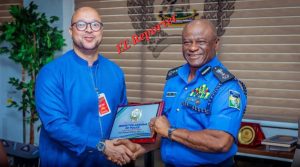
The Inspector-General of Police, IGP Olatunji Rilwan Disu, psc(+), NPM, on 18th June 2026, held a strategic meeting with representatives of the National Universities Commission (NUC), the Nigeria Police Academy (POLAC), and the United Nations Office of Counter-Terrorism (UNOCT) on the proposed domestication of the Specialized Executive Masters Degree Program on Counter-Terrorism Investigation at the Nigeria Police Academy
The meeting, which was attended by AIG Patrick Atayero, MSc, MBA, psc, and AIG Uche Ifeanyi Henry, PhD, psc,focused on advancing the academic integration and institutional adoption of the programme as part of efforts to strengthen capacity in counter-terrorism investigation and law enforcement education in Nigeria.
Eereporter.com
Police
The engagement underscores the shared commitment of the Nigeria Police Force and its partners to enhancing specialized investigative capabilities, strengthening institutional collaboration, and developing sustainable counter-terrorism education and training frameworks within the Nigeria Police Academy ecosystem.
Eereporter.com







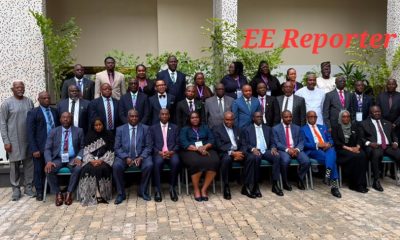


EFCC FC Kano Wins Inter-Service Unity Cup, Defeats NAF FC 5-4
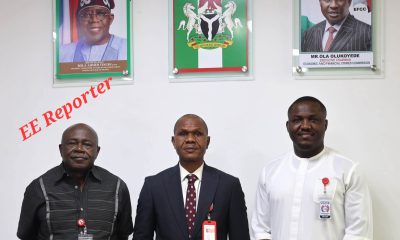
EFCC Football Club, Kano, has emerged champion of the Inter-Service Unity Cup after defeating NAF FC 5-4 on penalties in a thrilling final held at the Sani Abacha Stadium, Kano.
Eereporter.com
The match initially ended 1-1 after regulation time.
The tournament was organised by the Coalition of Military and Paramilitary Agencies in Kano.
Speaking during his opening remarks at the final, the EFCC Kano Zonal Director, who represented the Executive Chairman of the Commission, Mr. Ola Olukoyede, commended the organisers for bringing together various security agencies through sports.
“Unity is one of the fundamentals of law enforcement. Bringing ourselves together to have football and soccer events is one of the ways of building this unity,” he said.
The Zonal Director thanked the participating teams, service commanders and all attendees for finding time to share in the spirit of friendship and brotherhood. He also acknowledged the humility and character displayed by all players who reached the final stage, stressing that such values are integral to the ethos of the nation’s security services.
He reaffirmed the EFCC’s commitment to initiatives that promote unity, performance and cohesion among colleagues, friends, and brothers in service, and conveyed the Chairman’s appreciation for the invitation.

EFCC FC Kano
In addition to their football victory, the EFCC team also emerged champions in the tug of war challenge organised by the same coalition, which featured participation from agencies under the coalition.
The competition was held at the Sani Abacha Stadium on July 24, 2026, where the EFCC team won three battles on the same day, defeating the Nigerian Army, the Nigeria Police Force, and the National Drug Law Enforcement Agency (NDLEA).
Eereporter.com
Akwa Ibom
Governor Eno calls for democracy that Delivers institutions, opportunity and Dignity for all
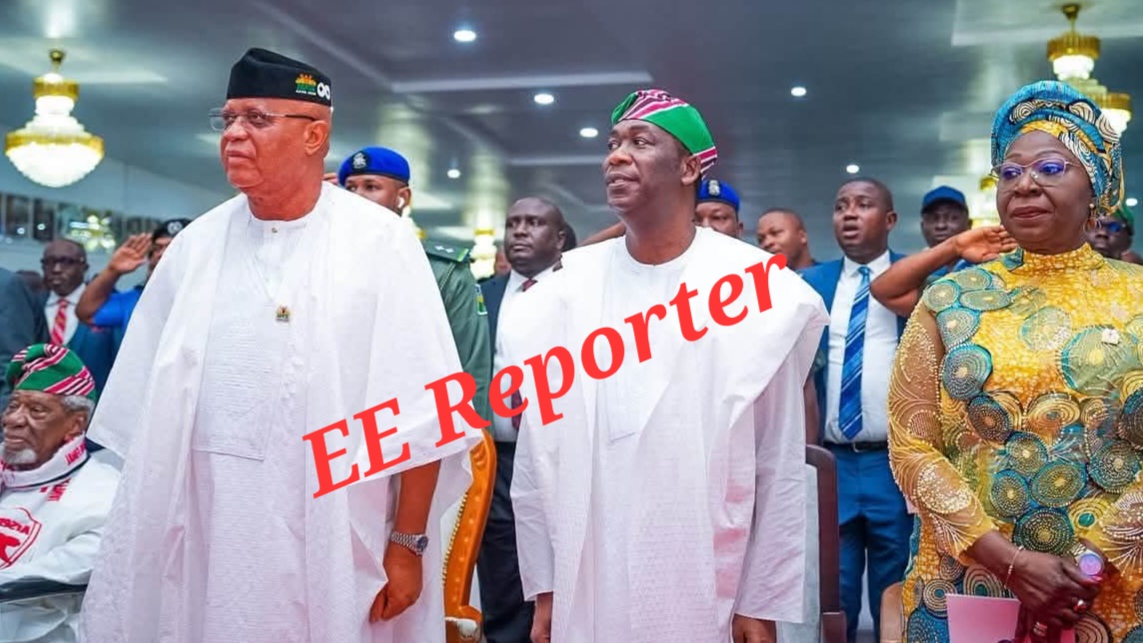
Governor Eno calls for democracy that Delivers institutions, opportunity and Dignity for all
At the Yoruba Tennis Club centenary Lecture on August 6, 2026, Akwa Ibom Governor Pastor Umo Eno calls for democracy that delivers institutions, opportunity and dignity for all.
Eereporter.com
Thursday, August 6, began with a rainy morning in Lagos, South-West Nigeria. But at Onikan, within the historic precincts of the Yoruba Tennis Club, the weather was quickly overshadowed by an occasion of national significance. It was the day Akwa Ibom State Governor, Pastor Umo Eno, delivered the centenary lecture of an institution that has witnessed, and in many ways mirrored, the evolution of Nigeria’s social and political life. His subject was compelling: “Democracy and Good Governance: Renewing Hope in Challenging Times.”
This year, the Yoruba Tennis Club marks 100 years since its establishment in 1926. From an original membership of about 25, it has grown into a prestigious institution with more than 2,000 members. President Bola Ahmed Tinubu is the Patron of the Club, while Lagos State Governor Babajide Sanwo-Olu serves as Vice Patron. The membership reads almost like a roll call of the Yoruba political, professional, business and intellectual establishment, making the club one of the country’s influential civic meeting points. The club also has its own distinctive character and tradition of salutation: members greet one another with the familiar “GREETINGS,” a simple expression that reflects the camaraderie and identity of the institution.
There was also something distinctive about the occasion beyond the speeches and formalities: the club’s unmistakable sartorial identity. Members appeared resplendent in white Agbada, complemented by Aso-Oke caps featuring the club’s characteristic green and red stripes. The sea of white gave the centenary gathering a striking visual identity and spoke to the club’s enduring sense of tradition, pride and belonging.
The Governor himself appeared to have read the mood and symbolism of the occasion. He arrived in a white stone-lace Agbada, complemented by his characteristic Awo-like headgear, prominently inscribed with the “ARISE” and “Renewed Hope” insignias. He arrived in the official Lexus LX 570 staff car, adding his distinctive touch to an occasion that brought together tradition, public service and contemporary politics.
The centenary has been marked by a year-long programme of activities, including a series of lectures by distinguished Nigerians. Nobel Laureate Professor Wole Soyinka delivered the first, and Governor Umo Eno followed with his August address. It was therefore more than a ceremonial lecture. It was an opportunity to place the question of democratic governance before an audience deeply familiar with Nigeria’s political, economic and institutional challenges.
The Chairman of the Yoruba Tennis Club, Bro. Chief Olawumi Gasper, Mni, said Governor Eno was chosen as keynote speaker because of his sterling performance in office, his compassionate leadership and appreciation of values associated with integrity, openness, responsibility and good character. The packed hall reflected the importance attached to the occasion. Former Akwa Ibom Governor Udom Emmanuel, Governor Sanwo-Olu, senior business figures, politicians, professionals and leaders of the club were present. Akwa Ibom also arrived in strength. The Deputy Governor of Akwa Ibom State, Senator Akon Eyakenyi; Speaker of the State House of Assembly, Hon. Udeme Otong; Senators Effiong Bob, Aloysius Etok and Ekong Sampson; Paul Usoro, SAN, and Emmanuel Enoidem, SAN; Secretary to the State Government, Prince Enobong Uwah; some members of the State House of Assembly; members of the State Executive Council; and Local Government Chairmen were among those who came out in support of the Governor. Other Akwa Ibom leaders and elders present included Atuekong Don Etiebet. The Akwa Ibom Community in Lagos also came out in large numbers to identify with and support the Governor.
Eno did not begin by recounting the achievements of his administration. Instead, he began with the story of the club itself. In 1926, African Lagosians faced exclusion from the European clubs of colonial Lagos. Rather than remain at the gate demanding admission, the founders of what became the Yoruba Tennis Club organized themselves, raised their own resources, secured land and established an institution of their own. They created rules and values that have carried the club across a century.
For Eno, that history contained a profound lesson in citizenship. The founders encountered a problem, organized around a solution, committed their own resources and built an institution designed to survive them. The fact that the club deliberately welcomed Nigerians from different backgrounds who subscribed to its values made the story even more compelling. Eno’s tribute to the founders was memorable: “Vision is common. Vision that outlives the visionary is rare.”
That became the philosophical foundation of his lecture. Nigeria, he argued, must move beyond the idea that democracy is sufficiently defined by elections. Elections are essential because they confer legitimacy, but the real test begins after the ballot boxes are closed. What does government do with the mandate it receives? How does that mandate translate into roads, schools, hospitals, jobs, security and dignity?
For the ordinary Nigerian, democracy is not experienced only at a polling station. It is experienced at the hospital, in the classroom, on the road to the farm, in the market and in the cost of feeding a family. If democratic government cannot reach those places, public confidence inevitably begins to weaken. This was perhaps the most powerful proposition in the Governor’s presentation: democracy has to be felt in the daily life of the citizen before it can be fully trusted.
From there, Gov. Eno identified five practical pillars of good governance: accountability, transparency, participation, the rule of law and equity. These are familiar terms in governance literature, but he sought to give them practical meaning through examples from Akwa Ibom. His argument was that democratic values must move from constitutional language into administrative habits.
On accountability, he cited the state’s monthly Delivery Review Sessions, where projects are examined in terms of cost, timelines and implementation. Stakeholders, journalists, civil society organizations and members of the public are invited to question officials. The importance of such a process lies not only in identifying delays or shortcomings, but in creating a culture in which public office is understood as a responsibility requiring continuous explanation.
Transparency, in turn, makes accountability possible. Citizens cannot question what they cannot see. Eno’s point was that public expenditure, procurement and government decisions must be sufficiently open to allow citizens to understand how their resources are being deployed. Without transparency, distrust grows in the spaces where information is absent.
Participation was the third element. Through town hall meetings, the Governor said, communities are given opportunities to identify their own priorities. A community may value a particular road, health centre, classroom or water project more urgently than an official in Uyo might realize. Bringing citizens into the planning process therefore improves not only democratic participation but the quality of development itself.
The principle of equity completed his argument. Government must serve the whole population, including those who did not vote for the administration in power. Development cannot become a reward for political loyalty. Once elected, a government assumes responsibility for everyone. That is one of the fundamental distinctions between campaigning for power and governing a society.
Pastor Eno then widened the lens to Nigeria’s national circumstances. He acknowledged the pressures confronting the country — economic hardship, insecurity, unemployment, infrastructure deficits and the erosion of public confidence. Yet he argued that periods of difficulty can also become moments when nations make difficult choices capable of producing long-term renewal. His assessment of President Tinubu’s economic reforms was supportive, particularly the efforts to create greater fiscal room for governments and restructure the national economy.
The Governor’s argument, however, was that macroeconomic reform only becomes meaningful when its consequences are visible on the ground. He used the transformation of a 70-hectare erosion-ravaged site in Akwa Ibom into the ARISE Palm Resort as an example. A piece of land that had represented environmental and economic liability is being converted into a major tourism asset. The lesson, he suggested, is that economic space created at the national level can become infrastructure and opportunity at the state level.
This connection between national policy and state-level delivery formed an important part of his presentation. The Governor cited Akwa Ibom’s programmes in infrastructure, social protection, agriculture, healthcare, aviation, tourism and human capital as examples of what can happen when government combines fiscal responsibility with a clear development agenda.
He spoke of the payment of more than ₦88 billion from an inherited gratuity obligation of ₦111 billion, the construction of more than 461 Compassionate Homes for vulnerable families, business grants and support for farmers and entrepreneurs. He also highlighted skills acquisition programmes and youth initiatives, arguing that economic development cannot be separated from the welfare of citizens who are most vulnerable.
His comments on young people carried a particular national resonance. Nigeria cannot continue to describe its youth as merely “leaders of tomorrow,” he argued. They are already a central part of the country’s population and economy. Their education, technical skills, digital capacity, entrepreneurial ability and access to capital must therefore be treated as immediate national priorities.
That philosophy is reflected in Akwa Ibom’s plans for Youth Development Centres across its 31 local government areas, with facilities intended to support ICT, vocational training, creativity and entrepreneurship. The real measure of those centres, however, will not be the buildings but the livelihoods and businesses they help create. Human capital becomes meaningful when training leads to productive economic participation.
Agriculture also featured in Eno’s wider development vision. His administration’s support for farmers, the Ibom Model Farms and the Tree Crop Revolution represents an effort to reconnect agriculture with commercial production and value chains. The objective is not simply to grow food but to create an agricultural economy capable of generating surpluses, processing opportunities, exports and jobs.
Perhaps the most important part of Eno’s national argument was his emphasis on continuity. Nigeria has repeatedly lost valuable time and resources when successive administrations abandon projects initiated by their predecessors. Eno’s declaration that his administration would complete inherited projects, regardless of which government began them, offers a different philosophy. His description of it as the “Finisher’s Anointing” may be colourful, but the principle behind it is serious: public projects belong to the people, not to the political personalities who initiate them.
This is where the centenary story of the Yoruba Tennis Club comes full circle. The founders did not build merely for their immediate generation. They created an institution that would outlive them. Nigeria’s leaders face the same responsibility. Roads, hospitals, schools, policies and institutions should be conceived with the next generation in mind, not merely the next election.
Governor Eno
Gov. Eno therefore left the audience with a message that was simultaneously political, civic and institutional. Government must be accountable, but citizens must also accept their responsibilities. Nigerians must vote peacefully, respect the rule of law, reject corruption in their daily dealings, pay taxes and insist on institutions that are stronger than the individuals temporarily occupying them. Democracy cannot be sustained by government alone.
The significance of the Yoruba Tennis Club setting was therefore impossible to miss. For a hundred years, the club has survived changes in politics, society and generations because its founders created rules and values bigger than themselves. It has become a meeting place for a substantial part of the Yoruba political-intelligentsia, business community and professional elite, while retaining a wider Nigerian identity. Its centenary provided Eno with a fitting metaphor for the task confronting Nigeria.
As he rounded off, the Governor returned to hope. But it was not the easy optimism of political speeches. His was a more demanding definition of hope: hope must have evidence behind it. It is renewed when a road is completed, a classroom functions, a doctor is available at a hospital, a young person finds meaningful work, a farmer receives support and a small business survives. In that sense, good governance is not an abstract political theory. It is the daily accumulation of small proofs that government can work.
The rain that greeted Lagos that Thursday morning had long ceased by the time the lecture ended, but the larger question Eno placed before the audience remained. Nigeria has held elections for decades. The next chapter must be about building institutions capable of delivering on the promise those elections represent. The founders of the Yoruba Tennis Club built for a century they may never see. Nigeria’s present generation must build with the same courage, not simply for the next election, but for the next generation.
Eereporter.com

AKISAN 2026: The Homecoming begins, as the new Akwa Ibom Awaits the Diaspora
Truly, a new Akwa Ibom under Governor Umo Eno awaits the Diaspora in 2027; from audacious tourism destinations and modern infrastructure to better healthcare and education, peaceful and united people, opportunities to invest, reconnect and come home.
There are conventions that end with applause, handshakes and photographs, and there are conventions that leave behind decisions capable of changing an organization’s direction. The 39th National Convention of the Akwa Ibom State Association of Nigeria, USA Inc. (AKISAN) belongs to the latter. For four days, Dallas became a temporary capital of the Akwa Ibom Diaspora, bringing together professionals, community leaders, traditional rulers, entrepreneurs, families and guests. Yet, beyond the speeches, cultural celebrations, Business Summit, fundraising activities and the election of Mr. and Miss Akwa Ibom 2026/27, one decision towered above the rest: Uyo, 2027.
The AKISAN Convention, the organization’s highest governing body, voted to hold its 40th National Convention in Uyo, Akwa Ibom State, Nigeria, as part of the celebration of four decades of the organization’s existence. It was more than a choice of venue; it was a declaration: AKISAN is coming home. And when the Diaspora returns, it will encounter a state that has continued to evolve under Governor Pastor Umo Eno, PhD, with a strong emphasis on infrastructure, tourism, healthcare, education, social development and investment.
The question, therefore, is: What will Akwa Ibom sons and daughters in the Diaspora come home to see?
At the convention proper, the Governor was represented by Mrs. Helen Eno Obareki, Coordinator of the Office of the First Lady, who delivered his message to the gathering. The message was clear: Akwa Ibom people in the Diaspora should bring home their expertise, professional skills, international exposure, networks and investments. They are invited to come home not merely to visit, but to participate. We are all partners in the Greater Akwa Ibom Project.
At the Town Hall, yours truly had earlier taken the Diaspora through the achievements of the Governor, providing a broad picture of the transformation taking place across the state. The presentation offered a glimpse of the journey so far and, perhaps more importantly, the road ahead.
The diaspora will see a state where tourism is increasingly treated as an economic engine. One major attraction will be the audacious ARISE Palm Resort, a landmark development on approximately 73 hectares of reclaimed and remediated land. Designed for leisure, business, recreation and family entertainment, the resort is expected to offer golf, swimming pools, floating bars, restaurants, sports facilities, a children’s playground and extensive convention infrastructure. It could become a fitting centrepiece of the 40th anniversary experience, a place where business meets leisure and memory meets celebration.
They will also encounter the rehabilitated Ibom Hotel and Golf Resort, the reconstructed Ibom Hotels at the City Convention Arena, perhaps the 5,000-capacity International Convention Centre at the Arena and the 2,000-capacity convention hall at the resort. Nearby, the ARISE Shopping City will be warming up for shopping and social activities. For Diaspora visitors accustomed to the facilities of major American cities, these developments will provide tangible evidence of a state determined to compete for attention on a broader global stage.
Their arrival will begin at the newly completed terminal of Victor Attah International Airport. More than an arrival point, the modern terminal represents the first impression Akwa Ibom intends to make on visitors. With the possibility of expanded regional and international connectivity, the airport is positioned to become an even more important gateway between the state, Nigeria and the wider world.
From the airport, the journey home will continue along a road network of more than 1,300 kilometres and across 41 bridges connecting Uyo with communities throughout the state. Some delegates will return to ancestral homes, schools, churches and neighbourhoods they have not seen in years. Beyond the concrete and asphalt, however, they will encounter something more important: people and communities experiencing the effects of development.
They will also have the opportunity to ride in the state’s CNG-powered buses, experiencing a modern, cleaner and more affordable dimension of public transportation as they move around the state. And as they travel, they will savour something perhaps even more precious than new infrastructure , the peaceful ambience of their homeland. In the gentle rhythm of the journey, beneath the familiar green landscape and through communities alive with activity, they may rediscover the quiet beauty of a state that feels like home.
Among the most heartwarming encounters will be with their retired relatives, many of whom will welcome them home with renewed joy and dignity as beneficiaries of gratuities owed to them for years. Governor Umo Eno inherited a gratuity burden of about ₦111 billion and, according to the state’s account, has so far paid ₦88.6 billion, substantially reducing the backlog. His administration has also committed to clearing the outstanding obligations by the end of his first term. For many families, these payments are more than figures on a balance sheet; they represent years of waiting finally giving way to relief, dignity and renewed hope.
They will meet elderly parents and retirees who are happier and more secure, as well as vulnerable citizens benefiting from social intervention programmes. At the ARISE Senior Citizens Centre, they will see the state’s effort to provide dignity and care for older people, including the professional contribution of Diaspora-connected experts to its development. Such encounters will remind returning citizens that development is measured not only in roads and buildings, but also in the dignity restored to ordinary people.
The Diaspora will also see a healthcare system being expanded to reach more citizens. Nearly 230,000 people are enrolled in the state’s health insurance programme, while the 350-bed Ibom International Hospital provides specialist services. For doctors, nurses, pharmacists and other healthcare professionals returning from abroad, these facilities may inspire a different question: How can I bring my expertise home?
Education and primary healthcare will also feature prominently. The state’s 31 model primary healthcare centres and 31 model primary schools represent interventions spread across the local government areas. Alongside these are efforts in agriculture, human capital development, security, social investment and public service. The broader picture is one of development being pursued not only through flagship projects, but through interventions intended to reach communities and households.
Perhaps among the most touching examples are the 461 Compassionate Homes , furnished two-bedroom houses built for vulnerable residents. Behind the number are families with secure roofs, children with better environments in which to grow and citizens whose dignity has been restored. For returning Diaspora visitors, such stories may prove more memorable than statistics because they reveal the human face of government.
Akwa Ibom is also seeking to strengthen its economic future beyond government spending. Agriculture, the blue economy, tourism, power, housing, transportation and investment are being positioned for growth. The establishment of the Akwa Ibom State Electricity Regulatory Commission reflects the changing energy landscape, while the Ibom Deep Seaport remains part of the state’s larger economic vision. The invitation to the Diaspora is therefore not simply to bring money, but ideas, technology, networks and global experience.
This is where the Business Summit at the Dallas convention becomes especially significant. AKISAN’s Diaspora is a reservoir of expertise , doctors, engineers, lawyers, accountants, academics, technology professionals, entrepreneurs, investors and creatives. Uyo 2027 can become the platform where those capabilities meet opportunities at home, producing partnerships, professional exchanges, investment commitments, mentorships and enduring development initiatives.
The youth dimension will be equally important. At the convention’s fundraising launch, Chairman of the occasion, Obong Dr. Itata Itata, Esq., urged AKISAN members to stop treating young people merely as “leaders of tomorrow” and instead give them meaningful opportunities to lead today. The young people returning with their parents to Uyo are themselves part of AKISAN’s future. For them, homecoming can transform Akwa Ibom from an inherited family story into a lived experience.
They will hear the language, taste the food, see the landscape and meet their people. They may discover that their heritage is not merely a photograph on a family wall, but a living culture with a future. That discovery could be among the most enduring legacies of the 40th anniversary convention.
For Engr. Dr. Mbong Ekiko, whose second consecutive two-year term as National President begins unopposed, the timing is significant. His administration has secured the historic decision to return to Uyo, but the harder assignment now begins. AKISAN must prepare an anniversary worthy of 40 years while strengthening its institutions, engaging younger members and creating sustainable pathways for Diaspora participation in Akwa Ibom’s development.

AKISAN 2026
Forty years also demand reflection. Who were the pioneers? What sacrifices did they make? How did a community of Akwa Ibom people abroad transform an idea into an organization with chapters, leadership structures and a national identity? Uyo 2027 should honour those pioneers while examining what remains unfinished. Remembrance must lead to renewal, because the best tribute to AKISAN’s founders will be an organization strong enough to serve another generation.
There is poetry in the journey home. The traveller who returns after many years may find changed roads, new buildings and altered skylines, but certain things remain: a family name, a village, childhood memories, familiar landscapes and the sound of home. Those who left carried memories and built lives across the ocean; now they can return carrying something even more valuable , the knowledge, networks and experience they have gathered around the world.
The road from Dallas to Uyo will require careful planning. AKISAN leadership, its chapters, the Akwa Ibom State Government, traditional institutions, businesses, community leaders and other stakeholders must work together to deliver a memorable 40th convention. Imagine delegates arriving through a modern airport terminal, travelling on improved roads and CNG buses, staying in renewed hospitality facilities, touring tourism assets, visiting their communities, engaging government and business leaders and gathering to celebrate four decades of shared identity. That is more than a convention; it is a reunion of a people with their homeland.
When delegates gathered in Dallas, they could have elected their officers, celebrated their culture, raised funds and returned home. Instead, they made a bigger choice. They chose Uyo. Dallas gave the organization the vote; Uyo will give it the homecoming. The Diaspora will see a state striving to be peaceful, joyful, welcoming and ambitious , a state where roads connect communities, hospitals are expanding, vulnerable families are receiving homes, elders are being cared for and major tourism assets are rising.
They will see a state still becoming, still building, still dreaming. They will see the model health centres and schools, the airport terminal, roads and bridges, hospital, resorts, shopping and convention facilities, social programmes and communities touched by development. They may pause and say, “To God be the glory.” Not because everything is finished, but because the direction of the journey is visible.
Most importantly, they will see a state that has continued to nurture the dream of peace and unity. That is the spirit of the new Akwa Ibom , Akwa Ibom United. A people united cannot be defeated.
The 39th convention has ended, but its most important chapter is still ahead. In 2027, AKISAN will return to Uyo carrying four decades of history and a world of experience. It will honour its pioneers, celebrate its present, engage its homeland and imagine its future. And the welcome will come not only from government officials and convention organisers, but from the roads, the airport, the resorts, the schools, the hospitals, the families, the elders, the children and the communities waiting for their own to come home.
Perhaps, when the first aircraft touches down in Uyo and the familiar air of home meets those who have travelled across the ocean, there will be a moment when memory and reality embrace. The roads will lead them onward; the landscape will tell its story; the CNG buses will carry them through peaceful streets; and the people will complete the welcome. What they once left behind will not be exactly what they find. Home, too, has been travelling , growing, changing and preparing for their return.
Dallas gave AKISAN the vote. Uyo will give it the homecoming. There could not have been a better way to celebrate Akwa Ibom at 40. The 40th AKISAN convention has, in a sense, already begun. Welcome home, worthy ambassadors of a blessed State. The Governor with a Midas touch looks forward to seeing you all!
Eereporter.com
-
 Crime1 year ago
Kogi Assembly Considers Law To Regulate Rent, Establish Control Board: Tenancy Law
-

 News1 year ago
Atiku Reveals Why He Failed To Pick Wike As Running Mate In 2023
-
 Akwa Ibom2 years ago
The Apostolic Church Gets New Territorial Chairman, Exco
-

 Crime1 year ago
Federal High Court Jails 2 For Vandalizing Transformer, Telecom Mast In Kogi
-
 News2 years ago
The Apostolic Church Gets New National President, Executive
-
 Akwa Ibom2 years ago
Umo Eno Commences Payment Of 80,000 Naira Minimum Wage With Arrears
-

 News1 year ago
Senator Natasha Returns To Senate With Husband Amid Seat Dispute
-
 Economy1 year ago
Kiyosaki: Is Tinubu’s Government Afraid Of Ibrahim Traore?