
News
ICPC Tasks Media On Shaping Public Perception, Driving Momentum In AML/CFT Fight

ICPC Tasks Media On Shaping Public Perception, Driving Momentum In AML/CFT Fight
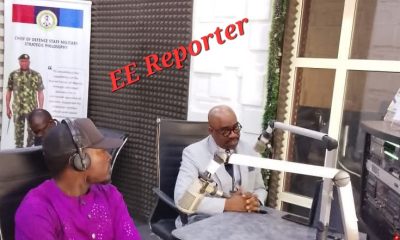
Public Perception. The Chairman of the Independent Corrupt Practices and Other Related Offences Commission (ICPC), Dr. Musa Adamu Aliyu, SAN, has emphasised the critical role of the media in combating money laundering and terrorist financing, describing it as an indispensable partner in safeguarding Nigeria’s economic integrity and democratic institutions.
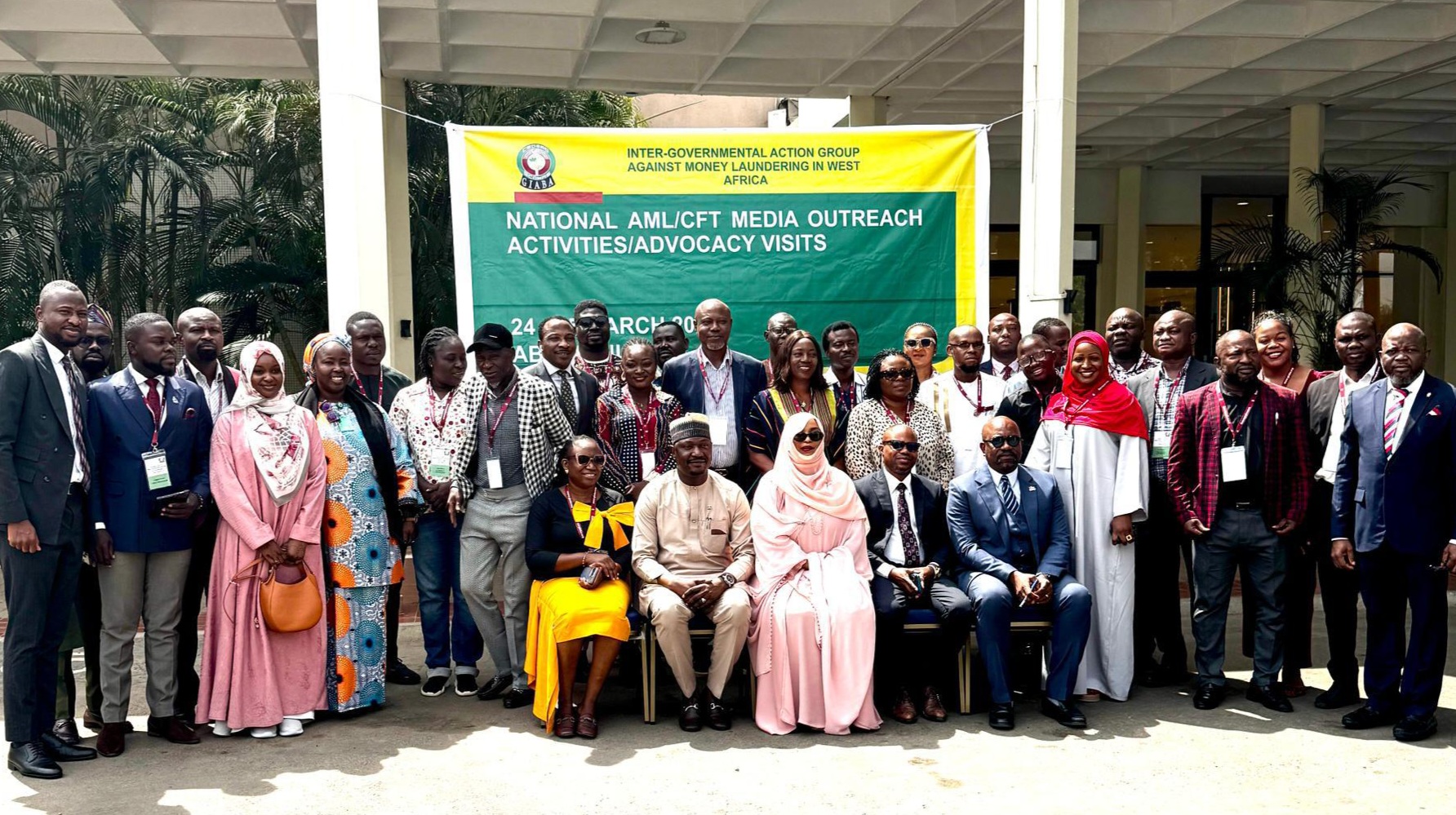
The ICPC Chairman made this known at the National Anti-Money Laundering/Countering the Financing of Terrorism (AML/CFT) Media Outreach organised by the Nigerian Financial Intelligence Unit (NFIU) in collaboration with the Intergovernmental Action Group Against Money Laundering in West Africa (GIABA), held in Abuja.
His remarks were delivered by the Head of Media and Public Communications, Mr. J. Okor Odey, anipr.
Dr. Aliyu noted that money laundering and terrorist financing remain among the most destabilising threats to national security and economic stability, stressing that their far-reaching consequences erode public trust, distort markets and deprive citizens of resources meant for development.
He observed that the evolving nature of financial crimes, driven by advancements in digital technology, social media and artificial intelligence, has made detection more complex, as criminal networks increasingly exploit anonymity and speed to move illicit funds across borders.
The ICPC Chairman, however, commended the NFIU for deploying advanced analytics and real-time transaction monitoring systems, noting that such technology-driven approaches are essential to staying ahead of financial criminals.
“The media must go beyond information dissemination to intentionally promote anti-corruption ideals and financial integrity. Investigative journalism, public interest programming and responsible reporting are vital tools for exposing illicit financial flows and deterring wrongdoing,” he said.
He further highlighted that corruption and money laundering are deeply interconnected, requiring a whole-of-society approach in which the media serves as an active and strategic partner.
Also speaking, the Chief Executive Officer of the Nigerian Financial Intelligence Unit (NFIU), Hajia Hafsat Abubakar Bakari, underscored the shared responsibility between journalists and financial intelligence institutions in serving the public interest.
She noted that beyond information sharing, both professions are united by a common goal of uncovering hidden financial networks and ensuring transparency.
“Journalists turn the light of truth on critical issues, while we trace financial flows to ensure that illicit networks do not operate in the shadows. This partnership is essential in strengthening accountability and responsible governance,” she said.
Similarly, the Director-General of GIABA, Mr. Edwin W. Harris Jr. who spoke through Mr. Timothy Melaye, emphasised that the media remains a vital stakeholder in the regional fight against money laundering and terrorist financing.
He noted that GIABA, as a specialised institution of ECOWAS, is mandated to promote compliance with international AML/CFT standards, including the Financial Action Task Force (FATF) recommendations, while taking into account regional peculiarities.
“The fight against financial crimes cannot succeed without the media. Journalists must enhance their understanding of AML/CFT issues and communicate them using accurate and accessible language to the public,” he said.
He added that the initiative would foster a regional network of journalists dedicated to reporting economic and financial crimes, thereby strengthening information dissemination and public awareness.
In the same vein, the Minister of Information and National Orientation, Alhaji Mohammed Idris, represented by Dr. Dili Ezughah, Executive Secretary, Nigeria Press Council, reaffirmed the Federal Government’s commitment to tackling corruption and financial crimes, noting the central role of the media in shaping national discourse.
“The media is not just a bystander but a powerful force in shaping national discourse and educating citizens on the dangers of money laundering and terrorist financing,” he said.
He noted that Nigeria has strengthened its financial architecture through improved monitoring systems, enhanced inter-agency collaboration and strategic partnerships aimed at tackling both domestic and transnational financial crimes.
While acknowledging the challenges faced by the media, including the technical complexity of AML/CFT reporting as well as safety and ethical concerns, he called for sustained collaboration between government and media organisations, alongside continuous training and capacity building.
Also, the Attorney-General of the Federation and Minister of Justice, Prince Lateef Olasunkanmi Fagbemi, SAN, represented by Mr. Olubunmi Ikupolati, highlighted the strategic role of the media in safeguarding national security and promoting economic stability.
“The Federal Government remains resolute in strengthening AML/CFT frameworks through enhanced intelligence-sharing, inter-agency collaboration and institutional support,” he said.
ICPC Tasks Media
He emphasised that beyond legal frameworks, public awareness remains critical in tackling financial crimes, noting that a well-informed citizenry is better equipped to identify and report suspicious activities.
The outreach programme brought together media professionals, regulators and key stakeholders, providing a platform to strengthen collaboration, enhance capacity and deepen public understanding of AML/CFT issues in Nigeria.
Participants expressed optimism that the engagement would serve as a catalyst for more impactful reporting and a stronger, united front in the fight against financial crimes.
Signed
J. Okor Odey, Anipr
Spokesperson for the Commission




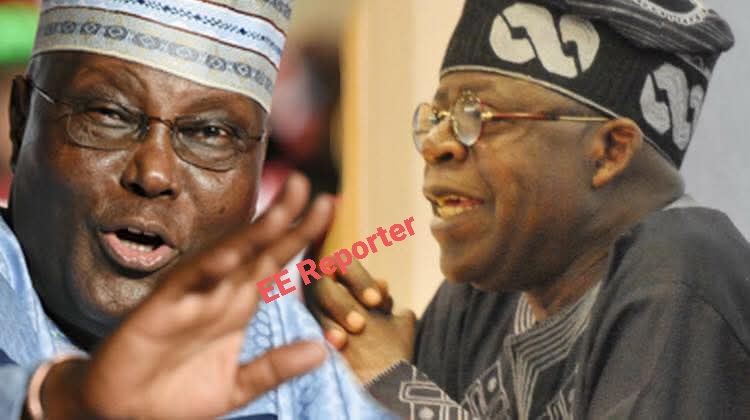
Atiku Tells Tinubu: Stop Blaming Nigerians For Insecurity
Former Vice President Atiku Abubakar has knocked the President Bola Tinubu-led government over its handling of insecurity and economic hardship.
Eereporter.com
Atiku accused the Presidency of attempting to shift responsibility for the country’s worsening conditions onto the media and ordinary Nigerians.
In a statement issued on Wednesday by his Senior Special Assistant on Public Communication, Phrank Shaibu, Atiku described as alarming recent remarks from the presidency suggesting that many kidnapping incidents occur because citizens ignore police warnings against travelling at night.
He argued that such reasoning amounted to an admission that Nigerians could only be safe for a limited part of the day.
“Is the presidency admitting that Nigerians can only be safe for a few hours of the day? Is this an official declaration that Africa’s largest economy has been reduced to an eight-hour economy where citizens must shut down their businesses, abandon legitimate travel, and retreat indoors once the sun sets?” Atiku asked.
Atiku said it was unacceptable for government officials to place the burden of security on citizens rather than on agencies responsible for protecting lives and property.
“The primary duty of any government is the protection of lives and property. Citizens do not surrender their freedoms in exchange for curfews imposed by fear,” he said.
He maintained that insecurity across the country was evident in the daily experiences of Nigerians and could not be dismissed as media exaggeration.
Atiku cited killings in Benue and Plateau states, bandit attacks in Zamfara, Katsina and Niger states, as well as recurring kidnappings and terrorism across several parts of the country.
“A trader travelling from Kano to Lagos, a businessman returning from Abuja to Kaduna, a farmer transporting produce to market, or a family embarking on a legitimate journey should not be blamed when criminals attack them. The blame belongs squarely where it should — on those charged with securing the country,” he said.
“A nation cannot prosper when its people are told that safety ends at sunset. Economies grow because people can move freely, trade freely, and conduct lawful activities without fear,” he stated.
Beyond insecurity, Atiku accused the administration of being disconnected from the economic realities facing Nigerians, saying hunger and hardship had become defining features of the current government.
According to him, rising food prices, worsening inflation, unemployment and declining purchasing power have left millions of families struggling to survive.
“The father who goes to bed wondering how to provide the next meal for his family does not need a newspaper report to confirm hardship,” he said.
He also faulted what he described as the presidency’s attempt to blame the media for highlighting insecurity and economic challenges, insisting that journalists were merely reporting realities already being experienced by citizens.
“Blaming journalists for reporting insecurity and hardship is like blaming a thermometer for a fever,” Atiku said.
He warned that governments lose credibility when they focus on managing narratives instead of addressing underlying problems.
Tinubu, Atiku
“Nigeria does not need explanations for suffering. Nigeria needs solutions. Nigeria does not need lectures about perception. Nigeria needs results,” he added.
The statement comes amid growing public concern over the rising cost of living and persistent security challenges across parts of the country, issues that have dominated national discourse since the removal of fuel subsidy and the floating of the naira by the Tinubu-led government.
Eereporter.com
EFCC to Arraign Bodejo For Alleged $2.530m Terrorism Financing, Money Laundering Offences
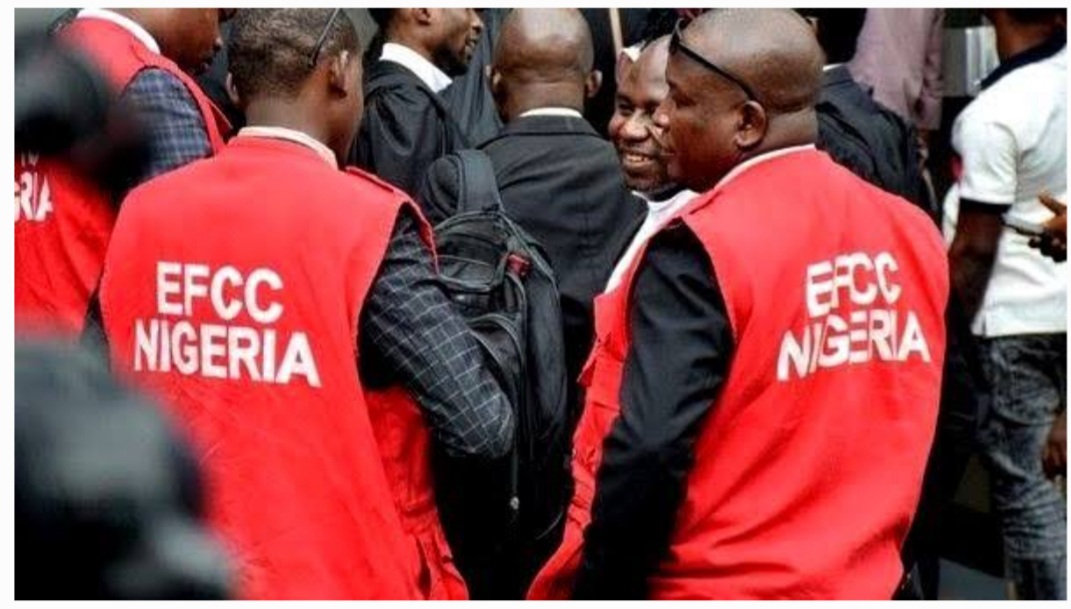
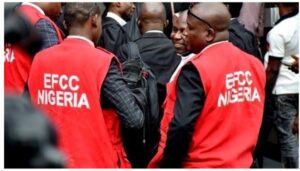
The Economic and Financial Crimes Commission, EFCC is set to arraign Bello Abdullahi Bodejo before a Federal High Court sitting in Abuja over allegations bordering on terrorism financing and money laundering to the tune of $2.530 million.
Eereporter.com
The EFCC, on Monday, June 22, 2026 filed a twelve-count charge before the Federal High Court against Bodejo, alleging him of receiving and possessing large sums of cash in foreign currency linked to proceeds of unlawful activities in contravention of the Money Laundering( Prevention & Prohibition) Act, 2011.
Bodejo, linked to Bauchi State Governor, Bala Mohammed, is expected to take his plea before the court in the coming days as the Commission commences formal proceedings.
Count one of the charges read: “That you, BELLO ABDULLAHI BODEJO (mele adult), on or about the 11th day of January 2022, at Abuja, within the jurisdiction of this Honourable Court, did knowingly and willfully, without lawful authority or excuse, accept a payment of the sum of One Hundred Thousand United States Dollars (USD $100,000) in physical currency from one SA’IDU ABUBAKAR, a former Accountant-General Bauchi State who is currently in the lawful custody of the Nigerian Police Force, which exceeded the statutory cash transaction threshold of Five Million Naira GN5,000,000.00) prescribed under Section 1(a) of the Money Laundering (Prohibition) Act, 2011 (as amended) without routing the said transaction through a financial institution as required by law, and thereby committed an offence contrary to Section 16(1)(d) of the Money Laundering Prohibition) Act, 2011 (as amended) and punishable under Section 16(2)(b) of the same Act.”
Count two reads: “That you, BELLO ABDULLAHI BODEIO (male adult), on or about the 21st day of January 2022, at Abuja, within the jurisdiction of this Honourable Court, did knowingly and willfully, without lawful authority or excuse, accept a payment of the sum of Two Hundred Thousand United States Dollars (USD $200,00) in physical currency from one SA’IDU ABUBAKAR, a former Accountant-General of Bauchi State who is currently in the lawful custody of the Nigerian Police Force, which exceeded the statutory cash transaction threshold of Five Million Naira GN5,000,000.00) prescribed under Section 1(a) of the Money Laundering (Prohibition) Act, 2011 (as amended), without routing the said transaction through a financial institution as required by law, and you thereby committed an offence contrary to Section 16(1)(d) of the Money Laundering (Prohibition) Act, 2011 (as amended) and punishable under Section 16(2)(b) of the same Act.”
Another count alleges that on March 20, 2024, Bodejo received $500,000 in physical cash from the same source, an amount said to have exceeded the legal cash transaction threshold prescribed under the Money Laundering (Prevention and Prohibition) Act, 2022.
Count four reads, “That you, BELLO ABDULLAHI BODEJO (male adult), on or about the 7th day of February 2024, at Abuja, within the jurisdiction of this Honourable Court, did knowingly and willfully, without lawful authority or excuse, accept a cash payment of the sum of Nine Hundred and Eighty Thousand United States Dollars (USD $980,000.00) in physical currency from one SA’IDU ABUBAKAR, a former Accountant-General of Bauchi State who is currently in the lawful custody of the Nigerian Police Force which sum exceeded the statutory cash transaction threshold of Five Million Naira (5,000,000.00) prescribed under Section 2(1)(a) of the Money Laundering (Prevention and Prohibition) Act, 2022, without routing the said transaction through a financial institution as required by law, and you thereby committed an offence contrary to Section 19(1)(d) of the Money Laundering (Prevention and Prohibition) Act, 2022 and punishable under Section 19(2 )(b) of the same Act.”
EFCC
According to count ten, Bello Abdullahi Bodejo allegedly took possession of $980,000 in Abuja on or about February 7, 2024, under circumstances in which he either knew, or reasonably ought to have known, that the funds were proceeds of unlawful activity, specifically money laundering. The conduct allegedly constitutes an offence under Section 18(2)(d) of the Money Laundering (Prevention and Prohibition) Act, 2022, and is punishable under Section 18(3) of the same Act.
All the alleged offences are punishable under various provisions of the Money Laundering (Prohibition) Act, 2011 (as amended), and the Money Laundering (Prevention and Prohibition) Act, 2022.
Further proceedings are expected to follow as the Commission awaits the arraignment date.
Eereporter.com
ADC: Onanuga “No Hunger” Comments Reflect Tinubu’s Disconnection From Reality
The African Democratic Congress (ADC) has accused the Tinubu administration of grave insensitivity, following comments by Presidential Spokesman Bayo Onanuga that he does not see the level of hunger and hardship being reported across the country.
Eereporter.com
In a statement signed by its National Publicity Secretary, Mallam Bolaji Abdullahi, the party said Onanuga’s views reflect the dominant thinking in the Tinubu-led government, which it said confirms its long-standing position that the administration is disconnected from the reality faced by millions of ordinary Nigerians.
The full statement read:
The African Democratic Congress (ADC) has condemned recent comments by Presidential Spokesman, Mr. Bayo Onanuga, claiming that he does not see the level of hunger and hardship Nigerians are talking about. Those comments are not merely insensitive; they are a startling admission of how disconnected the APC government has become from the realities of the people it governs.
When over 80% of Nigerians are struggling to feed their families, pay school fees, afford transportation and keep their businesses alive, it is extraordinary that a senior presidential spokesman can publicly suggest that the hardship is somehow overstated or even contrived.
The truth is that Nigerians are not faking their suffering. The unprecedented cost-of-living crisis confronting the country today is the direct result of the ill-conceived and poorly executed economic policies of the Tinubu administration, which have thrown millions more into acute poverty since this government came to power. Food prices have soared, transportation costs have multiplied, the value of incomes and savings has been eroded, and millions of Nigerians who were managing before are now trapped in economic distress.
This is not opposition propaganda. It is the daily lived experience of ordinary Nigerians in every state of the federation.
What makes Mr. Onanuga’s comments particularly troubling is that they reveal a government that has become tragically insular and could no longer do anything differently. A sensible government does not measure the effects of its policies by merely looking at the people within its immediate circle or driving through paved roads.
It must listen to the people in the markets, on the farms, in the classrooms, in the workshops and in the streets. If the Presidency genuinely cannot see the hunger and hardship that Nigerians are talking about, then it raises serious questions about whether it sees the people at all.
The APC government will undoubtedly point to roads infrastructure projects as its achievements. While even this is debatable, the fact remains that Nigerians cannot eat roads.
The first responsibility of any government is to create economic conditions in which citizens can afford food, find jobs, run businesses and live with dignity. On this most fundamental test, the Tinubu administration has failed. After three years of promises, excuses and appeals for patience, the reality for 62% of Nigerians is that life is harder today than it was when this government took office.
The ADC believes that leadership begins with honesty. The question is no longer whether Nigerians are suffering; Nigerians already know that they are. The real question is whether this government is prepared to acknowledge the consequences of its policies and accept responsibility for its historic failures.
ADC
Until it does, comments such as those made by Mr. Onanuga will only reinforce the growing perception that the APC government is out of touch with the people and unwilling to confront the damage its economic policies have inflicted on ordinary Nigerians.
Eereporter.com
Signed:
Mallam Bolaji Abdullahi, National Publicity Secretary, African Democratic Congress (ADC)
-
 Crime1 year ago
Kogi Assembly Considers Law To Regulate Rent, Establish Control Board: Tenancy Law
-

 News1 year ago
Atiku Reveals Why He Failed To Pick Wike As Running Mate In 2023
-
 Akwa Ibom1 year ago
The Apostolic Church Gets New Territorial Chairman, Exco
-

 Crime1 year ago
Federal High Court Jails 2 For Vandalizing Transformer, Telecom Mast In Kogi
-
 News1 year ago
The Apostolic Church Gets New National President, Executive
-
 Akwa Ibom1 year ago
Umo Eno Commences Payment Of 80,000 Naira Minimum Wage With Arrears
-

 News1 year ago
Senator Natasha Returns To Senate With Husband Amid Seat Dispute
-
 Economy1 year ago
Kiyosaki: Is Tinubu’s Government Afraid Of Ibrahim Traore?