
News
How Governor Eno Connects Akwa Ibom Communities with Dualized Roads


How Governor Eno Connects Akwa Ibom Communities with Dualized Roads
The infrastructural development plan of the Akwa Ibom State Government includes the linking up of all the 31 LGAs with dualized roads from Uyo, the state capital.
Eereporter.com
With the addition of Nsit Atai and Okobo, we now have about 18 LGAs linked with dualized roads from Uyo.
The dualization of Ibesikpo Asutan-Nsit Ibom-Nsit Ubium roads to link up with the Eket-Etinan-Uyo dualized road is ongoing right now and scheduled for completion in 2027.
Also ongoing is the dualization of the Okobo-Udung Uko – Mbo road to the site of the Ibom Deep Seaport.
The Akwa Ibom State Governor, Pastor Umo Eno had expressed the readiness of his administration to dualize the road from Ikot Ekpene to Ikono and Ini LGAs in his 2nd term.
Hopefully, at the end of the tenure of the current administration in 2031, the number of dualized roads linking the 31 LGAs may increase to 24.
With this number, Gov Umo Eno will hold the record of constructing the highest number of dualized roads (8 LGAs) from Uyo to the 31 LGAs in the State.

Akwa Ibom
This is aside the construction and dualization of other roads in the state capital like the Uyo Village road and Section 4 of Ring Road 3 which is scheduled for commissioning this November.
The combined tenure of Obong Victor Attah, Godswill Akpabio and Udom Emmanuel linked up 16 LGAs with dualized roads from Uyo the state capital.
Eereporter.com








Customs Strengthens Inter-Agency Collaboration with Six Agencies to Tackle Money Laundering
The Nigeria Customs Service (NCS) has engaged six federal government agencies to strengthen inter-agency collaboration in tackling cross-border illicit financial flows, money laundering, corruption, drug trafficking, terrorism financing, and other related offences.
Eereporter.com
The three-day visit, held from 27 to 29 October 2026, was led by the Assistant Comptroller-General in charge of Headquarters, Muhammad Shuaibu. It focused on deepening strategic cooperation and intelligence sharing among the agencies to combat financial crimes and other illicit activities.
The agencies include the Economic and Financial Crimes Commission (EFCC), the National Drug Law Enforcement Agency (NDLEA), the Nigeria Police Force (NPF), the Nigerian Financial Intelligence Unit (NFIU), the Nigeria Immigration Service (NIS), and the National Counter-Terrorism Centre under the Office of the National Security Adviser (ONSA).
Speaking during the engagements, Shuaibu expressed that the initiative was aimed at enhancing inter-agency coordination in addressing threats to Nigeria’s economy and national security. “The sole objective of this mission is to effectively detect and disrupt cross-border illicit financial flows. The measures include field visits to selected border stations to assess practical Customs control measures and engage with relevant agencies.” Shuaibu Said.
In his remarks, the Chief Executive Officer of the NFIU, represented by the Chief Operating Officer, Intelligence Security Service Sector, Muhammed-Mustapha, commended the Nigeria Customs Service for its efforts in combating smuggling and reinforcing border security. He also noted the longstanding relationship between the two institutions. “When NFIU was created, NCS was the first to collaborate with us. No particular agency understands things better than how Customs does globally,” Mustapha said.
Meanwhile, the World Customs Organisation (WCO) Mentoring Team, led by Shahiduzzaman Sarkar, interacted with the agencies on approaches to addressing Anti-Money Laundering (AML) and Countering the Financing of Terrorism (CFT). The team also called for stronger collaboration with the NCS to ensure the success of the initiative.

Nigerian Customs9
During the engagements, participants identified communication gaps, bureaucracy and database privacy concerns, among others, as impediments to effective inter-agency collaboration. The discussions also explored measures to address these challenges and strengthen institutional synergy.
The engagements also featured the presentation of NCS awards and WCO certificates to the agencies, demonstrating the Service’s commitment to enhance collaboration in tackling threats to Nigeria’s economy and national security.
Eereporter.com
Nigeria Customs Move to Neutralise Online Scams, Fake News with AI Data Tracking
The Nigeria Customs Service (NCS) has begun efforts to neutralise rampant fake news and online scams that damage the Service’s image by integrating new-age digital data-tracking intelligence tools.
Eereporter.com
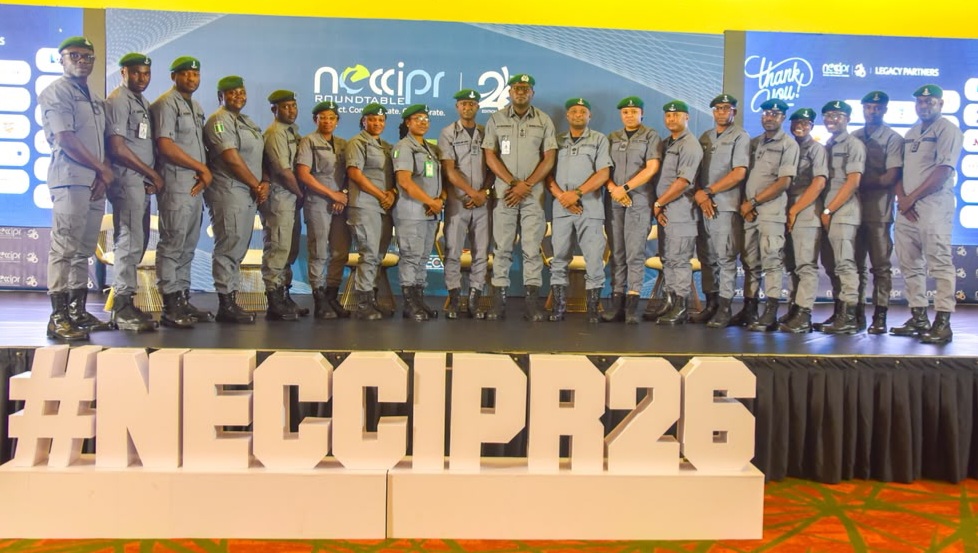
The Comptroller-General of Customs (CGC), Adewale Adeniyi, represented by the National Public Relations Officer of the Service, Deputy Comptroller of Customs Abdullahi Maiwada, disclosed this on Friday, 30 October 2026, at the just concluded Neccipr Roundtable ’26 Edition held in Lagos, with the Theme: Algorithm Influence & Public Relations.
Maiwada explained that as a communicator, it is important to ensure the general public understands and accepts why officers carry out their duties.
“The role of AI cannot be over emphasized especially within our operations. Over the years AI has been deployed in our core operational duties as well as strategic communication. AI has also been deployed to aid risk management, which involves assessment of the risks in imported items so that they can be categorised according to their different levels of risk to enable appropriate customs interventions,” he said.
Maiwada explained that artificial intelligence can also analyse sentiment and understand how people perceive Customs activities. He added that the Service is using every available platform to establish facts while working with other agencies to arrest those behind misleading information.
Earlier, the convener of the Neccipr Roundtable ’26, Nkechi Ali-Balogun, said the program began with a simple conviction: public relations professionals must not only manage messages but also lead national discourse.
Nigeria Customs
“This year, we confront a question that touches every one of us. When machines decide what we see, who is really shaping the Nigerian mind? Who now controls the flow of information that shapes what Nigerians believe? We live in a rapidly changing world, powered by AI, where a single algorithm can shape political narratives, throw out conspiracy theories, and dictate what millions read, believe, and share,” she said.
The event also included keynote addresses from the President and Chairman of the Governing Council, the Nigerian Institute of Public Relations (NIPR), Ike Neliaku, and former Federal Minister of Education, Obiageli Ezekwesili, among other invited dignitaries, showing professional readiness to sustain the standard of credible information
Eereporter.com
Nigeria Customs Showcases Smart Digital Transformation Journey At 2026 WCO Global Event
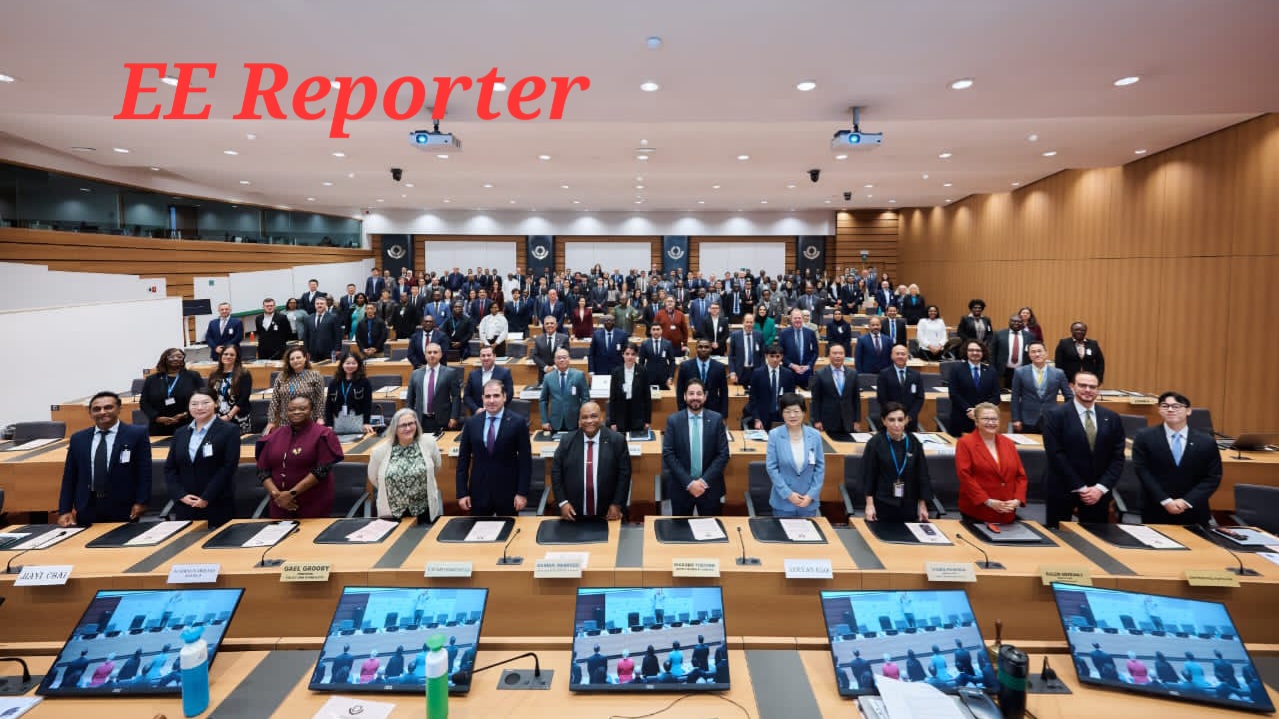
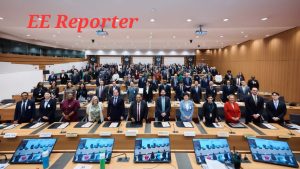
The Nigeria Customs Service (NCS) has showcased its ongoing digital transformation journey at the World Customs Organisation (WCO) Smart Customs Project Global Event 2026, held at the WCO Headquarters in Brussels, Belgium, from 29 to 30 October 2026. The Service was represented by Assistant Comptroller (AC) Omolara Adedeji, who presented Nigeria’s experience and progress towards building a technology-driven Customs administration.
Eereporter.com
…Highlights B’Odogwu, Data-Driven Operations, Artificial Intelligence In Modernisation Drive
The global event brought together Customs administrations, technology experts and international stakeholders to examine the application of disruptive technologies in strengthening Customs operations, improving border management and facilitating legitimate international trade. The opening ceremony featured remarks by the Deputy Secretary General of the WCO, Mr Ricardo Treviño Chapa. Ms Xueyan Guo, Director General of the International Cooperation Department, General Administration of Customs of the People’s Republic of China (GACC), and Mr Eduard Hakobyan, Chairman of the State Revenue Committee of Armenia, also delivered keynote addresses.
A major highlight of the first day’s programme was the formal launch and presentation of the updated WCO Study Report on Disruptive Technologies, which examined the report’s evolution, key findings, and relevance to WCO Members. The session also featured presentations from Customs administrations that contributed case studies to the updated report, including Nigeria, represented by AC Adedeji, as well as officials from the General Administration of Customs of China and the Mauritius Revenue Authority.
In her presentation titled “Nigeria Customs Service: The Journey Towards Smart Customs,” AC Adedeji outlined the Service’s transition from traditional Customs operations, characterised by manual processes, towards integrated digital operations under its Modernisation Project. She highlighted the development and deployment of B’Odogwu, the Unified Customs Management System (UCMS), as a significant component of the transformation, supporting increased automation, electronic processing, data-driven decision-making and stronger collaboration with government Ministries, Departments and Agencies (MDAs) and private-sector stakeholders.
According to her, “The NCS is undergoing a deliberate transition from traditional Customs operations towards integrated digital operations. Through the Service’s Modernisation Project, we are strengthening automation, electronic processing and data-driven decision-making to build a more efficient, responsive and technology-driven Customs administration.” She further identified smart technology and smart data as the two major components of Nigeria’s Smart Customs vision, explaining that while the former encompasses automation, integrated systems, digital platforms and modern ICT infrastructure, the latter focuses on intelligence-led interventions, data-driven risk management, analytics and improved information sharing.
The presentation also emphasised the Service’s strategic commitment to developing the human capacity required to sustain its digital transformation, particularly through upskilling personnel and building a workforce with the technical competence to drive innovation and deliver its Smart Customs vision.
Nigeria Customs
AC Adedeji further highlighted the application of geospatial technology across different operational areas of the Service, including fleet management, asset management and the Electronic Cargo Tracking System (ECTS), demonstrating how technology is being deployed beyond Customs declarations to strengthen operational monitoring, resource management and cargo visibility. She noted that the Service’s transformation was moving beyond basic process automation towards intelligent Customs operations, with priority areas including Artificial Intelligence and Machine Learning, predictive analytics, non-intrusive inspection, integrated border management, interoperability and real-time operational intelligence. As she explained, “By prioritising these technologies and investing in the people who will drive their application, we are working towards a system that anticipates risks, supports real-time operational intelligence and facilitates seamless trade.”
The programme further featured presentations on the Smart Customs Project’s deliverables under its Artificial Intelligence/Machine Learning (AI/ML) and Blockchain packages, including technical reports, readiness self-assessment tools and practical case studies. Another session examined AI governance and deployment readiness in Customs, bringing together experts and representatives from Cambodia, Mexico, Türkiye, and Vietnam to discuss institutional preparedness, governance frameworks, and the responsible deployment of emerging technologies.
Eereporter.com
-
 Crime1 year ago
Kogi Assembly Considers Law To Regulate Rent, Establish Control Board: Tenancy Law
-

 News2 years ago
Atiku Reveals Why He Failed To Pick Wike As Running Mate In 2023
-
 Akwa Ibom2 years ago
The Apostolic Church Gets New Territorial Chairman, Exco
-

 Crime2 years ago
Federal High Court Jails 2 For Vandalizing Transformer, Telecom Mast In Kogi
-
 News2 years ago
The Apostolic Church Gets New National President, Executive
-
 Akwa Ibom2 years ago
Umo Eno Commences Payment Of 80,000 Naira Minimum Wage With Arrears
-

 News2 years ago
Senator Natasha Returns To Senate With Husband Amid Seat Dispute
-
 Economy1 year ago
Kiyosaki: Is Tinubu’s Government Afraid Of Ibrahim Traore?