
News
House Of Reps Retain 7.5% VAT, Reject Proposed 15% Increase By 2030

House Of Reps Retain 7.5% VAT, Reject Proposed 15% Increase By 2030
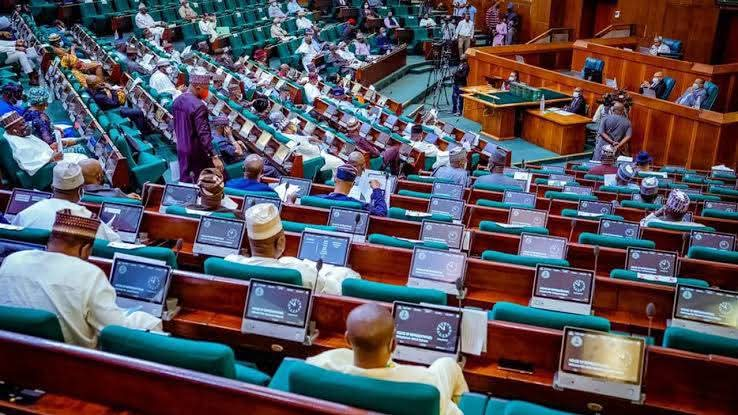
House of Reps retain 7.5% VAT, reject proposed 15% increase by 2030. The House of Representatives has upheld the 7.5% Value Added Tax (VAT) rate, dismissing a proposed gradual increase to 15% by 2030.
It also rejected the reintroduction of inheritance tax under the guise of family income taxation.
Key Highlights of the Tax Reform Bills:
The Nigeria Revenue Service (NRS) Bill will focus on federal revenue collection, with a 4% cost-of-collection rate and restricted borrowing powers requiring government approval.
The Joint Revenue Board (JRB) Bill enhances the Tax Ombud’s independence and ensures the Tax Appeal Tribunal (TAT) operates separately from the Federal Inland Revenue Service (FIRS).
Taxpayer Identification Number (TIN) processing will now take five working days instead of two, while companies ceasing operations must file returns within three months (previously six).
Petroleum Gains Tax reduced from 85% to 30%, and excise duty provisions were removed due to economic concerns.
Higher turnover threshold for small businesses: Now classified as small if annual turnover is ₦100 million or less.
Reps
New penalties for Virtual Asset Service Providers (VASPs), including stricter fines and potential license suspensions for non-compliant crypto and digital asset businesses.
Judicial oversight on asset seizure: Tax authorities must now obtain court orders before confiscating assets.
The amendments impact several laws, including the Companies Income Tax Act, VAT Act, Personal Income Tax Act, Petroleum Industry Act, and more.
The House will deliberate further on the report in the coming weeks.







News
End Child Marriage and Invest in Girls’ Rights as POCACOV Celebrates International Day of the Girl Child
End Child Marriage and Invest in Girls’ Rights as POCACOV Celebrates International Day of the Girl Child
The Police Campaign Against Cultism and Other Vices (POCACOV) has marked the 2026
Eereporter.com
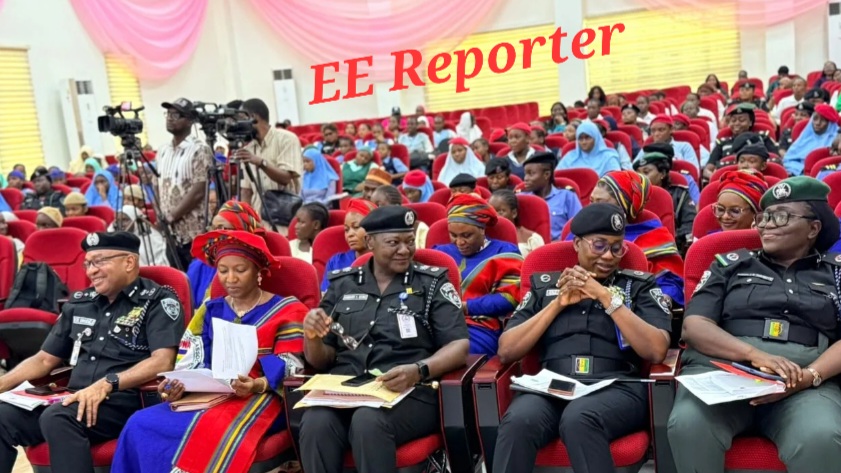
The Police Campaign Against Cultism and Other Vices (POCACOV), in collaboration with the Police Officers’ Wives Association (POWA), has commemorated the 2026 International Day of the Girl Child, highlighting the need to protect girls from child marriage, abuse and exploitation.Find Police Jobs.

POCACOV
The event, themed “End Child Marriage and Invest in Girls’ Rights,” emphasised the importance of safeguarding girls’ rights and expanding access to education, protection and empowerment opportunities to enable them to realise their full potential.
Eereporter.com
Details Loading >>>
News
Kenya: Presidential Aspirant Vows to Stop Dangote’s $16bn Refinery, Send Nigerian Billionaire Home if Elected

Kenya: Presidential Aspirant Vows to Stop Dangote’s $16bn Refinery, Send Nigerian Billionaire Home if Elected
Aformer Kenyan Defence Forces (KDF) soldier and presidential aspirant, Patrick Osoi, has threatened to halt the Dangote Refinery project in Kenya and send Nigerian billionaire Aliko Dangote back to Nigeria if he becomes president in the 2027 election.
Eereporter.com
Osoi argued that Kenyan businesspeople should be given the opportunity to establish and operate the country’s proposed oil refinery, insisting that local investors have the capacity and resources to execute the project without relying on the Nigerian industrialist.
He made the remarks while addressing supporters of his political movement, as he outlined his position on Kenya’s proposed refinery and the role of domestic businesses in the country’s oil sector.
“I want to tell Aliko Dangote, please don’t rush to start the refinery because when I’m sworn in as President of Kenya next year, you will be heading back to Nigeria,” Osoi said in a video posted online by A.M Media.
“We Kenyans have businesspeople who can start the refinery. I want to tell Dangote, please, don’t hurry up to start the refinery, because by next year, February, the time I’m sworn in as the president of this country, you’ll be back going to Nigeria.
“Because we have Kenyan refineries which can do that job. We also have business people in this country who can do that job. That is what we stand for. And this is the home of our movement.”
Osoi’s threats come amid mounting political, legal and community controversies surrounding Dangote’s proposed multibillion-dollar oil refinery in Lamu County, a project backed by Kenyan President William Ruto and intended to strengthen the country’s petroleum-processing capacity and reduce reliance on imported fuel.
His declaration also places the proposed investment at the centre of a broader debate about local participation, foreign investment, land rights, transparency and who should benefit from major industrial projects in Kenya.
The controversy surrounding the refinery intensified after Dangote and Ruto attended its groundbreaking ceremony in Lamu on September 30, 2026.
The proposed East African refinery, estimated to cost about $16 billion, is expected to process up to 700,000 barrels of crude oil daily.
Project proponents say it will strengthen regional energy security, create jobs and reduce East Africa’s dependence on imported petroleum products.
However, the project has faced opposition from residents, civil society organisations and opposition politicians over land ownership, compensation, environmental safeguards and the lack of publicly available information about the agreement.
On September 28, 2026, 133 residents filed a legal challenge at the Environment and Land Court in Malindi, seeking to halt the development.
They alleged that land earmarked for the project included ancestral property their families had occupied, cultivated and developed for generations without adequate compensation or resettlement arrangements.
The dispute has raised questions about whether affected residents were properly consulted and whether their land rights were adequately addressed before the refinery project moved forward.
The Kenyan government, however, has defended the land arrangements. Lands Cabinet Secretary Alice Wahome said the largest portion of the land designated for the development was public land, while maintaining that legitimate claims by landowners and occupants would be addressed.
The proposed refinery has also come under scrutiny from consumer-rights advocates and environmental campaigners.
On October 10, 2026, the Kenya News Agency reported that Save Lamu, a civil society organisation based in Lamu County, demanded that the government and Dangote’s project promoters publicly disclose documents demonstrating compliance with legal, environmental and public-participation requirements.
The group raised concerns about the absence of publicly available project-specific environmental and social impact assessment documentation, details of the relevant environmental licence and its conditions, as well as unresolved land-compensation issues.
It warned that legal action could follow if the concerns were not addressed.
Meanwhile, Kenyan opposition figures have demanded greater disclosure of the project’s financing arrangements and the extent of any proposed government investment.
On October 6, 2026, Jubilee Party leader Fred Matiang’i called for the disclosure of details surrounding the refinery and other concessions, arguing that the government should provide answers on projects attracting public scrutiny.
Nairobi Senator Edwin Sifuna has also asked the Senate’s Energy Committee to provide information on the project’s approval, financing, procurement, environmental impact, land arrangements and ownership structure.
The project is intended to serve Kenya and the wider East African market, with supporters arguing that it could expand refining capacity, create employment and stimulate industrial development.

Kenyan, Dangote
Its critics, meanwhile, are demanding assurances that those benefits will not come at the expense of local communities, environmental protections or public accountability.
As the debate continues, the refinery faces the challenge of reconciling its regional economic ambitions with the legal, political and community concerns surrounding its construction.
The disputes have added uncertainty to the implementation of the project, although Dangote has maintained his commitment to the investment despite the legal challenges.
Osoi’s comments introduce another dimension to the debate, framing the refinery not only as an investment and energy-security initiative but also as a question of domestic business ownership and economic sovereignty.
Eereporter.com
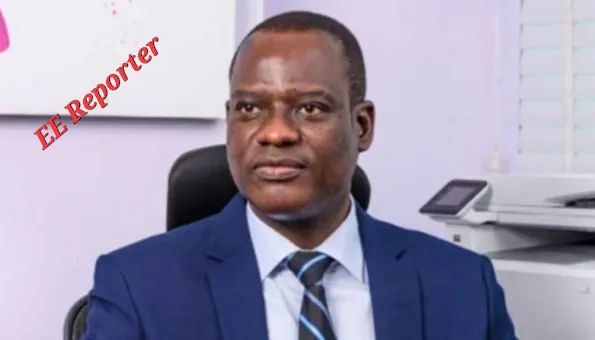
FG Sets to Hold MDAs to Measurable Performance Targets, Seeks End to Overlapping Regulations
The Federal Government is moving to hold Ministries, Departments and Agencies (MDAs) to measurable performance targets, with a new framework designed to cut bureaucratic delays, eliminate overlapping regulatory demands and make government more responsive to businesses and investors.
Eereporter.com
The Honourable Minister of Finance and Coordinating Minister of the Economy, Taiwo Oyedele, announced this on Thursday at a strategic engagement with Heads of Agencies and senior government officials at the Federal Ministry of Finance headquarters in Abuja.
Oyedele said the next phase of Nigeria’s economic reforms must go beyond stabilising the economy to fixing the everyday frustrations businesses encounter in their dealings with government. He stressed that agencies must make it easier, not harder, for businesses to operate, invest and expand.
To achieve this, he called on agencies to remain within their statutory mandates and eliminate duplicate requirements, multiple fees and unnecessary procedures that increase the cost of doing business.
The Minister outlined a “One Government” approach under which MDAs would coordinate their activities rather than leave businesses and other applicants to navigate conflicting demands from different institutions. Where mandates overlap, he said, the goal should be one lead agency, one process and one fee.
Oyedele also urged agencies to consult stakeholders before introducing new regulations, assess the economic implications of proposed measures, coordinate with other relevant institutions and give reasonable notice before major policy or regulatory changes take effect.
On public finance, Oyedele directed agencies to remit all revenues due to the government promptly and in full, transfer operating surpluses to the Consolidated Revenue Fund and submit audited accounts as required by law.
He said agency performance would be judged by results, including how quickly services are delivered, whether published timelines are respected and whether regulatory processes become less costly for businesses.
The Minister made clear that the Ministry of Finance would be held to the same expectations, acknowledging that government must also tackle internal obstacles such as slow approvals, delayed releases and outdated rules.

Taiwo Oyedele
As a next step, the Ministry will review submissions from participating agencies and provide specific feedback within four to six weeks. The draft framework will then be circulated for further consultation, with each agency expected to agree to measurable commitments whose implementation will be reviewed periodically.
The initiative seeks to make public institutions more accountable for the quality and speed of their services, while creating a regulatory environment in which businesses can spend less time navigating government procedures and more time investing, expanding and creating jobs.
Efe Ovuakporie Head information and PR Unit 11th October, 2026
Eereporter.com
-
 Crime1 year ago
Kogi Assembly Considers Law To Regulate Rent, Establish Control Board: Tenancy Law
-

 News2 years ago
Atiku Reveals Why He Failed To Pick Wike As Running Mate In 2023
-
 Akwa Ibom2 years ago
The Apostolic Church Gets New Territorial Chairman, Exco
-

 Crime2 years ago
Federal High Court Jails 2 For Vandalizing Transformer, Telecom Mast In Kogi
-
 News2 years ago
The Apostolic Church Gets New National President, Executive
-
 Akwa Ibom2 years ago
Umo Eno Commences Payment Of 80,000 Naira Minimum Wage With Arrears
-

 News2 years ago
Senator Natasha Returns To Senate With Husband Amid Seat Dispute
-

 Economy1 year ago
Kiyosaki: Is Tinubu’s Government Afraid Of Ibrahim Traore?