
Policy
House Of Reps Begin Hearing On Bill To Guarantee Social, Civil Rights Of Elderly Citizens


House Of Reps Begin Hearing On Bill To Guarantee Social, Civil Rights Of Elderly Citizens
House of Reps begin hearing on bill to guarantee social, civil rights of elderly citizens. The house of representatives has called for improved care, privileges, and protection of the economic and civil rights of older persons in the country.
Tajudeen Abbas, the speaker, made the call on Wednesday at the opening of a public hearing organised by the house committee on women affairs and social development in Abuja.
The hearing was on a bill seeking to provide for health and economic relief, protection of social and civil rights, and related matters affecting older persons.
Abbas, represented by Bello Kumo, chief whip of the house, said lawmakers would undertake legislative interventions that guarantee privileges and protect the rights of older persons in Nigeria.
He said section 42 of the constitution guarantees the inalienable rights of every citizen and prohibits discrimination based on gender, but does not address the injustices older persons face.
He said the fundamental objectives and directive principles of state policy in chapter two of the constitution require government to ensure citizens’ welfare but are not enforceable.
The speaker lamented that existing policies and legal frameworks for the protection of older persons are fragmented, incomplete, and largely unenforceable.
He noted that the house would enact progressive legislation to birth social welfare programmes for the benefit of older citizens.
Kafilat Ogbara, chair of the committee, said the panel would ensure that the voices of older citizens are heard and empowered.
She assured stakeholders that the committee would help put in place laws that serve as a safety net for older Nigerians.
Binta Bello, director-general of the National Agency for the Prohibition of Trafficking in Persons (NAPTIP), represented by Nnamdi Obi, a director in the agency, said there was a need to strengthen existing laws on the care of older citizens.
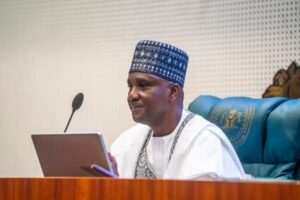
Hon. Abbas Tajudeen
She said the enactment of another law could create overlaps in the roles of ministries, departments, and agencies.
Stakeholders, including the National Human Rights Commission and the National Pension Commission, supported the passage of the bill with modifications.
Ogbara added that the panel would properly scrutinise all submissions to produce an effective and friendly law for older persons.
National Agency for the Prohibition of Trafficking in Persons (NAPTIP)









ICPC, IMBLN Inaugurate Joint Task Committee To Tackle Fraud, Corruption In Nigeria’s RES
The Independent Corrupt Practices and Other Related Offences Commission (ICPC) and the Institute of Mortgage Brokers and Lenders of Nigeria (IMBLN) have formally inaugurated a Joint Task Committee (JTC) mandated to implement a landmark Memorandum of Understanding aimed at professionalising and sanitising Nigeria’s mortgage and real estate industry.
The inauguration ceremony, held on Wednesday, 11 March 2026 at the Boardroom of ICPC Headquarters in Abuja, marked the formal constitution of the committee originally provided for under the MoU signed by both institutions on 10 June 2024.
The event brought together senior officials of the ICPC, IMBLN leadership, members of the newly inaugurated committee, and representatives of professional bodies in the housing sector.
Presiding over the inauguration, ICPC Secretary Clifford Okwudiri Oparaodu, Esq., DSSRS, confirmed the committee’s mandate and formalised the membership list, noting that the exercise represented the operationalisation of a strategic agreement concluded in the previous year.
“This very important exercise forms part of the plans that were put in place last year. What we are here to do today is simply to formalise the process, the committee is duly constituted on this 11th day of March 2026.”
Oparaodu outlined the ICPC’s specific areas of interest within the collaboration, including database development and intelligence-sharing platforms between the Commission and relevant stakeholders, advocacy and public-awareness initiatives, curriculum development covering anti-fraud and anti-money laundering (AML) modules, and joint research, training and knowledge-sharing programmes.
“The property and construction sectors can sometimes be vulnerable to money-laundering activities. By anticipating these challenges, we can work together to strengthen safeguards within the industry.”
In his remarks, IMBLN Vice President ESV Ayodele Thomas grounded the collaboration in statute, citing the Institute of Mortgage Brokers and Lenders Establishment Act, 2022, which empowers IMBLN to promote best practices, provide professional oversight, and ensure ethical compliance across the mortgage and housing finance ecosystem.
“The mortgage and housing finance sector plays a critical role in national development, it serves as a bridge between financial institutions, property developers, real estate practitioners, and Nigerians seeking access to home ownership. Because of this central role, the sector must operate on the foundations of professionalism, transparency, and strict compliance with regulatory standards.”
Thomas identified the JTC’s key expected outcomes as the strengthening of compliance frameworks, promotion of ethical conduct in the mortgage and real estate sector, support for investor confidence and public trust, and the enforcement of IMBLN’s charters and mandates. He commended the ICPC for what he described as a forward-looking strategy of preventive collaboration with professional bodies.
For IMBLN, the inauguration represents the culmination of more than five years of institutional effort. Dr. Victor Ivoke, Co-chair of the JTC and Head of Internal Affairs and Enforcement at IMBLN, described the committee as a turning point for an industry long characterised by informal and unregulated practice.
“The idea behind today is that it represents the fulfilment of a dream that has been on this journey as an institution for over five years. Last year, we found a willing partner in the ICPC, and we began this process together.”
Dr. Ivoke painted a stark picture of the current state of the industry, citing widespread irregular practices including multiple lettings of single properties to different tenants, and the prevalence of unregistered agents operating without traceable office addresses or accountability structures.
“Anyone can simply wake up, claim to be an agent, and begin to lease land or houses to people. In some cases, you even find a single one-bedroom apartment leased to three or four different people, with money collected from all of them.
They are then left to sort out the confusion among themselves, while the supposed agent disappears without a trace.”
He called for a regulated system modelled on other established professions, such as law and accountancy, where practitioners must be registered, trained and licensed before they can operate. IMBLN, he noted, is already making professional training available at little or no cost, with enforcement to follow after sufficient public awareness has been established.
“Before any enforcement begins, there must be adequate public awareness. We want to give practitioners enough time to understand the regulations and to comply with them.”
Dr. Ivoke further noted that a separate Act of Parliament, signed into law by the President, already empowers relevant bodies to regulate real estate practitioners and housing agents nationally, with violations subject to prosecution.
The partnership with ICPC is intended to provide the enforcement capacity that IMBLN alone could not wield.
“We were advised that if we attempted to enforce these measures alone, we might face resistance. That is why we chose to partner with institutions that are legally empowered to enforce compliance and prosecute offences where necessary.”
The JTC’s approved implementation roadmap includes five key deliverables: the establishment of a Joint Compliance and Ethics Enforcement Task Force; mandatory ethics and anti-corruption certification for sector practitioners; deployment of ICPC state offices as liaison points for nationwide monitoring and enforcement; a joint national compliance awareness campaign; and an annual Anti-Corruption and Compliance Summit.
Dr. Ivoke said the committee’s work would begin at the federal level before cascading to the states and eventually to local government level, with engagement starting at the Ministry of Housing and expanding through stakeholder meetings across the country. He confirmed that the EFCC has also been engaged as part of the broader effort to clean up the sector.
The committee draws members from key departments across both institutions. The ICPC delegation is led by Shehu Gambo of the Operations Department and comprises seven members in total, drawn from departments spanning Public Enlightenment and Education, the Anti-Corruption and Awareness Network (ACAN), System Study and Review, Proceeds of Crime, External Cooperation, and the Secretariat.
ICPC
The IMBLN side, led by Dr. Victor Ivoke in his capacity as Head of Internal Affairs and Enforcement, also fields seven members, including Legal Counsel, Media and Publications, ICT, and administrative representation, bringing the total JTC membership to fourteen.
The inauguration signals a significant shift in how Nigeria’s regulatory architecture approaches the real estate sector, moving from isolated institutional mandates to a coordinated, cross-agency enforcement and compliance model backed by legislative authority.
Both institutions emphasised that the initial phase of the JTC’s work will prioritise advocacy, education and voluntary compliance over punitive enforcement, with seminars and training sessions, some offered free of charge to be rolled out to estate agents, lawyers and other practitioners across the country.
The general consensus pointed to the premise that proper sanitisation of the real estate sector can generate significant income and provide employment for many people, provided implementation is professional to reduce the risk of corruption and minimise disputes.
EFCC Join Forces With AANISS Against Vote Buying
The Economic and Financial Crimes Commission, EFCC and the Alumni Association of the National Institute for Security Studies, AANISS have agreed to work towards credible elections by tackling vote buying and other acts of electoral fraud.
This fresh move was made on Wednesday, March 18, 2026 when the President of AANISS, Mike Ejiofor, led other executives of his Association on a courtesy visit to the EFCC’s Executive Chairman, Mr. Ola Olukoyede at the Commission’s Corporate Headquarters in Jabi, Abuja.
In his remarks, Ejiofor unfolded the topic of the 2026 AANISS Annual Lecture, “Credible Elections in Nigeria and National Security,” stressing that the focus of the Lecture drew the Association to the EFCC in recognition of the Commission’s efforts against vote buying, noting that credible elections are fundamental to good governance and national security.
“I must commend the EFCC, because I see the arrests you made over vote buying, which is the greatest challenge we are facing right now in the electoral process. I must commend you,” he said.
He urged the Commission to intensify its efforts and improve its modalities against vote buying as the 2027 election year draws closer. “As the general election is coming up in 2027, you should intensify and work out more modalities to ensure that vote buying is curtailed. We’re also available to cooperate with you. We will collaborate with the EFCC in terms of consultancy and advice. If you need resource persons, we are available to assist,” he said.
Olukoyede, in his response, acknowledged that battling vote buying falls within EFCC’s mandate, and that the Commission had been playing a critical role in that respect with an impressive number of convictions to show for it.
With regards to the 2027 general election, he assured that the Commission was not going to wait until election day to go into action. According to him, contingent planning and intelligence gathering are crucial to tackle fraudulent actors in any electoral process.
The EFCC boss urged AANISS’ members to brace up to be champions of national security. He pointed out that a strong nexus existed between national security, financial crimes and corruption, which he said made collaboration between the EFCC and AANISS compelling.
“There’s this strong link between national security and financial crimes and that is where we need our collaboration. We need to collaborate and synergize. We need you to support the agencies to ensure that we fulfil our mandate,” he said.
He restated his focus on using the anti-corruption war to support security agencies, guarantee stability in the economy as well as reduce the propensity of fraudulent actors towards corruption and financial crimes. In doing this, prevention, he said, continued to be fundamental.
“One of the critical things we did was to ensure that we don’t always wait for money to be stolen before we start rolling up our sleeves. So, I set up a Directorate called Fraud Risk Assessment and Control. Now, they are working with MDAs, tracking releases on a monthly basis. We are looking at where the money is going because it costs more to recover than to prevent,” he said.

EFCC
He also noted the prime place of asset recovery, describing it as key in the Commission’s anti-corruption fight. “As a matter of fact, from day one, we made asset recovery key, because depriving those who perpetrate crime the proceeds of their crimes is a sure way to discourage them.
If you allow them to have access to those assets, they will get the best of lawyers and continue to fight you with matters going on for 10 to 15 years in court.”
He urged AANISS to utilise the opportunity of its lectures to admonish Nigerians and give talks on the issue of financial crimes. “If we don’t take the issue of the fight against corruption, economic and financial crimes as a national policy, there is no way we can find security.
They are like twins. They are tied together. So, we need your cooperation. Even more, we need your support,” he said.
INEC Holds ICT Workshop On Development Of Artificial Intelligence Framework
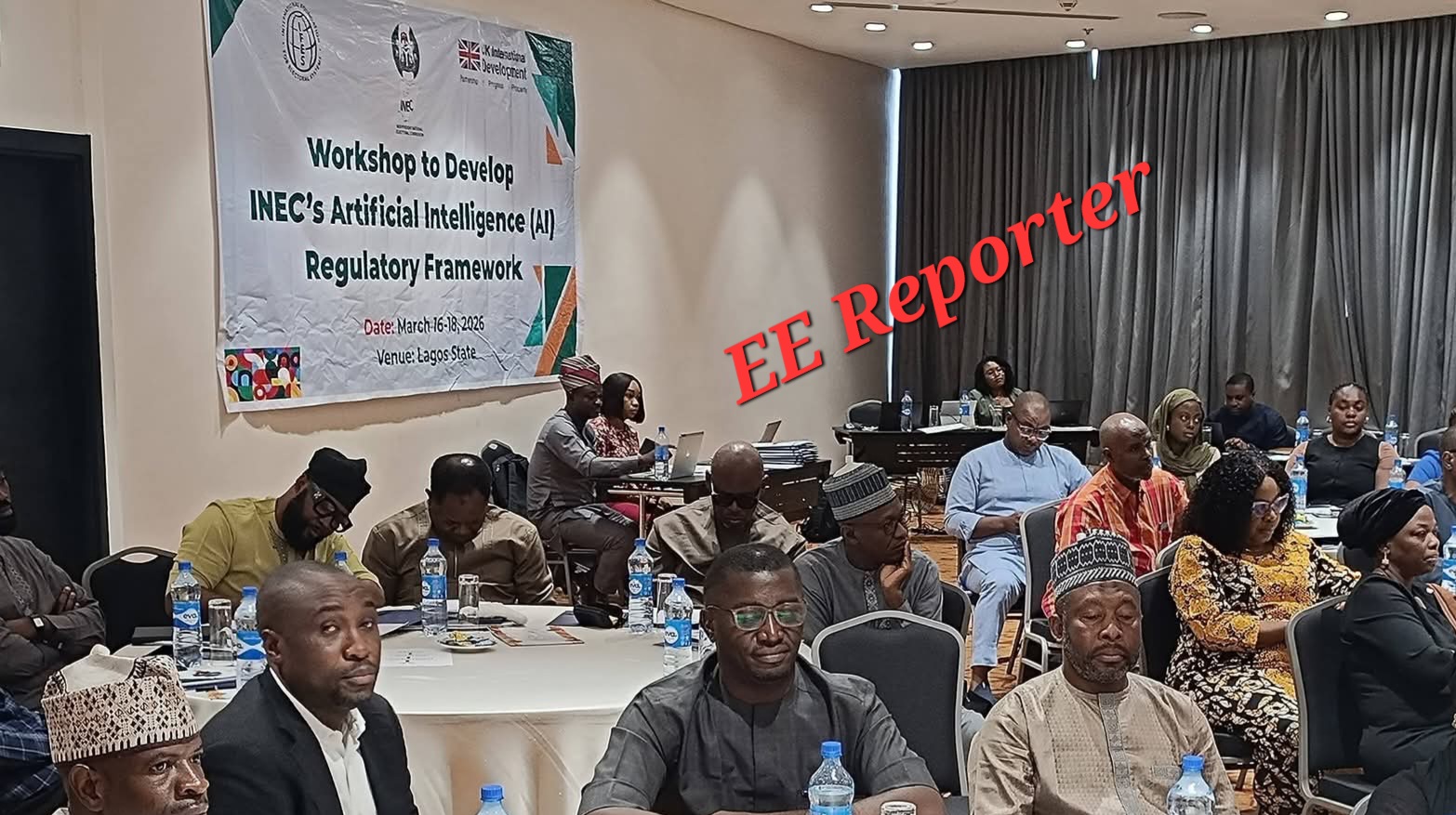
INEC holds ICT workshop on development of artificial intelligence framework. The Independent National Electoral Commission (INEC) has commenced a strategic Information and Communication Technology (ICT) workshop on the development of an Artificial Intelligence (AI) Regulatory Framework to guide the Commission’s adoption of emerging technologies in electoral administration.
The workshop, held on Monday, 16th March 2026 at the Lagos, brought together Directors, Heads of ICT Departments from State Offices, technical experts, development partners, and other key stakeholders within the Commission.
In his welcome remarks, the Resident Electoral Commissioner (REC) for Lagos State, Prof. Aboyomi Salami, represented by the Administrative Secretary, Mrs. Oluyemi Adeyemi-Showunmi, described the workshop as timely and strategic, noting that rapid technological advancements are reshaping governance systems and institutional operations globally. He observed that Election Management Bodies are increasingly deploying innovative tools to enhance the efficiency, transparency, and credibility of electoral processes.
The REC reaffirmed the Commission’s commitment to technological innovation, citing key milestones such as the introduction of biometric voter registration, the deployment of the Bimodal Voter Accreditation System (BVAS), and the INEC Result Viewing Portal (IReV), all of which have significantly strengthened transparency, accountability, and public confidence in the electoral process.
He further disclosed that the Commission, at its regular meeting of 22nd May 2025, approved the establishment of an Artificial Intelligence Division within the ICT Department. According to him, the initiative reflects INEC’s recognition of the growing importance of AI in enhancing institutional efficiency, enabling data-driven decision-making, and supporting the management of complex electoral operations.
While highlighting the potential of Artificial Intelligence in areas such as predictive planning, logistics coordination, risk monitoring, and large-scale data analysis, the REC cautioned that its adoption also presents critical challenges, particularly in relation to ethical governance, data protection, and information integrity. He emphasized the need for a clear and robust institutional framework to guide its responsible deployment.
“This workshop provides a platform for stakeholders to contribute to the development of a comprehensive AI Framework that will define governance structures, ethical standards, and operational integration within the Commission’s ICT architecture,” he stated.
Also speaking, the Director, ICT described the workshop as a significant milestone in the Commission’s technological advancement and a critical step towards institutionalising AI governance. He noted that while INEC has consistently leveraged technology to strengthen electoral integrity, the emergence of Artificial Intelligence represents a new frontier requiring deliberate planning and regulatory oversight.
He explained that AI has the potential to enhance electoral administration through improved data analytics, logistics forecasting, voter information services, disinformation detection, and decision-support systems. He, however, stressed that these opportunities must be guided by strong governance frameworks to mitigate ethical, legal, and operational risks.
“The objective of this workshop is not merely to discuss Artificial Intelligence, but to develop a structured, responsible, and forward-looking regulatory framework to guide its application in electoral processes,” he said.
He added that participants would, over the course of the workshop, examine AI fundamentals, review lessons from previous engagements, explore the Commission’s AI roadmap, and collaboratively develop a draft regulatory framework.
In his goodwill message, the International Foundation for Electoral Systems (IFES) Regional Director for Africa and the Country Director for Nigeria, Mr. Seray Jah, reaffirmed the organisation’s commitment to supporting INEC’s technological advancement.
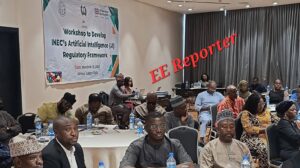
INEC Holds ICT Workshop
He noted that while Artificial Intelligence offers significant opportunities to enhance efficiency, transparency, and service delivery in electoral management, it also raises important concerns relating to accountability and data protection.
He commended INEC for its proactive and forward-looking approach, noting that institutions that responsibly embrace innovation are better positioned to lead in a rapidly evolving global environment.
The workshop is expected to produce a draft AI Regulatory Framework that will guide the Commission’s adoption of Artificial Intelligence in a manner that strengthens electoral integrity, promotes transparency and accountability, and sustains public trust in Nigeria’s democratic process.
-

 Crime11 months ago
Kogi Assembly Considers Law To Regulate Rent, Establish Control Board: Tenancy Law
-

 News12 months ago
Atiku Reveals Why He Failed To Pick Wike As Running Mate In 2023
-

 Akwa Ibom1 year ago
The Apostolic Church Gets New Territorial Chairman, Exco
-

 Crime1 year ago
Federal High Court Jails 2 For Vandalizing Transformer, Telecom Mast In Kogi
-

 News1 year ago
The Apostolic Church Gets New National President, Executive
-

 Akwa Ibom1 year ago
Umo Eno Commences Payment Of 80,000 Naira Minimum Wage With Arrears
-

 News1 year ago
Senator Natasha Returns To Senate With Husband Amid Seat Dispute
-

 Economy10 months ago
Kiyosaki: Is Tinubu’s Government Afraid Of Ibrahim Traore?