
Economy
High Court Fixes March 12 To Tule In Suit Seeking To Stop Wike From Arresting Commercial S£x Workers


High Court Fixes March 12 To Tule In Suit Seeking To Stop Wike From Arresting Commercial S£x Workers
High Court fixes March 12 to rule in suit seeking to stop Wike from arresting commercial s£x workers. Ms Joshua said AEPB had maintained that it only arrests s£x workers who are found standing on the streets of Abuja, waiting for their male clients.
The Abuja Division of the Federal High Court has fixed March 12 for judgment in a suit seeking to stop FCT Minister Nyesom Wike and the Abuja Environmental Protection Board (AEPB) from arresting and prosecuting commercial s£x workers (CSWs).
Justice James Omotosho fixed the date after counsel for the plaintiffs and the defence presented their arguments for and against the case.
The plaintiff, under the auspices of the Incorporated Trustee of Lawyers Alert Initiative for Protecting the Rights of Children, Women and the Indigent, had instituted the suit.
The group sued the AEPB, FCT minister, Federal Capital Territory Administration (FCTA) and the Attorney-General of the Federation (AGF) as the first to fourth respondents, respectively.
The originating summons was brought pursuant to Order 3, Rule 6 and 9 of the FHC (Civil Procedure Rules, 2019; Sections 6(6)(b), 41(1), and 42 of the 1999 Constitution (as amended) and under the inherent jurisdiction of the court.
The group sought two questions in the suit dated and filed on May 14, 2024, by a team of lawyers led by Rommy Mom, Bamidele Jacobs and Victor Eboh.
The lawyers want the court to determine whether the duties of the AEPB, under section 6 of the AEPB Act, 1997, extend to the harassment, arrest, detention and prosecution of women suspected of engaging in sex work on the streets of Abuja.
“Whether by the provision of section 35 (1) (d) of the AEPB Act, 1997, women can be regarded as articles or their bodies regarded as goods for purchase,” the lawyers said.
The lawyers, therefore, sought a declaration that the charge made by the personnel of the AEPB before the FCT mobile court, which referred to arrested women suspected of engaging in sex work as “articles” and considered their bodies as “goods for purchase,” is discriminatory and violated the provisions of section 42 of the 1999 Constitution.
They sought a declaration that the duties of the board do not extend to the harassment, arrest and raid of women suspected of engaging in s£x work on the streets of Abuja.
They also sought a declaration that neither section 6 of the AEPB Act, 1997, nor any extant laws of the country authorise the board to arrest women suspected of engaging in s£x work on the streets of Abuja.
They further sought a declaration that section 35(1) (d) of the AEPB Act, 1997, does not refer to women as “articles” or their bodies regarded as “goods for purchase.”
The lawyers, therefore, prayed the court for an order restraining the AEPB, its agents or privies from harassing, arresting and raiding women suspected of engaging in s£x work on the streets of Abuja.
They sought an order restraining the first respondent, her agents or privies from prosecuting women suspected of engaging in s£x work on the streets of Abuja under section 35(1) (d) of the AEPB Act, 1997.
They equally sought an order directing all the respondents to ensure proper application of the provisions of the Abuja Environmental Protect Act, 1997, by the first respondent.
A project assistant with R.A. Mom and Associates, Ayomide Joshua, in the affidavit she deposed to, said women were suspected of engaging in sex work on the streets of Abuja, leading to their harassment, arrest and prosecution by AEPB under Section 35 (1) (d) of the AEPB Act, 1997.
She said the cases are of national and international concerns, involving international organisations such as the United Nations, Amnesty International, the Open Society Fund, and over 30 local organisations.
Ms Joshua said although the women were prosecuted relying on section 35(1)(d) of the AEPB Act, which states that “any person who sells, displays, offers or carries for sale any goods or articles of trade at a road junction or any other unauthorised place is guilty of an offence.”
She alleged that AEPB had normalised the use of the police and other security agencies to arrest, harass and prosecute several women suspected of engaging in s£x work on the streets of Abuja under the section.
Ms Joshua said that the women who are arrested often do not have any goods for sale or wares on them.
She said AEPB, at the time of prosecuting these women, frequently accused them of prostitution and selling their bodies.
Ms Joshua said AEPB had maintained that it only arrests sex workers who are found standing on the streets of Abuja, waiting for their male clients.
“These women are often arrested alone, while the male counterparts are pardoned, despite being found in the same place at the same time,” she said.
According to her, the women are usually arrested with the assistance of the police and are not permitted to contact any relatives.
She said the determination of the case in favour of the applicant would put an end to the continuous harassment, intimidation and arrest of vulnerable women in Abuja by the board.
Ms Joshua said that a pre-action notice dated February 16, 2021, was served on AEPB before instituting the matter. She said it would be in the interest of justice to grant their reliefs.
But in a counter affidavit jointly filed by the minister, AEPB and FCTA by their lawyer, Betty Umegbulem, the respondents denied all the averments in the applicant’s affidavit.
Ahmed Gidado, a legal assistant who deposed to the counter affidavit, said the applicant did not file any case against the first to third respondents in 2019.
Mr Gidado argued that the exhibit attached therein was for a case filed by one Mirabel Ojimba and not the applicant.
He said the attached judgment copy was incomplete as the last pages were missing.
The lawyer said the applicant did not present any evidence to prove that any woman was harassed or arrested by the AEPB.
He said that contrary to the applicant’s argument, police officers are authorised, by law, to arrest any person they suspect to have committed an offence for the purpose of bringing him or her before a court of law for prosecution.
Mr Gidado said such a suspect can defend himself or raise any objection to their arrest at trial before a court.
He said all the information contained therein was hypothetical and speculative since the applicant was not the person arrested, and the deponent did not disclose the source of the information.
He argued that the applicant did not state how its fundamental human rights were violated and which of the rights was violated by the first to third respondents to warrant the filing of the action.
“The person (s) alleged to have been harassed, arrested or raided by the first to third respondents are not before the court to narrate their side of the story,” he added.

High Court
Mr Gidado, who argued that the applicant’s prayers were not in line with the Fundamental Rights Enforcement Procedure Rules 2009, said fundamental human rights cannot be enforced by another person who is not the victim of violation.
Also, the AGF, in his counter-affidavit deposed by Barnabas Onoja, a litigation officer, argued that all the facts presented by the applicant were untrue and misleading.
Mr Onoja said that contrary to the applicant’s submission, the AGF never received any pre-action notice from the applicant and that his office was only aware of the present suit upon receipt of the processes.
He said the AGF does not act as a supervisory officer over the activities of every security or federal government agency.
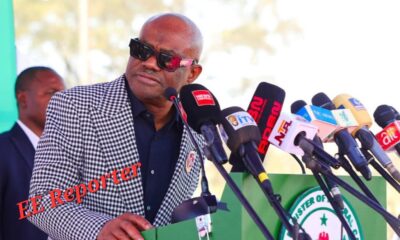









Akwa Ibom
Governor Eno Flags Off 2026 Akwa Ibom Sports Festival, Pledges More Investment in Talent Development

Governor Eno Flags Off 2026 Akwa Ibom Sports Festival, Pledges More Investment in Talent Development
Akwa Ibom State Governor, Pastor Umo Eno, has flagged off the 2026 edition of the Akwa Ibom State Sports Festival, reaffirming his administration’s commitment to investing in sports as a platform for discovering, nurturing and promoting young talents.
Governor Eno stated this on Tuesday in Uyo during the opening ceremony of the festival, where he was represented by the Deputy Governor, Senator Akon Eyakenyi.
Eereporter.com
The Governor described the State Sports Festival as an important platform for identifying emerging sporting talents, noting that athletes discovered during the 2025 edition went on to distinguish themselves at national and international competitions.
He assured young athletes in the state of continued government support, stressing the importance of creating opportunities for them to discover and develop their sporting abilities.
As part of the ceremony, Governor Eno honoured three Akwa Ibom athletes who won medals at the recent Commonwealth Games in Glasgow, Scotland.
The honoured athletes are gold medallist Edidiong Umoafia and silver medallist Ruth Nyong, both in weightlifting, as well as bronze medallist Enku Ekuta, who competed in judo.
In another move aimed at strengthening grassroots sports development, the Governor directed the Commissioner for Sports to revive inter-house sports competitions in schools across the state.
According to him, the competitions would provide an avenue for discovering and developing new sporting talents.
“We must also invest in the future of sports. That is why I directed the Commissioner for Sports to revive inter-house sports competitions. This competition would help us to develop and discover new stars. We should revisit the good old days.”
Representing the Governor, the Deputy Governor also announced that the state government would soon award the contract for the construction of a Sports Academy in Eket.
She said the proposed academy would provide a structured environment for identifying, training and grooming sporting talents in the state.
Earlier, the Commissioner for Sports, Elder Paul Bassey, described Governor Eno as a sports-loving governor and commended him for approving the 2026 edition of the State Sports Festival.
Bassey recalled that the 2025 edition produced athletes who subsequently represented Nigeria at international competitions, including the Commonwealth Games, where they won medals.
He also commended the Governor for approving automatic employment in the Akwa Ibom State Civil Service for the athletes in recognition of their achievements.
In separate goodwill messages, the Chairman of Uyo Local Government Area and Chairman of the Association of Local Governments of Nigeria (ALGON), Hon. Uwemedimo Udo, alongside Supervisors for Sports from the various local government areas, pledged the support of the 31 local government councils towards the successful hosting of the festival.

Akwa Ibom Sports Festival
The opening ceremony featured a colourful march-past by contingents from the 31 local government areas, led by their respective council chairmen.
A total of 27 sporting disciplines are being contested by athletes representing the 31 local government areas, with competitions taking place at 10 designated venues within Uyo and its environs.
Eereporter.com
Economy
Full Details: Umahi Receives NANS Assessment Reporter on Federal Roads across North-West Zone

Full Details: Umahi Receives NANS Assessment Reporter on Federal Roads across North-West Zone
The Honourable Minister of Works, Engr. David Umahi, CON, FNSE, FNATE, has received an assessment report by the National Association of Nigerian Students (NANS) on Federal Government road infrastructure projects inspected across the North-West Zone.
Eereporter.com
The report was presented to the Minister at the Ministry’s Conference Hall, Mabushi, Abuja, by the President of NANS, Comrade Akinteye Babatunde Afeez. The assessment followed a nationwide student-led inspection initiative aimed at enabling Nigerian students to obtain first-hand information on the progress, quality and relevance of Federal Government infrastructure projects.
Upon receiving the report, Minister Umahi commended NANS’s leadership and the participating student representatives for embarking on the tour, describing the initiative as a responsible demonstration of youth participation in national development. He reiterated that the Federal Ministry of Works welcomes constructive assessments from students, civil society organisations and other stakeholders, noting that such engagements provide the Ministry with unbiased feedback on projects and help identify areas requiring further attention.
According to him, the Ministry has continued to open its project sites to stakeholders and independent observers to enable them to assess ongoing and completed projects and gain a better understanding of the scope, quality and progress of work being undertaken by the Renewed Hope Administration of His Excellency, President Bola Ahmed Tinubu, GCFR.
Engr. Umahi assured that the Ministry would carefully study the observations and recommendations contained in the NANS report and take appropriate action, where necessary. He specifically directed relevant Directors in the Ministry to note the students’ recommendations on access roads and pedestrian safety around educational institutions, including the request for a pedestrian bridge at the Federal Cooperative College area of Kaduna.
The Minister also assured the students that their concerns regarding roads serving universities, polytechnics, colleges of education and surrounding communities would receive appropriate attention within the Ministry’s mandate. He noted that road infrastructure is critical to education, commerce, agriculture and the movement of people and goods, stressing that the Federal Government remains committed to improving connectivity across the country.
Speaking on the broader national conversation surrounding the Renewed Hope Agenda, Umahi stressed the importance of assessing government policies and their implementation through facts, projects and measurable outcomes. He also encouraged stakeholders, including state governments and citizens, to engage constructively on issues affecting their communities. He highlighted the Ministry’s community engagement, sensitisation and mobilisation structure, which is intended to showcase infrastructure projects as catalysts for national integration and development.
On the thorny subject of fuel subsidy removal and its implications for governance, the Minister underscored the need for citizens to examine how changes in government revenues and fiscal space are being reflected in public services and social interventions. Stakeholders were encouraged to engage their respective state governments on how additional revenues are being utilised for the benefit of citizens.
Engr. Umahi recognises that roads are more than engineering structures. Their condition directly affects the movement of people and agricultural produce, access to schools and healthcare facilities, transportation costs, trade, security and the wider economic life of communities.
Presenting the report, the NANS President, Comrade Akinteye Babatunde Afeez, disclosed that the students embarked on the inspection tour because they considered roads leading to educational institutions an important component of the infrastructure required to support access to education.
He said the North-West leg of the exercise covered major road projects across Kano, Kaduna, Jigawa, Katsina, Sokoto and Zamfara States. Among the projects inspected, according to NANS, were the Kano Northern Bypass; Kano–Kwanar Danja–Hadejia Road; Kano–Maiduguri Expressway; Dualisation of Kano–Katsina Road; Kaduna–Zaria–Kano Expressway; Zaria-Funtua–Gusau-Sokoto Road; Kaduna (Mando)–Birnin Gwari Road; Kaduna–Pambegwa–Jos Road; and other Federal road projects across the zone. On the Reconstruction of Kaduna (Mando)–Birnin Gwari Road, the students described the project as strategically important to interstate connectivity and access to communities and educational institutions.
Comrade Babatunde said the delegation observed that several of the roads inspected have a direct impact on students by improving access to campuses, reducing travel difficulties, and strengthening connectivity between educational institutions and surrounding communities.
He commended the quality and scale of work observed at several project sites, particularly the detailed attention given to road pavement construction, the adoption of continuous reinforced concrete pavement (CRCP) technology, drainage infrastructure, subgrade preparation, and the installation of solar-powered streetlights along selected corridors.
The NANS President, however, revealed that the students identified areas where additional interventions could further enhance the impact of some projects. Among the recommendations contained in the report was the provision of pedestrian infrastructure around educational institutions located close to major highways, as well as the construction and improvement of access roads linking some major Federal highways to citadels of learning. He stated that NANS would continue to undertake similar assessment exercises in other parts of the country and communicate its findings to the Ministry.
The Senior Special Assistants to the President (SSA-P) on Community Engagement representing the six geopolitical zones used the occasion to call on Nigerians, traditional institutions, community leaders, youth organisations and other stakeholders to support and participate in the Federal Government’s infrastructure engagement initiative.
They highlighted the long-standing challenges associated with neglected road corridors across the country and noted the importance of ongoing rehabilitation, reconstruction, expansion and completion of strategic routes to improve connectivity, security and socioeconomic activities.

Umahi
The Community Engagement teams are expected to serve as a bridge between the Ministry and communities by taking information about infrastructure development to the people, while bringing citizens’ observations, concerns and feedback to the Ministry’s attention. Speaking, the SSA-P, Community Engagement, North-West Zone, Abdullahi Tanko Yakasai, commended the students for visiting project sites and engaging with communities and road users.
Yakasai said the exercise provided an opportunity for the students to see ongoing infrastructure projects firsthand and communicate their observations to the Federal Government.
He commended the Federal Ministry of Works for facilitating access to the project sites and urged the students to continue providing constructive feedback on Federal Government projects across the country.
In his closing remarks, the Director Overseeing the Office of the Permanent Secretary (DOOPS), Alhaji Aminu Ahmed, commended the Minister for his commitment to the Ministry’s mandate and his sustained attention to infrastructure delivery and stakeholder engagement.
He thanked the NANS delegation for the initiative and for taking the time to inspect ongoing projects. He underscored the importance of collaboration among the political leadership, career officials, technical personnel, and external stakeholders in delivering and communicating the Ministry’s mandate.
The DOOPS guaranteed the students that their observations would be handled appropriately. He commended the students for their interest in infrastructure development and their commitment to contributing to national development through on-the-spot assessment and constructive engagement.
Ultimately, the impact of road infrastructure development is measured not only in the number of kilometres constructed or rehabilitated, but also in how effectively roads improve connectivity, facilitate economic activity and ease movement for the people who depend on them.
This initiative, therefore, seeks to position citizens and communities as active participants in understanding, monitoring, and communicating the impact of federal infrastructure development.
Mohammed A. Ahmed
Director, Information and Public Relations.
23 September, 2026.
Eereporter.com
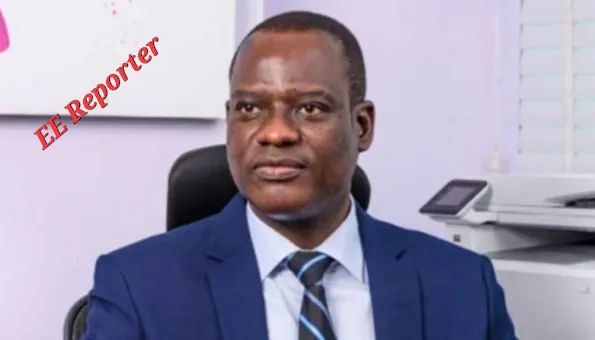
Finance Minister Oyedele Calls for Affordable Capital to Finance Africa’s Infrastructure
The Minister of Finance and Coordinating Minister of the Economy, Taiwo Oyedele, has called on the international community to scale up the availability of affordable capital to finance infrastructure and development across Africa.
Eereporter.com
Oyedele made the call while addressing the United Nations Dialogue on Solutions to Climate Finance on the margins of the 81st Session of the United Nations General Assembly in New York.
He said Africa’s development ambitions, particularly its energy needs, continue to be constrained by high financing costs, currency risks and limited access to affordable long-term capital.
The Minister explained that despite Africa’s relatively low contribution to global carbon emissions, the continent continues to face what he described as a “prejudice premium” and “narrative cost” in its efforts to mobilise financing for critical infrastructure.
He also identified currency risk and what he termed “stereotype tax” as additional burdens confronting African countries as they seek to raise capital for critical energy and other development assets.
Oyedele therefore called for a strategic shift in the approach to climate finance, with simpler access to affordable capital for developing countries and financing arrangements that better reflect their development realities.
He also urged the international community to scale up investment in gas and other transition energy sources, particularly in Africa, to expand access to reliable and affordable energy and help address global energy poverty.
According to him, greater investment in Africa’s energy sector would also help diversify global energy supply and reduce concentration risks, particularly amid disruptions affecting the Gulf region.
The Minister stressed that Africa’s energy transition must take account of the continent’s significant energy-access deficit, noting the need for greater investment to enable countries to meet their development needs while pursuing a practical transition to cleaner energy sources.

Taiwo Oyedele
For Nigeria, Oyedele said the immediate priority was to structure and implement policies and programmes that would reduce poverty, expand economic opportunities and accelerate the distribution of shared prosperity.
He said achieving these objectives would require stronger international cooperation and a financing framework that enables developing countries to mobilise the capital required to invest in infrastructure and improve the lives of their people.
Efe Ovuakporie Head information and PR
23rd September, 2026
Eereporter.com
-
 Crime1 year ago
Kogi Assembly Considers Law To Regulate Rent, Establish Control Board: Tenancy Law
-

 News1 year ago
Atiku Reveals Why He Failed To Pick Wike As Running Mate In 2023
-

 Akwa Ibom2 years ago
The Apostolic Church Gets New Territorial Chairman, Exco
-

 Crime2 years ago
Federal High Court Jails 2 For Vandalizing Transformer, Telecom Mast In Kogi
-
 News2 years ago
The Apostolic Church Gets New National President, Executive
-
 Akwa Ibom2 years ago
Umo Eno Commences Payment Of 80,000 Naira Minimum Wage With Arrears
-

 News2 years ago
Senator Natasha Returns To Senate With Husband Amid Seat Dispute
-

 Economy1 year ago
Kiyosaki: Is Tinubu’s Government Afraid Of Ibrahim Traore?