
Economy
FG Pushes Ahead With Strategic Road Projects In Borno Despite Insecurity

FG Pushes Ahead With Strategic Road Projects In Borno Despite Insecurity
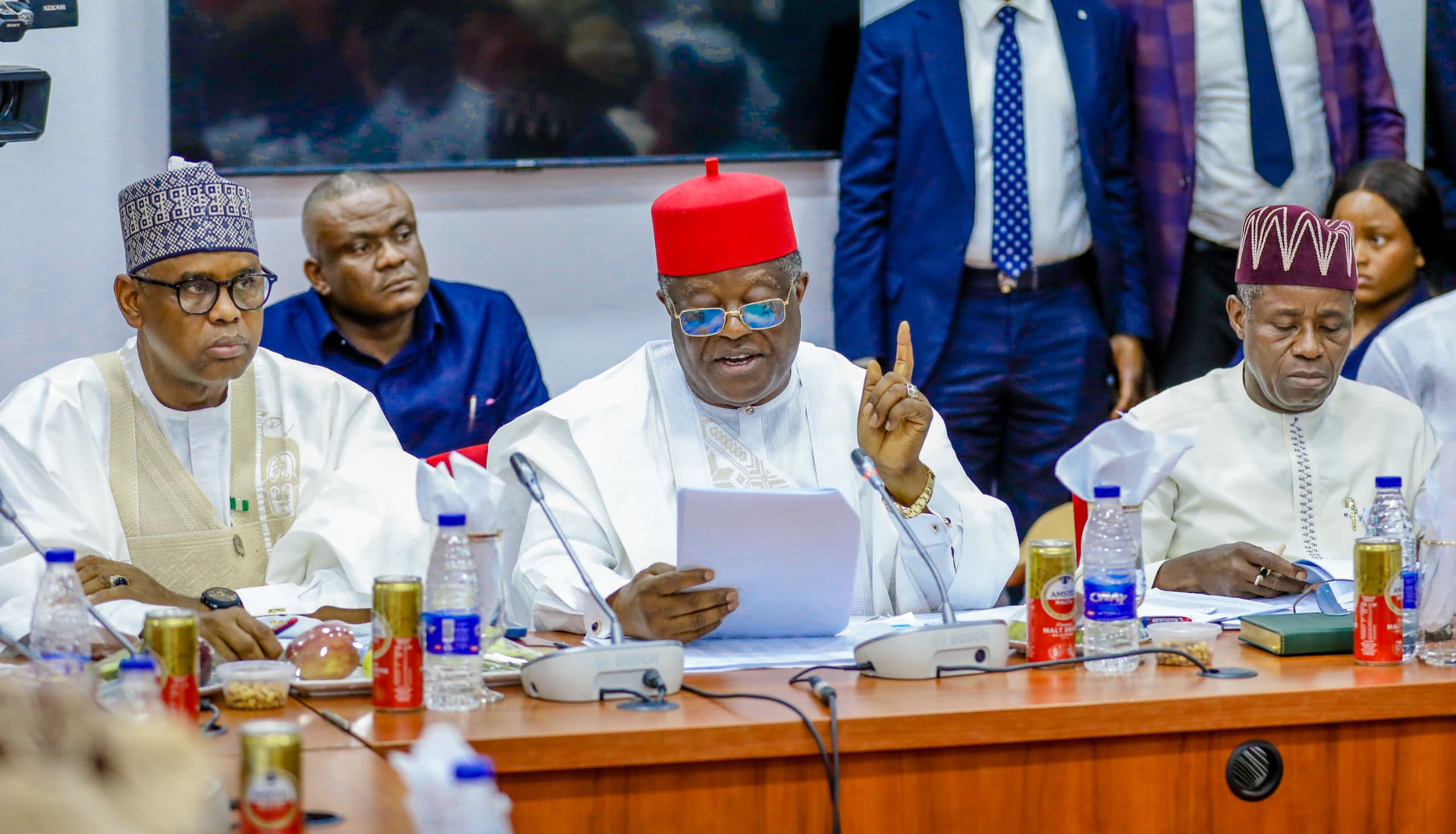
FG pushes ahead with strategic road projects in Borno despite insecurity. The Federal Ministry of Works has restated its avowed intention to rehabilitate the Maiduguri–Monguno Road (Section I) in Borno State, as work progresses steadily despite prevailing security and logistical challenges.
As the nationwide media tour of the North East Zone continues, the Federal Controller of Works in the State, Engr. Salihu Adamu assured Nigerians that the project will be completed despite persistent security and logistical constraints. “The biggest challenge faced by the contractor is insecurity.
There are pockets of attacks on the highways, and this has forced them to take longer and safer routes to source construction materials,” he stated, while addressing the media at the project site in Maiduguri.
The project was initially awarded in 2018 to QUMECS (Nigeria) Limited at a contract sum of ₦21.73 billion, traversing 105.6 kilometres. Following a technical review and scope adjustment, the project was revised to incorporate a flexible pavement structure with asphaltic concrete shoulders, bringing the current contract sum to ₦28.37 billion to reflect prevailing realities and enhanced engineering specifications.
Phase 1 of the project covers 30 kilometres. Significant progress has been recorded, with approximately 5.8 kilometres completed up to binder course level and about 8 kilometres of stone base executed.
Clearance works have also extended beyond 15 kilometres, while shoulder construction is ongoing, in line with the Ministry’s revised policy, which replaces surface dressing with asphaltic concrete shoulders to provide stronger structural protection for the carriageway and enhanced pavement durability.
As security remains the major constraint on the Maiduguri–Monguno corridor, Borno State continues to operate under emergency conditions, with base and sub-base laterite sourced from Ngamdu near the Yobe State border (about 150 km away). And stone materials hauled from as far as Shira town in Bauchi State (approximately 450 km) due to restricted access and security considerations like the ban on the blasting of rocks in the state.
The Project Manager for the company, Engr. Bukar Kadai, confirmed that the contractor remains fully mobilised on site with two active teams handling shoulder construction and stone base operations simultaneously, while asphalt laying is scheduled to commence following the delivery of bitumen to the site, soon.
Also speaking on the same project, the Chairman of the Nigerian Society of Engineers (NSE), Maiduguri Branch, Engr. Mohammed Shettima expressed satisfaction with the quality of work, stating that the rehabilitation will ease transportation challenges for residents and road users.
In another vein, the Chairman of the Nigeria Union of Journalists (NUJ), Borno State Council, Abdulkarim Haruna, inaugurated the completed Limited Rehabilitation of Kaga–Gubio Road, Sections I and II outside Benisheik Town, on behalf of the Honourable Minister of Works, Engr. David Umahi, CON, FNSE, FNATE. He described the road as a strategic one for economic empowerment and social inclusion.
Road Projects In Bornoĺ
He stated, “Roads are a means of empowering the people. This road connecting to Benisheik, which serves as a gateway to Maiduguri and Yobe state, is a very positive development.”
He further urged the media to continue sensitising Nigerians on ongoing infrastructure reforms and national development efforts of the administration of President Bola Ahmed Tinubu, GCFR.
The FCW described the Kaga–Gubio Road as a critical intervention, facilitating the movement of agricultural produce into Maiduguri and other parts of the zone, strengthening commercial activities within the corridor.
He explained that the project forms part of a broader emergency and special works designed to safeguard existing infrastructure, improve mobility, and support economic stability in areas facing security challenges.






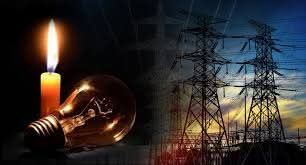
President Tinubu Complains Of Blackout At Plateau Airport During Condolence Visit
Blackout at Plateau airport. Amnesty International berated Mr Tinubu for failing to protect lives.
President Bola Tinubu, on Thursday, lamented the blackout at Plateau airport during a condolence visit to the state over the Palm Sunday attack that left at least 30 people dead.
“Please be seated,” Mr Tinubu said. “You have no light at the airport, and I have to fly back within the next 10 minutes.”
The president, who limited his visit to just the airport, met with the families of Anguwan Rukuba attack victims and other political stakeholders in the state.
“To the victims, there’s nothing I can give you, whether money in billion, but promise you this experience will not repeat itself,” Mr Tinubu said.
Against the backdrop of the attack on Anguwan Rukuba, People Gazette reported that at least 119 people have been k1lled in various coordinated attacks in Plateau State.
Frequent attacks and the surging death toll have sparked reactions and public outrage from within and outside Nigeria, with many berating Mr Tinubu’s government for failing in its core responsibility of protecting life and property.
Citing the Palm Sunday attack and others recorded in Plateau State in recent times, Amnesty International berated Mr Tinubu for “failing to protect lives.”

Electricity
“With the death toll from the Palm Sunday attack in central Nigeria surpassing 30 people, the Nigerian authorities must investigate the inexcusable security lapses that enabled the horrific attack by gunmen on motorbikes on Anguwan Rukuba community of Jos North LGA of Plateau State.
“The area, nature of the attack and timing show how increasingly vulnerable people are to being k1lled anywhere and anytime. More dead bodies are still being found and conveyed to the morgue. Plateau State is increasingly becoming unsafe,” Amnesty International said in a statement on Tuesday.
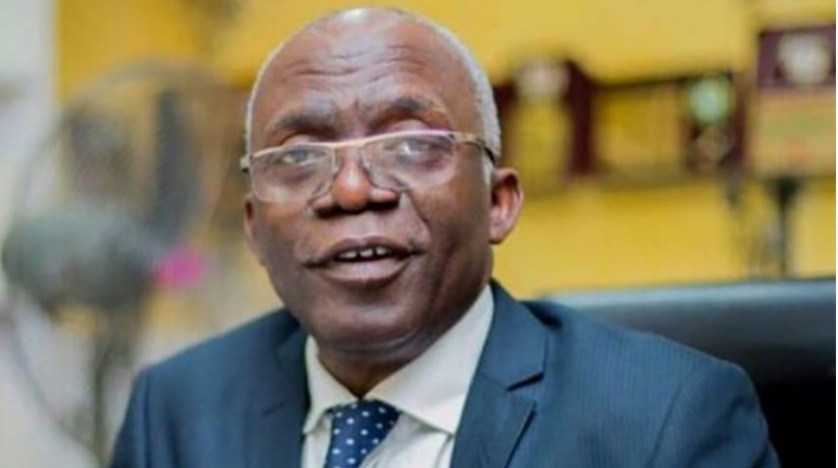
Restructuring: Femi Falana Advises FG To Give Oil Blocs To States, LGs, Not Individuals
Femi Falana advises FG. Mr Falana alleged that individuals have become dangerously rich, not because they are hardworking.
Legal luminary Femi Falana has urged the federal government to give oil bloc licenses to state governments rather than individuals, so they can better perform their responsibilities, including the payment of salaries to civil servants.
Speaking during the 5th Comrade Yinka Odumakin Memorial Lecture on Thursday in Ikeja, Lagos State, on the topic, “Can Nigeria’s Democracy Work Without Restructuring?”, Mr Falana alleged that individuals have become dangerously rich not because they are hardworking.
Mr Falana said, “You take oil resources from the Niger Delta, and you give licenses of oil blocs. You don’t know they give oil blocs to themselves? The owners of oil blocs are the richest people in Nigeria. There’s a lady in Lagos, they say she’s the richest lady in Africa, why? She has an oil bloc, not that she’s more hardworking than your mother, no.
“There is a general, a pensioner, he’s the richest pensioner in Africa, he has an oil bloc. In fact, in his own case, they don’t invest in oil bloc, they just take it offshore, and sell the licenses to the Chinese or Europeans, then he’ll come home, a multi-billionaire.”
Femi Falana
Alleging that state governments do not want to control their resources but privatise them, Mr Falana recalled that, “when state governments could not pay salaries, I asked the FG, why are you giving oil blocs to individuals? Give them to states and local governments. Today, more and more people are becoming dangerously rich at the expense of all of us.”
According to Mr Falana, those who have oil blocs are now being given licenses to mine solid minerals, adding that many communities are now being degraded by those who are mining mineral resources.
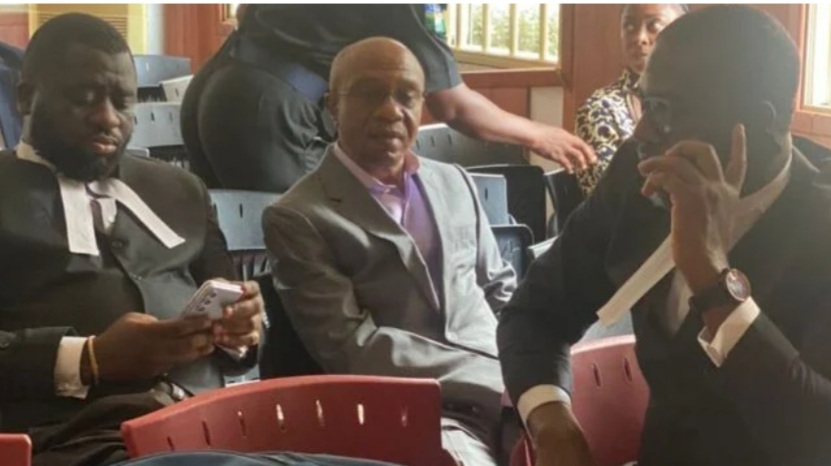
Court: Emefiele Violated CBN Act in Naira Redesign Exercise-Witness
Naira redesign. The Seventh Prosecution Witness, PW7, Chinedu Eneanya, in the trial of the former governor of the Central Bank of Nigeria, CBN, Godwin Ifeanyi Emefiele on Wednesday, April 1, 2026, told Justice Maryanne Anineh of the Federal Capital Territory High Court, Maitama, Abuja, that Emefiele violated the provisions of the CBN Act in the 2022 naira redesign exercise.
Emefiele is being prosecuted by the Economic and Financial Crimes Commission, EFCC, on a four-count charge, bordering on the alleged unlawful printing of new naira notes.
Testifying under cross-examination by defence counsel, Olalekan Ojo, SAN, at Wednesday’s proceedings, the witness disclosed that “the investigation conducted by the team showed that the defendant disobeyed the provisions of the CBN Act, 2007. The Central Bank must have board recommendations before the currency is redesigned.”
Further in his testimony, the witness disclosed that Emefiele presented three sample designs of the proposed naira notes in the denominations of N1000, N500 and N200, which were approved by the President.
“The president approved on the 11th page and directed that the design be done locally. However, investigation showed that what was eventually produced was not what was presented to the president,” he said.
The witness also disclosed that the original design of the old naira notes was handled by De La Rue, a UK-based company.
On whether the EFCC invited members of the CBN Board of Directors or its Committee of Governors during the investigation, Eneanya stated that the Commission obtained the statement of the official in charge of the Apex Bank’s Corporate Secretariat.
Earlier in the cross-examination, the witness identified Exhibit N1 to be the statement made by Ahmed Aliyu, Managing Director of the Nigeria Security Printing and Minting Company Limited, NSPMC
When asked if his investigation uncovered any contradiction in the content of Page six of Exhibit N1, the witness stated that the printing of the naira notes had been carried out locally before the investigation commenced. He also confirmed that the Central Bank of Nigeria paid NSPMC for the production of the currency.

Emefiele
Under re-examination, prosecution counsel, Abbas Mohammed, sought clarification on whether the President’s directive related to the design or production of the currency to which the witness stated that the redesign of the naira notes was carried out and given to President Buhari to approve.
“Investigation shows that the design of the currency was already shown to the president and it was approved,” the witness explained.
Justice Anineh thereafter adjourned the matter till May 11, 2026 for continuation of trial.
-
 Crime11 months ago
Kogi Assembly Considers Law To Regulate Rent, Establish Control Board: Tenancy Law
-

 News1 year ago
Atiku Reveals Why He Failed To Pick Wike As Running Mate In 2023
-
 Akwa Ibom1 year ago
The Apostolic Church Gets New Territorial Chairman, Exco
-

 Crime1 year ago
Federal High Court Jails 2 For Vandalizing Transformer, Telecom Mast In Kogi
-
 News1 year ago
The Apostolic Church Gets New National President, Executive
-
 Akwa Ibom1 year ago
Umo Eno Commences Payment Of 80,000 Naira Minimum Wage With Arrears
-

 News1 year ago
Senator Natasha Returns To Senate With Husband Amid Seat Dispute
-
 Economy11 months ago
Kiyosaki: Is Tinubu’s Government Afraid Of Ibrahim Traore?