
News
EFCC Boss Olukoyede Calls For All-inclusive Efforts In AML/CFT Framework Implementation

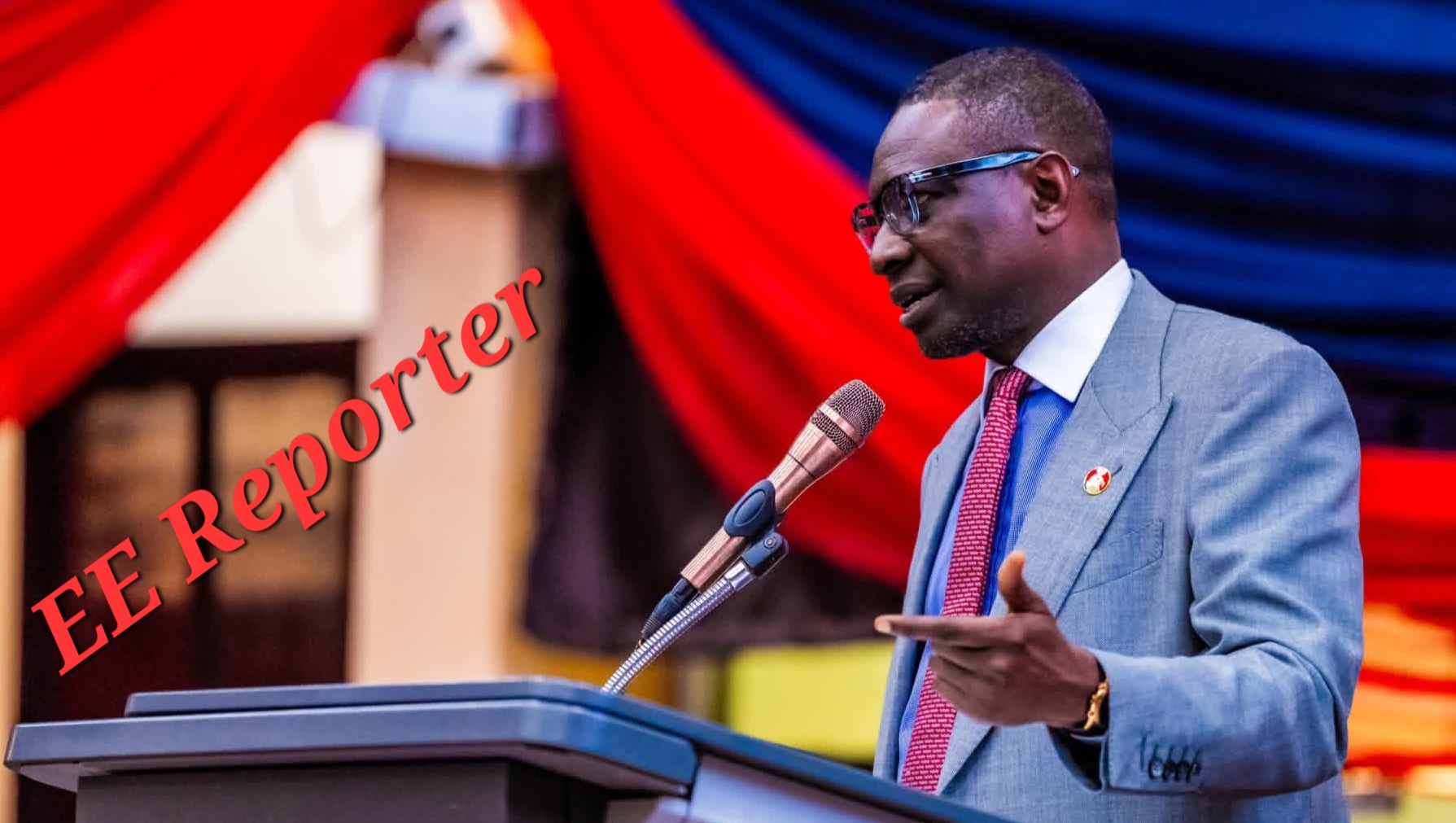
EFCC Boss Olukoyede Calls For All-inclusive Efforts In AML/CFT Framework Implementation
The Executive Chairman of the Economic and Financial Crimes Commission, EFCC, Ola Olukoyede, has called for all-inclusive efforts in the implementation of the Anti-Money Laundering and Counter-Terrorist Financing, AML/CFT framework, noting that it is the only way to defeat the twin scourges of money laundering and terrorism financing in Nigeria and beyond.
Eereporter.com
He made the observation in Abuja, at the opening ceremony of the Third African High Level Civil Society Anti-Money Laundering and Counter-Terrorist Financing AML/CFT, Conference 2026, at the Abuja Continental Hotel.
According to him, responding effectively to the threats posed by terrorism and money laundering requires not only robust legal and institutional frameworks but strong partnerships, built on trust, dialogue, and shared responsibility.
Olukoyede, who was represented by the Director, Special Control Unit against Money Laundering, SCUML, Deputy Commander of the EFCC, DCE Harry Erin, appreciated the participants from across the African Continent in the four day event, which runs from July 14–17 for their “unwavering commitment to transparency, accountability, humanitarian service, and contribution to sustainable development, growth and stability of Nigeria.”
He thanked representatives of African governments, Financial Intelligence Units, law enforcement agencies, regulatory authorities, civil society organizations, the non-profit sector, development partners, academia, and the private sector for their tireless efforts in working together to rid Africa of terrorism financing.
Speaking on the theme of this year’s conference, “Implementing FATF Recommendation Correctly: Practices, Lessons Learned and Opportunities for Reform,” he noted that the world continues to confront evolving threats from terrorist financing, violent extremism, transnational organized crimes, and illicit financial flows.
“These threats undermine peace, weaken democratic institutions, discourage investment, and divert scarce resources away from development priorities,” he said.
He clarified that the Financial Action Task Force Recommendation Eight, R8, was not about regulating or restricting all non-profit organizations, but a call on countries to identify the set of organizations that may be vulnerable to terrorist financing and to apply focused, proportionate and risk-based measures.
“Equally important, countries are expected to protect legitimate charitable and humanitarian activities from unnecessary disruption. This balanced approach is especially significant for Africa. Civil society organizations remain indispensable partners in delivering humanitarian assistance, promoting education, improving healthcare, supporting internally displaced persons, empowering women and young people, and responding to conflicts and natural disasters. They are not merely stakeholders in our AML/CFT framework; they are partners in safeguarding peace, resilience, and sustainable development,” he said.
According to the EFCC boss, Nigeria’s experience with R8 was best achieved through collaboration rather than confrontation.
“In recent years, Nigeria has undertaken far-reaching reforms to strengthen its AML/CFT framework, guided by the principles of partnership, evidence-based policymaking, and continuous stakeholder engagement”, he said, revealing that Nigeria successfully conducted a comprehensive National Terrorist Financing Risk Assessment of the Non-Profit Sector, which he disclosed was through teamwork and collaboration of inter-agency framework involving EFCC’s SCUML, the Nigerian Financial Intelligence Unit, NFIU, the Office of the National Security Adviser, ONSA, the Corporate Affairs Commission, CAC, other relevant government institutions and civil society organizations.
He stated that the assessment enabled Nigeria to move beyond broad assumptions to a more targeted understanding of terrorist financing vulnerabilities and that it strengthened Nigerian’ ability to identify organizations genuinely at risk of abuse, while ensuring that the overwhelming majority of legitimate non-profit organizations can continue their vital work without unnecessary regulatory burdens.
According to him, the experience reinforced an important lesson of effective implementation of FATF R8 which he said depends on trust. “Trust between regulators and civil society. Trust between governments and development partners. Trust built through transparency, consultation, information sharing, and mutual respect,” he said.
Speaking further, he explained that as Africa prepares for a new cycle of Mutual Evaluations, “we have an opportunity to learn from one another. This conference provides an important platform to exchange practical experiences, identify implementation challenges, showcase successful reforms, and strengthen regional cooperation. The lessons we share here can help shape more effective, context-specific approaches that reflect Africa’s realities while remaining fully aligned with international standards,” he said.
He pledged the commitment of the Commission in working with all stakeholders to strengthen Nigeria’s AML/CFT regime and to support continental efforts aimed at protecting the integrity of the financial system while preserving the legitimate role of civil society.
In her welcome address, the Executive Director, Spaces for Change|S4C West Africa, Victoria Ibezim-Ohaeri, noted that July 15, 2026, marked the 10th year anniversary of AML/CFT advocacy in Nigeria, noting that advancing R8 has been a rough ride.
“When we started engaging this issue, regarding implementing R8 correctly, ensuring that counter-measures do not hamper charitable operations, the debates were hard, tough and difficult, with governments and NPOs being very defensive. Our initial report, “Unpacking the Official Construction of Risks and Vulnerabilities for the Third Sector in Nigeria’ received a lot of pushback.”
She praised the EFCC for the first ever dialogue between NPOs and the AML/CFT security architecture in Nigeria, organised in April 2019 adding that traditional CSO-NPO dialogues have been sustained till date.
According to her, Spaces for Change has successfully worked with four SCUML directors over the years, whom she said made it possible for moving together from diagnosis to action and to the consolidation of progress made.
The Chairman, Board of Trustee, Spaces for Change, Samuel Diminas in his remarks disclosed that Africa is being drained by illicit financial flows to the tune of over $88 billion, annually. This, according to him, is despite the efforts of stakeholders in the last 10 years in strengthening AML/CFT frameworks. “These are not abstract numbers. They represent schools that remain unbuilt, hospitals left unequipped, and opportunities denied to millions,” he said.
He commended EFCC’s SCUML, and other stakeholders for their support and unflinching collaboration, noting that, “When government and civil societies converge under one roof, we send one clear message: tackling illicit finance in Africa demands collective action.”

Ola Olukoyede
He expressed confidence in collaborative efforts at tackling terrorist financing and money laundering, stating that it’s only through joint effort that far-reaching results can be achieved.
“So, our task this week is twofold: to strengthen the integrity of our financial systems and to safeguard the civic space that holds those systems accountable. A strong civil society is Africa’s early warning system against abuse of power, corruption, and illicit finance,” he said.
Diminas assured that in the four days event, stakeholders are going to move from diagnosis to action. “We will share practical solutions that help governments, regulators, law enforcement agencies, the private sector, especially financial institutions, as well as non-profits to comply with FATF Recommendation 8.
We will build trust between regulators, financial institutions, and civil society,” adding that compliance works best when it is collaborative, not adversarial.
Eereporter.com












Nigeria Police Arrest Suspects Over Obi’s Convoy Blockade in Benue
The Benue State Police Command has arrested some people in connection with the blockade of the convoy of the presidential candidate of the Nigeria Democratic Congress, Peter Obi, on Tuesday.
Eereporter.com
The Commissioner of Police, Cletus Nwadiogbu, who disclosed this at a press conference held in Makurdi on Wednesday, did not give the number of those arrested.
According to the CP, the police officers deployed for the visit of the former governor of Anambra State acted in a professional and tactical manner to avoid an escalation that could have resulted in loss of lives and destruction of property.
While stating that the tactical decision taken by the command should not be mistaken for inaction, the CP said that Obi was subsequently safely escorted back to the airport.
“Unfortunately, Mr. Obi’s movement was obstructed by a group of persons, creating tension and a situation that could have degenerated into violence.
“At that point, the Police took a professional and tactical decision to avoid an escalation that could have resulted in loss of lives and destruction of property. Mr. Obi was subsequently safely escorted back to the airport and departed the state peacefully.
The police boss, who said that the command remained a neutral and professional institution, added that every Nigerian has the right to freedom of movement, irrespective of political affiliation, status or personal belief.
“No individual or group has the right to unlawfully obstruct another person’s movement,” he said.

Peter Obi
The command assured the public that all those found culpable would be dealt with in accordance with the law.
He urged members of the public to remain calm and allow the police to conclude their investigation.
Eereporter.com
News
ICPC, NCS Advocate for a Robust Collaborative Framework to Safeguard Public and National Revenue
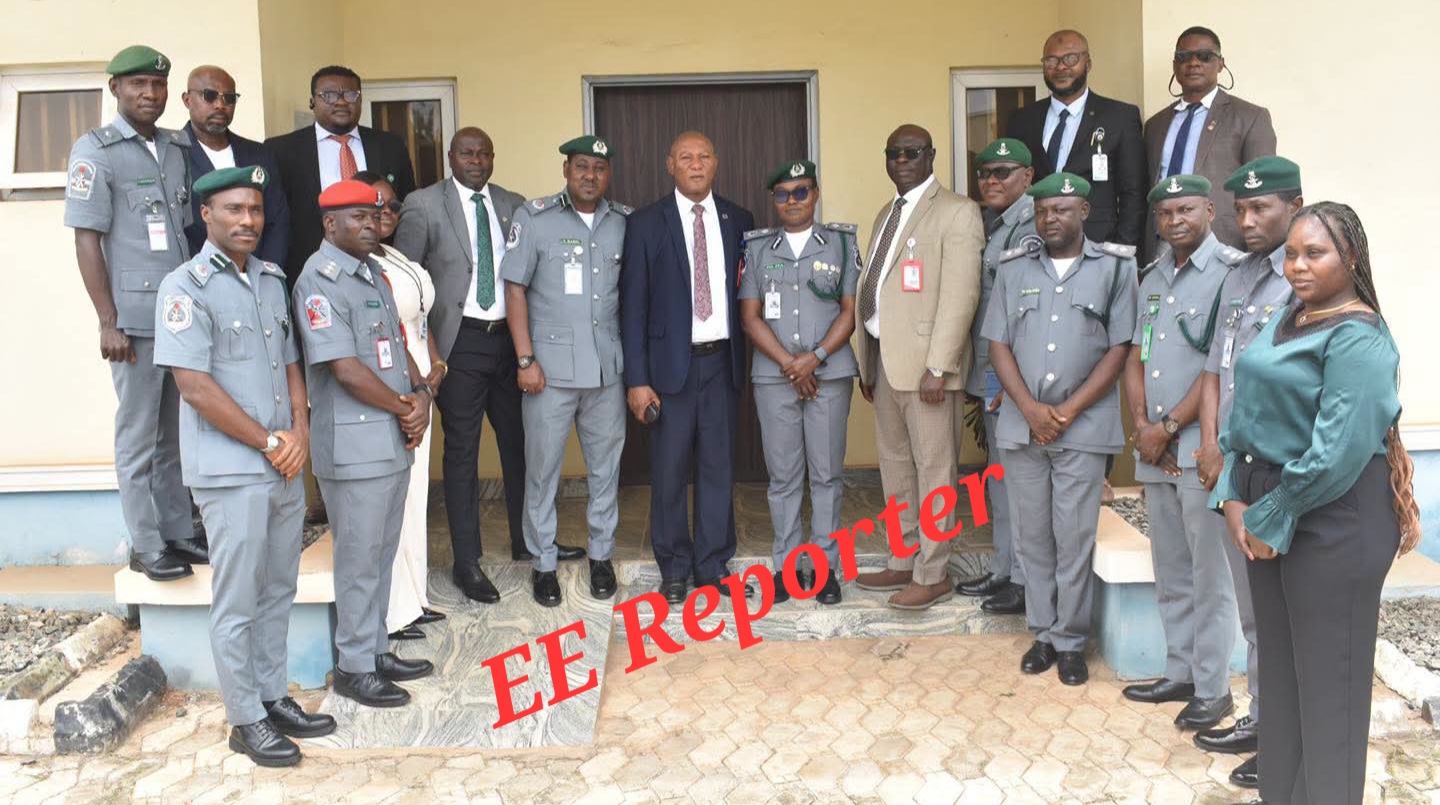
ICPC, NCS Advocate for a Robust Collaborative Framework to Safeguard Public and National Revenue
The Independent Corrupt Practices and Other Related Offences Commission (ICPC) has underscored the critical necessity of integrity within the Nigeria Customs Service (NCS), advocating for a robust collaborative framework to protect public revenue and bolster governmental trust.
Eereporter.com
The Commission articulated this stance during a high-level courtesy visit from the newly appointed Customs Area Controller for the Ondo/Ekiti Command, Deputy Comptroller Patience O. Ita, at the ICPC’s Ondo State headquarters in Akure.
During the meeting, the Resident Anti-Corruption Commissioner (RACC) for Ondo and Ekiti States, Mr. Tiku Andrew Menge, stressed that the NCS’s pivotal role in border management, enforcement, and trade facilitation renders ethical conduct paramount.
He warned that systemic revenue leakages and the abuse of regulatory powers not only erode public confidence but also critically impair the efficacy of state institutions, creating a fertile ground for corrupt practices.
Mr. Menge elaborated on the ICPC’s holistic preventive mandate, clarifying that its remit extends well beyond the investigation and prosecution of graft; further noting that the Commission is actively engaged in identifying systemic vulnerabilities and reinforcing institutional controls, thereby fostering an environment where corrupt activities are intrinsically difficult to initiate or sustain.
Highlighting the transformative potential of modernisation, the RACC advocated for the integration of technology, automation, and data-driven processes within Customs administration.
He explained that such advancements could significantly enhance traceability and accountability by curbing discretionary human intervention, though he cautioned that these measures must be underpinned by ethical leadership, rigorous supervision, and robust internal controls.
In a salient clarification, Mr. Menge asserted that the objectives of corruption prevention and trade facilitation are not mutually exclusive but are, in fact, symbiotic. He argued that transparent and predictable Customs processes effectively diminish the appeal of informal channels, thereby cultivating a more reliable and secure environment for legitimate commercial ventures.
Proposing a strategic roadmap for future collaboration, the Commissioner suggested that both agencies could benefit from practical engagements in corruption-risk identification, integrity sensitisation, and stakeholder dialogue.
He emphasised that such cooperation should be guided by the overarching public interest, rather than fostering a hierarchical dynamic where one institution supervises the other, but rather leveraging their respective mandates for a common good.
In her response, Deputy Comptroller Ita affirmed that her visit was primarily to establish a constructive working relationship following her recent deployment.

ICPC, Customs
She expressed her command’s unequivocal readiness to sustain engagement with the Commission on matters of mutual concern, particularly in the realms of compliance, enforcement, and the effective administration of public services.
However, Mr. Menge concluded with a firm caveat, reminding all parties that collaborative ventures must not compromise the statutory independence of either institution.
His parting words served as a stark reminder of the fundamental principles underpinning their shared mission: “Partnership creates trust; it does not create immunity.”
Eereporter.com

High Court: Five Bag Seven-year Jail Term in Lagos Over N117million Fraud
Justice K.A. Jose of the Lagos State High Court sitting in Tapa, Lagos, on Thursday, September 3, 2026, convicted and sentenced five persons to seven years imprisonment for their involvement in a N117.7 million fraud involving Chi Limited.
Eereporter.com
The convicts: Yinka Salawu, Joshua Oluremi Daramola, Raji Ahmed, Afolabi Israel Olusegun, and Muraina Olanrewaju Abdullahi, were prosecuted by the Lagos Zonal Directorate 1 of the Economic and Financial Crimes Commission (EFCC) on a six-count charge bordering on conspiracy to obtain money by false pretence, obtaining money by false pretence, and forgery.
One of the counts reads:“that you, Yinka Salawu (aka Mr. Yinka James Christopher), Tinuke Olayinka Salawu (aka Mrs. Yinka James Christopher), Ogbeide Kingsley Stevenson, Joshua Oluremi Daramola, Raji Ahmed, Sule Tijani Adebayo (at large), Afolabi Israel Olusegun, Muraina Olanrewaju Abdullahi, Fred Esumike (at large), and Ismaila Kareem (trading under the name and style of Ismak Ola Nig. Ltd.) (at large), sometime in 2009 at Lagos, within the jurisdiction of this Honourable Court, with intent to defraud, obtained the sum of N81,359,922.00 (Eighty-One Million, Three Hundred and Fifty-Nine Thousand, Nine Hundred and Twenty-Two Naira) from Chi Limited under the false pretence that the money was payment for goods and services you supplied and rendered to Chi Limited, which representation you knew to be false, thereby committing an offence contrary to Section 1(3) of the Advance Fee Fraud and Other Fraud Related Offences Act, 2006.”
In the course of the trial, the prosecution called 17 witnesses drawn from the EFCC, the Nigeria Police Force, banks, and Chi Limited. It also tendered several documentary exhibits to establish its case against the defendants.
At the conclusion of the trial, Justice Jose found the 1st, 4th, 5th, 6th, and 7th defendants guilty on Counts One, Two, and Three and convicted them accordingly. However, the 2nd, 3rd, and 8th defendants were discharged and acquitted.
Following the convictions, the prosecution counsel, M.S. Owede urged the court to invoke Section 11 of the Advance Fee Fraud and Other Fraud Related Offences Act and order the convicts to restitute Chi Limited, the petitioner the sums stated in counts Two and Three, totalling N117,755,061.
Owede also asked the court to order the sale of properties belonging to the 1st convict, with the proceeds paid to Chi Limited. Alternatively, he urged the court to order that the properties be forfeited outrightly to the petitioner.
In her ruling, Justice Jose sentenced each of the five convicts to seven years’ imprisonment without an option of a fine.
“The convicts will be given credit for the periods they have already spent in custody. All periods spent in prison shall be deducted from the seven-year terms imposed by the court,” the judge ruled.
On the issue of restitution, Justice Jose, relying on Section 297 of the Administration of Criminal Justice Law, ordered the convicts to restitute Chi Limited with the sums contained in the charge.

Court
“All monies already paid shall be deducted from the amounts to be restituted,” Justice Jose added.
The convicts’ journey to the Correctional Centre began when they were arrested for obtaining the sum of N81,359,922.00 (Eighty-One Million, Three Hundred and Fifty-Nine Thousand, Nine Hundred and Twenty-Two Naira) from Chi Limited under the false pretence that the money was payment for goods and services they supplied and rendered to Chi Limited.
They neither delivered the goods and services nor returned the money to the company.
Eereporter.com
-

 Crime1 year ago
Kogi Assembly Considers Law To Regulate Rent, Establish Control Board: Tenancy Law
-

 News1 year ago
Atiku Reveals Why He Failed To Pick Wike As Running Mate In 2023
-
 Akwa Ibom2 years ago
The Apostolic Church Gets New Territorial Chairman, Exco
-

 Crime2 years ago
Federal High Court Jails 2 For Vandalizing Transformer, Telecom Mast In Kogi
-

 News2 years ago
The Apostolic Church Gets New National President, Executive
-

 Akwa Ibom2 years ago
Umo Eno Commences Payment Of 80,000 Naira Minimum Wage With Arrears
-

 News2 years ago
Senator Natasha Returns To Senate With Husband Amid Seat Dispute
-

 Economy1 year ago
Kiyosaki: Is Tinubu’s Government Afraid Of Ibrahim Traore?