
Religion
Easter 2026: A Call to Return to the True Source of Faith

Easter 2026: A Call to Return to the True Source of Faith
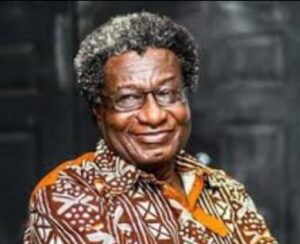
Easter Sunday 2026 will see millions of Christians gather in churches across the world, from expansive megachurch auditoriums equipped with advanced technology to modest chapels where worshippers rely on simple tools to share the experience. The celebration is marked by vibrant displays—viral social media clips, high-profile sermons, and even political references to the resurrection story.
Yet beneath the spectacle lies a deeper concern: whether modern expressions of faith have shifted focus from the core message of Easter to the personalities delivering it.
The Easter story itself is rooted in simplicity and disruption. According to biblical accounts, the resurrection of Jesus Christ occurred outside the centers of power, without ceremony or public spectacle. It was marked only by the discovery of an empty tomb and the proclamation that He had risen. This event bypassed established religious and political authorities, presenting a message that stood independent of human structures.
In contrast, contemporary Christianity often reflects a different reality. Large congregations, influential religious figures, and the blending of faith with politics have contributed to what some observers describe as a more institutionalized and personality-driven practice of religion. In this environment, followers may find themselves drawn more to individual leaders than to the foundational teachings of the faith.
This trend is not new. Early Christian writings, particularly the letters of the Apostle Paul, addressed similar divisions among believers who aligned themselves with different leaders. Paul emphasized that faith should be rooted in Christ rather than in human figures, warning against divisions that weaken spiritual focus.
The concern today is that when faith becomes closely tied to individual personalities, it can become unstable. Scandals or controversies involving prominent figures may lead to disillusionment among followers whose beliefs were closely linked to those leaders.
Easter, therefore, presents an opportunity for reflection. At its core, the celebration is about a personal encounter with the message of resurrection—one that emphasizes renewal, humility, and direct relationship with God. Biblical teachings often highlight quiet devotion, prayer, and service over public display or recognition.
This perspective encourages believers to look beyond outward expressions of faith and reconnect with its foundational principles. While communal worship and traditions remain important, the emphasis is on ensuring that these do not overshadow the central message.
The idea of “returning to the source” underscores a shift back to personal spiritual practices such as prayer, study, and acts of compassion. It highlights the belief that transformation is not tied to events or personalities but to an ongoing, individual journey of faith.
As Easter 2026 is observed, the message remains consistent: the resurrection symbolizes hope, renewal, and a direct invitation to spiritual engagement. In a rapidly evolving cultural and digital landscape, this moment offers believers a chance to refocus on the essence of their faith.
Dr. Emmanuel Usman Shehu, an Abuja-based writer, activist, and educator, presents this reflection as a call to rediscover the original meaning of Easter and to reaffirm a personal connection to its message.

EFCC Boss Olukoyede Charges Religious Leaders on Right Teaching against Corruption
The Executive Chairman of the Economic and Financial Crimes commission, EFCC, Ola Olukoyede, has called on religious leaders across the country to continually preach the right religious doctrine to their followers, especially those that pertain to corruption and its ills on the society.
Eereporter.com
He gave the charge in Abuja on Wednesday, September 23, 2026, at the 2026 second Council Meeting of the Nigeria Inter-Religious Council, NIREC, and the launch of the Anti-Corruption Interfaith Manual for religious leaders.
In his paper presentation, he stated that the theme of the event “Shared Sacred Flourishing in Nigeria,” demands that stakeholders in the anti-corruption fight must recognize that the wellbeing of Nigerians is dependent on the actions of individual citizens and that acts of corruption create division in the shared flourishing. As such, one of the most consequential contributions religious leaders can make to shared sacred flourishing, he said, is to restore the moral dignity of honest living.
Corruption, he regretted, “privatizes what is shared, converts the commonwealth into private advantage, and allows one person to flourish by making many others poorer adding that the unique role of the EFCC, therefore, is to defend the integrity of that commonwealth.”
According to him, by preaching the right religious doctrines, both Christianity and Islam can retain their distinctive beliefs and traditions while their adherents work together for peace, justice, human dignity and the wellbeing of our nation.
To ensure that worship centres play transformational roles in the lives of Nigerians, the EFCC boss disclosed that the Commission began tasking religious leaders on the need to infuse anti-corruption contents in their messages to their followers. “We have been doing this through the inter-faith framework. Over the years, we have specifically spelt out what should be the roles of religious leaders and the doctrine they need to pass down to their followers. We believe that no religion condones corruption and no faith entertains fraudulent engagements,” he stated.
Further in the endeavour, he disclosed that the EFCC over the years engaged leaders of both the Christian and Muslim faiths in fashioning an Inter-Faith Manual which captures the doctrinal positions of holy books on corruption.
“We are using this opportunity to launch the Manual which we hope our religious leaders will surely find useful in preaching anti-corruption messages to their members,” he said.
Speaking on the non-discriminatory nature and effects of corruption and financial crimes, he stated that “financial crime has no religion. Corruption has no tribe. Fraud does not become Christian or Muslim because of the identity of the person accused of committing it. When public money is stolen, both Christians and Muslims suffer. A badly equipped hospital does not first ask a dying patient where he worships. A collapsed road does not distinguish between a Christian traveller and a Muslim traveller. Unemployment does not respect denomination. Inflation does not spare one faith community. We enjoin our pastors and imams to keep faith with the manual and actively engage their members to know why corruption is heinous.”
While encouraging religious leaders to play more active roles in changing the society, Olukoyede observed that “Religious institutions have extraordinary responsibility in Nigeria’s anti-corruption struggle. The EFCC can investigate a person’s conduct. Faith communities can influence that person’s character. We can prosecute fraud. Religious teaching can cultivate honesty. We can confiscate illicit wealth. Churches and mosques can challenge the values that make society worship wealth without questioning its source. We can punish corruption after the event. Faith can help prevent it before it begins.”
In his remarks, the Executive Secretary of NIREC, Professor Cornelius Afebu Omonokhua stated that the EFCC’s preaching and teaching manual, which was launched, was facilitated as a guide for both Muslims and Christians through the Interfaith Anti-corruption Advisory Committee, IAAC.
“The Interfaith Anti-Corruption Advisory Committee, IAAC of the Economic and Financial Crimes Commission, EFCC has published the second edition of the anti-corruption preaching and teaching manual for Christians and Muslims in Nigeria along with the facilitators’ guides to assist preachers share the authentic teaching of religion with the hope of promoting peaceful co-existence and fight corruption,” he said.

EFCC Boss Olukoyede
He thanked Olukoyede for leading the anti-corruption conversation adding that the manual is important because it provides a guideline for teaching and preaching anti-corruption among religious institutions.
“No nation can flourish in the face of corruption at all levels. We thank the EFCC Chairman, Mr. Ola Olukoyede for accepting to lead us in today’s conversation. The anti-corruption manual is imperative because ignorance of scriptures is ignorance of God. Through the scriptures of different faith traditions, you can know about God. Any religious person, pastor or imam who is corrupt cannot claim to know God,” he said.
He is positive that the Manual would stop religious preachers and teachers from religious corruption and religion-motivated corruption through professional and fake preaching.
Speaking on the diversity and beliefs of Nigerians, Senator George Akume, the Secretary to the Government of the Federation, and representative of President, Bola Ahmed Tinubu stated that one of the strengths of the country lies in the diversity of faith beliefs and decried the myriad of crimes taking place in the country.
“Our nation is still passing through diverse challenges. Violence, orchestrated by criminal activities, banditry, kidnappings, communal clashes, terrorists’ activities have left wounds in our dear country.
In several places, parents are afraid to let their children go to school,” he said, stating that none of these existential threats is acceptable to both the government, religious and community leaders. “The assurance from the President is that every Nigerian must be adequately protected and no efforts will be spared to secure lives, livelihoods and dignity. Our armed forces, security agencies and the police are working day and night, intensifying their operations to reclaim every part of our nation from these non-state actors and criminals with remarkable success,” he said.
He further assured that the federal government will not rest on its oars until every Nigerian life is secured. “This government will not relent until every Nigerian can live, work, travel and pray in safety. Government is building a formidable security system that must be complemented by other stakeholders because security is a joint responsibility.
Whenever leaders of faith, Christians, Muslims, traditional community leaders speak with one voice, it will reverberate across Nigeria to effectively counter the narrative of division and conflict. All religions must condemn in a very strong way the barbaric practice of banditry and terrorism because they debase humanity,” he said.
Other dignitaries present at the event include the President, Christian Association of Nigeria, CAN, Reverend Daniel Okoh, the Sultan of Sokoto, Alhaji Muhammad Sa’ad Abubakar, Prof. Ishaq Oloyede, former Registrar of the Joint Admission and Matriculation Board, JAMB, the Emir of Zauzau, Alhaji Ahmed Nuhu Bamalli and Shehu Borno, Abubakar Umar El-Kanemi, among others.
Eereporter.com
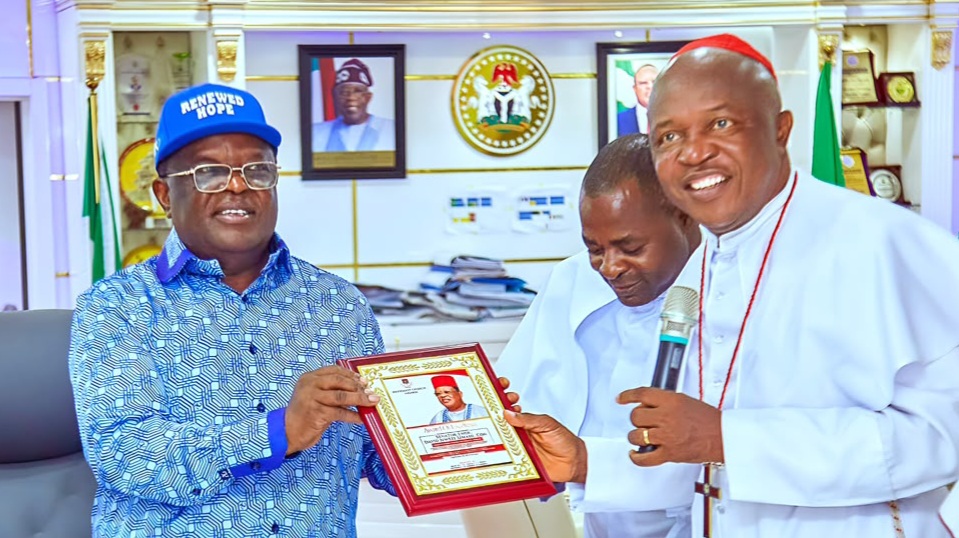
Umahi Receives Methodist Bishops, Says “Tinubu has Changed the Narrative in South-East”
The Honourable Minister of Works, Senator Engr. David Umahi, CON, has called on Nigerians, particularly people of the Southeast, to recognise and appreciate the infrastructure investments of the administration of President Bola Ahmed Tinubu, saying the President has “changed the narrative” of development in the region.
Eereporter.com
Umahi made the call on Wednesday, September 23, 2026, when Bishops and Archbishops of the Methodist Church from the Southeast paid him a courtesy visit at the headquarters of the Federal Ministry of Works.
Speaking during the visit, the Minister said the Southeast had experienced marginalisation in the past, but stressed that the situation should not prevent the people from acknowledging the scale of ongoing federal infrastructure development under President Tinubu.
“Yes, I agree that in the past there was so much marginalisation of the Igbo everywhere, not just the Southeast, but President Bola Tinubu has changed the narrative,” Umahi said.
According to him, the Federal Government is currently working across the country because of the President’s commitment to infrastructure development, adding that the appointment of a Minister of Works from the Southeast had also provided an opportunity to accelerate projects in the region.
“We are working everywhere in Nigeria because of who the President is,” he said, adding, “If we didn’t get a Minister of Works, and if we didn’t have President Bola Tinubu, I don’t know whether we would have changed the narrative in the Southeast.”
Umahi urged the people of the Southeast to continue demanding more development while also appreciating what is already being done.
“We can be looking for more. I agree. We can demand more so that we can meet up with the past marginalisation, but it shouldn’t make us not be appreciative,” he said.
Using the biblical account of the ten lepers healed by Jesus Christ, the Minister said appreciation was important in ensuring that the wounds of the past were gradually healed.
He said, “Man was created in the image of God,” stressing that just as one of the ten lepers returned to appreciate Christ after being healed, Nigerians should also acknowledge positive developments while continuing to seek greater progress.
Umahi said the Southeast had not supported President Tinubu at the polls as much as it should have, but argued that the President’s actions since assuming office shows his willingness to develop the region.
“We didn’t vote for the President as we should, and he’s doing all these things for us,” he said.
He therefore appealed to the people of the Southeast to support the President’s administration and ensure that the infrastructure projects already underway are completed.
“The prayers you want to do should be for the President, President Bola Ahmed Tinubu,” Umahi said, adding that his own major concern was to ensure that the projects initiated under the administration were completed.
“I said I’m on the ballot. When the President has won, I have won,” he declared, explaining that his greatest desire was to see the projects being executed across the country completed.
“If these projects are completed, we will never be the same again,” he said.
The Minister highlighted several major road and bridge projects in the Southeast which he said would significantly improve transportation, economic activity and connectivity when completed.
He pointed to the Enugu-Port Harcourt Road, noting that for many years travellers had endured extremely long journey times on the route.
“In Enugu-Port Harcourt, for more than 18 years, nobody has spent less than seven hours to do that short journey,” he said, stressing that the road was now undergoing reconstruction, including sections being executed with reinforced concrete pavement.
He also cited the Enugu-Onitsha corridor, Enugu-Abakaliki Road, the Eke-Obinagu Flyover in Enugu and the Second Niger Bridge as examples of infrastructure projects changing the transportation landscape of the Southeast.
According to Umahi, motorists who previously spent several hours in traffic around Eke-Obinagu can now use the completed flyover, which he described as the longest flyover in the area.
On the Niger Bridge, he recalled that President Tinubu had responded immediately when concerns emerged over the First Niger Bridge.
“When we heard of the First Niger Bridge, the President immediately directed that it should be shut down,” Umahi said, explaining that rehabilitation work had continued day and night.
He disclosed that the bridge was expected to be commissioned on Wednesday and would feature solar lighting and CCTV surveillance, describing it as being of a standard comparable with the Third Mainland Bridge.
The Minister also spoke about what the third legacy project, the major highway corridor connecting Calabar through Ebonyi, Benue, Enugu and Kogi towards Abuja.
He disclosed that the first two sections, covering about 330 kilometres, had already been awarded and paid for by the Federal Government.

Umahi Receives Methodist Bishops
Umahi said the completion of the project would dramatically reduce travel time from parts of the Southeast to Abuja.
“Those from Enugu can join at Nsukka Axis, and then they will now be in Abuja within three hours,” he said.
“For those of us in Ebonyi, we can be in Abuja within four hours. What are we going to do with the plane again? Nobody will miss the plane again,” he added.
He said the scale of the infrastructure programme demonstrated why political sentiments should not prevent Nigerians from recognising development taking place across the country.
“Sentiments must be laid aside. We have to count our blessings,” Umahi said.
Umahi said political participation should be viewed within the broader context of Nigeria, adding that political relationships built today could benefit the Southeast in the future.
“Our time will come. When the time comes, God will do it, and Nigerians will support us,” he said.
He also disclosed his intention to travel across the 36 states and the Federal Capital Territory as part of an effort to educate and sensitise Nigerians on the infrastructure projects and the need for continued support for President Tinubu.
“I am going to tour the entire 36 states and Abuja,” he said.
According to the Minister, the Southeast must understand the importance of being part of the central government, particularly when major infrastructure and development decisions are being made.
“The most important thing is to be part of the central government because a lot of people are making noise. Let them say what they have brought to Ala-Igbo. That is the most important thing,” he said.
Umahi stressed that his position was not driven by personal animosity towards Peter Obi, whom he described as a very close friend, but by what he believes is the need for Nigerians to distinguish between saving public funds and investing them in projects that improve lives and grow the economy. “I am not against Peter Obi.
He is my very close friend. I sent him a birthday message, and he sent me one during my own,” the Minister said, while cautioning that Nigerians should not be deceived by the idea that keeping government money unused automatically amounts to good governance. Drawing from the biblical parable of the talents, Umahi argued that public resources should be deployed productively to build roads, airports, seaports, industries and other infrastructure that create jobs and expand economic opportunities.
“You can’t be saving food for tomorrow when the children are hungry,” he said, stressing that the real value of public funds lies in using them to address immediate infrastructure needs and create lasting economic benefits. Speaking from his experience as a businessman and former party chairman, deputy governor, governor, senator and now Minister of Works, Umahi said his experience in both business and public administration had reinforced his conviction that productive investment in infrastructure is essential to development.
The Minister said infrastructure spending could generate employment, improve security, shorten travel distances, expand commercial activity and contribute to economic growth.
“We are borrowing to put in infrastructure, and this infrastructure, it is an investment,” Umahi said.
He cited ongoing road construction, including projects in Kebbi, as examples of infrastructure creating jobs and stimulating economic activity.
“It is also fighting insecurity. It’s shortening the distance between communities. It’s creating a revolution in our GDP and then commercial activities,” he said.
Umahi said the Federal Government’s long-term objective was not simply to construct roads but to develop economic corridors around them.
“When we finish, then we will now build infrastructure along the corridor. Nigeria will never be the same again,” he said.
He called on church leaders and other stakeholders to help educate the people about the projects and the opportunities they could create.
“What we are looking for is infrastructure, appointments, development, good governance,” he said.
The Minister also commended the governors of the Southeast for supporting the President, saying their experience enabled them to understand the importance of working with the Federal Government.
“I commend Southeast governors. They are all supporting the President, whether they are vocal about it or not. But they know because they are experienced. They understand,” he said.
He urged church leaders to help correct misinformation and ensure that young people in particular understood the extent of the infrastructure development taking place in the region.
“We need more, and we will come together as a people to meet the President and thank him for what he has done, and then table our problems to him,” he said.
“We need understanding, we need wisdom, we need knowledge.”
The Methodist delegation, led by the Methodist Church Archbishop of Anambra State, Most. Revd. Dr. Vincent C. E. Onoh, commended Tinubu for what they described as his remarkable infrastructure contributions to the Southeast and Nigeria.
He said they have also come to appreciate Mr President and Umahi for the work they are doing, particularly in the Southeast.
“Sometimes people wouldn’t even know where we start when we want to talk about you, but we have just come as a church to appreciate you for the work you are doing, not only in entire Nigeria, but particularly in the Southeast,” he said.
The Archbishop specifically praised the progress on the Niger Bridge, saying: “The work on the Niger Bridge is 90% done.”
He added that visitors who saw the project often expressed surprise that such infrastructure was being constructed in Nigeria.
“I won’t talk of the coastal line and all that goes with it. We just want to appreciate God that He raised a man like you in our own time,” Onoh said.
He said the Methodist Church had come to honour Umahi in recognition of his contribution to infrastructure development.
According to him, although the church does not traditionally confer traditional titles, Umahi’s work had earned him significant recognition among the people.
“Because the church doesn’t give traditional title, I will have given you the title of Olu Atugwu 1. Yes, your name is there. The work is there, and it’s a household name,” he said.
Archbishop Onoh also announced plans for a prayer and sensitisation project beginning in Awka and moving through Enugu, Ebonyi and Imo states, with the expectation of attracting more than 5,000 people at each major gathering.
He said the initiative would focus on returning people to God and strengthening the spiritual foundation of society.
The Archbishop prayed that God would continue to give Umahi wisdom, strength and the right timing to execute his responsibilities.
He also recalled Umahi’s record as Governor of Ebonyi State, saying his impact in the state remained visible.
“We have just come as a church to say thank you for what you have done, thank you for what you are doing, and let’s thank you for what we are yet to do,” Onoh concluded.
Francis Nwaze, FIPMD
Senior Special Assistant to the Honourable Minister of Works (Media)
September 23, 2026
Eereporter.com
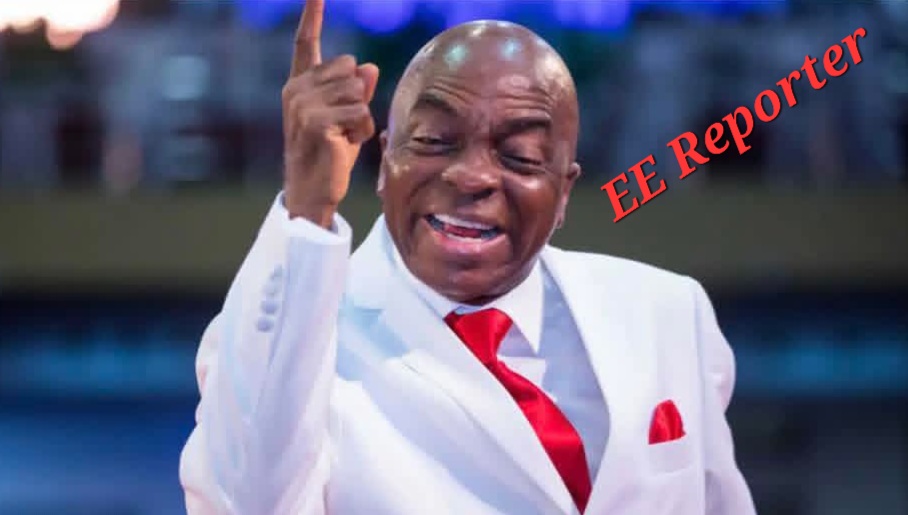
Oyedepo Declare Divine Judgement On Terrorists, Their Sponsors In Next Seven Days
The founder of Living Faith Church Worldwide, Bishop David Oyedepo, has declared judgment upon bandits and their sponsors.
Mr Oyedepo said this during a church service on Sunday tagged: “Covenant Day of Vengeance.”
Speaking at the church headquarters in Ota, Ogun State, the cleric declared that within seven days, divine retribution would strike those behind k1llings and kidnappings across Nigeria.
“Except I am not sent, in the next seven days, I declare judgment upon those responsible for these disasters and their sponsors in Jesus’ name,” he said.
The cleric added that the coming week would be marked by “testimonies of vengeance” for the nation.
He said that God’s intervention was imminent.
Preaching on pathways to sanctification, Mr Oyedepo urged congregants to resist spiritual laxity, stressing that ungodliness blocks supernatural breakthroughs and stains destiny.
Oyedepo
He explained that ungodliness fuelled shame and reproach, warning that without holiness, believers risked losing access to eternity, which remained the ultimate goal.
He said, “Until the God of vengeance shows up, the wicked will not give up.”
-
 Crime1 year ago
Kogi Assembly Considers Law To Regulate Rent, Establish Control Board: Tenancy Law
-
 News1 year ago
Atiku Reveals Why He Failed To Pick Wike As Running Mate In 2023
-
 Akwa Ibom2 years ago
The Apostolic Church Gets New Territorial Chairman, Exco
-

 Crime2 years ago
Federal High Court Jails 2 For Vandalizing Transformer, Telecom Mast In Kogi
-
 News2 years ago
The Apostolic Church Gets New National President, Executive
-
 Akwa Ibom2 years ago
Umo Eno Commences Payment Of 80,000 Naira Minimum Wage With Arrears
-

 News2 years ago
Senator Natasha Returns To Senate With Husband Amid Seat Dispute
-
 Economy1 year ago
Kiyosaki: Is Tinubu’s Government Afraid Of Ibrahim Traore?