
News
Diaspora Deaths: Faces/Names Of Nigerians Murdered Abroad In Cold Blood

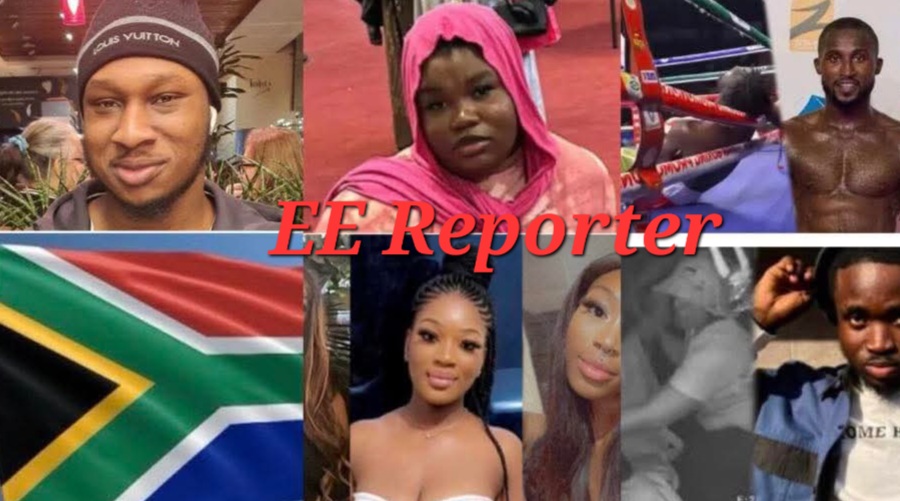
Diaspora Deaths: Faces/Names Of Nigerians Murdered Abroad In Cold Blood
Faces and names of Nigerians murdered abroad in cold blood in diaspora. Many Nigerians have been killed in several countries under varying circumstances. What should have been stories of success abroad have, in several cases, ended abruptly.
Aduwo Ayodele • June 1, 2026
created by photogrid
Many Nigerians have been killed in several countries under varying circumstances. What should have been stories of success abroad have, in several cases, ended abruptly. From unexplained deaths to brutal killings involving students and workers, the fatalities of Nigerian nationals have left several families either pursuing justice or grappling with inconsolable grief.
Eereporter.com
Media men presents a list, by no means exhaustive, of Nigerians killed abroad.
Khaleed Oladipo
In February, a 20-year-old Nigerian and cybersecurity student at De Montfort University in the UK, Khaleed Oladipo, was fatally stabbed in the chest on Oxford Street by an 18-year-old suspect.
Leicestershire Police said the incident occurred near the university campus, and an 18-year-old suspect had been arrested and was in custody at the time.
Mr Oladipo, who eventually died in a hospital, was described by his family as a good son and an Arsenal supporter. He was allegedly murdered on his way to watch the club’s match.
Emeka Uzor
On Monday, February 9, the Nigerian Union South Africa announced the death of Emeka Uzor, who was fatally shot at a Carltex Garage in Windsor East, Randburg, Johannesburg. NUSA said the victim, who was assassinated while in his vehicle, hailed from Nkerefi in Nkanu East local council of Enugu.
The group called on the South African minister of police and the national commissioner of the South African Police Service to conduct a thorough and impartial investigation into the incident.
Another group, the Nigerian Citizens Association South Africa, alleged that media personality Xolani Khumalo and his team shot the victim. NICASA described the incident as a violation of human rights and a tragic loss to the Nigerian community in South Africa.
Isaac Satlat
Isaac Satlat, a Nigerian student who worked as an e-hailing driver in South Africa, was strangled by two passengers, a male and a female, in February 2026. A February 12 viral videocaptured the attack, prompting widespread condemnation.
South African police’s preliminary investigations revealed that the victim was murdered by the two passengers who had requested the services of an e-hailing driver in Pretoria West.
The Pretoria Magistrates’ Court in South Africa adjourned the ongoing case against six suspected individuals arrested in connection with the incident until June for further investigation.
Four Nigerians found dead in UK waters
In March 2026, an advocacy group, ForBlackWomenUK, recalled the disappearances of four Nigerian women, whose bodies were found in rivers, lakes or offshore waters. The group listed the Nigerian victims as follows: Blessing Olusegun, Kayon Williams, Taiwo Balogun, and Samaria Ayanle.
The advocacy group said 24-year-old Ms Williams, a fashion designer, was found in the River Thames, while 53-year-old Ms Balogun, in a separate incident, was found in a lake near Bluewater Shopping Centre.
Also, the lifeless body of 21-year-old Ms Olusegun was discovered on a beach, while Ms Ayanle, a student at SOAS University of London in Bloomsbury before her death, was recovered from the River Thames.
The four Nigerian women died in separate incidents under unclear circumstances.
Rodiyat Alabede
A Nigerian student in Canada, Rodiyat Alabede, and one other individual died after donating their plasma at a collection centre in Winnipeg.
Ms Alabede died in October 2025, while the second person died in January 2026.
Health Canada, a government agency, in March 2026, said the victims developed fatal body reactions following their donations at the Grifols Plasma Donation Centre.
The Spanish-based donation centre reportedly pays plasma donors up to $100, although incentives may be higher.
“She was always happy. She had so many dreams, especially when she came to Canada. She held a big place in my heart. And before she arrived at the hospital, she had already passed,” Ms Alabede’s close friend, Mary Chika, said.
Segun ‘Success’ Olanrewaju
A Nigerian boxer and former national and West African light-heavyweight champion, Segun ‘Success’ Olanrewaju, reportedly collapsed and subsequently died in Ghana.
Mr Olanrewaju collapsed on Saturday, March 29, at the Bukom Boxing Arena during a bout with Ghanaian boxer John ‘Power’ Mbanugu.
The Nigerian boxer suddenly fell to the canvas, with early reports suggesting a possible cardiac arrest as the cause.
Ekpenyong Andrew
A Nigerian citizen, motor mechanic and father of five, Ekpenyong Andrew, was reportedly arrested by Tshwane Metro Police officers on Sunday, April 19, in the Booyens area of Pretoria on his way home.
NUSA stated in a release that Mr Ekpenyong’s body was discovered the next day at the Pretoria Central Morgue under circumstances suggesting foul play.
NUSA demanded a swift and unbiased probe by the Independent Police Investigative Directorate, the full autopsy report, disclosure of the cause of death and immediate suspension of the four police officers allegedly involved in the incident.
Emmanuel Amaramiro
In a separate incident, a Nigerian, Mr Amaramiro, died on April 20 from injuries sustained during brutal beatings by South African military operatives.
The incident reportedly followed an altercation with members of the Tshwane Metro Police.
The Nigerian consulate in Johannesburg said the killing threw the Nigerian community and diplomatic missions into shock.
The consul general, Ninikanwa Okey-Uche, said the incident raised questions about the safety of Nigerians and other foreigners in South Africa.
Eghosa Ogbebor
A 14-year-old Nigerian, Eghosa Ogbebor, died from gunshot injuries in Woolwich, United Kingdom.
On May 7, a 15-year-old Briton was arraigned at the Barkingside Youth Court over the teenager’s alleged murder.
On May 8, the UK Metropolitan Police stated that it arrested another teenager in connection with the murder.

Diaspora
Police investigation and prosecution of the case remain ongoing.
105 Nigerians killed in South Africa in seven years
On May 28, 2026, two Nigerian community groups in South Africa, NUSA and NICASA, said no fewer than 105 Nigerians had been killed in the country over the past seven years.
In a joint statement, the groups linked the deaths of several Nigerians in South Africa from 2019 to date to xenophobic attacks against migrants.
The groups said Nigerian migrants had been victims of extrajudicial killings, mob attacks, vigilante violence, shootings and unlawful use of force.
“In 2022, over 17 Nigerians reportedly lost their lives through violent attacks, vigilante-style executions, criminal assaults, and alleged brutality by security personnel, while in 2023, more than 40 Nigerians were reported dead in incidents ranging from mob violence and alleged police misconduct to unresolved violent encounters,” the statement said.
The groups stated that about eight Nigerians reportedly lost their lives under tragic circumstances in 2024, while in 2025, eight others similarly died in shootings, violent confrontations, or deaths in police custody.
“Most recently, from January 2026 to date, over 20 Nigerians have reportedly died during physical encounters involving security personnel, criminal attacks, or suspected extrajudicial actions,” the statement said.
Sylvester Abayomi
A Nigerian national, Sylvester Abayomi, was killed in a car crash by two friends, Uways Hussain (the driver) and Usmon Mahmood (passenger), in Manchester, United Kingdom.
The 50-year-old victim, who was reportedly on his way to work, died after being struck and suffering severe chest injuries.
The Manchester Crown Court sentenced the suspects, Mr Hussain to 11 years and eight months’ imprisonment for causing death by dangerous driving, while Mr Mahmood was jailed for 12 years and nine months for aiding the incident.
Despite the universal acceptance of the right to life, the deaths of several Nigerians abroad under obscure circumstances raise concerns about the safety and well-being of citizens outside the country.
Data released by the International Organisation for Migration in April indicated that a total of eight thousand migrants, including Nigerians, were reported dead or missing worldwide in 2025. The organisation noted that around 340,000 family members are estimated to have been directly affected.
Reacting, Inyene Etuk, a researcher in diaspora and transnational studies at the Institute of African Studies, University of Ibadan, expressed concern over the deaths of Nigerians abroad, attributing the trend to the country’s large population and the presence of Nigerian communities across the world.
“It might seem like there is an abundance of reports of casualties concerning Nigerian citizens, or people of Nigerian descent, in various countries. These casualties, especially the murders, are greatly unfortunate, and no one from anywhere should be in the news as a murder victim,” Mr Etuk explained.
“I would, however, attribute this abundance of Nigerian reports to the base rate fallacy. One in every 4 to 6 black people in the world is Nigerian. It is a country of over 200 million people. It is the largest nationality in Africa.”
The researcher noted that “when you consider the sheer demographic size and consequent dispersal, you can find an explanation for the seeming overrepresentation of Nigerian casualties in the media”.
Mr Etuk urged NiDCOM to strengthen its legal framework and foster greater cooperation with government institutions in other countries.
The researcher also called on the federal government to strengthen Nigeria’s institutions and international cooperation, adding that officials must work closely with foreign authorities to protect the welfare of Nigerians living abroad.
“I would say that bridging the gap in bringing justice to Nigerians in the diaspora who have become victims of casualties lies with strengthening our local or national institutions as well as our international cooperation,” Mr Etuk said.
“I believe that if the legal infrastructure of an institution like NiDCOM is further strengthened, particularly in cooperation with government institutions in other countries, we can move many steps forward in not only getting justice for Nigerians in the diaspora but also eliminating casualties of Nigerians abroad.”
The foreign affairs ministry and NiDCOM chief Abike Dabiri-Erewa did not immediately respond to requests for comments. Eereporter.com









Senate Backs Bill To Compel Facebook, TikTok, Others establishes Offices In Nigeria
The Senate on Thursday advanced legislative efforts to compel global social media companies operating in Nigeria to establish physical offices in the country, as stakeholders overwhelmingly backed the proposal during a public hearing in Abuja.
Eereporter.com
The public hearing, organised by the Senate Committee on Information and Communications Technology and Cyber Security, also received broad support for a separate bill seeking to establish an Artificial Intelligence Academy in Omuo-Ekiti, Ekiti State.
The proposed legislation on social media platforms, sponsored by Senator Ned Nwoko (Delta North), seeks to amend the Nigeria Data Protection Act, 2023, to mandate social media companies operating in Nigeria to maintain physical offices within the country’s territorial boundaries.
The AI Academy bill is sponsored by the Chairman of the Senate Committee on Media and Publicity, Senator Yemi Adaramodu (Ekiti South).
Declaring the hearing open, Chairman of the Senate Committee on ICT and Cyber Security, Senator Shuaib Salisu (Ogun Central), said the two bills were aimed at strengthening Nigeria’s digital economy and technological advancement.
According to him, while the social media bill seeks to improve the regulation and protection of Nigeria’s cyberspace, the proposed AI Academy is intended to serve as a centre of excellence for artificial intelligence education, research and innovation.
President of the Senate, Godswill Akpabio, represented by the Deputy Senate Leader, Senator Lola Ashiru (Kwara South), described both proposals as forward-looking and nationally significant.
Akpabio said the bill requiring social media companies to establish physical offices in Nigeria was not intended to stifle their operations but to promote greater accountability and engagement with the country.
Also defending the bill, Nwoko dismissed concerns that the legislation could discourage investment or target technology companies.
He said: “This bill is neither punitive nor hostile to innovation. It is not designed to frustrate investment or discourage technology companies from operating in Nigeria.
“On the contrary, it seeks to deepen their engagement with Nigeria by encouraging them to become true corporate citizens of our country.”
“Around the world, major technology companies have established headquarters, regional offices, engineering centres and operational hubs in countries such as the United Kingdom, the Netherlands, Spain, Singapore, India, the United Arab Emirates, South Africa, Brazil, Australia and Japan.”
Nwoko dismissed concerns that the proposed legislation was aimed at targeting or discouraging global technology companies, insisting that it was intended to strengthen their presence and engagement in Nigeria.
He said many countries, including the United Kingdom, India, the United Arab Emirates, South Africa and Brazil, had attracted global technology firms to establish local offices that support engineering, artificial intelligence research, regulatory compliance, customer support and other operations.
“These offices perform diverse functions ranging from engineering and artificial intelligence research to legal and regulatory compliance, public policy, advertising, trust and safety, cloud services, sales, customer support and product development.
“These countries did not attract such investments by accident. They recognised early that the digital economy is now as important as the traditional economy.
“By encouraging global technology companies to establish local operations, they have created employment, expanded tax revenues, strengthened regulatory engagement, promoted innovation and encouraged technology transfer to their citizens,” he said.
Citing Ireland as an example, Nwoko said the presence of companies such as Meta, Google, LinkedIn, TikTok and X had transformed the country into one of Europe’s leading technology hubs through job creation, innovation and increased foreign investment.
Senate
He argued that Nigeria, as Africa’s largest digital market, should enjoy similar economic and technological benefits.
“The question, therefore, is simple: if countries with significantly smaller populations and digital markets than Nigeria have secured these investments and benefits, why should Nigeria continue to stand on the sidelines? Why should Africa’s largest digital market not enjoy the same opportunities?”
The committee is expected to consider memoranda submitted by stakeholders before presenting its report to the Senate for further legislative action.
Eereporter.com
News
Olukoyede To Lawyers Forum: Collaborate With EFCC In Fight Against Money Laundering, Terrorist Financing
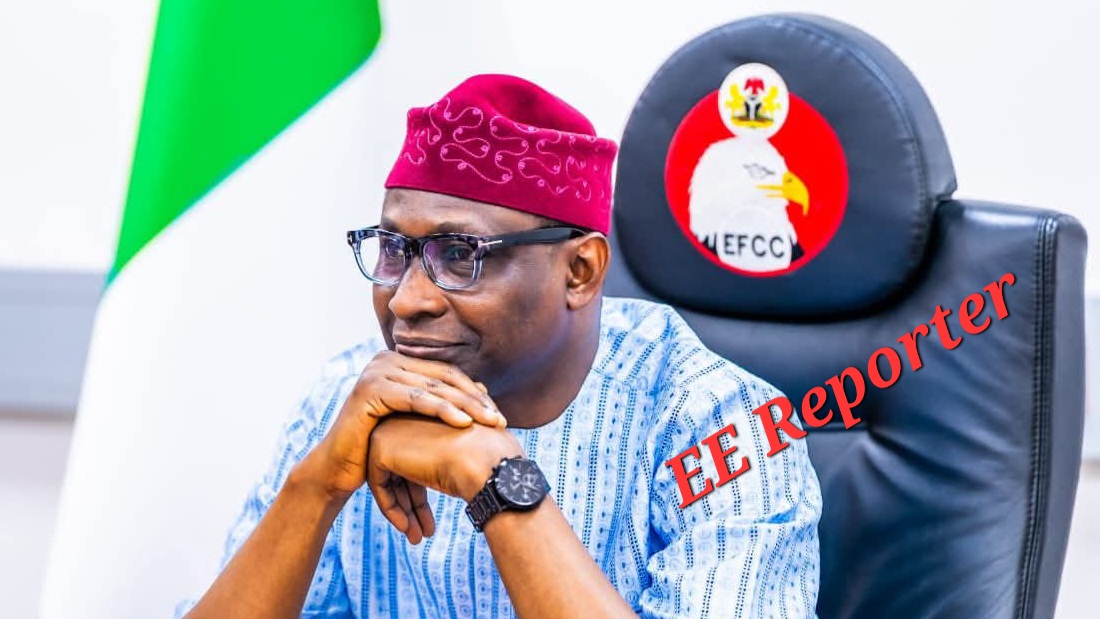
Olukoyede To Lawyers Forum: Collaborate With EFCC In Fight Against Money Laundering, Terrorist Financing
The Executive Chairman of the Economic and Financial Crimes Commission, EFCC, Ola Olukoyede, has charged female lawyers in the country to join hands with the Commission in the fight against money laundering and terrorist financing.
Eereporter.com
He gave the charge on Wednesday, July 22, 2026, in a one-day training of members of Women Forum of the NBA, NBAWF, Abuja branch, with the theme: “Mastering SCUML Registration and AML/CFT Compliance Training for Legal Practitioners.”
Olukoyede, who was represented by the Deputy Commander of the EFCC, DCE, Samu Pascal, encouraged the female lawyers to consistently ensure the protection of the legal profession and national interest while fulfilling their duties as lawyers. In prioritizing the safety of the country, he urged them to guard against making themselves and their services available for money laundering and terrorist financing but rather utilize their platform to enhance the application of the framework for Anti-Money Laundering, Countering the Financing of Terrorism, and Countering Proliferation Financing, AML/CFT/CPF in the country.
“Today’s engagement reflects the strong partnership between SCUML and the legal profession in strengthening Nigeria’s Anti-Money Laundering, Countering the Financing of Terrorism, and Countering Proliferation Financing, AML/CFT/CPF, framework. As legal practitioners, your role extends beyond providing legal services. You also serve as gatekeepers of the financial system, helping to prevent the misuse of the legal services for money laundering, terrorist financing and proliferation,” he said.
Olukoyede, who also disclosed that the training was aimed at improving lawyers’ comprehension of their responsibilities under the Money Laundering Prevention and Prohibition Act 2002, along with AML/CFT/CPF regulations, stated that training presented a valuable opportunity to tackle practical compliance issues, insights on emerging trends and typologies, and enhancing cooperation between the EFCC’s SCUML and the legal community.
“Your contributions will help us develop practical solutions that support compliance while maintaining the highest standards of professional ethics,” he said.
In her remarks, Hadiza Afegbua, leader of NBAWF, Abuja Chapter, expressed gratitude to the EFCC for providing the Forum members the opportunity to receive direct training on AML/CFT/CPF frameworks.
She noted that legal practitioners play distinctive roles in upholding the rule of law and in safeguarding the integrity of the nation’s financial system, adding that as professionals, they would ensure that the legal profession is not misused for money laundering and terrorist financing.
“I wish to express our sincere appreciation to the SCUML team for partnering with the NBA Women Forum, FCT Abuja Chapter, and for their willingness to share their expertise with us,” she said.
EFCC Boss
In her paper titled: “Lawyers, Compliance, and National Security: Understanding AML/CFT, Equipping Nigerian Legal Practitioners for Regulatory Excellence,” Assistant Commander of the EFCC, ACE 11 Korede Abdulaziz, urged the female lawyers to consistently recognize their responsibilities as gatekeepers and familiarize themselves with the 2022 AML/CFT legal framework.
She emphasized the importance of their consistent conduct of Customer Due Diligence, CDD and identifying Ultimate Beneficial Owners, UBO. She also highlighted the need for them to navigate the complexities of Legal Professional Privilege alongside reporting obligations and urged them to adopt a risk-based approach in their organizations.
Eereporter.com
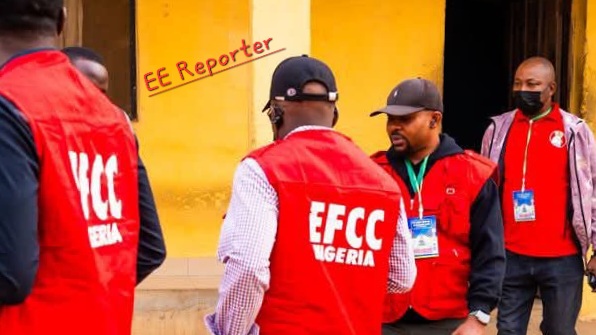
EFCC Arraigns Alhaji Muhammad Talake For Alleged N3.8m Property Fraud In Maiduguri
The Maiduguri Zonal Directorate of the Economic and Financial Crimes Commission, EFCC, on Thursday, July 23, 2026 arraigned one Alhaji Muhammad Talake before Justice Aisha Kumaliya of the Borno State High Court sitting in Maiduguri.
Eereporter.com
The defendant was arraigned on a two- count charge bordering on obtaining by false pretence and criminal misappropriation to the tune of N3,800,000.00 (Three Million, Eight Hundred and Fifty Thousand Naira).
Count one reads: “That you, Alhaji Muhammad Talake, on or about March, 2025 in Maiduguri, Borno State within the jurisdiction of the honourable court, with intent to defraud obtained the aggregate sum of N3,800,000.00 (Three Million, Eight Hundred Thousand Naira) from one Muhammad Umar Ali Abatcha, under the false pretence that same is meant for the purchase of a property; ID:BO: 006, situated and laying at Old GRA, circular road, Maiduguri, Borno State, purportedly being a property put up for sale by the Federal Government of Nigeria, a representation which you knew to be false and thereby committed an offence contrary to Section 1 (1) and punishable under Section 1 (3) of the Advance Fee Fraud and Other Fraud Related Offences Act, 2006.”
The defendant pleaded “not guilty” to the charges when they were read to him.
Counsel to the prosecution, S.O Saka prayed for a trial date and urged the court to remand the defendant in a Correctional facility.
EFCC
Justice Kumaliya thereafter adjourned the matter till August 10, 2026 for hearing of bail application and ordered the remand of the defendant in Maiduguri maximum correctional facility.
The defendant’s journey to the Correctional facility started when he purportedly obtained the sum of N3.8m from a petitioner for the purchase of a property situated at Old Government Reservation Area, GRA, circular road, Maiduguri, Borno State, purportedly being a property put up for sale by the Federal Government of Nigeria, a representation which was false.
Eereporter.com
-
 Crime1 year ago
Kogi Assembly Considers Law To Regulate Rent, Establish Control Board: Tenancy Law
-

 News1 year ago
Atiku Reveals Why He Failed To Pick Wike As Running Mate In 2023
-
 Akwa Ibom2 years ago
The Apostolic Church Gets New Territorial Chairman, Exco
-

 Crime1 year ago
Federal High Court Jails 2 For Vandalizing Transformer, Telecom Mast In Kogi
-
 News1 year ago
The Apostolic Church Gets New National President, Executive
-
 Akwa Ibom2 years ago
Umo Eno Commences Payment Of 80,000 Naira Minimum Wage With Arrears
-

 News1 year ago
Senator Natasha Returns To Senate With Husband Amid Seat Dispute
-

 Economy1 year ago
Kiyosaki: Is Tinubu’s Government Afraid Of Ibrahim Traore?