
Economy
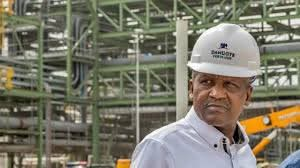
Dangote Refinery Ends Nigeria’s Era As Africa’s Largest Fuel Importer: Report

Dangote Refinery Ends Nigeria’s Era As Africa’s Largest Fuel Importer: Report
Dangote refinery ends Nigeria’s era as Africa’s largest fuel importer: Report. Nigeria’s era as Africa’s largest fuel importer has ended following increased output from the Dangote refinery, according to Bloomberg.
Citing an energy consultancy firm in a report on Wednesday, Bloomberg said the title is now held by South Africa, where operational fuel production capacity has shrunk.
Elitsa Georgieva, executive director at CITAC, an energy consultancy, told the publication that Nigerian imports are dropping due to Dangote’s continued operation.
“Since the beginning of this year, South African imports have been consistently highest in sub-Saharan Africa,” she said.
According to Bloomberg, the shift illustrates the ambition of several African nations, including Uganda and Mozambique, to increase domestic refining capacity — “a difficult task even for Dangote whose $20 billion project went over budget and took longer than anticipated”.
“Still, traders including Glencore Plc and Vitol SA have found opportunities to supply fuel to South Africa where a number of refineries have shut since 2020,” Bloomberg said.
“South Africa imported 4.2 million tons of refined products in the first quarter of 2025, while Nigeria landed 3.1 million tons, according to CITAC.
“It estimates South Africa will import around 15.5 million tons this year, almost twice as much as Kenya with 8.9 million tons and Nigeria with 6.4 million.”
Dangote Refinery
The publication said South Africa’s refining capacity has been reduced by half due to accidents and insufficient investment over the past five years.
Quoting state-owned logistics company, Transnet SOC Ltd, Bloomberg said imports now account for over 60 percent of the country’s fuel demand.
“The government last year bought the shuttered Sapref refinery from Shell Plc and BP Plc to try and grow domestic production again,” the publication reads.
“South Africa could draw even more fuel traders in the near-term as it seeks supply. Swiss commodities firm Gunvor was among companies shortlisted to buy Shell’s retail stations, people familiar with the matter said last month.”
After Nigeria officially began the naira-for-crude deal on October 1, 2024, Dangote began selling the product to its partners in naira.




Unity School Alumni Storm Akwa Ibom, Score Umo Eno High on Tourism Development
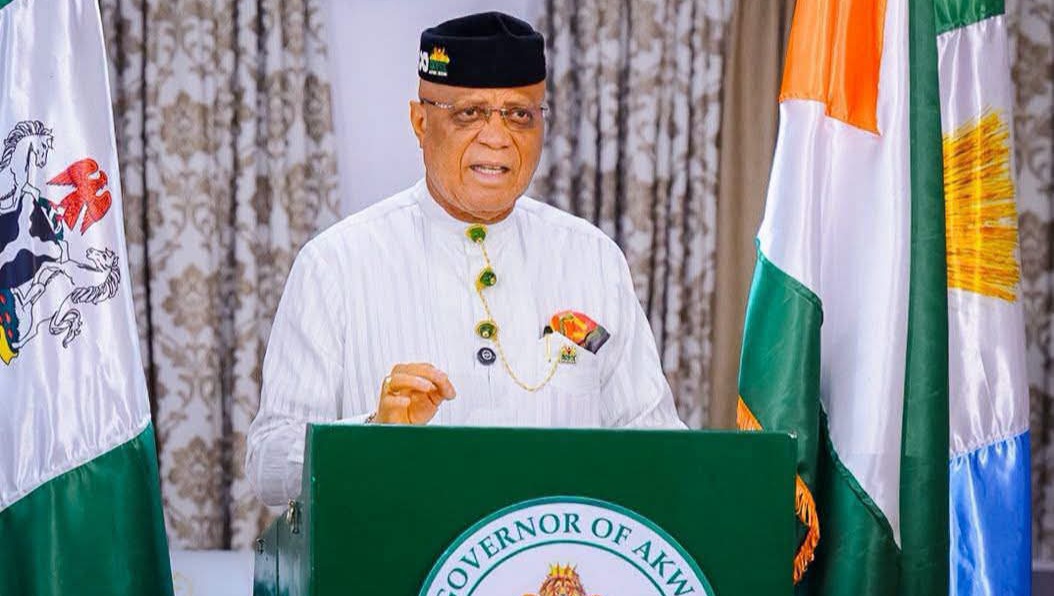
Members of the Unity Schools Old Students Association, USOSA, have embarked on a tour of key tourism, hospitality, technology and infrastructure projects in Akwa Ibom State with a verdict that Governor Umo Eno has performed more than they had envisaged.
Eereporter.com
The delegation, made up of old students of Federal Government Colleges from across Nigeria, visited the Arise Palm Resort, Godswill Akpabio International Stadium, AKWA-GIS facilities and Security and Command Centre, as well as the newly completed Ibom International Hotel and other strategic projects, as part of activities marking the association’s 49th National Plenary in Uyo.
Led on the tour by the Senior Special Assistant to the Governor on Research and Documentation, Dr Essien Ndueso, the visitors had an opportunity to see first-hand some of the infrastructure and investment projects shaping the State’s emerging tourism landscape.
A major point of attraction was the Arise Palm Resort, one of the flagship projects of the administration of Governor Umo Eno.
The resort, located in Uyo, is part of the State Government’s broader drive to position Akwa Ibom as a major tourism destination.
The project is also linked to the administration’s wider efforts at reclaiming erosion-affected land and converting it into productive infrastructure and tourism assets.
At the different locations, the visitors were taken through the facilities and the ideas behind the projects, with members of the delegation expressing excitement at the scale of development witnessed across the State.
Speaking during the tour, the Team Lead and Coordinator of the USOSA Akwa Ibom State Chapter, Dr. Imoh Ita, described the experience as one that challenged the expectations of many members of the delegation.
He said the excitement visible among members of the group was an indication that many of them were encountering a different picture of Akwa Ibom from what they had previously imagined.
“For many of us who came from different parts of Nigeria, what we have seen today is almost beyond what we imagined. You come with an idea of what a place looks like, and then you arrive and see these things physically for yourself. The excitement is written on the faces of our members.
Everywhere we have gone, people have been asking questions, taking pictures and expressing genuine amazement. It tells you that there is so much in Akwa Ibom that Nigerians need to see for themselves.”
Other members of the team said the tour was particularly significant because the USOSA gathering brought together Nigerians who had travelled from different parts of the country, creating an opportunity for the State to showcase its tourism and investment potential to a national audience.
He noted that tourism could serve as an avenue for people from other parts of Nigeria to discover the State beyond what they might have heard or read about it.
The delegation’s visit to the Godswill Akpabio International Stadium also offered the visitors an opportunity to see one of the State’s major sporting and tourism assets, while the tour of the AKWA-GIS and Security and Command Centre exposed them to the technology and administrative infrastructure supporting the State’s development efforts.
The visit to the Ibom International Hotel and the 5000 capacity Ibom International Convention Center complex further highlighted the State’s hospitality and entertainment ambitions.
The USOSA National Plenary, held under the theme “Fostering the Spirit of Pro Unitate: Advancing Unity, Leadership and Nation-Building in Nigeria,” brought together old students of Federal Government Colleges from across the country in Uyo.
For the visiting delegates, the tour offered more than sightseeing. It provided a direct opportunity to experience Akwa Ibom’s infrastructure, hospitality and tourism assets, while opening another channel for the State to showcase its attractions to visitors from across Nigeria.
The visit therefore added a practical dimension to the USOSA gathering allowing Nigerians from different parts of the country to see, experience and discuss Akwa Ibom beyond the conference venue.
During the tour, the Senior Special Assistant to the Governor on Research and Documentation, Dr. Essien Ndueso, who led the delegation around the Arise Palm Resort, explained the thinking behind the Governor’s decision to turn a once erosion-destroyed area into a one stop leisure and business destination capable of attracting visitors, creating opportunities and contributing to the State’s tourism economy.
“What you are seeing here is a reflection of Governor Umo Eno’s vision of transforming challenges into opportunities.
“This was once an area ravaged by erosion, but the Governor saw beyond the challenge and envisioned a destination that could attract people, create economic opportunities and add value to the tourism potential of Akwa Ibom State. We want people from across Nigeria and beyond to come here, experience what Akwa Ibom has to offer and become ambassadors of the State wherever they go.”

Umo Eno
Dr. Ndueso further explained that the project formed part of the administration’s broader vision of developing strategic infrastructure and tourism assets that would position Akwa Ibom as a destination for leisure, investment and business.
The team was received at the Arise Palm Resort by Mr Thomas, Group Managing Director of Ibom Hospitality Management ltd, Mr Thomas who showed them round the tourism park.
Eereporter.com
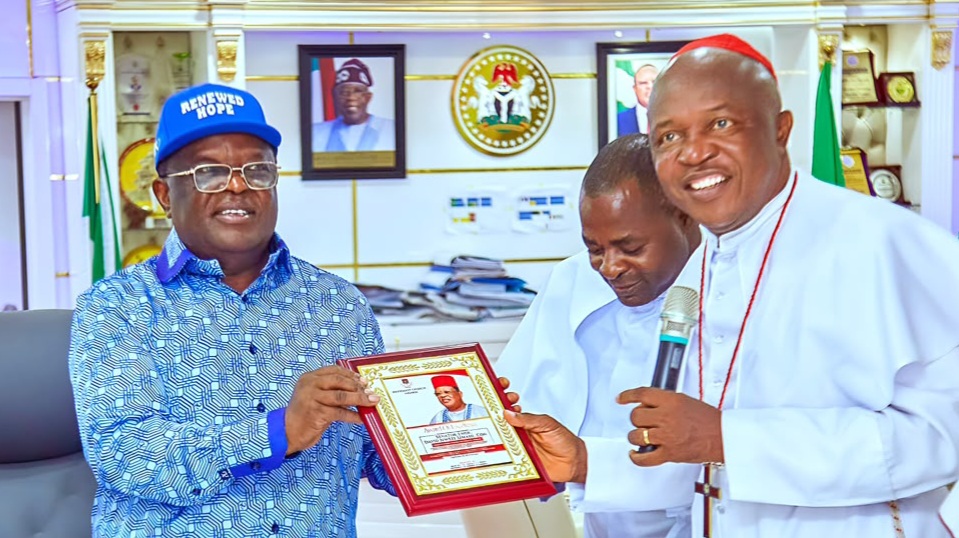
Umahi Receives Methodist Bishops, Says “Tinubu has Changed the Narrative in South-East”
The Honourable Minister of Works, Senator Engr. David Umahi, CON, has called on Nigerians, particularly people of the Southeast, to recognise and appreciate the infrastructure investments of the administration of President Bola Ahmed Tinubu, saying the President has “changed the narrative” of development in the region.
Eereporter.com
Umahi made the call on Wednesday, September 23, 2026, when Bishops and Archbishops of the Methodist Church from the Southeast paid him a courtesy visit at the headquarters of the Federal Ministry of Works.
Speaking during the visit, the Minister said the Southeast had experienced marginalisation in the past, but stressed that the situation should not prevent the people from acknowledging the scale of ongoing federal infrastructure development under President Tinubu.
“Yes, I agree that in the past there was so much marginalisation of the Igbo everywhere, not just the Southeast, but President Bola Tinubu has changed the narrative,” Umahi said.
According to him, the Federal Government is currently working across the country because of the President’s commitment to infrastructure development, adding that the appointment of a Minister of Works from the Southeast had also provided an opportunity to accelerate projects in the region.
“We are working everywhere in Nigeria because of who the President is,” he said, adding, “If we didn’t get a Minister of Works, and if we didn’t have President Bola Tinubu, I don’t know whether we would have changed the narrative in the Southeast.”
Umahi urged the people of the Southeast to continue demanding more development while also appreciating what is already being done.
“We can be looking for more. I agree. We can demand more so that we can meet up with the past marginalisation, but it shouldn’t make us not be appreciative,” he said.
Using the biblical account of the ten lepers healed by Jesus Christ, the Minister said appreciation was important in ensuring that the wounds of the past were gradually healed.
He said, “Man was created in the image of God,” stressing that just as one of the ten lepers returned to appreciate Christ after being healed, Nigerians should also acknowledge positive developments while continuing to seek greater progress.
Umahi said the Southeast had not supported President Tinubu at the polls as much as it should have, but argued that the President’s actions since assuming office shows his willingness to develop the region.
“We didn’t vote for the President as we should, and he’s doing all these things for us,” he said.
He therefore appealed to the people of the Southeast to support the President’s administration and ensure that the infrastructure projects already underway are completed.
“The prayers you want to do should be for the President, President Bola Ahmed Tinubu,” Umahi said, adding that his own major concern was to ensure that the projects initiated under the administration were completed.
“I said I’m on the ballot. When the President has won, I have won,” he declared, explaining that his greatest desire was to see the projects being executed across the country completed.
“If these projects are completed, we will never be the same again,” he said.
The Minister highlighted several major road and bridge projects in the Southeast which he said would significantly improve transportation, economic activity and connectivity when completed.
He pointed to the Enugu-Port Harcourt Road, noting that for many years travellers had endured extremely long journey times on the route.
“In Enugu-Port Harcourt, for more than 18 years, nobody has spent less than seven hours to do that short journey,” he said, stressing that the road was now undergoing reconstruction, including sections being executed with reinforced concrete pavement.
He also cited the Enugu-Onitsha corridor, Enugu-Abakaliki Road, the Eke-Obinagu Flyover in Enugu and the Second Niger Bridge as examples of infrastructure projects changing the transportation landscape of the Southeast.
According to Umahi, motorists who previously spent several hours in traffic around Eke-Obinagu can now use the completed flyover, which he described as the longest flyover in the area.
On the Niger Bridge, he recalled that President Tinubu had responded immediately when concerns emerged over the First Niger Bridge.
“When we heard of the First Niger Bridge, the President immediately directed that it should be shut down,” Umahi said, explaining that rehabilitation work had continued day and night.
He disclosed that the bridge was expected to be commissioned on Wednesday and would feature solar lighting and CCTV surveillance, describing it as being of a standard comparable with the Third Mainland Bridge.
The Minister also spoke about what the third legacy project, the major highway corridor connecting Calabar through Ebonyi, Benue, Enugu and Kogi towards Abuja.
He disclosed that the first two sections, covering about 330 kilometres, had already been awarded and paid for by the Federal Government.

Umahi Receives Methodist Bishops
Umahi said the completion of the project would dramatically reduce travel time from parts of the Southeast to Abuja.
“Those from Enugu can join at Nsukka Axis, and then they will now be in Abuja within three hours,” he said.
“For those of us in Ebonyi, we can be in Abuja within four hours. What are we going to do with the plane again? Nobody will miss the plane again,” he added.
He said the scale of the infrastructure programme demonstrated why political sentiments should not prevent Nigerians from recognising development taking place across the country.
“Sentiments must be laid aside. We have to count our blessings,” Umahi said.
Umahi said political participation should be viewed within the broader context of Nigeria, adding that political relationships built today could benefit the Southeast in the future.
“Our time will come. When the time comes, God will do it, and Nigerians will support us,” he said.
He also disclosed his intention to travel across the 36 states and the Federal Capital Territory as part of an effort to educate and sensitise Nigerians on the infrastructure projects and the need for continued support for President Tinubu.
“I am going to tour the entire 36 states and Abuja,” he said.
According to the Minister, the Southeast must understand the importance of being part of the central government, particularly when major infrastructure and development decisions are being made.
“The most important thing is to be part of the central government because a lot of people are making noise. Let them say what they have brought to Ala-Igbo. That is the most important thing,” he said.
Umahi stressed that his position was not driven by personal animosity towards Peter Obi, whom he described as a very close friend, but by what he believes is the need for Nigerians to distinguish between saving public funds and investing them in projects that improve lives and grow the economy. “I am not against Peter Obi.
He is my very close friend. I sent him a birthday message, and he sent me one during my own,” the Minister said, while cautioning that Nigerians should not be deceived by the idea that keeping government money unused automatically amounts to good governance. Drawing from the biblical parable of the talents, Umahi argued that public resources should be deployed productively to build roads, airports, seaports, industries and other infrastructure that create jobs and expand economic opportunities.
“You can’t be saving food for tomorrow when the children are hungry,” he said, stressing that the real value of public funds lies in using them to address immediate infrastructure needs and create lasting economic benefits. Speaking from his experience as a businessman and former party chairman, deputy governor, governor, senator and now Minister of Works, Umahi said his experience in both business and public administration had reinforced his conviction that productive investment in infrastructure is essential to development.
The Minister said infrastructure spending could generate employment, improve security, shorten travel distances, expand commercial activity and contribute to economic growth.
“We are borrowing to put in infrastructure, and this infrastructure, it is an investment,” Umahi said.
He cited ongoing road construction, including projects in Kebbi, as examples of infrastructure creating jobs and stimulating economic activity.
“It is also fighting insecurity. It’s shortening the distance between communities. It’s creating a revolution in our GDP and then commercial activities,” he said.
Umahi said the Federal Government’s long-term objective was not simply to construct roads but to develop economic corridors around them.
“When we finish, then we will now build infrastructure along the corridor. Nigeria will never be the same again,” he said.
He called on church leaders and other stakeholders to help educate the people about the projects and the opportunities they could create.
“What we are looking for is infrastructure, appointments, development, good governance,” he said.
The Minister also commended the governors of the Southeast for supporting the President, saying their experience enabled them to understand the importance of working with the Federal Government.
“I commend Southeast governors. They are all supporting the President, whether they are vocal about it or not. But they know because they are experienced. They understand,” he said.
He urged church leaders to help correct misinformation and ensure that young people in particular understood the extent of the infrastructure development taking place in the region.
“We need more, and we will come together as a people to meet the President and thank him for what he has done, and then table our problems to him,” he said.
“We need understanding, we need wisdom, we need knowledge.”
The Methodist delegation, led by the Methodist Church Archbishop of Anambra State, Most. Revd. Dr. Vincent C. E. Onoh, commended Tinubu for what they described as his remarkable infrastructure contributions to the Southeast and Nigeria.
He said they have also come to appreciate Mr President and Umahi for the work they are doing, particularly in the Southeast.
“Sometimes people wouldn’t even know where we start when we want to talk about you, but we have just come as a church to appreciate you for the work you are doing, not only in entire Nigeria, but particularly in the Southeast,” he said.
The Archbishop specifically praised the progress on the Niger Bridge, saying: “The work on the Niger Bridge is 90% done.”
He added that visitors who saw the project often expressed surprise that such infrastructure was being constructed in Nigeria.
“I won’t talk of the coastal line and all that goes with it. We just want to appreciate God that He raised a man like you in our own time,” Onoh said.
He said the Methodist Church had come to honour Umahi in recognition of his contribution to infrastructure development.
According to him, although the church does not traditionally confer traditional titles, Umahi’s work had earned him significant recognition among the people.
“Because the church doesn’t give traditional title, I will have given you the title of Olu Atugwu 1. Yes, your name is there. The work is there, and it’s a household name,” he said.
Archbishop Onoh also announced plans for a prayer and sensitisation project beginning in Awka and moving through Enugu, Ebonyi and Imo states, with the expectation of attracting more than 5,000 people at each major gathering.
He said the initiative would focus on returning people to God and strengthening the spiritual foundation of society.
The Archbishop prayed that God would continue to give Umahi wisdom, strength and the right timing to execute his responsibilities.
He also recalled Umahi’s record as Governor of Ebonyi State, saying his impact in the state remained visible.
“We have just come as a church to say thank you for what you have done, thank you for what you are doing, and let’s thank you for what we are yet to do,” Onoh concluded.
Francis Nwaze, FIPMD
Senior Special Assistant to the Honourable Minister of Works (Media)
September 23, 2026
Eereporter.com
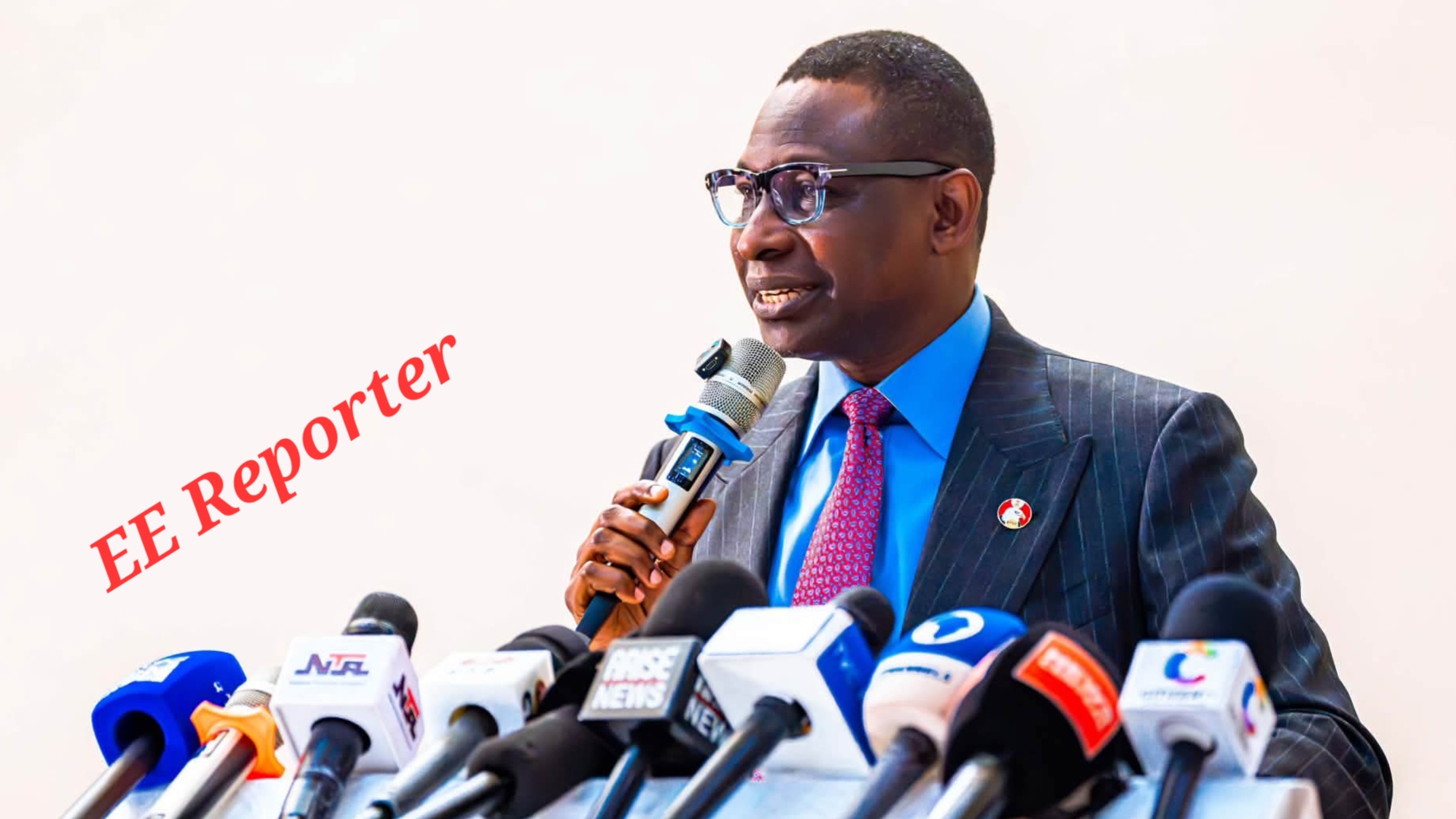
Olukoyede To NELFUND: “Channel Approved Funds to Indigent Students”
The Executive Chairman of the Economic and Financial Crimes Commission, EFCC, Mr. Ola Olukoyede, has urged the Nigerian Education Loan Fund, NELFUND to ensure that the funds that have been approved by the Federal Government for disbursement as loan to students get directly to the intended beneficiaries, while strengthening measures to prevent diversion and other financial crimes.
Eereporter.com
Olukoyede gave the charge in Abuja on Wednesday, 23 September, 2026 at the signing of a Memorandum of Understanding, MoU between the EFCC and NELFUND at the corporate headquarters of the Commission . The MoU is aimed at strengthening collaboration, preventing financial infractions and ensuring accountability in the management and disbursement of proceeds of crime allocated for educational support.
He described NELFUND as one of the major legacy projects of the President Bola Ahmed Tinubu-led administration and commended the management of NELFUND for the progress recorded in providing students with access to education financing. The EFCC Chairman said the Commission’s mandate extends beyond the recovery of proceeds of crime to ensuring that recovered funds are put to productive use for the benefit of Nigerians.
With the MoU, both EFCC and NELFUND will now set up a joint team tagged ‘Fraud Assessment and Control Unit’ to ensure that things are done in compliance with the set guidelines.
Olukoyede stressed that the partnership with NELFUND should also focus on prevention, rather than waiting until funds are stolen before taking action. He said the EFCC would work with NELFUND to examine its processes, identify vulnerabilities and strengthen internal controls to ensure that funds meant for students reach them as intended.
“There are certain things you might not have addressed your mind to, because that is what we do. We could give all your attention to it. We don’t have to necessarily wait for money to be stolen before we go into action. Why can’t we provide more prevention? Even if it doesn’t occur at the level of the organisation, across or along the chain, something could happen,” the Chairman stated.
According to him, the welfare of young people informed the EFCC’s interest in supporting NELFUND, particularly because a substantial proportion of those investigated for cybercrime are young people and, in some cases, students. “Whatever we recover from these proceeds of crime, why can’t we use it to also support them?” he asked, explaining that the idea of applying recovered proceeds to support students was driven by the need to address some of the vulnerabilities that could expose young people to economic crimes.
The EFCC Chairman further advised NELFUND to explore mechanisms for direct disbursement to beneficiaries, subject to appropriate verification by educational institutions. He noted that universities and other institutions could play a critical role in authenticating students’ identities and ensuring that only genuine beneficiaries access the funds. “Let it go directly to the human beings,” Olukoyede said, stressing that the Commission was particularly interested in ensuring that the benefits of recovered funds reached the people for whom they were intended.
He therefore urged NELFUND to access only funds legitimately due to it and ensure that such resources were applied promptly for their intended purpose.
The EFCC Chairman expressed confidence that the MoU would strengthen risk assessment, improve accountability and establish safeguards capable of protecting the programme beyond the tenure of the current leadership of both institutions.
Earlier, the Managing Director/Chief Executive Officer of NELFUND, Akintunde Sawyer, commended the EFCC for its support and its emphasis on preventing economic crimes before they occur. He said the EFCC’s preventive approach had helped NELFUND establish stronger standards of transparency and accountability in the management of its resources.
Sawyer disclosed that NELFUND had processed 1.6 million applications, with 960,000 loans approved, adding that the organisation had recently upgraded its systems and launched a new portal. According to him, NELFUND receives applications, processes approvals and makes disbursements electronically, with funds transferred through formal banking channels and without the use of cash.
He said payments to students are made directly into their bank accounts, using identifiers including the National Identification Number, NIN, Joint Admissions and Matriculation Board, JAMB registration details, matriculation numbers and Bank Verification Numbers, BVN for verification.
Sawyer recalled his promise to ensure that all of the operations of his office “would be fully transparent; where every penny, every kobo that leaves the organisation has an electronic footprint. Not just for today, but for those who may come tomorrow to say, what did they do while they were there? We’ve been taken to task many times on various allegations, suspicions, uncertainty. Say, look, all the records are there. It’s all electronic. If there’s anything wrong, you’ll find it.”
He said the system was designed to eliminate unnecessary intermediaries and reduce opportunities for manipulation, noting that applicants should not need personal connections within NELFUND to access the scheme.
“We wanted to make sure that there are no gateways, no middlemen in between, down to the point where we don’t need anybody to approve you as top civil servant or top judge. We don’t want anybody in the middle of this process, and we made sure that anyone who applies for this loan does not need to know anybody at NELFA. Of course, they interact with us if they have difficulties, but they don’t need to know us at all. The bulk of the money goes to the institutions” he said.
Sawyer said the organisation was committed to creating systems that would remain effective beyond the tenure of individual officials, stressing the importance of checks and balances and multiple layers of oversight. “It’s not personal. We need to ensure that this country can run and run and run without it being all because it’s this person or that person,” he said.

Olukoyede To NELFUND
Sawyer also expressed appreciation to the EFCC for its role in recovering funds used to support NELFUND’s mandate, noting the risks undertaken by EFCC personnel in the course of recovering proceeds of crime.
He said the MoU represented another step towards ensuring that recovered funds were not diverted after recovery but reached the beneficiaries for whom they were intended.
The collaboration is expected to strengthen preventive controls, improve transparency and enhance accountability in the management of funds dedicated to supporting Nigerian students.
Eereporter.com
-
 Crime1 year ago
Kogi Assembly Considers Law To Regulate Rent, Establish Control Board: Tenancy Law
-
 News1 year ago
Atiku Reveals Why He Failed To Pick Wike As Running Mate In 2023
-
 Akwa Ibom2 years ago
The Apostolic Church Gets New Territorial Chairman, Exco
-

 Crime2 years ago
Federal High Court Jails 2 For Vandalizing Transformer, Telecom Mast In Kogi
-
 News2 years ago
The Apostolic Church Gets New National President, Executive
-
 Akwa Ibom2 years ago
Umo Eno Commences Payment Of 80,000 Naira Minimum Wage With Arrears
-

 News2 years ago
Senator Natasha Returns To Senate With Husband Amid Seat Dispute
-
 Economy1 year ago
Kiyosaki: Is Tinubu’s Government Afraid Of Ibrahim Traore?