
News
CBN: Fixed-Income Trading Surges To N1.06tn

CBN: Fixed-Income Trading Surges To N1.06tn
The Nigerian fixed-income market recorded a massive surge in liquidity and investor participation as total single-day trading volume crossed the N1tn threshold.
Data released by the Central Bank of Nigeria from the official Fixed Income Dashboard on Thursday, 4 June 2026, reveals that market turnover reached exactly N1.06tn across 551 executed trades, driven by intense demand for short-term government debt instruments.
Eereporter.com
Nigerian Treasury Bills emerged as the primary catalyst for the day’s historic turnover, accounting for more than half of the total market volume. Investors aggressively channelled capital into these short-term instruments, reflecting a highly active secondary market.
According to the CBN official dashboard summary, “Treasury Bills led the market with 340 trades, pooling an impressive volume of N668,005,110,000, with 24 distinct market participants actively driving the momentum.”
The deepest pocket of activity within the NTB segment was heavily concentrated in the one-year tenors expiring in June 2027. One standout instrument (ISIN: NGT030306275) single-handedly absorbed massive liquidity blocks, including a single transaction flight that reached an N65bn volume at a closing rate of 19.09 per cent.
Other major tranches for the same maturity closed at yields as high as 19.54 per cent, indicating that investors are locking in near-20 per cent rates for 12-month sovereign paper.
In tandem with standard Treasury Bills, the CBN’s Open Market Operations served as another key liquidity sponge, drawing sharp interest from institutional players, particularly in ultra-short positions.
The dashboard highlighted the OMO breakdown, stating, “OMO Bills recorded a total volume of N224,408,000,000 across 43 trades, drawing in 11 key institutional participants as short-term yields continued to march upward.”
A granular look at the OMO details shows that the shortest-term bills, specifically those maturing on 30 June 2026 (0.07 years to maturity), triggered the highest yields of the day, with closing rates hitting a peak of 22.00 per cent for a N56.2bn volume block.
The FGN Bond performance profile noted, “The sovereign bond segment saw 168 trades yielding a total volume of N170,362,824,000, backed by 19 participating institutions.”
The most actively traded paper was the February 2031 FGN Bond (4.72 years to maturity), which cleared N76.26bn in volume at a weighted average rate of 16.61 per cent.
Intriguingly, the longest-dated instrument on the dashboard, the 27-year FGN Bond maturing in June 2053, settled at a much lower closing rate of 14.95 per cent on a modest volume of N6bn.
Conversely, the June 2032 FGN bond (6.06 years to maturity) saw its weighted average rate spike to the highest in the bond category at 18.78 per cent, signalling that the medium-term sector of the curve is bearing the brunt of the market’s current yield premium.
A comprehensive breakdown of the day’s trading activity highlights how the N1.06tn liquidity was distributed across the primary fixed-income asset classes.
The Treasury Bill segment captured the lion’s share of activity, recording 340 trades and a dominant volume of N668.01bn with 24 active market participants.
CBN
CBN OMO Bills followed as the next largest liquidity absorber, pulling in N224.41bn over 43 trades executed by 11 key institutional participants.
Meanwhile, the FGN Bonds market maintained steady long-term interest, generating 168 trades that accounted for N170.36bn in volume across 19 participating institutions, all culminating in an aggregate of 551 trades and 25 unique market participants, driving the robust single-day performance.
Eereporter.com








JAMB Sets to Refund UTME Fees for Candidates with Disabilities
The Joint Admissions and Matriculation Board has announced special examination support for candidates with disabilities, including refunds of application document fees, free audiobooks and transportation assistance for eligible candidates.
Eereporter.com
The board said candidates with disabilities who meet the required O’Level qualifications would receive a refund of their application document fees at their respective examination centres.
JAMB disclosed this in an awareness message on its X handle on Wednesday, explaining the special provisions available to candidates with disabilities ahead of the Unified Tertiary Matriculation Examination (UTME).
According to the board, “candidates with visual impairments, particularly those who are blind, would also receive audiobooks of prescribed reading texts to support their examination preparation.”
The board said the initiative was designed to improve access to learning materials and ensure that candidates with visual disabilities could prepare adequately for the examination.
It added that JAMB would cover transportation and accommodation costs for blind candidates and their guides.
The examination body further explained that candidates with disabilities who meet the minimum acceptable UTME score would also be considered for admission into their preferred institutions.
The provisions form part of the board’s efforts to promote inclusive access to tertiary education and ensure that physical disabilities do not prevent eligible candidates from pursuing their academic ambitions.

JAMB
“Remember, for the board to make necessary arrangements, you must indicate your disability status during registration,” the board stated.
It also clarified that the refund of application document fees would only be provided at the examination centre.
The board urged candidates with disabilities to ensure that they declare their status during registration so they can benefit from the available support services.
The initiative is expected to provide additional assistance to eligible candidates, particularly those who require special arrangements to participate in the UTME.
Eereporter.com
News
2027 Elections: IGP Disu Charges Police PROS on Strategic Communications, Countering Misinformation
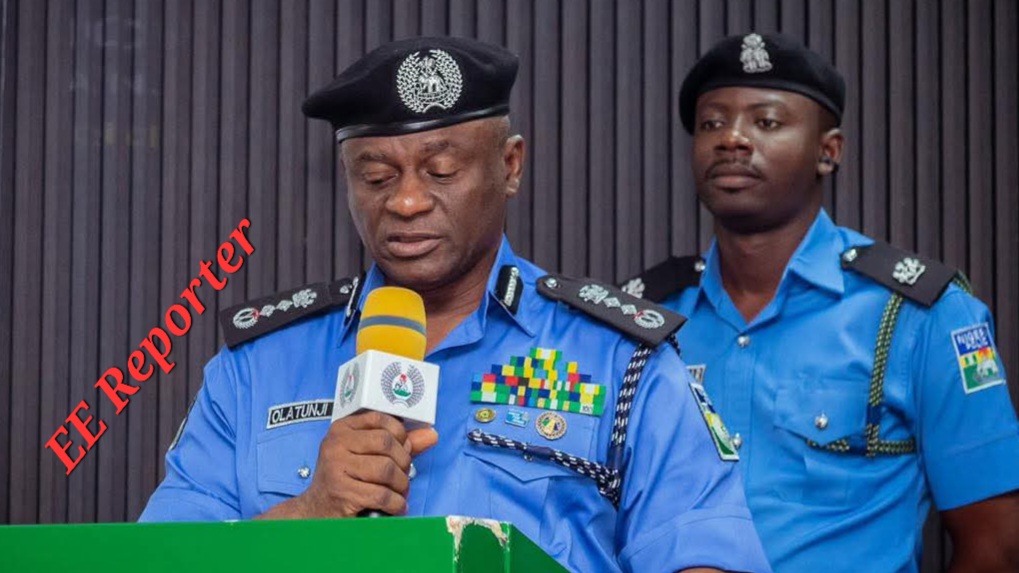
2027 Elections: IGP Disu Charges Police PROS on Strategic Communications, Countering Misinformation
The Inspector-General of Police, IGP Olatunji Rilwan Disu, psc(+), NPM, today, 18th November 2026, received Police Public Relations Officers (PPROs) and Public Relations liaison officers from various commands and formations at the Force Headquarters, Abuja, as part of institutional preparations for the 2027 General Elections.
Eereporter.com
Discussions during the meeting centred on strengthening professionalism, accountability, and effective communication between the Nigeria Police Force and members of the public. The officers, who are delegates at the ongoing World Public Relations Conference holding in Abuja from 15th to 21st November 2026, expressed appreciation to the Inspector-General of Police for approving their participation in the conference.
Addressing the spokespersons, IGP Disu urged them to make the most of the conference and apply the lessons learnt in their daily duties, particularly in alignment with the conference theme, “Responsible Communication: The Voice of the World.” Ahead of the 2027 General Elections, the IGP directed the officers to remain vigilant against misinformation during the campaign period, proactively dominate the cyberspace with accurate and timely information, and effectively localise Force Headquarters initiatives within their respective commands and formations.
IGP Disu
In a further effort to strengthen the Force’s strategic communication capacity, the Inspector-General of Police also approved the 2026 Police Public Relations Officers’ Conference to hold in phases, scheduled for 24th to 25th November 2026 in Abuja, and 1st to 2nd December 2026 in Akwa Ibom State.
The Nigeria Police Force reaffirms its commitment to transparent, responsive, and accountable public communication in support of peaceful democratic processes and public confidence nationwide.
CSP Ani Iniedu, anipr
Force Public Relations Officer
Force Headquarters, Abuja
18th November 2026
Eereporter.com
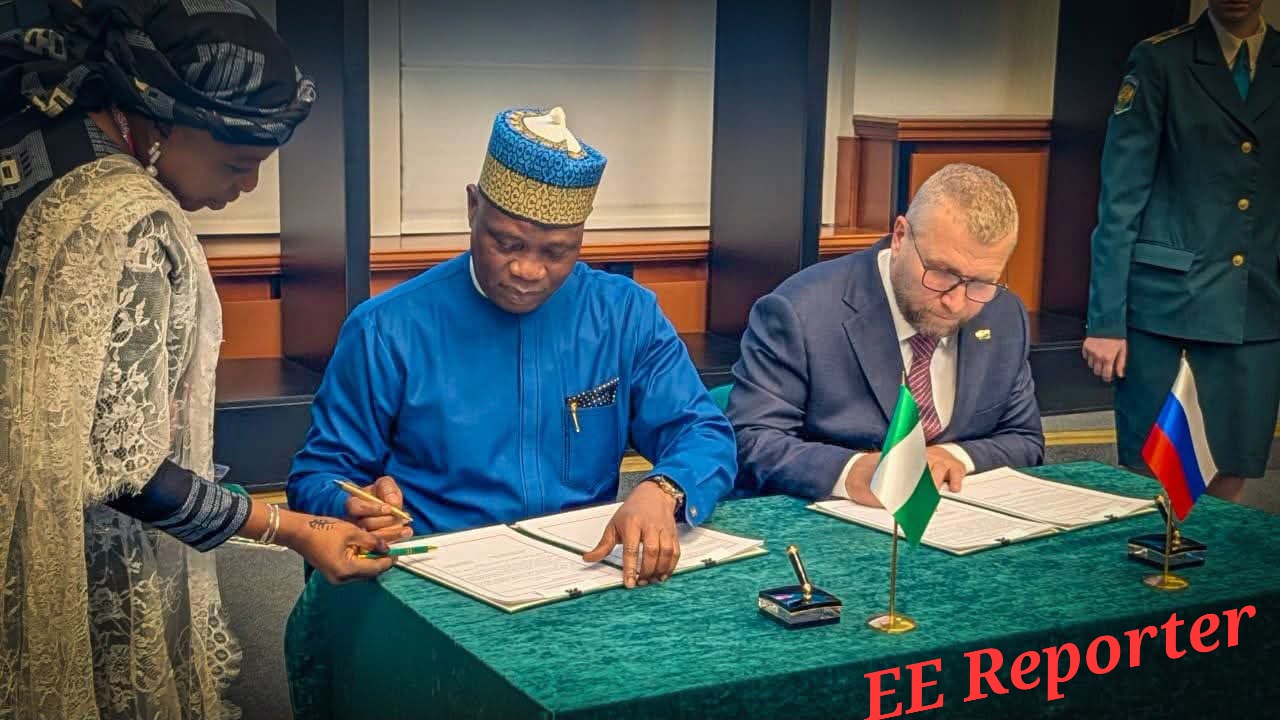
NCS, Russia Strengthen Cooperation to Optimise Trade Facilitation, Information Exchange
The Nigeria Customs Service (NCS) and the Federal Customs Service of the Russian Federation have taken a significant step toward strengthening bilateral customs cooperation after signing an Agreement on Cooperation and Mutual Assistance in Customs Matters (CMAA) in Moscow on 28 October 2026. The agreement establishes a framework for closer collaboration in trade facilitation, information exchange, customs enforcement, financial integrity and capacity development, while opening new opportunities for the two administrations to deepen operational cooperation.
Eereporter.com
…Move Towards Mutual Recognition of AEO Programmes, Enhanced Data Sharing.
The Comptroller-General of Customs, Adewale Adeniyi, who led the Nigerian delegation, described the agreement as a strategic instrument to safeguard economic integrity, secure supply chains and strengthen trade governance. He said the engagement marked the culmination of months of technical consultations, legal reviews, and constructive discussions between both administrations, reflecting a shared commitment to modernising customs operations and responding more effectively to emerging challenges in international trade.
CGC Adeniyi explained that the new legislative framework has accelerated the Service’s transformation, particularly through the adoption of digital systems that have significantly automated customs processes. According to him, declarations, payments and the submission of supporting documents are increasingly conducted electronically, enabling the Service to improve operational efficiency while facilitating legitimate trade. He emphasised that revenue generation and trade facilitation are not competing objectives, noting that the NCS approach aligns with the World Customs Organisation’s SAFE Framework of Standards.
On implementing the agreement, CGC Adeniyi identified exchanging experience between the two countries’ Authorised Economic Operator (AEO) programmes as an important area of cooperation. He explained that both administrations had been encouraged to undertake structured exchanges to understand their respective programme frameworks, operational procedures and implementation experiences, with the longer-term objective of advancing mutual recognition and acceptance. Such an arrangement, when developed, would strengthen the confidence accorded to compliant traders and potentially improve the efficiency of cargo movement between the two countries.
During bilateral discussions with the Head of the Federal Customs Service of Russia, Mr Valery Pikalyov, CGC Adeniyi highlighted the similarities in the reform journeys of both administrations, explaining that the Service had evolved considerably from its colonial origins into a modern customs administration. He recalled that the Service’s law remained largely unchanged for several years, until the introduction of the Nigeria Customs Service Act 2023, which provided a stronger legal foundation for institutional reforms, technological advancement and private-sector partnerships.
The discussions also examined the prospect of sharing customs statistics and trade data for analytical purposes. CGC Adeniyi highlighted Nigeria’s participation in the World Customs Organisation’s data initiative, stating that the NCS was the only customs administration to submit its trade data to the WCO data project. He noted that access to reliable customs data and structured information exchange would support comparative analysis, improve understanding of bilateral trade patterns and strengthen evidence-based customs administration.
In his response, Mr Pikalyov explained that the Federal Customs Service of Russia is statutorily authorised to collect, process, compile and provide customs statistics derived from customs declarations. He noted that Russia already exchanges customs statistics with foreign customs administrations under existing agreements, allowing both sides to analyse trade flows, identify discrepancies and monitor developments in bilateral commerce. He indicated that the Russian side was prepared to explore a dedicated arrangement with the NCS to exchange statistical data, subject to the relevant framework and procedures.
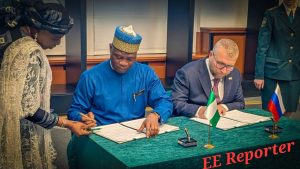
Customs, Russia
The Russian side further noted that Nigeria had become one of the first sub-Saharan African countries, alongside Ethiopia and Namibia, to conclude a customs cooperation agreement with the Federal Customs Service. The engagement took place within the framework of the Third Russia–Africa Summit, providing an opportunity to advance customs collaboration as part of the broader relationship between the two countries. With the agreement now signed, the NCS is positioned to deepen institutional cooperation with its Russian counterpart, strengthen customs intelligence and information exchange, promote compliant trade and contribute to more secure and efficient international supply chains.
The CMAA provides for four principal areas of cooperation: streamlined customs procedures to facilitate legitimate trade; secure information exchange to prevent, detect, investigate and suppress customs offences; financial integrity measures targeting illicit financial flows, grey-market importations and tax evasion; and stronger border security through cooperation against counterfeit goods, narcotic drugs, psychotropic substances and other prohibited or hazardous materials. It also provides a legal basis for direct engagement between the two administrations on customs-related matters, including operational assistance and the exchange of experience in personnel training.
Eereporter.com
-
 Crime2 years ago
Kogi Assembly Considers Law To Regulate Rent, Establish Control Board: Tenancy Law
-

 News2 years ago
Atiku Reveals Why He Failed To Pick Wike As Running Mate In 2023
-
 Akwa Ibom2 years ago
The Apostolic Church Gets New Territorial Chairman, Exco
-

 Crime2 years ago
Federal High Court Jails 2 For Vandalizing Transformer, Telecom Mast In Kogi
-
 News2 years ago
The Apostolic Church Gets New National President, Executive
-
 Akwa Ibom2 years ago
Umo Eno Commences Payment Of 80,000 Naira Minimum Wage With Arrears
-

 News2 years ago
Senator Natasha Returns To Senate With Husband Amid Seat Dispute
-
 Economy2 years ago
Kiyosaki: Is Tinubu’s Government Afraid Of Ibrahim Traore?