
Security
Lagos: Two-Storey Building Collapse At Northern Vulture Estate, Injured 1


Lagos: Two-Storey Building Collapse At Northern Vulture Estate, Injured 1
Lagos: Two-storey building collapse at Northern Vulture Estate, injured 1. A two-storey building under construction at Northern Vulture Estate, Chevron, Lagos State, collapsed on Tuesday, leaving one person dead and four others injured.
According to the Lagos State Emergency Management Agency (LASEMA), the building’s collapse led to the death of an adult male.
However, four other adult males sustained severe injuries in the disaster and were promptly transported to a nearby hospital for treatment.
Confirming the incident in a statement released on Tuesday, Dr. Olufemi Damilola Oke-Osanyintolu, the Public Relations Officer of LASEMA, said the injured persons were immediately transported to a nearby hospital for medical treatment.
“On arrival of the Agency’s Response Team at the incident scene, it was discovered that a two (2) storey building under construction was found to have collapsed at aforementioned location
The immediate cause of of the incident is unknown and further investigation will be conducted.
“Unfortunately, an adult male was confirmed dead by the LASAMBUS officials and four (4) adult males were seriously injured and have been transported to hospital,” he said.

Lagos
He noted that the agency alongside other common stakeholders were able to rescue the victims while the agency’s heavy-duty equipment has been dispatched.
Oke-Osanyintolu added that a search and rescue operation was ongoing.











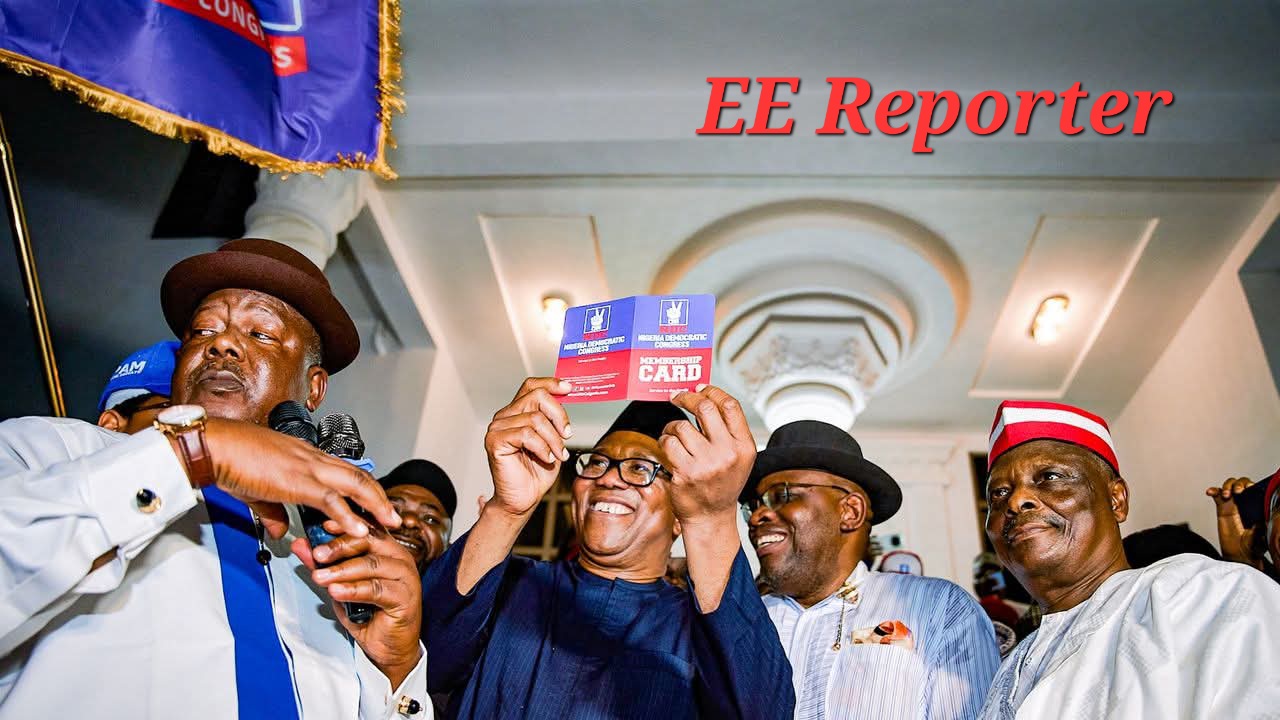
Obi-Kwankwaso Defection: Recalibration That Could Redefine The Country’s Power Structure
Obi-Kwankwaso surge; the defection storm that could upend Nigeria’s political system.
Politics does not whisper at defining moments; it roars, demanding bold choices and decisive turns. Today, the evolving journeys of Mr. Peter Obi, presidential candidate of the Labour Party in the 2023 elections, and Senator Rabiu Musa Kwankwaso, flagbearer of the New Nigeria Peoples Party in that same contest, capture the urgency of this moment.
This is not a quest for mere relevance or routine recalibration; it is a high-stakes pivot and a deliberate search for a credible platform capable of bearing the weight of a serious national challenge and reshaping the country’s political destiny.
What many once dismissed as improbable is now gaining the texture of inevitability: a broad, reform-minded alliance anchored on the convergence of supporters of Obi and Kwankwaso, now christened the OK Movement. This is no ordinary political maneuver; it is a recalibration that could redefine the country’s power structure while opening a path toward a more inclusive and stable democratic order.
Eereporter.com
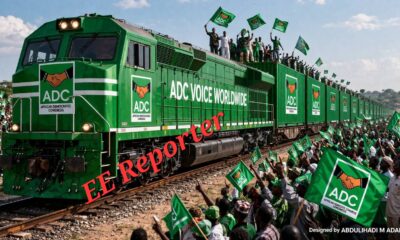
Both figures have, in recent cycles, moved away from their former party homes, briefly converging within the African Democratic Congress (ADC) and now gravitating toward the National Democratic Congress (NDC). Kwankwaso’s migration from the NNPP to the ADC was not merely symbolic; it signaled that the old political camps were no longer fit for purpose. As he put it, “We left the NNPP because of externally influenced legal challenges that made our stay perilous.”
Obi’s departure from the Labour Party to the ADC further consolidated what many hoped would become a formidable coalition. However, the ADC, rather than emerging as a stable opposition platform, became entangled in internal disputes, legal battles, and structural inconsistencies that many insiders now describe as unreliable. Explaining his exit, Obi noted: “My decision to depart from the ADC was not due to personal issues with the party leadership… but was driven by unresolved political conflicts and recurring legal and internal disputes that distracted the party from national issues.”
What we are witnessing is not indecision; it is strategic migration, a revolt against weak platforms and a determined search for a viable electoral vehicle. The ADC phase offered proof of concept, an early coalition impulse, but also exposed the limitations of platforms lacking internal cohesion. By contrast, the emerging NDC option presents itself as a more structured vehicle and one that promises clarity of leadership, a predictable primary process, and an institutional spine capable of sustaining a national campaign.
With this shift, a potential exodus of key members from the ADC appears imminent, further weakening a party already burdened by litigation over its leadership. Yet, the true engine of this moment is not party labels rather it is people. The fusion of the Kwankwasiyya Movement and the Obidient Movement represents one of the most compelling political alignments in contemporary Nigeria.
Kwankwasiyya brings disciplined grassroots organization, particularly across northern constituencies, with a proven record of loyal and enduring mobilization. The Obidient Movement, by contrast, is youthful, decentralized, digitally savvy, and driven by a reformist ethos that prioritizes transparency, competence, and accountability.
Together, they offer a rare synthesis: structure meets spontaneity; regional strength meets national reach; experience meets aspiration. In electoral terms, this alignment has the potential to consolidate a broad alliance cutting across geography, class, and generation. In governance terms, it could nurture a culture that blends technocratic discipline with active citizen engagement. This is precisely the mix many analysts argue Nigeria needs to move from cyclical contestation to sustained development.
This is where the NDC’s proposition becomes pivotal. Beyond serving as a landing ground, the party is positioning itself as an enabling architecture. Its most significant offering to an Obi–Kwankwaso ticket is not merely access, but assurance: a transparent pathway to nomination, a commitment to internal democracy, and a platform anchored on policy coherence rather than factional bargaining.
In a political environment often defined by contentious primaries and legal disputes, such guarantees can be decisive. They reduce uncertainty, attract broader coalitions, and allow candidates to focus on articulating a national agenda rather than navigating intra-party conflict.
The potential implications for electoral success are considerable. A unified ticket anchored on these two leaders could redraw Nigeria’s political map by aligning northern organizational strength with southern reformist momentum. It could also recalibrate voter psychology, shifting the narrative from fragmented opposition to a credible alternative. In many democracies, it is this moment of perceived viability that transforms enthusiasm into votes.
Obi-Kwankwaso
More importantly, the NDC offers narrative clarity. In modern politics, perception is shaped not only by what a movement stands for, but by how clearly and consistently it communicates its purpose. By providing a structured environment, the party enables the OK Movement to maintain message discipline while articulating a vision centered on economic reform, governance efficiency, and national unity. This clarity could convert widespread goodwill into measurable electoral support.
Analytically, the implications of this convergence are significant. Nigerian elections are often decided at the intersection of structure and sentiment. The Obidient Movement brings the sentiment, an energized, emotionally invested base seeking change.
Kwankwasiyya contributes the structure, a disciplined network capable of translating enthusiasm into votes. Their alignment, under a stable platform, creates a political equation that could fundamentally alter electoral dynamics.
Globally, such alignments have often catalyzed both electoral success and political stability. In diverse democracies, coalitions that bridge ideological, regional, or generational divides have demonstrated an ability not only to win power but to govern with a broader mandate. Their strength lies in inclusivity: carrying multiple constituencies along, reducing post-election tensions, and fostering shared ownership of governance.
In Kenya, intense political rivalry gave way to alliance arrangements that restored stability, most notably the 2008 power-sharing framework between Mwai Kibaki and Raila Odinga. In South Africa, the Government of National Unity in the 1990s brought former adversaries together, stabilizing a fragile transition and laying the foundation for enduring democratic institutions.
The lesson is clear: alliances are not easy, but when thoughtfully constructed, they can transform fragmentation into functionality. They convert competition into shared responsibility and create the conditions for stability.
For Nigeria, the Obi–Kwankwaso surge represents a similar possibility. It offers an opportunity to move from fragmented contestation to coordinated engagement, from narrow political calculations to a broader national vision, one grounded in competitive credibility rather than entrenched dominance.
No movement is without challenges. Alliance management demands discipline, compromise, and clear decision-making frameworks. Messaging must remain consistent, expectations must be managed, and internal cohesion must be actively maintained. Yet, these are the natural tests of any serious political enterprise.
What matters is the direction of travel and here, it is unmistakable: toward consolidation, credibility, and a reimagined political center.
The defection storm, therefore, should not be seen merely as instability. It is a manifestation of political evolution and a sign that actors are responding to the demands of a changing electorate. It reflects a growing insistence on platforms that can deliver not just participation, but performance.
In the final analysis, the Obi–Kwankwaso surge is more than a moment; it is a message. A message that Nigeria’s political space remains open to reinvention and that that alliances can be rebuilt, narratives reshaped, and power redefined.
As the storm gathers strength, one truth stands out: this is not simply about upending an existing order. It is about constructing a new one: more inclusive, more responsive, and more aligned with the aspirations of the Nigerian people.
And as the OK Movement weighs its next steps, the path forward becomes clearer. The future of Nigeria’s political contest will not be decided by rhetoric alone, but by the ability to align vision with structure, energy with organization, and aspiration with execution.
In that sense, the journey from the ADC to the NDC is not merely a change of address. it is a statement of intent: an intent to move from possibility to preparedness, from momentum to machinery and from movement to mandate.

EFCC Arraigns Former SKye Bank Chairman, Tunde Ayeni For N15.6b Fraud
The Economic and Financial Crimes Commission, EFCC, on Monday, May 4, 2026, arraigned a former Chairman, Board of Directors of the defunct Skye Bank Plc, Tunde Ayeni before Justice Jude Onwuzuruike of the Federal Capital Territory, FCT, High Court, Apo, Abuja.
Ayeni was arraigned on a 17-count charge bordering on criminal breach of trust, misappropriation and conversion of investors’ funds to the tune N15,665,085,429 (Fifteen Billion, Six hundred and Sixty five Million, Eighty five thousand, Four Hundred and Twenty-nine Naira (N15,665,085,429).
Prosecution counsel E.E. Iheanacho, SAN, informed the court that the matter was slated for arraignment and prosecution ready for trial.
“We have before the court 17-count charge dated April 28, 2026, we humbly apply that the charge be read to the defendant”, he said.
Eereporter.com
Count three of the charge reads: “That you, Tunde Ayeni, whilst being the Chairman, Board of Directors of the defunct Skye Bank Plc between 21st of October, 2014 and 19th November, 2014 at Abuja within the jurisdiction of this Honourable Court and having dominion over depositors funds domiciled in the defunct Skye bank Plc’s Suspense Account, committed criminal breach of trust when you dishonestly misappropriated the aggregate sum of Three billion, Two hundred and One million, Five Hundred and Thirty Five Thousand, Four Hundred and Twenty Nine Naira, Forty two kobo(N3,201,535,429.42) by transferring same to Misa Limited’s account No: 1011295717 and 1011295718 domiciled with Zenith Bank in Violation of the Prudential Guidelines and other regulations and thereby committed an offence contrary to Section 311 of the Penal Code and punishable under Section 312 of the same Act.
Count five of the charge reads: “That you Tunde Ayeni, whilst being the Chairman, Board of Directors of the Defunct Skye Bank Plc on or about 27th November, 2014, at Abuja within the Jurisdiction of this Honourable Court and having dominion over depositors’ funds domiciled in the defunct Skye bank Plc’s Suspense Account, committed criminal breach of trust when you dishonestly misappropriated the sum of Five Billion, Seventy Eight million, Five hundred and Fifty thousand Naira(N5, 078,550,000) by transferring same to Union Registrar Limited’s Account No: 0003490559 domiciled with Union Bank in violation of the Prudential Guidelines and other Regulations and thereby Committed an offence contrary to Section 311 of the Penal Code and Punishable under Section 312 of same Act.”

Fraud
Ayeni pleaded “not guilty” to the charges when they were read to him.
In view of his “not guilty” plea, Iheanacho prayed the court for a trial date and urged the court to remand the defendant in a Correctional Centre.
Defence counsel, Ahmed Raji Bashir, SAN, informed the court that the charge was given to the defendant on a public holiday adding that he considered it imperative to inform the court. He also prayed the court to release the defendant to him or return him to the custody of the EFCC.
Justice Onwuzuruike adjourned the matter to May 13, 2026, for hearing of the bail application, while the defendant was remanded at the Kuje Correctional Centre pending determination of bail application.
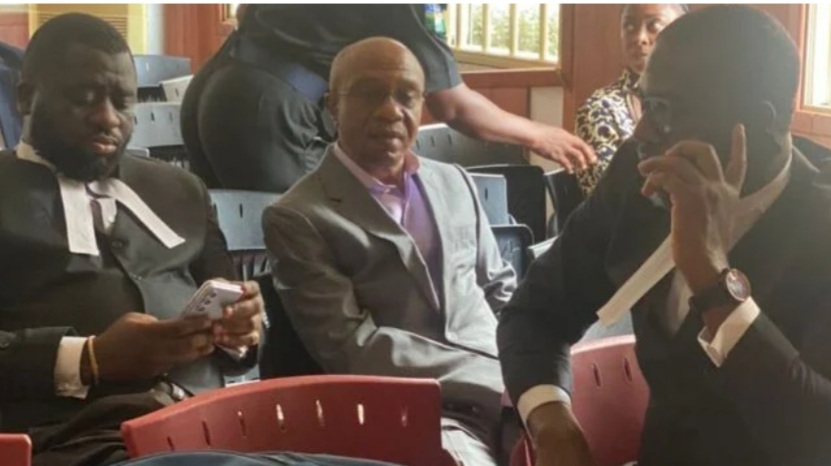
Alleged $4.5bn Fraud: Court Admits Co-Defendant’s Statement In Emefiele’s Trial
Justice Rahman Oshodi of the Special Offences Court sitting in Ikeja, Lagos, on Monday, May 4, 2026, ruled that the extrajudicial statement made by Henry Omoile, co-defendant to the erstwhile Central Bank of Nigeria (CBN) Governor Godwin Emefiele, is admissible in court.
Eereporter.com
Omoile had challenged the admissibility of his statements to the Economic and Financial Crimes Commission (EFCC), alleging that it was obtained under oppression and inducement.
This led to a “Trial-within-Trial” to determine the voluntariness or otherwise of the statement.
Omoile is currently facing a three-count charge bordering on unlawful acceptance of gifts as an agent, while Emefiele is standing trial on a 19-count charge filed by the EFCC, bordering on alleged gratification and corrupt demands during his tenure as CBN Governor.
Both defendants pleaded not guilty to all charges.
At Monday’s hearing, C.C. Okezie appearing for the prosecution while Labi Lawal, SAN, appearing for both first and second defendants
In his ruling, Justice Oshodi held that the prosecution had successfully proven that the statements obtained on February 26, 2024 were made voluntarily and not under any form of inducement, threat, or coercion.

Emefiele
“I have carefully considered the evidence presented during the mini trial. The environment was active, and there is no evidence that the second defendant was physically harmed. I am satisfied that the prosecution has proven beyond reasonable doubt that the statement was made voluntarily,” the judge stated.
The court further ruled that the statements made on February 26, 2024, marked as Exhibits 1–3, were not obtained under duress and were therefore admissible as evidence.
Following the ruling, Justice Oshodi adjourned the case to June 26, June 30, and July 6 and 8, 2026, for continuation of trial.
-

 Crime12 months ago
Kogi Assembly Considers Law To Regulate Rent, Establish Control Board: Tenancy Law
-

 News1 year ago
Atiku Reveals Why He Failed To Pick Wike As Running Mate In 2023
-
 Akwa Ibom1 year ago
The Apostolic Church Gets New Territorial Chairman, Exco
-

 Crime1 year ago
Federal High Court Jails 2 For Vandalizing Transformer, Telecom Mast In Kogi
-
 News1 year ago
The Apostolic Church Gets New National President, Executive
-
 Akwa Ibom1 year ago
Umo Eno Commences Payment Of 80,000 Naira Minimum Wage With Arrears
-

 News1 year ago
Senator Natasha Returns To Senate With Husband Amid Seat Dispute
-

 Economy12 months ago
Kiyosaki: Is Tinubu’s Government Afraid Of Ibrahim Traore?