News
Wike Tells Atiku says “No Regrets Over VP Slot, I’ll Ensure You Lose Again”

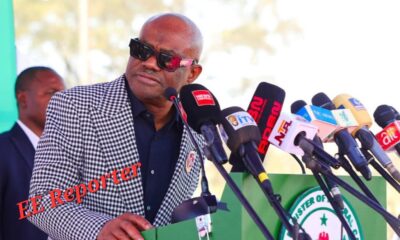
Wike tells Atiku says “no regrets over VP slot, I’ll ensure you lose again”. Federal Capital Territory (FCT) Minister, Nyesom Wike, has vowed to thwart former PDP presidential candidate Atiku Abubakar’s future presidential ambitions, insisting he has no regrets over being overlooked for the vice-presidential slot in 2023.

Wike Tells Atiku
Atiku recently stated he had “no regrets” for choosing Ifeanyi Okowa over Wike as his running mate, explaining that a PDP committee ranked Okowa as the preferred choice.
Responding through his media aide, Lere Olayinka, Wike dismissed Atiku’s remarks, stating that just as he contributed to Atiku’s defeat in 2023, he would ensure he fails again.

News
Diaspora Deaths: Faces/Names Of Nigerians Murdered Abroad In Cold Blood
Faces and names of Nigerians murdered abroad in cold blood in diaspora. Many Nigerians have been killed in several countries under varying circumstances. What should have been stories of success abroad have, in several cases, ended abruptly.
Aduwo Ayodele • June 1, 2026
created by photogrid
Many Nigerians have been killed in several countries under varying circumstances. What should have been stories of success abroad have, in several cases, ended abruptly. From unexplained deaths to brutal killings involving students and workers, the fatalities of Nigerian nationals have left several families either pursuing justice or grappling with inconsolable grief.
Eereporter.com
Media men presents a list, by no means exhaustive, of Nigerians killed abroad.
Khaleed Oladipo
In February, a 20-year-old Nigerian and cybersecurity student at De Montfort University in the UK, Khaleed Oladipo, was fatally stabbed in the chest on Oxford Street by an 18-year-old suspect.
Leicestershire Police said the incident occurred near the university campus, and an 18-year-old suspect had been arrested and was in custody at the time.
Mr Oladipo, who eventually died in a hospital, was described by his family as a good son and an Arsenal supporter. He was allegedly murdered on his way to watch the club’s match.
Emeka Uzor
On Monday, February 9, the Nigerian Union South Africa announced the death of Emeka Uzor, who was fatally shot at a Carltex Garage in Windsor East, Randburg, Johannesburg. NUSA said the victim, who was assassinated while in his vehicle, hailed from Nkerefi in Nkanu East local council of Enugu.
The group called on the South African minister of police and the national commissioner of the South African Police Service to conduct a thorough and impartial investigation into the incident.
Another group, the Nigerian Citizens Association South Africa, alleged that media personality Xolani Khumalo and his team shot the victim. NICASA described the incident as a violation of human rights and a tragic loss to the Nigerian community in South Africa.
Isaac Satlat
Isaac Satlat, a Nigerian student who worked as an e-hailing driver in South Africa, was strangled by two passengers, a male and a female, in February 2026. A February 12 viral videocaptured the attack, prompting widespread condemnation.
South African police’s preliminary investigations revealed that the victim was murdered by the two passengers who had requested the services of an e-hailing driver in Pretoria West.
The Pretoria Magistrates’ Court in South Africa adjourned the ongoing case against six suspected individuals arrested in connection with the incident until June for further investigation.
Four Nigerians found dead in UK waters
In March 2026, an advocacy group, ForBlackWomenUK, recalled the disappearances of four Nigerian women, whose bodies were found in rivers, lakes or offshore waters. The group listed the Nigerian victims as follows: Blessing Olusegun, Kayon Williams, Taiwo Balogun, and Samaria Ayanle.
The advocacy group said 24-year-old Ms Williams, a fashion designer, was found in the River Thames, while 53-year-old Ms Balogun, in a separate incident, was found in a lake near Bluewater Shopping Centre.
Also, the lifeless body of 21-year-old Ms Olusegun was discovered on a beach, while Ms Ayanle, a student at SOAS University of London in Bloomsbury before her death, was recovered from the River Thames.
The four Nigerian women died in separate incidents under unclear circumstances.
Rodiyat Alabede
A Nigerian student in Canada, Rodiyat Alabede, and one other individual died after donating their plasma at a collection centre in Winnipeg.
Ms Alabede died in October 2025, while the second person died in January 2026.
Health Canada, a government agency, in March 2026, said the victims developed fatal body reactions following their donations at the Grifols Plasma Donation Centre.
The Spanish-based donation centre reportedly pays plasma donors up to $100, although incentives may be higher.
“She was always happy. She had so many dreams, especially when she came to Canada. She held a big place in my heart. And before she arrived at the hospital, she had already passed,” Ms Alabede’s close friend, Mary Chika, said.
Segun ‘Success’ Olanrewaju
A Nigerian boxer and former national and West African light-heavyweight champion, Segun ‘Success’ Olanrewaju, reportedly collapsed and subsequently died in Ghana.
Mr Olanrewaju collapsed on Saturday, March 29, at the Bukom Boxing Arena during a bout with Ghanaian boxer John ‘Power’ Mbanugu.
The Nigerian boxer suddenly fell to the canvas, with early reports suggesting a possible cardiac arrest as the cause.
Ekpenyong Andrew
A Nigerian citizen, motor mechanic and father of five, Ekpenyong Andrew, was reportedly arrested by Tshwane Metro Police officers on Sunday, April 19, in the Booyens area of Pretoria on his way home.
NUSA stated in a release that Mr Ekpenyong’s body was discovered the next day at the Pretoria Central Morgue under circumstances suggesting foul play.
NUSA demanded a swift and unbiased probe by the Independent Police Investigative Directorate, the full autopsy report, disclosure of the cause of death and immediate suspension of the four police officers allegedly involved in the incident.
Emmanuel Amaramiro
In a separate incident, a Nigerian, Mr Amaramiro, died on April 20 from injuries sustained during brutal beatings by South African military operatives.
The incident reportedly followed an altercation with members of the Tshwane Metro Police.
The Nigerian consulate in Johannesburg said the killing threw the Nigerian community and diplomatic missions into shock.
The consul general, Ninikanwa Okey-Uche, said the incident raised questions about the safety of Nigerians and other foreigners in South Africa.
Eghosa Ogbebor
A 14-year-old Nigerian, Eghosa Ogbebor, died from gunshot injuries in Woolwich, United Kingdom.
On May 7, a 15-year-old Briton was arraigned at the Barkingside Youth Court over the teenager’s alleged murder.
On May 8, the UK Metropolitan Police stated that it arrested another teenager in connection with the murder.

Diaspora
Police investigation and prosecution of the case remain ongoing.
105 Nigerians killed in South Africa in seven years
On May 28, 2026, two Nigerian community groups in South Africa, NUSA and NICASA, said no fewer than 105 Nigerians had been killed in the country over the past seven years.
In a joint statement, the groups linked the deaths of several Nigerians in South Africa from 2019 to date to xenophobic attacks against migrants.
The groups said Nigerian migrants had been victims of extrajudicial killings, mob attacks, vigilante violence, shootings and unlawful use of force.
“In 2022, over 17 Nigerians reportedly lost their lives through violent attacks, vigilante-style executions, criminal assaults, and alleged brutality by security personnel, while in 2023, more than 40 Nigerians were reported dead in incidents ranging from mob violence and alleged police misconduct to unresolved violent encounters,” the statement said.
The groups stated that about eight Nigerians reportedly lost their lives under tragic circumstances in 2024, while in 2025, eight others similarly died in shootings, violent confrontations, or deaths in police custody.
“Most recently, from January 2026 to date, over 20 Nigerians have reportedly died during physical encounters involving security personnel, criminal attacks, or suspected extrajudicial actions,” the statement said.
Sylvester Abayomi
A Nigerian national, Sylvester Abayomi, was killed in a car crash by two friends, Uways Hussain (the driver) and Usmon Mahmood (passenger), in Manchester, United Kingdom.
The 50-year-old victim, who was reportedly on his way to work, died after being struck and suffering severe chest injuries.
The Manchester Crown Court sentenced the suspects, Mr Hussain to 11 years and eight months’ imprisonment for causing death by dangerous driving, while Mr Mahmood was jailed for 12 years and nine months for aiding the incident.
Despite the universal acceptance of the right to life, the deaths of several Nigerians abroad under obscure circumstances raise concerns about the safety and well-being of citizens outside the country.
Data released by the International Organisation for Migration in April indicated that a total of eight thousand migrants, including Nigerians, were reported dead or missing worldwide in 2025. The organisation noted that around 340,000 family members are estimated to have been directly affected.
Reacting, Inyene Etuk, a researcher in diaspora and transnational studies at the Institute of African Studies, University of Ibadan, expressed concern over the deaths of Nigerians abroad, attributing the trend to the country’s large population and the presence of Nigerian communities across the world.
“It might seem like there is an abundance of reports of casualties concerning Nigerian citizens, or people of Nigerian descent, in various countries. These casualties, especially the murders, are greatly unfortunate, and no one from anywhere should be in the news as a murder victim,” Mr Etuk explained.
“I would, however, attribute this abundance of Nigerian reports to the base rate fallacy. One in every 4 to 6 black people in the world is Nigerian. It is a country of over 200 million people. It is the largest nationality in Africa.”
The researcher noted that “when you consider the sheer demographic size and consequent dispersal, you can find an explanation for the seeming overrepresentation of Nigerian casualties in the media”.
Mr Etuk urged NiDCOM to strengthen its legal framework and foster greater cooperation with government institutions in other countries.
The researcher also called on the federal government to strengthen Nigeria’s institutions and international cooperation, adding that officials must work closely with foreign authorities to protect the welfare of Nigerians living abroad.
“I would say that bridging the gap in bringing justice to Nigerians in the diaspora who have become victims of casualties lies with strengthening our local or national institutions as well as our international cooperation,” Mr Etuk said.
“I believe that if the legal infrastructure of an institution like NiDCOM is further strengthened, particularly in cooperation with government institutions in other countries, we can move many steps forward in not only getting justice for Nigerians in the diaspora but also eliminating casualties of Nigerians abroad.”
The foreign affairs ministry and NiDCOM chief Abike Dabiri-Erewa did not immediately respond to requests for comments. Eereporter.com
News
Federal Workers Threaten Nationwide Strike Over Wages, Insecurity
The Federal Workers Forum (FWF) has threatened to mobilise federal workers for an indefinite nationwide strike over rising insecurity and unresolved wage issues.
The forum, in a communiqué issued after an online meeting on Saturday, condemned the Nigeria Labour Congress and the Trade Union Congress for failing to show leadership in this respect.
Eereporter.com
In the communique signed by the National Coordinator and Secretary, Messrs Andrew Emelieze and Ayo Ogundele, respectively, and made available to journalists in Ibadan on Sunday, the forum accused the federal government of exploiting workers and failing to guarantee their safety.
The group said an online poll of its members overwhelmingly backed immediate strike action to address the current hardship and insecurity crisis confronting Nigeria.
It said the July 2024 minimum wage adjustment was a hoax for federal workers.
According to the forum, only N40,000 was added flat to salaries across all grade levels, and that amount was taxed, leaving workers with much less.
The group also alleged that the promised 40 per cent peculiar allowance, which the Head of Service of the Federation, Mrs Didi Walson-Jack, said would take effect from May 1, 2026, was later denounced by the Office of the Accountant General.
“May 2026 salaries have been paid, but no wage award was given as promised by the Minister of Finance, and consequential adjustments remain outstanding.
“Federal workers are already getting used to forfeiting their promotion arrears, and as a matter of fact, some salaries and numerous arrears have entered ‘voice mail’,” the communique stated.
It further listed unpaid entitlements, including two months of wage award arrears since July 2024 and outstanding duty tour allowance arrears.
The forum rejected a recent N100,000 minimum wage proposal by the Nigerian Governors’ Forum, calling it a “Greek gift” meant to keep wages low and describing it as a “wicked conspiracy against workers.”
It demanded a living wage and immediate clearance of all outstanding arrears, and a cost-of-living allowance.

Federal Workers protest
On insecurity, the FWF said that federal workers now live daily in fear and uncertainty, with kidnappings and attacks becoming routine.
It specifically condemned recent kidnappings in Oyo and Borno states involving children and teachers.
The forum therefore mandated the leadership of the NLC and the TUC to engage the government with a view to the speedy resolution of hardship and insecurity.
It also demanded that the federal government use all means, including negotiation, to free hostages, especially children in captivity in Oyo State and other parts of the country.
It equally called on the National Assembly to legislate the right of Nigerians to bear firearms.
The forum urged the convocation of a sovereign national conference to discuss the state of the nation.
News
How Arukwe Drives NNPC Foundation’s CSR Success
It’s fair to say that Emmanuella Arukwe has become the most recognisable face behind NNPC’s social impact programs. That is because she heads NNPC Foundation—the official Corporate Social Responsibility (CSR) arm of NNPC.
Park that.
To know her is to understand why she navigates this role the way she does. First, Arukwe comes from a line of strong women who she says were unaware of limitations. Her mother was married as a teenager, raised five children, then returned to school to earn two master’s degrees and a PhD. Her grandmother was self educated and became a politician and businesswoman. Most importantly, she was raised by a father who taught his daughters to believe they could do anything.
“I didn’t know there was a difference between men and women,” she said jokingly.
Eereporter.com
That explains a lot about her confidence, resilience and refusal to accept excuses.
Long before becoming the first MD of NNPC Foundation, Arukwe had built a reputation within the company as a legal and corporate governance professional. During a pivotal period, she served as Acting Company Secretary during NNPC’s transition from corporation to limited liability company. In just eight months, she helped steer one of the most consequential transitions in the company’s history.
“We held over 17 board meetings and about 18 committee meetings in eight months,” she recalled. “Sometimes I hardly caught my breath.”
Today, her role is different, but no less demanding. Under her leadership, NNPC Foundation has rapidly become one of Africa’s most visible CSR platforms focused on health, education, access to energy and environmental sustainability.
“People think NNPC is only about energy…The essence of the Foundation is branding. We are rewriting NNPC’s story through actions, not words,” she said.
Arukwe says the brand must earn the trust of stakeholders. She understands that communities are more receptive when they feel seen, heard and respected. Whether engaging the Eze in Nnewi or the Olowo of Owo, she moves comfortably between boardrooms and traditional institutions, understanding that successful interventions are as much about relationships as they are about resources.
In three years, the Foundation has won four awards at the Sustainability, Enterprise, and Responsibility Awards (SERAS) Africa CSR Awards in 2024 and five in 2025, including the prestigious Most Responsible Organisation in Africa Award. Arukwe herself was named Sustainability Professional of the Year 2025.
Yet behind the awards and initiatives are human stories like the nationwide cataract intervention programme that has screened over 23,000 Nigerians and performed over 6,000 surgeries. She shakes her head as a reminder of the impact these figures translate to.
“We removed the cataracts, and gave the blind sight,” she said. “At first, communities thought the programme was fake because they could not believe something so life-changing could be free.”
She is passionate about these interventions which she says are the best part of her job because they are not statistics on PowerPoint slides. They transform the lives of real people.
I saw that passion firsthand at the Nnamdi Azikiwe University Teaching Hospital, Nnewi where the Foundation commissioned a state-of-the-art 1.5 Tesla Magnetic Resonance Imaging (MRI) machine. The diagnostic equipment, installed at the hospital means access to advanced screening for patients across South-Eastern Nigeria who previously had to travel as far as Lagos and pay high fees for MRI services.
Arukwe understands personally what it means for a family to access timely diagnosis for neurological, cardiovascular or cancer-related conditions.
“These are human beings behind these interventions,” she kept repeating.
Her passion for young people is equally evident. What started as a financial literacy initiative eventually evolved into a business development and entrepreneurship programme.
“Young Nigerians need more than financial knowledge…they need a route to economic independence.”
That initiative expanded into the NYSC entrepreneurship programme where Corpers received training on business fundamentals and startup development. In collaboration with the Corporate Affairs Commission (CAC), Corps members received a 45% discount for business name registration after the Foundation engaged the CAC Registrar-General/Chief Executive Officer who facilitated the intervention.
It is that same instinct to help people see possibilities that shapes the way she approaches mentorship — particularly of younger women. Early in her career, she was asked to relocate to Benin for a demanding role when her children were very young. Arukwe hesitated. Her mentor encouraged her to take the role. She now credits that move as one of the experiences that sharpened her leadership skills.
Years later, she became the encouraging voice to a young graduate trainee while working at Integrated Data Services Limited (IDSL).
“She was offered a role she felt unprepared for…I told her she could and must do it,” she said.
Today, the woman is a Company Secretary—proof of the powerful role mentorship plays in shaping women leaders in a majority male environment.

Arukwe
Arukwe says the establishment of Women in NNPC (WIN) is a legacy-defining initiative because representation alone is never enough and the pressure that comes with having a few women at the top is unsustainable.
So is the unseen pressure behind the work of NNPC Foundation where requests never stop. Yet despite the endless demands, the Foundation operates through clearly defined priorities, careful research and measurable impact.
“The Foundation is data and statistics driven. We must be even when demonstrating care…but I never forget that empathy is the foundation that grounds me,” she explained.
Arukwe does not forget how she was carried while building her career. Her mother helped significantly with childcare. There were nannies, relatives and young people she supported who became part of the ecosystem that helped her balance leadership and family.
What legacy does she hope to leave behind?
“I want people to know that I worked for a great company that gave me the wings and support to change people’s lives,” she said.
After listening to her speak about restored sight, empowered young people and dignity restored, one could argue that it’s a fair legacy to hope for.
Eereporter.com
-
Crime1 year agoKogi Assembly Considers Law To Regulate Rent, Establish Control Board: Tenancy Law
-

News1 year agoAtiku Reveals Why He Failed To Pick Wike As Running Mate In 2023
-
Akwa Ibom1 year agoThe Apostolic Church Gets New Territorial Chairman, Exco
-

Crime1 year agoFederal High Court Jails 2 For Vandalizing Transformer, Telecom Mast In Kogi
-
News1 year agoThe Apostolic Church Gets New National President, Executive
-
Akwa Ibom1 year agoUmo Eno Commences Payment Of 80,000 Naira Minimum Wage With Arrears
-

News1 year agoSenator Natasha Returns To Senate With Husband Amid Seat Dispute
-

Economy1 year agoKiyosaki: Is Tinubu’s Government Afraid Of Ibrahim Traore?