
News
Integrity Key To Sustainable Development, Says Olukoyede At NACIWA Leadership Conference

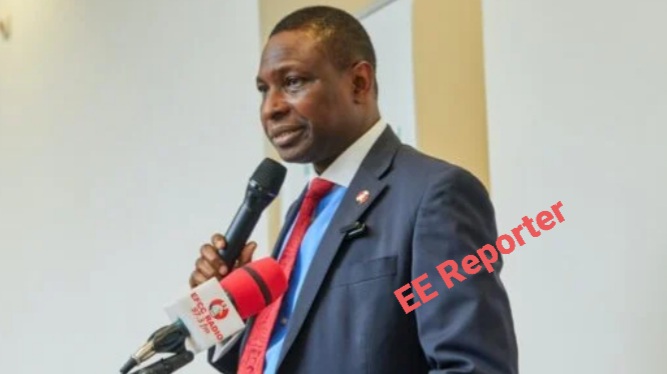
Integrity Key To Sustainable Development, Says Olukoyede At NACIWA Leadership Conference
The Executive Chairman of the Economic and Financial Crimes Commission, EFCC, and President, Network of Anti-Corruption Institutions in West Africa, NACIWA, Mr. Ola Olukoyede has identified integrity as a critical and compelling need for sustainable development of nations and institutions in the West-African sub-region.
Eereporter.com
He stated this in Abuja on Tuesday, July 21, 2026 at the opening ceremony of a two-day Leadership Conference for Heads of National Anti-Corruption Institutions in West Africa at the New ECOWAS Secretariat.
Olukoyede pointed out that without integrity in public institutions, the promises of economic integration, democratic governance, peace and sustainable development cannot be realised.
Corruption, he said, “weakens public confidence, diverts resources from essential services, distorts markets, undermines security and threatens the legitimacy of the state.”
He disclosed that the corruption environment has changed significantly, with criminal networks increasingly operating across borders. Illicit financial flows, he said, move through multiple jurisdictions within seconds, digital platforms and emerging technologies creating new opportunities for development, and also producing new forms of fraud, concealment, manipulation and financial crimes.
While noting that Artificial Intelligence has transformed the way information is generated, analysed and deployed, through enormous potential for detection, intelligence development, risk assessment and institutional efficiency, he stressed that it also raises questions of governance, ethics, accountability, data integrity and organisational readiness.
Explaining the rationale for the Conference, Olukoyede stated that it was designed as a leadership development programme and a statement of institutional intent. “We are signaling that leadership development, institutional capacity, peer learning and implementation must become permanent features of the Network’s programming. We are signaling that West African anti-corruption institutions are prepared to take collective responsibility for strengthening the regional integrity architecture,” he said.
The Conference, attended by heads of anti-graft agencies and institutions in West Africa, including Chairman, Code of Conduct Bureau, Dr. Abdulahi Bello, representatives of Independent Corrupt Practices and Other Related Offences Commission, ICPC, is devoting ample time to discussions on artificial intelligence in transformational leadership; institutional independence, integrity and accountability; institutional reform and high performance; digital transformation and intelligence-led enforcement; judicial partnership; transnational corruption; cross-border cooperation; asset recovery leadership; and effective board and executive governance.
Explaining what successful anti-corruption fight entails, the EFCC’s boss stated that anti-corruption agencies are required to pursue difficult cases, confront powerful interests, protect the integrity of sensitive investigations, respond to rapidly evolving financial crimes, manage public expectations and maintain confidence in their work.
In so doing, he noted that the agencies, at the same time, must ensure due process, institutional accountability, professionalism, fairness and respect for the rule of law. These challenges he noted “requires more than technical competence. They require strategic leadership.”
“Our institutions must be built to outlive us. They must have clear systems, credible governance arrangements, professional personnel, reliable technology, institutional memory and cultures that preserve integrity across successive leadership transitions”, he said, adding that “We must build anti-corruption institutions that are strong because their systems are strong; trusted because their processes are credible; and sustainable because their capabilities are deliberately developed and continuously renewed.”
In a lecture tagged: NACIWA Distinguished Leadership Lecture, Attorney General of the Federation and Minister of Justice, Prince Lateef Fagbemi, SAN, stated West African states are facing defining moments, when leadership is measured not by the eloquence of its pronouncements, but by the strength, credibility and integrity of institutions built and sustained. “West Africa stands at such a moment. Across our region, citizens are demanding governments that are accountable, economies that are transparent, and public institutions worthy of their confidence,” he said.
According to him, protecting public trust and ensuring that those entrusted with public resources remain accountable requires more than robust legal frameworks or institutional mandates, but demands courageous, visionary and transformational leadership. “Leadership that is prepared to uphold the rule of law without fear of failure, strengthen institutional independence, inspire public confidence, and leave behind institutions that are stronger than individuals,” adding that the difference between an institution that merely occupies space and one that changes the trajectory of a nation is almost always leadership.
He warned that public office is not a license for self-enrichment and that those entrusted with public resources must always be prepared to account for how those resources are managed. Nigeria, he said, remains unwavering in its commitment to combating corruption through strong institutions and faithful application of laws.
Ola Olukoyede
Other speakers at the Conference are, Dr. Olubunmi Ajayi, former Chairman, Independent Corrupt Practices and Other Related Offences Commission, ICPC, Professor Bolaji Owasanoye, former chairman of Independent Corrupt Practices and Other Related Offences Commission, ICPC, Mr. Dein Whyte, Dr, Arabi D.I., among others
The leadership Conference is the maiden edition put together by the Executive Committee of NACIWA. The well-attended Conference features delegates from Ghana, Sierra Leone, Cape Verde, Togo, Gambia, Senegal and other West African countries. The Conference is expected to come out with the Abuja Leadership Declaration, which would capture NACIWA’s shared understanding of the leadership standards, institutional priorities and cooperative actions required to strengthen anti-corruption effectiveness across West Africa.
Eereporter.com








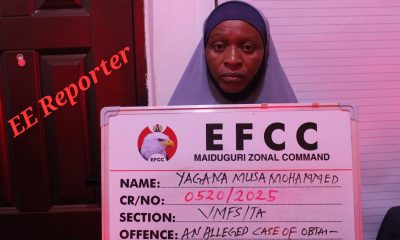


Court Affirms Final Forfeiture Of N293m, Properties Linked To Major General Atewe
The Lagos Division of the Court of Appeal has affirmed the judgment of the Federal High Court, Lagos, ordering the final forfeiture of over N293.97 million, multiple landed properties and investment assets linked to a retired military officer, Major General Emmanuel Jebe Atewe, to the Federal Government.
Eereporter.com
In a unanimous judgment read by Justice Boloukuromo Moses Ugo on Wednesday, July 22, 2026, the appellate court dismissed Atewe’s appeal against the judgment of Justice Chukwujekwu Aneke of the Federal High Court, which granted the application of the Economic and Financial Crimes Commission, EFCC, for the final forfeiture of the assets.
The forfeited assets include the sum of N293,970,000.00, 30,000 MTN -linked units in Stanbic IBTC Asset Management Limited, several high-value properties in Abuja, including plots of land at the Outer Northern Expressway, Jahi, Sabon Lugbe, Kuje, Gaube Farmland Extension II Layout, Sector Centre B Layout, Kuje, as well as a commercial property in Yenagoa, Bayelsa State.
The Commission traced the assets to funds reasonably suspected to be proceeds of unlawful activities. Investigations pointed to the diversion of money released for the operations of the Joint Task Force, Operation Pulo Shield.
In the Investigations by the EFCC, about N8.537 billion released to the Joint Task Force was allegedly diverted through a network of companies and individuals acting as proxies. The investigation further established that billions of naira were transferred to companies for services that were never rendered, with portions of the funds subsequently used to acquire various assets allegedly linked to Atewe through companies associated with him.
Specifically, the Commission’s findings showed that N297 million traced to Cisco Nobots Limited was used in a property transaction in Port Harcourt, from which N290 million was eventually recovered by the EFCC.
The Federal High Court had earlier granted an interim forfeiture order before making it final after holding that Atewe failed to satisfactorily explain the legitimate source of the assets.
Dissatisfied with the judgment, Atewe appealed, arguing, among other grounds, that the forfeiture proceedings were incompetent because he was entitled to the protection of Section 123 of the Armed Forces Act, that the proceedings ought not to have commenced while criminal charges against him were pending, and that the trial court lacked jurisdiction to entertain the application.
However, the Court of Appeal resolved all three issues in favour of the EFCC.
The appellate court held that Section 123 of the Armed Forces Act and the decision in General Jafaru Mohammed v. EFCC did not apply to Atewe because he was a retired military officer at the time the forfeiture proceedings were instituted.
The court noted that Atewe admitted his retirement in his affidavit before the trial court and held that the statutory protection under Section 123 is available only to serving members of the Armed Forces.
The court further held that Atewe failed to sufficiently show how he legitimately acquired the assets in question, observing that his explanations merely referred to honoraria without establishing a lawful source for the assets.

Court
On the appellant’s contention that commencing forfeiture proceedings while his money laundering trial was pending amounted to an abuse of court process, the Court of Appeal rejected the argument, holding that the institution of civil forfeiture proceedings during the pendency of criminal proceedings does not constitute an abuse of the judicial process.
Consequently, the Court of Appeal dismissed the appeal for lacking merit and affirmed the judgment of the Federal High Court ordering the final forfeiture of the assets to the Federal Government.
Eereporter.com
News
IGP Disu Declares Open Two-Day Workshop On Strategic Communication And Media Relations For Commissioners Of Police
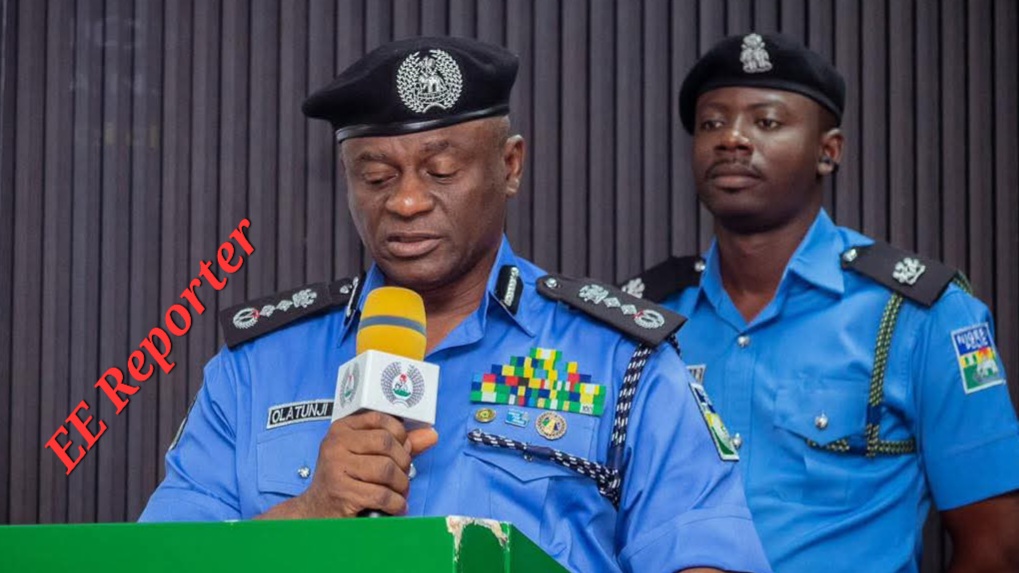
IGP Disu Declares Open Two-Day Workshop On Strategic Communication And Media Relations For Commissioners Of Police
The Inspector-General of Police, IGP Olatunji Rilwan Disu, psc (+), NPM, today declared open a two-day workshop themed “Enhancing Strategic Communication and Media Relations” for Commissioners of Police (CPs) drawn from commands nationwide.
Eereporter.com
Holding at the Nigeria Police Public Relations School (NPPRS), Abuja Centre, the workshop was attended by members of the Force Management Team, resource persons, and senior police officers.
In his welcome address, the Provost of the School, CP Emmanuel Ojukwu (Rtd), mnipr, fana, fnpa, fnisma, traced the institution’s growth from Kulende, Ilorin, through Lafia, to its present Abuja Centre. He reminded participants that Police Public Relations Officers do not create the image of the Force but manage it, noting that the true face of the Police remains its field officers, whose professionalism ultimately wins public affection. He charged the CPs to cascade lessons from the course down to junior officers at their commands, and disclosed that seven resource persons had been lined up for the engagement.
In his remarks, IGP Disu commended police officers nationwide for their daily dedication and successes, noting that media engagement has not traditionally featured in the career path of many officers ahead of their elevation to CP, a gap this workshop is specifically designed to close. He told the gathering that the office of a CP extends far beyond its outward prestige, stressing that CPs are, first and foremost, managers who must lead from the front. He urged them to attend social functions, visit schools, and leave lasting legacies in their host communities.
The IGP charged the CPs to dominate the media space, describing internal security as the NPF’s core mandate and reaffirming its standing as the foremost security agency in the country. He commended the clearance operations led by the Assistant Inspector-General of Police in charge of Police Mobile Force and the Commissioners of Police of Kogi and other states.
He urged the CPs to be proactive rather than reactive, build their character and media presence, and treat journalists as partners rather than adversaries. He charged them to engage the public with humility, respond swiftly to unfolding situations, and build relationships with the media before crises occur. “Guns protect lives, but your voices protect our reputation,” the IGP stated.

IGP Disu
The Nigeria Police Force remains committed to equipping its senior officers with the communication skills required to project a professional, accessible, and people-oriented police Force nationwide.
CSP ANIETIE OKOKON EDEM INIEDU, ANIPR,
Force Public Relations Officer,
Force Headquarters, Abuja.
22nd July, 2026.
Eereporter.com
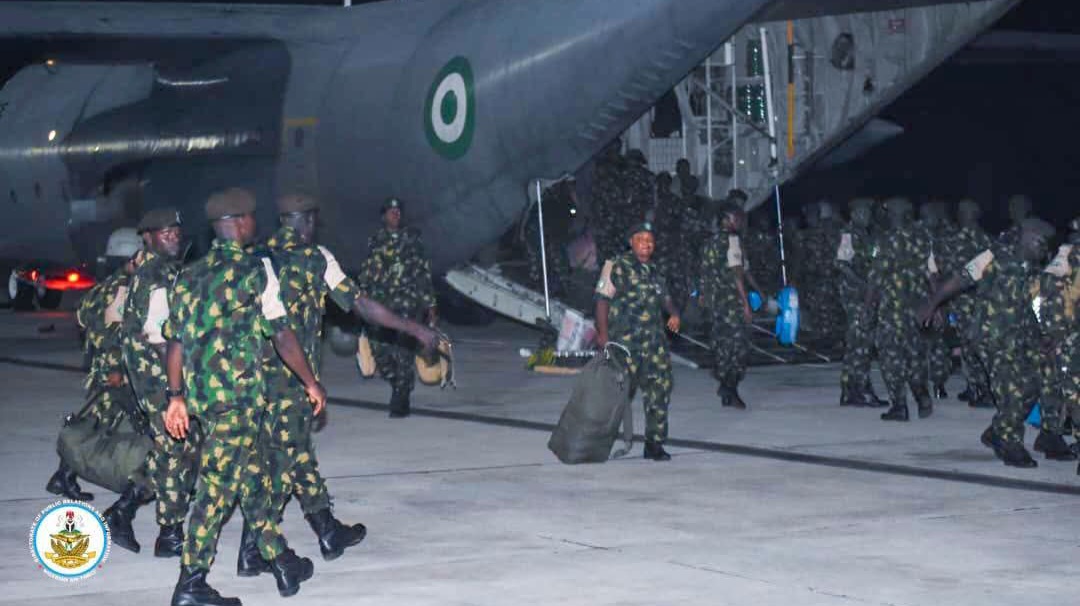
NAF Provides Frontline Insight To Media, Strengthens Transparency And Public Trust
In a strategic effort to deepen public understanding of ongoing counter-terrorism operations, the Nigerian Air Force (NAF) conducted a media familiarisation visit to the Air Component of Operation HADIN KAI in the North-East theatre.
Eereporter.com
The media delegation, led by the Director of Public Relations and Information, Air Commodore Ehimen Ejodame, comprised defence correspondents from various media organisations who were provided firsthand insight into the planning and execution of air operations, reaffirming the NAF’s commitment to openness, accountability and effective strategic communication. The Chief of the Air Staff (CAS), Air Marshal Sunday Kelvin Aneke, emphasised that transparency and credible communication are essential to sustaining public trust and ensuring balanced reporting of the sacrifices and achievements of military personnel.
The correspondents embarked on day and night air and ground patrols, interacted with air and ground support personnel and shared meals with frontline troops, providing a unique opportunity to gain firsthand insight into the realities, challenges and unwavering commitment of personnel serving in the theatre.
They also witnessed the exceptional professionalism, discipline and sacrifice of personnel working tirelessly round the clock to protect citizens, while operating in close synergy with the Nigerian Army and other security agencies to restore peace and stability in the region. The visit further afforded journalists a deeper appreciation of how precision air operations contribute to degrading terrorist capabilities and protecting civilian communities.
NAF
During the engagement, the Air Component Commander, Operation HADIN KAI, Air Commodore MB Ahmed, provided a vital brief on ongoing air operations and underscored the importance of accurate and responsible reporting in enhancing public confidence and countering misinformation. Similarly, the Theatre Commander, Joint Task Force Operation HADIN KAI, Major General AE Abubakar, highlighted the pivotal contributions of the Air Component in Intelligence, Surveillance and Reconnaissance (ISR), air interdiction and air mobility missions, which continue to enhance the flexibility, responsiveness and effectiveness of joint operations.
The initiative aligns with the CAS’s command philosophy of building a highly motivated, professional and mission-ready force capable of delivering decisive air power effects in synergy with surface forces for the realisation of national security objectives, while reinforcing public trust and support for ongoing military operations.
Eereporter.com
-
 Crime1 year ago
Kogi Assembly Considers Law To Regulate Rent, Establish Control Board: Tenancy Law
-

 News1 year ago
Atiku Reveals Why He Failed To Pick Wike As Running Mate In 2023
-
 Akwa Ibom1 year ago
The Apostolic Church Gets New Territorial Chairman, Exco
-

 Crime1 year ago
Federal High Court Jails 2 For Vandalizing Transformer, Telecom Mast In Kogi
-
 News1 year ago
The Apostolic Church Gets New National President, Executive
-
 Akwa Ibom1 year ago
Umo Eno Commences Payment Of 80,000 Naira Minimum Wage With Arrears
-

 News1 year ago
Senator Natasha Returns To Senate With Husband Amid Seat Dispute
-

 Economy1 year ago
Kiyosaki: Is Tinubu’s Government Afraid Of Ibrahim Traore?