
News
We Cannot Fight 21st Century Corruption With 20th Century Tools – ICPC Chairman

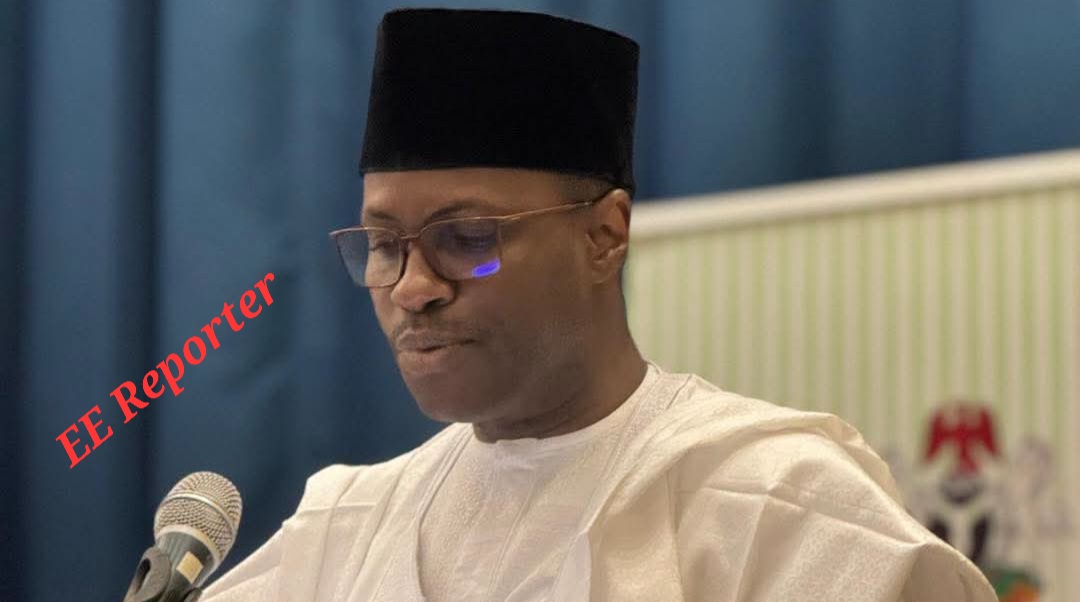
We Cannot Fight 21st Century Corruption With 20th Century Tools – ICPC Chairman
The Chairman of the Independent Corrupt Practices and Other Related Offences Commission (ICPC), Dr. Musa Adamu Aliyu, SAN, has called for innovative and technology-driven approaches to tackling corruption, stressing that “we cannot fight 21st century corruption with 20th century tools.” He made the statement at the IFEPS/ICPC Stakeholders Conference held at the Commission’s Headquarters in Abuja.
Eereporter.com
The conference, themed “Securing Tomorrow: Ethics at the Frontier of Innovation,” brought together leaders, policymakers, educators, civil society organisations and private sector stakeholders to advance ethics, transparency and accountability as essential pillars for Nigeria’s development.
Declaring the conference open through the Secretary to the Commission, Mr. Clifford Okwudili Oparaodu, DSSRS, the ICPC Chairman said corruption has become increasingly digital, faster and more sophisticated, making it imperative for anti-corruption strategies and ethical standards to evolve accordingly. “Our theme, Securing Tomorrow: Ethics at the Frontier of Innovation, speaks directly to the challenge before us. Corruption is evolving. It is now digital, faster and more sophisticated. If our ethics do not evolve with it, we will be left behind. That is why this conference is critical.
We cannot fight 21st century corruption with 20th century tools,” he stated.
Dr. Aliyu outlined three key priorities for strengthening integrity in Nigeria. The first is Prevention through Values through the C-H-I-L-D-R-E-N Values Initiative, aimed at instilling honesty, discipline and respect in children from an early age.
The second is Responsibility in the Digital Space through the Citizens Digital Responsibility Initiative (CDRI), which promotes ethical online behaviour and combats cybercrime, misinformation and digital fraud.
The third is Sustainability through Funding through the newly launched Ethics Endowment Fund (EEF), designed to provide sustainable resources for ethics education, public sensitization and the institutionalisation of integrity nationwide.
Reaffirming the Commission’s commitment to combating corruption, Dr. Aliyu stated that while enforcement remains a core mandate of the ICPC, prosecution alone cannot eradicate corruption.
He stressed the need to build a national culture where integrity becomes the accepted standard of behaviour, adding that the Commission has already laid important foundations through initiatives such as the National Values Curriculum (NVC), the National Ethics and Integrity Policy (NEIP), and the Sexual Harassment Policy.
Earlier, in her welcome address, the Executive Director of the Institute for Ethics and Professional Studies (IFEPS), Dr. (Mrs.) Uyim Akpabio, said the conference was convened at a time when technology is advancing faster than regulations, making it imperative to embed ethics into innovation.
She observed that while artificial intelligence, data and digital platforms are reshaping governance and society, integrity must remain the guiding principle. She commended the ICPC for facilitating the National Values Curriculum (NVC) and the National Ethics and Integrity Policy (NEIP), describing them as complementary frameworks for nurturing ethical values in young people and promoting integrity in public and private institutions.
Dr. Akpabio explained that the conference was built around three key objectives—Alignment, Action and Activation.
According to her, the initiative seeks to unite government, academia, the private sector, civil society, faith-based organisations, the media and families in promoting ethics as a shared national responsibility.
She urged participants, particularly children and youths, to become champions of the C-H-I-L-D-R-E-N Values Initiative, the Citizens Digital Responsibility Initiative (CDRI), the National Values Curriculum and the National Ethics and Integrity Policy in their schools, workplaces and communities, while commending the ICPC for its unwavering leadership in institutionalising ethics in governance.
In her opening remarks, the Chairperson of the Board of the Institute for Ethics and Professional Studies (IFEPS), Prof. Ekanem Braide, represented by Amb. (Mrs.) Anthonia Ekpa, said the Institute, in collaboration with the ICPC, streamlined the originally planned two-day stakeholders’ conference into a one-day event to ensure greater participation, focus and impact while maintaining the quality of engagement and expected outcomes.
She noted that the conference theme underscores the urgent need to align rapid technological advancement with ethical values, warning that innovation without integrity could fuel inequality, misinformation and the erosion of public trust.
She added that the conference would also witness the joint launch of three flagship initiatives by IFEPS and ICPC aimed at institutionalising ethics, integrity and responsible digital citizenship, stressing that securing the ethical values of young people is fundamental to securing Nigeria’s future.
Delivering the goodwill message on behalf of the Corps Marshal of the Federal Road Safety Corps (FRSC), Shehu Mohammed, mni, Assistant Corps Commander Agboola Olundegun commended the organisers for choosing a theme that reflects the realities of an era in which technology is rapidly transforming governance and public service delivery.
He emphasized that innovation must be guided by integrity, transparency, accountability and professionalism if it is to strengthen governance and earn public trust.
He noted that the FRSC has continued to leverage technology through digital driver’s licence and number plate administration, electronic traffic enforcement, real-time patrol monitoring and crash data management systems to improve service delivery. He, however, maintained that technology alone cannot eliminate corruption or guarantee excellence, stressing that ethical values remain indispensable to sustainable national development.
ICPC Chairman
Also delivering a goodwill message on behalf of the Director-General of the Bureau of Public Procurement (BPP), Dr. Adebowale Adedokun, the Director of the Civil Infrastructure Department, Mr. Nasir M. Bello, described the conference as timely, noting that ethics, transparency and accountability must underpin innovation and digital transformation in public service.
He said collaboration among government institutions, the private sector and civil society is critical to entrenching integrity in governance.
Mr. Bello reaffirmed the Bureau’s commitment to promoting due process, transparency and accountability in public procurement, expressing confidence that the conference would foster stronger partnerships and practical strategies for advancing ethical leadership and strengthening Nigeria’s anti-corruption efforts.
Eereporter.com











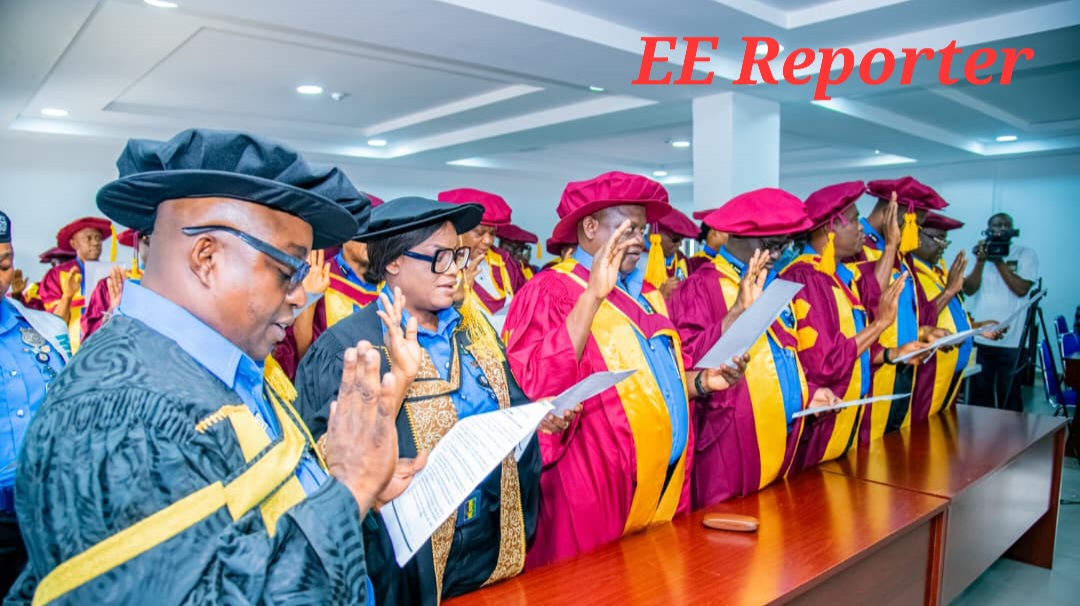
ICMNA: President’s Induction Address By DIG Isyaku Mohammed, PhD, FCNA (DTD)
Distinguished Members of the Police High Command, Members of the Governing Council of the Institute, Distinguished Guests, Ladies and Gentlemen, and our esteemed Commissioners of Police to be inducted.
Eereporter.com
I bring you warm greetings from the President and Governing Council of the Institute of Conflict Management and Negotiation Analysts (ICMNA).
The President of the Institute sincerely regrets his inability to be physically present at this important occasion due to unavoidable official commitments.
He has, however, conveyed his profound appreciation to the Nigeria Police Force for this strategic partnership and has requested me to deliver this address on his behalf and to perform the induction ceremony.
It is therefore my honour and privilege to represent the President & the Governing Council of the Institute on this significant occasion.
Today marks another significant milestone in the advancement of professional excellence, ethical leadership, and strategic conflict management within our nation.
Permit me, on behalf of the Governing Council and the entire membership of the Institute of Conflict Management and Negotiation Analysts (ICMNA), to congratulate each one of you on the successful completion of the Two-Day Executive Training Programme for Commissioners of Police organized by the Nigerian Police Force.
The theme of this programme, “Enhancing Strategic Communication, Media Relations, Thought Leadership, Emotional Intelligence, Public Relations and Excellence in the Nigeria Police Force,” reflects the realities of modern policing. Contemporary law enforcement demands far more than operational competence; it requires leaders who communicate effectively, inspire confidence, manage conflict professionally, negotiate with wisdom, and build enduring public trust.
The Institute recognizes that the competencies developed through this executive programme are closely aligned with the core values and professional framework of conflict management and negotiation.
* Strategic communication strengthens understanding and prevents unnecessary conflict.
* Media relations promote transparency, credibility, and public confidence.
* Thought leadership equips leaders to influence positive institutional change.
* Emotional intelligence enables effective decision-making under pressure while fostering empathy and professionalism.
* Public relations enhances collaboration between law enforcement agencies and the communities they serve.
Collectively, these competencies form the foundation of effective conflict prevention, negotiation, mediation, leadership, and sustainable peacebuilding, which are the very principles upon which the Institute of Conflict Management and Negotiation Analysts was established.
It is in recognition of your successful participation in this executive programme, your commitment to professional development, and your dedication to ethical leadership that the Institute has found you worthy of admission into its professional body as Certified Conflict and Negotiation Professionals (CPs).
This induction is therefore not merely the presentation of a certificate or the conferment of a professional title. It is an affirmation that you have accepted a greater responsibility to serve as ambassadors of peace, ethical leadership, constructive dialogue, and professional excellence wherever your duties may take you.
As members of this Institute, you are expected to uphold the highest standards of integrity, professionalism, accountability, confidentiality, and continuous learning. You are also expected to promote peaceful conflict resolution, effective negotiation, and responsible leadership in the discharge of your official responsibilities and in service to our nation.
At this point, the formal admission into the Institute requires your public affirmation of allegiance to its Constitution, Code of Ethics, values, and professional obligations.
Administration of the Oath
May I respectfully request all inductees to kindly rise.
Please raise your right hand and repeat after me as I administer the Oath of Allegiance.
(The President proceeds with the Oath of Allegiance.)
After the Oath
Congratulations.!!!
By the authority vested in me as the President of the Institute of Conflict Management and Negotiation Analysts (ICMNA), and having taken the Oath of Allegiance and pledged to uphold the Constitution, Code of Ethics, and professional standards of the Institute, I hereby admit you into the Institute as Certified Conflict Management and Negotiation Professionals (Ps), with all the rights, privileges, responsibilities, and obligations pertaining thereto.

ICMNA
You are now ambassadors of professionalism, ethical leadership, peaceful conflict management, strategic negotiation, and institutional excellence.
On behalf of the Governing Council and the entire membership of the Institute, I warmly welcome you into the ICMNA family.
May your membership inspire greater service, exemplary leadership, and lasting contributions to the Nigeria Police Force and our nation.
Congratulations, and welcome to the Institute.
Eereporter.com
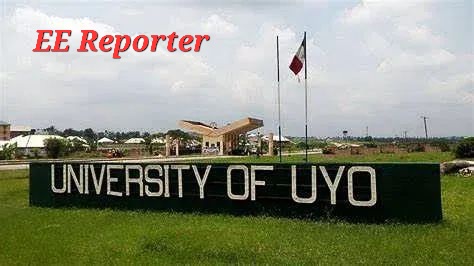
University of Uyo Seeks Anti-Corruption Alliance With ICPC
In a decisive move to fortify ethical governance within academic circles, the management of the University of Uyo paid a high-level courtesy visit to the Akwa Ibom State Office of the Independent Corrupt Practices and Other Related Offences Commission (ICPC), signaling a renewed institutional resolve to combat corruption from the ground up.
Eereporter.com
Leading the delegation, the Vice Chancellor, Professor Christopher N. Ekong, accompanied by key members of his team, formally called on the Resident Anti-Corruption Commissioner (RACC) for Akwa Ibom and Cross River States, Mr. Baba Alaro Shuaib to support the University Anti-Corruption efforts.
During the engagement, Professor Ekong articulated the University’s unwavering commitment to fostering a culture of transparency, probity, and accountability across all levels of the institution.
He underscored the visit as a strategic step to deepen collaborative ties with the Commission, while specifically soliciting technical support for comprehensive sensitisation programmes aimed at both students and staff.
“We are here to build a robust partnership that will insulate our community from the scourge of corrupt practices. The University of Uyo stands ready to be a beacon of integrity, and we believe the ICPC is an indispensable ally in that mission,” Professor Ekong stated.
In his response, Mr. Shuaib lauded the Vice Chancellor’s proactive leadership, describing tertiary institutions as pivotal gatekeepers in the national anti-graft crusade.
He assured the delegation of the Commission’s full backing, emphasising that educational environments are fertile grounds for cultivating long-term ethical reform.
Also in attendance were the Commission’s Second-in-Command, Mr. Ebenezer Olamiku, alongside other senior ICPC officers. The University’s Deputy Vice Chancellor, Professor Iniobong Uko, delivered the vote of thanks, expressing gratitude for the warm reception and the Commission’s evident enthusiasm for the proposed partnership.
UniUyo
The meeting, which comprised twelve participants in total, concluded with both parties agreeing to map out a structured framework for joint anti-corruption initiatives, including workshops, policy reviews, and student outreach programmes.
This developing alliance marks a significant milestone in the University of Uyo’s administrative ethos, reinforcing its dedication to producing not only academically excellent graduates but also morally upright citizens.
Eereporter.com

IGP Disu Holds Strategic Meeting With Benue Stakeholders, Pledges Intensified Security
As part of his efforts to strengthen regional stability, the Inspector-General of Police, IGP Olatunji Riliwan Disu, psc (+), NPM, paid an official working visit to the Executive Governor of Benue State, His Excellency, Rev. Fr. Dr. Hyacinth Iormem Alia, culminating in a high-level strategic engagement at the State Government Banquet Hall in Makurdi.
Eereporter.com
The meeting brought together key security stakeholders, including traditional rulers, religious leaders, youths and women representatives, and members of various Farmers Associations, to address the state’s most pressing security challenges, with a primary focus on resolving the longstanding farmer-herder conflict.
Addressing the assembly, IGP Disu expressed grave concern over the widespread proliferation of sophisticated firearms, identifying it as the underlying driver of recurring violence across local communities. He commended Governor Alia and community leadership for their proactive support, emphasizing that local cooperation remains indispensable to achieving lasting peace. Urging residents, particularly the youths, to report suspicious activities promptly, the IGP promised robust, intelligence-driven policing backed by absolute confidentiality for all informants. He further called for seamless collaboration among conventional security agencies and local security outfits, reiterating that maintaining law and order is a collective responsibility.
In response, Governor Hyacinth Alia expressed deep gratitude to IGP Disu for conducting a direct operational assessment of the state, describing the visit as a clear demonstration of the Nigeria Police Force’s dedication under his leadership. Reaffirming his administration’s commitment to supporting security agencies, Governor Alia stressed that his overarching goal is to guarantee a safe environment where every citizen can live, work, and farm without fear. He further commended the Commissioner of Police, Benue State Command, CP Cletus C. Nwadiogbu, for his decisive efforts to tackle crime and foster stronger police-community relations.

Benue
The Nigeria Police Force remains steadfast in its dedication to safeguarding communities across the nation while upholding the highest standards of professionalism and public trust.
CSP ANIETIE OKOKON EDEM INIEDU
Force Public Relations Officer,
Force Headquarters, Abuja.
24th July, 2026.
-

 Crime1 year ago
Kogi Assembly Considers Law To Regulate Rent, Establish Control Board: Tenancy Law
-

 News1 year ago
Atiku Reveals Why He Failed To Pick Wike As Running Mate In 2023
-

 Akwa Ibom2 years ago
The Apostolic Church Gets New Territorial Chairman, Exco
-

 Crime1 year ago
Federal High Court Jails 2 For Vandalizing Transformer, Telecom Mast In Kogi
-
 News1 year ago
The Apostolic Church Gets New National President, Executive
-
 Akwa Ibom2 years ago
Umo Eno Commences Payment Of 80,000 Naira Minimum Wage With Arrears
-

 News1 year ago
Senator Natasha Returns To Senate With Husband Amid Seat Dispute
-

 Economy1 year ago
Kiyosaki: Is Tinubu’s Government Afraid Of Ibrahim Traore?