
News
Governor Eno Receives First 20 CNG State-Owned Buses, Reaffirms Commitment To Modern Transportation System


Governor Eno Receives First 20 CNG State-Owned Buses, Reaffirms Commitment To Modern Transportation System
Akwa Ibom State Governor, Pastor Umo Eno, has received the first batch of 20 state-owned buses out of the 50 ordered by his administration, describing the development as another major step towards transforming the state’s transportation sector.
Eereporter.com
Speaking during the reception of the buses, at Government House Uyo, Governor Eno expressed gratitude to God for a safe delivery of the vehicles and commended everyone who contributed to the successful procurement process.
He specifically appreciated the Ministry of Transport, the Commissioner for Transport, Dr. Anthony Luke, AKICORP, Mr. Imo-Abasi Jacob, the Managing Director of Peacock Paint, Mr. Ime Uwa, and other stakeholders for their dedication and support.
The Governor disclosed that the remaining 30 buses would arrive in batches, while the government intensifies work on the completion of modern bus terminals across the state.
“We have just received the first 20 buses. We ordered 50, and they will come in batches. The next step is to get the terminals ready. We have already paid for the tracking devices, and we will install trackers, introduce an electronic ticketing system, and put every necessary facility in place. This speaks to a better transport system for Akwa Ibom State,” he said.
Governor Eno reiterated that his administration remains committed to making transportation easier, safer, and more affordable for residents.
“What we promised our people is that we would make transportation easy and simple. Akwa Ibom has one of the best road networks in Nigeria after Abuja. These buses will operate across all the 31 Local Government Areas, which is why we are constructing transport terminals to ensure seamless movement of people across the state.”
He explained that beginning with 50 buses is a strategic move, adding that more buses would be procured as demand increases.
The Governor expressed optimism about the state’s future, noting that the dividends of his administration’s investments are beginning to manifest.
“I see a brighter future for Akwa Ibom. All these projects are coming together. Within three years, by the grace of God, you will witness seed time and harvest time. I believe this administration has sown the seeds, and Akwa Ibom is gradually entering the harvest season.”
Governor Eno also congratulated the people of Akwa Ibom for their continued faith and support for his administration, urging them to remain hopeful and united as the government delivers more developmental projects.

Transportation
Earlier, the Commissioner for Transport, Dr. Anthony Luke, thanked Governor Eno for his unwavering commitment to repositioning the transport sector.
He described the arrival of the buses as clear evidence that the administration is deliberate and intentional about modernising transportation infrastructure and services in the state.
According to the Commissioner, the initiative has been warmly welcomed by the people of Akwa Ibom and will significantly improve mobility, enhance economic activities, and provide residents with a safer and more efficient public transportation system.
Eereporter.com








Artificial Intelligence (AI) Must Be Guided by Values, ICPC Tells Students
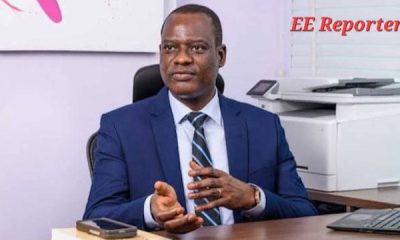
The Independent Corrupt Practices and Other Related Offences Commission (ICPC) has called on Nigerian students to ensure that the growing use of Artificial Intelligence (AI) is guided by strong moral values and ethical principles.
Eereporter.com
The call was made during the 2026 Secondary Schools Debate Competition organised by the Junior Chamber International (JCI Aso) Abuja in collaboration with the ICPC at the Commission’s headquarters in Abuja.
Speaking at the event, the Chairman of ICPC, Dr. Musa Adamu Aliyu, SAN, represented by the Director of Public Enlightenment and Education, Mr. Demola Bakare, FSI, described the debate theme, “Balancing the Benefits and Risks of Artificial Intelligence,” as timely and relevant in today’s technology-driven world.
According to him, while artificial intelligence offers immense opportunities to improve lives and enhance productivity, it can also be misused to harm society if not guided by integrity and responsible conduct.
Dr. Aliyu noted that young people are central to the future of AI and will ultimately determine how the technology shapes society.
“The AI we are talking about belongs to the youths. Some of us are merely migrants into the system. The only thing we owe them is to incorporate values into it, values that make life worth living,” he stated.
The ICPC Chairman further urged participants to reject the criminal and fraudulent use of artificial intelligence and embrace ethical innovation for national development.
In his opening remarks, the President of JCI Aso described the debate theme as timely, stressing that young people would play a crucial role in shaping the future of artificial intelligence.
About 20 secondary schools participated in the competition, showcasing their debating skills and perspectives on the opportunities and challenges presented by artificial intelligence.
At the end of the contest, Government Day Secondary School, Wuse II, emerged second runner-up, while Merosa Academy secured the first runner-up position. Federal Government Boys’ College (FGBC), Apo, emerged overall winner of the competition.
ICPC
Trophies were presented to the schools that placed first, second and third, while students who distinguished themselves in other segments of the competition received medals in recognition of their outstanding performances.
This version reads more like a professional news report and has a stronger closing paragraph.
Eereporter.com
Public Interest Must Prevail Over Personal Agendas, ICPC Chief Warns New Permanent Secretaries
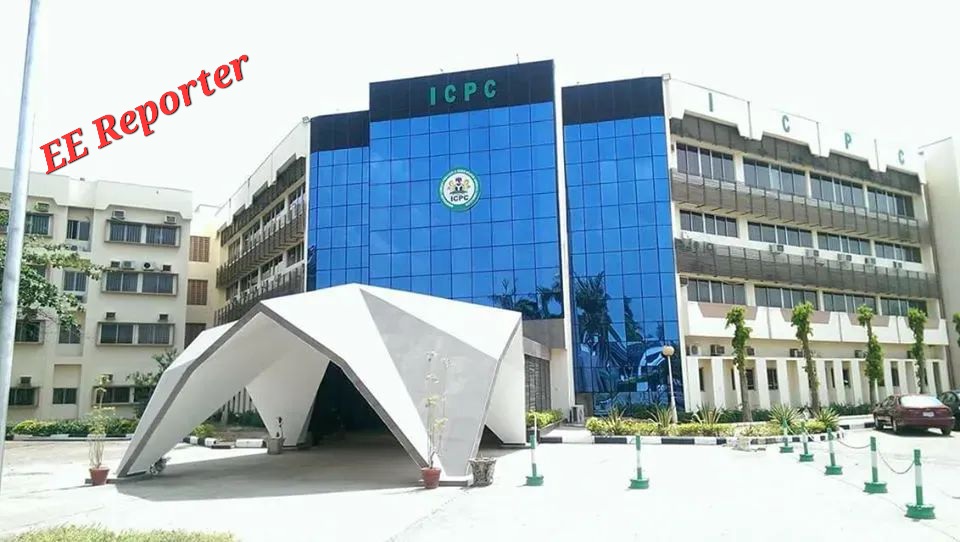
In a firm admonition to the Federal Civil Service’s newest accounting officers, Chairman of the Independent Corrupt Practices and Other Related Offences Commission (ICPC), Dr. Musa Adamu Aliyu, SAN, has charged newly appointed Permanent Secretaries to steadfastly subordinate personal and sectional interests to the greater public good in the execution of their official responsibilities.
Eereporter.com
Dr. Aliyu delivered this clarion call during an induction training programme for the four newest Permanent Secretaries, held recently at the Chief Olusegun Obasanjo Conference Hall within the Office of the Head of the Civil Service of the Federation in Abuja. He underscored that such unwavering commitment is indispensable for fostering transparency, accountability, and robust good governance across the public service landscape.
Presenting a paper entitled “Avoiding Corruption Pitfalls: Adherence to Anti-Corruption Principles,” the ICPC Chairman characterised corruption as a pervasive global malaise by no means confined to Nigeria. He identified greed, eroded integrity, feeble accountability frameworks, and ineffectual institutional oversight as the principal drivers of corrupt practices worldwide.
Dr. Aliyu proceeded to delineate the mandates of Nigeria’s three frontline anti-corruption agencies, providing clarity on their distinct yet complementary roles. He explained that the Code of Conduct Bureau is statutorily responsible for promoting public morality and enforcing asset declaration compliance among public officers.
The ICPC, he noted, is vested with the mandate to prevent, investigate, and prosecute systemic corruption within the public sector, alongside its educational function. Meanwhile, the Economic and Financial Crimes Commission (EFCC) focuses on investigating and prosecuting economic and financial crimes traversing all sectors of the national economy.
Drawing upon the United Nations Convention Against Corruption (UNCAC), Dr. Aliyu highlighted that Section 15(5) stipulates unequivocally that States shall abolish all corrupt practices and abuse of power. He emphasised that the mandatory language of “shall” imposes a binding obligation rather than a discretionary option, thereby underscoring the gravity of the international anti-corruption architecture.
He further observed that the ICPC Act of 2000 stands out for its meticulous, section-by-section articulation of provisions, furnishing a comprehensive legal framework for Nigeria’s anti-corruption crusade.
Turning his attention to the strategic fulcrum occupied by Permanent Secretaries, Dr. Aliyu characterised the Federal Civil Service as the veritable engine room of government. He elucidated that whilst ministers craft policies and set strategic priorities, it falls to Permanent Secretaries to translate these visions into measurable, tangible outcomes for the citizenry.
The Hon Chairman reminded the participants that, as accounting officers, financial controllers, and trustees of their respective ministries, they are duty-bound to exercise the most exacting standards of diligence, probity, and integrity in managing public resources. Corruption, he stressed, extends far beyond the narrow confines of bribery; it encompasses abuse of office, conflicts of interest, contract inflation, ghost worker schemes, nepotism, and other unethical practices that erode public trust.
Dr. Aliyu urged the newly appointed Permanent Secretaries to assert firm control over their ministries by bolstering internal control mechanisms, safeguarding whistleblowers from reprisal, and ensuring rigorous compliance with due process at every turn. “Always place the public interest above personal or sectional interest,” he counselled, in a refrain that resonated throughout the hall.
In her remarks, the Head of the Civil Service of the Federation, Mrs. Didi Esther Walson-Jack, represented by the Permanent Secretary of the Common Services Office, Dr. Danjuma Usman Kalba, commended the ICPC Chairman for his unwavering dedication to the anti-corruption crusade. Dr. Kalba also lauded the Commission’s proactive measures designed to ensure that Ministries, Departments and Agencies (MDAs) adhere rigorously to due process in discharging government responsibilities. Such initiatives, he affirmed, are critical to reinforcing accountability and bolstering public confidence in governance institutions.
The induction programme featured four newly appointed Permanent Secretaries who participated in the intensive training session. They are:
1. Mrs. Bekearedo Augustina Waren – Permanent Secretary, Political and Economic Affairs Office, Office of the Secretary to the Government of the Federation (OSGF);
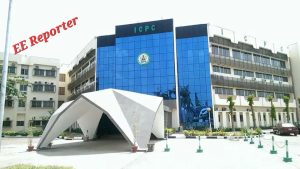
ICPC
2. Dr. Kamil Ayinde Shoretire – Permanent Secretary, Federal Ministry of Labour and Employment;
3. Mrs. Nkiruka Bella Jones-Nebo – Permanent Secretary, Career Management Office, Office of the Head of the Civil Service of the Federation (OHCSF); and
4. Mr. Sani Yargaya Aminu – Permanent Secretary, Special Services Office, Office of the Secretary to the Government of the Federation (SSO-OSGF).
The induction programme forms an integral component of the Office of the Head of the Civil Service of the Federation’s ongoing efforts to equip newly appointed Permanent Secretaries with the requisite knowledge, ethical grounding, and leadership acumen necessary for effective stewardship of public institutions.
Ultimately, the initiative seeks to deepen the culture of transparency, accountability, and exemplary service delivery across the entire Federal Civil Service, in service to the Nigerian people.
J. Okor Odey anipr.
Head, Media & Public Communications, ICPC.
Eereporter.com

NPF Commences Five-Day Women Police Leadership Programme
The Nigeria Police Force has commenced a five-day Women Police Leadership Programme aimed at strengthening leadership capacity, promoting professional development, and advancing gender-responsive policing among female police officers.
Eereporter.com
The programme is supported by the Government of Germany and conducted in collaboration with the United Nations Development Programme (UNDP), GS Foundation, CLEEN Foundation, and the Nigeria Police Reform Secretariat, brings together female officers from Commands and Formations across the country to enhance their leadership competencies, strategic management skills, and contemporary policing knowledge.
Representing the Inspector-General of Police, IGP Olatunji Rilwan Disu, psc(+), NPM, at the opening ceremony, the Assistant Inspector-General of Police in charge of Training and Development, AIG Uche Ifeanyi Henry, reaffirmed the IGP’s commitment to continuous capacity building as a cornerstone of ongoing reforms within the Nigeria Police Force. He encouraged participants to maximise the opportunity by actively engaging in the sessions and applying the knowledge acquired to improve service delivery and strengthen leadership within the Force.
In his keynote address, the Director-General of the National Institute of Police Studies, Prof. Olu Ogunsakin, underscored the importance of sustained leadership development for female officers, describing it as essential to enhancing professionalism, institutional effectiveness, and operational excellence within the Nigeria Police Force.

Women Police Leadership Programme
The Nigeria Police Force remains committed to investing in the training and retraining of its personnel, fostering professionalism, promoting gender inclusion, and implementing reforms that strengthen institutional capacity and improve policing service delivery across the country.
Eereporter.com
CSP ANIETIE OKOKON EDEM INIEDU Anipr, Force Public Relations Officer, Force Headquarters, Abuja, 29th June, 2026
-

 Crime1 year ago
Kogi Assembly Considers Law To Regulate Rent, Establish Control Board: Tenancy Law
-

 News1 year ago
Atiku Reveals Why He Failed To Pick Wike As Running Mate In 2023
-

 Akwa Ibom1 year ago
The Apostolic Church Gets New Territorial Chairman, Exco
-

 Crime1 year ago
Federal High Court Jails 2 For Vandalizing Transformer, Telecom Mast In Kogi
-
 News1 year ago
The Apostolic Church Gets New National President, Executive
-
 Akwa Ibom1 year ago
Umo Eno Commences Payment Of 80,000 Naira Minimum Wage With Arrears
-

 News1 year ago
Senator Natasha Returns To Senate With Husband Amid Seat Dispute
-

 Economy1 year ago
Kiyosaki: Is Tinubu’s Government Afraid Of Ibrahim Traore?