
News
FG Approves A Combined N4.34tn Financing For Transport, Agriculture, Power, Others

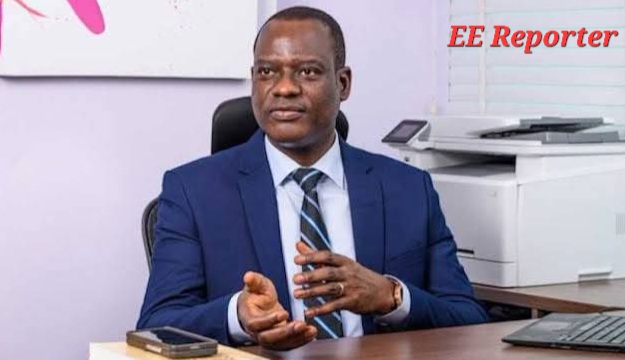
FG Approves A Combined N4.34tn Financing For Transport, Agriculture, Power, Others
The Federal Government on Monday approved a combined N4.34tn in financing across five sectors including transportation, agriculture, power, infrastructure and small business credit.
Eereporter.com
The approvals followed the Federal Executive Council meeting presided over by President Bola Tinubu at the Council Chamber of the State House, Abuja.
It was the first meeting in approximately three months since the council last sat on March 4, 2026, when Tinubu swore in Inspector-General of Police, Tunji Disu.
They span 14 separate memos presented by the Ministry of Finance.
The approvals include N215bn in naira-denominated investments in transport, $900m (approximately N1.24tn) for agricultural and rural development, $160m (approximately N220.6bn) for Niger State solar energy from the Islamic Development Bank, $1.2bn (approximately N1.65tn) for the Sokoto-Badagry Super Highway, and a combined $500m (approximately N689.5bn) and €200m (approximately N315.6bn) for MSME financing through the Development Bank of Nigeria.
Briefing State House correspondents after the meeting, the Minister of Finance and Coordinating Minister of the Economy, Taiwo Oyedele, said “We had 14 memos for the Ministry of Finance. You would imagine I’m not going to take you through all of them one by one, but council made very strategic decisions, which I have decided to categorise under five headings.”
On transportation, Oyedele said council ratified a series of previously anticipated presidential approvals covering the CNG bus initiative, electric vehicles, CNG-powered tricycles and vehicle conversion kits, unlocking the remaining investment tranche needed to complete those programmes.
“As many of you will recall, Mr President had introduced initiatives on CNG buses, electric vehicles, CNG fuel tricycles and conversion kits. Some of these investments had already been made based on anticipatory approval by Mr President, given the urgency of those interventions and council today approved.
“What that means is the remaining investment that needs to be made can now go ahead. The total amount is about N215bn,” he said.
Four memos on agricultural development were approved at a combined $900m, covering financing for agricultural and rural technical-vocational training, special agro-industrial processing zones and green valuation for growth projects, he stated.
The Council approved a $160m credit facility from the Islamic Development Bank for Niger State solar energy development projects.
The Islamic Development Bank will provide $150m and the Niger State government will contribute $10m as counterpart funding.
“I attended the AGM of the Islamic Development Bank about one or two weeks ago, and these were some of the conversations we had on how to finance development using concessional facilities,” Oyedele said.
Council also approved financing of approximately $1.2bn for section two of the Sokoto-Badagry Super Highway, covering the Kebbi State portion of the corridor.
According to Oyedele, the final category covered two memos providing affordable financing for small businesses, one of €200m and another of $500m, to be channelled through the Development Bank of Nigeria.
He explained, “We all know that the bulk of employment as well as economic activities in Nigeria is done by small businesses, so we always have to think about how to support that sector, because supporting them is supporting ourselves and our country.
Responding to questions about fuel pump prices, which remain elevated despite a decline in global crude oil prices following the easing of Middle East tensions, Oyedele said a structured process was already under way to address what he described as an asymmetric pricing problem where operators adjust prices upward quickly when costs rise but resisting downward adjustments when they fall.
“The way the market tends to work is that when prices are going up, operators make adjustments very quickly under the excuse of replacement cost. But when prices come down, the prices don’t go down as fast, the excuse is always unsold inventory, old stock.
“This is something we need to always balance. We do not want our operators and businesses to go out of business, but we also do not want them to exploit the Nigerian people.
“Trying to strike that balance requires some work on the part of the regulators and ensuring that we are very honest and transparent with ourselves,” he said.
He noted that the Federal Competition and Consumer Protection Commission and the Nigerian Midstream and Downstream Petroleum Regulatory Authority, which has statutory powers under the Petroleum Industry Act to ensure market-reflective prices that do not take advantage of consumers, were already addressing the matter.
Taiwo Oyedele
“There is already an ongoing process to address this issue,” he said.
Oyedele also pushed back on suggestions that the government’s transport cost-mitigation measures had failed, pointing out that fuel products in Nigeria currently attracted no taxes after presidential suspensions of VAT, excise and surcharge.
He argued, “Many people have said that when the crisis in Iran started, many countries reduced taxes on fuel products, what is Nigeria doing? Well, actually in Nigeria there are no taxes on fuel products.
“Mr President suspended VAT, excise as well as the surcharge on fuel products. This is the main reason why you find that pump prices in our neighbouring countries are between 20 and 50 per cent lower than in Nigeria. It would have been worse.
“So let’s say it’s a bad situation that we are paying more for transportation, but it would have been worse without those interventions by the government.”
Oyedele also appealed to operators who have converted to CNG which is a cheaper fuel than petrol but are reportedly charging passengers the same fares as petrol-powered vehicles.
“With this huge investment in CNG conversion kits, some of which are subsidised by government, you find the person using CNG is charging the same amount as the person using petrol.
“Now that’s not government anymore, it’s just us taking advantage of the situation.
“If we all play our part and are very honest and think about the interest of our country, I think we will make progress faster,” he said.
Eereporter.com









Nigeria Sets to Host Global AMR Conference as Minister Warns of Rising Drug Resistance
Nigeria will host the fifth Global High-Level Ministerial Conference on Antimicrobial Resistance (AMR) from December 6 to 8, 2026, in Abuja, as the Federal Government intensifies efforts to tackle drug-resistant infections.
Eereporter.com
The Coordinating Minister of Health and Social Welfare, Professor Muhammad Ali Pate, announced this during a webinar on Tuesday, describing antimicrobial resistance as a silent pandemic responsible for thousands of preventable deaths in Nigeria and more than one million deaths globally.
The conference, which will be the first of its kind to take place in Africa, will be held under the theme, “One Health: Advancing Global AMR Commitments to Local Action.”
Pate said the growing threat required coordinated action across the human health, agriculture, livestock, environment and water sectors, stressing that no single ministry could effectively address the problem independently.
Antimicrobial resistance occurs when bacteria and other disease-causing microorganisms develop the ability to withstand medicines designed to eliminate them, making infections such as pneumonia and typhoid increasingly difficult to treat.
“AMR is a hidden pandemic. It’s silent. People go to hospitals, get treated for pneumonia, typhoid or whatever infectious disease without proper knowledge of sensitivity to the antimicrobial being used,” the minister said.
He explained that the Federal Ministry of Health and Social Welfare had introduced antimicrobial stewardship programmes in federal hospitals over the past two and a half years.
According to him, the ministry had also established a clinical governance task force to reduce hospital-acquired infections and was collaborating with relevant regulatory bodies to ensure the availability of genuine medicines, discourage indiscriminate drug sales and improve diagnostic services.
The minister identified the inappropriate use of antibiotics in livestock production as another major concern, noting that efforts to combat AMR must extend beyond hospitals and other healthcare facilities.
Speaking at the briefing, the Minister of State for Health and Social Welfare, Dr Iziaq Salako, cited findings from the 2022 Global Research on Antimicrobial Resistance study published in The Lancet.
The study estimated that bacterial antimicrobial resistance directly caused 1.27 million deaths globally in 2019, with Nigeria accounting for approximately 64,500 deaths.
Salako warned that the situation could become more severe without urgent intervention.
“Without action, more than 39 million deaths could be directly attributable to AMR between 2025 and 2050,” he said.
He disclosed that the conference would adopt the Abuja Compact on Antimicrobial Resistance, which is being developed through consultations with member states to translate international commitments into practical measures.
The Minister of State for Agriculture and Food Security, Dr Aliyu Sabi Abdullahi, said AMR threatened human health, agricultural productivity and food security.
He noted that the misuse of antimicrobials could undermine disease control, compromise food safety and disrupt trade, calling for responsible practices throughout the agricultural value chain.
Similarly, the Minister of Environment, Balarabe Abbas Lawal, stressed the importance of a coordinated One Health approach, explaining that resistance could spread between humans, animals and the environment through food, water, soil and waste systems.
He said the four ministries had committed to strengthening joint coordination, promoting responsible antimicrobial use and establishing public reporting and monitoring mechanisms to track the implementation of the Abuja Compact.
Tinubu Approves Ebola Task Force
Pate also disclosed that President Bola Ahmed Tinubu had established an Ebola task force, chaired by the Chief of Staff to the President, to coordinate Nigeria’s preparedness and response to the outbreak in the Democratic Republic of the Congo.
He said the Nigeria Centre for Disease Control and Prevention and Port Health Services had strengthened surveillance and preparedness measures, including monitoring at the country’s borders.
The minister, however, maintained that there was currently no evidence of an Ebola case in Nigeria.
Minister Defends Nigeria-US Health Agreement
On the health memorandum of understanding between Nigeria and the United States, Pate described the agreement as a non-binding and non-secret framework guided by Nigerian laws and policies.
He said the arrangement provided for a transition by 2030 to enable Nigeria to reduce its dependence on external health funding and strengthen domestic financing for healthcare.
Federal Government
According to him, the United States has supported Nigeria’s HIV, tuberculosis and malaria programmes for 25 years.
However, following a shift in US policy in 2025, President Tinubu approved a six per cent increase in the health budget as part of the country’s commitment to mobilise more than $3 billion in additional health funding before 2030.
Pate maintained that the agreement did not undermine Nigeria’s sovereignty or conflict with existing national laws.
“There’s nothing in that MoU that is inconsistent with our national policies and existing laws. Our sovereignty was safeguarded. The MoU is available under Freedom of Information,” he said.
He urged Nigerians to avoid spreading misleading information about national issues for social media attention, calling for responsible public engagement.
Eereporter.com
President Tinubu Applauds EFCC on Record- Breaking Achievements
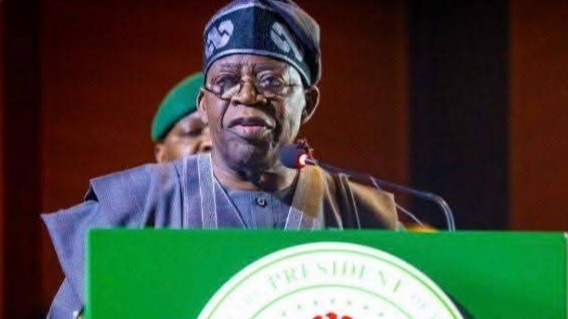
President Bola Tinubu has commended the Economic and Financial Crimes Commission, EFCC, for its record-breaking achievements in combating financial crimes, recovering illicit assets and strengthening Nigeria’s international financial standing and called for stronger collaboration among all stakeholders in the anti-corruption corridor.
Eereporter.com
The President gave the applause in Abuja on Tuesday, October 13, 2026, at the opening ceremony of the 8th EFCC/National Judicial Institute, NJI Workshop for Judges and Justices.
Calls for Stronger Synergy among Anti-Graft Stakeholders.
The workshop is themed: “Investigation and Prosecution of Economic and Financial Crimes in a Digital Age.”
Represented by Vice President Kashim Shettima, Tinubu particularly commended the EFCC’s efforts in tackling cryptocurrency fraud and recovering virtual assets, noting that the Commission had demonstrated its determination to stay ahead of evolving criminal methods. “The EFCC’s recent momentum in tackling cryptocurrency fraud and its commendable strides in recovering virtual assets is highly reassuring. These actions signal an agency that is proactive, forward-looking and resolved not to be outpaced by technological innovation,” he said.
In the first 34 months of the current administration of the EFCC, the Commission filed 14,476 cases in court and secured 10, 872 convictions, which represents 75.1 percent conviction-to-filing ratio. The EFCC equally recorded 1,370 convictions from 1,889 filings in the first half of 2026. In addition, the Commission recovered N1.233 trillion, $684,478,457.32, £373, 905.78, and €9,343,803.66 in monetary assets.
The President cited the successful prosecution and subsequent deportation of 192 foreigners arrested for cyberterrorism and cryptocurrency fraud as evidence of the Commission’s commitment to combating technology-driven crimes.
He noted that the increasing sophistication of financial crimes, driven by blockchain technology and artificial intelligence, require continuous capacity building for investigators, prosecutors and judicial officers.
“Because these modern threat typologies are constantly mutating, law enforcement and judicial authorities must engage in continuous capacity building to effectively adapt and respond to these evolving threats. Adapting to the shifting dynamics of financial crime and realigning our investigative and prosecutorial strategies is critical to preventing institutional obsolescence,” he said.
President Tinubu also pledged the Federal Government’s support for judicial capacity development, stressing that an independent, progressive and reform-minded judiciary was indispensable to achieving meaningful progress in the anti-corruption campaign.
He, however, urged the judiciary to strengthen its capacity to adjudicate complex financial crime cases, assuring that his administration would continue to support the sector while respecting judicial independence.
He particularly expressed concern that major anti-corruption prosecutions lost on procedural technicalities could undermine public confidence in the justice system. He urged the EFCC and the judiciary to continue to improve on prosecutorial discipline and close loopholes exploited by individuals seeking to frustrate trials.
He maintained that the fight against corruption should not be regarded as an Executive agenda alone, but as a collective responsibility of all arms of government.
Additionally, the President acknowledged that the EFCC’s asset recovery efforts had provided critical fiscal support for social intervention programmes, including the Nigerian Education Loan Fund, NELFUND and the Nigerian Consumer Credit Corporation, CREDICORP.
In his welcome remarks, Executive Chairman of the EFCC, Mr. Ola Olukoyede said his administration has embarked on operational reforms that now enable the Commission to secure more recoveries and convictions. He also stated that the EFCC is strengthening intelligence-led investigations, forensic capabilities, domestic and international cooperation, while deepening its understanding of emerging financial technologies.
“We do not seek simply to investigate more people; we seek to investigate more intelligently. We do not seek merely to prosecute more cases; we seek to prosecute cases that are properly investigated and capable of meeting the required standard of proof. Where assets are recovered, we seek to ensure that the recovery is lawful, transparent and sustainable,” he said.
The EFCC’s boss underscored institutional bottlenecks and procedural delays as some of the barriers to effective prosecution that paralyze complex financial crime proceedings, adding that frivolous adjournments and constant change of counsel stall the wheels of justice. “When financial crime cases are allowed to drift indefinitely, the integrity of the process erodes. Evidence deteriorates and loses its cogency. Witnesses disappear, relocate, or suffer memory lapses. Public confidence in the judicial system completely evaporates. Justice endlessly delayed is accountability decisively defeated,” he said.
Olukoyede told the gathering that “adjudicating corruption cases requires an elevated standard of integrity, judicial courage, and an unswerving commitment to the rule of law. We continue to hold in the highest esteem those jurists who have consistently held the candle of justice aloft in these challenging times.”
“We do not urge Your lordships to reinvent the wheel, nor do we suggest the manufacturing of evidence to secure convictions. We ask only for rigorous, expeditious adjudication. Before delivering judgment in any corruption matter, I urge you to resolve a few fundamental questions within your own conscience: Will this verdict encourage or deter financial crimes? How will this decision be measured by the verdict of judicial history decades from now? What colour will this judgment add to the enduring tapestry of your legacy?”
He said the goal of anti-corruption efforts was a more cohesive justice system where investigators know exactly what the courts require; prosecutors proactively anticipate evidentiary challenges; forensic specialists translate complex digital data into clear testimonies, and the judiciary understands the sophisticated methods used to perpetrate and conceal financial crime.
On her part, Chief Justice of Nigeria, Justice Kudirat Kekere-Ekun stressed the need for the judiciary to strengthen its capacity to handle emerging forms of financial crimes in the digital age, while upholding the principles of fair hearing, due process and judicial independence. She noted that cryptocurrency transactions, encrypted communications, electronic records and cross-border financial activities had introduced new complexities into criminal proceedings, requiring judges to understand how digital evidence is obtained, preserved, authenticated and evaluated.
She said the seriousness of an allegation must not determine the outcome of a trial, insisting that the prosecution must establish its case through credible and legally admissible evidence. She also emphasised the importance of effective case management under the Administration of Criminal Justice Act, 2015, urging judges to prevent unnecessary delays without compromising the rights of parties.
The Chief Justice said continued judicial education had improved judges’ capacity to handle financial crime cases. She also highlighted Nigeria’s removal from the Financial Action Task Force’s Grey List on October 24, 2025, as an important milestone requiring sustained institutional commitment.
According to her, the judiciary must continue to strengthen its professional standards and competence in adjudicating corruption, money laundering and other financial crimes. She, however, cautioned that institutional cooperation must respect the constitutional independence of the courts, stressing that monitoring and coordination must never extend to influencing judicial decisions.

President Tinubu
Chairman, Senate Committee on Anti-Corruption, Senator Emmanuel Udende identified delays in the trial and determination of economic and financial crime cases as a major challenge undermining Nigeria’s anti-corruption efforts. He noted that although investigations and prosecutions were essential, their impact was diminished when cases remained unresolved for years. Such delays, he said, weakened deterrence, undermined public confidence, consumed judicial resources and complicated the recovery of public funds.
He urged judges to strengthen case management, minimise avoidable adjournments and ensure the timely conclusion of proceedings in accordance with the law. He nevertheless emphasised that expeditious trials must not come at the expense of due process, noting that accused persons were equally entitled to fair hearings within a reasonable time.
Udende also called for stronger institutional cooperation and sustained capacity building to address the challenges posed by digital evidence and increasingly sophisticated financial crimes. He urged investigators to present complete and properly organised evidence, prosecutors and defence counsel to discharge their responsibilities diligently, and judges to exercise firm, fair and impartial control over proceedings.
He encouraged the EFCC and NJI to sustain their collaboration and develop practical recommendations for improving the handling of digital evidence, reducing delays and strengthening coordination across the criminal justice system.
Chairman, House Committee on Financial Crimes, Ginger Obinna Onwusibe called for urgent reforms to address the evidence, speed and legislative gaps undermining the investigation and prosecution of financial crimes in Nigeria.
The lawmaker pledged the National Assembly’s support for strengthening the EFCC through adequate funding for forensic laboratories, digital investigation tools and specialised training. He also promised legislative reforms to improve the admissibility of digital evidence, facilitate the management of virtual assets and strengthen the legal framework for combating cybercrime and money laundering.
Onwusibe further advocated improved judicial welfare and independence, stressing that an adequately equipped judiciary was essential to effective justice delivery. He challenged judges to demonstrate firmness in deciding financial crime cases, declaring that the EFCC could arrest suspects and the legislature could enact laws, but only the judiciary could convict offenders. He urged participants to build a justice system capable of responding more swiftly and intelligently to technology-driven criminal activities.
Attorney-General of the Federation and Minister of Justice, Lateef Fagbemi, emphasised that effective prosecution of financial crimes must begin with thorough investigations and the proper handling of digital evidence. He said such evidence must be lawfully obtained, carefully preserved, reliably authenticated and clearly linked to the elements of the alleged offence. He warned that prosecutorial success should not be measured merely by arrests or charges filed, but by the integrity of investigations, fairness of proceedings and sustainability of judicial outcomes.
Describing prosecutors as ministers of justice, Fagbemi stressed that their responsibility was to pursue justice through lawful means rather than secure convictions at all costs. He called on investigators, prosecutors, defence counsel and judges to discharge their duties professionally, while ensuring that the pursuit of speed did not undermine fair hearing.
Fagbemi also underscored the importance of recovering and managing proceeds of crime, noting that the Proceeds of Crime (Recovery and Management) Act, 2022, provides mechanisms for tracing, preserving, recovering and managing illicit assets. He stressed that asset recovery must be supported by credible evidence, proper judicial processes and respect for the rights of affected persons.
According to him, improved forensic capacity, information sharing and international assistance were essential to achieving lasting results. He urged institutions to replace rivalry with shared responsibility, insisting that Nigeria’s anti-corruption efforts must remain uncompromising in confronting financial crimes while equally protecting the rights of innocent persons and upholding the rule of law.
He further called for stronger cooperation among the Ministry of Justice, EFCC, judiciary, financial intelligence institutions and other relevant agencies to combat increasingly borderless financial crimes.
The opening ceremony was well-attended by members of the bar and bench, anti-corruption experts across the country and other stakeholders in the fight against corruption. The three-day Workshop will end on Thursday, October 15, 2026.
Dele Oyewale
Head, Media & Publicity
October 13, 2026
Eereporter.com

High Court Dismisses Akwa Ibom State’s Suit Against the EFCC
Justice M.A. Onyetenu of the Federal High Court sitting in Uyo, Akwa Ibom State, has dismissed a suit filed by the State’s Attorney General and Commissioner of Justice in 2017, Uwemedimo Nwoko, challenging the statutory powers of the Economic and Financial Crimes Commission, EFCC, to investigate the financial activities of the state government.
Eereporter.com
Delivering the landmark judgment on Thursday, October 8, 2026, Justice Onyetenu hinged the ruling on the preliminary objection filed by the Commission’s legal team.
The case originated in 2016 when some indigenes of the state petitioned the Office of the Executive Chairman of the EFCC over alleged diversion of state resources for purposes other than the welfare and development of the state.
The Commission then commenced investigation into the matter and subsequently invited some government officials for questioning. But rather than honouring the invitation, the officials approached the Akwa Ibom State High Court, Ikot Ekpene, through the state Attorney-General, challenging the Commission’s actions.
The suit also joined other federal government agencies.
In the suit, the Attorney-General challenged the Commission’s authority to investigate the financial activities of the state government. While the matter was pending before the State High Court, the Attorney-General instituted another suit at the Federal High Court.
The Attorney-General further obtained an interim restraining order on July 6, 2016, from the late Honourable Justice F.O. Riman, restraining the Commission and other federal government agencies pending the determination of the case.
The order was subsequently relied upon to challenge the Commission’s attempts to invite state officials for questioning. An appeal against the restraining order was unsuccessful, as the Court of Appeal directed the parties to return to the trial court and await the determination of the substantive suit.

Court
In response, the EFCC’s counsel, Joshua Abolarin filed a preliminary objection challenging the competence of the suit. The objection was predicated on the grounds that a similar suit instituted before the Akwa Ibom State High Court, Ikot Ekpene, remained pending and had not been determined before the commencement of the federal suit.
Delivering his ruling on October 8, 2026, Justice Onyetenu upheld the preliminary objection and dismissed the entire suit.
The ruling marks a significant legal development in the protracted dispute over the Commission’s investigative powers in relation to the financial activities of the Akwa Ibom State Government.
Eereporter.com
-
 Crime1 year ago
Kogi Assembly Considers Law To Regulate Rent, Establish Control Board: Tenancy Law
-

 News2 years ago
Atiku Reveals Why He Failed To Pick Wike As Running Mate In 2023
-
 Akwa Ibom2 years ago
The Apostolic Church Gets New Territorial Chairman, Exco
-

 Crime2 years ago
Federal High Court Jails 2 For Vandalizing Transformer, Telecom Mast In Kogi
-
 News2 years ago
The Apostolic Church Gets New National President, Executive
-
 Akwa Ibom2 years ago
Umo Eno Commences Payment Of 80,000 Naira Minimum Wage With Arrears
-

 News2 years ago
Senator Natasha Returns To Senate With Husband Amid Seat Dispute
-

 Economy1 year ago
Kiyosaki: Is Tinubu’s Government Afraid Of Ibrahim Traore?