
News
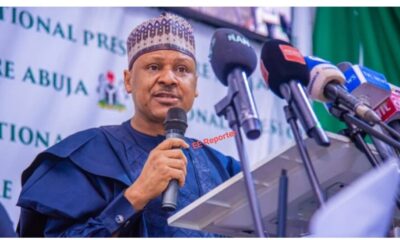
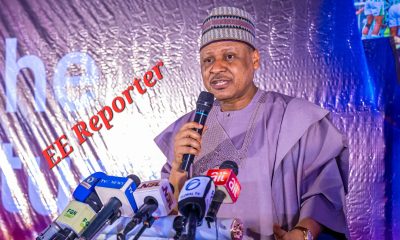
United Against Terror: Attack On One Is Attack On All, Says Information Minister Mohammed Idris

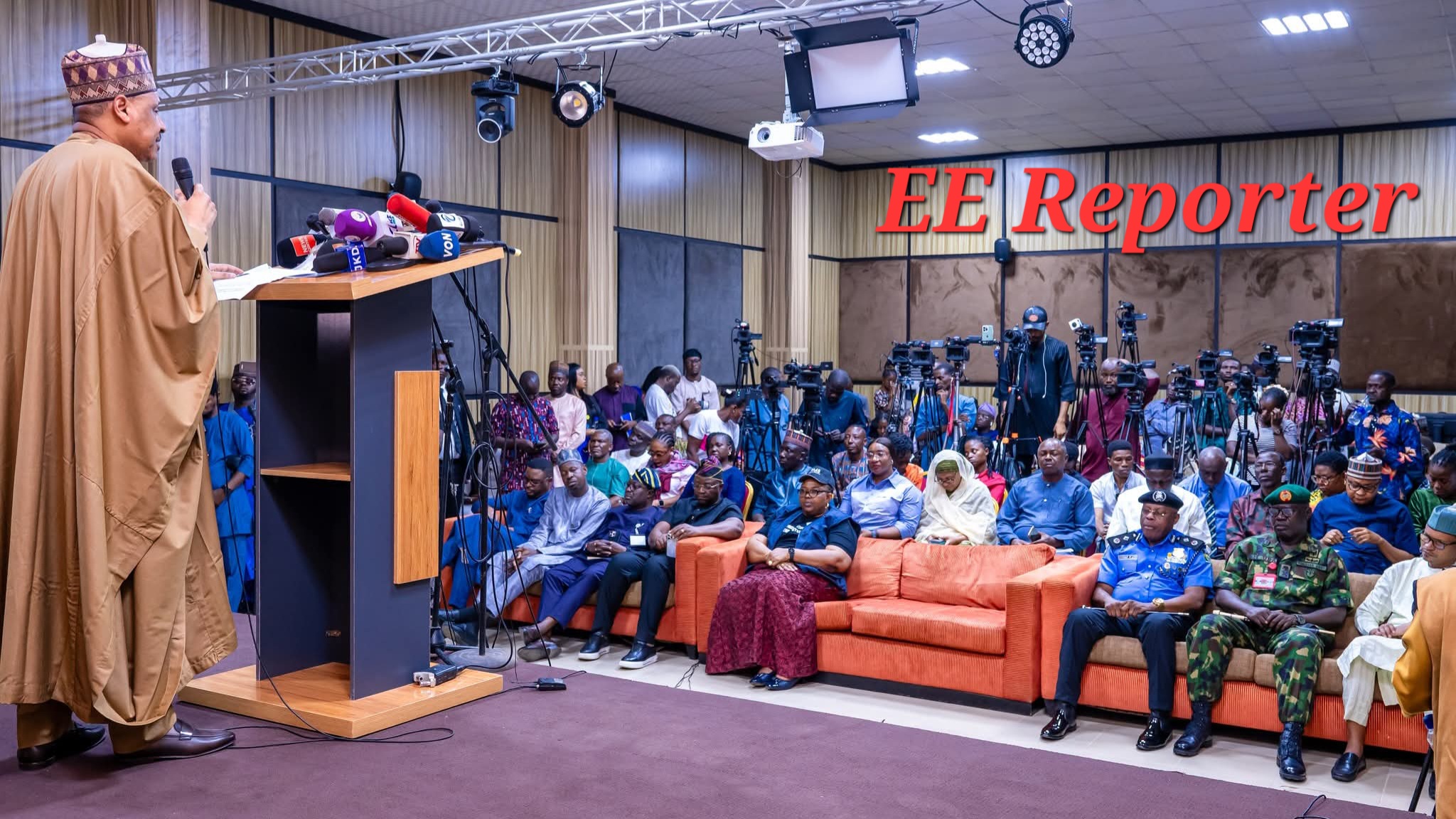
United Against Terror: Attack On One Is Attack On All, Says Information Minister Mohammed Idris
This press briefing comes at a sobering moment in our nation’s history. Recent events in Oyo and Borno States have once again tested our collective resolve as a people. The abduction of innocent school children and their teachers is not merely an attack on families or communities; it is an attack on the future of our nation, on education, and on the values that bind us together as Nigerians.
On behalf of President Bola Ahmed Tinubu, GCFR, and the Federal Government of Nigeria, I wish to assure all Nigerians that the safe return of every child and every teacher currently in captivity remains a top national priority.
The President has made it clear that no child belongs in captivity and that no effort will be spared in ensuring that those responsible for these heinous crimes are brought to justice. He has directed that every lawful instrument available to the Nigerian state be deployed towards achieving this objective, including the deployment of a specialised rescue team. He has also authorised the recruitment of 1,000 forest guards to strengthen security presence across vulnerable communities and forests within the state. Eereporter.com
In Borno State, terrorists also attacked a school in Askira-Uba Local Government Area, with at least 42 children reported missing following the assault. This attack bears the familiar signature of terrorist groups that have for years sought to undermine education and destabilise communities in the North-East.
While operational details cannot be disclosed for security reasons, I can assure Nigerians that multiple security and intelligence agencies are working in close coordination. The Armed Forces of Nigeria, the Department of State Services, the Nigeria Police Force, the National Intelligence Agency, the Office of the National Security Adviser, and the National Counter Terrorism Centre are actively involved in ongoing efforts. Intelligence gathering, aerial surveillance, community engagement, and search-and-rescue operations are continuing without interruption.
What distinguishes the Tinubu Administration’s response is not merely the deployment of force but the adoption of a comprehensive, intelligence-led approach to national security, combined with an ongoing and long-overdue overhaul of the nation’s security architecture.
One of the pillars of this overhaul is the determined implementation of state policing. President Tinubu is determined to ensure that one of his legacies is the delivery of a restructured policing system that is dynamic, flexible, and fit-for-purpose – one that truly empowers and secures local communities.
President Tinubu assumed office amid evolving security challenges, including terrorism, banditry, kidnapping, oil theft, and other criminal activities. Rather than relying solely on military action, this administration has pursued a strategy that combines military pressure, intelligence coordination, technological enhancement, regional cooperation, and socio-economic interventions.
Since May 2023, Nigeria has recorded significant successes against terrorist and criminal networks. Hundreds of terrorists and criminal elements have been neutralised, arrested, or forced to surrender. Numerous victims of kidnapping have been rescued across various parts of the country.
These successes are being replicated across various theatres of operation. In the North-East, troops of Operation Hadin Kai continue to record significant gains against Boko Haram and ISWAP terrorists. In the past week alone, the Nigerian Army and Air Force, acting on credible intelligence, successfully repelled multiple infiltration attempts along the Kirawa-Pulka and Ngoshe axes in Borno State. Follow-up operations led to the neutralisation of over 50 terrorists, including several high-value targets.
According to the Theatre Commander, approximately 1,000 terrorist elements, including dozens of their leaders, were eliminated during the first quarter of 2026 alone as troops sustained both offensive and defensive operations across the theatre.
A major breakthrough was recorded in mid-May through a joint Nigeria-United States-supported operation that disrupted terrorist logistics networks and eliminated key ISWAP commanders. Security forces additionally rescued 92 civilians from terrorist captivity near Buratai, while enhanced security deployments ensured that Eid-el-Kabir celebrations proceeded peacefully across key areas of the North-East.
In the North-West and North-Central regions, joint military and police operations have intensified pressure on bandit groups and kidnapping syndicates operating in Zamfara, Sokoto, Katsina, Kogi, Niger, Kwara, Kaduna and adjoining states. Several criminal camps have been dismantled, numerous suspects arrested, and intelligence-led operations have continued to deny criminal elements freedom of movement.
In the South-East and South-South, security forces continue to sustain operations against violent criminal networks, separatist-linked violence, cult groups, oil thieves, and economic saboteurs. Enhanced maritime security operations led by the Nigerian Navy have contributed to a reduction in oil theft, resulting in an increase of about 400,000 barrels per day of production since the President assumed office.
These efforts are also yielding tangible results within the justice system. Just yesterday, the Federal High Court in Abuja convicted and sentenced four terrorists to death for their involvement in the horrific attack on St. Francis Catholic Church in Owo, Ondo State, in June 2022, one of the most tragic terrorist incidents in our nation’s recent history. The judgment demonstrates that terrorism is being confronted not only on the battlefield but also through the rule of law. It sends a clear message that those who commit acts of terror against Nigerians will be pursued, prosecuted, and punished in accordance with the law.
Additionally, in April 2026, Nigeria commenced one of the largest terrorism prosecutions in its history, with more than 500 suspects facing trial for alleged involvement in terrorist activities and support for militant groups. The outcomes have already been substantial. According to the Office of the Attorney-General of the Federation, 508 terrorism-related cases were brought before the courts during the latest phase of the trials, resulting in 386 convictions.
These convictions are a significant milestone in Nigeria’s counter-terrorism efforts. While no judicial outcome can erase the pain suffered by those affected, it reinforces public confidence that terrorism will not go unanswered.
President Tinubu also recognises that terrorism has evolved into a transnational challenge requiring international cooperation. Consequently, Nigeria has expanded strategic security partnerships with friendly nations and international organisations. The relationship between Nigeria and the United States has grown significantly stronger under this administration, particularly in intelligence sharing, counterterrorism cooperation, military training, border security, cybersecurity, and capacity building for security personnel.
Beyond the United States, Nigeria continues to strengthen cooperation with countries across Africa, Europe, and the wider international community. Through regional frameworks and multinational security arrangements, our country is collaborating with neighbouring states to prevent terrorist groups from exploiting our borders.
Equally important is the strong collaboration between the Federal Government and state governments. In the case of the Oyo abductions, President Tinubu has maintained close coordination with Governor Seyi Makinde and state security authorities.
Both levels of government are sharing intelligence, coordinating rescue operations, and mobilising resources towards securing the release of the victims. Governor Makinde himself has publicly affirmed that the Federal Government and Oyo State Government are working together around the clock to ensure the successful rescue of the abducted children and teachers.
This spirit of cooperation extends to Borno State, where federal security agencies continue to work with the state government and local authorities in addressing the security challenges facing communities affected by terrorism.
There is a fundamental point to be made: that the enduring solution to Nigeria’s security challenges lies in shared and inclusive economic growth and shared prosperity. This is why President Tinubu is championing the most ambitious, forward-looking, and productive economic reforms in our nation’s history, combined with an infrastructure programme that is delivering thousands of kilometres of new concrete highways criss-crossing the country, alongside mass housing, gas and power supply, state-of-the-art federal medical facilities, and much more.
By opening up thousands of communities through new roads and rail, we are setting tens of millions of our people on the path to a new wave of prosperity. This is what the Renewed Hope Agenda is all about — boundless opportunities for hardworking Nigerians to succeed at what they do, whether as farmers, entrepreneurs, artisans, traders, academic workers, students, or white-collar workers.
This critical nexus between the economy and security is one the President is keenly aware of, and is determined to act upon for the benefit of all Nigerians, now and for generations to come.
As I conclude, let me reiterate that the fight against insecurity cannot be won by any single institution acting alone. It requires partnership, trust, and a common purpose.
Government action alone is not enough. Terrorists thrive on fear, division, misinformation, and public despair. Their objective is not only to kidnap or kill; it is to weaken national unity and undermine confidence in our institutions. We must not allow them to succeed.
In this regard, the media also has an important responsibility. While it is essential to report accurately and hold institutions accountable, we must be careful not to inadvertently amplify the objectives of terrorists by giving undue prominence to their atrocities. Terrorist groups seek publicity, fear, and psychological impact far beyond the immediate scene of their crimes. Responsible reporting, guided by professionalism and national interest, can help deny them this objective. We therefore urge media organisations to exercise restraint, verify information before publication, and avoid sensationalism. At the same time, citizens must work closely with the government and security agencies by sharing credible information and reporting suspicious activities. Defeating terrorism requires a whole-of-society approach. Nigeria must remain secure and united, because only in an atmosphere of peace and stability can our democracy, economy, media, and national aspirations continue to flourish.
This is why the theme of today’s briefing, “Unite Against Terror,” is so important. Whether in Oyo, Borno, Zamfara, Kaduna, Plateau, Benue, the South-East, or any other part of Nigeria, an attack against one Nigerian is an attack against all Nigerians. Terrorism has no tribe. Terrorism has no religion. Terrorism has no political affiliation. Its only purpose is destruction.
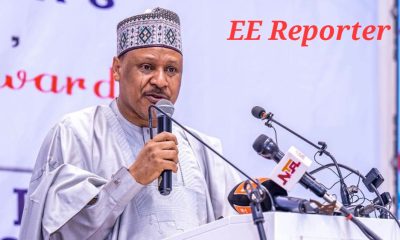
Mohammed Idris
As citizens, we must therefore reject divisive narratives, support our security agencies by providing credible information, and remain vigilant in our communities. We must continue to promote national unity and strengthen the bonds that connect us as one people under one nation.
To the families whose children and loved ones remain in captivity, I convey the assurances of President Bola Ahmed Tinubu. Your pain is our pain. Your government – our government – has not forgotten you. Every available resource is being deployed. Every security agency remains engaged. Every intelligence lead is being pursued.
Nigeria has faced difficult moments before and emerged stronger. We shall overcome this challenge as well. We shall defeat terrorism. We shall protect our schools. We shall safeguard our children. And we shall continue to build a nation where every Nigerian can live, learn, work, and prosper in peace.
Together, united in purpose and unwavering in resolve, we will ensure that terrorism has no future in Nigeria.
God bless the Federal Republic of Nigeria.
Eereporter.com
Thank you.






EFCC Arraigns ALSCON, Director for Alleged N582.43m Money Launderin
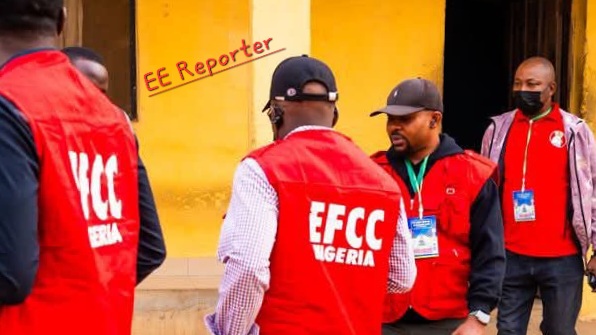
The Economic and Financial Crimes Commission, EFCC, on Monday, October 12, 2026, arraigned Aluminium Smelter Company of Nigeria, ALSCON, plc, and its Director, Zavyalov Dmitry, before Justice O. A. Egwuatu of the Federal High Court, Abuja, for alleged money laundering offences involving N582,430,250.00 (Five Hundred and Eighty-Two Million, Four Hundred and Thirty Thousand, Two Hundred and Fifty Naira).
Eereporter.com
The company and its director were arraigned on a six-count amended charge, marked FHC/ABJ/CR/644/2025. Dmitry is said to be at large.
According to the charge, the company, a Designated Non-Financial Business and Profession, DNFBP, and Its Director, Dmitry, failed to report in writing to the Special Control Unit against Money Laundering (SCUML) single transfers made from the company’s account between March and July 2024, as required under Section 11(1)(b) of the Money Laundering (Prevention and Prohibition) Act, 2022.
The transfers include N147,515,050.00 in March 2024, N156,026,860.00 in April 2024, N121,425,200.00 in May 2024 and N127,338,190.00 in July 2024, all paid to UDATSON NIGERIA. Others are N15,124,950.00 paid to Urico Global Services in April 2024 and N15,000,000.00 paid to one Christopher Azogu in June 2024.
Count one reads: “That you, Aluminium Smelter Company Of Nigeria Limited, plc, a Designated Non-Financial Business and Profession (DNFBP) and Zavyalov Dmitry (at large) being Director of the said DNFBP sometime in March, 2024 in Abuja within the jurisdiction of this Honourable Court, failed to report in writing to the Special Control Unit against Money Laundering (SCUML), a single transfer of the sum of N147,515,050.00 (One Hundred and Forty Seven Million, Five Hundred and Fifteen Thousand, Fifty Naira) paid into UDATSON NIGERIA from account no. 1013726291 operated by Aluminium Smelter Company Of Nigeria Plc as specified under Section 11(1)(b) of the Money Laundering (Prevention and Prohibition) Act, 2022 and you thereby committed an offence contrary to and punishable under Sections 11 (3), 19(2) (b), and 22 of the same Act.”
Count two: “That you, Aluminium Smelter Company Of Nigeria, plc, a. Designated Non-Financial Business and Profession (DNFBP) and Zavyalov Dmitry (at large) being Director of the said DNFBP sometime in April, 2024 in Abuja within the jurisdiction of this Honourable Court, failed to report in writing to the Special Control Unit against Money Laundering (SCUML), a single transfer of the sum of N156,026,860.00 (One Hundred and Fifty Six Million, Twenty Six Thousand, Eight Hundred and Sixty Naira) paid into UDATSON NIGERIA from account no. 1013726291 operated by Aluminium Smelter Company Of Nigeria Plc as specified under Section 11(1)(b) of the Money Laundering (Prevention and Prohibition) Act, 2022 and you thereby committed an offence contrary to and punishable under Sections 11 (3), 19(2) (b), and 22 of the same Act.”
Count four of the charge sheet reads, “That you, Aluminium Smelter Company Of Nigeria Plc, a Designated Non-Financial Business and Profession and Zavyalov Dmitry (at large) being Director of the said DNFBP sometime in May, 2024 in Abuja within the jurisdiction of this Honourable Court, failed to report in writing to the Special Control Unit against Money Laundering (SCUML), a single transfer of the sum of N121,425,200.00 (One Hundred and Twenty One Million, Four Hundred and Twenty Five Thousand, Two Hundred Naira) paid into Udatson Nigeria from account no. 1013726291 operated by Aluminium Smelter Company Of Nigeria Plc as specified under section 11(1)(b) of the Money Laundering (Prevention and Prohibition) Act, 2022 and you thereby committed an offence contrary to and punishable under sections 11 (3), 19(2) (b), and 22 of the same Act.”
EFCC
Lead counsel to the EFCC, Ekele Iheanacho, SAN, told the court that the offences are punishable under sections 11(3), 19(2)(b) and 22 of the Money Laundering (Prevention and Prohibition) Act.
When the charges were read, the company’s Acting Managing Director, Ime Monday Inyang, pleaded not guilty to all six counts on its behalf.
Counsel to the company had asked the court to quash the charges, claiming that the company was innocent of the charges.
In view of the plea, Justice Egwuatu adjourned the matter to January 27, 2027 for commencement of trial.
Dele Oyewale
Head, Media & Publicity
October 12, 2026
Eereporter.com
News
Taiwo Oyedele, Cardoso Meet World Bank President Banga on Nigeria’s Shift From Stability to Growth
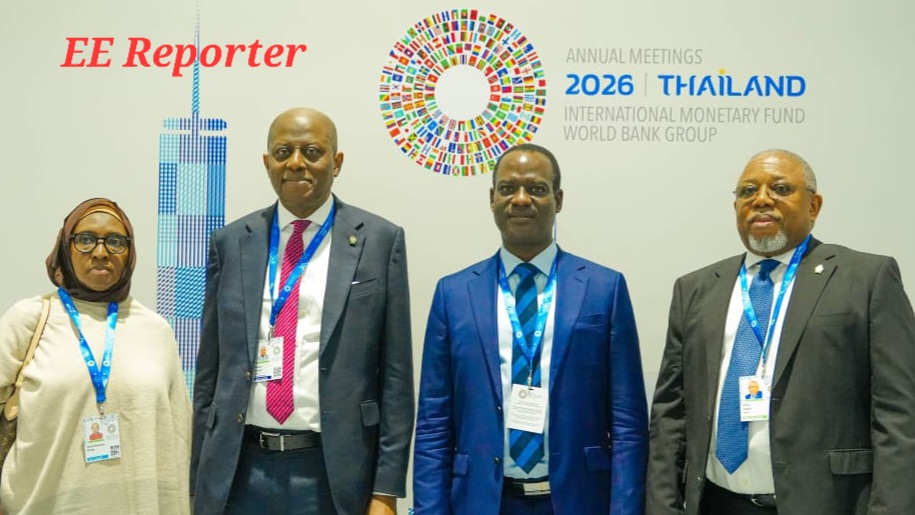
Taiwo Oyedele, Cardoso Meet World Bank President Banga on Nigeria’s Shift From Stability to Growth
Bangkok, 12 October 2026. The Honourable Minister of Finance and Coordinating Minister of the Economy, Taiwo Oyedele, and the Governor of the Central Bank of Nigeria, Olayemi Cardoso, met the President of the World Bank Group, Ajay Banga, on Monday. The meeting took place on the sidelines of the 2026 IMF and World Bank Group Annual Meetings in Bangkok, Thailand, where Oyedele leads Nigeria’s delegation.
Eereporter.com
The meeting reviewed Nigeria’s reform progress and the next phase of its agenda: turning macroeconomic stability into faster growth, more private investment and stronger domestic revenues.
Banga commended the progress of Nigeria’s reforms. He pointed to the rise in private capital inflows from about $300 million in 2023 to nearly $6 billion in 2026, a twentyfold increase.
Oyedele highlighted the rising economic growth and noted that Nigeria’s tax-to-GDP ratio rose from about 7 per cent to 12.5 per cent over the same period. This gives the government more room to fund public investment without resorting to deficit monetisation.
The meeting discussed how Nigeria can make greater use of World Bank guarantee instruments. These guarantees can unlock financing for infrastructure and draw more private capital into the domestic market.
Power infrastructure and human capital were identified as priorities for continued public investment, given their importance to business competitiveness, productivity and job creation. The meeting also stressed the quality of public spending, so that each naira delivers measurable economic and social returns.
Taiwo Oyedele, Cardoso
The meeting is part of the Federal Government’s wider engagement with development partners to lock in reform gains and attract new investment. As Nigeria moves from stability to growth, the priority is to turn stronger fundamentals into productive investment, more jobs and better living standards for Nigerians.
Efe Ovuakporie
Head of Media
Federal Ministry of Finance
12 October 2026
Eereporter.com
High Court Dismisses Aisha Achimugu’s Fundamental Rights Suit Against EFCC
Justice M.S. Liman of the Federal High Court sitting in Abuja has dismissed a fundamental human rights suit filed by Abuja-based businesswoman, Aisha Achimugu against the Economic and Financial Crimes Commission, EFCC.
Eereporter.com
In the originating suit no : FHC/ABJ/CS/466/2026, Achimugu approached the court for determination of whether the defendant, EFCC’s action of searching her house and seizing her cars and jewelries and other items was within the powers of the Commission.
Achimugu also asked the court to enforce her rights to privacy, including an order of the court restraining the defendant from threatening or harassing and invading her private residence.
Part of her claim was for the court to award a N10,000,000,000 (Ten Billion Naira) damage against the EFCC for what she described as invasion of her privacy.
Delivering judgment in the suit on Monday, October 10, 2026, Justice Liman dismissed the suit and held that the defendant has the power to search the plaintiff’s property after receiving intelligence on the alleged criminal activities of the plaintiff. “EFCC has the right to search the residence,” he said.
The judge said that Achimugu and her legal representatives failed to show reason to warrant the kind of damage she demanded from the EFCC and equally dismissed the request for N10 billion damages.
On the whole, Justice Liman agreed that there was nothing that should have stopped the EFCC from carrying out its statutory duties. The court therefore held that the matter lacked merit and was dismissed because “ it is frivolous and it was brought in bad faith”. The damage she sought was also denied.
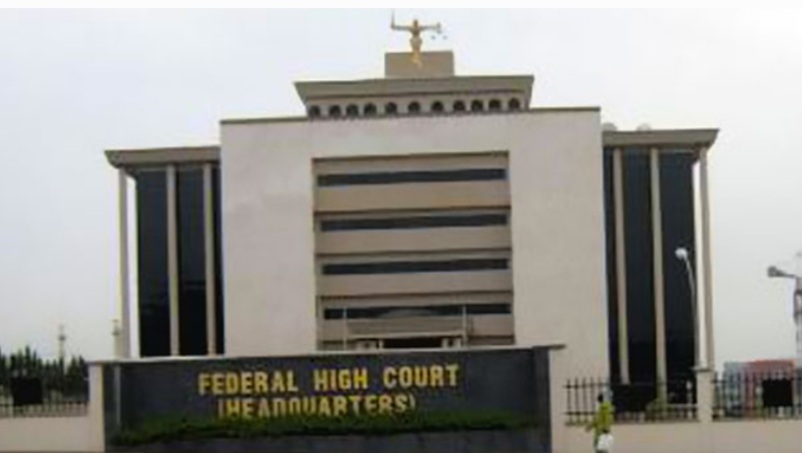
Federal High Court
Reacting to the judgment, counsel to the EFCC, Emenike Mgbemele said the judgment was in the interest of justice, adding that the suit was a ploy to waste the time of the court.
Dele Oyewale
Head, Media & Publicity
October 12, 2026
Eereporter.com
-
 Crime1 year ago
Kogi Assembly Considers Law To Regulate Rent, Establish Control Board: Tenancy Law
-

 News2 years ago
Atiku Reveals Why He Failed To Pick Wike As Running Mate In 2023
-
 Akwa Ibom2 years ago
The Apostolic Church Gets New Territorial Chairman, Exco
-

 Crime2 years ago
Federal High Court Jails 2 For Vandalizing Transformer, Telecom Mast In Kogi
-
 News2 years ago
The Apostolic Church Gets New National President, Executive
-
 Akwa Ibom2 years ago
Umo Eno Commences Payment Of 80,000 Naira Minimum Wage With Arrears
-

 News2 years ago
Senator Natasha Returns To Senate With Husband Amid Seat Dispute
-
 Economy1 year ago
Kiyosaki: Is Tinubu’s Government Afraid Of Ibrahim Traore?