
News
Obi Means Well, I Will Give Him That Much. Can Nigeria Be Fixed In Four Years

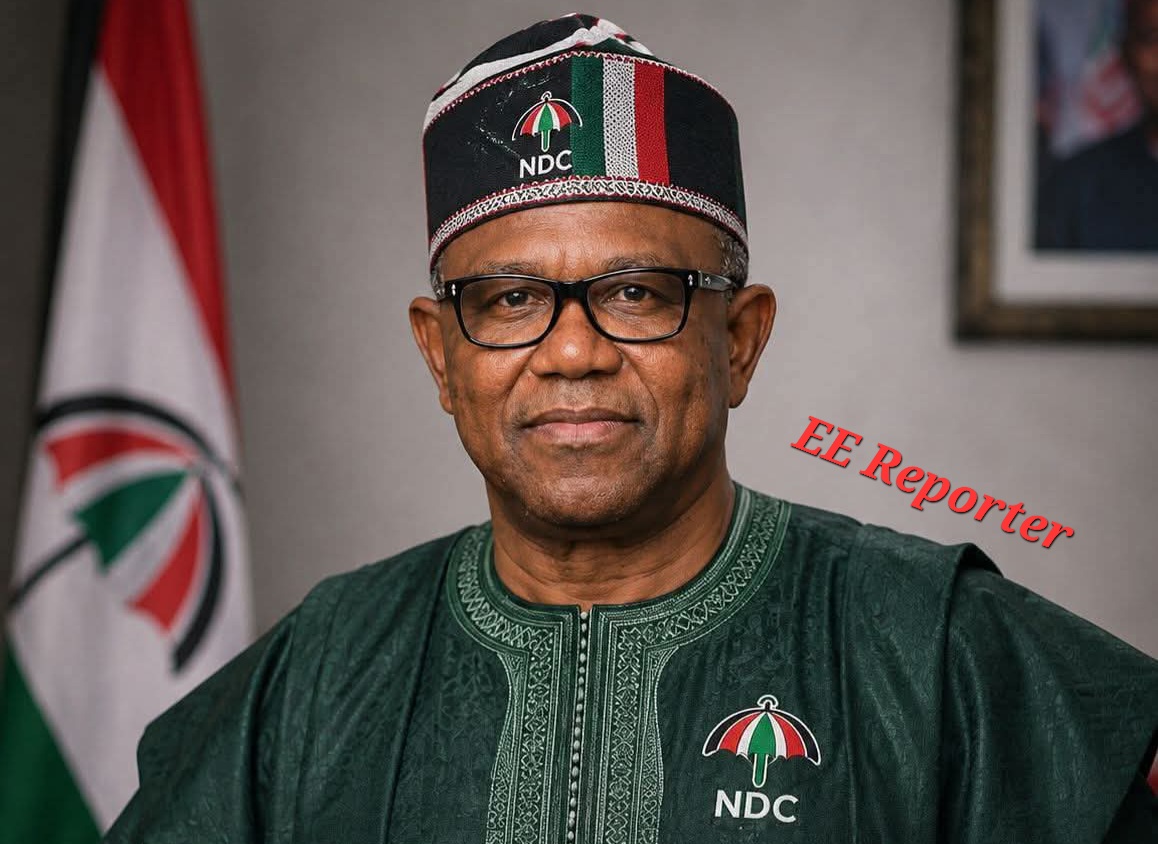
Obi Means Well, I Will Give Him That Much. Can Nigeria Be Fixed In Four Years
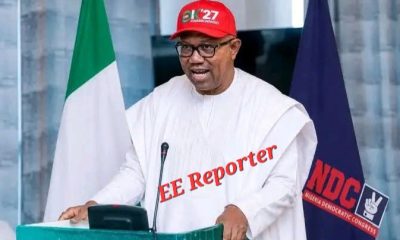
Peter Obi means well. I will give him that much. The former Labour Party presidential candidate and Nigerian Democratic Congress ( NDC) likely flagbearer has been consistent on at least one thing since he entered the 2027 race: he wants to be a one-term president. “I would not stay a day longer than four years, even with a gun to my head,” he told News Central TV.
Those are strong words. The kind of conviction you rarely hear from politicians in this country, where staying in power is treated like a hereditary right and term limits are just suggestions for other people. But here is my problem. And it is a serious one.
Eereporter.com
As I have said on this page before, Nigeria cannot be fixed in four years. Not even close. The country has been damaged so thoroughly, from the power sector to education, from healthcare to security, that it would take at least two full terms of focused, disciplined governance to begin to see meaningful structural change.
You need eight years to plant a tree and watch it take root. Four years? You will barely have finished identifying the problem, let alone solving it.
Think about it. Our power crisis has been with us since before many of our young voters were born. NEPA became PHCN, PHCN became the successor DisCos, and Nigerians are still buying diesel at N1,500 per litre to run generators at home and at work. Our healthcare system has become a travel agency; every president, every governor, every senator boards a flight to London or India at the first sign of a headache, while the hospitals they are supposed to fix remain glorified consulting rooms without drugs or equipment.
Our security situation in the North East, the North West and the Middle Belt is not a four-year problem. It is a generational wound with roots going back decades. And education? Nigeria has more than 20 million out-of-school children, according to UNICEF. You don’t fix that in 48 months.
So when Obi says one term is enough to make a mark, I want to believe him. But wanting to believe someone and actually believing them are two very different things.
Now, to be fair to Obi, he has grounded his one-term pledge in something that at least sounds principled, the zoning arrangement. His argument is that if a southerner wins in 2027, that president must be ready to step down in 2031 to keep the unwritten power-rotation compact alive.
On paper, that is statesmanlike. In practice, it is a political landmine he is walking toward with his eyes wide open. Here is why. The south-east has never produced a civilian president in the history of this republic. Not once. From 1999 till today, we have had Olusegun Obasanjo from the south-west, Umaru Yar’Adua and Muhammadu Buhari from the north-west, Goodluck Jonathan from the south-south.
The south-east has been the one region sitting outside the door, knocking, watching, waiting. So if Peter Obi becomes the first Igbo civilian president in Nigeria’s post-military democratic history, the question nobody in his camp wants to answer is this: Why should the south-east settle for just four years?
The constitution gives any president the right to run for two terms of four years each. Eight years. Every other region that has held the presidency has used that full constitutional window. Obasanjo served eight years. Buhari served for eight years. Even Jonathan, who completed Yar’Adua’s term and then won his own election, was on course for a combined stretch that no South East candidate has ever come close to. So what Obi is essentially proposing is that the first Igbo civilian president should agree, before he even wins, to half of what every other region enjoyed.
That is not just zoning. That is something else entirely, and the South East deserves a more honest conversation about what it means. There is a clear difference between respecting democratic norms and pre-emptively surrendering your constitutional rights before you have won a single vote.
And this is where the pledge, however well-intentioned, begins to unravel. Because it is not just about Peter Obi the individual. The moment he wins, the south-east as a region enters Aso Rock for the first time in civilian democratic history. From that day, you are not managing one man’s ambition. You are managing the collective expectation of an entire region that has waited since 1999. Those are two fundamentally different political problems, and conflating them is naive.
Two years into his tenure, mark my words, the groups will come. Youth associations, Ohanaeze factions, town union federations, political entrepreneurs in agbada, all of them printing T-shirts and issuing press releases with one message: the south-east must complete its eight years.
That is not speculation. That is how Nigerian politics has always worked. The hangers-on arrive without invitation. They wrap regional sentiment around the presidency so tightly that a principled one-term pledge starts to look, from the inside, like a betrayal of an entire people.
Obi cannot control that narrative from the State House. No president has ever managed to. Obasanjo, in 2006, swore the third-term agenda was not his idea. Whether you believe him or not is beside the point. The pressure around a presidency has its own gravitational pull. It warps everything around it, including the best intentions.
History has also not been kind to pre-election one-term pledges. Goodluck Jonathan once positioned himself as a reluctant president who would govern briefly and go home quietly. His supporters had other plans entirely. The pledge is always sincere at the microphone.
It is the office that changes the mathematics. The combination of power, party pressure, regional expectation and the sheer institutional weight of the presidency has a way of making a man reconsider positions he held with total certainty before he sat in the chair.
Now, many people have genuine respect for what Peter Obi represents in our political conversation. According to his supporters, he has brought fiscal discipline, attention to numbers and a genuine questioning of the waste that has defined our governance for decades.
After years of politicians who could not differentiate between a national budget and a personal shopping list, that matters. But sincerity and strategic thinking are not the same commodity, and you cannot run a country on sincerity alone.
Obi Means Well
What Obi should be telling Nigerians right now is not how long he plans to stay. What we need to hear is what exactly he will do with the time. What is his specific plan for electricity? What is his blueprint for the 20 million out-of-school children? What is his counter-insurgency strategy for Borno, Zamfara and Plateau? What will he do about an economy where more than 133 million Nigerians live in multidimensional poverty, according to the National Bureau of Statistics? These are the questions that matter. Not dramatic declarations about guns to heads.
Because here is the hard truth: no one in our political space wants to say plainly that a bad president for four years can inflict more lasting damage than a decent president serving eight. We do not need shorter tenures. We need better leaders with the right competence, the right team and the institutional will to govern without stealing.
The one-term pledge is a campaign device, not a governance strategy. And Nigerian voters deserve better than campaign devices dressed up as constitutional philosophy.
So can Nigeria be fixed in four years? No. Not by Obi, not by any political Houdini that this system eventually produces. The problems are too structural, too layered, too generational. What four years of the right leadership can do is begin to change direction, not arrive at the destination.
Let us demand direction. Let us demand competence. Let us demand a plan. These are the issues.






News
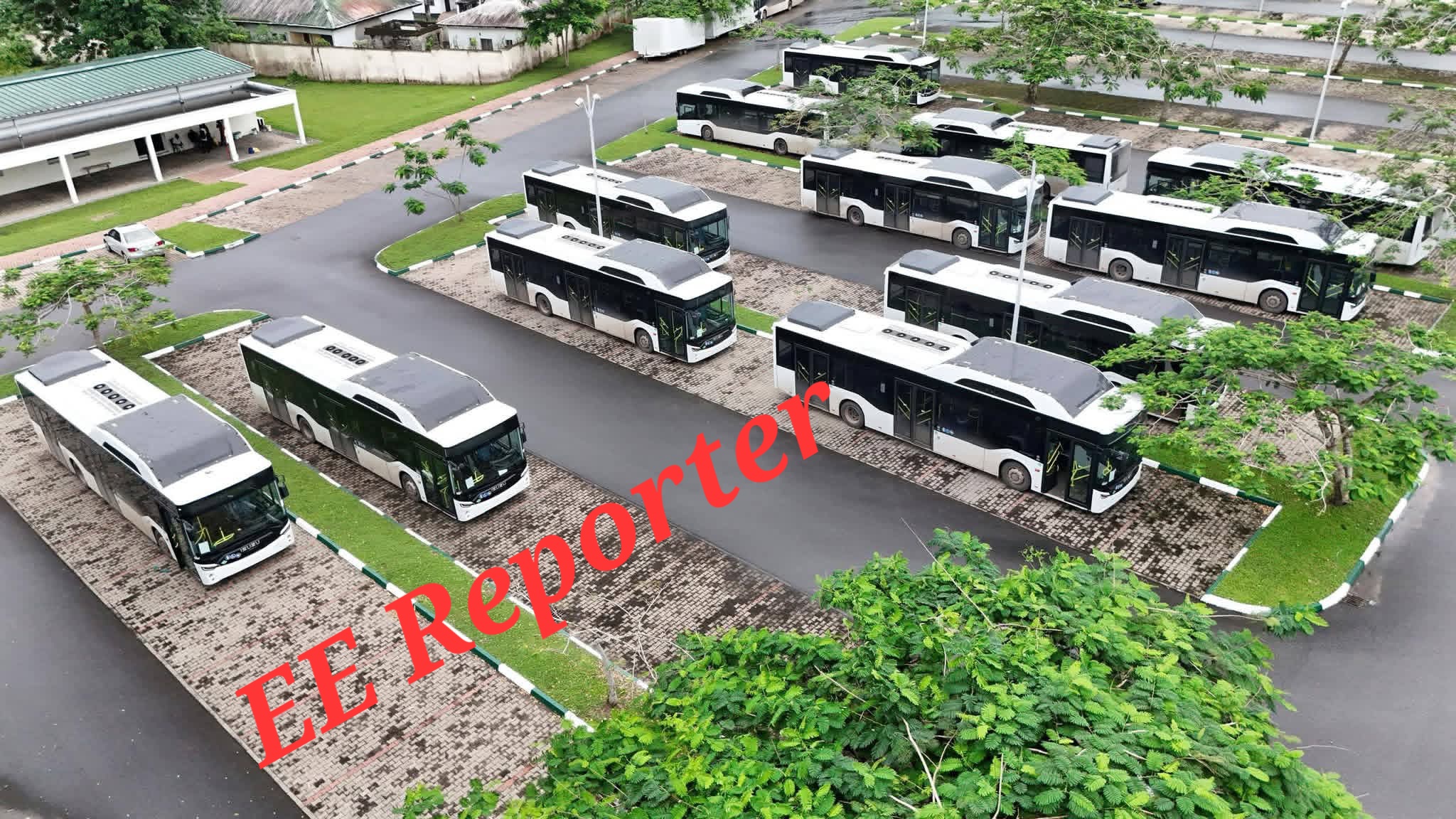
Civil Society, Journalists Commend Governor Eno On Arrival Of First Batch Of Brand-New CNG Buses, Inspect Fleet
Civil Society, Journalists Commend Governor Eno On Arrival Of First Batch Of Brand-New CNG Buses, Inspect Fleet
Journalists and civil society stakeholders have commended Akwa Ibom State Governor, Pastor Umo Eno, for the arrival of the first batch of brand-new Compressed Natural Gas (CNG) buses, describing the initiative as a bold step towards transforming the state’s public transportation system.
Eereporter.com
The commendation came on Tuesday , July 1,2026 ,during an inspection of the newly delivered buses at the Government House parking facility in Uyo, where members of the Nigeria Union of Journalists (NUJ), civil society representatives inspected 20 of the 50 buses procured by the state government as part of its integrated mass transit programme.
Speaking during the inspection, the Chairman of the Nigeria Union of Journalists (NUJ), Akwa Ibom State Council, Comrade Nsibiet John, lauded Governor Umo Eno for prioritising quality and investing in a transportation system that will benefit residents across the state.
“On behalf of my colleagues, I want to thank His Excellency for bringing this to our people. I must say the Governor loves standard, and this is standard,” he said.
The NUJ Chairman encouraged young people in the state to take advantage of opportunities that would emerge from the project by acquiring the technical skills required to operate and maintain the modern transport system.
He also appreciated the Commissioner for Information for granting journalists unrestricted access to inspect the buses, noting that firsthand inspection would enable the media to provide accurate information to members of the public.
Speaking during the inspection, the Chairman of the Civil Liberties Organisation (CLO), Barr. Clifford Thomas, commended Governor Umo Eno for the initiative, describing the acquisition of the CNG buses as a bold and forward-looking investment in the state’s transportation sector.
He noted that the integrated mass transit system would significantly ease transportation challenges, improve mobility for residents and reduce the cost of commuting across Akwa Ibom State.
Barr. Thomas, however, urged the state government to put in place a sustainable maintenance and management framework to ensure the buses are properly maintained and remain operational for many years.
Addressing journalists, the Commissioner for Information, Dr. Aniekan Umanah, explained that the inspection was organised following a request by the NUJ Chairman to verify the arrival of the buses amid public speculation.
“We came here on the request of the Chairman of the NUJ to see for himself, and for all of us, the new CNG buses brought in by His Excellency, the Governor of Akwa Ibom State, for the mass transportation system he is putting in place. This transport system will cover the 31 Local Government Areas and move our people seamlessly using these CNG buses.”
Dr. Umanah disclosed that Governor Umo Eno approved the procurement of 50 CNG buses, with 20 already delivered to the state while the remaining units are expected after the completion of production and shipping processes.
“Today, 20 of those brand new buses are on ground here in the Government House parking bay. Many people have been wondering whether these buses are real. Here are the buses, gentlemen of the press.
“They are brand-new manufactured buses. For those who have gone about claiming that these are refurbished buses, let me state clearly that they are marchants of falsehood. These are brand-new buses produced specifically for Akwa Ibom State.”
He further revealed that construction of the state’s central transport terminal at Ikot Akpe is progressing steadily and will serve as the operational hub of the integrated transport system.
According to him, the facility will include passenger terminals, a drivers’ academy, maintenance workshops, car wash facilities, CNG refuelling stations and other supporting infrastructure required for efficient operations.
“We are about entering an era of efficient and effective mass transportation for the people of Akwa Ibom State,” he declared.
Also speaking, the Commissioner for Transport, Dr. Luke, commended Governor Umo Eno for his visionary leadership and commitment to providing a transportation system that meets global standards while improving mobility and reducing transportation costs for residents.
Providing further insight into the procurement process, Mr. Ime Uwah said Governor Umo Eno insisted on quality throughout the acquisition process, leading government officials to travel to Turkey to inspect the buses before payment was made.
“For me, His Excellency Governor Umo Eno stands for quality and standard because these Isuzu buses, he made sure we went for this particular brand. We travelled to Turkey to inspect them before payment was made, ensuring that they met exactly what we wanted.”
Mr. Uwah added that Alpha Dias Project Limited has been engaged to manage the transport system for the first two years to ensure professional and efficient operations.
“His Excellency wants experienced hands and experts to operate these buses before they are eventually handed over for broader local management. The first two years will therefore be managed under contract by Alpha Dias.”
Speaking on the technical features of the fleet, the Chief Executive Officer of Alpha Dias Project Limited, Mr. Alex , dismissed claims that the buses were converted diesel vehicles.
He explained that the buses are original factory-built CNG vehicles powered by Cummins CNG engines and specifically designed for natural gas operations.
“Many CNG buses operating in Nigeria and across West Africa are diesel buses converted to run on gas. These buses are different. They were designed and manufactured from the factory specifically as CNG buses, making the Akwa Ibom fleet one of the most advanced public transport fleets on the African continent.”
Akwa Ibom CNG Buses
He disclosed that the integrated transport network will connect all 31 Local Government Areas through carefully planned routes linking major commercial centers
He added that transport terminals under construction will feature modern passenger facilities, maintenance centres, driver training schools and CNG refuelling stations to support efficient and sustainable operations.
Members of the Nigeria Union of Journalists and representatives of civil society organisations were later taken on a demonstration ride aboard the new CNG buses, where they experienced firsthand the comfort, spacious interiors, modern safety features and smooth, quiet operation of the factory-built vehicles.
The inspection reinforced confidence in the state’s integrated transport initiative and underscored the government’s commitment to delivering a safe, affordable, environmentally friendly and world-class mass transportation system that will serve residents across all 31 Local Government Areas of Akwa Ibom State.
Eereporter.com
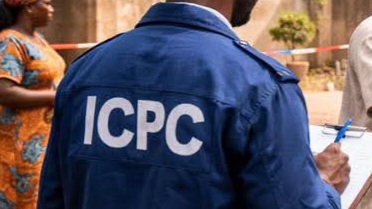
ICPC Arrests Former Minister Over Certificate Forgery Allegations
The Independent Corrupt Practices and Other Related Offences Commission (ICPC) has arrested the immediate past Minister of Science, Technology and Innovation, Hon. Geoffrey Uchechukwu Nnaji (M), following the execution of a bench warrant issued by the Federal High Court of Nigeria.
Eereporter.com
The arrest was effected on Wednesday, 1st July 2026 at the Nnamdi Azikiwe International Airport, Abuja, upon Mr. Nnaji’s arrival. He was apprehended with the assistance of the Department of State Services (DSS) and subsequently handed over to the ICPC for further investigation.
The Commission had earlier extended formal invitations to the former minister through a letter referenced ICPC/HC/CSTF/GUN/GBT/T.1/VOLV16, dated 15 May 2026. The invitation notices were duly served to his known addresses in Abuja and Enugu, as well as via his electronic mail address. Despite service through multiple channels, Mr. Nnaji failed to appear for investigative interviews on the scheduled dates, necessitating further legal action.
The legal action followed a court order granted by the Federal High Court in the Abuja Judicial Division (Suit No: FHC/ABJ/CS/1160/2026). The order, issued on 11 June 2026, directed the ICPC to arrest the former minister to enable investigation into allegations bordering on:
1. Forgery of academic credentials, specifically concerning a degree certificate from the University of Nigeria, Nsukka (UNN); and
2. False National Youth Service Corps (NYSC) Discharge Certificate, which was submitted during his ministerial screening process in 2023.
ICPC
Following the arrest, Mr. Nnaji has been taken into custody at the ICPC headquarters in Abuja, where investigations are expected to continue. The Commission assures the public that the matter will be pursued diligently in accordance with the law.
J. Okor Odey
Head, Media and Public Communications, ICPC
Eereporter.com
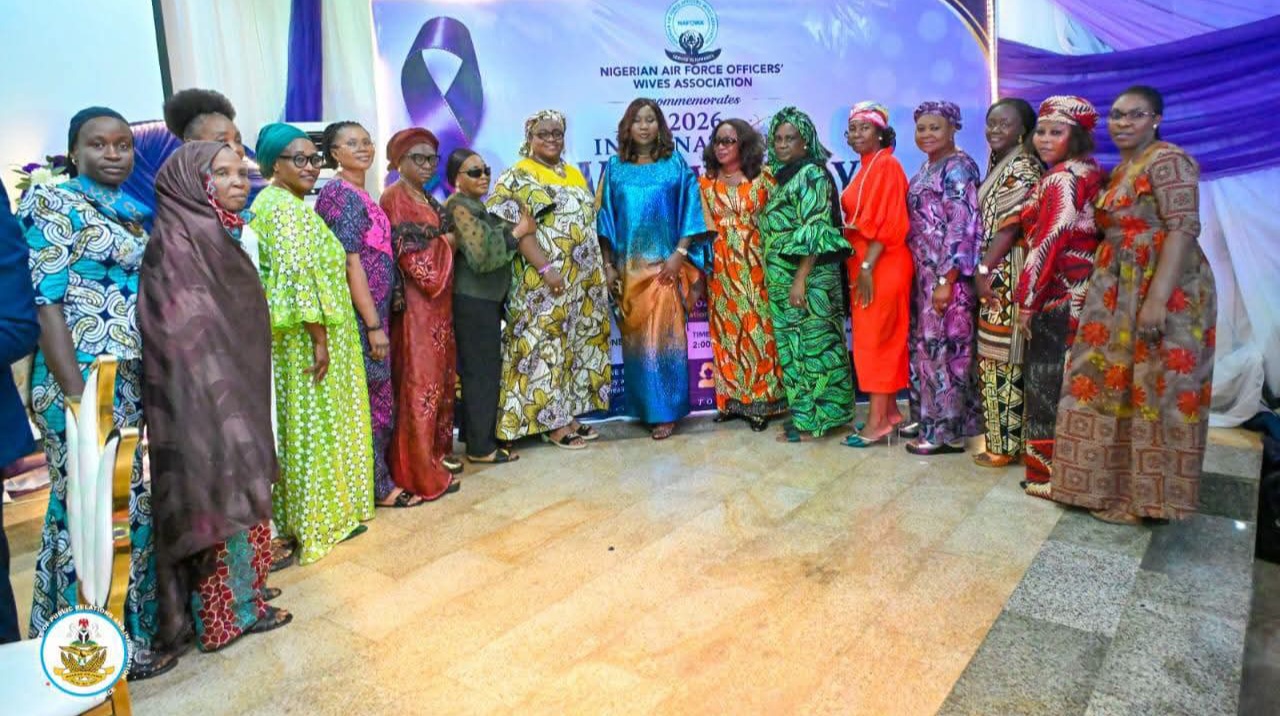
NAFOWA Honours Fallen Heroes’ Widows, Advances Welfare For Enhancement
The Nigerian Air Force Officers’ Wives Association (NAFOWA) has reaffirmed its unwavering commitment to the welfare and empowerment of the widows of fallen Nigerian Air Force (NAF) personnel through a special dinner and empowerment lecture held to commemorate the 2026 International Widows’ Day.
Eereporter.com
Speaking at the event in Abuja, the President of NAFOWA, Mrs Ngozi Aneke, paid glowing tribute to the courage, resilience and enduring strength of the widows, describing them as living symbols of hope whose sacrifices continue to inspire the NAF community. She emphasised that beyond offering sympathy, NAFOWA remains committed to restoring confidence, promoting dignity and creating sustainable opportunities that enable widows to rebuild their lives with hope and self-reliance.
Guided by NAFOWA’s vision of “Strengthening Compassion, Empowering Communities,” the programme featured an empowerment lecture, interactive engagements and recreational activities designed to foster emotional healing, economic empowerment and stronger social support among participants. The event also provided an open platform for widows to engage directly with the NAFOWA leadership on welfare-related matters, reaffirming the Association’s commitment to ensuring that the families of fallen heroes remain valued, supported and closely connected to the Nigerian Air Force family.
The initiative reflects the Chief of the Air Staff, Air Marshal Sunday Kelvin Aneke’s vision of “Welfare for Enhanced Warfare,” which recognises that the operational effectiveness of the Nigerian Air Force is strengthened when personnel are assured that their families will continue to receive care and support, even in the face of the ultimate sacrifice.
NAFOWA
By sustaining comprehensive welfare initiatives for the families of fallen personnel, the NAF continues to reinforce morale, strengthen fighting spirit and preserve the confidence of its personnel serving across all theatres of operation in defence of Nigeria.
Nigerian Air Force Officers’ Wives Association
Eereporter.com
-
 Crime1 year ago
Kogi Assembly Considers Law To Regulate Rent, Establish Control Board: Tenancy Law
-
 News1 year ago
Atiku Reveals Why He Failed To Pick Wike As Running Mate In 2023
-
 Akwa Ibom1 year ago
The Apostolic Church Gets New Territorial Chairman, Exco
-

 Crime1 year ago
Federal High Court Jails 2 For Vandalizing Transformer, Telecom Mast In Kogi
-
 News1 year ago
The Apostolic Church Gets New National President, Executive
-
 Akwa Ibom1 year ago
Umo Eno Commences Payment Of 80,000 Naira Minimum Wage With Arrears
-
 News1 year ago
Senator Natasha Returns To Senate With Husband Amid Seat Dispute
-
 Economy1 year ago
Kiyosaki: Is Tinubu’s Government Afraid Of Ibrahim Traore?