
News
Peter Obi Predicts Credible 2027 Elections, Says Nigeria Needs Production-Driven Economy


Peter Obi Predicts Credible 2027 Elections, Says Nigeria Needs Production-Driven Economy
Peter Obi says Nigeria will witness a free, fair and credible elections in 2027, adding that the country can overcome its current challenges through accountable leadership and a production-driven economy.
Obi spoke on Saturday at the national convention of the Nigeria Democratic Congress (NDC), where he described the country’s current crisis as the result of systemic looting rather than lack of resources.
Eereporter.com
The former Anambra governor said millions of Nigerians are facing worsening poverty, unemployment and insecurity despite the country’s vast potential.
“Every Nigerian is worried, no Nigerian know where the next meal will come from. Nigeria is not a poor country, Nigeria is looted into poverty and we will change it,” Obi said.
He also dismissed concerns that credible elections would be impossible in 2027, insisting that Nigerians would have the opportunity to freely choose their leaders.
“Those who think we will not have free and fair election in 2027, let them rethink now, because in 2027, we are going to have free and fair and credible election,” he said.
Obi said Nigeria must urgently shift from a consumption-based economy to a production-driven system capable of creating jobs and improving living standards.
He cited rising multidimensional poverty and youth unemployment as evidence that the country’s leadership priorities must change.
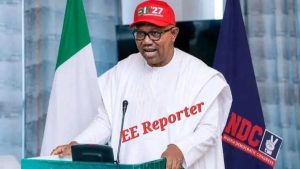
Peter Obi
According to him, over 140 million Nigerians are living in multidimensional poverty, while more than 80 million young people are unemployed or underemployed.
The former presidential candidate also defended his decision to join the NDC, saying his political choices have always been guided by principle rather than personal interest.
Quoting former British Prime Minister Winston Churchill, Obi said: “Some men change their party for the sake of their principles; others their principles for the sake of their party”.
He said his defection to the NDC was informed by his desire to work with like-minded leaders committed to rebuilding Nigeria ahead of the 2027 general election.
2027 presidential election
NDC convention
peter obi.








Alleged N2b NEDC Fraud: Danjuma Mohammed’s Absence Stalls Proceedings
The absence of the National Coordinator of Multi-Sectional Crisis Recovery Projects, MCRP, North East Development Commission, NEDC, Danjuma Mohammed on Thursday, June 25, 2026 stalled his trial before Justice K. N. Ogbonnaya of the Federal Capital Territory, High Court, Zuba, Abuja.
Eereporter.com
Mohammed, the first defendant, is facing prosecution by the Economic and Financial Crimes Commission, EFCC alongside Prince Achem and Aminu Alhaji (at large) on amended 54-count charge, bordering on conspiracy, false pretence, fraud and forgery to the tune of N2.2 billion.
At Thursday`s proceedings, the EFCC’s counsel, Joshua Saidi informed the court that he got a letter from the counsel to the first defendant that his client will not be in court today due to a scheduled surgery.
“My lord, we got a letter yesterday from counsel to the first defendant that he is preparing to undergo a scheduled surgery. This is very frustrating because if they had informed us earlier, we wouldn’t have bordered on letting all these witnesses from Gombe, Borno and Katsina to come to court today. This is the third time these witnesses have come to court,” he said.
Counsel to the first defendant, M.S. Ibrahim, SAN, stated that the first defendant was unavoidably absent because of his diagnosis with a urinary problem in the hospital on June 18, 2026, which he said, required surgery. He further disclosed that he had made available a letter from the Federal Medical Centre, Abuja authenticating the diagnosis to the prosecution.

EFCC
On his part, Counsel to the second defendant, J.J Usman, SAN, informed the court that although he was ready to go on with the cross-examination of the First Prosecution Witness, PW1, Kenneth Ejiofor Ifekudu, he was constrained not to proceed following the absence of the first defendant in court.
Justice Ogbonnaya adjourned the matter till July 13, 2026 for continuation of trial.
Eereporter.com
NAF Joins National Anti-Drug Campaign, Reaffirms Commitment To A Safer Nigeria
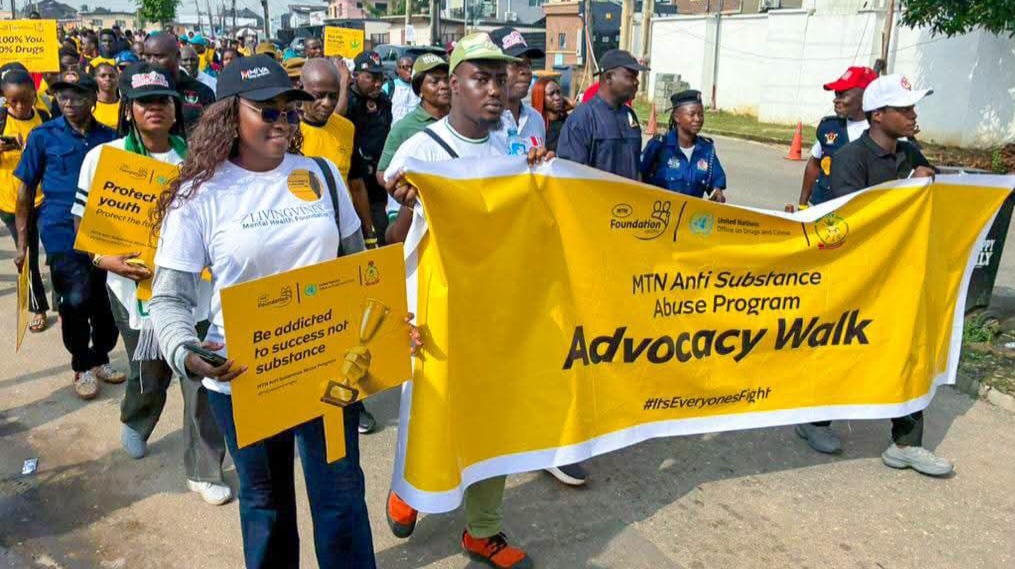
The Nigerian Air Force (NAF) has reaffirmed its commitment to supporting national efforts to combat drug abuse and illicit trafficking through its participation in the 2026 United Nations International Day Against Drug Abuse and Illicit Trafficking Advocacy Walk.
Eereporter.com
Personnel from NAF Base, Ikeja, Lagos, joined other stakeholders in the event organised by the National Drug Law Enforcement Agency (NDLEA) in collaboration with the MTN Foundation. Held under the theme, “The World Drug Problem: Persisting Issues, New Challenges, Innovative Responses,” the advocacy walk promoted greater public awareness of the dangers of drug abuse and the need for collective action to curb illicit drug trafficking.
The Nigerian Air Force’s participation underscores its recognition that drug abuse and illicit drug trafficking undermine national security by fuelling crime and other forms of insecurity. Accordingly, the Service remains committed to supporting initiatives that promote preventive awareness, responsible citizenship and a drug-free society as part of a comprehensive approach to enhancing public safety, national resilience and sustainable development.
As a professional and people-centred Service, the Nigerian Air Force remains steadfast in supporting national efforts to eliminate the menace of drug abuse and illicit trafficking.
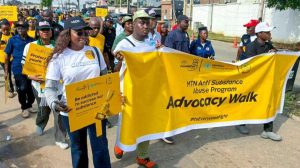
National Anti-Drug Campaign
Recognising that a drug-free society is fundamental to national security and sustainable development, the Service will continue to partner with relevant stakeholders to promote preventive awareness, inspire positive behavioural change and deny criminal elements the social conditions that fuel insecurity. Together, these efforts will help build safer communities and a more secure Nigeria.
Eereporter.com
News
ICPC Convenes Follow-Up Workshop In Kano To Develop Anti-Corruption Curriculum For Nigerian Law Schools
ICPC Convenes Follow-Up Workshop In Kano To Develop Anti-Corruption Curriculum For Nigerian Law Schools
The Independent Corrupt Practices and Other Related Offences Commission (ICPC) has convened a follow-up curriculum development workshop in Kano as part of ongoing efforts to institutionalise anti-corruption education within Nigeria’s legal education system.
Eereporter.com
Declaring the workshop open, the former Director-General of the Nigerian Law School, Professor Isa Hayatu Chiroma, SAN, described the engagement as a critical step in the Commission’s broader strategy to secure the buy-in of Nigeria’s education sector in the fight against corruption.
Professor Chiroma noted that the initiative underscores the strategic importance of introducing anti-corruption values at the foundational stages of legal training, stressing that future legal practitioners must be equipped from an early stage with an understanding that combating corruption is not only a legal obligation but also a civic and moral responsibility.
According to him, the workshop, which builds on an earlier engagement held in Abuja, is expected to produce a curriculum that could eventually be adopted by the Nigerian Law School.
“The objective is to draft a curriculum that will be adopted by the Nigerian Law School,” Professor Chiroma stated.
He explained that deliberations at the previous Abuja workshop had established two possible pathways for incorporating anti-corruption studies into legal education. These include the introduction of a stand-alone anti-corruption course or the integration of anti-corruption themes into existing modules within the Nigerian Law School curriculum.
Professor Chiroma further assured participants that the curriculum development process would be rigorous, transparent and subjected to thorough scrutiny by a duly constituted committee of experts, adding that the Commission was committed to ensuring that the final document meets the highest standards of legal education.
He also commended the caliber of resource persons assembled for the workshop, noting that their expertise and experience would guarantee the development of a credible, practical, and implementable curriculum.
The workshop brought together legal educators, curriculum experts, and institutional stakeholders to advance the landmark initiative aimed at embedding anti-corruption values into Nigeria’s legal education architecture.
Presenting a paper titled *”Law Educators, Curriculum Development and Review: Emerging Challenges and the Way Forward,”* Professor Garba Saad of Bayero University, Kano, underscored the importance of curriculum development as a continuous process that must respond to evolving societal realities.
Professor Saad described the curriculum as a strategic instrument for social transformation and emphasised the need for legal education in Nigeria to adapt to emerging challenges, particularly corruption.
He stated that anti-corruption education could either be introduced as a dedicated course or systematically infused into existing courses such as Criminal Law and the Law of Evidence. According to him, any proposed curriculum framework must clearly identify the knowledge, competencies and skills expected of future legal practitioners.
The education expert further stressed that effective curriculum development requires broad stakeholder participation involving needs assessment, consultations, implementation, monitoring and evaluation to ensure relevance and sustainability.
Also presenting at the workshop, Deputy Director and Head, Open and Distance Learning Division of the National Universities Commission (NUC), Dr. Nte Bisong, highlighted the opportunities presented by the Core Curriculum and Minimum Academic Standards (CCMAS) framework for integrating anti-corruption principles into legal education.
Dr. Bisong explained that the overarching goal of incorporating anti-corruption content into the CCMAS for Law programmes is to produce lawyers who are intellectually proficient, ethically grounded and profoundly committed to the anti-corruption crusade.
Tracing the evolution of curriculum development in Nigeria, he outlined key reforms introduced under the CCMAS framework, including the 70:30 curriculum-sharing formula, under which the NUC develops 70 per cent of programme content while universities are permitted to develop the remaining 30 per cent in line with their institutional strengths and peculiarities.
ICPC
According to him, the CCMAS places significant emphasis on competency-based learning, entrepreneurship, employability and 21st-century skills acquisition, as well as information and communication technology, all aimed at producing globally competitive graduates.
Dr. Bisong further disclosed that the development of the CCMAS adopted the triple-helix model, which brings together academia, industry, professional bodies, and government institutions in the curriculum development process to ensure that graduates possess the knowledge, skills, and behavioural attributes required by employers and society.
Participants at the workshop reaffirmed that integrating anti-corruption education into legal training represents a long-term investment in systemic change and an important strategy for strengthening ethical standards within the legal profession.
As part of the next steps, participants agreed that the immediate task of the Kano workshop is to produce a substantive draft anti-corruption curriculum for institutional review and possible adoption by the Nigerian Law School.
A dedicated committee is expected to be constituted to further review and refine the draft curriculum, while additional stakeholder engagements will be convened to build consensus and facilitate eventual adoption.
The Kano workshop is the second in a series of engagements being coordinated by the ICPC to develop an anti-corruption curriculum for Nigeria’s legal education sector. While the Abuja workshop laid the conceptual foundation for the initiative, the Kano engagement focused on substantive content development and broader stakeholder alignment.
The Commission maintains that sustainable anti-corruption outcomes require not only enforcement actions but also a deliberate transformation of professional culture, beginning with the training of lawyers who serve as officers of the court and custodians of justice.
J. Okor Odey anipr.
Head, Media & Public Communications, ICPC
Eereporter.com
-

 Crime1 year ago
Kogi Assembly Considers Law To Regulate Rent, Establish Control Board: Tenancy Law
-

 News1 year ago
Atiku Reveals Why He Failed To Pick Wike As Running Mate In 2023
-
 Akwa Ibom1 year ago
The Apostolic Church Gets New Territorial Chairman, Exco
-

 Crime1 year ago
Federal High Court Jails 2 For Vandalizing Transformer, Telecom Mast In Kogi
-
 News1 year ago
The Apostolic Church Gets New National President, Executive
-

 Akwa Ibom1 year ago
Umo Eno Commences Payment Of 80,000 Naira Minimum Wage With Arrears
-

 News1 year ago
Senator Natasha Returns To Senate With Husband Amid Seat Dispute
-

 Economy1 year ago
Kiyosaki: Is Tinubu’s Government Afraid Of Ibrahim Traore?