Connect with us

News

Governor Yusuf Welcomes Eight NNPP Defectors To APC In Kano

Published

on

Kano Residents Welcomes Governor Abba Yusuf From Hajj

Governor Yusuf Welcomes Eight NNPP Defectors To APC In Kano

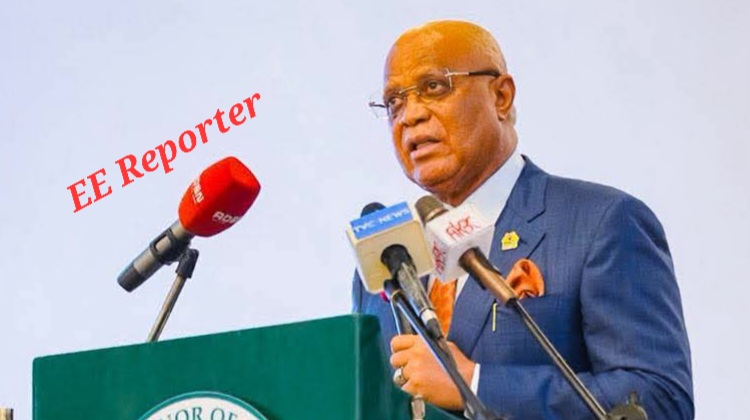
NNPP defectors. Governor Abba Yusuf has welcomed the defection of eight NNPP lawmakers to the APC at the National Assembly in Abuja.

Governor Abba Yusuf has welcomed the defection of eight NNPP lawmakers to the APC at the National Assembly in Abuja. This was disclosed in a statement by his spokesperson, Sanusi Dawakin-Tofa, on Wednesday.

It said that the lawmakers cited the internal NNPP crisis as the reason for their move, listing the defected lawmakers as Tijjani Abdulkadir Jobe, Garba Ibrahim Diso, Hassan Shehu Hussain, Idris Dankawu, Muhammad Chiroma Nalaraba, Rabiu Yusuf, Dr Ghali Mustapha Tijjani, and Muhammad Bello Shehu.

The statement noted that the event was attended by the former APC national chairman, Abdullahi Umar-Ganduje and Deputy Senate President Barau Jibrin.

The Kano governor stated that the development was part of the democratic process, noting that political realignments were not unusual in a vibrant democracy.

Kano Residents Welcomes Governor Abba Yusuf From Hajj

Governor Yusuf

He reaffirmed his administration’s commitment to delivering the dividends of democracy to the people of Kano, irrespective of political differences.

The governor emphasised the need for unity and cooperation among elected representatives for the state’s overall development.

News

EFCC Rallies Anti-corruption Agencies For Enhanced Collaboration

Published

on

By

EFCC Arraigns Gidado Ibrahim

EFCC Rallies Anti-corruption Agencies For Enhanced Collaboration

The Executive Chairman of the Economic and Financial Crimes Commission, EFCC, Ola Olukoyede on Wednesday, June 8, 2026, convened a strategic meeting of the nation’s anti-corruption agencies at the Abuja corporate headquarters of the Commission.
Eereporter.com

The roundtable was to fashion a stronger and enduring collaboration and synergy framework among the EFCC, the Independent Corrupt Practices and Other Related Offences Commission, ICPC, the Code of Conduct Bureau and the Bureau of Public Procurement, BPP for better outcomes in the fight to eradicate corruption, economic and financial crimes in the country.

In a meeting attended by the Director General, BPP, Dr. Adebowale Adedokun; ICPC Chairman, Dr. Musa Adamu Aliyu, SAN, and CCB Chairman, Dr. Abdulahi Usman Bello, Olukoyede explained that he called the anti-graft czars to put heads together for broad-based collaboration and synergy for effective deliveries of the anti-corruption mandates.

He identified procurement and contract fraud as the severest of all public sector corruption and financial crime typologies in the country.

“More than 80 percent of public sector corruption is caused by contract and procurement fraud and if you look at its impact on the economy, on our social life, health sector and all that, you will discover that it’s quite huge. If we can reduce this to the barest minimum, we would have gone a long way in realizing our mandates. If we can actually deal with the issue of contract and procurement fraud in Nigeria, probably within the next one year, the impact will be felt everywhere,” he said.

He stressed the need for the three law enforcement agencies to also work better with the BPP, which is a regulator. “The essence of this meeting is to also work with the BPP. The BPP is a regulator. The three of us were enforcers. In fighting public and private sector procurement and contract fraud, if you don’t work with the regulator, technically speaking, a lot of things would be missed. It’s not just about waiting for them to steal the money. It’s about prevention, it’s about risk management. And that’s where the regulator comes in. They have the technical depth of the procurement processes which some of us may not have. If we work together, if we synergize to establish a sustainable institutional partnership between the law enforcement agencies and the BPP it will go a long way in helping us to reduce contract and procurement fraud. Basically that is the objective of this meeting,” he said.

Speaking further, Olukoyede noted that there are many areas in the Public Procurement Act that have not been activated, adding that “that’s what the BPP DG is here to also draw our attention to. He will also enlighten us with respect to some of these regulations that can help our work.”

He noted that anti-corruption agencies’ collaboration efforts would improve information and intelligence gathering and facilitate timely investigation and prosecution of some cases.

“I have discovered that there is really nothing to compete about. We can do joint investigations. Sometimes it may be necessary for us to do joint monitoring. I believe if we do these with the BPP that will help us a lot. Also, capacity building is very key”, he said.

He proposed the formulation of a Standard Operating Procedure, SOP that will help the agencies stimulate the relationship and identify what is expected of each one of them and the need to manage information very confidentially. “That’s why we decided to call for this meeting. And then, going forward we believe we’ll be able to have this meeting on a quarterly basis so that we will review our resolutions and ultimately help our nation”, he said.

Lending credence to the EFCC’s Chair submissions, ICPC Chairman, while calling for greater synergy and collaboration observed that “if ICPC, CCB, NFIU and EFCC come together it will give people confidence that we are really working together to fight corruption. And that will also help us in avoiding duplications because there are a lot of cases that people will file in EFCC, they will come to ICPC and they will go to Code of Conduct”

“This is an area where I have concern for us. Whenever I see any petition which is out of our mandate, I don’t touch it. I will direct it to either the CCB, EFCC or police. So that’s why this kind of meeting is very important and we need to use technology so that we eliminate duplication.”

EFCC Arraigns Gidado Ibrahim

EFCC

The Chairman, CCB Chairman, while regretting the impact of corruption in the country, showed in infographics that around N7 to N25 trillion had been lost in the country to corruption. He disclosed that the country has about five million public servants and corroborated that procurement fraud is one of the major scourges in the public sector space. He emphasized the need for improved collaboration, reiterating that partnership among the NFIU, EFCC and ICPC is very important. The NFIU, he said “can provide information for us, the EFCC can investigate financial crimes, regarding procurement. The ICPC can also look at systemic corruption.”

In his presentation, the BPP Chairman took the participant agencies through basic imperatives anti-graft agencies need to know from the regulatory perspective. He made a presentation on “Why Public Procurement Matters,” capturing the consequences of a weak procurement system, which he said usually leads to waste of public resources, cost overrun, project abandonment, poor quality infrastructure and corruption.

He also threw light on public procurement reforms, comprising legal and institutional reforms, capacity building and collaboration. He stressed that “The most effective anti-corruption strategy is not merely to pursue wrongdoing after it occurs, but to design procurement systems where hide.”

He pointed out that public procurement reform required five elements: legal & institutional reforms; governance & accountability; strategic procurement; digital procurement and improved market operations. Discussions were held on such issues as procurement without cash backing, deliberate breaches of procurement procedures, abuse of procurement laws, among others.
Eereporter.com

Continue Reading

News

PFIPC Scandal: ADC Condemns Arrest Of Adeyemi’s Father, Says “Only Independent Inquiry Acceptable”

Published

on

By

ADC Unveils Manual Membership Card

PFIPC Scandal: ADC Condemns Arrest Of Adeyemi’s Father, Says “Only Independent Inquiry Acceptable”

The African Democratic Congress (ADC) has taken note of President Bola Tinubu’s directive to the Independent Corrupt Practices and Other Related Offences Commission (ICPC) to investigate the Presidential Foreign Intervention Promotion Council (PFIPC) scandal.
Eereporter.com

We insist, however, that only an independent judicial panel will be able to provide answers beyond all reasonable doubt to the many questions that this historic scandal has thrown up.

A few days ago, the ADC called for an independent inquiry into this matter, identified the institutions requiring investigation, and warned against any attempt to reduce the scandal to the actions of a single individual. We therefore note that President Tinubu has now accepted the central argument advanced by the ADC: that this matter requires an investigation and should not simply be explained away, as his Presidency had initially attempted to do.

However, by handing the investigation to the Independent Corrupt Practices Commission (ICPC), an agency of government under the Executive, it conveys the impression that the President intends to keep the investigation in-house and possibly be a judge in his own case. A Presidency that is at the very heart of a historic scandal such as this does not have the credibility to authorise an investigation into a matter that has brought an entire country into disrepute.

This is why the President should seize this moment as an opportunity to restore some credibility to his government by allowing an independent inquiry made up of trusted citizens. A government that is drowning in scandals cannot be trusted to investigate itself.

Second, the ADC is equally concerned that, even as the President has ordered an investigation, the Presidency’s statement remains stubbornly presumptuous, appearing to have concluded that the appointment letters and other official documents were “forged”, even before any investigation had started. Yet, one of the central questions that the investigation is expected to determine is whether the appointment letters and other documents that Mr. Adeyemi relied on were genuinely issued, as he has claimed, or whether they were forged, as the Presidency has insisted.
Therefore, by anchoring the investigation on its own position, the government would have effectively biased the entire process.

The investigation must be allowed to independently determine whether the documents were forged, improperly issued, fraudulently obtained, or lawfully issued under the authority of the Presidency. The credibility of the entire exercise depends on allowing investigators to follow the evidence wherever it leads, rather than predetermining the outcome through official pronouncements.

Third, since the Presidency itself acknowledges that the investigation may extend to the conduct of public officials and institutions connected to the Presidency, Nigerians deserve to know whether every relevant office, including the Office of the Chief of Staff to the President, will be subjected to the same level of scrutiny as every other institution.
If this is so, the minimum expectation is for the President to direct his Chief of Staff to proceed on leave until the investigations are concluded. As long as he remains an active official of government, it creates the impression that the President is deliberately shielding a key party in this matter. It would also be difficult to convince anyone that the Chief of Staff would not use his powerful office to influence the investigations in his favour.

Third, the Presidency should immediately clarify whether the findings of the ICPC investigation will be made public. A report submitted only to the President is not enough. Nigerians have a right to know the truth. Transparency demands that the final report be released in full and that its recommendations be implemented without fear or favour.

Fourth, the President must commit to releasing the full, unredacted report at the end of the investigation. Merely announcing the outcome, or punishing a few expendable officials or scapegoats, will not satisfy a nation crying out for justice and will certainly not restore the confidence of the international community, which now views our Presidency as a den of scammers.

Fifth, the ADC condemns the reported arrest of the father of Mr. Adeyemi Adeniyi. This act of intimidation only strengthens the impression that the government is panicking and is desperate to hide the truth rather than uncover it. If indeed a crime has been committed, only the suspect can be legally arrested.

ADC Unveils Manual Membership Card

ADC

It is an established fact that Nigerian law does not provide for vicarious liability. Moreover, if the government is already going around arresting ordinary people while prominent government actors, who definitely have questions to answer, continue to sit pretty in their offices, where is the justice in this? And why bother to conduct any investigations if you have already decided whom to arrest?

The ADC will continue to monitor developments on this matter closely. As we have noted before, this is a national security matter that exposes either the culpability or the vulnerability of our institutions. It must therefore not be swept under the Presidential red carpet.

Signed:

Mallam Bolaji Abdullahi, National Publicity Secretary, African Democratic Congress (ADC)
Eereporter.com

Continue Reading

News

Olukoyede Charges Students: Steer Away from Cybercrimes, Financial Crimes

Published

on

By

Olukoyede Tasks Universities On Use Of Artificial Intelligence

Olukoyede Charges Students: Steer Away from Cybercrimes, Financial Crimes

The Executive Chairman of the Economic and Financial Crimes Commission, EFCC, Ola Olukoyede has charged students in the country to steer away from internet fraud and other forms of financial crimes, stating that the future of the country depends on the choices young people make.
Eereporter.com

He gave the charge on Tuesday, July 7, 2026, when the students of Regent Secondary School, Abuja, came on a study visit of the Commission.

Speaking on behalf of Olukoyede, the Head of EFCC Radio and Deputy Commander of the EFCC, DCE Nwanyinma Okeanu, described such visits as an important aspect of young people’s sensitisation against corruption and fraudulent financial practices.

She observed that the students’ decision to visit the Commission marked a positive beginning in shaping their future and urged them to remain focused on the path of becoming responsible citizens.

According to her, “Having students visit us from time to time is one of the ways in which we try to tell you that your future begins with the choices you make as young people. What you are going to become begins with the choices you make today. And having made the choice to visit EFCC, today marks a very good beginning to your future.”

Okeanu disclosed that the EFCC was established to restore Nigeria’s dignity by combating corruption, economic and financial crimes, stating that the Commission’s officers are committed to the fight to promote transparency and accountability and safeguard the nation’s future. She warned against the increasing attraction of cybercrimes to young people and described corruption, economic and financial crimes as serious threats to national development.

Delivering a lecture titled, “Ills of Cybercrime,” Eniola Kayode of the Cybercrime Unit of the EFCC, enlightened the students on the nature, causes and consequences of cybercrime, and urged them to resist the temptation of internet fraud and other forms of financial crimes.

She warned that while cybercrimes may appear to offer quick financial gains, it ultimately destroys lives, ruins futures and damages reputations and encouraged the students to channel their talents to productive ventures by using the internet for education, programming, digital skills, online businesses and innovations.

Olukoyede Tasks Universities On Use Of Artificial Intelligence

Olukoyede

The Head of Enlightenment and Reorientation of the EFCC, Assistant Commander of EFCC, ACE II Aisha Mohammed, took the students through the mandate and functions of EFCC and urged them to be good ambassadors of the Commission and the country.

“You have to be good ambassadors. You have to contribute your own quota and your voices matter,” she said.

In his remarks, the Humanities Trip Coordinator of Regent Secondary School, Jatau Shadrach Solomon, expressed gratitude to the Commission, noting that the visit has “expanded the students’ scope of learning.”

Two students of the school, Aisha Ismail and Dubem Moghalu were decorated as EFCC ambassadors.
Eereporter.com

Continue Reading

Trending