
Politics
Tinubu’s Convention Speech Signals Loyalty Demands Amid Social Strains And Institutional Biases

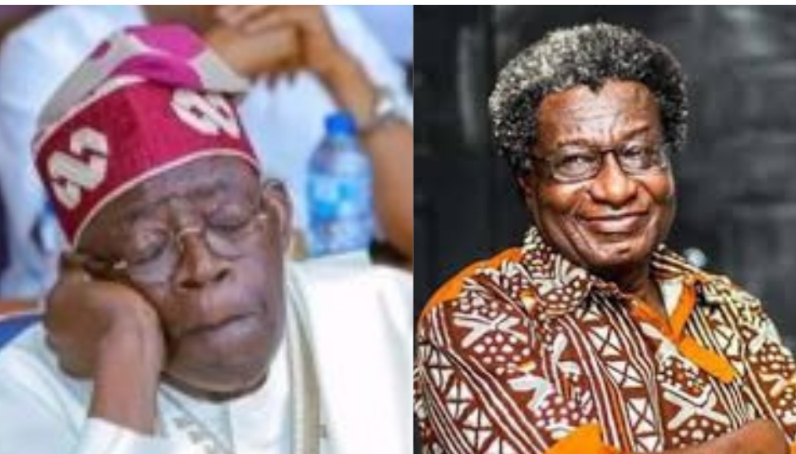
Tinubu’s Convention Speech Signals Loyalty Demands Amid Social Strains and Institutional Biases By Emman Usman Shehu
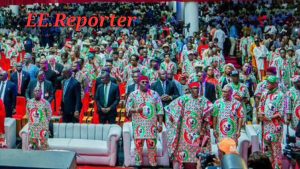
At Eagle Square on March 27, 2026, President Bola Tinubu addressed the All Progressives Congress (APC) during its 4th elective national convention. His speech, framed around the theme “Unity in Progress: Consolidating the Renewed Hope Agenda,” sought to project cohesion and optimism three years into a presidency defined by bold, yet controversial, economic reforms.
But beneath the formal tone lay tensions that the address did not acknowledge: a party still grappling with factionalism, public discontent over austerity measures, and rising concerns about authoritarian tendencies.
Tinubu celebrated the APC’s 2013 origins as a pragmatic coalition formed to correct the perceived failures of the PDP and paid tribute to founding figures, including the late President Muhammadu Buhari. He claimed the party’s greatest strength was its unity. Critics, however, note that defections now hailed as “voluntary endorsements” are often facilitated by political incentives, highlighting the fragile nature of this so-called unity.
The president defended his Renewed Hope Agenda, particularly the removal of fuel subsidies and the naira flotation. While these reforms have improved government revenue and moderated headline inflation (down to 15.06% in February 2026), they inflicted significant hardship. Fuel prices surged from N190 to N950 per litre, pushing millions of low-income households deeper into poverty. Social protection measures helped somewhat, but welfare conditions remain worse than before. Analysts warn that framing these sacrifices as long-term prosperity may increasingly feel hollow to citizens struggling with daily costs.
Tinubu also defended the Electoral Act 2026, dismissing opposition concerns as a “disservice” to the legislative process. Critics highlight the controversial manner of the amendment’s passage, rushed provisions for electronic results transmission, and removal of penalties for certificate forgery—all raising questions about fairness ahead of the 2027 elections.
Perhaps most worrying to observers are signs of a creeping authoritarian tilt. Peaceful protests in 2024, such as #EndBadGovernance, resulted in hundreds of arrests, including minors, under charges of treason or terrorism. Digital crackdowns targeted journalists and citizens alike, with reports of over 140 attacks on online expression. Furthermore, selective anti-corruption enforcement fuels perceptions of bias: high-profile cases against defectors often vanish once they join the APC. The recent plea bargain of former Aviation Minister Stella Oduah, resolved after her defection, has sparked controversy and reinforced these perceptions.
While Tinubu reaffirmed the importance of opposition voices, actions on the ground suggest dissent is tolerated only if polite and deferential. Rising insecurity, youth unemployment, and widening inequality underscore that Nigerians need tangible relief, not speeches promising a better tomorrow.
In essence, the APC convention projected unity and forward momentum, but analysts and critics argue that the event also revealed the party’s vulnerabilities: social hardship, institutional favoritism, and the centralization of authority. True progress, they argue, will require not just rhetorical unity but accountability, impartial governance, and protection of dissenting voices.
Dr. Shehu is an Abuja-based writer, activist, and educator.
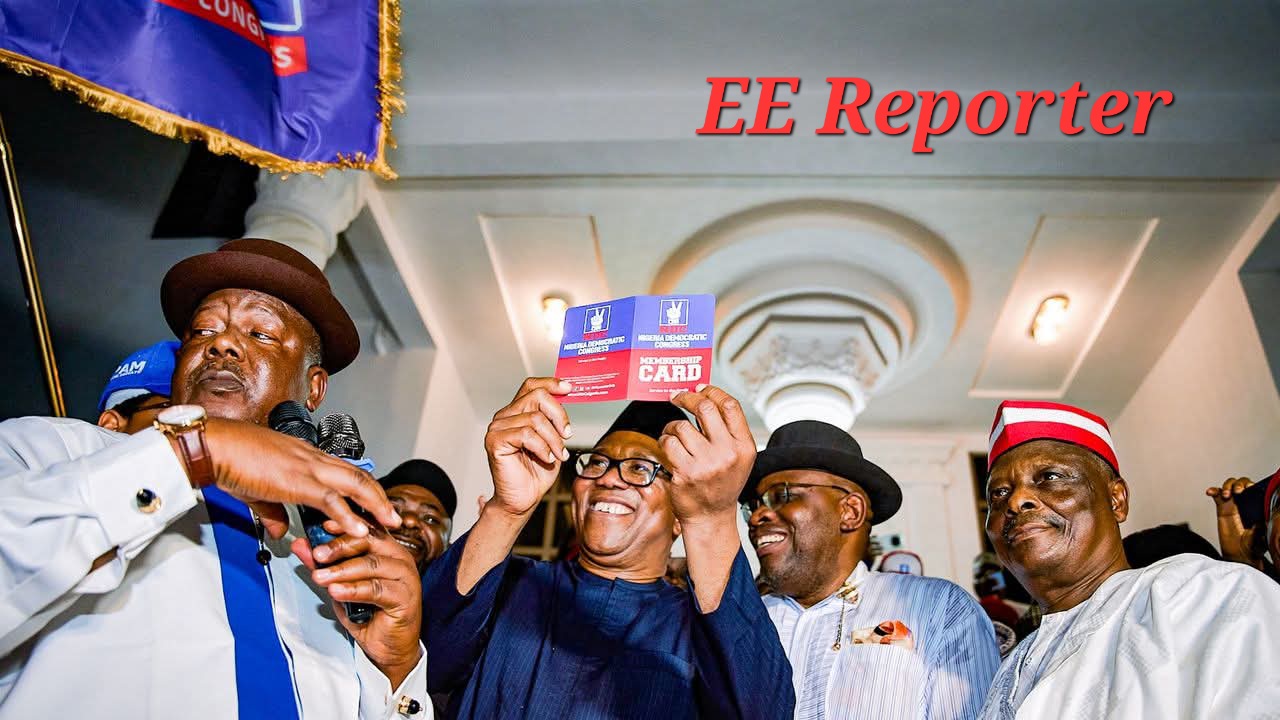
Obi-Kwankwaso Defection: Recalibration That Could Redefine The Country’s Power Structure
Obi-Kwankwaso surge; the defection storm that could upend Nigeria’s political system.
Politics does not whisper at defining moments; it roars, demanding bold choices and decisive turns. Today, the evolving journeys of Mr. Peter Obi, presidential candidate of the Labour Party in the 2023 elections, and Senator Rabiu Musa Kwankwaso, flagbearer of the New Nigeria Peoples Party in that same contest, capture the urgency of this moment.
This is not a quest for mere relevance or routine recalibration; it is a high-stakes pivot and a deliberate search for a credible platform capable of bearing the weight of a serious national challenge and reshaping the country’s political destiny.
What many once dismissed as improbable is now gaining the texture of inevitability: a broad, reform-minded alliance anchored on the convergence of supporters of Obi and Kwankwaso, now christened the OK Movement. This is no ordinary political maneuver; it is a recalibration that could redefine the country’s power structure while opening a path toward a more inclusive and stable democratic order.
Eereporter.com
Both figures have, in recent cycles, moved away from their former party homes, briefly converging within the African Democratic Congress (ADC) and now gravitating toward the National Democratic Congress (NDC). Kwankwaso’s migration from the NNPP to the ADC was not merely symbolic; it signaled that the old political camps were no longer fit for purpose. As he put it, “We left the NNPP because of externally influenced legal challenges that made our stay perilous.”
Obi’s departure from the Labour Party to the ADC further consolidated what many hoped would become a formidable coalition. However, the ADC, rather than emerging as a stable opposition platform, became entangled in internal disputes, legal battles, and structural inconsistencies that many insiders now describe as unreliable. Explaining his exit, Obi noted: “My decision to depart from the ADC was not due to personal issues with the party leadership… but was driven by unresolved political conflicts and recurring legal and internal disputes that distracted the party from national issues.”
What we are witnessing is not indecision; it is strategic migration, a revolt against weak platforms and a determined search for a viable electoral vehicle. The ADC phase offered proof of concept, an early coalition impulse, but also exposed the limitations of platforms lacking internal cohesion. By contrast, the emerging NDC option presents itself as a more structured vehicle and one that promises clarity of leadership, a predictable primary process, and an institutional spine capable of sustaining a national campaign.
With this shift, a potential exodus of key members from the ADC appears imminent, further weakening a party already burdened by litigation over its leadership. Yet, the true engine of this moment is not party labels rather it is people. The fusion of the Kwankwasiyya Movement and the Obidient Movement represents one of the most compelling political alignments in contemporary Nigeria.
Kwankwasiyya brings disciplined grassroots organization, particularly across northern constituencies, with a proven record of loyal and enduring mobilization. The Obidient Movement, by contrast, is youthful, decentralized, digitally savvy, and driven by a reformist ethos that prioritizes transparency, competence, and accountability.
Together, they offer a rare synthesis: structure meets spontaneity; regional strength meets national reach; experience meets aspiration. In electoral terms, this alignment has the potential to consolidate a broad alliance cutting across geography, class, and generation. In governance terms, it could nurture a culture that blends technocratic discipline with active citizen engagement. This is precisely the mix many analysts argue Nigeria needs to move from cyclical contestation to sustained development.
This is where the NDC’s proposition becomes pivotal. Beyond serving as a landing ground, the party is positioning itself as an enabling architecture. Its most significant offering to an Obi–Kwankwaso ticket is not merely access, but assurance: a transparent pathway to nomination, a commitment to internal democracy, and a platform anchored on policy coherence rather than factional bargaining.
In a political environment often defined by contentious primaries and legal disputes, such guarantees can be decisive. They reduce uncertainty, attract broader coalitions, and allow candidates to focus on articulating a national agenda rather than navigating intra-party conflict.
The potential implications for electoral success are considerable. A unified ticket anchored on these two leaders could redraw Nigeria’s political map by aligning northern organizational strength with southern reformist momentum. It could also recalibrate voter psychology, shifting the narrative from fragmented opposition to a credible alternative. In many democracies, it is this moment of perceived viability that transforms enthusiasm into votes.
Obi-Kwankwaso
More importantly, the NDC offers narrative clarity. In modern politics, perception is shaped not only by what a movement stands for, but by how clearly and consistently it communicates its purpose. By providing a structured environment, the party enables the OK Movement to maintain message discipline while articulating a vision centered on economic reform, governance efficiency, and national unity. This clarity could convert widespread goodwill into measurable electoral support.
Analytically, the implications of this convergence are significant. Nigerian elections are often decided at the intersection of structure and sentiment. The Obidient Movement brings the sentiment, an energized, emotionally invested base seeking change.
Kwankwasiyya contributes the structure, a disciplined network capable of translating enthusiasm into votes. Their alignment, under a stable platform, creates a political equation that could fundamentally alter electoral dynamics.
Globally, such alignments have often catalyzed both electoral success and political stability. In diverse democracies, coalitions that bridge ideological, regional, or generational divides have demonstrated an ability not only to win power but to govern with a broader mandate. Their strength lies in inclusivity: carrying multiple constituencies along, reducing post-election tensions, and fostering shared ownership of governance.
In Kenya, intense political rivalry gave way to alliance arrangements that restored stability, most notably the 2008 power-sharing framework between Mwai Kibaki and Raila Odinga. In South Africa, the Government of National Unity in the 1990s brought former adversaries together, stabilizing a fragile transition and laying the foundation for enduring democratic institutions.
The lesson is clear: alliances are not easy, but when thoughtfully constructed, they can transform fragmentation into functionality. They convert competition into shared responsibility and create the conditions for stability.
For Nigeria, the Obi–Kwankwaso surge represents a similar possibility. It offers an opportunity to move from fragmented contestation to coordinated engagement, from narrow political calculations to a broader national vision, one grounded in competitive credibility rather than entrenched dominance.
No movement is without challenges. Alliance management demands discipline, compromise, and clear decision-making frameworks. Messaging must remain consistent, expectations must be managed, and internal cohesion must be actively maintained. Yet, these are the natural tests of any serious political enterprise.
What matters is the direction of travel and here, it is unmistakable: toward consolidation, credibility, and a reimagined political center.
The defection storm, therefore, should not be seen merely as instability. It is a manifestation of political evolution and a sign that actors are responding to the demands of a changing electorate. It reflects a growing insistence on platforms that can deliver not just participation, but performance.
In the final analysis, the Obi–Kwankwaso surge is more than a moment; it is a message. A message that Nigeria’s political space remains open to reinvention and that that alliances can be rebuilt, narratives reshaped, and power redefined.
As the storm gathers strength, one truth stands out: this is not simply about upending an existing order. It is about constructing a new one: more inclusive, more responsive, and more aligned with the aspirations of the Nigerian people.
And as the OK Movement weighs its next steps, the path forward becomes clearer. The future of Nigeria’s political contest will not be decided by rhetoric alone, but by the ability to align vision with structure, energy with organization, and aspiration with execution.
In that sense, the journey from the ADC to the NDC is not merely a change of address. it is a statement of intent: an intent to move from possibility to preparedness, from momentum to machinery and from movement to mandate.
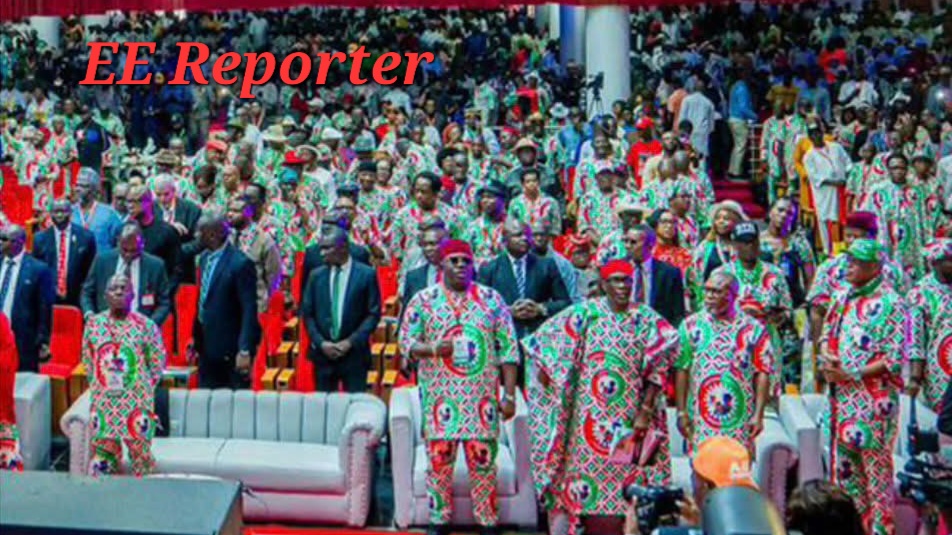
Labour Party (LP) Releases 2027 Primaries Pimetable, Fixes Nomination Fees
The Labour Party has released its timetable and schedule of activities for the 2026 primary elections.
The Labour Party has released its timetable and schedule of activities for the conduct of its 2026 primary elections, with concessions for women, people living with disabilities and youths.
The national publicity secretary of the party, Ken Asogwa, who disclosed this in a statement on Monday, added that the timetable was released in accordance with the 1999 Constitution.
He also said its release complied with the Electoral Act, 2026, and the Independent National Electoral Commission’s revised timetable and schedule of activities for the conduct of the 2027 elections.
According to him, the timetable indicates that nomination forms for all elective offices will be available for sale from May 6 to 16.
Mr Asogwa said that the submission of completed forms would begin on May 17 and end on May 18.
“Screening of aspirants for the House of Assembly and Governorship election will be on May 20, while that of the National Assembly and the Presidential election will be on May 22,” he said.
He said the screening results would be published on May 23.
Eereporter.com
He added that appeals and petitions for House of Assembly and governorship aspirants would be heard on May 24, while those for National Assembly and presidential aspirants would be heard on May 25.
He further said that the final list of cleared aspirants would be published on May 26.
According to him, party primaries for House of Assembly and governorship positions will be held on May 27, while those for National Assembly and presidential positions will take place on May 29.
Mr Asogwa also announced the structured fees for nomination forms for various offices.
For the House of Assembly, the expression of interest form costs ₦1,000,000, while the nomination form costs ₦2,000,000, bringing the total to ₦3,000,000.
For the House of Representatives, the expression of interest form costs ₦1,500,000 and the nomination form ₦3,500,000, totalling ₦5,000,000. Senatorial aspirants are to pay ₦2,500,000 for the expression of interest form and ₦7,500,000 for the nomination form, for a total of ₦10,000,000.
Governorship aspirants will pay ₦5,000,000 for the expression of interest form and ₦20,000,000 for the nomination form, for a total of ₦25,000,000. For the presidential ticket, the expression of interest form costs ₦10,000,000, while the nomination form costs ₦40,000,000, bringing the total to ₦50,000,000.
He, however, said that the party’s National Working Committee decided to give Abia Governor Alex Otti the form free of charge.
The spokesman said that in line with the party’s motto of “Equal Opportunity and Social Justice’’, concessions had been approved for certain categories of aspirants.
Labour Party
“Female aspirants, people living with disabilities and youths aged 25 to 30 would only be required to pay for the expression of interest forms for all positions,’’ he said.
He also said that the LP was calling on all prospective aspirants for the 2027 elections who had not yet registered to take advantage of the ongoing membership registration.
He said registration was open from May 3 to midnight of May 4, ahead of the compilation and submission of the party’s membership register to INEC in compliance with the Electoral Act, 2026.
News
ADC Release Timetable For 2026 Primary Elections, Urges Aspirants To Ensure Full Compliance With Party Constitution, Electoral Act
ADC Release Timetable For 2026 Primary Elections, Urges Aspirants To Ensure Full Compliance With Party Constitution, Electoral Act
The African Democratic Congress (ADC) has officially released its timetable for the conduct of its 2026 primary elections, outlining the guidelines and requirements for nomination of candidates for the 2027 general elections.
The timetable reflects the party’s commitment to internal democracy, orderliness, and full compliance with electoral guidelines.
As outlined in the timetable, the process is already underway, with the collection of application forms running from April 1 to May 4, 2026. The sale of nomination forms will take place from May 5 to May 10, 2026, while the submission of completed forms is scheduled for May 11 to May 13, 2026.
Eereporter.com
The party will conduct the screening of aspirants from May 14 to May 15, 2026, followed by the publication of screening results on May 17, 2026. Appeals will be heard between May 18 and May 19, 2026, with the final list of cleared aspirants to be released on May 20, 2026.
The party’s primary elections will commence on May 21, 2026, with elections for State Houses of Assembly, House of Representatives, and Senate seats holding simultaneously at the ward level. The Governorship primaries will take place on May 22, 2026, while the Presidential Primary is scheduled for May 25, 2026.
This will be followed by a meeting of the National Executive Committee on May 26, 2026, and the Special National Convention on May 27, 2026, where final ratifications will be made.
ADC
In line with its commitment to inclusivity and broad participation, the ADC has also approved a structured fee regime for nomination forms across all elective positions. The presidential nomination form is pegged at N100 million, governorship at N50 million, Senate at N20 million, House of Representatives at N10 million, and State House of Assembly at N3 million.
To encourage wider participation, the party has introduced concessional rates, offering a 50 percent discount for youthsand a 25 percent discount for women and persons with disabilities.
The ADC calls on all members, stakeholders, and aspirants to adhere strictly to the outlined schedule and guidelines, as the ADC continues to position itself as the primary platform for Nigerians seeking competent, accountable, and people-focused leadership in 2027.
Signed:
Mallam Bolaji Abdullahi
National Publicity Secretary
African Democratic Congress (ADC)
-

 Crime1 year ago
Kogi Assembly Considers Law To Regulate Rent, Establish Control Board: Tenancy Law
-

 News1 year ago
Atiku Reveals Why He Failed To Pick Wike As Running Mate In 2023
-

 Akwa Ibom1 year ago
The Apostolic Church Gets New Territorial Chairman, Exco
-

 Crime1 year ago
Federal High Court Jails 2 For Vandalizing Transformer, Telecom Mast In Kogi
-
 News1 year ago
The Apostolic Church Gets New National President, Executive
-
 Akwa Ibom1 year ago
Umo Eno Commences Payment Of 80,000 Naira Minimum Wage With Arrears
-

 News1 year ago
Senator Natasha Returns To Senate With Husband Amid Seat Dispute
-

 Economy1 year ago
Kiyosaki: Is Tinubu’s Government Afraid Of Ibrahim Traore?