
Politics
BREAKING: 2025 GATI Report: Abia, Borno, Ekiti, Anambra, Other Rank Performing States

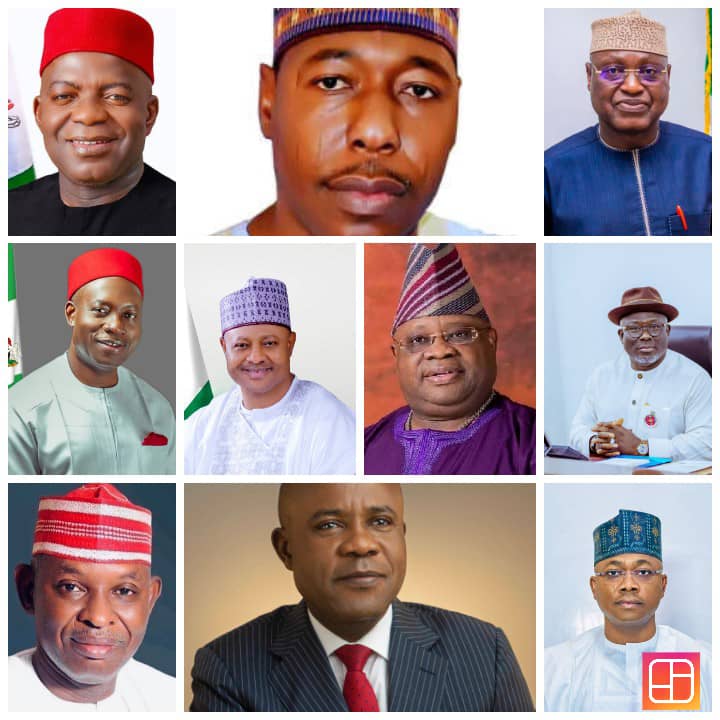
BREAKING: 2025 GATI Report: Abia, Borno, Ekiti, Anambra, Rank Performing States
The Guild of Online Media Editors and Publishers (GOMEP) Nigeria has released the much anticipated 2025 Governance Accountability and Transparency Index (GATI) Report, with Abia, Borno, Ekiti, Anambra, Kaduna, Osun, Delta, Kano, Enugu and Kogi States emerging Top 10 performing states in the country.
The Report unveiled at a press conference in Abuja, the Nigeria capital territory marks the second edition of the annual Governance Accountability and Transparency Index developed by the GOMEP Nigeria, an umbrella body of more than 75 online media editors and publishers across Nigeria.
The annual report seeks to strengthen democratic governance by assessing how transparently and responsibly Nigeria’s 36 state governments conduct public affairs, while also reinforcing the media’s role as an impartial watchdog on governance, social justice and public interest.
Purpose of the Index
According to GOMEP Nigeria, the Governance Accountability and Transparency Index (GATI) was conceived to deepen good governance by placing greater scrutiny on the activities of state governments through measurable indicators that reflect transparency, accountability and responsiveness to citizens.
The 2025 index assessed all the 36 states using seven key measurable indices, namely:
1. Public Access to Information and Open Data Initiatives:
– Implementation of Freedom of Information (FOI) laws
– Government websites and online portals
-Government data portals
– Data formats and accessibility
2. Budget Transparency and Participatory Budgeting:
– Access to budget documents
– Clarity and accessibility of budget documents
– Details of budget expenditures
– Citizen engagement in budgeting processes
– Public hearings and consultations
3. Audit and Oversight:
– Independence of audit institutions
– Effectiveness of parliamentary oversight
4. Anti-Corruption Efforts:
– Effectiveness of Whistleblower protection laws
5. Government Responsiveness:
– Timeliness of government responses to citizen inquiries
– Citizen satisfaction surveys
6. Procurement Transparency:
– Publicly available procurement information
– Tender processes and contract awards.
7. Media Freedom:
– Press freedom
– Journalists’ safety and protection
Methodology Used
Presenting the report, the National President of the GOMEP Nigeria, Dr. Dozie Nwankodu, who is also the Publisher of GlobalReporters.Ng stated that the group adopted five internationally recognised methodologies in evaluating the states.
These include:
Surveys conducted among citizens, businesses and government officials;
Document Reviews of publicly available government policies, laws and records;
Expert Assessments involving academics and civil society organisations;
Data Analyses using statistical models from multiple sources; and
Index Aggregation using weighted averages to determine final scores.
Dr. Nwankodu explained that each of the seven indices was scored independently before the Average Index Point for each state was determined.
“Points were awarded to states based on merit across the seven indices. The final index mark for each state was obtained by adding the scores across the indices and dividing by seven,” he said.
He further explained the grading system:
85% – 100%: Category A – Exceptional Performance
65% – 84%: Category B – Strong Performance
45% – 64%: Category C – Average Performance
25% – 44%: Category D – Poor Performance
0% – 24%: Category E – None Performance.
Rigorous Data Collection Process
Speaking on the credibility of the report, the Chairman of the Appraisal Committee and Publisher of Naija NewsHouse, Comrade Dominic Edem, said the evaluation process was rigorous and adhered to global best practices. He disclosed that the committee consisted of 36 professionals drawn from the media, academia and civil society, painstakingly analysed data gathered from across the country.
“Our approach combined both quantitative and qualitative methods, including surveys, interviews and analyses of publicly available information across the states,” Edem said.
According to him, primary data were collated by field agents across the 36 states within a 90-day period, generating 350 data points per state, amounting to 12,600 data entries nationwide.
He added that the data were compiled by the Information and Data Desk of GOMEP before being reviewed by the Appraisal Committee, which carefully analysed them before submitting the final report to the general house – membership of the GOMEP Nigeria for adoption.
Comparative Performance of Category A States (Exceptional Performance) in the 2025 GATI Report To The Previous Year, 2024 Report
From the Report obtained by newsmen, during the unveiling of the GATI 2025 Report, a comparative analyses of the 2024 First Edition, and the 2025 Edition revealed notable improvements in governance performance across several Nigerian states, with four states (Abia, Kaduna, Kano and Kogi), which hitherto were not in (Category A – Exceptional Performance) bracket, advancing into the position, while six others consolidated their positions.
Abia State recorded a significant progression between the two editions. In the 2024 report, the state ranked under Category B (Strong Performance) with an Average Index Point of 82.2. But in the 2025 edition, Abia advanced to Category A (Exceptional Performance) with 90.0 points, representing an increase of 7.8 points, or a 9.49% improvement in its governance performance score.
Borno State, which already occupied the Exceptional Performance category in 2024 with an Average Index Point of 86.3, further strengthened its standing in 2025. The state achieved 89.7 points, reflecting a 3.4-point increase and a 3.94% improvement, thereby consolidating its position among the leading performers.
Ekiti State demonstrated steady advancement, improving from 86.3 points in 2024 to 89.6 points in 2025. This 3.3-point increase represents a 3.82% growth in its governance performance index.
Anambra State also recorded measurable progress, rising from 86.3 points in 2024 to 89.3 points in 2025, representing a 3.0-point increase and a 3.47% improvement.
Kaduna State recorded one of the most notable upward movements among the states that previously fell below Category A. In 2024, Kaduna ranked in Category B (Strong Performance) with an Average Index Point of 81.7. By 2025, it had risen to Category A (Exceptional Performance) with 89.3 points, reflecting a 7.6-point increase, equivalent to a 9.30% improvement.
Osun State posted notable gains as well, increasing from 86.3 points in 2024 to 89.3 points in 2025, a 3.0-point rise representing a 3.47% improvement.
Similarly, Delta State improved from 86.3 points in 2024 to 89.3 points in 2025, marking a 3.0-point increase and a 3.47% growth in its index score.
Kano State recorded one of the most remarkable improvements in the index. In the 2024 Report, the state was placed in Category C (Average Performance) with an Average Index Point of 58.6. In the 2025 Edition, however, Kano surged to Category A (Exceptional Performance) with an Average Index Point of 89.1. This represents an impressive 30.5-point increase, translating to a 52.05% improvement in governance performance.
Enugu State maintained its position within the high-performing tier, moving modestly from 86.3 points in 2024 to 86.4 points in 2025. This reflects a 0.1-point increase, equivalent to a 0.12% improvement, indicating stability in governance performance.
Perhaps the most dramatic improvement was recorded by Kogi State. In the 2024 report, the state ranked in Category D (Poor Performance) with an Average Index Point of 33.9. In the 2025 edition, however, Kogi surged to Category A (Exceptional Performance) with 85.5 points. This represents an extraordinary 51.6-point increase, translating to a 152.21% improvement—one of the most significant governance performance turnarounds captured in the index.
Focus On Governance Transparency
Also speaking at the event, the Deputy National President of GOMEP and Publisher of Satcomm Online, Luqman Oluwatoyin Bolakale, noted that the index specifically examined governance models adopted by state governments and how transparency and accountability were embedded in their programmes.
“For there to be meaningful development, transparency and accountability must remain the cornerstone of governance. All we did was examine how state governments performed within those parameters, knowing that good governance reflects clearly when those two indicators are present in public institutions,” Bolakale stated.
Overcoming Field Challenges
The Secretary of the Appraisal Committee and Publisher of Marshal Newslink, Comrade Ndiana Okon acknowledged that security challenges in some parts of the country posed difficulties during the data gathering process, causing the delay in the release of the 2025 Index Report. However, he commended the dedication of GOMEP’s field agents who were able to obtain credible data from all the states, ensuring the reliability of the final report.
He also disclosed that the top 10 state governors recognised in the 2025 Index Report would receive Certificates of Merit from GOMEP in recognition of their commitment to governance transparency and accountability.
Okon further noted that the index will remain an annual exercise designed to encourage healthy competition among states and promote better governance across Nigeria.
Call For Greater Transparency
In his closing remarks, the National President of the GOMEP, Dr. Dozie Nwankodu, called on government institutions at all levels to embrace transparency and accountability as the foundation of democratic governance.
He also revealed that the organisation plans to extend the assessment framework to Federal Ministries and the National Assembly in future editions.
Overall, GOMEP’s 2025 GATI Report highlighted a broad upward trajectory in governance standards, with several states not only improving their index scores, but also transitioning into higher performance categories.
These gains, according to the GOMEP, signal strengthening commitments to accountability, transparency, and institutional performance, key pillars for sustainable governance and public sector credibility.
The press briefing was attended by members of GOMEP, media practitioners, members of the academia, and representatives of civil society organisations.
ADC Unveils Manual Membership Card, Inaugurates 27 LG Committee Chairmen In Borno
The Borno State chapter of the African Democratic Congress (ADC) has officially launched its Membership Mobilisation, Registration, and Revalidation (MMRR) exercise, reinforcing the party’s commitment to inclusivity, transparency, and strong grassroots participation.
The event, held at the State Party Secretariat, was presided over by the Deputy National Chairman, Babagana Buhari, who completed his registration at Gwange II Ward in the Maiduguri Metropolitan Council (MMC).
The exercise was coordinated by the Chairman of the Borno ADC Membership Committee, Peter Biye, alongside the Committee Secretary and former Minority Leader, Hon. Kolo Bukar, in the presence of party leaders and stakeholders from across the state.
In his remarks, Hon. Kolo Bukar reaffirmed the party’s commitment to meritocracy, fairness, and inclusiveness. He stressed that leadership within the state chapter will emerge through credible democratic processes rather than through imposition or personal interests. According to him, the ADC remains a platform where every member’s voice matters and where transparency and accountability are key guiding principles.
He further highlighted the significance of the MMRR exercise in providing citizens with a genuine political platform, urging members to set aside factional differences and work together in unity. As part of the event, the party also unveiled its new national manual membership card and an updated party register designed to enhance the security, organization, and credibility of membership records.
Additionally, the party inaugurated the 27 Local Government Committee Chairmen to strengthen its grassroots structures and ensure effective coordination of party activities across the state.
ADC Unveils Manual Membership Card
The event witnessed strong participation and goodwill messages from party leaders, who emphasized the importance of grassroots mobilization, youth engagement, and unity as critical drivers for future electoral success.
The ADC continues to reaffirm its commitment to empowering Nigerians and deepening democratic participation at all levels.
Signed:
Muhammad Bulama Sheriff
Media and Publicity Director Membership Registration
Borno state African Democratic Congress (ADC)
We Are Only Speaking For Nigerians, Not Inciting Them: ADC Replies APC
We are only speaking for Nigerians, not inciting them: ADC replies APC. Cites nearly 500 percent fuel price surge, and 100 percent food import increase since May 2023.
The African Democratic Congress (ADC) has pushed back against the All Progressives Congress (APC) over its defence of President Bola Tinubu’s economic reforms, which accused the opposition party of inciting Nigerians against the government.
In a statement signed by its National Publicity Secretary, Mallam Bolaji Abdullahi, the party rejected the accusation of incitement, insisting that the data showing Nigeria’s poverty rate has risen to 63 percent, up from about 50 percent before the removal of petrol subsidy, and the report showing that 93 percent of Nigerians believe the country is heading in the wrong direction are not opposition talking points, but publicly available reports that highlight the human cost of the administration’s economic policies and reflect the views of ordinary Nigerians who are living in hell under the APC government.
The full statement read:
The African Democratic Congress (ADC) takes note of the ruling party, APC’s response to our earlier statement on the rising poverty figures under the Bola Tinubu-led government. But instead of addressing the clear evidence that more Nigerians are falling into poverty under this government, the ruling party has chosen to attack the opposition and dismiss the lived realities of millions of citizens. Facts, however, cannot be dismissed by press statements.
The independent report that triggered this debate shows that Nigeria’s poverty rate has risen to 63 percent, up from about 50 percent before the removal of petrol subsidy. This means that tens of millions of additional Nigerians have been pushed into poverty in the period since the administration’s failed economic policies were introduced. The APC claims Nigerians support its reforms, yet the data says otherwise.
Independent surveys show that 93 percent of Nigerians believe the country is heading in the wrong direction. Eighty-eight percent describe the national economy as bad, while 74 percent say their personal living conditions are poor. These are not opposition talking points. They are the views of Nigerians themselves, APC members included.
The APC also insists that the hardship Nigerians are experiencing is “transient.” But the numbers tell a different story. Recent surveys show that 82 percent of Nigerians report going without enough food at least once in the past year, 82 percent have gone without medical care, 79 percent have gone without cooking fuel, 74 percent have gone without clean water, and 95 percent have gone without a cash income at some point during the year. These figures point not to temporary discomfort, but to widespread and deepening economic distress.
The APC speaks proudly of macroeconomic indicators, but Nigerians live in a real economy where fuel prices have surged by almost 500 percent, from about N255 per litre in May 2023 when Tinubu came into office, to around N1,500 per litre today in many parts of this country. This is pushing up transport costs and driving food prices beyond the reach of millions of households.
The APC claims that the money previously spent on fuel subsidy, which should amount to roughly N6.4 trillion in savings last year alone, is now being redirected to “vital sectors” such as healthcare and social development. However, it is on record that only N36 million, just about 0.02 percent of the capital budget, was actually released for capital projects in 2025 for Nigeria’s entire federal healthcare sector. Nigerians are therefore left to ask a simple question: if the subsidy savings are truly being redirected to critical sectors, where exactly is all the money going? Why are local contractors not paid? Why are the universities still poorly equipped?
The human cost of Tinubu and the APC’s failed policies is even more evident in the food and agriculture sector. Latest reports have it that out of more than 150 rice mills across Nigeria, nearly 90 have shut down operations, while the remaining mills are operating at between 30 and 70 percent of their installed capacity, largely because the Tinubu administration’s policies have encouraged import dependency.
Official data from the National Bureau of Statistics show that Nigeria’s food import bill has jumped from N3.83 trillion in 2023, when President Tinubu came into office, to N7.65 trillion today, an increase of N3.82 trillion, or about 100 percent. This shows that instead of strengthening our local agricultural sector and protecting Nigerian farmers, the policies of the APC government are undermining domestic production and putting thousands of Nigerian farmers and processors out of business.
ADC Replies APC
Economic reforms must ultimately be judged by their outcomes. When poverty rises from 50 percent to 63 percent, when nine out of ten Nigerians say the country is on the wrong path, and when millions struggle to afford basic necessities, it is clear that something is fundamentally wrong.
Nigerians do not expect economic lectures or political attacks on the opposition. They expect policies that make their lives better. The APC may dismiss these concerns, but Nigerians cannot dismiss the realities of the APC’s failures that they confront every day.
Until the APC-led Tinubu government begins to measure success by the well-being of its citizens, the gap between official claims and the lived reality of Nigerians will only continue to widen.
Signed:
Mallam Bolaji Abdullahi
National Publicity Secretary
African Democratic Congress (ADC)
Plateau LG Council Polls: ADC Conducts Primaries In 15 LGAs
Plateau LG Council Polls: ADC conducts primaries in 15 LGAs. The chairperson boasted that the party is fully prepared for the election.
The Plateau chapter of the African Democratic Congress (ADC) says it has successfully conducted primaries in 15 out of the 17 local government areas of the state. The primaries are for local elections slated for September 9.
Plateau ADC chairperson, Hanatu Gagara, told journalists that primaries were conducted peacefully across the local governments, except for Mikang and Langtang South.
Ms Gagara said that in the rest of the local governments, ADC has candidates contesting for councillorship and chairmanship seats.
“What really happened was that the two local governments came late to obtain the forms, and by then we couldn’t sell the forms to them anymore because the time had already elapsed.
“Now that the Plateau State Independent Electoral Commission (PLASIEC) has increased the period for the primaries based on the new electoral act, their issue will be looked into.
“We haven’t started the process yet because I just received the letter this afternoon from PLASIEC regarding what happened,” she said.
The chairperson boasted that the party is fully prepared for the election.
According to her, ADC, which is the main opposition party in Plateau, has nominated competent personalities to slug it out with the ruling party.
“Well, we have great chances of winning the elections. As you can see, even with the defections from various parties, many people are coming in.
“That alone shows that there is a great possibility and strong prospect of winning,” she stated.
ADC
She said that members of the party were fully mobilised to participate in all the electoral processes leading to the elections.
Meanwhile, Ms Gagara said the party’s e-registration was ongoing and urged members to validate their membership.
“Our members are enthusiastic, especially now that they know the congresses are coming up.
“A lot of people are participating, and we have stationed people in various local governments who are continuing with the registration.”
The chairperson urged old and intending members to validate their membership by visiting various wards and local governments.
-

 Crime10 months ago
Kogi Assembly Considers Law To Regulate Rent, Establish Control Board: Tenancy Law
-

 News12 months ago
Atiku Reveals Why He Failed To Pick Wike As Running Mate In 2023
-

 Akwa Ibom1 year ago
The Apostolic Church Gets New Territorial Chairman, Exco
-

 Crime1 year ago
Federal High Court Jails 2 For Vandalizing Transformer, Telecom Mast In Kogi
-

 News1 year ago
The Apostolic Church Gets New National President, Executive
-

 Akwa Ibom1 year ago
Umo Eno Commences Payment Of 80,000 Naira Minimum Wage With Arrears
-

 News1 year ago
Senator Natasha Returns To Senate With Husband Amid Seat Dispute
-

 Economy10 months ago
Kiyosaki: Is Tinubu’s Government Afraid Of Ibrahim Traore?